
Tiffany L. Carson1, Kesha Baptiste-Roberts2 and Tiffany L. Gary-Webb3
(1)
Division of Preventive Medicine, University of Alabama at Birmingham School of Medicine, Birmingham, AL, USA
(2)
School of Nursing and College of Medicine, Department of Public Health Sciences, The Pennsylvania State University, Hershey, PA, USA
(3)
Department of Epidemiology, Columbia University Mailman School of Public Health, New York, NY, USA
Tiffany L. Gary-Webb
Email: tlg2124@cumc.columbia.edu
Abstract
The alarming disparities in obesity and related conditions for African-Americans compared to Whites have prompted the investigation of social and cultural influences of the obesogenic environment as potential contributors. One such cultural influence may be body image, which encompasses one’s perception of body size and the emotional attitude toward that perception. While studies show that body image is significantly associated with weight, studies during pregnancy have been few, particularly among minority populations. The concept of body image and its influence on weight control should be considered in various phases of a woman’s life, including pregnancy.
Keywords
Body imageRacial/ethnic disparitiesCultural influencesWeight controlPrepregnancyPostpartum
Key Points
· Body image is an important contributor to weight and significant racial/ethnic disparities exist.
· Body image changes with different phases of life and should be considered during the very important pregnancy and postpartum phases.
· Results of studies during pregnancy and postpartum suggest that body image dissatisfaction increases and that there are many factors (i.e., prepregnancy weight and behaviors, psychosocial factors) that influence this association.
· Health professionals have an opportunity to help pregnant women adapt to their changing bodies in healthy ways. They should implement strategies to improve body image satisfaction during this critical phase.
Understanding How Cultural Influences May Impact Health
African-Americans experience extremely high rates of obesity compared to their White counterparts particularly among women. In fact, over 75 % of African-American women aged 20 and above are overweight or obese [1], and this disparity is only partially explained by differences in socioeconomic status (SES). Given that obesity is also a risk factor for diabetes, heart disease, stroke, and many other chronic problems, studies are urgently needed to identify novel risk factors that may contribute to the disproportionate burden of obesity among African-Americans. It has long been recognized that culturally appropriate methods for ethnic minorities are needed for programs targeting weight loss, diabetes care, and improvement in cardiovascular risk factors; however, little work has been done to identify specific cultural components that could be incorporated in these programs. Although the existing medical literature has limited exploration of these cultural components, a few studies bringing in perspectives from anthropology and psychology [2–4] have provided key leads to be further explored including similarities between African and African-American dietary patterns, contrast between African-American values and mainstream values, and cultural perceptions concerning body image and weight, just to name a few. This chapter explores in detail the construct of body image.
Conceptual Framework
The conceptual framework guiding this chapter (see Fig. 7.1) was developed by Ard and analyzes the obesogenic environment from the unique perspective of African-American women [5]. It proposes that, unlike mainstream US culture which promotes thinness, cultural influences for African-American women may be permissive for weight gain. It has been suggested that many of the cultural norms of African-Americans don’t identify being “skinny” as critical to one’s health, happiness, and personal sense of well-being [5]. Body image is a unique, multidimensional concept that is influenced by the cultural frameworks that help to shape individuals and groups. Thus, examining the broader social/cultural context above and beyond individual goals is crucial to understanding facilitators and barriers. Careful examination of body image, as well as other social/cultural constructs, will move us closer to identifying solutions for achieving healthy weight in African-American communities.
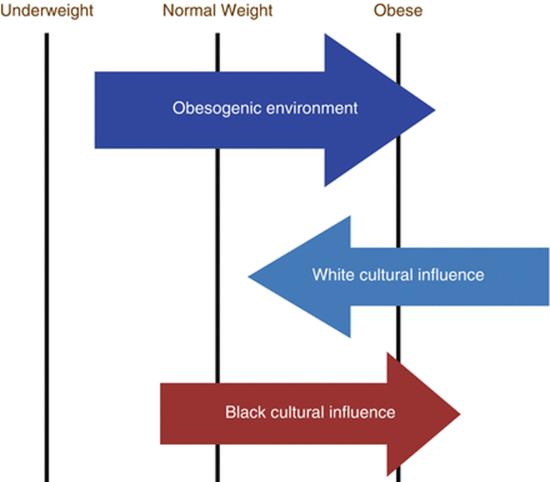
Figure 7.1
Confluence of obesogenic environment and cultural influence. Black cultural influence has an additive interaction with the overall obesogenic environment further promoting obesity among Black women. Conversely, White cultural influence acts as a counterweight to the prevailing obesogenic environment by influencing White women to strive for thinness (Reproduced with permission from: Ard [5])
Body Image as a Construct
Body image, an important factor in weight control, encompasses one’s perception of body size and the emotional response or attitude toward that perception [6–8]. Body image is often assessed using attitudinal questionnaires such as the Body Cathexis Scale [9], the Body Shape Questionnaire [10] or by exploring percept evaluations using figure rating exercises. For the figure rating exercises, participants are shown a series of numbered silhouettes ranging from very thin to extremely obese. Participants are asked to select which figure they currently most resemble. This is known as body imagecurrent. To further explore dimensions of body image, participants are often asked to select which figure they would like to resemble. This is known as body imageideal. The calculated difference between body imagecurrent and body imageideal is called body image discrepancy or body image dissatisfaction (BID = body imagecurrent − body imageideal). Several instruments have been developed to facilitate this line of study. The most widely used instrument is the Stunkard Figure Rating Scale, which consists of 9 silhouettes (see Fig. 7.2a) [11]. The Stunkard scale was introduced in the early 1980s as an easy-to-administer self-assessment of body image and has been strengthened by subsequent work, which established BMI norms for adults and children [12]. Several additional figure rating scales have been developed and adapted to be appropriate for diverse populations [8, 13, 14]. Highlighted at the bottom of Fig. 7.2b is the scale developed by Pulvers et al., who sought to develop an instrument more relatable to a range of cultures with detailed figures, but not specific to any one culture [13]. Scales are currently being developed that better depict body proportions for African-Americans and allow participants to desire change of specific body parts (i.e., chest, hips) vs. change of the entire body. From these figure rating exercises, many conclusions have been drawn about body image among African-American and White women. Research has shown that both African-American and White women report some body image dissatisfaction [15–18]. However, White women typically report greater body image dissatisfaction than African-American women, while African-American women generally report body image ideals larger than that of White women [19, 20]. There are a range of proposed factors that may influence body image differences across race/ethnic groups.
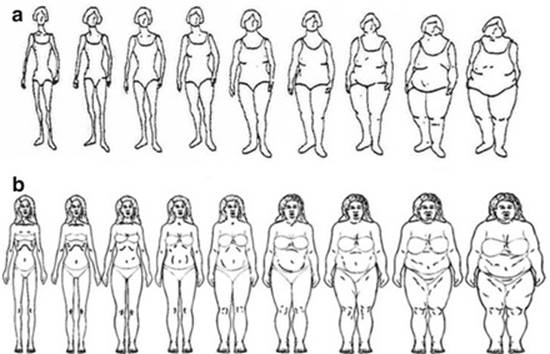
Figure 7.2
Selected figure rating scales. (a) Stunkard Figure Rating Scale: most widely used instrument developed as an easy-to-administer self-assessment of body image (Reproduced with permission from: Stunkard et al. [11]). (b) Pulvers Figure Rating Scale: instrument adapted to be appropriate for diverse populations [13] (Reproduced with permission of John Wiley & Sons, Inc)
Historical Influence
Body image ideals in the United States are thought to have roots in historical conditions where different body sizes were promoted for African-American and White women. The environmental and economic conditions in colonial times made women who were physically strong and able preferable because they were seen as fertile and able to contribute to the land and household chores [21]. Later, with the introduction of slavery, White women were urged to be thin and frail to make them more attractive candidates for marriage to an upper-class man who could then justify the use of slaves by stating that his wife was too frail to work [22]. However, this pressure to be thin was never imposed upon African-American women. In fact, for African-American women, larger, stronger bodies were preferred by Whites because this body type was seen as more equipped to endure the working conditions. Additionally, African-American men also preferred African-American women with larger body types because that suggested to them the strength, productivity, robustness, and fertility of that woman. From this, we might hypothesize that what was once a survival- and strategy-driven rationale for preference of certain body sizes, over generations, has become an inherent social norm in current society.
Current Social Influence
Media
The current media has also been identified as a contributor to body image perceptions of women [21]. Differential depictions of African-American and White women in the media may drive the differences in body image ideals that have persisted for several decades. For example, a 2004 study by Schooler and colleagues reported that White women were negatively influenced by seeing thin White women in the media, but African-American women were not affected by these images [23]. However, for African-American women, viewing African-American-oriented media actually demonstrated some protective effect on their body image [23], which is believed to be a result of the larger body sizes of African-American women that are often seen in the mainstream media.
Opposite Sex Preferences
Male preference for body size has also been cited as a contributor to body image among women [24]. Currently, male’s physical appearance preferences for women largely mirror the body image ideals that seemed to develop during slavery. Specifically, African-American men prefer African-American women with at least a moderate-sized body shape compared to White men who prefer White women with a thin body shape [24]. Both African-American and White women are aware of male preferences for their respective body sizes. However, there is limited empirical data to establish how male preferences influence body image and actual body sizes of African-American and White women.
Maternal Influence
Mothers may also play a role in the development of body image in their daughters. Subsequently, the body image ideals developed during the formative years are continued into adulthood. Among African-American women, there is a cultural belief of valuing character over appearance [25]. The lower emphasis on appearance may protect against body image dissatisfaction in African-American females. In contrast, White mothers were more critical of heavy daughters in a 1995 study by Brown and colleagues [26]. Thus, it may be that some of the differences in body image ideals seen today when comparing African-American and White women are the result of different maternal emphasis in childhood.
Acculturation
Among African-American women only, acculturation may also influence body image ideals. Acculturation is defined as “socialization: the adoption of the behavior patterns of the surrounding culture.” So, African-American women with greater acculturation with mainstream America are more likely to adopt the “White” standard of beauty which includes thinness. However, African-American women with lower acculturation are more likely to adopt “African-American” standards of beauty, which is ultimately associated with fuller, more voluptuous figures.
To this point, the main focus of this chapter has been on body image differences between African-American and White women largely due to limited body image research in other race/ethnic groups. However, other race/ethnic groups, such as Hispanics and Asian-Americans are not exempt from this discussion and are increasingly being studied by researchers. Challenges for studying body image in Hispanic Americans come from the diversity of this group in terms of lineage (e.g., Mexican, South American, Caribbean) and immigration stage (first generation, second generation, third generation). It is well known that rates of overweight and obesity are also disproportionately high among most Hispanic women [1]. Though the literature for Hispanic body image is not definitive, it suggests that body image beliefs among Hispanics fall somewhere in between that of African-Americans and Whites. Though reporting more body image dissatisfaction than African-Americans, Hispanics still report less body image dissatisfaction than Whites [19]. It has been suggested that body image among Hispanics is influenced by strong familial ties and focus on character. For Asian Americans, for whom overweight and obesity rates are much lower than other groups, there is even less weight-related body image data. Of the literature that is available for body image of Asian-Americans, the findings are mixed. Some studies have found that Asian-Americans are more satisfied with their bodies than Whites and Hispanics [19, 27], while other studies have indicated that Asian-Americans report similar levels of body image dissatisfaction as Whites [28]. The challenges involved in the study of body image of Asian-Americans are similar to that seen in Hispanic Americans (e.g., lineage, immigration stage).
Body Mass Index (BMI)
Though many of the factors influencing body image are psychological in nature and driven by social relationships and norms, one quantitative measure that has a direct association with body image among African-American and White women is BMI. For example, a 2011 study by Cox and colleagues reported that body image ideals differed by obesity class with class I (BMI 30–34 kg/m2) obese women having the smallest body image ideal and class III (BMI ≥40 kg/m2) obese women having the largest body image ideal [16]. However, the causal direction of this relationship is unclear. Some suggest that women may select an ideal body size based on what they see as more relatable to their current size which would lead women who are currently class III obese to choose body image ideals that are larger than that of women who are class I obese. Conversely, the body size that a woman chooses to maintain may be driven by what she sees as ideal. Thus, a woman with a larger body image ideal may be more likely to have a larger actual body size. Further research is needed to more fully understand this relationship. Not only does BMI have a direct relationship with body image ideals, it is also positively associated with body image dissatisfaction. Thus, as BMI increases, body image dissatisfaction increases for both African-American and White women [16, 29]. Though relationships between BMI and body image exist for African-American and White women, thresholds for and magnitudes of the relationships differ. Specifically, when comparing African-American and White women of similar BMIs, African-American women consistently report more satisfaction with their bodies and higher weight-related quality of life [30].
Body Image During Pregnancy
Body image is a part of a woman’s psyche that begins to develop at a young age and continues through the life course. However, body image is not a static concept and may change with the different phases of life that a woman may experience. One such time to consider is the pregnancy phase, which is a very important phase in a woman’s life, with implications for both her own well-being and that of her developing fetus. During pregnancy, women experience substantial and sometimes dramatic changes in their body shape, sensations, muscle tone, and weight, over a relatively short period of time, resulting in significant alterations of body image [31]. It is important to understand women’s adaptation to their changing bodies during pregnancy because body image dissatisfaction has been shown to be associated with depression, anxiety [32, 33], and unhealthy dieting and eating behaviors [34], which all have serious implications for the health and well-being of the mother and developing fetus [35, 36]. In addition, body image influences the ability of a woman to develop a positive maternal identity, which has a great impact on her ability to accept the maternal role postpartum. Nevertheless, there is a paucity of evidence in this area with almost all of the studies having been conducted in very small samples containing only nonminority participants or no report of race. A summary of studies evaluating body image during pregnancy is presented in Table 7.1.
Table 7.1
Summary of studies evaluating body image during pregnancy
|
Author (year) country, design |
Population |
Setting |
Body image assessment |
Summary of results |
|
Boscaglia (2003) Australia, prospective cohort [47] |
N = 71 |
Not described |
Body Cathexis Scale [BCS] |
Changes in BIS across the 4 time points were different for the higher and low-exercise groups |
|
40 high exercisers (HE) |
At 15–22 weeks HE were significantly more satisfied with their bodies compared to LE |
|||
|
31 low exercisers (LE) |
HE were more satisfied with their bodies at 15–22 weeks’ gestation compared to 6 months prepregnancy and were also more satisfied at both time points during pregnancy compared to their body image satisfaction expectation postpartum |
|||
|
For the LE group, no difference in body image satisfaction across the four time points |
||||
|
Chang (2006) Taiwan, qualitative study [50] |
N = 18 |
Clinics at a medical center in Taipei, Taiwan |
n/a |
Loss of the self/body and expressed concern about regaining the prepregnancy feminine self after the birth of baby |
|
Approximately 50 % of women emphasized dissatisfaction with their overall appearance |
||||
|
Negative attitudes toward the changes in their body seemed to be dampened, by awareness that other women shared their experiences |
||||
|
Partner acceptance of body was an important determinant of body image satisfaction and women expressed fear and anxiety that the changes in their body would negatively affect their relationships with their partners |
||||
|
Women saw changes in their body as reflective of their child’s development |
||||
|
Women felt that changes in their bodies reflected their role as mothers |
||||
|
Women were ambivalent about gaining weight, while some considered all changes in her body as signs of her new role as mother |
||||
|
Clark et al. (2009) Australia, prospective cohort [48] |
N = 116 |
Australia |
Body Attitude Questionnaire [BAQ] |
Women reported feeling least fat at 32–35 weeks when compared to all time points (prepregnancy, 6 weeks postpartum, 6 months postpartum, and 12 months postpartum) |
|
Women reported feeling most fat at 6 months postpartum |
||||
|
Significant relationship between depression and body dissatisfaction scores |
||||
|
Davies and Wardle (1994) UK, cross-sectional study [45] |
N = 173 |
London antenatal clinics and community sample at a local GP well-woman clinic |
Eating Disorder Inventory (The Body Dissatisfaction and the Drive for Thinness subscales were used |
Pregnant women were all in their third trimester (mean = 33 weeks) |
|
76 pregnant women (all third trimester) |
Figure rating scale |
Pregnant women had a lower score on the “Drive for Thinness” and the Body Image Dissatisfaction Scale compared to the nonpregnant group |
||
|
97 nonpregnant controls |
Body part size perception |
In both groups there was a significant positive correlation between BMI and body dissatisfaction |
||
|
After adjustment for BMI, the pregnant women evaluated themselves as larger than the nonpregnant group |
||||
|
Duncombe et al. (2008) Australia, prospective cohort [33] |
N = 158 |
Melbourne and regional Victoria, Australia |
Body Attitudes Questionnaire [BAQ] |
Prepregnancy: 20 % were satisfied, 74 % wanted a smaller body size, and 5.7 % wanted a larger body size |
|
Contour Drawing Rating Scale |
Body image remained relatively stable. Women who felt good about their bodies at the start continued to do so and those that did not maintained that concern during pregnancy |
|||
|
Pregnancy Figure Rating Scales |
||||
|
Fairburn et al. (1992) UK, prospective cohort [35] |
N = 100 |
Maternity hospital in Oxford |
Eating Disorder Examination |
The degree of concern about body shape increased between early-to-middle and late pregnancy |
|
Significant decline in concern about weight during the early stages of pregnancy and an increase in the later stages |
||||
|
Fox and Yamaguchi (1997) UK, qualitative study [46] |
N = 76 |
Antenatal classes and midwifery centers in 4 London hospital and clinics |
18 % of normal-weight women (NW) experience positive change in BI, 62 % negative change, and 19 % no change |
|
|
Of the overweight women, 62 % experience a positive change, 23 % a negative change, and 15 % no change |
||||
|
Goodwin et al. (2000), Australia, prospective cohort [51] |
N = 65 |
Community- and hospital-based prenatal classes |
Body Cathexis Scale [BCS] |
Significant change in attitude toward body image from prepregnancy to early pregnancy in a negative direction |
|
Exercisers did not have a more positive body image compared to non-exercisers |
||||
|
Exercise group had more positive ratings compared to the non-exercise group on combined waist, hips, bust, and abdomen subscales of the BCS at 30 weeks’ gestation |
||||
|
Harris (1979) UK, prospective cohort [53] |
N = 85 |
Clinic patients |
Stomach Focus dimension of the Body Focus Questionnaire |
White women were more aware of their stomachs at each of the three time points (3 months, 9 months, and postpartum) compared to Black women |
|
Black: 55 |
Body Distortion Questionnaire |
At 3 months, both groups had similar body distortion; however, body distortion increased for Black women peaking at 9 months and then decreasing fairly close to the score at 3 months. Body distortion decreased for White women most dramatically during postpartum |
||
|
White: 30 |
||||
|
Hofmeyr et al. (1990) South Africa, cross-sectional [44] |
N = 891 |
Antenatal clinic at Johannesburg Hospital |
Questionnaire |
19 % felt more attractive than usual |
|
20 % reported increased interest in sex |
||||
|
53 % felt less attractive than usual |
||||
|
60 % reported being less interested in sex |
||||
|
Richardson (1990) USA, qualitative study [52] |
N = 63 |
Maternity clinics of a large university-affiliated outpatient facility |
n/a |
Of 463 experiences reported, 70 % indicated changes in body image |
|
AA: 14 % |
||||
|
Hisp: 41 % |
Of the 305 changes reported, 80 % were satisfactory and 20 % worrisome |
|||
|
White:45 % |
||||
|
Strang and Sullivan (1985) Canada, prospective cohort [31] |
N = 96 |
A large urban hospital in western Canada |
Attitude to Body Image Scale |
Participants felt more negative about their bodies during the last 3 months of pregnancy than they did before the onset of their pregnancy (p < 0.01) |
BAQ Body Attitudes Scale, BCS Body Cathexis Scale, ABIS Attitude to Body Image Scale
The current Institute of Medicine [IOM] guidelines recommend that women with normal prepregnancy weight (body mass index [BMI] <25) gain 25–35 lb whereas overweight (25< BMI <30) or obese (BMI ≥30) women are advised to gain 15–25 lb and 11–20 lb, respectively [37]. However, currently, fewer than one third of pregnant women achieve guideline-recommended gains, with the majority gaining above IOM recommended levels [38]. Excessive gestational weight gain is on the rise, with more than 40 % of normal-weight women and 60 % of overweight women exceeding the gestational weight gain recommendations [38]. There are significant racial differences in gestational weight gain with White women more likely than their African-American counterparts to gain in excess of recommended levels [39–41]. However, African-American women are more likely to enter pregnancy overweight or obese compared to their White peers [42]. As mentioned earlier, a significant amount of research indicates that the idealized image of female beauty in western societies is thin [43]. During the course of pregnancy, with the increase in weight, breast size, and thickening of the waist, women depart from this cultural ideal of beauty. A woman’s assessment of her body image when nonpregnant is based on her current perceived body image in comparison to her ideal body image. Thus, it can be expected that if the ideal remains stable during pregnancy, there would be an increase in body image dissatisfaction as pregnancy progresses [31].
The body changes that occur during pregnancy are somewhat expected, but there are some inconsistencies in the literature on whether a woman adapts positively to these changes or becomes dissatisfied or concerned about them [44–51]. In addition, it is evident that women have conflicting feelings about the changes in their bodies. Although for the most part, women have a positive perception of themselves during pregnancy, a considerable proportion report feeling unattractive [44]. A qualitative study by Chang et al. [50] reported that over 50 % of the women interviewed expressed dissatisfaction with their overall appearance. Some women talked about loss of the self/body and expressed concern about regaining their prepregnancy feminine self after the birth of baby. However, some women responded positively to their changed bodies. For others, the response was either negative or conflicted and their reactions to changing breasts covered the spectrum. Almost half of the women expressed concern and most expressed strong negative reactions to striae gravidarum (stretch marks). In this study, the reactions of significant others played a crucial role in a woman’s adaptation to her pregnant body. As such, Chang et al. concluded that even during pregnancy, women are relying on ideas of men’s standards of attractiveness and media representations to assess the changes they are experiencing during pregnancy. In a cross-sectional study [44] of 891 women, more than half of the study population felt less attractive than usual and 60 % reported being less interested in sex.
In contrast, several studies [35, 45, 52] have suggested that the normal societal pressures in western societies to conform to the ideal body shapes may be reduced during pregnancy [35, 45] since women see changes in their body as temporary and specific to childbearing [52]. As such, pregnancy may be the only reprieve from the pressure to be thin in most western societies since the reproductive role supersedes a woman’s physical appearance. Fairburn et al. [35] report that among women interviewed 3 days postdelivery, 6 % reported dieting during pregnancy, 26 % experienced overeating episodes, 50 % expressed no concern about weight gain, and 24 % felt distressed about weight gain or felt less concerned than they would have before pregnancy. Approximately two thirds felt positive about their abdominal shape change, while one third felt negative about this change. Furthermore, the pregnant women in this study were more accepting of their body size and made fewer attempts to control their weight.
Chang et al. [50] reported that pregnant women view the changes in their body as reflective of their child’s development and their assumption of the role of “mother.” The participants in this study tended to compare their bodies with those of other pregnant women to assess whether or not their child was developing normally and attributed some level of success in this comparison. Davies and Wardle [45] compared pregnant and nonpregnant women and found that pregnant women were more accepting of their body size, had lower body dissatisfaction scores, and made fewer attempts to control their weight. In a diverse US sample (n = 63) consisting of 45 % non-Hispanic White, 41 % Hispanic, and 14 % African-American women, Richardson also found that women were extremely tolerant of body changes. Of the 63 women studied, 70 % indicated changes in body experience, and of these, 80 % described these changes as satisfactory [52]. In a UK study comparing Black and White women, using the Stomach Focus dimension of the Body Focus and the Body Distortion Questionnaire, Harris [53] reported that over the course of pregnancy, White women were more aware of their stomachs at 9 months and least aware of their stomachs postpartum. However, this decrease in stomach awareness following delivery was not observed among Black women. In addition, the level of body distortion was similar for both groups during the first trimester; however, at 9 months and postpartum, Blacks showed more body distortion than Whites. Body distortion increased during pregnancy among Blacks, peaked at 9 months, and then fell to slightly less than their first trimester scores. On the other hand, body distortion decreased during pregnancy and most dramatically to almost half their 9-month score following delivery among Whites.
Determinants of Body Image During Pregnancy
Prepregnancy Body Image
Women who have had a positive body image prior to pregnancy seem to have a more positive attitude toward their pregnancy bodies, while a negative body image prior to pregnancy seems to persist during pregnancy [49]. The consequences of negative body image may include behaviors such as dieting, starving, and purging, and this is of great concern since these behaviors are linked to adverse obstetric outcomes, such as inadequate weight gain, premature delivery, and low birth weight [36].
Prepregnancy Weight Status
In a study by Fox and Yamaguchi [46], pregnancy weight status influenced body image during pregnancy. A sample of pregnant women (n = 76) provided qualitative data through open-ended questions on how they felt generally about their current appearance and body shape and if, how, and why these feelings differed from prepregnancy feelings. Among women with a normal weight before pregnancy, 62 % reported more body image dissatisfaction during pregnancy, 19 % experienced less body image dissatisfaction, and 19 % experienced no change in body image. On the other hand, among women who were overweight before pregnancy, 62 % experienced less body image dissatisfaction, 23 % experienced more body image dissatisfaction, and 15 % experienced no change. As such, the thin body ideal may not be completely abandoned during pregnancy.
Prepregnancy Eating Behaviors
Fairburn and Welch [35] explained the differences in response to weight gain and shape on the basis of the woman’s prepregnancy experience of being a dieter vs. a non-dieter and her previous attitudes toward her shape. The previous non-dieter group reported no feelings of concern about their weight gain and shape change in pregnancy. However, past dieters either had increased fears of weight gain or reduced concern through a license not to worry. These results contrast with Slade’s hypothesis [54] that weight gain and loss history contributes to desensitization of concerns about bodily changes during pregnancy, thus, suggesting that past dieters would be more tolerant of weight gain.
Psychological Factors
Body image satisfaction (BIS) during pregnancy not only reflects a cosmetic assessment of appearance but may affect the woman’s psychological and physical well-being. Several studies show a significant correlation between psychological characteristics and BIS during pregnancy [33, 48, 55, 56]. Anderson [55] reported that pregnant women who reported more symptoms of depression had lower BIS than those reporting fewer symptoms. In addition, Di Pietro et al. [56] showed that women who were more satisfied with their bodies during pregnancy showed fewer negative mood symptoms and less anger. In studies conducted by Duncombe et al. [33] and Clark et al. [48], the correlation between depressive symptoms and body image dissatisfaction persisted throughout pregnancy when measured prospectively at three and five time points during pregnancy.
Physical Activity
The link between exercise and body image is well established in the general population [57]. Evidence from previous studies indicates that there is a bidirectional relationship between exercise and body image. Individuals engage in exercise to reduce body image dissatisfaction, and engagement in exercise reduces body image dissatisfaction [57]. However, there is a small body of evidence concerning the relationship between exercise and body image satisfaction in pregnant women [47, 51, 58]. In a small pre-post quasi-experimental study, Marquez-Sterling et al. [58] found improvement in body satisfaction following an intervention consisting of 1 h exercise training sessions for a duration of 15 weeks among previously sedentary pregnant women compared to the control group. In another study, Boscaglia [47] compared high exercisers and low exercisers during pregnancy and assessed BIS prepregnancy retrospectively, at 15–22- weeks’ and 23–30 weeks’ gestations. High-exercising women were found to be significantly more satisfied with their bodies at 15–22 weeks compared to low-exercising women. Relative to their prepregnancy body image, high-exercising women were significantly more satisfied with their body image at 15–22 weeks’ gestation and tended to be more satisfied at 23–30 weeks’ gestation. No similar pattern was observed for low-exercising women, whose BIS remained relatively stable from prepregnancy to later pregnancy. As such, there seems to be a benefit of moderate levels of exercise particularly in the early phases of pregnancy.
In contrast, Goodwin et al. [51] compared body image satisfaction of 25 exercisers and 18 non-exercising pregnant women at several time points during pregnancy. For both groups, body image satisfaction ratings prepregnancy were more positive than early pregnancy ratings. There were no differences between groups at any of the time points measured (prepregnancy, 17 weeks, and 30 weeks). However, the exercising group had more positive ratings compared to the non-exercise group on combined waist, hips, bust, and abdomen subscales of the Body Cathexis Scale at 30 weeks’ gestation. Several studies have suggested that women who exercise regularly throughout pregnancy retain a positive attitude toward their changing bodies as pregnancy progresses. Moreover, exercise may function as an adaptive strategy such that any potential body dissatisfaction due to weight gain is counteracted by general positive feelings about the body due to exercise. Walker and Freeland-Graves [59] posit that exercise may help avoid excessive weight gain and thus reduce weight distress and body dissatisfaction during pregnancy and postpartum.
Body Image Postpartum
Several studies indicate that one main concern of recent mothers during the postpartum period is the return to her normal/prepregnancy size; a summary of these studies is presented in Table 7.2. Studies of women’s postpartum body image have yielded mixed results with some finding that women are more dissatisfied during postpartum compared to during pregnancy [60–62] and that body image dissatisfaction increases during postpartum [63], while other studies have observed that women felt more positive about their postpartum body image than their pregnant body image [31]. There are a small number of studies examining body image during postpartum, and most of these included minority women in their study population.
Table 7.2
Summary of studies evaluating body image during postpartum
|
Author (year) country, design |
Population |
Setting |
Body image assessment |
Summary of results |
|
Boyington et al. (2007) US, cross-sectional [67] |
N = 105 |
4 inner city clinics in Washington, DC |
The Reese Figure Rating Scale |
75 % exhibited dissatisfaction with current body size |
|
100 % AA |
55 % perceived that they were too large and wanted to lose weight |
|||
|
Carter-Edwards et al. (2010) US, randomized controlled trial [66] |
N = 162 |
Women residing in the Triangle area of North Carolina |
Stunkard Figure Rating Scale |
Black women had higher mean body mass index [BMI] and higher mean ideal body image ideal mother body image compared to Whites but their body image dissatisfaction was significantly lower even after adjustment for age, BMI, education, income, and marital status |
|
White:55 % |
||||
|
Black: 45 % |
||||
|
Gjerdingen et al. (2009) US, prospective cohort [63] |
N = 506 |
7 Minneapolis/St. Paul metropolitan area clinics |
Body Shape Questionnaire |
Body image dissatisfaction increased significantly from 0–1 to 9 months postpartum |
|
White: 76 % |
||||
|
AA: 17.6 % |
||||
|
Asian: 6.7 % |
||||
|
Other: 8.7 % |
||||
|
Jenkin and Tiggemann (1997) Australia, prospective cohort [60] |
N = 115 |
On average, women were heavier 4 weeks after having their baby than they were prior to becoming pregnant and were less satisfied with their postnatal weight and shape |
||
|
They were also slightly heavier than they had anticipated, particularly in the case of the younger women |
||||
|
Morin (1995) US, cross-sectional [68] |
N = 57 |
Not described |
Attitude to Body Image Scale |
Women with higher obesity measurement had a more negative view of the body as reflected by a higher ABIS score |
|
AA: 75 % |
||||
|
White:25 % |
||||
|
Morin et al. (2002) US, cross-sectional [65] |
N = 45 |
Not described |
Attitude to Body Image Scale |
Women had slight positive attitudes about their bodies immediately postpartum |
|
African-Americans |
||||
|
Rallis et al. (2008) Australia, prospective cohort [62] |
N = 79 |
Prenatal exercise classes or obstetrician and gynecology practices in various suburbs of Melbourne |
BAQ |
Higher BID during postpartum |
|
Physical Appearance Comparison Scale |
Women reported feeling most fat at 6 months postpartum, even though they weighed less than they did at 6 weeks postpartum and the discrepancy between the stable ideal body size and their actual body size decreased |
|||
|
Walker (1998) US, cross-sectional survey [64] |
N = 207 |
Residence in Austin, Texas, with a singleton birth and a published mailing address |
BCS |
No significant difference in body image dissatisfaction between mothers who bottle-feed and those who breastfeed |
|
White: 73 % |
||||
|
Hispanic: 19 % |
||||
|
Other: 8 % |
||||
|
Strang and Sullivan (1985) Canada, prospective cohort [31] |
N = 96 |
A large urban hospital in western Canada |
Attitude to Body Image Scale |
Participants had a slightly positive feeling toward their body image at 2 and 6 weeks postpartum |
BAQ Body Attitudes Scale, BCS Body Cathexis Scale, ABIS Attitude to Body Image Scale, BID Body Image Dissatisfaction
Rallis et al. [62], in a small Australian study, found that women in the first-year postpartum felt fatter and less strong and fit and had greater body image dissatisfaction compared to their reports during pregnancy. Even though women are larger in size in their third trimester of pregnancy than during postpartum, they still reported higher body image dissatisfaction during postpartum. In this study, body image was assessed at three time points during the postpartum period. At 6 weeks postpartum, women seemed to perceive their size in the context of the recent pregnancy and are not yet too concerned about the weight gained during pregnancy and returning to their prepregnancy size. Nonetheless, women reported feeling the heaviest at 6 months postpartum, even though they weighed less than they did at 6 weeks postpartum and the discrepancy between the stable ideal body size and their actual body size decreased. These results suggest that the temporary reprieve of pressure to conform to the ideal during pregnancy is eliminated and returns during the postpartum period. Similarly, one study [63] in a diverse US sample (n = 506) with 17 % African-American and 67 % White women examined the progression of body image dissatisfaction over time during the postpartum period. On average, women lost 10.1 lb (s.d. 16.3) from 0–1 to 9 months postpartum but remained on average 5.4 lb (s.d. 15.6) heavier at 9 months postpartum compared to prepregnancy. Body image dissatisfaction increased significantly from 0–1 to 9 postpartum. Body image dissatisfaction was significantly associated with overeating, higher current weight, poor mental health, single status, race other than African-American, bottle-feeding, and parity.
Walker et al. [59] examined the association between the method of feeding (bottle vs. breast) and body image dissatisfaction and found no significant difference in a diverse sample (n = 207 with 73 % White, 19 % Hispanic, and 8 % others). However, in the bottle-feeding group, body image dissatisfaction was significantly associated with weight gain, but this association was not observed in the breastfed group. In another publication [64], text data from this study sample suggests that some women who were breastfeeding may minimize or repress their feelings about their weight and, thus, report lower body image dissatisfaction.
Three studies on body image postpartum were conducted in African-American populations. Morin [65], in small sample of 45 African-American women who were assessed 24–48 h postpartum, found that these women had slightly positive attitudes about their bodies immediately postpartum. Similarly, in the Active Mothers Postpartum (AMP) study [66], the authors, in a sample of 162 participants, compared African-American and White women postpartum. They found that although African-American women had higher mean body mass index [BMI], there was no difference by race in current perception of body image. Although African-American women selected heavier figures as ideal compared to Whites, this difference did not achieve statistical significance. However, for ideal mother image, there was a significant race difference with African-American women selecting heavier figures compared to White women. Both groups experienced some level of body image dissatisfaction when their current body image was compared with the ideal image and the ideal mother image. On average, for both groups, body image dissatisfaction was lower when the current body image was compared with the ideal mother image, suggesting greater satisfaction with a larger size as a mother. However, African-American women had significantly lower mean body dissatisfaction than White women indicating a greater degree of satisfaction with a larger size. This difference persisted even after adjustment for age, BMI, education, income, marital status and interactions terms. In a sample of low-income African-American women interviewed between 0 and 6 months postpartum, Boyington [67] reported that over 75 % exhibited dissatisfaction with current body size and 55 % perceived that they were too large and wanted to lose weight. Similarly, Morin [68], in a study of predominantly African-American women within the first 48 h postpartum, reported that women with higher BMI had a more negative view of their body as reflected by a higher score on the Attitude to Body Image Scale [ABIS] [31]. These results are not consistent with reports indicating that African-American women have lower body image dissatisfaction when compared to their White counterparts [69].
Strategies to Improve Body Image During Pregnancy and Postpartum
Health professionals working with pregnant women have an opportunity to help them adapt to their changing bodies in positive, healthy ways. To accomplish this, they need to create an environment conducive to sharing of feelings and experiences. It is important that health practitioners do not minimize patient’s concerns about their changing bodies. Instead, practitioners should be able to discern when a woman is having a difficult time accepting changes in her body that accompany pregnancy and assist with the development of coping strategies for adapting to a woman’s growing body. Several strategies have been noted, for example, support groups for networking with other pregnant women have been successful. Another strategy has been to encourage women to treat themselves periodically to something special. When women take the time to look their best during pregnancy, others respond to them in a positive manner. In this way, the pregnant woman’s body image improves. Exercise programs designed especially for pregnant women have been shown not only to reduce stress but also to improve body image. In summary, given the dramatic physical changes during pregnancy and postpartum, and the importance of body image to both maternal and neonatal health, these may be opportune times for interventions to address body image dissatisfaction. However, given the paucity of evidence, limited prospective data, and the lack of diversity in study populations, our understanding of body image during pregnancy and postpartum is limited. As such, there is a need for further research in diverse populations so that racial/ethnic differences in body image during pregnancy and postpartum can be better understood.
Moreover, intervention strategies for body image have been investigated primarily among persons with eating disorders. One study [70] found that the importance of appearance typically decreased with age in women, and other studies have indicated that engaging in cognitive reappraisal, an active process to accept aging changes, was associated with lower levels of body dissatisfaction [71, 72]. In addition, studies of cognitive behavioral therapy (CBT)-based interventions for body dissatisfaction and disordered eating in young women have shown clinically significant reductions in body dissatisfaction [73, 74]. Finally, engagement in body management or self-care (relaxation, massage, making time for exercise) was reported to be associated with less concern about shape and weight among midlife women [72]. Perhaps these strategies could be used to inform interventions to promote the acceptance of body changes during pregnancy and improve body image during pregnancy and postpartum.
Weight loss has been associated with improvement in body image in several populations [75–77]. However, the expected improvement in body image as a result of weight loss may be less than expected, since it is not uncommon for participants in weight loss programs after having lost weight to still be dissatisfied with their bodies. Nonetheless, weight loss programs tailored for women during postpartum may improve body image. Although several weight loss intervention studies targeting postpartum women are in progress, body image is not usually assessed [78].
Improved understanding of body image during pregnancy and postpartum in ethnically diverse populations, along with lessons learned from the eating disorder literature, can facilitate the development of culturally tailored interventions which may be effective among specific racial/ethnic groups. Further research is needed to facilitate the development of evidence-based clinical interventions for promoting a healthy body image during pregnancy and postpartum by health-care professionals working with women during this life stage.
Acknowledgment
Dr. Gary-Webb was funded by a grant from NHLBI (K01-HL084700).
References
1.
Flegal KM, Carroll MD, Kit BK, Ogden CL. Prevalence of obesity and trends in the distribution of body mass index among US adults, 1999–2010. JAMA. 2012;307(5):491–7. Epub 2012/01/19.PubMed
2.
Airhihenbuwa CO, Kumanyika S, Agurs TD, Lowe A. Perceptions and beliefs about exercise, rest, and health among African-Americans. Am J Health Promot. 1995;9(6):426–9. Epub 1995/06/07.PubMed
3.
Airhihenbuwa CO, Kumanyika S, Agurs TD, Lowe A, Saunders D, Morssink CB. Cultural aspects of African American eating patterns. Ethn Health. 1996;1(3):245–60. Epub 1996/09/01.PubMed
4.
Kumanyika SK, Morssink C, Agurs T. Models for dietary and weight change in African-American women: identifying cultural components. Ethn Dis. 1992;2(2):166–75. Epub 1992/01/01.PubMed
5.
Ard JD. Unique perspectives on the obesogenic environment. J Gen Intern Med. 2007;22(7):1058–60. Epub 2007/05/24.PubMed
6.
Anderson LA, Janes GR, Ziemer DC, Phillips LS. Diabetes in urban African Americans. Body image, satisfaction with size, and weight change attempts. Diabetes Educ. 1997;23(3):301–8.PubMed
7.
Liburd LC, Anderson LA, Edgar T, Jack Jr L. Body size and body shape: perceptions of Black women with diabetes. Diabetes Educ. 1999;25(3):382–8. Epub 1999/10/26.PubMed
8.
Patt MR, Lane AE, Finney CP, Yanek LR, Becker DM. Body image assessment: comparison of figure rating scales among urban Black women. Ethn Dis. 2002;12(1):54–62. Epub 2002/03/27.PubMed
9.
Secord PF, Jourard SM. The appraisal of body-cathexis: body-cathexis and the self. J Consult Psychol. 1953;17(5):343–7. Epub 1953/10/01.PubMed
10.
Cooper PJ, Taylor MJ, Cooper Z, Fairbum CG. The development and validation of the body shape questionnaire. Int J Eat Disord. 1987;6(4):485–94.
11.
Stunkard AJ, Sorensen T, Schulsinger F. Use of the Danish Adoption Register for the study of obesity and thinness. Res Publ Assoc Res Nerv Ment Dis. 1983;60:115–20.PubMed
12.
Bulik CM, Wade TD, Heath AC, Martin NG, Stunkard AJ, Eaves LJ. Relating body mass index to figural stimuli: population-based normative data for Caucasians. Int J Obes Relat Metab Disord. 2001;25(10):1517–24. Epub 2001/10/24.PubMed
13.
Pulvers KM, Lee RE, Kaur H, Mayo MS, Fitzgibbon ML, Jeffries SK, et al. Development of a culturally relevant body image instrument among urban African Americans. Obes Res. 2004;12(10):1641–51.PubMed
14.
Williamson DA, Womble LG, Zucker NL, Reas DL, White MA, Blouin DC, et al. Body image assessment for obesity (BIA-O): development of a new procedure. Int J Obes Relat Metab Disord. 2000;24(10):1326–32. Epub 2000/11/28.PubMed
15.
Cox TL, Zunker C, Wingo BC, Thomas DM, Ard JD. Body image and quality of life in a group of African American women. Soc Indic Res. 2010;99:531–40.
16.
Cox TL, Ard JD, Beasley TM, Fernandez JR, Howard VJ, Affuso O. Body image as a mediator of the relationship between body mass index and weight-related quality of life in Black women. J Womens Health (Larchmt). 2011;20(10):1573–8. Epub 2011/08/06.
17.
Cachelin FM. Ethnic differences in body-size preferences: myth or reality? Nutrition. 2001;17(4):353–4. Epub 2001/05/23.PubMed
18.
Rucker CE, Cash TF. Body images, body-size perceptions, and eating behaviors among African-American and White college women. Int J Eat Disord. 1992;12(3):291–9.
19.
Altabe M. Ethnicity and body image: quantitative and qualitative analysis. Int J Eat Disord. 1998;23(2):153–9. Epub 1998/03/21.PubMed
20.
Becker DM, Yanek LR, Koffman DM, Bronner YC. Body image preferences among urban African Americans and whites from low income communities. Ethn Dis. 1999;9(3):377–86. Epub 1999/12/22.PubMed
21.
Derenne JL, Beresin EV. Body image, media, and eating disorders. Acad Psychiatry. 2006;30(3):257–61. Epub 2006/05/27.PubMed
22.
Thesander M. The feminine ideal. London: Reaktion Books; 1997.
23.
Schooler D, Ward M, Merriwether A, Caruthers A. Who’s that girl: television’s role in the body image development of young White and Black women. Psych Women Q. 2004;28:38–47.
24.
Kumanyika S, Wilson JF, Guilford-Davenport M. Weight-related attitudes and behaviors of Black women. J Am Diet Assoc. 1993;93(4):416–22. Epub 1993/04/01.PubMed
25.
Baturka N, Hornsby PP, Schorling JB. Clinical implications of body image among rural African-American women. J Gen Inter Med. 2000;15(4):235–41. Epub 2000/04/12.
26.
Brown K, Schreiber G, McMahon R, Crawford P, Ghee K. Maternal influences on body satisfaction in Black and White girls aged 9 and 10: the NHLBI Growth and Health Study (NGHS). Ann Behav Med. 1995;17(3):213–20.PubMed
27.
Lucero K, Hicks RA, Bramlette J, Brassington GS, Welter MG. Frequency of eating problems among Asian and Caucasian college women. Psychol Rep. 1992;71(1):255–8. Epub 1992/08/01.PubMed
28.
Shaw H, Ramirez L, Trost A, Randall P, Stice E. Body image and eating disturbances across ethnic groups: more similarities than differences. Psychol Addict Behav. 2004;18(1):12–8. Epub 2004/03/11.PubMed
29.
Fitzgibbon ML, Blackman LR, Avellone ME. The relationship between body image discrepancy and body mass index across ethnic groups. Obes Res. 2000;8(8):582–9.PubMed
30.
Cox T, Ard J, Beasley TM, Fernandez J, Howard V, Kolotkin R, et al. Examining the association between body mass index and weight related quality of life in Black and White women. Appl Res Qual Life. 2012;7(3):309–22.
31.
Strang VR, Sullivan PL. Body image attitudes during pregnancy and the postpartum period. J Obstet Gynecol Neonatal Nurs. 1985;14(4):332–7. Epub 1985/07/01.PubMed
32.
Skouteris H, Carr R, Wertheim EH, Paxton SJ, Duncombe D. A prospective study of factors that lead to body dissatisfaction during pregnancy. Body Image. 2005;2(4):347–61. Epub 2007/12/20.PubMed
33.
Duncombe D, Wertheim EH, Skouteris H, Paxton SJ, Kelly L. How well do women adapt to changes in their body size and shape across the course of pregnancy? J Health Psychol. 2008;13(4):503–15. Epub 2008/04/19.PubMed
34.
Conti J, Abraham S, Taylor A. Eating behavior and pregnancy outcome. J Psychosom Res. 1998;44(3–4):465–77. Epub 1998/05/20.PubMed
35.
Fairburn CG, Stein A, Jones R. Eating habits and eating disorders during pregnancy. Psychosom Med. 1992;54(6):665–72. Epub 1992/11/01.PubMed
36.
Franko DL, Walton BE. Pregnancy and eating disorders: a review and clinical implications. Int J Eat Disord. 1993;13(1):41–7. Epub 1993/01/01.PubMed
37.
Rasmussen KM, Yaktine AL, Guidelines CtRIPW, Medicine Io, Council NR, editors. Weight gain during pregnancy: reexamining the guidelines. Washington, DC: The National Academies Press; 2009.
38.
Chu SY, Callaghan WM, Bish CL, D’Angelo D. Gestational weight gain by body mass index among US women delivering live births, 2004–2005: fueling future obesity. Am J Obstet Gynecol. 2009;200(3):271 e1–7. Epub 2009/01/10.
39.
Fontaine PL, Hellerstedt WL, Dayman CE, Wall MM, Sherwood NE. Evaluating body mass index-specific trimester weight gain recommendations: differences between black and White women. J Midwifery Womens Health. 2012;57(4):327–35. Epub 2012/07/05.PubMed
40.
Schieve LA, Cogswell ME, Scanlon KS. An empiric evaluation of the Institute of Medicine’s pregnancy weight gain guidelines by race. Obstet Gynecol. 1998;91(6):878–84. Epub 1998/06/04.PubMed
41.
Caulfield LE, Witter FR, Stoltzfus RJ. Determinants of gestational weight gain outside the recommended ranges among black and White women. Obstet Gynecol. 1996;87(5 Pt 1):760–6. Epub 1996/05/01.PubMed
42.
Vahratian A. Prevalence of overweight and obesity among women of childbearing age: results from the 2002 national survey of family growth. Matern Child Health J. 2009;13(2):268–73. Epub 2008/04/17.PubMed
43.
Thompson JK, Heinberg LJ, Altabe M, Tantleff-Dunn S. Exacting beauty: theory, assessment, and treatment of body image disturbance. Washington, DC: American Psychological Association; 1999.
44.
Hofmeyr GJ, Marcos EF, Butchart AM. Pregnant women’s perceptions of themselves: a survey. Birth. 1990;17(4):205–6. Epub 1990/12/01.PubMed
45.
Davies K, Wardle J. Body image and dieting in pregnancy. J Psychosom Res. 1994;38(8):787–99. Epub 1994/11/01.PubMed
46.
Fox P, Yamaguchi C. Body image change in pregnancy: a comparison of normal weight and overweight primigravidas. Birth. 1997;24(1):35–40. Epub 1997/03/01.PubMed
47.
Boscaglia N, Skouteris H, Wertheim EH. Changes in body image satisfaction during pregnancy: a comparison of high exercising and low exercising women. Aust N Z J Obstet Gynaecol. 2003;43(1):41–5. Epub 2003/05/21.PubMed
48.
Clark A, Skouteris H, Wertheim EH, Paxton SJ, Milgrom J. The relationship between depression and body dissatisfaction across pregnancy and the postpartum: a prospective study. J Health Psychol. 2009;14(1):27–35. Epub 2009/01/09.PubMed
49.
Berk B. Body image and pregnancy: bridging the mind-body connection. A guide for health care professionals. J Perinatol. 1993;13(4):300–4. Epub 1993/07/01.PubMed
50.
Chang SR, Chao YM, Kenney NJ. I am a woman and i’m pregnant: body image of women in Taiwan during the third trimester of pregnancy. Birth. 2006;33(2):147–53. Epub 2006/05/31.PubMed
51.
Goodwin A, Astbury J, McMeeken J. Body image and psychological well-being in pregnancy. A comparison of exercisers and non-exercisers. Aust N Z J Obstet Gynaecol. 2000;40(4):442–7. Epub 2001/02/24.PubMed
52.
Richardson P. Women’s experiences of body change during normal pregnancy. Matern Child Nurs J. 1990;19(2):93–111. Epub 1990/01/01.PubMed
53.
Harris R. Cultural differences in body perception during pregnancy. Br J Med Psychol. 1979;52(4):347–52. Epub 1979/12/01.PubMed
54.
Slade PD. Awareness of body dimensions during pregnancy: an analogue study. Psychol Med. 1977;7(2):245–52. Epub 1977/05/01.PubMed
55.
Anderson VN, Fleming AS, Steiner M. Mood and the transition to motherhood. J Reprod Infant Psychol. 1994;12(2):69–77.
56.
Dipietro JA, Millet S, Costigan KA, Gurewitsch E, Caulfield LE. Psychosocial influences on weight gain attitudes and behaviors during pregnancy. J Am Diet Assoc. 2003;103(10):1314–9. Epub 2003/10/02.PubMed
57.
Campbell A, Hausenblas HA. Effects of exercise interventions on body image: a meta-analysis. J Health Psychol. 2009;14(6):780–93. Epub 2009/08/19.PubMed
58.
Marquez-Sterling S, Perry AC, Kaplan TA, Halberstein RA, Signorile JF. Physical and psychological changes with vigorous exercise in sedentary primigravidae. Med Sci Sports Exerc. 2000;32(1):58–62. Epub 2000/01/27.PubMed
59.
Walker LO, Freeland-Graves J. Lifestyle factors related to postpartum weight gain and body image in bottle- and breastfeeding women. J Obstet Gynecol Neonatal Nurs. 1998;27(2):151–60. Epub 1998/04/29.PubMed
60.
Jenkin W, Tiggemann M. Psychological effects of weight retained after pregnancy. Women Health. 1997;25(1):89–98. Epub 1997/01/01.PubMed
61.
Leifer M. Psychological changes accompanying pregnancy and motherhood. Genet Psychol Monogr. 1977;95(1):55–96. Epub 1977/02/01.PubMed
62.
Rallis S, Skouteris H, Wertheim EH, Paxton SJ. Predictors of body image during the first year postpartum: a prospective study. Women Health. 2007;45(1):87–104. Epub 2007/07/07.PubMed
63.
Gjerdingen D, Fontaine P, Crow S, McGovern P, Center B, Miner M. Predictors of mothers’ postpartum body dissatisfaction. Women Health. 2009;49(6):491–504. Epub 2009/12/17.PubMed
64.
Walker LO. Weight-related distress in the early months after childbirth. West J Nurs Res. 1998;20(1):30–44. Epub 1998/02/25.PubMed
65.
Morin KH, Brogan S, Flavin SK. Attitudes and perceptions of body image in postpartum African American women. Does weight make a difference? MCN Am J Matern Child Nurs. 2002;27(1):20–5.PubMed
66.
Carter-Edwards L, Bastian LA, Revels J, Durham H, Lokhnygina Y, Amamoo MA, et al. Body image and body satisfaction differ by race in overweight postpartum mothers. J Womens Health (Larchmt). 2010;19(2):305–11. Epub 2010/02/02.
67.
Boyington J, Johnson A, Carter-Edwards L. Dissatisfaction with body size among low-income, postpartum Black women. J Obstet Gynecol Neonatal Nurs. 2007;36(2):144–51. Epub 2007/03/21.PubMed
68.
Morin KH. Obese and nonobese postpartum women: complications, body image, and perceptions of the intrapartal experience. Appl Nurs Res. 1995;8(2):81–7. Epub 1995/05/01.PubMed
69.
Baptiste-Roberts K, Gary TL, Bone LR, Hill MN, Brancati FL. Perceived body image among African Americans with type 2 diabetes. Patient Educ Couns. 2006;60(2):194–200. Epub 2006/01/31.PubMed
70.
Pliner P, Chaiken S, Flett GL. Gender differences in concern with weight and physical appearance over the lifespan. Pers Soc Psychol Bull. 1990;16:10.
71.
Webster J, Tiggemann M. The relationship between women’s body satisfaction and self-image across the life span: the role of cognitive control. J Genet Psychol. 2003;164(2):241–52. Epub 2003/07/15.PubMed
72.
McLean SA, Paxton SJ, Wertheim EH. Factors associated with body dissatisfaction and disordered eating in women in midlife. Int J Eat Disord. 2010;43(6):527–36. Epub 2009/09/01.PubMed
73.
Paxton SJ, McLean SA, Gollings EK, Faulkner C, Wertheim EH. Comparison of face-to-face and internet interventions for body image and eating problems in adult women: an RCT. Int J Eat Disord. 2007;40(8):692–704. Epub 2007/08/19.PubMed
74.
Gollings EK, Paxton SJ. Comparison of internet and face-to-face delivery of a group body image and disordered eating intervention for women: a pilot study. Eat Disord. 2006;14(1):1–15. Epub 2006/06/08.PubMed
75.
Stewart TM, Bachand AR, Han H, Ryan DH, Bray GA, Williamson DA. Body image changes associated with participation in an intensive lifestyle weight loss intervention. Obesity (Silver Spring). 2011;19(6):1290–5. Epub 2010/12/15.
76.
Dalle Grave R, Cuzzolaro M, Calugi S, Tomasi F, Temperilli F, Marchesini G. The effect of obesity management on body image in patients seeking treatment at medical centers. Obesity (Silver Spring). 2007;15(9):2320–7. Epub 2007/09/25.
77.
Ramirez EM, Rosen JC. A comparison of weight control and weight control plus body image therapy for obese men and women. J Consult Clin Psychol. 2001;69(3):440–6. Epub 2001/08/10.PubMed
78.
Kuhlmann AK, Dietz PM, Galavotti C, England LJ. Weight-management interventions for pregnant or postpartum women. Am J Prev Med. 2008;34(6):523–8. Epub 2008/05/13.PubMed