
Alexander Berger1 and Wanda Nicholson2
(1)
Department of Obstetrics and Gynecology, Thomas Jefferson University Hospital, Philadelphia, PA, USA
(2)
Department of Obstetrics and Gynecology, Diabetes and Obesity Core, Center for Women’s Health Research, University of North Carolina School of Medicine, Chapel Hill, NC, USA
Wanda Nicholson
Email: wanda_nicholson@med.unc.edu
Abstract
There are over 1.4 million overweight or obese women who become pregnant each year in the United States. The postpartum period may be a critical period for postpartum weight retention, long-term weight gain, and chronic obesity for young women. Achieving a healthy weight after delivery in women who were overweight or obese prior to pregnancy should be possible, but will require the use of relevant, evidence-based lifestyle interventions. There is a lack of consensus from medical and public health policy organizations about how lifestyle interventions should be implemented in the postpartum period. Differences in recommendations may be due in part to limited and inconsistent evidence of the effectiveness of postpartum interventions on weight loss. Larger-scale trials with rigorous methodology, diverse study samples, and consistent outcome measures are needed to confirm intervention effectiveness in the postpartum period. The translation and dissemination of evidence-based interventions to high-risk populations deserves further attention.
Keywords
Postpartum careLifestyle modificationRE-AIM frameworkLifestyle interventions
“If I don’t lose weight, that puts me at high risk for heart disease, heart attacks and stroke,” FIRST WIND Trial participant, 2008. [1]
Key Points
· Few women return for their postpartum visit at 6–8 weeks after delivery, limiting the ability of their providers to communicate about weight loss after delivery.
· There are few published trials comparing weight loss interventions in the postpartum period; few trials use evidence-based lifestyle components.
· The RE-AIM framework is an established model for assessing the sustainability of community-based lifestyle interventions.
· The Chronic Care Model may be a reasonable framework to translate lifestyle interventions into routine postpartum care.
Introduction
Based on current estimates, there are over 1.4 million overweight or obese women who become pregnant each year in the United States [2–4]. Helping women to prepare for the postpartum [5–8] and to achieve a healthy weight after delivery [9] continues to be an important challenge for clinicians within the current US model of care. The postpartum period is generally defined as the 6- to 8-week period after delivery. The interconception period refers to the time between pregnancies, including, but not restricted to, the postpartum period [10]. In many clinical trials and public health reports, the interconception period is referred to as the time frame from delivery to 12–18 months after the birth of an infant. Throughout this chapter, we use the term postpartum broadly to include the standard 6- to 8-week postpartum period and the interconception period.
Using established frameworks, such as RE-AIM or the Chronic Care Model, may help to facilitate the integration of a standard postpartum care model for overweight or obese parturients into the current health system.
Importance of the Postpartum Period
The postpartum period may be a critical period for postpartum weight retention, long-term weight gain, and chronic obesity for young women [3, 4]. Physiological changes of childbirth and sedentary behaviors related to parenting contribute to weight retention and weight gain [11, 12]. Compared with weight gain during other life intervals, excess weight retained after childbirth appears to be particularly harmful, as postpartum weight accumulates centrally rather than peripherally, increasing the risk of developing the chronic disease [13, 14]. Although it is well recognized that the time period after delivery represents a unique opportunity [15] to initiate weight management interventions or to continue interventions that began during pregnancy (Chap. 4), there are relatively few opportunities for ongoing patient-clinician communication after delivery. Insurance coverage for postpartum or interconception care, including third-party payers and Medicaid, ends at 6–12 weeks after delivery. The postpartum visit, which often occurs within a busy clinical practice, focuses primarily on contraception and lactation. Recent estimates show that only 50 % of women, independent of socioeconomic status or insurance, return for the postpartum visit [16], therefore missing an important opportunity to communicate with their providers about important lifestyle modifications after delivery.
Achieving a healthy weight after delivery in women who were overweight or obese prior to pregnancy should be possible, but will require the use of relevant, evidence-based lifestyle interventions [5, 6]. Also, given the one brief postpartum visit, interventions will need to be widely disseminable in order to be deemed successful. In this chapter, we summarize current global recommendations for postpartum weight management and review the findings of seven fair-to-good published studies on the effectiveness of diet and physical activity interventions to prevent postpartum weight retention, highlighting current gaps in our knowledge of the best practices for postpartum weight management. Finally, we propose an agenda for future research to improve the development and testing of evidence-based models of care.
Recommendations for Postpartum Weight Management
Global recommendations for postpartum care for overweight and obese women vary widely. The American Congress of Obstetricians and Gynecologists [17] provides general recommendations for postpartum physical activity, but there are no current evidence-based guidelines for dietary or exercise interventions and no recommendations in the United States that specifically target women who were overweight or obese prior to pregnancy (Table 8.1). The most recent recommendation supports the gradual resumption of prepregnancy exercise activities in those women with uncomplicated pregnancies and provides reassurance that moderate physical activity does not interfere with the quality of milk production or neonatal weight. ACOG does not make specific guidelines for nutritional intake, but clinicians are encouraged to provide their patients with information about healthy eating, and a list of resources is available through the ACOG Resource Guide – Nutrition and Physical Activity to Address Overweight and Obesity (http://www.acog.org) [18]. The Canadian Society for Exercise Physiologists [19] recommends the generally healthy women to return to their normal exercise program after receiving medical clearance at the 6–8-week postnatal visit.
Table 8.1
Comparison of NICE and ACOG recommendations
|
All postpartum women |
Postpartum women with BMI ≥30 |
|
|
NICE |
6–8-week postnatal check: |
6–8-week postnatal check: |
|
Ask those who are overweight and obese or who have concerns about their weight if they would like any further advice and support now – or later |
Explain the increased risks that being obese poses to them and, if they become pregnant again, their unborn child |
|
|
Provide clear, tailored, consistent, up-to-date, and timely advice about how to lose weight safely after childbirth |
Encourage them to lose weight |
|
|
Ensure women have a realistic expectation of the time it will take to lose weight gained during pregnancy |
Offer a structured weight loss program or a referral to a dietitian or an appropriately trained health professional |
|
|
Discuss benefits of a healthy diet and regular physical activity |
Provide women who are not yet ready to lose weight with information about where they can get support when they are ready |
|
|
Advice on healthy eating and physical activity should be tailored to her circumstances |
Use evidence-based behavior change techniques to motivate and support women to lose weight |
|
|
Advise women, their partners, and family to seek information and advice from a reputable source |
Encourage breastfeeding |
|
|
Provide details of appropriate community-based services |
||
|
Encourage women to breastfeed |
||
|
Provide advice on recreational exercise: |
||
|
1. A mild exercise program consisting of walking, pelvic floor exercises, and stretching may begin immediately |
||
|
2. After complicated deliveries, or lower segment caesareans, a medical caregiver should be consulted before resuming prepregnancy levels of physical activity, usually after the first checkup at 6–8 weeks after giving birth |
||
|
Emphasize the importance of participating in physical activities, such as walking, which can be built into daily life |
||
|
ACOG |
Rapid return to prepregnancy activities is acceptable after an uncomplicated pregnancy and delivery |
No recommendations based on BMI |
|
Moderate weight reduction after delivery does not interfere with lactation or neonatal weight |
||
|
Postpartum exercise may help to reduce postpartum depression symptoms |
||
|
Refer to consultation with a weight specialist before the next pregnancy |
||
|
Discuss healthy lifestyle behaviors at each visit |
NICE National Institute of Health and Clinical Excellence, ACOG American Congress of Obstetricians and Gynecologists
Current recommendations for postpartum dietary interventions and physical activity interventions in the United Kingdom were developed by the National Institute for Health and Clinical Excellence (NICE) [20]. NICE recommendations are developed based on available evidence of effectiveness (including cost-effectiveness), fieldwork data, and incorporating the perspectives of multiple stakeholders (e.g., patients, clinicians) and experts. The recommendations include components of effective aspects of care for obesity in general and identify key dietary, exercise, and behavioral principles, such as eating a low-fat diet, encouraging regular physical activity, and identifying and addressing barriers to behavioral change. In slight contrast to ACOG, NICE provides specific recommendations for postpartum counseling and support to prevent weight retention in overweight or obese women (Table 8.1). NICE recommends that clinicians discuss the need for weight loss with all postpartum women and expand the discussion to include the adverse effects of maternal obesity on pregnancy outcomes for any future pregnancy. Clinicians are encouraged to provide ongoing counseling with their practice or to refer the patient to a dietary expert for further behavioral modification. If patients have not yet committed to making lifestyle modifications, it is recommended that clinicians provide a 6-month follow-up visit to reevaluate the patient’s readiness for weight loss. Of particular relevance are the NICE community-based service guidelines. These guidelines encourage communities to create and sustain affordable recreational exercise facilities and to increase the availability of cost-efficient healthy foods. Also, the NICE provides guidelines for health professionals to improve their ability to talk with their patients about weight loss and to provide dietary and exercise counseling. The NICE recommendations are continually updated based on available evidence for effectiveness and expert review.
Evidence for Postpartum Interventions to Promote Weight Loss
Interventions that integrate exercise and dietary changes have been shown to achieve weight loss in middle- and older-aged adults [PREMIER [6], Well-Integrated Screening and Evaluation for Women Across the Nation (WISEWOMAN) [21], Diabetes Prevention Program (DPP) [22]], though evidence for their efficacy in postpartum women is limited. The paucity of recommendations for postpartum care in the United States may be due, in part, to the small number of clinical trials that compare the effectiveness and safety of dietary and exercise interventions, small sample size, limitations in study design, and a lack of participants that are generalizable to diverse populations of US women. Reducing postpartum weight retention can decrease the proportion of women that develop pregnancy-related hypertension or gestational diabetes in a subsequent pregnancy. Alternatively, if women have completed childbearing, reducing postpartum weight retention can lower the risk of long-term metabolic abnormalities or cardiovascular disease. The PREMIER trial was a National Heart Lung and Blood (NHLBI)-funded intervention designed for adults with Stage 1 hypertension. The intervention was successful in lowering blood pressure and was also found to lower weight. The Diabetes Prevention Program [5] was a clinical study sponsored by the Centers for Disease Control and Prevention (CDC). Subsequent trials have focused on translating these interventions into various settings [23]. Administered through the CDC’s Division for Heart Disease and Stroke Prevention, the WISEWOMAN program [21] provides low-income, underinsured, or uninsured women, age 40–64, with lifestyle intervention and referral services in an effort to prevent cardiovascular disease.
We conducted a review of clinical trials comparing diet and exercise interventions for the reduction in postpartum weight retention. Our goal was to identify fair-to-good quality RCTs based on the United States Preventive Services Task Force quality criteria [24] and to assess studies for the use of evidence-based intervention components proven effective in general populations. Twelve trials [25–35] published between 1998 and 2011 met the quality criteria (Table 8.2). Eight trials were conducted in the United States, one in Taiwan [31] and one in Honduras [26] and one in Greece [23] and the United Kingdom [32]. The trials also compared different types of interventions using different modes of delivery. Seven trials compared an in-person diet and exercise intervention to standard postpartum care. Three trials compared the effects of exercise interventions to standard postpartum care; two were supervised while one was self-directed. One trial compared the effect of individual dietetic counseling and facilitated group sessions with standard postpartum care. The mode of delivery of the interventions varied from mail correspondence to in-person individual and group sessions to telephone follow-up.
Table 8.2
Results from 12 randomized controlled trials of diet and exercise interventions
|
Author, year, country (reference) |
Intervention arms |
Intervention enrollment/duration |
Study sample, N |
Race/ethnicity |
Weight change, kg (standard deviation) |
|
Diet plus exercise interventions |
|||||
|
Leermakers and Wing 1998, USA [34] |
Intervention (I): Correspondence lessons, group sessions, and telephone follow-up |
8 mos |
Non-lactating postpartum women |
3 % nonwhite |
I: −7.8 ± 4.5 |
|
Control (C): usual care, brochure |
6 mos |
N = 90 |
C: −4.9 ± 5.4 |
||
|
(P = 0.03)a |
|||||
|
O’Toole et al., 2003, USA [33] |
I: Structured diet + exercise with weekly in-person sessions × 12 wks, biweekly sessions × 8 wks, and monthly sessions up to 1 year |
6 wks to 6 mos |
Postpartum women who were overweight or obese prior to pregnancy |
1 AA |
I: −4.8 ± 1.7 |
|
C: One session, self-directed |
6–10 mos |
N = 40 |
C: −0.8 ± 2.3 |
||
|
(P < 0.001) |
|||||
|
Craigie et al. 2011, UK [32] |
I: Two face-to-face counseling sessions, with telephone follow-up for reinforcement and resources for pamphlet |
6–18 mos |
Low-income, overweight, and obese postpartum women |
3 nonwhite participants |
I: −7.3 |
|
C: Information pamphlet |
3 mos |
N = 52 |
C: −1.3 |
||
|
(P < 0.05) |
|||||
|
SD-NR |
|||||
|
Huang and Tsai 2011, Taiwan [31] |
I: Individualized dietary and physical activity plans, including 6 in-person pregnancy sessions and 3 postpartum sessions |
1 day |
Pregnant and postpartum women Taiwanese women; 1 day postpartum |
Taiwanese |
I: −0.9 ± 5.1 |
|
C: Usual care |
6 mos |
N = 189 |
C: −0.36 ± 4.9 |
||
|
(P = 0.25) |
|||||
|
Lovelady et al. 2000, USA [30] |
I: Caloric restriction and exercise intervention, including 4 exercise sessions, lasting 43 min with goal of 65–80 % heart rate |
5 wks |
Overweight postpartum women with BMI 25–30 kg/m2, exclusively breastfeeding |
3.5 % AA |
I: −1.6 ± 2.0 |
|
C: Usual care |
2.5 mos |
N = 40 |
C:0.2 ± 2.2 |
||
|
(P = 0.018) |
|||||
|
Ostbye et al. 2009, USA [29] |
I: 8 healthy eating classes, 10 physical activity classes, and 6 telephone counseling sessions over 9 mos |
2 mos |
Overweight or obese postpartum women |
I: 45 % AA |
I: −11.21 |
|
C: Usual care |
9 mos |
N = 450 |
C: 45 % AA |
C: −11.04 |
|
|
(P-value NR) |
|||||
|
SD-NR |
|||||
|
Davenport et al. 2011, USA [35] |
I: Diet + low-intensity exercise |
8 wks |
Overweight or obese women who retained >5 kg after delivery |
Intervention groups: 85–90 % white |
I: −5.0 ± 2.9 moderate intensity |
|
I: Diet + moderate-intensity exercise |
4 mos |
N = 60 |
No AA |
I: −4.2 ± 4.0 low intensity |
|
|
C: No intervention |
Other race: NR |
C: −0.1 ± 3.3 |
|||
|
(P < 0.01) |
|||||
|
Exercise-only interventions |
|||||
|
Zourladani et al., 2011, Greece [23] |
I: Instructor led 1-h exercise class with aerobic activity and strength training 3 times per wk for 12 wks |
4–6 wks |
Primiparous postpartum women |
Greek |
I: −3.3 |
|
C: No intervention |
3 mos |
N = 40 |
C: −1.3 |
||
|
(P = 0.667) |
|||||
|
Maturi and Abedi, 2011, Iran [28] |
Tailored pedometer-based walking program with baseline counseling session, cell phone and text reminders, and telephone feedback |
6 wks to 6 mos |
Lactating, normal, or overweight postpartum women |
Iranian |
I: −2.1 |
|
C: Routine care |
3 mos |
N = 66 |
C: 0 |
||
|
(P < 0.001) |
|||||
|
Dewey et al., 1994, USA [26] |
I: Individually tailored and supervised aerobic activity to achieve 60–70 % heart rate reserve. 45 min–5 times a wk |
6–8 wks |
Exclusively breastfeeding postpartum women |
No AA |
I: −1.6 |
|
C: No intervention |
3 mos |
N = 33 |
C: −1.6 |
||
|
(p > 0.05) |
|||||
|
Diet-only intervention |
|||||
|
Krummel et al. 2010, USA [25] |
Counseling with dietitian and 10 facilitated discussion groups, monthly personalized feedback on self-monitoring records |
30 wks |
Postpartum women enrolled in WIC |
10 % nonwhite |
I: −2.1 |
|
C: Self-directed |
12 mos |
N = 151 |
C: 0 |
||
|
(P < 0.001) |
|||||
|
SD-NR |
|||||
|
Breastfeeding Intervention |
|||||
|
Dewey et al., 2001, Honduras [26] |
I: Received counseling on exclusive breastfeeding |
4 mos |
Two studies: postpartum, primiparous, low-income women |
NR |
Cohort 1: |
|
C: Usual care |
2 mos |
141 |
I: −0.7 ± 1.5 |
||
|
C: −0.1 ± 1.7 |
|||||
|
(P < 0.05) |
|||||
NR not reported, AA African American, mos months, wks weeks, WIC Women, Infant, and Children’s program
aP-values less than or equal to 0.05 represents a statistically significant difference between outcome in the intervention and control groups
The enrollment period for the 12 trials ranged from 1 day to 6 months after delivery. The duration of the interventions was 3–9 months. No trials included evidence-based intervention components. Only three trials reported the percentage of African American participants [29, 33, 36]. Ostbye and colleagues [29] reported that African American women comprised 45 and 44 % of the intervention and standard care groups, respectively. One trial reported 3.5 % of the 40 participants as African American women [30]; another trial reported one African American woman among 40 enrollees [33]; two studies [32, 34] included a small number of nonwhite participants, but the specific racial/ethnic groups for participants were not reported.
There were inconsistent results among the seven trials [29–35] comparing the effect of a postpartum diet and exercise intervention to standard postpartum care on weight (Table 8.2). Five trials [30, 32–35] reported greater postpartum weight loss among women in the intervention group compared to those in the usual care group. One study reported no statistically significant differences in weight. In the largest trial by Ostbye and colleagues [29] (N = 450), there were no statistically significant differences in mean weight loss between the intervention and usual care groups. Leermakers and colleagues [34] found a statistically significantly higher percentage weight loss (10 % versus 5.8 %; p < 0.04) among women in the intervention group compared to those in the control group. Also, there were a higher proportion of women returning to their prepregnancy weight (33 % versus 11.5 %, p < 0.05) in the intervention group versus the standard care group. There were no statistically significant differences in abdominal circumference between women in a diet and exercise intervention and those in usual care. In a small trial, Davenport and colleagues [35] reported statistically significantly lower waist-to-hip ratios in women receiving a diet and exercise intervention compared to usual care.
Further research is needed to determine the effectiveness of postpartum intervention on weight and measures of adiposity (e.g., waist circumference, skinfold thickness) and to increase our understanding of which single or combinations of components are most effective in postpartum women. Large-scale studies that include a diverse sample of participants, improved adherence to intervention protocol, and consistency in outcome measures can provide better insight into the effectiveness of intervention. Further, studies should include an examination of harms including effects on both the mother and infant child. Such studies can inform the development of postpartum care guidelines tailored to overweight or obese women. The LIFE-Moms Consortium [37], sponsored by NIH, consists of six ongoing large studies of pregnancy and postpartum interventions. Findings from these ongoing studies should address some of the existing gaps in our knowledge and inform postpartum care guidelines.
Proposing an Agenda for Future Research
Future research in postpartum care for the overweight or obese parturient might focus on the integration of existing clinical models of care and the ability to disseminate interventions with proven efficacy. The Chronic Disease Model and the RE-AIM framework represent existing strategies that might be applied to the care of overweight and obese women during the perinatal period.
Applying the RE-AIM Framework to Research on Postpartum Interventions
The four RE-AIM dimensions allow for a standard set of evaluation parameters that can be used to quantitatively evaluate each project. These four dimensions can be used to guide planning, development, and testing of population-based interventions for overweight and obese women. While well established within the public health community, the RE-AIM framework has broad applicability to the 1.4 million overweight or obese women who become pregnant each year. The RE-AIM framework is particularly relevant to the topic of postpartum weight retention and prevention of obesity because it provides flexibility for clinicians and researchers to modify the framework to relate to their specific target population, recruitment and outreach approaches, efficacy, adoption, implementation, and maintenance. Given the multiple settings in which women may receive care after delivery (private medical office, health department, hospital-based clinic), a general framework that can be modified for specific populations and settings can be useful in designing dissemination studies. The Weight Loss After Delivery (Fig. 8.1) project was a feasibility study conducted among African American women in West Baltimore to promote postpartum weight loss. The intervention adapted evidence-based components of PREMIER and the Diabetes Prevention Program for use in postpartum African American women who had been overweight or obese at the time of conception. In Phase 1, a pilot trial was planned and conducted in preparation for a larger-scale comparative effectiveness trial. To promote the reach of the intervention, the target population for First WIND was postpartum African American women living in West Baltimore City. Statewide data had shown large disparities in overweight and obesity in Baltimore City compared to other areas of Central Maryland and particularly large disparities in obesity and the associated morbidities in African American women in the area. A series of focus groups were conducted with pregnant and postpartum African American women to effectively adapt the components of PREMIER to this specific population. Planning for the feasibility study included multiple meetings with community-based obstetrical practices in the West Baltimore area. Additional discussions were held with the Chief of Obstetrics and Gynecology at the community-based hospitals in which labor and delivery services took place in order to promote adoption of the intervention by clinicians and the broader health community. The investigative team presented the final plans for the study at the community hospital’s monthly grand rounds, where clinicians were able to make additional suggestions and modifications to the research plan. To test the preliminary effectiveness of the intervention, 30 postpartum women were randomized to the adapted intervention (First WIND) or usual care. Women randomized to the usual care + intervention received a 6-month postpartum intervention, consisting of 5 individual sessions with a health educator and 10 group sessions facilitated by the health educator in a community setting. Women randomized to usual care received a series of informational brochures. A key phase of implementation will be the training of health educators, the interventionists who have previously undergone training in participatory methods and received additional sessions on implementing the adapted components to postpartum women. Several outcomes were planned at 6 months, including weight, systolic and diastolic blood pressure, mental health, and weekly minutes of physical activity to determine preliminary efficacy. Analysis included comparison of outcomes between the usual care and intervention groups. Planned process outcomes included logistical barriers to intervention implementation, participant adherence to study protocol, and staff and participant behaviors. Assessment of clinical and process outcomes is the next step in planning for a larger comparative effectiveness study to set the stage for sustainability or maintenance of the intervention within the study community.

Figure 8.1
Using the RE-AIM framework to assess the sustainability of the First WIND intervention (Adapted from Nicholson WK, Ghosh P, Grogan R, Dalcin A, Charleston J, Appel LJ. Translating PREMIER for use in postpartum women (pending publication))
A potential theoretical approach to creating effective postpartum care in the overweight or obese parturient is the Chronic Care Model. This model acknowledges the importance of multiple community, health system, and individual level factors (Fig. 8.2) [37–39]. Building from this model, clinicians and public health officials can rigorously engage other community-based providers, including behavioral interventionists, dieticians, exercise physiologists, and lifestyle coaches to assist patients with the important lifestyle modifications necessary to reach their weight loss goals. The Chronic Care Model is particularly relevant to reducing postpartum weight retention because it includes condition-specific decision support and general skill building around prevention. Interventions that share success similar to other interventions based on this model have the potential to provide significant improvements in overall health in preparation for a future pregnancy and for long-term health.
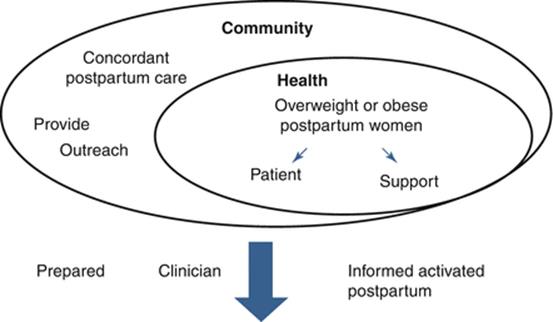
Figure 8.2
The Chronic Care Model applied to postpartum care for women at risk for long-term obesity and development of chronic disease
Postpartum weight retention or weight gain is major problem that has received scant attention. Additional efforts are needed to design and test interventions that are readily scalable, able to be implemented in a variety of institutional settings (e.g., perinatal programs, large clinics, HMOs), and applicable to overweight or obesity postpartum women and easily accessible.
References
1.
Setse R, Grogan R, Cooper LA, Strobino D, Powe NR, Nicholson W. Weight loss programs for urban-based, postpartum African-American women: perceived barriers and preferred components. Matern Child Health J. 2008;12(1):119–27.PubMed
2.
Flegal KM, Carroll MD, Kit BK, Ogden CL. Prevalence of obesity and trends in the distribution of body mass index among US adults, 1999–2010. JAMA. 2012;307(5):491–7.PubMed
3.
Gunderson EP, Abrams B, Selvin S. The relative importance of gestational gain and maternal characteristics associated with the risk of becoming overweight after pregnancy. Int J Obes Relat Metab Disord. 2000;24(12):1660–8.PubMed
4.
Gore SA, Brown DM, West DS. The role of postpartum weight retention in obesity among women: a review of the evidence. Ann Behav Med. 2003;26(2):149–59.PubMed
5.
Ratner RE, Christophi CA, Metzger BE, Dabelea D, Bennett PH, Pi-Sunyer X, Fowler S, Kahn SE. Prevention of diabetes in women with a history of gestational diabetes: effects of metformin and lifestyle interventions. J Clin Endocrinol Metab. 2008;93(12):4774–9.PubMed
6.
Appel LJ, Champagne CM, Harsha DW, Cooper LS, Obarzanek E, Elmer PJ, Stevens VJ, Vollmer WM, Lin PH, Svetkey LP, Stedman SW, Young DR. Effect of comprehensive lifestyle modification on blood pressure control: main results of the PREMIER clinical trial. JAMA. 2003;289:2083–93.PubMed
7.
Howell EA. Lack of patient preparation for the postpartum period and patients’ satisfaction with their obstetric clinicians. Obstet Gynecol. 2010;115(2 Pt 1):284–9.PubMed
8.
Martin A, Horowitz C, Balbierz A, Howell EA. Views of women and clinicians on postpartum preparation and recovery. Matern Child Health J. 2013. [Epub ahead of print].
9.
Ostbye T, Krause KM, Brouwer RJ, Lovelady CA, Morey MC, Bastian LA, Peterson BL, Swamy GK, Chowdhary J, McBride CM. Active Mothers Postpartum (AMP): rationale, design, and baseline characteristics. J Womens Health (Larchmt). 2008;17(10):1567–75.
10.
Information for health professionals on preconception and interconception care, Center for Disease Control and Prevention. http://www.cdc.gov/preconception/hcp/recommendations.html. Accessed on 24 Sep 2013.
11.
Rooney BL, Schauberger CW, Mathiason MA. Impact of perinatal weight change on long-term obesity and obesity-related illnesses. Obstet Gynecol. 2005;106(6):1349–56.PubMed
12.
Kral JG. Preventing and treating obesity in girls and young women to curb the epidemic. Obes Res. 2004;12(10):1539–46.PubMed
13.
Gunderson EP, Murtaugh MA, Lewis CE, Quesenberry CP, West DS, Sidney S. Excess gains in weight and waist circumference associated with childbearing: the Coronary Artery Risk Development in Young Adults Study (CARDIA). Int J Obes Relat Metab Disord. 2004;28(4):525–35.PubMed
14.
Smith DE, Lewis CE, Caveny JL, Perkins LL, Burke GL, Bild DE. Longitudinal changes in adiposity associated with pregnancy. The CARDIA Study. Coronary Artery Risk Development in Young Adults Study. JAMA. 1994;271(22):1747–51.PubMed
15.
McBride CM, Emmons KM, Lipkus IM. Understanding the potential of teachable moments: the case of smoking cessation. Health Educ Res. 2003;18(2):156–70.PubMed
16.
Weir S, Posner HE, Zhang J, Willis G, Baxter JD, Clark RE. Predictors of prenatal and postpartum care adequacy in a medicaid managed care population. Womens Health Issues. 2011;21(4):277–85.PubMed
17.
Practice ACO. ACOG Committee opinion. Number 267, January 2002: exercise during pregnancy and the postpartum period. Obstet Gynecol. 2002;99(1):171–3.
18.
ACOG Resource Guide-Nutrition and Physical Activity to Address Overweight and Obesity. http://www.acog.org/About_ACOG/ACOG_Departments/Health_Care_for_Underserved_Women/Resource_Guide_-_Nutrition_and_Physical_Activity. Accessed on 24 Sep 2013.
19.
Davies GA, Wolfe LA, Mottola MF, MacKinnon C. Joint SOGC/CSEP clinical practice guideline: exercise in pregnancy and the postpartum period. Can J Appl Physiol. 2003;28:330–41.PubMed
20.
Excellence National Institute for Health and Clinical. Weight management before, during and after pregnancy. London: National Institute for Health and Clinical Excellence; 2010.
21.
Nelson TL, Hunt KJ, Rosamond WD, Ammerman AS, Keyserling TC, Mokdad AH, Will JC. Obesity and associated coronary heart disease risk factors in a population of low-income African-American and white women: the North Carolina WISEWOMAN project. Prev Med. 2002;35(1):1–6.PubMed
22.
Ratner RE, Christophi CA, Metzger BE, Dabelea D, Bennett PH, Pi-Sunyer X, Fowler S, Kahn SE, Diabetes Prevention Program Research G. Prevention of diabetes in women with a history of gestational diabetes: effects of metformin and lifestyle interventions. J Clin Endocrinol Metab. 2008;93(12):4774–9.PubMed
23.
Zourladani A, Tsaloglidou A, Tzetzis G, Tsorbatzoudis C, Matziari C. The effect of a low impact exercise training programme on the well-being of Greek postpartum women: a randomised controlled trial. Int SportMed J. 2001;12(1):30–8. %O The effect of a low impact exercise training programme on the well-being of Greek postpartum women: A randomised controlled trial %O 1528–3356 %O 2011243572. Language: English. Entry Date: 2020110923. Revision Date: 2020111007. Publication Type: journal article.
24.
Atkins D, Best D, Briss PA, Eccles M, Falck-Ytter Y, Flottorp S, Guyatt GH, Harbour RT, Haugh MC, Henry D, Hill S, Jaeschke R, Leng G, Liberati A, Magrini N, Mason J, Middleton P, Mrukowicz J, O’Connell D, Oxman AD, Phillips B, Schünemann HJ, Edejer T, Varonen H, Vist GE, Williams Jr JW, Zaza S. Grading quality of evidence and strength of recommendations. BMJ. 2004;328(7454):1490.PubMed
25.
Krummel D, Semmens E, MacBride AM, Fisher B. Lessons learned from the mothers’ overweight management study in 4 West Virginia WIC offices. Women, Infants, and Children. Journal of Nutrition Education & Behavior. 2010;42(3S):S52–58.
26.
Dewey KG, Cohen RJ, Brown KH, Rivera LL. Effects of exclusive breastfeeding for four versus six months on maternal nutritional status and infant motor development: results of two randomized trials in Honduras. J Nutr. 2001;131(2):262–7.PubMed
27.
Dewey KG, Lovelady CA, Nommsen-Rivers LA, McCory MA, Lonnerdal B. A randomized study of the effects of aerobic exercise by lactating women on breast-milk volume and composition. N Engl J Med. 1994;330:449–53.PubMed
28.
Maturi SM, Afshary P, Abedi P. Effect of physical activity intervention based on a pedometer on physical activity level and anthropometric measures after childbirth: a randomized controlled trial. BMC Pregnancy Childbirth. 2011;11(10):103.PubMed
29.
Ostbye T, Krause KM, Lovelady CA, Morey MC, Bastian LA, Peterson BL, Swamy GK, Brouwer RJN, McBride CM. Active Mothers Postpartum. A randomized controlled weight-loss intervention trial. Am J Prev Med. 2009;37(3):173.PubMed
30.
Lovelady CA, Garner K, Moreno KL, Williams JP. The effect of weight loss in overweight, lactating women on the growth of their infants. N Engl J Med. 2000;342:449–5.PubMed
31.
Huang TT, Yeh C, Tsai YC. A diet and physical activity intervention for preventing weight retention among Taiwanese childbearing women: a randomized controlled trial. Midwifery. 2011;27(2):257–64.PubMed
32.
Craigie AM, Macleod M, Barton KL, Treweek S, Anderson AS. Supporting postpartum weight loss in women living in deprived communities: design implications for a randomized control trial. Eur J Clin Nutr. 2011;65:952–8.PubMed
33.
O’Toole ML, Sawicki MA, Artal R. Structured diet and physical activity prevent postpartum weight retention. J Womens Health (Larchmt). 2003;12(10):991–8.
34.
Leermakers EA, Anglin K, Wing RR. Reducing postpartum weight retention through a correspondence intervention. Int J Obes Relat Metab Disord. 1998;22:1103–9.PubMed
35.
Davenport MH, Giroux I, Sopper MM, Mottola MF. Postpartum exercise regardless of intensity improves chronic disease risk factors. Med Sci Sports Exerc. 2011;43(6):951–8.PubMed
36.
Lovelady CA, Nommsen-Rivers LA, McCrory MA, Dewey KG. Effects of exercise on plasma lipids and metabolism of lactating women. Med Sci Sports Exerc. 1995;27(1):22–8.PubMed
37.
https://portal.bsc.gwu.edu/web/lifemoms.
38.
Stuckey HL, Dellasega C, Graber NJ, Mauger DT, Lendel I, Gabbay RA. Diabetes nurse case management and motivational interviewing for change (DYNAMIC): study design and baseline characteristics in the Chronic Care Model for type 2 diabetes. Contemp Clin Trials. 2009;30(4):366–74.PubMed
39.
Barr VJ, Robinson S, Marin-Link B, Underhill L, Dotts A, Ravensdale D, Salivaras S. The expanded Chronic Care Model: an integration of concepts and strategies from population health promotion and the Chronic Care Model. Hosp Q. 2003;7(1):73–82.PubMed