
Shlomo Raz1
(1)
Division of Pelvic Medicine and Reconstructive Surgery, UCLA School of Medicine, Los Angeles, CA, USA
Electronic supplementary material
The online version of this chapter (doi:10.1007/978-1-4939-2941-2_9) contains supplementary material, which is available to authorized users.
Keywords
BleedingInfectionObstructionBladder or urethral erosionPelvic painFistulaProlapseIncontinence
Vaginal surgery complications can at times be difficult to manage. Clearly the best management scheme entails steps to prevent complications. These steps require judicious preoperative planning with detailed knowledge of the patient’s case, operative anatomy, surgical indications, and expectations, as well as prudent use of preoperative diagnostic testing. This kind of preparation facilitates better recognition of intraoperative complications and consequent expeditious treatment.
Proper identification of the intraoperative complication, with thorough knowledge of the surgical principles of repair, will help to prevent late complications or adverse outcomes. Delay in operative management will only prolong the problem and may result in longer hospitalization and greater patient discomfort, cost, and inconvenience.
A thorough preoperative evaluation will assist in outlining the best surgical approach and properly identifying optimal surgical candidates. Depending on the pathology to be treated, one can tailor the preoperative approach accordingly.
The identification and management of many important complications of vaginal surgery are discussed in this chapter:
· Bleeding
· Infection
· Bladder injury (perforation)
· Urethral injury
· Ureteric injury
· Bowel/rectal injury
· Neurologic injury
· Pelvic pain, mesh exposure or extrusion
· Recurrent prolapse
· De novo urgency incontinence
· Urinary outlet obstruction
· Vaginal narrowing/stenosis
· Recurrent stress incontinence
· Pelvic pain, dyspareunia
9.1 Bleeding
Most cases of bleeding during transvaginal surgery are self-corrected. Clearly, patients at risk for bleeding complications (such as those using aspirin, NSAIDs, or warfarin and those who have a history of a bleeding diathesis) should be screened and the risk possibly corrected prior to surgery. Nonetheless, significant bleeding can be encountered intraoperatively, especially if one dissects into the wrong tissue planes or structures. Bleeding encountered intraoperatively can be controlled with judicious use of electrocoagulation, suture ligatures, or both. These techniques should be performed cautiously if done in the anterior vaginal wall or retropubic space, in order to avoid ureteric injury. Most cases of mild bleeding subside with packing or placement of a tampon. Alternatively, intravaginal inflation of a Foley catheter with 50–60 mL of water can help tamponade bleeding (Fig. 9.1). If bleeding becomes severe or the patient becomes unstable, the source of bleeding may be extraperitoneal or retroperitoneal (Fig. 9.2). Appropriate resuscitative measures should be taken in these cases. Persistent or postoperative bleeding may require re-exploration or even a laparotomy. If the bleeding area cannot be identified, one may consider selective angioembolization or, if necessary, bilateral hypogastric artery ligation.

Fig. 9.1
In cases of persistent vaginal bleeding after surgery, the insertion of the Foley catheter behind a vaginal packing can provide further control of the bleeding

Fig. 9.2
MRI was done for pain occurring immediately after insertion of an obturator sling. The image shows a hematoma (arrow) in the left obturator fossa. The hematoma expanded, requiring surgical drainage
9.2 Infection
As bacteria potentially contaminate the vagina, it is a frequent site of infections in the postoperative period. These infections can be avoided with judicious use of broad-spectrum antibiotics administered perioperatively, along with a careful and thorough vaginal preparation and scrub prior to incision, along with proper draping of the surgical field so that the rectum/anus is out of the area of the operation. Additionally, preoperative urine culture and sensitivity testing may be indicated in patients at risk for recurrent urinary tract infections (UTIs) or those with abnormal urinalyses (e.g., presence of leukocytes, nitrites, or blood). Prevention again is key to helping avoid complications in the postoperative period.
Infections may affect the vaginal incision areas, suprapubic incisions, retropubic spaces, or urinary tract. Incisional infections or vaginal cuff infections occur more commonly after hysterectomy and may result from retained secretions or inadequate cleansing of the vaginal apex. Nonetheless, these infections may drain spontaneously or require antibiotics and daily gentle digital examination of the vagina. Prevention of this complication requires thorough cleansing of the entire vagina prior to surgery and during closure of the cuff and avoidance of dead space, where fluid and bacteria may collect. Retropubic infections may occur from similar mechanisms and may require drainage by interventional radiology or rarely open drainage and antibiotic irrigation and insertion of a Penrose of other drains type to ensure that the collection resolves. Suprapubic infections and infected sutures may occur if bacteria become entrapped and are transferred to the suprapubic incision. Again, copious antiseptic irrigation helps to avoid this problem, as do preoperative antibiotics. If this area becomes infected, one must judge whether the infection requires open drainage or simply antibiotics. Additionally, if the sutures are painful, they may be infected and can be removed suprapubically. Often, there may be sufficient scar formation inferiorly to provide adequate bladder neck support despite removal of the suspending sutures. Erosion from suture or synthetic material in the vagina leads to vaginal drainage, bleeding, and pain, and these materials usually must be removed (Figs. 9.3 and 9.4).

Fig. 9.3
Chronic sinus tract and recurrent abscess of the inner thigh after an obturator sling. The sling was removed by a combined groin and vaginal approach, correcting the problem

Fig. 9.4
CT scan of a patient admitted with high fever, pain, and inability to walk after an obturator sling. The scan showed diffuse inflammatory changes and a pelvic abscess. The collection was drained and the mesh was removed after resolution of the infection
UTIs may cause an exacerbation of incontinence symptoms after the catheters are removed, so one must always realize that an infection may be present in the setting of postoperative incontinence or urge symptoms. Postoperative antibiotics are not required but the avoidance of long-term urethral Foley catheters help to reduce the incidence of UTIs. We try to use suprapubic catheters in the postoperative period, as they lessen the likelihood of bacterial contamination of the urinary tract. Rarely, the cystitis may result in a pyelonephritis, requiring hospitalization and intravenous antibiotics.
9.3 Bladder Injury (Perforation)
Injuries to the bladder may occur during dissection of the vaginal wall off of the underlying perivesical fascia or during suture or trocar passage in patients with slings or cystocele repairs. The urethral Foley allows palpation of the urethra and bladder neck. The catheters are plugged during surgery, so if bladder entry occurs, one may notice urine extravasating into the operative field. Any blood in the urine should be considered suspicious of bladder or urethral injury. In the course of dissecting tissue flaps of vaginal wall off of the perivesical fascia, one must stay very superficial in the dissection on the side of the wall in order to prevent bladder entry. Another area in which bladder injury may occur is during entry into the retropubic space. If the retropubic space is entered, using curved Mayo scissors and keeping them pointed directly superior and parallel to the urethra at the level of the distal urethra should prevent bladder injury.
Bladder perforations are not rare when blind passage of trocars is used. They may occur when using trocars to transfer mesh from the suprapubic area to the vagina (SPARC procedure) or from the vagina to the suprapubic area (TVT procedure). Cystoscopy is mandatory in these cases. Unless a large perforation occurred, the trocar can be reinserted lateral to the area of the perforation. When bladder entry is suspected, instillation of indigo carmine dye into the Foley catheter can be helpful in identifying the entry site and subsequently confirming the repair. Lack of recognition of an intraoperative bladder injury can lead to a vesicovaginal fistula (Figs. 9.5 and 9.6) or the presence of mesh in the bladder.

Fig. 9.5
Cystogram of a patient 1 month after cystocele repair with mesh. The study shows extravasation of contrast into the vagina through a vesicovaginal fistula

Fig. 9.6
Examination of the vaginal wall shows localized inflammatory changes, eroded mesh and the fistula of the anterior vaginal wall. A catheter was inserted in the fistula prior to surgery
Suture perforation of the bladder may occur in the course of transvaginal surgery and incontinence procedures (Fig. 9.7). It may be easily identified with the use of intraoperative cystoscopy and should rarely be problematic. If one discovers a bladder entry, the sutures are simply removed. Other important steps in the prevention of bladder entry at this time include emptying the bladder of accumulated urine prior to retropubic space dissection and proper entry in the lateral fornix and not through the levator fascia laterally or too medially into the bladder.

Fig. 9.7
Cystoscopy of a patient suffering from frequency, urgency, and urinary infections after placement of an autologous fascial sling supported by nonabsorbable sutures. The sutures have perforated the bladder. Endoscopic incision and excision of the sutures was performed
If a bladder entry is encountered, a multilayer repair using absorbable sutures is recommended. The initial layer reapproximates the mucosal surface with fine absorbable sutures, and the outer layer (perivesical fascia) is closed with interrupted absorbable sutures. Cystoscopy is performed, and indigo carmine may be instilled through the catheter to ensure a watertight closure. If ureteric injury is contemplated, intravenous indigo carmine dye is administered and visualized cystoscopically from each ureteric orifice. Extensive bladder injury may require the use of a fibro-fatty labial flap (Martius flap) as an added layer of protection from future fistula formation. Finally, the vaginal epithelium is advanced over the repair in such a way that none of the suture lines are overlapping. Long-term catheter drainage is required for at least 1 week, and a voiding cystourethrogram should be performed to confirm healing and absence of extravasation.
Perforations unrecognized at the time of surgery can result in erosion of mesh into the bladder (Figs. 9.8, 9.9, and 9.10). Mesh is not migrating into the bladder. Mesh in the bladder is due to an unrecognized perforation at the time of surgery.

Fig. 9.8
This plain pelvic X-ray of a patient after a retropubic sling procedure shows a bladder calcification (arrow). Endoscopy confirms the presence of a fixed bladder stone. The mesh and the stone in the bladder were removed

Fig. 9.9
(a) Cystoscopy of a patient with recurrent urinary infection and pelvic pain after placement of retropubic mesh. The mesh has eroded the urethra (arrows). It was totally removed transvaginally (including a partial cystectomy), and a Martius flap was used to cover the defect. (b) Open bladder at the time of exploration showing a segment of mesh eroded into the bladder wall. There are multiple stones on the mesh (arrows). All the mesh was removed by a transvaginal and open bladder removal. (c) Cystoscopy finding of mesh (arrow) on the left lateral bladder wall 3 months after a retropubic mesh insertion for urinary incontinence. (d) Cystoscopy of a patient with complications of a retropubic mesh insertion. The mesh has eroded the bladder wall, requiring open removal

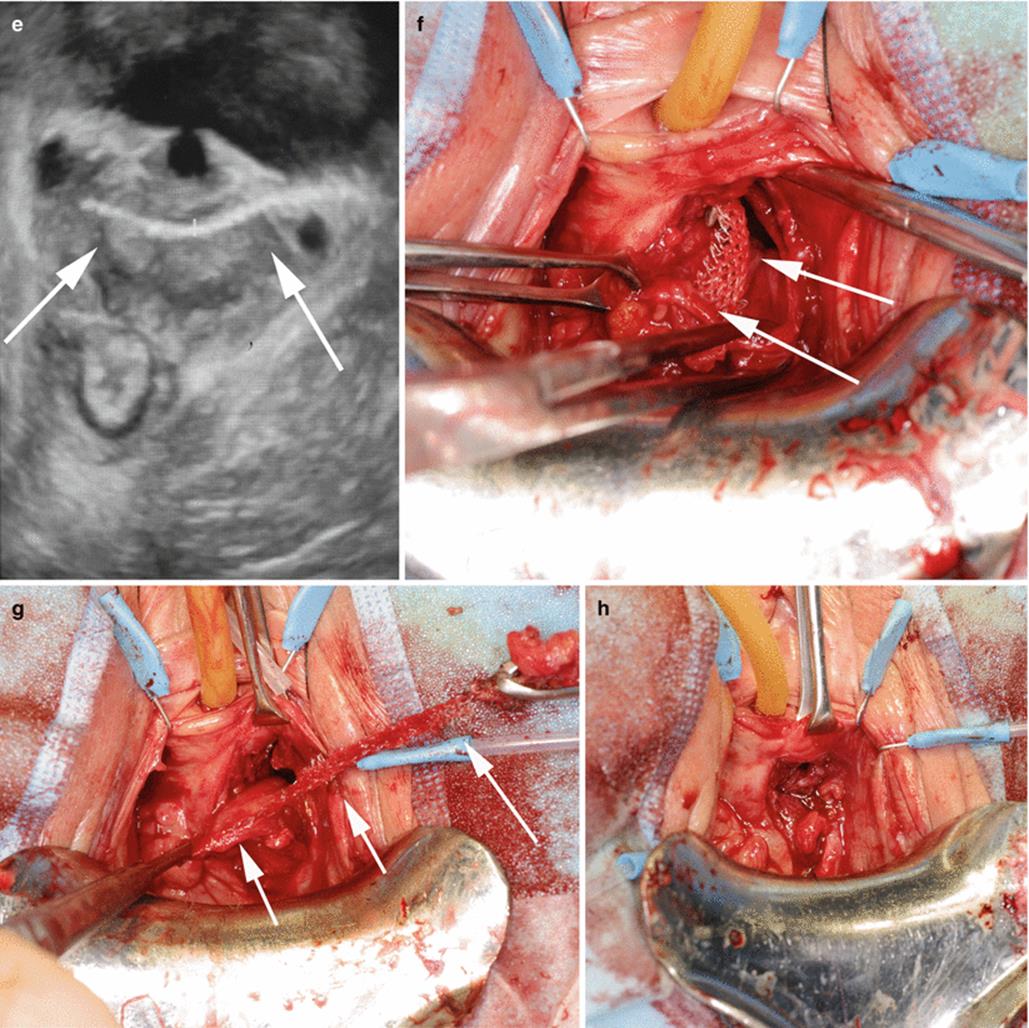
Fig. 9.10
(a) Cystoscopy of a patient with frequency, urgency, pain, hematuria, and recurrent urinary infection after insertion of an anterior vaginal wall mesh. The mesh traversed the bladder from the trigone to the right lateral bladder wall. (b) Exposure of the anterior vaginal wall is obtained and the mesh is dissected from the trigone. A ureteric stent was inserted in the right ureter. The bladder was opened and the mesh was excised from the bladder wall. (c) The bladder is closed in layers. An in situ Martius (arrow), a flap is created and rotated to cover the area of surgery. A retropubic flat drain is inseted (arrow). (d) A flap of the anterior vaginal wall is advanced to cover the area of the reconstruction. (e) Translabial ultrasound in a patient complaining of pelvic pain, urinary infections, and hematuria after insertion of a retropubic mesh. The arrows outline the periurethral mesh. (f) Cystoscopy revealed that the mesh has eroded the left half of the bladder wall. Transvaginal exploration of the left perivesical space is performed, the bladder is opened, and the eroded mesh is exposed (arrow). (g) Suprapubic exploration is performed, and the mesh is transferred through the retropubic space from the abdominal to the vaginal incision (arrow). A transvaginal partial cystectomy is performed because of the extent of the inflammatory changes and stones. The bladder is irrigated with diluted indigo carmine to ensure integrity of the closure. (h) The bladder wall is closed in two layers, and a Martius flap from the left labium is rotated to the left retropubic space
9.4 Urethral Injury
Intraoperative injuries to the urethra should be an infrequent occurrence because it is easily identifiable with a Foley catheter in place. One must stay lateral and superficial to the periurethral fascia in all dissections. Similar to avoiding bladder injury, if entry into the retropubic space is necessary, it should be done lateral to these structures. Too medial an entry can risk urethral injury, but this injury should still be infrequent. If injury does occur in the course of dissection, immediate repair should be undertaken in order to properly orient the anatomic layers and prevent postoperative fistula, stricture, or diverticula. Interrupted or running sutures of fine absorbable material should be used to close the mucosal defect. A separate, interrupted layer of absorbable suture should be placed to reapproximate the periurethral fascia in such a way as to avoid overlapping suture lines. The vaginal wall should be advanced over the repair, again avoiding overlapping suture lines. Large entries can also be closed with the assistance of a fibro-fatty Martius flap graft prior to epithelial closure.
Injury to the urethra may be discovered in the postoperative period. When a patient presents with persistent loss of urine despite restoration of normal anatomy and no objective demonstration of urethral incontinence, the surgeon should also consider the possibility of an iatrogenic ureterovaginal, vesicovaginal, or urethrovaginal fistula. This may occur as a result of an unrecognized intraoperative complication, postoperative infection, or ischemic necrosis of the pelvic tissues, especially in patients with poorly estrogenized tissues or previous radiotherapy. Voiding cystourethrogram is helpful in confirming this diagnosis.
Sling erosions are occurring with greater frequency with the increasing use of synthetic substances in vaginal sling surgery. One must be cognizant of the issues related to synthetics: the body may reject the tissue, the sling may become infected, or both. The symptoms, which may vary from patient to patient, are often pain with voiding, frequency, vaginal discharge, and dyspareunia.
We have abandoned the use of synthetic mesh in vaginal surgery. Although they provide a better immediate outcome than other procedures, long-term complications (even 5–10 years later) are a concern, as 5–10 % of patients will develop erosions, pelvic pain, and dyspareunia. Proper management once sling erosion is identified entails careful transvaginal excision of the sling, which may be infected. The sling may have eroded into the urethral wall, so optimal repair may require urethral reconstruction with or without interposition of flaps (Figs. 9.11, 9.12, 9.13, and 9.14).

Fig. 9.11
(a) Voiding cystogram of a patient after an obturator mesh insertion. The patient complains of obstructive symptoms, pain, and urinary infections. The study shows deformity and narrowing of the midurethra (arrow). (b) Cystoscopy of the patient, showing urethral erosion due to mesh (arrows). (c) An anterior vaginal wall flap was created. The periurethral fascia is opened horizontally and the urethral wall is opened. (d) The mesh is isolated and totally excised. The urethral wall was reconstructed, and the periurethral fascia was approximated horizontally. A Martius flap was rotated to cover the defect and the vaginal wall advanced to cover the area of reconstruction


Fig. 9.12
(a) Cystoscopy of a patient with pain, infection, and dyspareunia after a retropubic sling. The mesh is seen to be eroded at the bladder neck. (b) The anterior vaginal wall was exposed. The mesh is dissected from the periurethral fascia. (c) The retropubic space was entered and the mesh removed from the urethral wall. All the mesh was removed by vaginal and suprapubic exploration. The two areas of erosion are closed in layers, and a Martius flap was used to cover the area of reconstruction. Arrows indicate the area of urethral erosion at each side of the urethra. (d) Plain pelvic X-ray of a patient with recurrent urinary tract infection 1 year after the insertion of a MiniArc™ Single-Incision Sling (AMS, Minnetonka, MN). A triangular calcification (arrow) represents the mesh anchor in the bladder. (e) Sagittal cuts of translabial ultrasound show mesh (arrow) in the bladder. (f) Tridimensional reconstruction of the translabial ultrasound shows the penetration of the mesh in the bladder neck area (arrow). (g) Cystoscopy showing the end segment of the mesh sling in the bladder lumen. The mesh did not migrate; rather, it was not recognized at the time of surgery. (h) The sling is removed from the bladder neck after removal of the right side of the mesh from the obturator fossa on the right. The mesh anchor removed from the bladder is held by a forceps. (i) After the removal of the mesh, the fistula at the bladder neck is seen. (j) The fistula is closed in layers. Irrigation of the bladder with diluted indigo carmine shows no extravasations. (k) A Martius flap from the left labium is prepared and will be rotated and transferred to the vaginal area. (l) The Martius flap has been transferred and covers the area of reconstruction. (m) The flap of the anterior vaginal wall created at the time of the initial incision is advanced distally to cover the area of the Martius flap

Fig. 9.13
(a) In a patient with constant and stress leakage of urine after a retropubic sling, a bladder neck fistula is seen, with mesh exposure on the margin of the fistula (arrow). (b) A superior and inferior flap of the vaginal wall was developed to isolate the fistula. A Foley catheter is inserted into the tract to facilitate the dissection. All the mesh is removed. (c) The fistulous tract is closed in two layers. The first layer includes the whole fistulous tract, and the second layer includes the periurethral fascia to cover the area of the closure. The bladder is irrigated with diluted indigo carmine solution to confirm closure of the fistula. (d) An in situ Martius flap (arrow) is brought from the right labium to cover the area of reconstruction. The anterior vaginal flap will be advanced distally, providing new vaginal tissue covering the repair. Arrow indicates the Martius flap covering the area of the reconstruction

Fig. 9.14
(a) Surgical findings in a patient with urinary retention after a retropubic sling. Exploration of the anterior vaginal wall was performed. An inverted U flap was developed. A transverse incision of the periurethral fascia was performed and superior and inferior flaps are developed. The mesh has perforated the urethra (arrow). (b) The mesh has been removed after a vaginal and suprapubic exploration. A large urethral defect is seen. (c) An end-to-end anastomosis of the urethra is performed after mobilization of the margins of the urethra. (d) The periurethral fascia (arrows) is advanced distally to cover the area of the reconstruction. (e) Interrupted figure-of-eight sutures are applied to the periurethral fascia from the inferior to the distal margins, covering the urethral repair. (f) An in situ Martius flap of the left labium is developed. (g) The Martius flap (arrows) has been mobilized and rotated to cover the urethra. (h) The anterior vaginal flap is advanced distally to cover the Martius flap, providing new vaginal tissue to cover the area of reconstruction
9.5 Ureteric Injury
Ureteric injuries occur in 0.3–3 % of patients undergoing gynecologic surgery. Over two thirds of these injuries occur during the course of transabdominal surgery, however, so ureteric complications of transvaginal surgery are fortunately rare. The chances of ureteric injury increase if the patient has had previous pelvic surgery or a history of fibrosis and adhesions after transabdominal surgery. Proper preoperative planning may allow the placement of a stent if there is a concern about possible injury.
Ureteric injuries in the course of transvaginal surgery can be prevented in several ways. During sling surgery and entry into the retropubic space, as previously outlined, ensuring that entry is distal to the level of the bladder neck and not more proximal on the bladder reduces the chances of ureteric injury. More commonly, injury occurs during the placement of sutures or mesh over the perivesical fascia during cystocele repairs. One can avoid the ureters by careful and superficial placement of the sutures after reducing the trigone and elevating the base of the bladder with gentle retraction. Deep dissection of the vaginal wall during placement of anterior mesh may perforate the bladder but affect the ureters. Placement of mesh over a very thin perivesical fascia may lead to late erosions and ureteric obstruction. Intravenous administration of indigo carmine dye ensures patency of the ureters if dye is seen effluxing from the orifice; seeing blood or a lack of dye efflux should alert one to the possibility of ureteric injury.
The usual management is repositioning of the sutures and repeated cystoscopic examination. If the injury is detected late (i.e., postoperatively), proper drainage is achieved via placement of an endoscopic stent or percutaneous nephrostomy tube. If the ureter fails to resume patency with these measures, operative correction with a ureteric reimplant is undertaken after a prudent period of observation (Figs. 9.15and 9.16).

Fig. 9.15
(a) A patient presents with low-grade constant leakage of urine from the vagina after a vaginal hysterectomy and cystocele repair. There is no stress incontinence on examination. The patient was given phenazopyridine (Pyridium) for 24 h prior to the examination. When the bladder was filled with diluted indigo carmine, no blue dye was seen on a pad test, but the gauze was stained with orange dye at the proximal part (arrow). The cystoscopy was normal. (b) A CT urogram reveals normal, bilateral functioning kidneys without hydronephrosis. In patients with ureteric fistula without obstruction, the ureter involved is not hydronephrotic. Arrow indicates the area of the extravasation of contrast into the vaginal cuff. (c) Extravasation of contrast is seen in the vaginal cuff area, confirming the presence of a ureterovaginal fistula. (d) A Boari flap and a 4-cm tunnel were created to reimplant the ureter (arrow)

Fig. 9.16
(a) CT urogram of a patient complaining of left flank pain and urinary leakage per vagina after a vaginal hysterectomy and cystocele repair. There is severe hydronephrosis of the left kidney. The cystoscopy and the cystogram were normal. (b) Retrograde ureteric imaging was attempted. The left ureter was totally obstructed. Multiple attempts to pass a stent or guide wire were not successful. The diagnosis was made of left ureteric obstruction (arrow) and ureteric fistula. (c) A Boari flap and a stented left ureteric reimplantation were performed. (d) The Boari flap is made into a tube (arrow) and the bladder is closed. A suprapubic and urethral catheter will drain the bladder for 3 weeks
9.6 Bowel and Rectal Injury
Rectal and bowel injury should be an uncommon complication, but when injury does occur, it must be approached seriously (Figs. 9.17 and 9.18). Steps to avoid intraoperative bowel complications include good preoperative bowel preparation and proper intraoperative identification of the bowel to prevent its injury. In the course of rectocele repairs, one should stay very superficial in the dissection of the vaginal wall off of the prerectal fascia. Enterocele repairs also may be complicated by bowel injury, but careful packing of the intra-abdominal contents with a laparotomy pack will reduce the incidence of injury.

Fig. 9.17
(a) View of the lower abdomen of a patient suffering from an enterocutaneous fistula after placement of a retropubic sling (arrow). She had had prior abdominal surgeries, including hysterectomy. Abdominal exploration revealed that the mesh was placed in the middle of a small bowel segment. The mesh was removed and a small bowel resection was performed. (b) View of the posterior vaginal wall in a patient with a rectovaginal fistula (arrow) after posterior repair with mesh. The fistula was repaired by removing the mesh and repairing the rectal defect in layers, including a Martius flap. More details on the surgical technique to repair a rectovaginal fistula are described in Chap. 5. (c) Colonoscopy was performed on this patient suffering from pelvic pain and vaginal and rectal bleeding after the insertion of a posterior mesh. The mesh has traversed the left lateral wall and the lumen of the rectum (arrow), causing severe inflammatory changes (arrows) in the left posterior perirectal and vaginal areas. Arrowsindicate the finding at the time of colonoscopy showing the eroded mesh. (d) Exploration of the posterior vaginal wall was performed, and the whole posterior mesh (including the rectal mesh) was removed. Shown is a segment of the mesh removed from the rectum. (e) The defect in the left lateral rectal wall is seen (arrow). A finger in the rectum demonstrates the defect. (f) The rectal wall and the posterior vaginal wall were repaired in layers. A loop colostomy was performed, owing to the extent of the defect and the inflammatory changes in the lateral posterior pelvis

Fig. 9.18
(a) Lateral cystogram of a patient after a retropubic sling, with recurrent infection and stool matter in the urine. The patient had multiple prior abdominal surgeries. The cystogram shows a vesicoenteric fistula (arrow) with dye entering the colon. (b) Exploration of the abdomen shows the communication of the bowel to the bladder, where the mesh was found traversing the area (arrow). The mesh was removed entirely. (c) The bladder was opened and a circular segment of the bladder with the fistulous tract was excised and left on the colonic wall. (d) The bladder was closed in layers. The fistulous tract is seen over the colonic wall. No bowel resection was performed. (e) The fistulous tract is partially excised and was sutured in layers, without opening the colonic wall. (f) The serosa of the colon and the fatty tissue of the mesocolon are used to cover the area of reconstruction
When bowel injury occurs, one must decide on the nature of the injury prior to deciding on therapy. In the event of a clean, small opening in the bowel, transvaginal closure may be performed in a multilayer, watertight fashion. Interposition of fatty tissue or other local tissue adjacent to the closure is wise, as it may help to prevent postoperative fistula formation. Large, extensive lacerations or those contaminated with stool may require colostomy fecal diversion after termination of the vaginal procedure. Rarely, the placement of suprapubic catheters may lead to a bowel fistula.
9.7 Neurologic Injury
Sacrospinous fixation can be complicated by nerve injury, as the pudendal and sciatic nerve branches lies in proximity to the sacrospinous ligament. Clearly, one must maximize exposure with the use of Breisky–Navratil retractors and must palpate the ligament prior to suture placement. Additionally, the suture should be placed through the ligament without incorporating lateral tissue, to decrease the chance of nerve injury. Rarely, sciatic nerve or obturator nerve injury can occur with lateral or extensive retropubic dissection or placement of an obturator mesh.
More commonly, one sees entrapment of the ilioinguinal nerve branches that course immediately lateral to the pubic bone on either side. This entrapment can cause quite disabling, constant suprapubic pain. Therefore, in the course of retropubic procedures, if the transfer of the mesh is done too far laterally over the ilioinguinal nerve, pain may result from nerve entrapment. Ideally, one should stay more medial in the placement of mesh or suspension sutures immediately above the pubic bone, as opposed to laterally.
Proper patient positioning can help avoid complications of peroneal palsy or femoral neuropathy. Gentle positioning with the use of padded lithotomy props and the avoidance of excessive pressure or tension on the lower extremities can prevent problems. Recovery from these injuries is usually spontaneous but may take several weeks to months.
9.8 Pelvic Pain, Mesh Exposure or Extrusion
Pain after a pelvic surgical procedure is a normal occurrence, but pain that continues beyond the normal healing period requires full evaluation. Obstruction, infection, pelvic collection, or bleeding can be all sources of persistent pain. Mesh exposure or extrusion can be present. A physical examination and adequate imaging should diagnose the problem, and steps to correct it should be undertaken (Fig. 9.19).
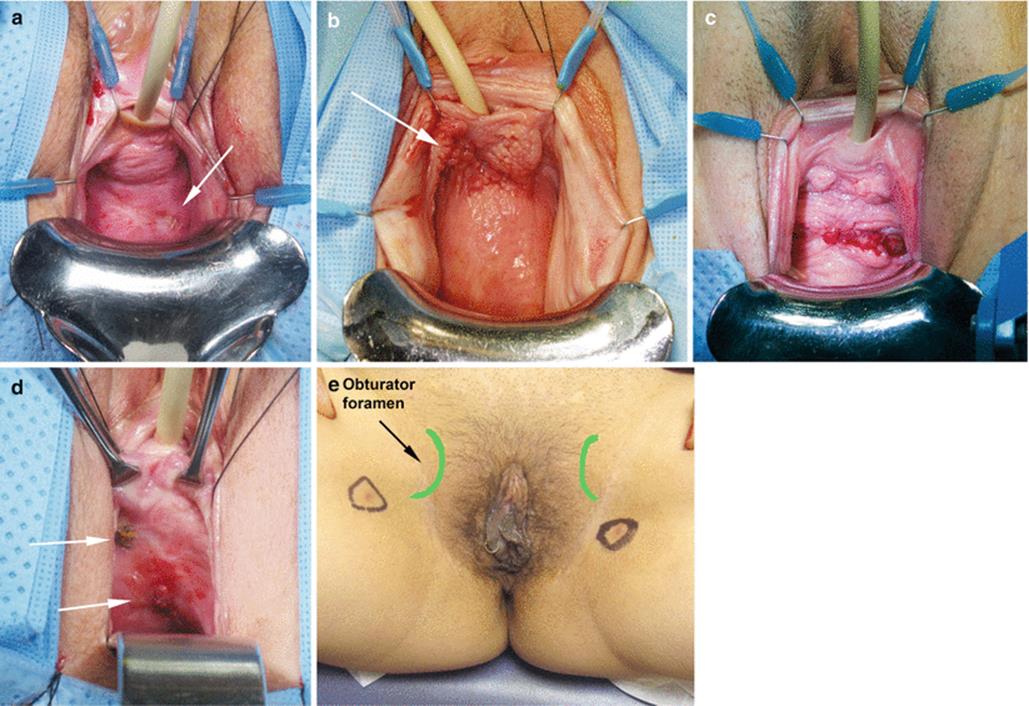
Fig. 9.19
(a) Anterior mesh exposure (arrow) after anterior mesh insertion for cystocele. The patient complained of dyspareunia but not pelvic pain, leg or groin pain, or urinary symptoms. A localized excision of the mesh was performed, with good outcome over 2 years. Estrogen cream was added to the treatment. (b) Anterior vaginal wall exposure of a patient complaining of pelvic pain, dyspareunia, hispareunia, groin and leg pain, and vaginal discharge after an obturator sling insertion. There is an erosion in the right distal vagina (arrow). The mesh was totally removed by exploration of the obturator and adductor fossa. (c) Erosion of the anterior vaginal wall after anterior mesh placement with arms extending to the sacrospinous ligament and paravesical space. The patient complained of back pain, tail bone pain, dyspareunia, vaginal bleeding, and leg pain. An extensive operation was required to remove the whole anterior mesh, with removal of the attachments to the obturator musculature and sacrospinous ligament area. (d) Extensive anterior vaginal wall erosion after anterior mesh placement for cystocele and vault prolapse. There is extensive infiltration and erosion of the anterior vaginal wall toward the cuff. The vaginal wall is atrophic and thin from prior explorations and attempted mesh removal. The whole anterior mesh, including the arms, was removed. A rotational flap of the vaginal cuff and posterior vaginal wall was required in order to cover the large anterior vaginal defect after the mesh removal. Arrows indicate areas of mesh erosion into the anterior vaginal wall. (e) This patient complained of significant groin, hip, and leg pain after obturator sling surgery for stress incontinence. The point of entrance of the trocars was found to be far lateral and inferior from the normal location next to the inner descending pubic rami. Removal of the mesh resulted in a cure of the pelvic pain
With the extensive the use of mesh in the past 15 years, the incidence of vaginal exposure has increased greatly. The exposure can appear early after surgery or as late as 5–10 years afterward. The mesh exposure can be asymptomatic, but many times it is accompanied by pelvic pain, groin and suprapubic pain, hip pain, and dyspareunia. Urinary frequency, urgency, stress and urgency incontinence, and defecatory dysfunction can be present. The etiology of mesh exposure is unclear. Factors involved can be suture separation, chronic mesh infection, vaginal atrophy, and superficial placement of the mesh on the vaginal wall. As with other implants, it is possible that a biofilm is formed on the mesh, explaining the delayed appearance of symptoms.
Simple mesh exposure without urinary or bowel symptoms can be excised and new vaginal wall used to cover the area. When mesh exposure is accompanied by significant pelvic, groin, or suprapubic pain, however, it is our experience that a segmental removal of the mesh will not improve the symptoms. These patients require a total removal of the mesh. Retropubic mesh removal requires a vaginal exploration, division of the mesh into two segments, separation of the mesh from the periurethral tissues, and entrance into the retropubic space and dissection of the mesh free from the bladder, levator, and obturator muscles and the posterior aspect of the pubic bone. A combined suprapubic exploration is done to entirely remove the mesh. In patients with complications of obturator mesh, the mesh is dissected from the obturator fossa (the obturator internus, membrane, and externus). If the mesh is not a single incision mesh exploration of the mesh should be removed from the adductor fossa as well (gracilis, adductor longus, and brevis).
9.8.1 Removal of Pelvic Mesh: Indications and Preoperative Evaluation
Removal of mesh is indicated after insertion of a sling and anterior or posterior mesh if the patient complains of significant pelvic pain, suprapubic and groin pain, leg pain, obstructed urination or defecation, dyspareunia, vaginal drainage, or extensive vaginal wall erosion. Some patients also present with systemic effects.
The preoperative evaluation consists of a good medical history and a review (if available) of the prior operative report and any prior partial mesh removal. The anterior vaginal wall can be indurated by mesh (intra-epithelial infiltration), or an obvious exposure can be seen and palpated. A rectal examination will detect rectal involvement, found in patients with arms of mesh extending to the sacrospinous ligament. Urine examination and a check of post-void residuals are mandatory. In patients with obstructive symptoms, video urodynamics will help to assess the degree and location of the obstruction and its impact on bladder function. In patient with erosions of the urethra, a filling defect may be present. Cystoscopy is also mandatory to rule out urethral or bladder erosion, as the mesh can be found eroding the urethral wall or the lateral and anterior bladder wall. Stones are not uncommon around mesh.
Translabial ultrasound is the only means to visualize the mesh location, integrity, and proximity to the urethral wall in cases of prior partial removal (Fig. 9.20). Erosion of the mesh in the bladder will also be visualized. The test is done with sagittal, axial, and coronal cuts, as well as in the relax and strain maneuvers. The mesh can be found mobile or fixed. The anterior and posterior meshes are commonly found folded. Tridimensional reconstruction of the urethra and vaginal canal also can be performed.


Fig. 9.20
(a) Sagittal ultrasound view at the midurethral area showing the bladder, the urethra, and the location of a retropubic mesh (arrow) located at the bladder neck. In more than 600 ultrasound studies, fewer than 50 % of midurethral slings have been found in the midurethral area. (b) Coronal cut through the urethra showing the mesh (arrow) at the midurethral area. (c) Axial image in a patient with urethral obstruction and burning after an obturator sling procedure. The mesh (arrows) is deep in the urethral wall but has not eroded into the lumen. (d) Tridimensional reconstruction of a sling (arrows) and its relation to the urethral wall. (e) Axial image of the anterior vaginal wall in a patient with complications of a urethral sling procedure. The patient had a partial mesh removal previously. The image reveals the residual mesh (arrow) in the right periurethral area. (f) Sagittal cuts showing a flat segment of mesh (arrow) covering the anterior bladder wall in a patient with vaginal wall erosion after anterior mesh insertion. (g) Sagittal image of a patient with vaginal wall erosion, pain, and urinary urgency after placement of anterior vaginal wall mesh. The mesh (arrow) is folded and shortened. (h) Sagittal cut of a patient with complications of posterior vaginal mesh. The extent of the mesh is seen anterior to the rectum (arrow)
9.8.2 Removal of Suburethral Segment of Mesh
The patient shown in Fig. 9.21 presented with vaginal wall exposure, vaginal drainage, and dyspareunia after a retropubic sling. There was no pelvic, suprapubic, or leg pain and no incontinence. The patient decided to have only the suburethral segment of the mesh removed in order to preserve continence.

Fig. 9.21
(a) With exposure of the anterior vaginal wall, erosion is seen in the left distal vagina (arrow). (b) An oblique incision is made in the distal left vaginal wall and the mesh is isolated using a fine right-angle clamp. The mesh is transected as it enters the retropubic space. (c) A similar oblique incision has been made in the right side and a transverse incision of the anterior vaginal wall is performed, creating superior and inferior flaps. The mesh is dissected free from the urethra and is transected at the entrance to the retropubic space, in the lateral periurethral area
9.8.3 Removal of Retropubic Mesh
The patient in Fig. 9.22 suffers from suprapubic and groin pain, difficulty in emptying the bladder, and dyspareunia 2 years after a TVT mesh insertion. She was found to have a small exposure on the left distal vagina. She had prior revision of the mesh. The patient is placed in lithotomy position. The vagina and lower abdomen are prepared. A Foley catheter is inserted in the bladder.


Fig. 9.22
(a) Prior to surgery the suprapubic area is examined and the exit points of the trocars are marked (arrows). More commonly, these points are not seen. The patient is placed in lithotomy position and the vagina and lower abdomen are prepared. A Foley catheter is inserted in the bladder. (b) Two oblique incisions are made in the distal vagina. The mesh is isolated over a silk suture. (c) A transverse incision is made in the anterior vaginal wall between the sutures, and a superior and an inferior flap are created to expose the mesh (arrows). The area of mesh erosion is excised with the creation of the flaps. (d) The mesh is dissected free from the periurethral tissues and will be divided in two. The silk tie at the end of the mesh is used to facilitate its dissection and removal. (e) The retropubic space is entered. The mesh is dissected free from the urethral wall, from the posterior aspect of the pubic bone, and from the bladder wall. Often the mesh is inserted more laterally, incorporating the levator musculature. The mesh may have been inserted flush over the posterior pubic bone, penetrating the obturator fascia. Under finger control in the vagina, the dissection is carried out up to the suprapubic area. The skin is incised under finger guidance and dissection is carried out down to the insertion of the fascia to the pubic bone. The fascia is open under finger guidance in the retropubic space for a distance of several centimeters. The end of the mesh is grasped with a clamp. Further dissection of the mesh from the surrounding subcutaneous tissue and fascia is performed. The mesh is also separated from the periosteum of the pubic bone. All dissection of the mesh is performed using a coagulation knife, because sharp dissection can easily transect the mesh. The mesh in the retropubic space must be totally free, so that a finger can be inserted through the anterior fascial incision into the retropubic space. (f) A finger is inserted through the fascial incision in the retropubic space. A large pedicle clamp is inserted from the vaginal incision, grasping the end of the mesh. Under finger control in the retropubic space, the mesh is transferred from the vagina to the suprapubic area. (g) Sometimes the mesh is firmly attached to the bladder wall and levator muscle next to the vaginal incision, making it difficult to transfer the mesh from the vagina to the suprapubic incision. In these cases, we use a large clamp to transfer the mesh from the suprapubic to the vaginal incision. Under direct vision, the attachments of the mesh to the levator and bladder wall are separated to free up the mesh. Arrows indicate the mesh segment as it is removed from the retropubic space; mesh is attached to the perivesical fascia and levator musculature. (h) The removed mesh is seen. The specimen must contain all the mesh; leaving fragments of mesh may result in continuation of the patient’s symptoms and uncertainty about the outcome of the procedure
9.8.4 Removal of Obturator Sling
The patient in Fig. 9.23 had an obturator sling for stress incontinence. She presented with symptoms of urinary obstruction, vaginal and groin pain, and dyspareunia.


Fig. 9.23
(a) Translabial ultrasound showing the mesh as a strip of hyperechoic areas around the urethra (arrow). (b) The mesh was isolated laterally over a silk suture. A transverse incision was made in the anterior vaginal wall between the sutures, creating a superior and an inferior flap of vaginal wall. (c) The mesh is divided in two in the midline. At the end of each segment, a silk suture is applied to facilitate the transfer and dissection of the mesh. Each half of the mesh is dissected free from the periurethral tissues and directed toward the obturator fascia. The obturator fascia is open. The mesh is dissected free from the descending inner rami of the pubic bone, from the obturator internus, the obturator membrane, and the obturator externus. The mesh is sometimes surrounded by dense adhesions and fixed to the pubic bone, in which case we use a periosteum elevator to separate the mesh from the periosteum of the pubic bone. The dissection is very delicate, and excess traction must be avoided to prevent transection of the mesh. Arrows indicate the mesh after transaction in the midline, showing two segments of mesh, right and left. (d) Guided by the puncture side of the trocar (or more often by the finger in the obturator fossa), an oblique incision is made 1 cm lateral to the descending pubic bone. The skin and subcutaneous dissection allows for exposure of the adductor fascia that covers the adductor longus and gracilis muscles. Occasionally, a small segment of mesh is found, but more often no mesh is found over the fascia. The adductor fascia is open. Under blunt dissection the adductor musculature is split, allowing the passage of a finger to the already dissected obturator fossa. (e) In the vagina, the end of the mesh with the silk suture is grasped with an angulated pedicle clamp. Under finger control in the obturator fossa, the mesh and the clamp are transferred toward the adductor fossa. The mesh and the clamp are seen emerging from the adductor fossa (arrow). (f) The silk suture is transferred to the adductor fossa. The mesh (arrow) is dissected free from the lateral periosteum of the descending rami of the pubic bone and from the adductor musculature (adductor longus, brevis, and gracilis), using a coagulation knife to prevent transection of the mesh. The more difficult part is the removal of the mesh attachment to the periosteum. Care should be taken to remove all the mesh, which may extend laterally and deeper into the adductor fossa. (g) The mesh in the left obturator fossa has been removed entirely. A small laparotomy pad soaked with antibiotics is inserted in the adductor fossa. (h) A similar maneuver was performed on the right side. The mesh is removed from the right adductor fossa. (i) The two lateral labial incisions are seen after the mesh removal. A vaginal packing soaked with antibiotics is inserted in the vagina for 24 h. The Foley catheter is left in place for 5 days
9.8.5 Removal of Anterior Mesh for Cystocele Repair Without Arms
When pelvic pain, dyspareunia, vaginal drainage, urgency incontinence are present in a patient with anterior mesh insertion for prolapse, the whole mesh should be removed.
Anterior mesh can be inserted as a free segment into the paravesical space and anterior vaginal wall without arms (Prosima) (Fig. 9.24), with an arm toward the sacrospinous ligament and paravesical space, crossing the obturator fossa (Avaulta, Perigee, Prolift), or with a single incision in which the fixation is toward the sacrospinous ligament and obturator muscle without trocars through the obturators (Elevate). Removal of each of these types of mesh requires an extensive and difficult dissection of the mesh from the bladder, paravesical space, and sacrospinous ligament area, where nerves (sacral plexus, pudendal nerve, and sciatic nerve) and the uterine and gluteal arteries are present. The mesh may cause only vaginal wall changes (exposure, extrusion), but often extensive infiltration of the anterior vaginal wall requires excision of large areas of affected vagina. Occasionally, rotational flaps of the labia, vaginal wall, or inner thigh may be required.

Fig. 9.24
(a) Extensive anterior vaginal wall exposure and infiltration of mesh (arrows) after an anterior vaginal wall mesh repair (Prosima). (b) A large elliptical incision is made in the anterior vaginal wall to include the affected area. (c) The anterior vaginal wall and the mesh are dissected free laterally to enter the paravesical space, where the mesh (arrows) is detached from the obturator musculature. (d) The entire mesh has been removed, exposing the perivesical fascia from the bladder neck to the vaginal cuff. (e) Figure-of-eight delayed absorbable sutures are used to approximate the margins of the intact anterior vaginal wall. This patient had enough anterior vaginal wall leftover to do a primary closure
9.8.6 Removal of Anterior Mesh for Cystocele Repair with Four Arms
The patient in Fig. 9.25 presents with vaginal pain, drainage, and pelvic pain after a cystocele repair with four arms: two to the obturator musculature and two to the sacrospinous ligament.

Fig. 9.25
(a) The anterior vaginal wall is retracted. An area of vaginal exposure and erosion is seen (arrow) with multiple areas of infiltration of the vaginal wall by the mesh. (b) A vertical incision is made in the anterior vaginal wall. The vaginal wall is dissected free from the mesh. The dissection is extended toward the vaginal cuff and distal to the bladder neck. Arrows indicate the anterior mesh after separation from the anterior vaginal wall; it will be dissected free from the bladder wall. (c) The right arm of the mesh is dissected free from the perivesical tissues. The arm is followed toward the obturator muscle and detached. The lower arm is detached from the sacrospinous ligament in the right side, providing mobility to the mesh. The finger holds one of the arms of the mesh. (d) The mesh is dissected free from the perivesical fascia. Care is taken during this dissection not to penetrate the bladder wall. Diluted indigo carmine can be inserted in the bladder through the Foley catheter to ensure its integrity. (e) The upper arm of the mesh has been dissected from the obturator muscle. The inferior arm is followed toward the paravesical and pararectal space and dissected free from the attachment to the sacrospinous ligament
9.8.7 Removal of Posterior Mesh
The patient in Fig. 9.26 presents with severe defecatory dysfunction, posterior vaginal pain, and anal pain after insertion of a posterior mesh.
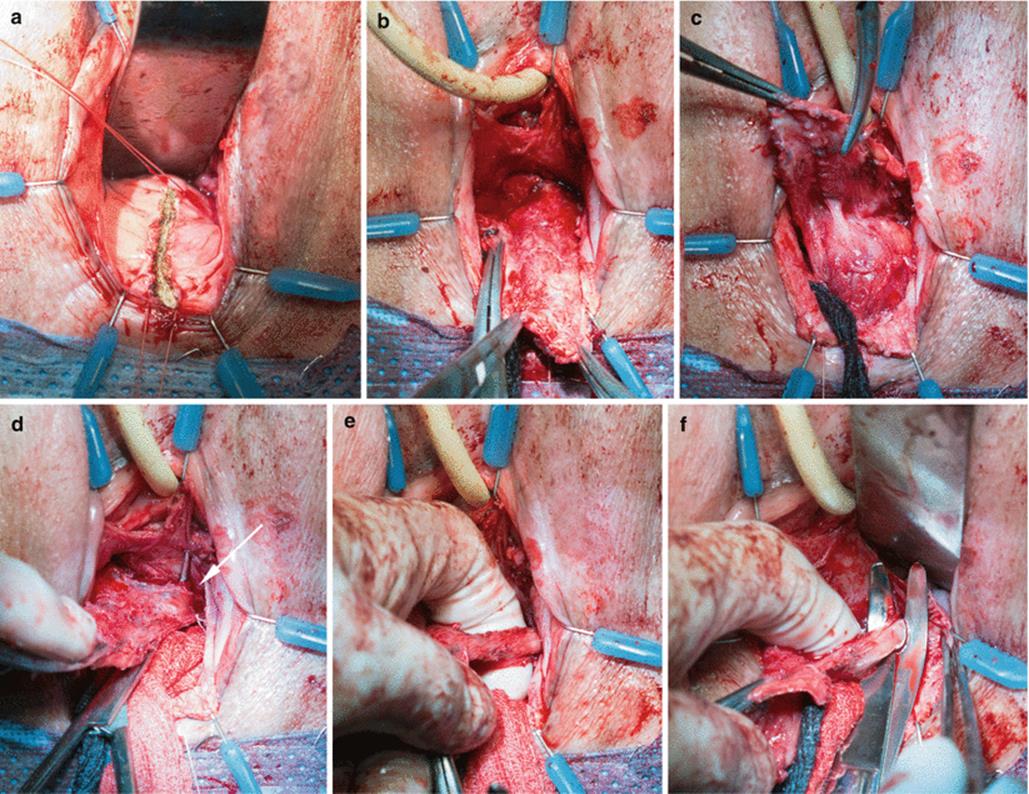

Fig. 9.26
(a) A vertical incision is made in the posterior vaginal wall from the cuff to the distal vagina. (b) Dissection is carried out under the vaginal wall on each side of the incision to expose the pararectal fascia and the lateral margins of the mesh. The dissection is carried out superficial to the mesh, proximal toward the vaginal cuff. (c) The distal segment of the mesh is detached from the posterior distal vagina and elevated, in order to dissect the rectal wall from the mesh. (d) The mesh is dissected toward the pararectal space, where the arms of the mesh are isolated over a right-angle clamp (arrow). (e) The left proximal arm of the mesh is dissected free toward the sacrospinous ligament area. (f) Using a right-angle scissors, the mesh is transected flush over the sacrospinous ligament. Branches of the uterine artery require coagulation or suture ligature. (g) The posterior bladder mesh was dissected free from the rectal wall. This is a very delicate dissection and care should be taken to avoid rectal injury. (h) Posterior vaginal mesh after excision
9.9 Recurrent Prolapse
Recurrent prolapse may occur in the setting of almost any vaginal repair where the anatomic axis of the vagina is changed. Such repairs may change the dynamic forces of where the intra-abdominal pressure is transmitted and may cause exacerbation of preexistent prolapse. Therefore, one must aggressively seek to identify any moderate to severe degrees of prolapse that may potentially worsen with time. We perform dynamic MRI evaluation of the pelvic floor in patients with high-grade prolapse and have found unrecognized pelvic floor pathology in approximately 20 % of these patients. We then approach these patients with the intent to identify and correct the pathology in order to prevent recurrent prolapse in the future. If recurrent prolapse occurs, one must decide if it is severe or symptomatic enough to require operative management (Fig. 9.27).


Fig. 9.27
(a) Lateral cystogram of a patient after a cystocele repair. The patient complains of a vaginal bulge and difficulties in emptying the bladder. The study confirms a well-supported urethra and a significant recurrent cystocele. (b) Lateral cystogram in a patient with recurrent stress incontinence after a sling procedure for stress incontinence. The relax and strain pictures show significant urethral hypermobility and a mild cystocele. The sling procedure failed to support the urethra and prevent mobility. (c) Lateral straining MRI of the midpelvis showing a large enterocele (arrows). The patient underwent a sling procedure and a cystocele repair. The vault was not repaired, and 6 months after surgery, the patient presents with significant vault prolapse. Arrows indicate the enterocele sac. (d) The patient presented to the emergency room 2 months after an uneventful vaginal hysterectomy. She was found to have evisceration of the small bowel through a small defect of the cuff closure. (e) The same patient was taken to the operating room immediately, where the bowel was reduced to the abdominal cavity without any bowel resection. The defect of the cuff after reduction of the bowel is seen. (f) The cuff of the vagina was closed, the vault resuspended, and the vaginal wall reconstructed
9.10 De Novo Urgency Incontinence
De novo bladder overactivity with urgency incontinence is a well-known complication of anti-incontinence surgery. Most often, symptoms were present preoperatively but become more pronounced in the postoperative period, as the accompanying stress urinary incontinence has been treated. This condition is often temporary and resolves over time, but some patients do develop new-onset de novo bladder instability, causing them to be surgical failures. The reported incidence of this complication varies considerably but may be as high as 28 %. The etiology is unclear; it may be related to unrecognized preoperative detrusor overactivity masked by severe sphincteric incompetence or to the creation of subclinical bladder outlet obstruction. The treatment is primarily medical, including behavioral modification, cholinolytics, and rarely sacral neuromodulation. In isolated cases, augmentation cystoplasty can be considered.
9.11 Urinary Outlet Obstruction
Chapter 7 discussed in detail the treatment of urethral obstruction. Although all the anti-incontinence procedures being used are nonobstructive by design, the potential for postoperative bladder outlet obstruction exists and has been reported in the literature, even when procedures are well performed. Obstruction most often occurs in the setting of improper suture or mesh placement, as discussed above, or it may be due to overzealous elevation of the bladder neck and proximal urethra while adjusting the tension of a sling. Slings of any variety should never be elevated under tension. Doing so may create postoperative outlet obstruction resulting in urgency, frequency, large post-void residuals, and possibly even urinary retention. Interposition of a clamp between the urethra and the mesh while adjusting the mesh tension could prevent obstruction. Pulling up the sutures or mesh under tension is unnecessary to produce urinary continence. In suspension procedures, we place a cystoscope sheath per urethra and incline it to 45° to the horizontal prior to tying the suspending sutures. This angle reapproximates the native position of the vesicourethra, preventing excessive elevation of the proximal urethra during tying of the sutures.
The initial incision for the insertion of a midurethral sling can be accidentally done deep to the periurethral fascia so that the mesh may be placed into the urethral wall itself, causing obstruction.
Finally, in some cases, postoperative development of a cystocele may cause bladder outlet obstruction. Failure to recognize and correct coexistent pelvic prolapse during an anti-incontinence operation may result in an enlarging postoperative cystocele, which kinks at the level of the bladder outlet in the location of the suspension sutures. If adequate bladder outlet support was attained at the time of bladder neck suspension, simple repair of the cystocele will result in the return of normal voiding function and the maintenance of urinary continence.
Outlet obstruction in women is a difficult diagnosis. The most helpful finding is a postoperative change in voiding symptoms in the setting of an increased post-void residual. These patients may present with the postoperative onset of new irritative voiding symptoms including urgency, frequency, and urge incontinence. These women should be differentiated from patients with some preoperative baseline irritative symptoms that remain after the surgery or perhaps are somewhat exacerbated by it. The vast majority of these patients will have resolution of their irritative symptoms with time. It is also common for patients with pure stress incontinence preoperatively to have some degree of urgency and frequency postoperatively owing to the inherent nature of pelvic surgery and perivesical inflammation. These patients are treated symptomatically with anticholinergic agents until the symptoms resolve, usually within 1–2 months.
Commonly, female patients with outlet obstruction do not exhibit the “high pressure, low flow” findings on urodynamics that are commonly seen in the obstructed male. Voiding cystourethrography may demonstrate urethral kinking or perhaps an oversuspended urethra and bladder neck, with the bladder neck elevated to an unphysiologically high retropubic position. Conversely, an obstructed urethra may be in good anatomic position but is fixed and is unable to funnel and open during a bladder contraction. Translabial ultrasound will help in the diagnosis of obstruction and deep placement of mesh into the urethral wall.
Treatment of these patients includes intermittent catheterization and cholinolytics initially. After a short period of observation, only the mesh or the suspension suture should be incised. In cases appearing late (more than 4 months) after the surgical procedure, a more extensive urethrolysis may be required to free up the urethra.
9.12 Vaginal Narrowing/Stenosis
Excessive excision of the vaginal wall may lead to narrowing of the vagina and stenosis. Additionally, excessive plication of tissue may lead to the development of ridges, which often become painful and tender. We use several steps to prevent these very avoidable complications. During cystocele, rectocele, or enterocele repairs, when excess vaginal tissue is excised, one must be cognizant of the amount of tissue to be removed. We use a Haney retractor to facilitate the identification of vaginal depth, adjacent structures, and avoidance of overexcision. Minimal tissue excision will help avoid narrowing, yet similarly, approximation of tissues too widely can cause the same result. One can avoid painful ridges by creating a smooth repair in a symmetric fashion. During rectocele repairs in particular, we find it necessary to continuously reassess the location of the sutures to prevent asymmetry. Placement of sutures too laterally in the distal phase of a rectocele repair can cause pain from levator spasm and tenderness; one should avoid any sutures through the levators.
In a patient with significant vaginal stenosis, a rotational flap of the inner thigh is performed (Fig. 9.28). This procedure is described in detail in Chap. 5.

Fig. 9.28
(a) This patient had multiple anterior and posterior vaginal reconstructions for prolapse, resulting in severe stenosis of the vaginal introitus and proximal vagina. The vaginal examination showed severe stenosis, requiring a Hegar dilator for the initial exploration. (b) An inverted U inner thigh flap will be created and rotated medially, the labium will be mobilized and rotated laterally, and a 5 o’clock episiotomy will be performed to allow transfer of the inner thigh flap toward the vagina. (c) The inner thigh flap has been rotated to the vagina and anastomosed to the medial and lateral margins of the episiotomy. The labial flap is displaced laterally and anastomosed to the donor site at the inner thigh. (d) Three months after surgery, the size of the introitus and the vaginal depth are normal. The patient was able to resume sexual relations without complications
9.13 Recurrent Stress Incontinence
The treatment of primary or secondary stress incontinence is discussed in Chap. 2. Continued incontinence postoperatively is considered a surgical complication. The most common situation is that the patient has persistent stress incontinence after a sling procedure, either immediately or a few months later. The sling never provided adequate urethral compression or support and the patient continues to lose urine with stress. The anatomical position of the urethra does not correlate with the degree of incontinence.
If the patient complains of continued stress incontinence postoperatively or has recurrence of stress incontinence shortly after surgery, the surgeon must evaluate for any technical issues that may have led to the surgical failure. These include improper diagnosis, detachment of the anchors from the obturator fascia, lack of adequate urethral compression and support, malpositioning of the sling, deep urethral penetration creating fixation of the urethral wall, and surgical complications like urethral perforation or fistula. Physical examination or video-urodynamic studies will demonstrate continued bladder neck funneling and urethral leakage with stress.
Proper placement of a sling is important. The ideal position of a sling is at the midurethra, but in more than 50 % of the patients cured by a sling, the mesh is not found at the midurethra. Placement of sutures or mesh too proximal relative to the bladder neck will not adequately support the bladder outlet. The mesh or the sutures will, in effect, fix the bladder neck into an open position, creating loss of the proximal sphincteric mechanism at the level of the bladder neck. Very distal placement of a sling adequate support at the level of the urethra will lead to an inadequate urethral compensation during stress of the urethra, and the impact of the sling on the sphincteric unit will not be effective.
Patients may have recurrent incontinence due to damage to the sphincteric unit itself. Sutures or mesh placed into the urethral wall may damage the periurethral envelope (intrinsic smooth and skeletal musculature) with fibrosis, scarring, and atrophy of the urethral spongy tissue. Loss of the urethral spongy tissue will often result in poor urethral coaptation, loss of the mucosal seal mechanism, and the development of intrinsic sphincteric deficiency. A well-supported but “pipestem”-type urethra with no inherent resistance is the long-term surgical result.
Suggested Reading
Abbott S, Unger CA, Evans JM, Jallad K, Mishra K, Karram MM, et al. Evaluation and management of complications from synthetic mesh after pelvic reconstructive surgery: a multicenter study. Am J Obstet Gynecol. 2014;210(2):163.e1–8.CrossRef
Abouassaly R, Steinberg JR, Lemieux M, Marois C, Gilchrist LI, Bourque JL, et al. Complications of tension-free vaginal tape surgery: a multi-institutional review. BJU Int. 2004;94:110–3.CrossRefPubMed
Ashok K, Petri E. Failures and complications in pelvic floor surgery. World J Urol. 2012;30(4):487–94.CrossRefPubMed
Blaivas JG, Sandhu J. Urethral reconstruction after erosion of slings in women. Curr Opin Urol. 2004;14:335–8.CrossRefPubMed
Bontje HF, van de Pol G, van der Zaag-Loonen HJ, Spaans WA. Follow-up of mesh complications using the IUGA/ICS category-time-site coding classification. Int Urogynecol J. 2014;25(6):817–22.PubMed
Crosby EC, Abernethy M, Berger MB, DeLancey JO, Fenner DE, Morgan DM. Symptom resolution after operative management of complications from transvaginal mesh. Obstet Gynecol. 2014;123(1):134–9.CrossRefPubMedPubMedCentral
de Tayrac R, Sentilhes L. Complications of pelvic organ prolapse surgery and methods of prevention. Int Urogynecol J. 2013;24(11):1859–72.CrossRefPubMed
Ellington DR, Richter HE. The role of vaginal mesh procedures in pelvic organ prolapse surgery in view of complication risk. Obstet Gynecol Int. 2013;2013:356960.
Khan ZA, Thomas L, Emery SJ. Outcomes and complications of trans-vaginal mesh repair using the Prolift™ kit for pelvic organ prolapse at 4 years median follow-up in a tertiary referral centre. Arch Gynecol Obstet. 2014;290(6):1151–7.CrossRefPubMed
Klutke C, Siegel S, Carlin B, Paszkiewicz E, Kirkemo A, Klutke J. Urinary retention after tension-free vaginal tape procedure: incidence and treatment. Urology. 2001;58:697–701.CrossRefPubMed
Kuuva N, Nilsson C. A nationwide analysis of complications associated with the tension-free vaginal tape (TVT) procedure. Acta Obstet Gynecol Scand. 2002;81:72–7.CrossRefPubMed
Laurikainen E, Killholma P. A nationwide analysis of transvaginal tape release for urinary retention after tension-free vaginal tape procedure. Int Urogynecol J. 2006;17:111–9.CrossRef
Marks BK, Goldman HB. Controversies in the management of mesh-based complications: a urology perspective. Urol Clin North Am. 2012;39(3):419–28.CrossRefPubMed
Mothes AR, Mothes HK, Radosa MP, Runnebaum IB. Systematic assessment of surgical complications in 438 cases of vaginal native tissue repair for pelvic organ prolapse adopting Clavien-Dindo classification. Arch Gynecol Obstet. 2015;291:1297–301.CrossRefPubMed
Muffly T, Barber MD. Insertion and removal of vaginal mesh for pelvic organ prolapse. Clin Obstet Gynecol. 2010;53(1):99–114.CrossRef
Rice NT, Hu Y, Slaughter JC, Ward RM. Pelvic mesh complications in women before and after the 2011 FDA public health notification. Female Pelvic Med Reconstr Surg. 2013;19(6):333–8.CrossRefPubMed
Sokol AI, Jelovsek JE, Walters MD, Paraiso MF, Barber MD. Incidence and predictors of prolonged urinary retention after TVT with and without concurrent prolapse surgery. Am J Obstet Gynecol. 2005;192:1537–43.CrossRefPubMed
Unger CA, Walters MD, Ridgeway B, Jelovsek JE, Barber MD, Paraiso MF. Incidence of adverse events after uterosacral colpopexy for uterovaginal and posthysterectomy vault prolapse. Am J Obstet Gynecol. 2015;212(5):603.e1–7.CrossRef
Wong KS, Nguyen JN, White T, Menefee SA, Walter AJ, Krulewitch CJ, et al. Adverse events associated with pelvic organ prolapse surgeries that use implants. Obstet Gynecol. 2013;122(6):1239–45.CrossRefPubMed