
Sarin Wongprasartsuk, Andrew Danks, Neil Vallance
2.1 Introduction
The specialty of ear, nose and throat — head and neck (ENT — head and neck) surgery is very broad and complex. Each component is a subspecialty in itself. Addressing any problems relating to the head and neck with this in mind will allow you to systematically approach the patient’s problem. As in any aspect of clinical medicine, the initial diagnosis is made by taking a thorough history prior to a complete physical examination that is supplemented by special investigations.
History
The common symptoms in the ear are otalgia, hearing loss, vertigo, tinnitus, aural fullness, discharge, hissing, facial weakness, bleeding and blockage. Common symptoms relating to the nose and sinuses are epistaxis (bleeding nose), nasal obstruction, hyposmia (decreased smell)/anosmia (complete loss of smell), loss of taste, facial pain, post-nasal drip, facial asymmetry, diplopia (double vision), epiphora (abnormal tears due to a blocked collecting system), redness of the eye, nasal discharge, allergy, sneezing and hay fever. Common symptoms relating to the throat include pain, dysphagia (difficulty swallowing), dysphonia (abnormal voice production), reflux, referred pain, cough, haemoptysis, shortness of breath, snoring and drooling. Head and neck patients may also present with symptoms of lumps and pain.
When a patient presents with any of these symptoms (Table 2.1) it is important to characterise the symptoms in terms of site, severity, radiation, frequency, duration, exacerbating and relieving factors, associated features, the progression of symptoms and how it affects the patient’s activities of daily living. When taking a history, the past history needs to be noted, including previous surgery to the respective parts of the ear, nose and throat, head and neck and any associated conditions. A patient’s medication and adverse reactions to medication should be known, as well as their social history, including their smoking and alcohol consumption and environmental exposures such as noise, dust and any other potential allergens. The family history should be known and it is also wise to find out about any family tendencies regarding bleeding disorders and deafness.
Table 2.1 Symptoms of ear, nose and throat conditions
|
Ear |
Otalgia, hearing loss, vertigo, tinnitus, aural fullness, discharge, hissing, facial weakness, bleeding, blockage |
|
Nose and sinuses |
Epistaxis, obstruction, hyposmia/anosmia, loss of taste, facial pain, post-nasal drip, facial asymmetry, diplopia, epiphora, red eye, nasal discharge, allergy/sneezing/hay fever |
|
Throat |
Pain, dysphagia, dysphonia, reflux, globus, referred pain, cough, haemoptysis, shortness of breath, snoring, drooling |
|
Head and neck: lump, pain |
Examination of the head and neck
As stated, a systematic approach to examining the head should recognise the principles of ENT — head and neck and include this in the examination, along with the cranial nerves. This will make a complete examination of the area. It is important to be aware of referred pain (Fig 2.1); for example, the ear is supplied by multiple nerves and ear pain can present as referred pain from intraoral or laryngeal pathology. Look for signs of redness, swelling, tenderness, increased warmth and loss of function.
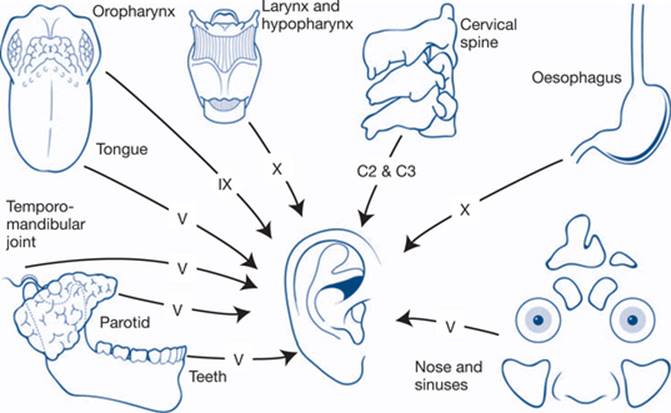
Figure 2.1 Referred or non-otologic otalgia
From Dhillon & East, 2006
Ear
See section 2.2.
Nose
Nose and sinuses
When examining the nose assess for symmetry, nasal bones, upper lateral cartilages, lower lateral cartilages, the base and the lateral profile from the right and left sides. Assess the function of the nose by occluding the nasal airway on each side respectively and ask the patient to breathe in and out.
Inspect the internal nose by examining the septum and assessing for deviation, the appearance of the mucosa, the presence of blood, any perforation of the septum, pus, foreign bodies, polyps, mass lesions and also the appearance of turbinates and sinus drainage pathways. This is performed with the assistance of a nasal endoscope.
Throat
When examining the throat, examine the mouth, the pharynx (which is subdivided into the nasopharynx, oropharynx and the hypopharynx), the tongue base and the larynx.
Mouth
The mouth is examined in all four quadrants, assessing the teeth and salivary ducts while massaging the parotid, submandibular and sublingual glands in that order. The mucosa and floor of the mouth are examined followed by the roof of the mouth, the uvula and finally the sulcus on either side of mandible, looking for any hidden lesions in the buccal or lingual sulcus. The tongue is examined and its mobility and texture are assessed. Any lesion should be palpated after asking the patient to stick their tongue to one side between their teeth to protect the examiner from any reflex bite.
Oropharynx
In the oropharynx, attention should be paid to the tonsils and posterior pharyngeal wall, assessing for any masses, ulcers or evidence of reflux suggesting submucosal gland hypertrophy. Other aspects to observe are evidence of post-nasal drip with secretions coming from the nasopharynx and evidence of any dryness of the mucosa.
Hypopharynx
The hypopharynx and larynx are examined with a large mirror and head light as is the tongue base. Laryngeal assessment includes the epiglottis, vallecula, aryepiglottic fold, arytenoids, false cords, laryngeal ventricles, true cords, the subglottis and trachea. Reflux can often be detected by visualising reddening of the posterior glottis and arytenoids.
Nasopharynx
The nasopharynx is assessed and a tongue depressor is positioned, with a head light to shine on to the mirror to help visualise the post-nasal space. This allows visualisation of the adenoid pad and the Eustachian tube orifices.
As in the abdomen, any part of the upper aerodigestive tract can be obstructed because of a mass, develop a fistula, have adhesions leading to a stenosis, have some form of perforation or can bleed.
Head and neck lumps
When a lump is assessed, remember the mnemonic ‘Surgeons Can Find The Lumps’: Each lump should be characterised according to:
Site, size, surface, sinus
Colour, contour, cough, compressibility
Fluctuance, fixation, fluid, filling and emptying
Temperature, transillumination, thrill, tenderness
Local features, lobulation, lymph nodes, lumps elsewhere.
Palpation of the head and neck involves palpation of the lymph nodes and the thyroid gland. It is important to palpate one side of the head and neck at a time and systematically approach all the groups of lymph nodes (Fig 2.2). Deep palpation of the jugular chain is important because these glands are deep to sternocleidomastoid. One should take care when compressing around the carotid.

Figure 2.2 Division of lymph node groups, levels I–VI (VII)
Based on Dhillon & East, 2006
The lymph node groups are divided into groups commonly known as 1–6. There is a seventh group but it is often not included. The groups are:
1. submental and submandibular triangle
2. upper jugular chain
3. mid-jugular chain
4. lower jugular chain
5. posterior triangle
6. anterior triangle
7. superior mediastinum.
The other areas that need to be palpated are the parotid, the posterior occipital nodes and the post-auricular region.
The lymph node groups drain specific areas of the head and neck, which in turn relates to the treatment of various head and neck cancers.
Table 2.2 outlines the process for performing a thyroid examination when thyroid disease is detected or suspected. Table 2.3 outlines an examination of the cranial nerves.
Table 2.2 Thyroid examination — performed if thyroid disease is detected or suspected
|
Look |
Patient — hyper/hypothyroid, thyroid eye signs, proptosis — Graves’ disease, lid lag, chemosis a complication, voice — recurrent laryngeal nerve compression, goitre |
|
Feel |
Right versus left side, prominent nodules |
|
Percuss — retrosternal extension |
|
|
Auscultate — bruits |
|
|
Pemberton’s sign — a sign of SVC compression — raise arms above head and look for venous congestion in the head |
|
|
Periphery |
Pulse, reflexes |
Table 2.3 Screening examination of the cranial nerves
|
I |
Smell |
|
II |
Visual acuity, light reflex — direct and consensual, fields |
|
III/IV/VI |
Eye movements |
|
V — V1, V2, V3 |
Sensation, motor — palpate jaw (masseter, temporalis) |
|
VII |
Facial movements: temporal — forehead; zygomatic — eye closure; buccal — cheek; marginal mandibular — lower lip; cervical — platysma |
|
VIII |
Tuning fork |
|
IX/X |
Gag reflex |
|
XI |
Sternocleidomastoid, trapezius — palpate |
|
XII |
Tongue mobility; palsy indicated by protrusion to affected side |
A gait examination is often performed as part of the dizziness assessment and is covered in the neurologic examination.
The voroscope (Fig 2.3) has revolutionised the ENT — head and neck examination. A good headlight from theatre will often suffice. Sometimes only a light source and head mirror are available.

Figure 2.3 Voroscope
Photos courtesy of Mr Sarin Wongprasartsuk
Flexible nasal endoscopy has also revolutionised the diagnosis of ENT — head and neck conditions. It has become an integral part of the examination and enabled office-based diagnosis. There are many hidden areas in ENT — head and neck examination and the nasoendoscope has permitted access to the internal nose, sinus outflow tracts, post-nasal space, larynx, hypopharynx, tongue base and sometimes the proximal oesophagus (Fig 2.4).
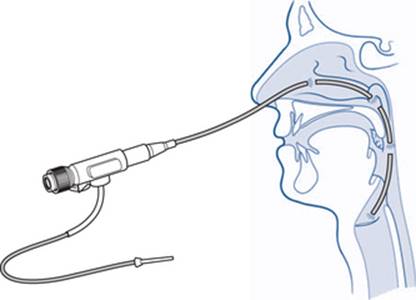
Figure 2.4 Nasolaryngoscope
From Dhillon & East, 2006
After the thorough history and complete physical examination have been performed, investigations are ordered. A differential diagnosis should be considered and the mnemonic VITAMIN CID may be helpful.
Vascular
Infective: may involve bacterial, viral, fungal and parasitic problems
Tumour: subdivided into benign and malignant
Accident
Metabolic causes such as diabetes and renal impairment
Immune/autoimmune conditions
Nutritional causes
Congenital
Idiopathic
Drugs and alcohol
Investigations are ordered to:
• confirm the diagnosis
• rule out other diagnoses
• quantify the severity of the disease
• follow the progression of the disease
• look for complications of any therapy.
The common investigations include:
• A blood test — FBE, allergy investigations (e.g. RAST — radioallergosorbent test).
• A biopsy — always be aware of the potential for bleeding and look for any pulsations as any red lesion may be actually a vascular malformation. Lesions high in the nose should be treated with caution as there may be a communication with the CSF space.
• Fine needle aspirate (FNA) — preferred to an open biopsy of any neck lump to prevent seeding of tumour cells. Can be combined with ultrasound guidance for increased accuracy.
• Swabs can be taken to include bacterial, fungal and viral cultures.
• Radiology — includes ultrasound, X-ray, barium swallow, CT, MRI and nuclear medicine.
• The audiogram is an important component of hearing assessment.
• Vestibular function testing is often performed.
• Laryngeal videostroboscopy allows visualisation of the vocal cords.
• Rhinomanometry is used for assessment of nasal air flow.
• Clinical photographic documentation is important in assessing assaults and the preoperative assessment for some cosmetic procedures.
The last four investigations are usually ordered by ENT — head and neck specialists.
Regional and developmental anatomy
It is very important to know the regional anatomy and embryology of the structures of the ENT — head and neck. When assessing a lump in the neck consider the local anatomy of the skin, soft tissue, associated vessels, the lymph node drainage pathways, any potential nerves that may be in the area and bones. Think about the pathway for development of the thyroid, parathyroids, branchial cleft cysts, ear cysts and their appendages.
2.2 Ear
The ear has three components consisting of a number of parts listed in Table 2.4.
Table 2.4 Outer ear, middle ear and inner ear components
|
Outer ear |
Pinna — parts |
|
External auditory canal — lined by skin, acts to remove accumulated squames from the tympanic membrane out of canal |
|
|
Tympanic membrane |
|
|
Middle ear |
Ossicles: malleus (hammer)/incus (anvil)/stapes (stirrup) — act as the chain between the tympanic membrane and the oval window membrane |
|
Eustachian tube — functions to aerate middle ear |
|
|
Middle ear mucosa — respiratory type |
|
|
Mastoid cells — part of the temporal bone and joined to middle ear cleft |
|
|
Inner ear |
Cochlea and vestibular apparatus |
|
Oval window — superior — part of the cochlear connection to ossicular chain |
|
|
Round window — inferior — part of the cochlea that moves in response to any hydraulic force placed on the oval window |
To examine an ear, systematically investigate the outer ear followed by the middle ear and then the inner ear (Fig 2.5).
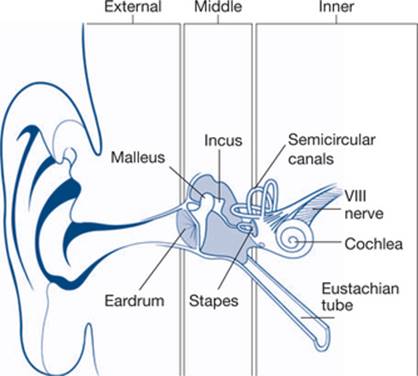
Figure 2.5 Anatomy of the ear
From Dhillon & East, 2006
For the outer ear look at the normal contour of the outer ear, the ear canal and the tympanic membrane. Sometimes it is necessary to remove the wax from the canal to get a good view. When assessing the middle ear also assess for tympanic membrane mobility using what is called pneumatic otoscopy. Check any perforation of the tympanic membrane by assessing its size, the site, associated discharge and the condition of the middle ear mucosa. The tests of the inner ear that are commonly performed are: using a 512 Hz tuning fork; testing a patient’s gait; and performing a Dix-Hallpike manoeuvre. Prior to performing a Dix-Hallpike manoeuvre the stethoscope should be used to listen for any carotid bruits because the Dix-Hallpike manoeuvre may precipitate a TIA. The stethoscope is also used to listen for pulsatile tinnitus and is placed on the mastoid tip. The Dix-Hallpike manoeuvre is diagnostic of benign paroxysmal positional vertigo (BPPV) and is performed on an examination couch. While sitting up, the patient turns their head quickly to one side while keeping the eyes wide open and focusing on a spot in the distance in the line of their eye sockets. Next, the patient lies back with their head dependent over the head of the examination bench. The examiner inspects for nystagmus, which indicates an overstimulated semicircular canal system. It is a positive result when nystagmus is elicited on the side to which the head is turned.
Facial nerve (CN VII). This nerve courses through the temporal bone then enters the internal auditory canal in the antero-superior quadrant. It then passes forwards in what is called the labyrinthine segment and passes above the cochlea, contributing to the geniculate ganglion that has branches to the petrosal nerves. It then turns back and runs between the lateral semicircular canal superiorly and the oval window that is attached to the stapes, inferiorly. After passing these two structures it courses down in the stylomastoid canal giving off two branches: first, the nerve to the stapedius and then the chorda tympani that relays taste sensation from the anterior two-thirds of the tongue. The facial nerve exits the skull base via the stylomastoid foramen. It is termed the trunk of the facial nerve at this point. It gives off its auricular branch and then separates into a superior and inferior division. The superior division has temporal, zygomatic and buccal branches and the inferior division has the marginal mandibular and the cervical branches. These braches supply the muscles of facial expression.
Vestibulocochlear nerve (CN VIII). The cochlear nerve occupies the antero-inferior quadrant of the internal auditory canal (IAC). The superior division of the vestibular nerve occupies the postero-superior quadrant of the IAC and the inferior division of the vestibular nerve occupies the postero-inferior quadrant. The cochlear nerve conducts sound and the vestibular nerve conducts the sensation of balance.
Role of the ear
The purpose of the ear is to transform sound energy into electrical impulses. Sound is conducted via the external canal, the tympanic membrane and the ossicular chain, then converted into electrical impulses by the cochlea. These impulses pass up the cochlear component of the auditory nerve.
The balance system or vestibular apparatus comprises: the lateral, posterior and superior semicircular canals; the utricle and the utricle saccule; and the endolymphatic sac. This sensory apparatus is supplied by the vestibular component of the vestibulocochlear nerve.
The cochlea and vestibular apparatus are found in the petrous temporal bone.
Nearby blood vessels
The sigmoid sinus runs from the superolateral aspect of the temporal bone coursing inferomedially to exit the skull via the jugular foramen. The internal carotid artery enters the floor of the petrous temporal bone via the carotid canal, passes below the cochlea and travels horizontally till it reaches the sphenoid and carotid siphon. The superior petrosal sinus courses along the postero-superior aspect of the temporal bone from the cavernous sinus to the transverse sinus. It lies in the outer margin of the tentorium cerebelli. The labyrinthine artery, which is a branch of the basilar artery or anterior inferior cerebellar artery, supplies the petrous temporal bone entering via the internal auditory canal.
External ear
Wax and otitis externa
Otitis externa (OE) is an inflammation of the external auditory canal (EAC). It is characterised by pain, blockage and discharge from the ear.
Predisposing factors include the following.
• Wax build up and moisture — the normal function of the EAC is to move wax produced by the ceruminous glands and keratin from the tympanic membrane and canal skin itself away from the tympanic membrane towards the opening of the EAC. Water can be trapped behind the wax and become secondarily infected resulting in an early OE.
• Cotton bud abuse — this causes damage and irritation to the skin of the EAC. This leads to build-up of debris in the canal, which can become infected.
• Diabetes/immune deficiency — this needs to be considered in all cases because skull base osteitis, which is diagnosed with a combination of CT, bone scan and white cell scan, is a severe complication of OE.
• Swimming in lakes, waterholes or community pools.
• Humid climates.
• Skin conditions.
• Posttraumatic — syringing of ears.
• Exostoses — bony growths that narrow the EAC.
The build-up of debris is subsequently infected by bacteria or fungi.
The most common bacteria is Pseudomonas aeruginosa. Fungal hyphae are seen in fungal infections.
Management
OE is best managed with one or more of the following measures:
• meticulous toileting of the external canal — this may need to be repeated as healing skin desquamates
• taking a culture of the discharge — microscopy, cultures and antibiotic sensitivities (M/C/S) and fungal
• using topical antibiotics — Ciproxin HC, Sofradex, Locacortin vioform, Otocomb
• using a pope ear wick, which is an expandable tampon that allows delivery of the medication; in moderately severe cases of OE where the EAC is completely occluded, a wick needs to be inserted and expanded with antibiotics for 24 hours prior to permitting ear toileting
• a course of oral/IV antibiotics — ciprofloxacin in non-responsive cases
• excluding skull base osteitis in severe non-responsive cases, especially in diabetic or immunocompromised patients
• excluding any predisposing factors such as cotton bud use (as a long-term measure)
• removing exostoses with an operation that drills away the bone and enlarges the ear canal.
Middle ear
Otitis media
Otitis media is an inflammation of the middle ear/mastoid cavity. Its underlying cause is an abnormality of the Eustachian tube that ceases to aerate the middle ear, leading to a range of possible complications (Figs 2.6 and 2.7). A negative pressure forms in the cleft and an effusion results. There are many causes of a dysfunctional Eustachian tube. In children, the Eustachian tube is shorter and more horizontal, therefore, more prone to blocking. Causes include: viral URTI, cleft palate and a post-nasal space tumour. The effusion may become secondarily infected resulting in acute otitis media (AOM). Common organisms are: Streptococcus pneumoniae, Haemophilus influenzae and Moraxella.
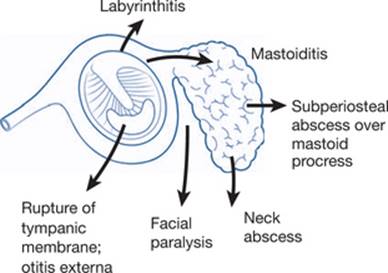
Figure 2.6 Extracranial complications of otitis media
From Dhillon & East, 2006

Figure 2.7 Intracranial complications of otitis media
From Dhillon & East, 2006
AOM presents with otalgia, fever and a red, inflamed ear drum. The treatment may include antibiotics and antipyretic analgesia. The tympanic membrane may spontaneously rupture, resulting in a discharging ear and immediate pain relief.
Otitis media with effusion (OME) presents with a conductive hearing loss and a dull ear drum. Most cases of OME in children (about 90%) will resolve within three months, as there is often a preceding URTI. In adults, a new onset effusion with no precedent URTI needs to be investigated. The post-nasal space needs to be visualised. In longstanding effusions, a middle ear ventilation tube (grommet) is inserted to resolve the effusion.
Complications of AOM are those resulting from mastoiditis and include:
• subperiosteal abscess — presents with a protruding ear; pus escapes from the mastoid cavity via a communication posterior and superior to the pinna
• intracranial complications — extradural, subdural, intracerebral abscesses; meningitis
• labyrinthitis
• facial nerve palsy
• lateral sinus thrombosis
• petrositis — infection of the apex of the petrous temporal bone; CN VI palsy; trigeminal neuralgia CN V.
CT scan findings consistent with mastoiditis are opacification of the middle ear/mastoid cleft associated with bony destruction of the normal bony trabeculae.
A chronic discharging ear for more than three months is termed chronic suppurative otitis media (CSOM). It results from chronic infection, with an associated biofilm formation or may be caused by a cholesteatoma.
A cholesteatoma is a sac of keratinised squamous epithelium that has the potential to grow and erode the surrounding structures resulting in hearing loss, discharge and potential intracranial complications.
A bacterial biofilm is a colony of bacteria that has formed a resistant matrix often on an inert surface. Bacterial biofilms result in chronic infections in the ear, nose and throat.
Inner ear
Hearing loss
There are many causes of hearing loss, as indicated in Table 2.5.
Table 2.5 Causes of hearing loss
|
Cause |
Conductive hearing loss |
Sensorineural hearing loss |
|
Congenital |
Atresia of ear, ossicular abnormalities |
Prenatal: genetic, rubella |
|
Acquired |
External: wax, otitis externa, foreign body |
Perinatal: hypoxia, jaundice |
|
Middle ear: middle ear effusion, chronic suppurative otitis media, cholesteatoma, |
Trauma: noise, head injury, surgery |
|
|
Perforated drum, otosclerosis, traumatic perforation of drum |
Inflammatory: chronic otitis, meningitis, measles, mumps, syphilis |
|
|
Ossicular disruption |
Degenerative: presbyacusis |
|
|
Ototoxicity: aminoglycosides, cytotoxics |
||
|
Neoplastic: acoustic neuroma |
||
|
Idiopathic: Ménière’s disease, sudden deafness |
Based on Dhillon & East 2006
When evaluating hearing loss, the outer ear, middle ear, inner ear and central pathways need to be considered. The time frame, whether sudden or acute versus chronic, needs to be ascertained. A prior history of trauma, noise exposure and associated symptoms is a valuable clue.
A complete examination with tuning fork tests is required and an audiogram will guide the diagnosis (Figs 2.8a and b).
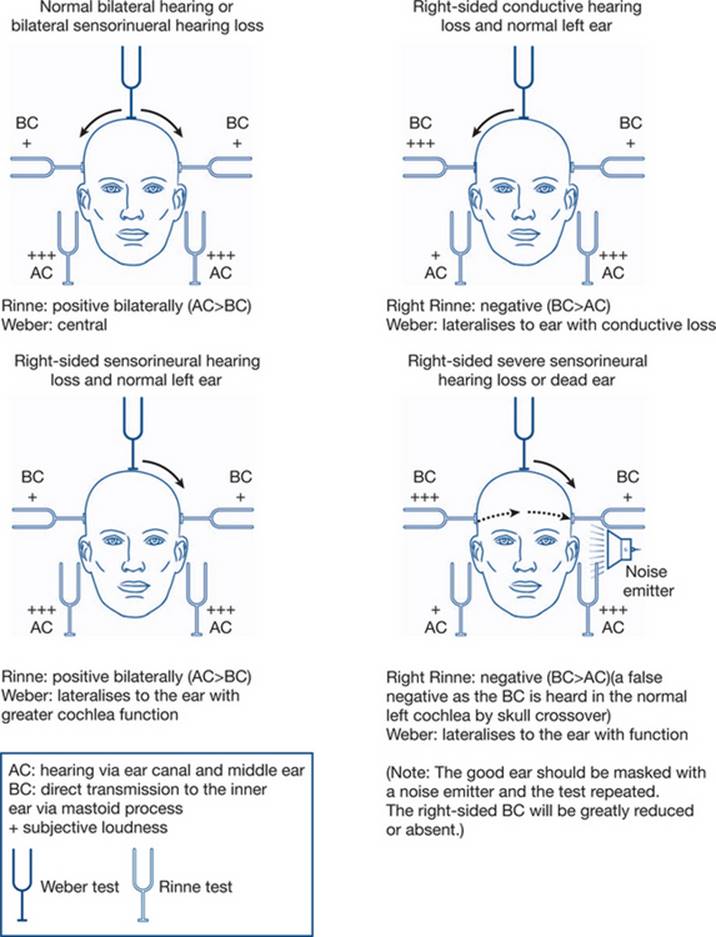
Figure 2.8a Tuning fork tests
From Dhillon & East, 2006

Figure 2.8b Audiograms
From Dhillon & East, 2006
CT, MRI and other auditory tests such as stapedial reflexes (a test of middle ear function/fixation of the stapes in otosclerosis), otoacoustic emissions (a test for cochlear function) and auditory brain stem responses (ABR) (a test of the central pathway) will assist with localisation of the problem.
Vertigo
Vertigo can be disabling. The vestibular apparatus may be overactive or underactive. An imbalance between the left and right sides may result in vertigo. There are many causes (Fig 2.9).

Figure 2.9 Otologic causes of dizziness
From Dhillon & East, 2006
The most common causes of vertigo are:
• Benign paroxysmal positional vertigo (BPPV) — a disorder of the semicircular canals where otoliths (small calcium particles) float free in the semicircular canals and stimulate the ampullae of the canals. The treatment is a particle repositioning manoeuvre such as the Epley manoeuvre.
• Ménière’s — a syndrome characterised by the triad of rotatory vertigo, hearing loss and tinnitus — often associated with aural fullness. There are many theories that relate to an imbalance in the flow of endolymph in the inner ear.
• Vestibular neuronitis — often a viral aetiology, with no involvement of the auditory system.
• Labyrinthitis — often a viral aetiology involving the whole of the labyrinth and therefore both balance and hearing are affected.
When assessing a patient with a balance problem, the components of balance disorders that need to be addressed are the cardiovascular system (CVS), central nervous system (CNS)/peripheral nervous system (PNS), cerebellum, vestibular system and vision. Often the causes are irreversible and may progress. The ongoing therapy involves physiotherapy and occupational therapy to make sure it is safe for a patient to return home.
Vestibular function testing may be of assistance in diagnosing the probable cause, as is imaging. MRI is used to assess the brain, brainstem and retrocochlear region, whereas CT is used to assess the middle ear anatomy.
Tinnitus
Defined loosely as noise generated somewhere in the head, tinnitus (Fig 2.10) is annoying to the patient and can be extremely disabling.
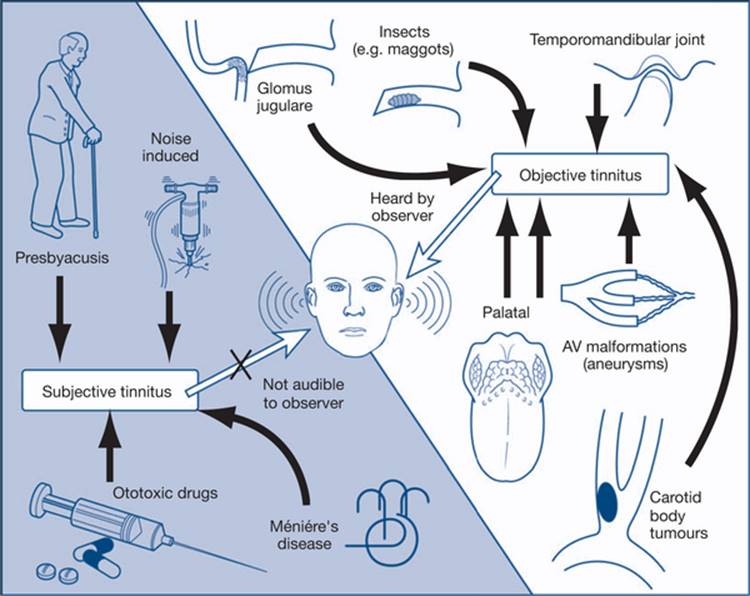
Figure 2.10 Tinnitus
From Dhillon & East, 2006
There are many causes for tinnitus, but the most common is idiopathic.
Idiopathic tinnitus cannot be cured with an operation. It is known that if all the hearing mechanism was removed, tinnitus would still be reported by the patient because of a phenomenon known as brain plasticity — it creates the sound and amplifies it at the level of the patient’s awareness.
The treatment for idiopathic tinnitus is supportive, relying on some form of distraction therapy such as:
• having a clock radio on at night prior to going to sleep
• having a hearing aid that introduces sound (a masking sound) into the affected side
• psychological retraining — this aims to refocus a patient away from tinnitus. One can explain tinnitus to patients as likening it to tuning in to external sounds such as an air conditioning fan or a car going past. If you concentrate on it, you hear it. If you don’t concentrate on it then you don’t hear it and so with tinnitus it will stop bothering you.
Reversible causes, such as outer, middle or inner ear pathology, need to be ruled out. An audiogram is a good screening test. CT and MRI may be ordered.
2.3 Facial weakness
When a patient presents with a facial weakness a systematic approach needs to be adopted, considering the components and course of the facial nerve together with the VITAMIN CID mnemonic. Consider:
• the central nervous system — causes sparing of the forehead
• the peripheral nervous system — whole of affected side involved
• the course of the facial nerve from the internal auditory canal through the middle ear and mastoid
• the branches of facial nerve dividing in the parotid: temporal, zygomatic, buccal, marginal mandibular, cervical
• the neuromuscular junction
• muscle disorders.
Table 2.6 lists the most common causes of facial weakness.
Table 2.6 Causes of facial weakness
|
Site |
Aetiology |
|
Intracranial |
Acoustic neuroma |
|
CVA* |
|
|
Brain stem tumour* |
|
|
Intratemporal |
Bell’s palsy |
|
Herpes zoster oticus |
|
|
Middle ear infection |
|
|
Trauma |
|
|
– surgical |
|
|
– temporal bone fracture |
|
|
Extratemporal |
Parotid tumours |
|
Miscellaneous |
Sarcoidosis, polyneuritis |
Based on Dhillon & East, 2006
* Supranuclear lesions.
Management
When approaching a presentation of facial nerve palsy, the function of the branches should be considered and addressed in order of importance.
1. Zygomatic — the eye branch that normally protects the eye. Loss of function of this branch can result in severe corneal erosion and blindness. Treatment involves padding the eye closed and lubricating drops during the day and night with ophthalmological referral.
2. Buccal — this branch travels to the cheek, allowing food to be pushed into mouth. Loss of this branch results in swallowing problems.
3. Marginal mandibular — this branch stretches to the angle of the mouth. Its loss results in a cosmetic deformity.
4. Frontal — loss of this nerve results in an inability to raise the forehead, which is purely a cosmetic loss.
5. Cervical — this branch supplies the platysma; its loss is often unnoticed.
Trauma
There are many forms of trauma. Trauma to the ear may result in:
• tympanic membrane perforation — the basis of treatment is to keep the ear dry (very large holes have been known to heal spontaneously)
• ossicular chain — this can be disrupted resulting in a maximal conductive hearing loss of 60dB; treatment is middle ear reconstruction
• inner ear — cochlea: if disrupted this can result in complete deafness or ‘dead ear’; in the vestibular system, vertigo can result
• facial nerve — immediate or delayed paralysis.
2.4 Nose and sinuses
Anatomy/physiology
The nose and sinuses are made up of a number of components (Figs 2.11 and 2.12).
• The nasal airway comprises a midline septum and a lateral nasal wall. The septum has a cartilaginous component and a bony component made up of the perpendicular plate of the ethmoid and the vomer. There are also contributions from the maxilla and palatine bones.
• The lateral nasal wall comprises the ethmoid bone and its turbinates — superior and middle, the inferior turbinate, the maxilla, lacrimal and palatine bones.
• The sphenoid sits at the postero-supero-lateral aspect of the nasal airway.
• The roof of the nose comprises the ethmoid, the cribriform plate and the sphenoid.
• The floor of the nose is made up of the maxilla and the palatine bone.
• The nose and paranasal sinuses are lined by respiratory epithelium — ciliated columnar epithelium, which is secretory. The daily secretions of the nose and paranasal sinuses is in the order of 800 mL per day.
• The function of the turbinates is to warm and humidify inspired air.

Figure 2.11 Structure of lateral nasal wall
From Dhillon & East, 2006
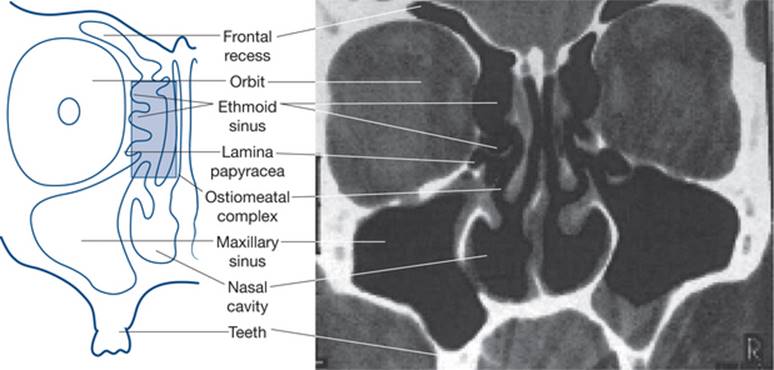
Figure 2.12 Paranasal sinuses
From Dhillon & East, 2006
Blood supply
The blood supply is from both the external and internal carotid circulation.
The septum is supplied by the facial artery, greater palatine artery, sphenopalatine artery, anterior ethmoid artery and the posterior ethmoid artery. It has a prominent plexus called Little’s area in the centre of the cartilaginous septum.
The lateral nasal wall has its blood supply predominantly from the sphenopalatine artery, with contributions from the anterior and posterior ethmoid arteries.
Nerve supply
The nerve supply of the nose reflects its function: to smell, to warm and humidify the air that has been breathed in and to function as the airway. There are several neural components which help regulate the function.
• The area of olfaction is in the roof of the nose (the olfactory nerve has its sensory endings in the cribriform plate).
• General sensory supply of the nasal airway is from the trigeminal nerve.
• The parasympathetic nervous system contributes to nasal secretions via the sphenopalatine ganglion.
• The sympathetic nervous system gives its supply via the superior cervical ganglion. The nerves run with the blood vessels supplying the nose and sinuses.
Paranasal sinuses
There are generally four named sinuses: frontal, ethmoid, maxillary and sphenoid sinuses. They are paired — left and right. They are variable in their development and are often asymmetric. These sinuses drain via pathways that are normally 2–5 mm wide.
Epistaxis
Most commonly epistaxis is anterior and unilateral (approximately 90%) from Little’s area. Posterior epistaxis is uncommon; it presents bilaterally and is often severe from the sphenopalatine artery.
Contributing factors include:
• hypertension
• coagulopathy
• being elderly — having thin, friable mucosa
• rhinitis
• trauma
• deviated nasal septum causing airway turbulence.
Treating epistaxis is based on the following principles.
• Cover up — protect yourself with gloves, masks, gowns and eye protection. Blood anywhere in the upper aerodigestive tract can stimulate a cough reflex that the patient cannot control.
• Assistance — ask for help with equipment, handling tongue depressors, suckers and packing.
• General first aid — apply pressure.
• Ensure you have a good light source to work by.
• Inspection — clear all clots with a nasal sucker (Frazier type) and Killian nasal speculum.
• Active bleeding is often not amenable to cautery and requires direct pressure. A pack situated at the bleeding point is preferable. Removing a clot during active bleeding helps because a clot is like jelly and provides no pressure on the bleeding point.
• Nasal pack (anterior pack) — Kaltostat, expandable tampon, gauze impregnated with antibiotic paste. Always admit the elderly. Prescribe oral antibiotics to reduce the theoretical potential for toxic shock.
• Posterior pack post-nasal space balloon — use a Foley catheter filled with 10 mL of water in combination with an anterior pack. The Foley needs to be secured at the nostril to prevent the balloon slipping backwards and occluding the airway. All patients with posterior packing need admission and close observation. Care needs to be taken to protect the nostril from trauma caused by the clip securing the balloon catheter.
• Ensure adequate fluid resuscitation.
• Correct any underling predisposing causes such as coagulopathy and hypertension.
• Cautery — using silver nitrate or electrocautery.
• Arterial ligation — sphenopalatine, anterior and posterior ethmoid, maxillary, external carotid artery.
• Greater palatine foramen injection of vasoconstrictor — 3 mL leuer lock syringe with 25/27 gauge needle. Aspirate prior to injection to create vasoconstriction of sphenopalatine artery.
• Embolisation.
Nasal obstruction
Often when we refer to the nose we actually mean the nose and paranasal sinuses. Patients will often present with the complaint of a blocked nose and pain around the area of their sinuses. Associated symptoms include hyposmia, anosmia and loss of taste. More sinister symptoms might be facial sensory loss — V1 or V2, or diplopia.
The cause of nasal obstruction can relate to anatomical, mucosal and pathologic factors. Remember the nasal airway extends from the skin of the nostril to the post-nasal space.
Anatomical factors include deviated nasal septum, nasal bones, anatomical variants of the normal sinus outflow tracts and adenoid hypertrophy.
Mucosal factors include turbinate mucosal hypertrophy. The turbinates have a blood and nerve supply and the epithelium is respiratory with glandular elements. Therefore, they shrink and enlarge in response to conditions that affect:
• blood flow — posture in bed, exercise, vasoconstrictors or vasodilator, heat or cold
• neurologic inputs — sympathetic and parasympathetic responses
• glandular activity — allergy, irritants.
Pathological factors may include:
• vascular lesions — vascular malformations
• infective processes — viral, bacterial and fungal: viral factors lead to a transient blockage, whereas bacterial and fungal infections often become chronic
• tumours — benign and malignant. Polyps are a common cause of nasal obstruction. There are many theories about the cause of polyps — they may be caused by infective processes — viral, bacterial, fungal; airflow turbulence; allergy; or part of a multistep developmental progression towards cancer in which the polyp acquires malignant cellular characteristics.
Beware of new onset unilateral nasal hypertrophy in adults — you must rule out a tumour. There are certain conditions to watch out for:
• nasopharyngeal carcinoma in Asian males, especially those of Cantonese origin
• juvenile angiofibroma in teenage males
• inverting papilloma
• accident (posttraumatic) — fractured and displaced nasal/facial bones and septum
• secondary to systemic conditions — metabolic, immune-related, nutritional, drug-related
• congenital — cysts, abnormal development of the nose/paranasal sinuses, choanal atresia.
Sinusitis/nasal polyps/allergy
Sinusitis often develops as a complication of nasal obstruction. Secretions build up secondary to obstruction of the normal sinus outflow tract and infection often develops. This causes the symptoms of pressure-type pain in the face, fever and discharge. Maxillary sinus pain occurs in the cheek, ethmoids (midface, between the eyes), frontals (forehead) and sphenoid (the vertex of the skull).
Complications of sinusitis include:
• maxillary — subperiosteal abscess — cheek swelling
• ethmoid (eye presentations) — cellulitis of the eye lid (pre-septal) orbital cellulitis (post-septal), subperiosteal abscess, intraorbital abscess, cavernous sinus thrombosis
• frontal — subperiosteal abscess
• sphenoid — cavernous sinus pathology, cranial neuropathy V1 and V2, decreased visual acuity.
Intracranial complications of the ethmoid, frontal and sphenoid sinuses include meningitis, extradural abscess, subdural abscess, subarachnoid abscess and intra-cerebral abscess.
The following points are also worth noting.
• A patient presenting in the middle of the night with the worst headache they’ve ever experienced is not simple sinusitis. Exclude an intracranial lesion such as a cerebral aneurysm.
• In immune-compromised patients (diabetes, leukaemia) beware of fungal sinusitis, which can often be invasive and life-threatening.
• Ask patients if their sinus symptoms get worse in the setting of a cold or nasal obstruction. This will help differentiate between sinus-related pain and other causes of headache.
If sinus pain is unable to be resolved, a CT scan is indicated, including the axial, coronal and parasagittal views. If pus is present, a swab is taken for M/C/S. An MRI should be ordered if there is concern regarding intracranial problems.
Treatment
Treatment relates to addressing the underlying obstructing factors including:
• treating the infection with oral or intravenous antibiotics
• nasal douching — using a saline solution to reduce the inflammatory load
• prescribing topical/oral decongestants to reduce mucosal swelling (topical decongestants should only be used for five days, otherwise a rebound effect called rhinitis medicamentosa occurs)
• prescribing intranasal/oral steroids to reduce polyps
• analgesia
• performing surgery to correct anatomical abnormalities.
2.5 Throat
Tonsils and adenoids
Figure 2.13 depicts the framework of the larynx and Table 2.7 lists the spaces and anatomy related to the throat.
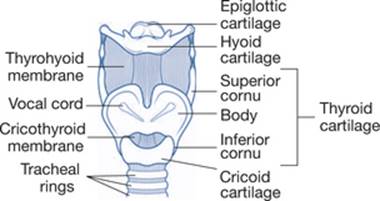
Figure 2.13 Laryngeal framework
From Dhillon & East, 2006
Table 2.7 Related spaces and anatomy
|
Parapharyngeal space |
Inferior: hyoid |
|
Anterior: pterygomandibular raphe |
|
|
Posterior: prevertebral fascia |
|
|
Medial: superior constrictor |
|
|
Lateral: parotid, mandible and lateral pterygoid |
|
|
Styloid process divides into: pre-styloid and post-styloid compartments |
|
|
Pre-styloid: fat, LN, IMA, inferior alveolar, lingual and auriculotemporal nerves |
|
|
Post-styloid: ICA, IJV, sympathetic chain, IX, X,XI,XII |
|
|
Superior: BOS |
|
|
Retropharyngeal space |
Superior: BOS |
|
Inferior: T4 where space is obliterated through fusion of oesophagus to prevertebral layer |
|
|
Anterior: pharynx and oesophagus |
|
|
Posterior: alar fascia |
|
|
Lateral: carotid sheath |
|
|
Above superior constrictor: Eustachian tube and pharyngobasilar fascia |
|
|
Between superior and middle constrictor: tongue, stylopharyngeus, styloid process, stylohyoid ligament, lingual nerve |
It is these related spaces where deep neck space abscesses may occur following severe tonsillitis or secondary to any perforation of the pharynx. This may result in upper airway obstruction if not recognised and addressed.
Microbiology/pathology
A number of organisms may be found in the tonsils, as listed in Table 2.8.
Table 2.8 Organisms found in the tonsil
|
Establishment of N flora of URT begins at birth |
First 6–8/12 Actinomyces, Fusobacterium nucleatum, Nocardia fusobacterium increase after first dentition |
|
Follow: Bacteroides, Leptotrichia, Propriobacteria, Candida |
|
|
AnO2: O2 — 10:1 due to [O2] |
|
|
Pathogenic bacteria found in healthy patients |
Streptococcus pneumoniae 19% |
|
Haemophilus influenzae 13% |
|
|
Group A streptococci 5% |
|
|
Moraxella 36% |
|
|
First three most common causative pathogens for recurrent tonsillitis |
|
|
Chronic illness: change of pathogens |
Staphylococcus aureus |
|
Gram-negative |
Infectious mononucleosis
This is a disease characterised by fever, sore throat, LN and atypical lymphocytes. These are T cells reacting against B cells infected by Epstein-Barr virus (EBV). The condition is associated with a rising titre of antibodies against EBV. The disease is associated with a high titre of heterophilic (reacting with cells of another species) antibodies: sheep, horse and beef red blood cells.
The typical age for infectious mononucleosis is 15–40 years, often without a history of any recurrent tonsillitis.
History and examination
The typical patient will present for the first time with a tonsillitis-like episode that does not respond to antibiotics. They are often adolescent or young adults who are socially active. The typical examination findings include:
• bilateral Cv LN –75%
• sore throat with inflamed oral and pharyngeal surfaces, follicular tonsillitis
• morbilliform rash, HA and eye signs
• palpable splenomegaly — 50%, hepatomegaly 15%
• jaundice
• ECG/CNS changes
• lymphoma-like proliferation.
Diagnosis
The typical investigations include:
• pleomorphic atypical lymphocytosis (10–20×109/L)
• heterophile antibodies: Paul-Bunnell test — to sheep RBC antigen (Ag)
• monospot test — to horse RBC Ag
• EBV serology — EBV antibodies (Ab) are produced against EBV capsid Ag; IgG develops early (2–3 weeks); IgM — develops early and disappears (2–3 months versus EBV nuclear antigen, which develops later)
• at 2–6 months, persistence of the antibodies can suggest chronic infection.
Medical treatment
Penicillin is the first-line choice for treating bacterial tonsillitis (Fig 2.14) and is used for 10 days as a minimum to avoid possible complications relating to systemic streptococcal infections. Beware of prescribing amoxicillin in undiagnosed infectious mononucleosis as this can cause a rash. Treating viral pharyngitis and glandular fever is supportive. Patients with glandular fever should be counselled against participating in contact sports to avoid splenic injury.
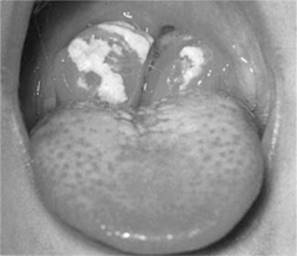
Figure 2.14 Bacterial tonsillitis
From Dhillon & East, 2006
A quinsy (Fig 2.15) is a peritonsillar collection of pus, which is one of the most common complications of bacterial tonsillitis. It is managed through recognition and drainage.
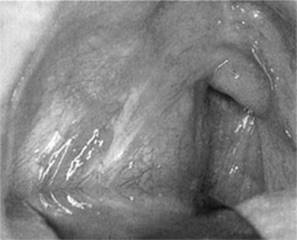
Figure 2.15 Quinsy
From Dhillon & East, 2006
Surgical treatment
The indications for tonsillectomy include recurrent episodes of tonsillitis, typically seven episodes in one year, five in two consecutive years or three in three consecutive years, having more than two weeks off school or work, any associated upper airway obstruction or any suspected tumour.
The complications of tonsillitis include:
• a quinsy or peritonsillar abscess
• retropharyngeal or parapharyngeal space abscesses
• systemic problems such as nephritis and rheumatic fever
• lung abscesses or pneumonia after inhaling discharged pus
• otitis media (by association).
2.6 Airway emergencies and tracheostomy
The upper airway is any point that conducts air between the nostrils and the trachea. Any infection or mass in the mouth and oropharynx and neck can potentially compress the upper airway. Assessment of the airway should be performed clinically prior to sending a patient for any radiological investigation such as a CT scan as this can have disastrous consequences.
Assessing an airway obstruction comprises:
• taking a history — acute, chronic or recent infection, fever, how well the patient can talk
• conducting an examination — obs: pulse, looking for tachycardia, temperature, looking for a febrile/infective cause, respiratory rate — laboured breathing, blood pressure
• inspecting for intercostal recession, tracheal tug, distress, asymmetry or induration of the neck
• listening for stridor — biphasic stridor may indicate a fixed obstruction.
A flexible nasal endoscope is certainly helpful and a portable lateral neck X-ray may also assist. It is important to lie the patient down before a CT scan, to see if they can tolerate lying in the CT scanner.
Performing a tracheostomy
A tracheostomy is a surgical opening in the trachea indicated by an upper airway obstruction. It prevents aspiration of saliva and protects the lower airway as well as permitting long-term ventilation and avoiding the complications of prolonged endotracheal intubation.
The technique used to perform a tracheostomy is as follows.
1. Make a transverse skin incision halfway between the cricoid and sternal notch.
2. Expose the trachea by retracting the strap muscles and thyroid isthmus, which may be divided.
3. Identify the second and third tracheal rings.
4. Puncture this area, creating an opening large enough to insert a tracheostomy tube (Fig 2.16).
5. Secure the tracheostomy tube with sutures or ties.
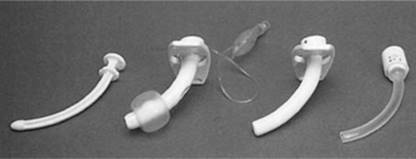
Figure 2.16 Tracheostomy tubes
From Dhillon & East, 2006
Tube types
Single versus double lumen: Double lumen tubes permit regular cleaning of the tracheostomy airway without having to change the tube. Single lumen tubes require regular changing of the tube.
Cuffed versus uncuffed: A cuffed tube permits maintenance of positive end expiratory pressure and is required for long-term ventilation. The problem with a cuff is that it may lead to pressure necrosis of the tracheal mucosa. Low pressure cuffs have been created.
Nonfenestrated versus fenestrated: a fenestrated tube permits the tracheostomy tube opening to be occluded during expiration that will allow air to pass the vocal cord and mouth to generate speech.
Complications
Complications from performing a tracheostomy can include:
• bleeding — local skin; erosion of minor vessels (thyroidea ima) or major vessels (innominate artery)
• infection — skin and soft tissue
• perichondritis and subglottic stenosis from trauma to the trachea with subsequent scar tissue
• subcutaneous emphysema, pneumothorax, pneumomediastinum
• scarring
• tracheo-oesophageal fistula
• aspiration
• tracheocutanous fistula
• tracheomalacia
• dysphagia
• tracheal stenosis
• occlusion of the tracheostomy tube from dry secretions that have not been cleared (if an occlusion has not been detected, this can be fatal)
• dislodgement of the tracheostomy tube — completely or partially
• postoperative dysphonia — nerve damage — recurrent laryngeal nerve (RLN), superior laryngeal nerve (SLN).
Avoiding complications
Patients should be located on wards where the nursing staff are experienced in caring for tracheostomies.
Humidified air/oxygen should be administered and regular suctioning performed to prevent tube occlusion. The inner cannula should be regularly changed and cleaned; single lumen tubes should be regularly changed. The tube should be reviewed at least twice daily, ideally during each nursing shift.
2.7 Snoring and obstructive apnoea
Snoring and obstructive sleep apnoea (OSA) belong under the broad classification of upper airway restriction. Snoring is at one end of the spectrum and severe OSA is at the other, with mild to moderate grades of OSA in between.
There are several sites for upper airway obstruction:
• nose, paranasal sinuses and post-nasal space
• mouth and oropharynx — tonsils, uvula, hard palate and tongue
• hypopharynx, tongue base and larynx.
The diagnosis of severe OSA should be ruled out prior to any elective surgery on the upper airway. This is achieved with a thorough history and physical examination. A sleep study is also arranged (Fig 2.17). This involves an overnight stay in hospital with the patient being monitored.
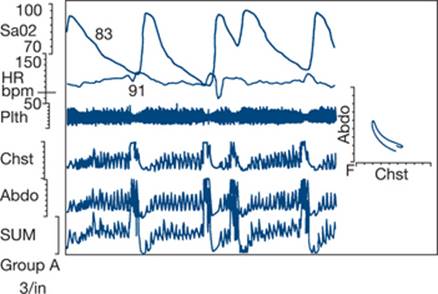
Figure 2.17 Sleep study in obstructive sleep apnoea
From Dhillon & East, 2006
Problems associated with OSA are:
• oxygen desaturation resulting in poor sleep and daytime somnolence because of waking during the night to try to obtain more oxygen
• cardiac arrhythmia, hypertension, earlier heart failure and respiratory failure
• neurologic impairment
• increased risk of stroke associated with secondary polycythaemia and hypertension
• social impairment
• (in children) poor growth, poor energy levels and poor feeding.
Treatment
The treatment for OSA is continuous positive airway pressure (CPAP). In this procedure, air is pumped and delivered via a mask, which makes breathing easier. Upper airway obstructions need to be addressed either through:
• nasal surgery
• oral/oropharyngeal surgery — uvulopalatopharyngoplasty (UPPP)
• hypopharynx — a tongue base advancement often achieved with a dental mandibular advancement splint
• tracheostomy (the gold standard, but often impractical).
2.8 Voice/dysphonia/hoarse voice
The larynx has three main functions:
• breathing — conduction of air
• protecting the lower airway during swallowing
• phonation — generating the voice.
The larynx consists of the laryngeal cartilages, bone, ligaments, membranes and muscles (Fig 2.18, Box 2.1).
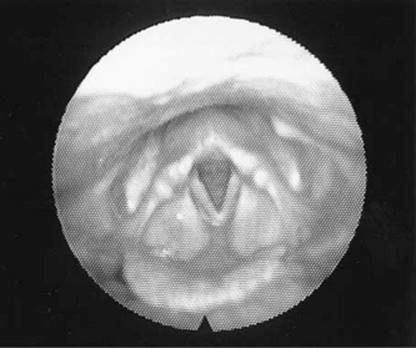
Figure 2.18 The larynx
From Epstein et al, 2008 (courtesy of Wonersh Surgery)
Box 2.1
The anatomy of the larynx
Cartilages
 Main: thyroid, cricoid, epiglottis, arytenoids
Minor: corniculate, cuneiform, triticeous
Bone
Hyoid
Ligaments/membranes
Extrinsic: thyrohyoid, cricothyroid, cricotracheal, thyroepiglottic
Intrinsic: quadrangular, conus elasticus, median cricothyroid ligament, vocal ligament
Muscles
Extrinsic: depressor — sternohyoid, thyrohyoid, omohyoid; elevators — geniohyoid, digastrics, mylohyoid, stylohyoid
Accessory: pharyngeal constrictors
Intrinsic: quadrangular membrane — thyroarytenoid, thyroepiglottis, vocalis, aryepiglottis; arytenoid muscles — interarytenoid, posterior cricoarytenoid, lateral cricoarytenoid; cricothyroid
Epithelium: true vocal cord — stratified squamous epithelium (SSE); the rest of the larynx — respiratory ciliated columnar epithelium
True vocal fold has five layers:
• stratified squamous epithelium (SSE)
• superficial layer of lamina propria (LP) — Reinke’s layer
• Intermediate lamina propria — elastic fibres
• deep layer of LP — collagen fibre
• vocalis muscle.
The true vocal fold functionally has three layers:
• the cover — SSE and superficial LP
• the transitional zone — intermediate and deep LP
• the body — vocalis.
Nerve supply
The larynx is supplied by two branches of the vagus nerve:
• superior laryngeal nerve
• recurrent laryngeal nerve.
Dysphonia
The course of the vagus nerve in the neck (Fig 2.19) is from the jugular foramen travelling down in the carotid sheath between the internal carotid artery and internal jugular vein. On the right side, it gives off the recurrent laryngeal nerve, which passes around the right subclavian artery, while on the left side it curls around the arch of the aorta.
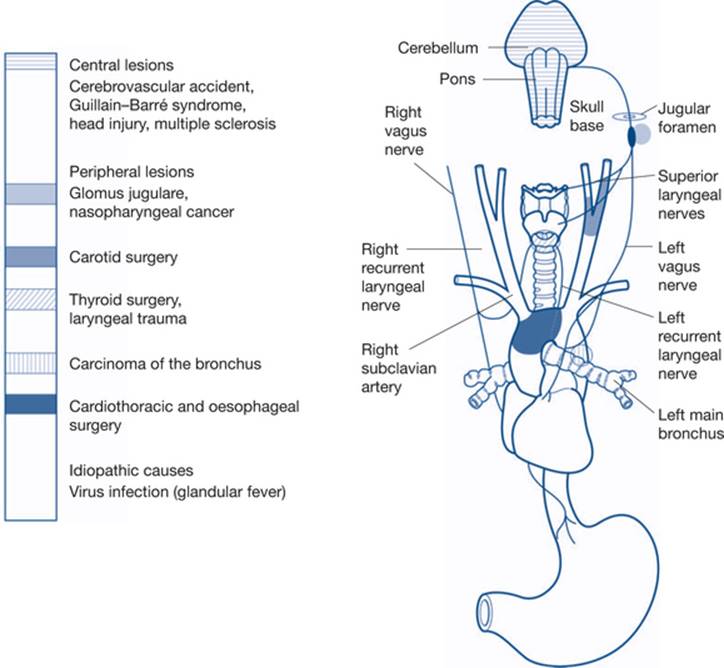
Figure 2.19 Course of vagus nerve and potential causes of vagus palsy/hoarseness
From Dhillon & East, 2006
Dysphonia is the term used to describe an abnormality of a person’s normal voice; its cause can be both organic and non-organic (Table 2.9). Aphonia is the complete absence of voice production.
Table 2.9 Organic and non-organic causes of dysphonia
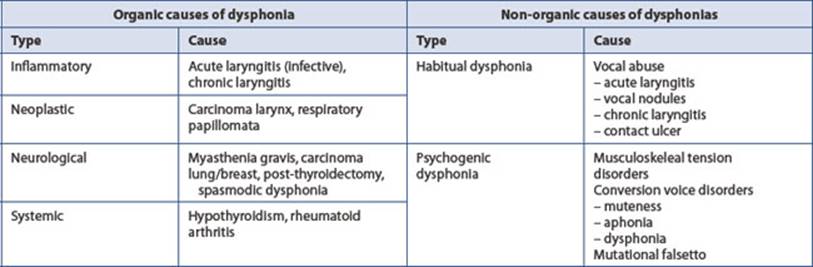
Like any disorder, a systematic approach considering the factors associated with voice production is required. Intelligible voice production begins centrally with the language centres. It requires adequate respiratory reserve and exhalation to create airflow past the vocal cords. Sound is modulated by the mouth, nose and paranasal sinuses.
Disease processes affecting the lower respiratory system should be studied from the usual medical texts.
Concentrating on disorders involving the larynx, the usual systematic evaluation should be made considering the VITAMIN CID mnemonic as well as:
• the central nervous system — tumours, systemic conditions
• the peripheral nervous system — motor and sensory (nerve injury) vagus nerve, recurrent laryngeal nerve
• the neuromuscular junction
• muscle disorders
• joint disorders (arthritis)
• vocal fold disorders — cover level: epithelium — nodules, leukoplakia, carcinoma; middle/transitional layer — cysts and Reinke’s oedema;
deep layer — conditions affecting the vocalis muscle.
Videostroboscopy also has a role in diagnosing vocal fold disorders.
More common benign lesions include polyps, cysts, granulomas, recurrent papillomas, haemangiomas, laryngocoele, contact ulcers and lymphangiomas.
2.9 Dysphagia
There are three phases to swallowing:
• oral phase
• pharyngeal phase
• oesophageal phase.
Dysphagia is an abnormality of swallowing (Ch 7.12). Odynophagia is pain on swallowing. When assessing dysphagia, the three stages of swallowing need to be addressed. A dynamic contrast study (barium swallow) is often performed.
2.10 Congenital anomalies
Thyroglossal cysts often present as midline cysts that develop along the pathway of the thyroid, anywhere between the foramen caecum and the site of the thyroid. Cysts can be single or multiple.
The investigations performed are an ultrasound, FNA, nuclear study (to ensure that this is not the only functioning thyroid tissue) and a CT neck study with contrast (after the nuclear study). The administration of contrast will delay the nuclear scan because it may reduce the thyroid’s normal uptake of iodine and give a false result.
The treatment of choice is a Sistrunk’s procedure in which the thyroglossal cyst is removed with the body of the hyoid. This reduces cyst recurrence as it is easier to remove any residual thyroglossal tract.
The types of branchial cysts are listed in Box 2.2.
Box 2.2
Branchial cysts
First branchial cysts, sinuses and fistulae — these are associated with the ear and may be intimately related to the facial nerve
Second branchial cysts (most common) — often related to the tonsils, enlarging during an episode of tonsillitis. They present as lumps from the level of the tonsil, run across the carotid sheath into the neck.
Third and fourth branchial cleft cysts and sinuses are uncommon.
Vascular malformations
These are classified as:
• haemangiomas
• vascular malformations — low flow (venous) and high flow (arteriovenous)
• lymphatic.
Depending on their size and site, they may be of either cosmetic or clinical significance. Some may affect the airway and others may affect vision; some may be associated with intracerebral vascular malformations such as Sturge-Weber syndrome.
Nasolabial cyst/dermoids/cleft lip and palate
Facial cysts form along lines of fusion of the face. The facial bones and skull are formed from processes — frontal, maxillary and mandibular — and sometimes cysts form at these sites. Examples of these are nasolabial cysts and dermoids. Intranasal lesions seen to be arising from the roof of the nose should not be biopsied without adequate imaging as there may actually be an associated meningocele or encephalocele.
Failure of fusion of these facial processes results in conditions such as cleft lip and cleft palate.
2.11 Foreign bodies
Foreign bodies of the ear, nose and throat often have a history of some contact with the foreign object. In young children, prevention is the most important aspect and vigilance the key. Having access to the correct equipment to diagnose and remove a foreign body are vital aspects in successful treatment. In young children it is often better to allow an experienced clinician to remove the foreign body because in the emergency department setting, a child will often permit one attempt prior to losing all confidence in the medical staff.
The paradigm of history, examination, investigation and treatment should be followed.
Ear
History
A variety of foreign bodies can be found in the ear such as insects, beads and cotton bud tips.
Examination
Examination of the ear for foreign bodies is by direct inspection and tuning fork tests.
Investigation
If available, an audiogram is useful for detecting foreign bodies in the ear.
Treatment
Removal of obstructing foreign bodies should be performed as soon as practical, especially in young children. Soft foreign bodies such as cotton bud tips can be removed electively.
After removal, antibiotic drops should be used to assist with healing, especially in cases of insects, which often carry bacteria and fungi.
Microalligator forceps can assist, as well as good ear suction. Trauma to the EAC is a cause of pain and this should be avoided. The TM needs to be inspected after the procedure and an audiogram should be obtained prior. If this is impractical, tuning fork tests should be documented and, if the child is too young, part of the consent should include mentioning that the patient’s hearing will need to be followed up and that the foreign body may have caused injury to the hearing apparatus. After successfully removing the foreign body from one ear, the other ear should always be inspected.
Nose
History
In young children the presentation is of a unilateral discharging nostril.
Examination
A careful inspection of the nasal airway should be performed to look for a second foreign body in the same side or in the contralateral nostril.
Investigation
Conduct a direct inspection and endoscopic evaluation to look for a second foreign body.
Treatment
Small disc batteries should be removed as soon as possible to prevent a local burn and potential subsequent septal perforation.
Oropharyngeal/oesophageal
History
Obtain a history of ingestion of the object: coins, batteries and fish bones.
With an impacted fish bone, the patient will point to the submandibular region when the bone is in the tonsil or tongue base and point to the level of the cricopharyngeus when it is at the level of the upper oesophageal sphincter.
You must elicit the symptoms consistent with a perforation and abscess formation or mediastinitis: fever, chest pain, subcutaneous emphysema.
The exact nature of the foreign body needs to be obtained. A history of ingestion of a disc battery should hasten all management as a perforation of the oesophagus with subsequent life-threatening mediastinitis may result from delayed removal.
Examination
Examination should include careful inspection of the mouth, oropharynx, tonsils and tongue base in combination with a fibre-optic nasal endoscopy of the larynx and hypopharynx.
For fish bones, the wiggle test is useful. Start by grasping (in order) the hyoid, thyroid, cricoid, then trachea. At each level, move the structure from side to side and, if there is an impacted fish bone, pain will be elicited.
Investigation
Investigation is usually by:
• lateral neck X-ray
• chest X-ray — looking for complications of a perforation
• CT scan — fine cuts.
Treatment
Endoscopic removal is commonly used in treatment. Disc batteries need to be removed as soon as possible to lessen the risk of perforation of the oesophagus. This is potentially a life-threatening complication that can result in mediastinitis because of infective saliva passing into the mediastinum.
Upper airway
History
A history of a nut or other foreign body ingestion should be sought from the patient, or the parent, as it is often a child.
Examination
A complete respiratory examination is usually required. Decreased breath sounds on the affected side are an indication of a foreign body lodged in the upper airway. Pneumonia may be a consequence of long-term lodgement with a foreign body.
Investigation
Inspiratory and expiratory chest X-ray is useful for detecting foreign bodies in the upper airway. This will potentially demonstrate loss of expansion and collapse on the side of the foreign body.
Treatment
Removal should be made by an experienced endoscopist and anaesthetist, which may require transport of the patient to a tertiary hospital. Always contact an ENT service for any paediatric airway foreign body.
2.12 Head and neck cancer
Most head and neck cancers (about 90%) are squamous cell cancers (SCC). Treating any tumour depends on its stage. Staging is performed clinically and radiologically by CT, MRI or PET scan. The upper aerodigestive tract needs to be assessed and this is achieved by performing a triple endoscopy: direct laryngoscopy, oespohagoscopy and bronchoscopy. Biopsies are taken to confirm the diagnosis and also determine the extent of any surgery. An FNA is taken to assess lymph node involvement. This avoids the potential spread of tumour cells to the surrounding tissues of the neck with more invasive biopsies such as a core biopsy.
The tumour classification system often employed is the TNM classification: Tumour size, Nodal status, Metastases (Table 2.10). Depending on the TNM classification of a tumour, it is then classified as stage I, II, III or IV. Early tumours are classified stage I and II. Advanced tumours are classified stage III or IV. Generally, stages I and II have no nodal involvement — N0, stage III has early nodal involvement (N1) without distant metastases (M0) and stage IV has advanced nodal status (N2 or N3) and/or distant metastases (M1).
Table 2.10 TNM
|
TX |
Primary tumour cannot be assessed. In these instances, patients present with lymphadenopathy of the head and neck with no obvious primary site tumour |
|
T0 |
No evidence of primary tumour |
|
NX |
Regional lymph nodes cannot be assessed |
|
N0 |
N0 — no regional lymph node metastases |
|
MX |
Distant metastasis cannot be assessed |
|
M0 |
No distant metastasis |
Therapy involves one or more of surgery, radiotherapy and chemotherapy. Often in sites where surgical access is difficult, a combination of chemo-radiotherapy is used. The nasopharynx is one such site.
Tables 2.11 to 2.14 indicate staging for a variety of head and neck cancers. Figure 2.20 depicts a carcinoma of the tonsil.
Table 2.11 Staging for lip and oral carcinoma
|
T1 |
≤ 2 cm |
|
N1 |
Ipsilateral single node ≤ 3 cm |
Table 2.12 Staging for oropharyngeal carcinoma
|
T1 |
≤ 2 cm |
|
N1 |
Ipsilateral single node ≤ 3 cm |
Table 2.13 Staging for hypopharyngeal carcinoma
|
T1 |
≤ 2 cm and limited to one subsite |
|
N1 |
Ipsilateral single node ≤ 3 cm |
Table 2.14 Staging for nasopharyngeal carcinoma
|
T1 |
Limited to nasophayrnx |
|
N1 |
Unilateral metastasis in node/s ≤ 6 cm, above supraclavicular fossa |

Figure 2.20 Carcinoma of tonsil
From Dhillon & East, 2006
2.13 Larynx
Most of the cancers of the larynx are SCC. For the purposes of tumour staging, the larynx is divided into three anatomical regions: the glottis (true vocal cords, anterior and posterior commissures); the supraglottis (epiglottis, arytenoids and aryepiglottic folds, and false cords); and the subglottis.
Tables 2.15 to 2.18 outline the staging for these cancers, as well as cancer affecting the salivary gland.
Table 2.15 Staging for supraglottic carcinoma
|
T1 |
One subsite, normal mobility of vocal cord |
|
T2 |
Involving mucosa of more than 1 adjacent subsite of supraglottis or glottis or adjacent region outside the supraglottis without fixation |
|
T3 |
Limited to larynx with vocal cord fixation or invades postcricoid area, pre-epiglottic tissues, base of tongue |
|
T4 |
Extends beyond larynx |
Table 2.16 Staging for glottic carcinoma
|
T1 |
Limited to vocal cord/s, normal mobility |
|
T1a |
Unilateral vocal cord involvement, normal mobility |
|
T1b |
Bilateral vocal cord involvement, normal mobility |
|
T2 |
Extending to supraglottis, subglottis, impaired vocal cord mobility |
|
T3 |
Vocal cord fixation |
|
T4 |
Extends beyond larynx |
Table 2.17 Staging for subglottic carcinoma
|
T1 |
Limited to the subglottis |
|
N1 |
Ipsilateral single node ≤ 3 cm |
Table 2.18 Staging for salivary gland carcinoma
|
T1 |
≤ 2 cm, without extraparenchymal extension |
|
N1 |
Ipsilateral single node ≤ 3 cm |
2.14 Parotid and salivary glands
In the head and neck there are three paired major salivary glands and many minor salivary glands that are part of the mucosa.
The major salivary glands are the parotid, submandibular and sublingual. The submandibular and sublingual glands contribute 60% of saliva production and the parotid contributes about 30%.
The parotid gland drains via Stensen’s duct opposite the second upper molars. The submandibular and sublingual glands drain via Warton’s duct, which opens either side of the tongue frenulum. The facial nerve is an inherent part of the parotid gland and needs to be identified during any parotid surgery. The submandibular gland has the marginal mandibular, lingual and hypoglossal nerves in close proximity, and these need to be avoided during surgery.
Examination of the gland involves careful inspection of it and the duct orifice, palpation of the gland and massage to see the nature of the expressed secretions, whether clear or pus. Cervical lymph nodes should be examined to assess for malignancy. The associated nerves also need to be tested.
All salivary glands can be affected by the same pathologic processes.
Sialadenitis is acute inflammation of a salivary gland. Managing acute sialadenitis involves regular massage of the involved gland, massaging in the line of the duct, oral hygiene, maintaining hydration status by drinking lots of water, using sialagogues such as lemon juice to stimulate saliva production, adequate analgesia and antibiotics (flucloxacillin or clindamycin).
Calculi can present as intraglandular or intraductal and cause a build-up of saliva with subsequent swelling of the affected gland. This fluid has potential to become infected, often by Staphyloccus aureus.
Investigations
Investigations include:
• plain X-ray — 60 % of submandibular calculi are radio-opaque versus only 30% of parotid calculi
• sialogram — contrast is injected via the salivary duct, looking for stones, duct dilatation and constriction
• CT scan — differentiation between stones and tumours; however, does not always detect stones.
Systemic conditions that may affect the salivary glands are:
• mumps — presents as bilateral parotitis
• Sjögren’s syndrome — results in dry eyes and enlargement of the salivary glands
• alcoholism — results in bilateral enlargement of the parotids.
As a general rule, 80% of tumours in major salivary glands are benign and 20% are malignant. In minor salivary glands, 20% of tumours are benign and 80% are malignant.
Benign tumours include:
• monomorphic adenoma
• Warthin’s — also known as adenolymphoma, which are often bilateral and found in smokers
• pleomorphic adenoma — accounting for about 80% of benign tumours. These tumours need to be excised with a margin of tissue to prevent recurrence as they have bosselations that are out pouchings of the lesions. There is a long-term risk of malignant change if they are not excised.
Malignant tumours comprise:
• SCC — metastatic — from associated skin lesions, primary
• adenoid cystic carcinoma
• carcinoma ex pleomorphic — arise from pleomorphic adenomas
• mucoepidermoid carcinoma
• lymphoma
• adenocarcinoma
• acinic cell carcinoma — almost exclusively confined to the parotid gland.
2.15 Thyroid/parathyroid
Goitre
The most common presentation of thyroid disease is an enlargement of the gland (goitre). Abnormalities of endocrine function may coexist. Morphologically goitre has three types: general enlargement (either diffuse or multinodular) or a solitary nodule. Physiological enlargement of the thyroid occurs at puberty and the normal thyroid gland is frequently visible and palpable in slender individuals on either side of the trachea as a soft, smooth, bilobed fullness that moves upwards when the patient swallows. In thick-necked individuals the normal gland can be neither felt nor seen.
Thyroid enlargement involving the whole gland is usually easy to recognise — the gland’s characteristic shape of two lobes on either side of the trachea joined by an isthmus and its movement with the larynx on swallowing and speech are unmistakable signs. A localised discrete lump in the thyroid will also be confined by the pretracheal fascia and will move on swallowing. All forms of goitre affect women more frequently than men.
Common causes
I. General enlargement
1. Multinodular goitre: euthyroid or toxic
2. Diffuse toxic goitre (Graves’ disease)
3. Thyroiditis
4. Anaplastic carcinoma
II. Single nodule
1. Dominant nodule in a multinodular goitre
2. Adenoma
3. Colloid nodule, cyst or haematoma
4. Carcinoma
III. Recurrent goitre after surgery
Clinical features
History
Most swellings are chronic and painless. Pain over the swelling, particularly when accompanied by acute enlargement, strongly suggests acute haemorrhage, thyroiditis or occasionally carcinoma. Symptoms suggesting compression of local structures should be sought — tracheal compression may cause dyspnoea, wheeze and stridor, particularly at night or on tilting the head to one side. Flushing of the face on exertion or on arm elevation suggests venous obstruction. A recent voice change suggests recurrent laryngeal nerve involvement. Sometimes extrathyroid manifestations of malignancy, such as a lymph node swelling, can be the primary presenting problem.
Hormonal imbalance can cause protean symptoms because thyroid hormones exert effects on most body tissues. In young patients, ocular and general systemic manifestations are common; in older patients, symptoms are predominantly cardiac. A typical history is of anxiety, weight loss without loss of appetite and heat intolerance. Hypothyroidism is often iatrogenic. A history of previous thyroid surgery or antithyroid drug intake should be sought.
Table 2.19 sets out the process of examining a goitre.
Table 2.19 Physical examination of the thyroid
|
Examination |
At what |
Significance |
|
Look, look, look!/inspect/listen |
General body habitus |
Indicates hyper/hypothyroid |
|
Feel |
Goitre size, nodularity, consistency, tenderness, warmth |
Thyroid lesion |
|
Percuss |
Sternum |
Retrosternal extension |
|
Auscultate |
Bruit |
Hyperdynamic circulation |
|
Dynamic manoeuvres |
Pemberton’s sign |
SVC compression |
Examination of the neck should always begin with a frontal inspection of the patient’s exposed entire head, neck and upper chest in repose, then while swallowing water from a glass. Any scars of previous operations and visible swellings are noted. The patient should sit comfortably and swallow first with the neck in a neutral position and then slightly extended to throw the gland into more prominence. The effects of lateral neck flexion and of raising both arms above the head are noted. Obstruction of the superior vena cava (SVC) may be precipitated by arm-raising, causing facial flushing and venous congestion (Pemberton’s sign). Vascular pulsation may be apparent; visible jugular veins and the level and symmetry of the jugular venous pulse and pressure waves are noted. The lower limits of lateral lobe swelling are often visible on swallowing. The position of the anatomical landmarks of the thyroid cartilage, hyoid bone and trachea are noted.
If an enlargement of the gland is noted, its size, consistency and vascularity, together with its local and systemic effects, must be assessed. The examiner first stands behind the patient and identifies the trachea by palpation and notes any displacement. The limits of the gland are outlined with the finger pulps and, as the patient swallows, the gland is allowed to slip between the fingers. The lateral lobes, isthmus, pyramidal lobe and lower boundaries of the gland are assessed and nodules defined. To evaluate each lobe more precisely, each sternomastoid in turn is retracted by one hand and the exposed gland palpated from behind by the other hand passed across the midline.
Finally, the gland is palpated from in front. Each lobe is palpated between the thumb in front and the fingers crooked behind the posterior edge of the sternomastoid: the right hand palpates the left lobe and vice versa. Each lobe is made more prominent for palpation by displacing and rotating the trachea towards the side being examined, so the lobe is brought more anteriorly, using the thumb of the other hand placed on the trachea.
If a lower lobe’s boundary is neither visible nor palpable by these manoeuvres, it is probably retrosternal and should be further assessed by percussion over the sternum. Tracheal compression may be exposed by compressing the lateral lobes of the thyroid between both hands (Kocher’s test) to see if stridor is evoked. Fixation or attachment of the goitre to the sternomastoid muscles, the trachea and carotid vessels is assessed. Benign swellings, even when very large, displace but do not obscure the vessels; cancers can wrap around them (Berry’s sign). Examine the neck for enlarged nodes, particularly looking for prelaryngeal (Delphic) or pretracheal nodes, as well as those of the deep cervical chain and posterior triangle. Finally, listen for bruits: evidence of hyperthyroidism within the gland is established solely on this basis. If surgery is to be undertaken or if carcinoma is suspected, examination of the goitre is not complete until the cords have been assessed by indirect laryngoscopy. Paralysis of the recurrent laryngeal nerve causes an immobile cord and is usually indicative of carcinoma and occasionally of thyroiditis or previous surgery.
Signs of hyperthyroidism outside the neck are next assessed: these may be obvious or occult. One must be alert for eye signs, cardiovascular manifestations and peripheral signs.
Common causes — specific clinical features
Differentiation should, by this stage, be possible between general (diffuse or multinodular) enlargement or a localised single lump.
General enlargement
The differential diagnosis is multinodular goitre, diffuse toxic goitre (Graves’ disease), Hashimoto’s thyroiditis and anaplastic carcinoma.
1 Multinodular goitre
A longstanding nodular enlargement involving the whole gland without endocrine disturbance is, in most cases, associated with dietary deficiency and hyperplasia (involution sequence) or with goitrogens in the diet. Toxicity may develop in older patients, in whom symptoms are predominantly cardiac. Tracheal compression and intrathoracic extension are also common complications. Dyspnoea, wheeze and stridor develop, particularly when lying on one side at night.
2 Graves’ disease
This is common in young women and combines signs of overactivity with a smooth diffuse vascular enlargement. Eye signs and systemic effects may predominate with no visible or palpable goitre. Some patients present because of associated symptoms such as diarrhoea or amenorrhoea.
3 Hashimoto’s thyroiditis
This is the most common form of thyroiditis. It is much more common in women. Association of a nodular goitre with mild hypothyroidism in a middle-aged patient is very suggestive of Hashimoto’s thyroiditis. The gland may also be painful, tender and initially associated with clinical and laboratory signs of thyrotoxicosis progressing to hypothyroidism.
Acute or subacute thyroiditis (De Quervain’s thyroiditis) is suggested by sudden onset of swelling with severe pain, fever and a diffusely enlarged, firm and a very tender gland. It often follows an upper respiratory tract infection and is related to infection with mumps or Coxsackie virus infection. Riedel’s thyroiditis is a rare fibrotic condition of the thyroid associated with hypothyroidism and tracheal compression.
4 Anaplastic carcinoma
This occurs in older patients and is suggested by a hard, irregularly enlarged gland with signs of fixation to surrounding structures and local lymph node spread.
Single nodule
A single-nodule goitre is depicted in Figure 2.21.
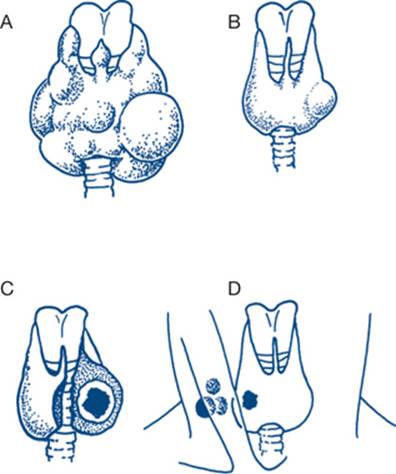
Figure 2.21 Goitre — single nodule
A: dominant nodule in a multinodular goitre; B: benign adenoma; C: celloid nodule within a haemorrhagic cyst; D: carcinoma (papillary) with nodes
The differential diagnosis includes: dominant nodule in an unrecognised multinodular goitre; adenoma; colloid nodule or haemorrhagic cyst; papillary or follicular carcinoma; and lobular thyroiditis. The main question to be answered is whether the lesion is benign or malignant. Pressure effects and toxicity are much less common as complications of a single nodule. A single thyroid nodule is more likely to be cancer in a man than in a woman and in a young patient than in an old one.
Benign lesion
A short history suggests a haemorrhagic cyst or thyroiditis; an abrupt onset of a tender nodule is typical of haemorrhage into a cyst. Tenderness on palpation is the main feature of thyroiditis. Benign adenomas are usually nontender. Careful palpation is essential to exclude multinodular goitre, but it is often difficult to be sure that a nodule is truly single.
Carcinoma
Papillary carcinoma is the most common thyroid cancer and usually presents in young adult women. Initial spread is typically lymphatic and the disease may present as a lateral or medial lymph node swelling in the neck (the primary lesion being impalpable). The tumour is well differentiated histologically and can be difficult to distinguish from normal thyroid tissue. Thyroid tissue obtained from cervical nodes was considered for some time to be aberrant thyroid tissue, but it is now realised that these findings imply a small and often impalpable, primary cancer in the thyroid. The classification and staging of thyroid carcinoma is listed in Box 2.3.
Box 2.3
Thyroid carcinoma classification and staging
T1 ≤ 2 cm
T2 >2–4 cm
T3 >4 cm
T4 Extends beyond gland
N1 Regional lymph node metastases
N1a Ipsilateral cervical nodes
N1b Bilateral, midline, contralateral or mediastinal nodes
Follicular carcinoma accounts for about 20% of malignant thyroid tumours. Follicular carcinoma can be very difficult to distinguish from a benign follicular adenoma (Box 2.4). Capsular invasion, if present, is indicative of malignancy. Follicular tumours occur more often than papillary tumours in older patients and have a greater tendency for blood-borne spread. The prognosis is therefore not as good as for papillary carcinoma.
Box 2.4
Staging: papillary (follicular) carcinoma
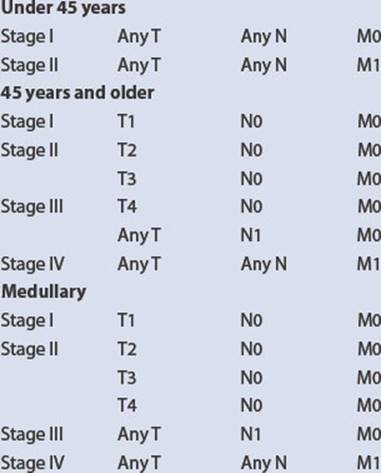
Medullary carcinoma is an uncommon form of thyroid cancer. It is a solid hard tumour that secretes calcitonin and occurs as part of the familial multiple endocrine adenomatosis syndrome.
Undifferentiated or anaplastic thyroid carcinoma is uncommon and of poor prognosis (Box 2.5).
Box 2.5
Staging: undifferentiated (anaplastic) carcinoma

Staging and prognosis for differentiated thyroid cancer is made in terms of 20-year survival versus five-year survival rates for head and neck SCC. Having a differentiated thyroid cancer is, therefore, a relatively good prognosis. From the 20-year perspective, it means that thyroid cancer should continue to be under surveillance once diagnosed. Prognostic scoring systems do not account for local lymph node metastases, as these relate to recurrence rather than long-term survival.
Table 2.20 Thyroid carcinoma outcome statistics
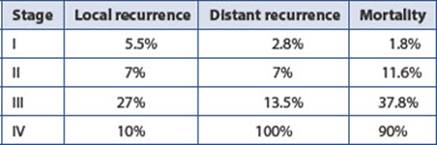
The US-based Mayo Clinic classifies carcinoma according to the acronym MAICS (Table 2.21):
Table 2.21 The Mayo Clinic carcinoma classification system

Metastasis yes = 3, no = 0
Age <39 = 3.1, >40 = 0.08 × age
Invasion yes = 1, no = 0
Completeness of resection yes = 1, no = 0
Size 0.3 × size in centimetres.
The Lahey Clinic, also in the US, bases its classification system on the acronym AMES (Table 2.22):
Table 2.22 The Lahey Clinic’s AMES classification system
|
Low risk |
High risk |
|
|
Age |
<41 male, <51 female |
>41 male, >51 female |
|
Metastases |
No |
Yes |
|
Extent |
Intrapapillary thyroid, follicular with minor capsular invasion |
Extracapsular |
|
Size |
<5 cm |
>5 cm |
Age
Metastases
Extent
Size.
Diagnosis
In most cases the true nature of the thyroid disorder can be obtained by careful history and examination, leading to a clinical diagnosis. Investigations serve merely to confirm the diagnosis. In an important minority of patients, clinical methods leave the diagnosis unresolved, particularly when a patient presents with:
• a discrete lump in an otherwise normal gland or
• milder states of hyperthyroidism resembling an anxiety state and
• occult hypothyroidism.
Laboratory investigations of thyroid disease fall into two main categories:
• thyroid function tests (TFTs) and thyroid antibodies
• tests to determine more precisely the pathology of thyroid enlargements.
Imaging studies help define altered morphology and function; cytological techniques help define pathology, particularly the presence of cancer.
Thyroid function tests
A battery of TFTs exist, but four hormone assays in particular will give a clear picture of thyroid function. These measure plasma concentrations of total thyroxine (T4), total triiodothyronine (T3), thyroid-binding globulin (TBG) and thyroid-stimulating hormone (TSH). Serum T4 usually gives an accurate reflection of thyroid function.
All patients with clinical evidence of hyperthyroidism or hypothyroidism will require TFTs to confirm the diagnosis and give a baseline against which to monitor treatment. Patients with uncomplicated nodular goitre and no clinical evidence of functional abnormalities or compressive symptoms, in whom no active treatment is contemplated, do not require TFTs or further imaging. Patients clinically euthyroid, in whom some type of thyroid resection is contemplated, should also have baseline TFTs.
Thyroid imaging
Plain X-ray. All patients with pressure symptoms should have a plain X-ray of the neck and thoracic inlet. This may reveal displacement or compression of the trachea and mediastinal extensions. The soft tissue mass of the goitre will be visible. Calcification occurs in large nodular goitres. If malignancy is suspected or confirmed, X-rays of chest, spine and pelvis should be done. Osteolytic metastases are particularly likely with follicular carcinomas.
Radionuclide scanning. Radioisotopes of either technetium or iodine produce maps of functioning thyroid tissue. Scanning is most often used in patients presenting with an apparently solitary nodule. Scanning determines if such a nodule is truly single and whether it is hyperfunctioning, hypofunctioning or functioning similarly to normal thyroid tissue. An increased incidence of malignancy is found in hypofunctioning (‘cold’) nodules. Benign degenerative nodules, cysts, haematomas and adenomas are also cold and these account for the majority of nodules. Also, a functioning nodule does not absolutely exclude a cancer, so the test is of low discriminatory value. If lytic metastases are found, isotope scans of technetium together with phosphorus should be done to determine the avidity of the metastases for isotope.
Ultrasound scanning. This can determine whether palpable nodules are single or multiple and whether they are solid or cystic. Ultrasound is of little value in excluding malignancy.
Aspiration cytology
FNA is the most accurate method for predicting the likelihood of cancer in thyroid nodules and is now often the diagnostic procedure of first choice, replacing radionuclide and ultrasound studies. Fine needle aspiration cytology (FNAC) will usually be diagnostic with anaplastic and papillary carcinomas. Distinguishing follicular adenomas from carcinomas is more difficult and less certain. Aspiration of cysts is usually both diagnostic and curative. FNAC is also very useful in diagnosing other malignancies, such as lymphomas, and in diagnosing thyroiditis, whether presenting as a nodular or diffuse enlargement.
Other biochemical tests
Thyroid antibodies are measured when thyroiditis or Graves’ disease is suspected. Thyroid microsomal and thyroglobulin antibodies are generally elevated in Hashimoto’s autoimmune thyroiditis. Thyroid-stimulating immunoglobulins are often detected in Graves’ disease and have been implicated in its pathogenesis.
Serum calcium and phosphate estimations assess parathyroid function.
Treatment plan
The plan of management is determined by the clinical presentation. The following are the most common clinical problems.
General enlargement
1 Generalised longstanding gland enlargement (multinodular goitre)
If no features of compression or functional derangement exist, the patient should be reassured that neither investigation nor treatment is necessary.
Multinodular goitre with compressive (trachea, veins, oesophagus) or cosmetic symptoms or suspicion of malignancy. Surgery is the treatment of choice. Preoperative assessment includes plain X-ray of neck and chest, TFTs, serum calcium level and examination of the vocal cords. Hyperthyroidism, if present, is controlled by a course of antithyroid drugs prior to surgery. These patients sometimes require semi-emergency operations. If cancer is suspected, FNAC is done prior to surgery. Surgical exploration includes frozen section if cancer is suspected.
Toxic nodular goitre. This disease commonly affects elderly women; cardiac manifestations are common. Investigations include TFTs, neck and chest X-ray, ECG and often additional tests of cardiorespiratory function. Radio-iodine ablation is the treatment of choice unless the gland is very large or pressure symptoms are present. For initial control of severe thyrotoxicosis, antithyroid drugs may be necessary. Surgery is reserved for the uncommon event of failure to respond to drugs or development of pressure symptoms.
2 Graves’ disease
Tests of thyroid function and antibodies are performed. The disease is probably mediated by antibodies to the TSH receptor, causing overproduction of thyroid hormones. Findings are elevated total T4 and T3, normal or low TSH and normal TBG; thyroid antibodies may be positive. Isotope scanning is not required for diagnosis but characteristically shows diffusely increased isotope uptake.
Initial treatment is to control the thyrotoxic state with antithyroid drugs (carbimazole). Definitive treatment is selected from long-term antithyroid drug treatment, radio-iodine ablation or surgery (bilateral subtotal thyroidectomy). Most patients respond to antithyroid drugs but commonly relapse after ceasing treatment; long-term treatment is usually well tolerated. Radio-iodine ablation is usually reserved for those beyond child-bearing age. Surgery is reserved for the group resistant or relapsing after drug treatment and in older patients with large goitres.
3 Hashimoto’s thyroiditis
Tests for antibodies, thyroid function and FNAC are the main diagnostic tools. Treatment is by thyroxine suppression, as progression of the disease ultimately leads to gland destruction and hypothyroidism. Surgery, if required to exclude malignancy or relieve tracheal compression, must be conservative.
4 Anaplastic invasive cancer
These patients are commonly elderly with an extensive firm goitre and signs of local spread. FNAC is the principal investigation and, if equivocal, is followed by core biopsy. The mainstay of treatment of undifferentiated invasive cancer is local irradiation. Surgery has little place other than confirming the diagnosis.
Single thyroid nodules
These are commonly degenerative nodules, cysts or benign adenomas. Exclusion of thyroid cancer is the important principle and FNAC is often the first investigation in a referral clinic. Most patients with a dominant single nodule, in whom a multinodular goitre is not discovered on investigation, will require surgery to confirm the benign nature of the lesion or to treat cancer. Patients are often referred to hospital having already had thyroid scans, which help to detect or exclude other nodules. The results of FNAC will be:
• Aspiration of a cyst with disappearance of the lump and negative cytology. Radionuclide scanning is performed (if not already done) to determine whether subclinical cysts or nodules are present. The patient is observed for a period as an outpatient to see that clinical recurrence does not occur.
• Solid lump, cytology negative or equivocal for cancer. The safest course is surgical excision of the lump with a margin of normal tissue to confirm its benign nature, with frozen section at the time of surgery. When the lump is in the isthmus it is removed together with the isthmus. When in one lobe, a total or near-total lobectomy and isthmectomy is done on that side, identifying and preserving the recurrent laryngeal nerve. If cancer is diagnosed by frozen section, the other lobe is similarly removed, with preservation of the recurrent laryngeal nerve and parathyroids. If diagnosis of a differentiated cancer is not made by frozen section, but is later confirmed by paraffin section, the neck is not usually re-explored. Lobectomy and subsequent long-term thyroxine treatment is usually adequate treatment for these cancers, which have a favourable long-term prognosis.
• Preoperative preparation in all patients undergoing surgery includes baseline thyroid function and serum calcium estimations, isotope imaging of the gland and examination of the cords.
• Solid lump, cytology suggests thyroiditis. Thyroid function tests, isotope imaging and antibody screening are done. Thyroxine is given. If the nodule persists after two months of treatment the gland is explored as above.
• Solid lump, cytology suggests differentiated carcinoma. In addition to the preoperative preparations listed, CT scan of the neck, X-rays of the chest, spine and pelvis and radionuclide bone scans are done. CT scans are more discriminatory than isotope scans for identifying additional nodules and lymph node enlargement. Operation comprises total thyroidectomy, preserving the recurrent laryngeal nerve and parathyroid glands. Any involved lymph nodes are locally removed at the same time. After total thyroidectomy, functioning metastases can be detected and ablated with radioactive iodine. Patients are followed up with six-monthly thyroglobulin levels and neck ultrasounds to detect recurrence.
Patients after previous thyroid surgery
Recurrent thyrotoxicosis is treated with medical management, although there is an increasing trend for surgical intervention in the form of a complete thyroidectomy. Other presentations, such as recurrent nodules, are treated on their merits. If surgery is planned, preoperative assessment must include thyroid function tests and serum calcium estimations, vocal cord examination and isotope scanning as baseline tests. Preservation of nerves and parathyroids requires very careful surgery.
2.16 Mouth ulcers and lesions
Most mouth ulcers are caused by trauma or other benign causes. In many cases dental consultation is advisable. Biopsy is indicated if an ulcer persists for more than three weeks after removal of an obvious local cause. Cancers of the oral mucous membrane are common in patients with poor oral hygiene; they are often asymptomatic or present late. Examination of the entire oral mucous membrane requires a mixture of: inspection — using a pocket torch or head lamp combined with a retracting spatula; palpation — using fingers of one or two hands (particularly to detect induration); and endoscopy to visualise the furthest recesses of the oral cavity and adjoining nasopharynx and oropharynx. Only those causes of mouth ulcer that may result in a condition requiring surgery will be considered.
Common causes
There are two categories of cause:
• Benign disease
1 ‘Dental’ ulcer
2 Herpes labialis (‘cold sore’)
3 Benign fissures
4 Prosthetic ulcers and epulides
5 Pyogenic granuloma
6 Lichen planus
7 Candidiasis
8 Mucous retention cyst
9 Neutropenia
10 Pigmented and vascular lesions
• Carcinoma and leukoplakia
Clinical features and treatment
Benign disease
1 ‘Dental’ ulcer
The ancient Greeks called ulcers of the mouth aphthi and recognised that they could be benign or malignant. Benign aphthous ulcers are common in children and adults, are usually found on the oral mucous membrane of the alveolar ridges or the floor of the mouth and are characteristically painful superficial ulcers with no hint of induration, with a white surface and a red, inflamed edge. Their natural history is of gradual but complete healing, but they can last for weeks or even months (major aphthae) and, if so resistant, should be regarded with suspicion. Behçet’s syndrome, consisting of recurrent aphthous ulceration and ulceration of the external genitalia and uveitis, must also be considered in intractable cases. Any hint of induration is an indication for biopsy. Treatment otherwise is symptomatic. Covering the ulcer with a surface film helps reduce pain and may facilitate healing. They are commonly associated with systemic illnesses but their cause is unknown; vitamin B12 or folic acid deficiencies may sometimes be of significance. When a mouth ulcer appears to be aphthous but is painless, chancre must be excluded in the high-risk patient.
2 Herpes labialis (‘cold sore’)
These acute, short-lived lesions caused by herpes simplex infection present as tender, raised, fissured and crusted plaques on the mucosa of the lip, often at the commissure. They tend to be recurrent and flare up during associated illnesses with liver and constitutional disturbance. They can be treated by local application of antiviral creams. Similar ulcers may appear in the posterior oropharynx in Coxsackie group A infectious mononucleosis and adenovirus infections.
3 Benign fissures
Benign fissuring of the tongue is a congenital lesion of no clinical importance. The length of history, characteristic appearance and complete absence of induration help distinguish it from carcinoma. Chronic fissuring of the lips is common at the angle (cheilosis). It may be due to vitamin deficiency and radiate from the margins (rhagades). Fissuring is more common when drugs such as antihistamines are being taken, which have side effects of dry mouth. Vitamin B, folic acid and iron deficiencies also produce atrophy and an easily damaged oral cavity. Fissuring can occur in the edentulous patient, with pooling of spittle in the corners due to lack of oral competence following erosion of the edentulous mandible’s upper margin. Brown superficial crusting and scabbing at the corners of the mouth that can be scraped or licked off can occur in school children (perlèche). Chronic midline fissure is another lesion of the lower lip that is seen most in winter months in cold climates. It can simulate carcinoma and will require biopsy and excision if chronic.
4 Prosthetic ulcers and epulides
Chronic irritation by dentures, pipes and teeth stumps can lead to traumatic ulcers. These can mimic carcinoma and may be premalignant. Other causes of trauma are worn tooth facets produced by bruxism (grinding) and malocclusion. A nodular lesion of the gum or alveolar margin is called an epulis and may be inflammatory or neoplastic in origin. All epulides should be removed for biopsy. Dental consultation is usually necessary in these cases.
5 Pyogenic granuloma
The mucous membrane of the lips and mouth, particularly at the commissural line of the inner cheek, is the usual site for this common lesion. It presumably starts as a traumatic breach from biting, burning, chemical injury or a hypersensitivity reaction and is transformed by infection into a small protuberant cherry-red nodule. It is a soft, vascular, haemorrhagic lesion. Excisional biopsy will be necessary to confirm the diagnosis.
6 Lichen planus
This benign dermatitis can cause intra-oral white web-like plaques similar to leukoplakia and may require biopsy to exclude carcinoma. This lesion may be premalignant in 10–15% of cases. Usually, similar lesions occur on the limbs. Atrophic, erosive and bullous lesions are also seen. A similar appearance may result from methyldopa sensitivity.
7 Candidiasis
Infection with monilia (Candida) is common in patients on antibiotics and immunosuppressants. Oral candidiasis presents as a white exudate that is soft and woolly with surrounding reddened inflammation of the mucous membrane, usually very characteristic in appearance. The exudate is easily brushed from the surface. Treatment by oral washes with nystatin or amphotericin is usually rapidly curative.
8 Mucous retention cyst
This common lesion of the buccal mucous membrane presents as a soft, translucent, dome-shaped nonulcerated swelling with the appearance of a blister, although the overlying mucosa is a little more opaque. They arise from obstruction of the mucosal salivary glands and often disappear on aspiration or unroofing.
9 Neutropenia
Oral ulceration and ulcers of other mucous membranes is a common presentation of severe neutropenia associated with lymphoma or drug toxicity. It can be a debilitating complication of cytotoxic therapy. These ulcers are very painful, indolent and chronic; they are usually sited on the palate or oropharynx and can be very difficult to heal.
10 Pigmented and vascular lesions
Benign haemangioma (‘venous lake’) is a small bluish lesion a few millimetres in diameter presenting as a symptomless, soft, longstanding nodule. The nodule often shows the physical sign of ‘emptying’ on compression.
Hereditary haemorrhagic telangiectasia (Osler’s disease). Occasionally, multiple cherry-red, pink or bluish-red, nodular haemangiomas occur over the inner aspect of the mucous membrane of the lips and elsewhere. A family history is present. There are often coexistent arteriovenous malformations of the lungs, brain and gastrointestinal systems. Troublesome epistaxis is the main presentation.
Melanosis of the buccal mucosa and intestinal polyposis (Peutz-Jeghers syndrome). Dark pigmented spots on the buccal mucous membrane are associated with multiple polyps of small bowel. Recurrent abdominal pain and bleeding causing anaemia may be symptoms. The lesions are benign hamartomas and need no treatment in themselves, but an association with gastrointestinal malignancies is sometimes suggested.
Leukoplakia is the major premalignant lesion of the oral cavity. These present as whitish wet plaques and can be localised or confluent. They are initially translucent and later become thicker and whiter (looking like wet paint) and may become fissured with superficial ulceration. They will require biopsy to exclude malignancy. Any induration in an area of leukoplakia is very suspicious of carcinoma. Squamous carcinoma may also be preceded by erythroplakia. This lesion has a fragile, red, velvety appearance and when appearing in conjunction with leukoplakia has a sinister significance.
Diagnostic and treatment plans for suspicious lesions
With any suspicious lesion, biopsy is essential. This may be by FNAC, which can be very helpful in diagnosis, but greater discrimination is given by histological tissue examination. This can often serve as definitive treatment of the lesion by complete excisional biopsy.
2.17 Approach to a head and neck lump
Once again, the paradigm of history followed by examination then investigations is undertaken for any patient presenting with a neck lump. It is useful to ask about the duration of the lump. Days will often indicate an infective cause; weeks to months often indicates a malignancy and years may indicate a benign lump or a congenital lesion. Beware of sudden change in a lump, which may indicate a malignant transformation. Ask for evidence of referred pain and associated symptoms. In considering the differential diagnoses during the examination remember anatomy and VITAMIN CID. The first investigation should be an ultrasound, which will help differentiate the lesion into solid or cystic, whether it is vascular or whether it has benign or malignant characteristics. As long as the lesion is not vascular, FNAC is ordered with or without ultrasound guidance. At the same time a CT scan is often ordered. If the lesion is vascular in nature — do not organise an FNAC or biopsy. A referral is often appropriate. The lesion will then be investigated using CT, MRI/MRA/MRV or angiography.
2.18 Neck pain
The two main causes of persistent neck pain are cervical spondylosis and traumatic neck strain (‘whiplash’).
Causes
1. Cervical spondylosis
2. Traumatic neck strain (whiplash)
3. Cervical rib
4. Referred pain — angina
5. Less common causes — neoplasms, infections
Clinical features, diagnostic and treatment plans
1 Cervical spondylosis
This is the most common cause of chronic neck pain and stiffness. The main levels involved are C5, C6 and C7. Pressure or irritation of adjacent structures produces symptoms such as occipital headaches from muscle spasm, pain and paraesthesiae of the upper limbs because of cervical nerve root compression. On occasions, spasticity of the lower limbs can develop because of pressure from large osteophytes on the long tracts of the spinal cord.
X-rays of the neck may show no bony abnormality but narrowing of disc space; osteophyte formation and narrowing of the nerve root canal are commonly demonstrated on X-ray and CT examination. MRI is the most accurate investigation. Movement of the head often reproduces the symptoms. Treatment is using a soft cervical collar, analgesia and physiotherapy. Nonsteroidal anti-inflammatory agents may be very helpful. Short courses of oral steroids if medically appropriate, and radiologically guided infections of steroids, may be helpful in selected cases. Occasionally, operative decompression of a nerve root or anterior discectomy and interbody fusion are necessary for recalcitrant symptoms and signs due to nerve root or spinal cord compression.
2 Traumatic neck strain (whiplash)
This is most common after sudden extension–flexion of the neck in occupants of a motor vehicle that has been struck from behind. The clinical pattern is similar to that of chronic back strain; compensation often influences prognosis. Neck splints should be avoided if possible after the first few weeks and treatment is based upon pain relief and active exercises.
3 Cervical rib
Thoracic outlet compression syndromes — as from a cervical rib — uncommonly present with neck pain alone. Vascular symptoms are much more common in these conditions.
4 Referred pain — angina
Neck or jaw pain is occasionally a prominent feature of anginal pain — the history should establish the diagnosis from the pattern of the pain.
5 Less common causes
Occasionally, neck pain is due to invasive or metastatic carcinoma or osteomyelitis. Pancoast’s syndrome is caused by local invasion by an apical lung neoplasm, with pain down the medial aspect of the arm due to invasion of the lower roots of the brachial plexus. Horner’s syndrome is also present due to involvement of the cervical sympathetic chain. Chest X-ray and CT scan will reveal the diagnosis. Treatment is palliative. Osteomyelitis may progress to epidural abscess with potentially severe spinal cord disturbance.
2.19 Cranial nerve evaluation
First (olfactory) cranial nerve
Anosmia is usually due to a lesion of the olfactory nerves or bulb rather than a cerebral lesion and often follows fractures of the ethmoid plate. Olfactory hallucinations can occur with temporal lobe lesions.
Second (optic) cranial nerve
Visual fields are tested clinically by confrontation, each eye being covered in turn. A test object such as the head of a hatpin is brought centripetally, testing temporal and nasal fields sequentially. Lesions of the optic nerve cause disturbed vision of that eye only. Fibres from the nasal half of the retina decussate in the optic chiasma and fibres in each optic tract carry visual impulses constituting the opposite homonymous visual field. Lesions of the chiasma (e.g. pituitary adenoma) thus cause bitemporal hemianopia. Lesions of the optic tract and optic radiation between the chiasma and cerebral cortex produce homonymous hemianopia of the right or left visual field.
Visual acuity impairment is usually due to refractive error. The patient is asked to read a passage from a newspaper, using each eye in turn. If a defect is noted, accurate testing can be done with Snellen cards from 6 m (20 ft). The result is expressed as a fraction with the normal distance (6) being the numerator; therefore, normal vision is expressed as 6/6 and, if the patient reads at 6 metres what a normal person reads at 60 metres, acuity is expressed as 6/60.
Retinoscopy (ophthalmoscopy) visualises the disc, retina and vessels and any abnormalities.
Pupillary reactions. Lesions of the optic nerve result in unilateral blindness. The direct response to light is lost, but consensual and accommodation reactions are normal with an optic nerve lesion.
Third, fourth and sixth cranial nerves
These supply somatic and autonomic extrinsic and intrinsic muscles of the eye and lids and are tested together. The nuclei of the third and fourth nerves are situated in the midbrain and the sixth nerve originates in the pons. The nerves run in the cavernous sinus and leave the skull through the superior orbital fissure. Lid and eye movements and pupillary reactions to light are observed with the patient seated. A pencil is followed through all ranges of movement while ptosis, pupil size and reaction, squint, defective movement and diplopia are noted.
Third nerve (oculomotor). This supplies the majority of the eye muscles and the elevator of the upper lid and carries the autonomic parasympathetic motor fibres to the pupil. Complete paralysis of the third nerve causes ptosis and an external ophthalmoplegia and diplopia involving all external ocular muscles except the external rectus and superior oblique. The affected eye deviates outwards. The pupil is dilated and fixed; it does not react to light directly or consensually, nor to accommodation.
Fourth nerve (trochlear). An isolated fourth nerve lesion is rare. Paralysis does not produce an obvious squint, but the patient experiences diplopia when looking in the direction of movement innervated by the paralysed superior oblique (looking down and out). Diplopia on walking down stairs may therefore be noted as a problem.
Sixth nerve (abducent). Sixth nerve palsies are common. They can follow generalised increase in intracranial pressure and do not necessarily indicate a focal lesion. An internal squint is apparent and the eye does not follow an object laterally because of paralysis of external rectus.
Fifth cranial nerve (trigeminal)
The fifth nerve provides sensation to the entire head and scalp and supplies the muscles of mastication. The motor and sensory nuclei lie in the pons. Sensation is tested over the three divisions. The important corneal and conjunctival reflexes are tested with cotton wool. A fifth nerve lesion causes loss of blinking of both eyes when the affected eye is tested.
The muscles of mastication are tested by inspection and palpation while the patient clenches the jaws and opens the mouth. The jaw-jerk is tested by placing the thumb on the chin of the half-open jaw and briskly tapping the thumb with a hammer.
The fifth nerve may be involved in herpes zoster and in trigeminal neuralgia.
Seventh (facial) cranial nerve
The facial nerve is a purely motor nerve with a pontine nucleus. It leaves the pons at the cerebellopontine angle, enters the facial canal and leaves the skull through the stylomastoid foramen. It traverses the parotid gland to supply the muscles of facial expression. Taste fibres from the anterior tongue join the nerve in the petrous temporal bone. Paralysis can be of upper motor neurone (stroke) or lower motor neurone (Bell’s palsy) type.
Upper motor neurone lesions cause weakness of the lower face with sparing of the forehead muscles. Lower motor neurone lesions cause weakness of all facial muscles. Facial weakness is tested by checking wrinkling of the forehead and eyebrow elevation, eye closure, cheek and mouth movements (puffing out cheeks, whistling, smiling, showing teeth), tensing the skin of the neck and enquiring for hyperacusis. Minimal lesions are best appreciated by observing facial movement and symmetry during conversation. A ‘wry-mouth’ deformity is characteristic of mandibular branch weakness, with a leer due to failure of eversion of the mucous membrane by the depressor anguli oris and a lack of mobility of the angle of the mouth. The patient talks gangster-fashion, from one side of the mouth.
An upper motor neurone facial nerve palsy is most often part of an upper motor neurone hemiplegia and on the same side as the hemiplegia. Lower motor neurone lesions will need to be localised. Bilateral lower motor neurone lesions are rare; if present, they are usually due to a peripheral neuritis or to a muscular disease (muscular dystrophy or myaesthenia gravis).
The much commoner unilateral lesion may be:
• Pontine (in which case the sixth cranial nerve is also likely to be involved).
• At the cerebellopontine angle. Lesions such as acoustic neuromas can affect the fifth, sixth, seventh and eighth cranial nerves.
• Within the facial canal. Trauma is the most common cause of a lesion here. Testing for taste (sweet, sour, salty) by applying sugar, lemon and salt to the anterior tongue helps localisation. A lesion of the nerve in the facial canal causes accompanying loss of taste to the anterior two-thirds of the tongue and hyperacusis (although this last sign is not usually detectable on routine clinical examination). Herpes zoster can cause a lower motor neurone lesion within the facial canal and is accompanied by painful vesicles around the auditory canal.
• Extracranial at or distal to the styloid foramen. The lesion will be a lower motor neurone lesion without impairment of taste. Parotid carcinoma, stab wounds and parotid surgery are common causes. Segmental lower motor neurone lesions affecting just the lower branches must be distinguished from upper motor neurone lesions. Bell’s palsy is a lower motor neurone palsy of unknown (viral) cause affecting the nerve at the stylomastoid foramen or within the facial canal.
A facial nerve palsy causes loss of the conjunctival and corneal reflexes on the affected side only.
Eighth cranial nerve
The two components of hearing (cochlear) and balance (vestibular) need separate testing. Tinnitus is a common associated symptom of cochlear disorders. Nausea, giddiness, dizziness and true vertigo (hallucinations of movement) are commonly associated with vestibular and labyrinthine lesions.
Ninth and tenth cranial nerves (glossopharyngeal and vagus)
These arise from motor and sensory nuclei in the medulla in the floor of the fourth ventricle and supply the muscles of the palate, pharynx and larynx, secretomotor fibres to the parotid gland and sensation (including taste) to the posterior third of the tongue, the palate and nasopharynx, oropharynx and laryngopharynx. The vagus has additionally extensive autonomic efferent connections to the heart, lungs and intestine, which are not easily subject to testing. The motor supply to the muscles of the pharynx and palate incorporates branches from the cranial root of the eleventh nerve, which run with the vagus. These muscles have bilateral cortical representation and are therefore unaffected by unilateral cerebral lesions. Upper motor neurone lesions must be bilateral to cause palatal or pharyngeal paralysis.
The ninth, tenth and eleventh nerves all leave the skull through the jugular foramen. The ninth and tenth nerves are tested together by noting whether the patient has any dysphonia or dysphagia and by observing palatal movement. The ninth nerve supplies taste to the posterior third of the tongue, but testing for this is rarely helpful. The soft palate is inspected and normally moves up in the midline on saying ‘ah’. In the presence of unilateral palatal paralysis the palate moves upwards towards the normal side.
Reflexes subserved through the ninth and tenth cranial nerves and brain stem include the palatal reflex (when the soft palate moves up on stimulation) and the gag reflex, which is a vigorous contraction of the pharyngeal muscles on stimulating the posterior pharyngeal wall. The palatal reflex may be absent bilaterally in functional disorders. Unilateral absence of the palatal reflex indicates a lower motor neurone lesion. A lower motor neurone lesion may also cause absence of the gag reflex. Palatal paralysis has symptoms of dysphagia for fluids, with regurgitation into the nasopharynx, and a nasal voice.
A hoarse voice results if the recurrent laryngeal branch of the vagus is affected. Cord paralysis on one or both sides can be confirmed by indirect laryngoscopy using a headlight and laryngeal mirror.
Unilateral palsies of the ninth and tenth cranial nerves often have associated eleventh and twelfth nerve paralysis and are due to lesions at the base of the skull near the jugular foramen, such as nasopharyngeal and other cancers, basal fractures or Paget’s disease.
Bilateral lesions may be lower motor neurone or upper motor neurone. Lower motor neurone lesions often also involve the eleventh and twelfth nerves, as seen in bulbar palsy, due to motor neurone disease.
Bilateral upper motor neurone paralyses (pseudobulbar palsy) are usually due to bilateral cerebral vascular lesions, with accompanying bilateral spastic paresis of the limbs.
Eleventh cranial nerve (accessory)
This is a purely motor nerve. Its cranial nucleus supplies the muscles of the pharynx and larynx and it is distributed via the vagus. Its spinal root supplies the sternomastoid and trapezius muscles and is their sole motor supply. The trapezius is tested by shrugging the shoulders against resistance. The examiner stands behind the patient and palpates the muscles.
The sternomastoid muscles are tested individually by rotating the head against resistance to the side opposite to the muscle being tested. The muscle is inspected and palpated by the examiner during an isometric contraction.
The sternomastoid muscles are tested together by having the supine patient elevate the extended head against resistance. Sternomastoid muscles act in concert in this regard, as in the action of craning the neck to look over a high fence.
Causes of eleventh nerve lesions include those listed for the ninth and tenth nerves, plus wounds of malice, accident or surgery.
Twelfth nerve (hypoglossal)
The twelfth nerve is a purely motor nerve, arising in the medulla. It leaves the skull via the hypoglossal canal and supplies the muscles of the tongue.
The tongue is inspected for atrophy and fibrillation, which occur with chronic lower motor neurone lesions, and the patient is asked to protrude the tongue. Unilateral lesions cause the tongue to deviate to the affected side. Concurrent lesions of the ninth, tenth and eleventh nerves are common. A small spastic tongue that cannot be protruded at all is characteristic of a bilateral upper motor neurone lesion, as in pseudobulbar palsy. Unilateral injury may be due to surgical (carotid endarterectomy, neck dissection) or nonsurgical trauma.