
Jane Fox
3.1 Introduction
History
Discovering a lump is the complaint of most concern in patients presenting with breast disease. The clinician must answer the questions: Is a discrete (dominant) lump really present? Then, if the answer is yes: Is it a carcinoma?Most carcinomas present as painless lumps. The other common forms of presentation of breast problems are painful breasts (often with general lumpiness), nipple discharge and skin changes.
Also important is a history of: past breast pathology; cyclical changes in the breast, particularly premenstrual tenderness and lumpiness; times of menarche and menopause; pregnancy, contraception and lactation details including the number and dates of pregnancies and complications of lactation such as milk retention, breast abscess, nipple soreness and retracted nipple; and any family history of breast disease.
Physical examination
The fully exposed breasts are examined initially in the seated and then the supine position.
On inspection any asymmetry or alteration in contour of the breasts is noted (Box 3.1). Most differences in size of the breasts are developmental. Accessory nipples may be observed along the milk line between axillae and groins. The most common site is just below the normal breast. Accessory breast tissue is most commonly seen between the true breast and the axilla and may increase in size initially with lactation but is rarely connected to the mammary ducts, although a rudimentary nipple may appear as a pore on the skin.
Box 3.1
CAUSES OF UNILATERAL ENLARGEMENT OF THE BREAST OR BREAST ASYMMETRY
 Benign hypertrophy
Giant fibro-adenoma
Sarcoma
Filariasis
Localised skin retraction and dimpling is an important sign of infiltration by carcinoma. The breast stroma is traversed by fine fibrous bands that support the breast and have attachments to the dermis and to the fascia over the pectoralis major muscle. Invasive and sclerosing lesions within the breast, by involving these ligaments, can produce tethering and dimpling of the overlying skin.
The patient, while sitting, is asked successively to raise the hands fully above the head, to clasp hands behind the neck, to place hands on hips, to press the hands against the hips and to lean forwards. Asymmetry and distortion by a mass or skin tethering (Fig 3.1) and retraction, are often only detected by movements such as arm elevation or leaning forward, or by tension of the underlying chest muscles. Dermal oedema due to lymphatic obstruction causes a skin appearance resembling orange peel or pig skin (peau d’orange). This sign is a feature of a locally advanced cancer or a local inflammatory lesion such as an abscess or may follow treatment for breast cancer, particularly when the axillary lymph nodes have been dissected and when the patient has received radiotherapy to the conserved breast. Erythematous discoloration of skin may be due to underlying infection, duct obstruction during lactation or, occasionally, inflammatory malignancy. In the areola the nodules of Montgomery’s follicles are seen. These can sometimes become infected. Bilateral nipple retraction may be a developmental anomaly. A recent history of unilateral nipple retraction suggests underlying breast disease, particularly malignancy or periductal inflammation.
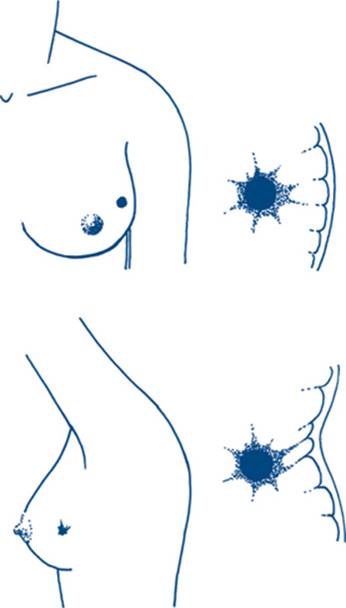
Figure 3.1 Skin tethering due to cancer only demonstrable when the patient raises her arms
Nipple discharge should be induced, if possible, by segmental compression around the areola, or assessed by examining the stain on underclothing. Spontaneous nipple discharge that is bloodstained or a clear sticky yellow fluid is most commonly due to duct papilloma, but occasionally indicative of serious intraduct pathology, particularly ductal carcinoma in situ. Physiological discharge may been seen in young women and during lactation. A thick creamy or green discharge suggests mammary duct ectasia and is rarely spontaneous. Hyperprolactinaemia due to a microadenoma of the pituitary gland is a rare cause of a copious milky discharge and some psychoactive medications may precipitate nipple discharge due to endocrine interactions. Cytological examination of the fluid may aid diagnosis.
Palpation is initially performed with the patient supine. A pillow is placed beneath the shoulder on the side being examined and the arm on that side is abducted with the hand placed behind the head (Fig 3.2). This spreads the breast over a larger area, reducing the depth of the breast tissue and thus facilitating palpation. The whole breast is palpated, including the axillary tail, using the palmar surfaces of the fingers with the hand flat. This avoids mistaking normal fat or glandular tissue for discrete lumps, a mistake that is common if the tips of the fingers are used. The detection of a discrete or dominant lump requires experience in palpating the normal texture of the breast and recognising the normal and cyclical variation. If a lump is discovered or the patient’s suspicion of a lump is confirmed, its physical characteristics are fully assessed. Many dominant lumps in the breast are cystic so that assessment for fluctuation is important; however, fluctuation will not be elicitable with deep cysts. The important physical characteristics of cancer are discreteness and induration. Fixity is usually a late sign except where a cancer is unusually superficial or in the infra-mammary fold of the breast.
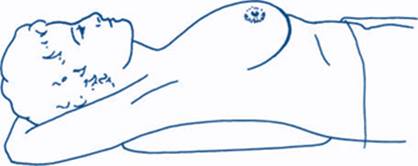
Figure 3.2 Breast examination
Finally the patient is brought back to the seated position to complete the examination. Any lumps are assessed by palpation with one hand, then by both hands compressing the breast between them. Fixation of the lump to the underlying muscle is tested by assessing for change in mobility upon contraction of the pectoralis major muscle. The patient is asked to press her hand against the hip in order to contract the muscle. The axilla is palpated while resting the patient’s forearm on the examiner’s forearm. Palpable nodes are common in the normal axilla; firm nodes of 1 cm or more suggest involvement by metastatic tumour. Enlarged and tender nodes may indicate an inflammatory or infective process. The examination is completed by looking for signs of metastatic disease, palpation for supraclavicular nodes and for hepatomegaly and bone tenderness, particularly in the spine, and auscultation of the chest. A diagramatic record can then be made of the findings (Fig 3.3).
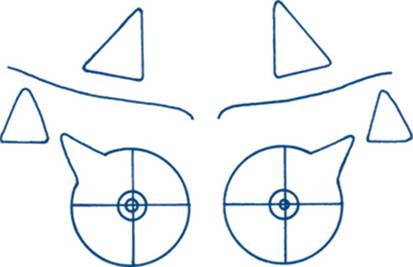
Figure 3.3 Scheme for recording the characteristics of breast lesions
Diagnostic tests
Percutaneous aspiration of a breast lump is often part of the routine physical examination, both to obtain a cytological specimen for diagnosis and to definitively treat breast cysts. Simple aspiration of breast cysts is both diagnostic and therapeutic. Cytological examination of the greenish-yellow fluid is not worthwhile, but cytology should be done if the aspirate is bloodstained or if the cyst is recurrent or if an ultrasound shows a complex lesion.
Imaging techniques: mammography, ultrasound
Imaging of breast tissue commonly utilises mammography and ultrasound. Mammography provides the most sensitive and specific method of screening an asymptomatic woman for signs of breast cancer. Examination of a symptomatic patient generally involves both mammography and ultrasound and ultrasound should be regarded as a focused investigation rather than a screening strategy. High-resolution ultrasound is useful in providing diagnostic information about solid and cystic masses and is increasingly used as a clinical tool to differentiate between ‘lumpy normal’ and breast pathology. Mammography is least useful in breasts with dense glandular tissue in women aged under 30 years. Imaging of dense breast tissue, particularly in women identified at high risk of developing breast cancer, is challenging. At present MRI (magnetic resonance imaging) has promising sensitivity and improving specificity and is of particular use in young women at high risk of breast cancer because of a genetic predisposition.
Positive signs of malignancy on mammography include an irregular infiltrating mass and focal pleomorphic microcalcification. Differentiation of mass lesions and calcified lesions uses a combination of mammographic workup including magnification, ultrasound and image-guided biopsy (Fig 3.4).
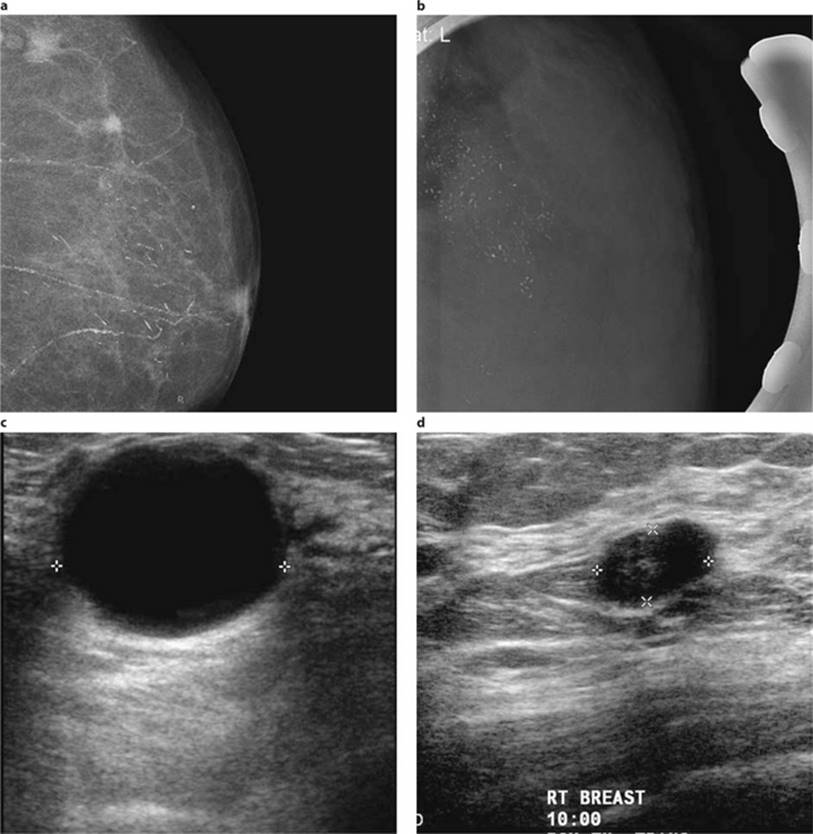
Figure 3.4 Mammographic and sonographic images of the breast
Mammographic and sonographic images of the breast often demonstrate the features of benign and malignant breast lesions.
(a) Breast cancer typically appears on a mammogram as a focal density with spiculate edges.
(b) Microcalcification can be associated with benign and malignant breast pathology and is graded according to its morphology. Typically malignant calcification is variable in size and shape and may cast the branching pattern of the milk ducts.
(c) Simple cysts may show as a discrete density on mammography, but ultrasound best demonstrates the smooth cyst wall and anechoic cyst fluid.
(d) Fibroadenomas may also appear as a discrete density on mammography and on ultrasound. A benign solid lesion should have more breadth than height.
Courtesy of Dr Manish Jain, MIA
Cytology and histology
Fine needle aspiration cytology (FNAC) is a very useful diagnostic test in solid lumps. Diagnostic accuracy can be over 90–95%; however, the technique is often not diagnostic and core biopsy for histology is preferred in many centres.
A negative report should never override clinical suspicion.
Histology is more reliable than cytology, provided the site of sampling is accurate — so false negatives for cancer are rare. Open biopsy is the most reliable examination, although it is uncommon for a patient to not have a preoperative diagnosis. It is no longer routine for the extent of a patient’s surgery to be determined by intraoperative frozen section.
Specific markers can be indentified by immunohistochemistry including oestrogen and progesterone receptors and tyrosine kinase receptors, which are useful in predicting susceptibility to targeted therapies and in predicting prognosis. The development of gene array techniques and proteomics are expected to refine these tests.
3.2 Breast pain
Breast pain (mastalgia) is a very common problem and is not often due to malignant disease.
Common causes
1. Cyclical mastalgia
2. Focal lesions — inflammation, neoplasia
Clinical features and diagnosis
In most instances breast pain is cyclical. This condition is very common. Sometimes the pain is continuous, severe and disabling. There is often a premenstrual increase in pain and lumpiness. The condition is most common between the ages of 30 and 50 years and is unusual after menopause. Breast pain may be cyclical or noncyclical — the former is much more common. The severity of pain varies widely and cyclical pain may be regarded as a minor variation to normal swelling, tenderness and tenseness before or with the period. Severe symptoms may be associated with increased circulating prolactin.
On examination, tender lumpiness is felt in the breast, usually without a dominant lump. The association of a lump will require appropriate imaging and percutaneous cytological aspiration cytology or biopsy; management of the lump in such instances is the main problem. The diagnosis of pain can be established by regular review without recourse to radiological examination or biopsy. Patients are frequently reassured simply to have an explanation for their pain and may not require specific treatment. Appropriate diagnostic and screening tests should be undertaken on the basis of clinical signs and estimated risk of cancer (particularly age).
Treatment plan
Managing breast pain is often difficult. The principles of treatment are:
• Nonspecific measures including analgesia, avoiding trauma and wearing at all times a brassiere that gives good support and protection. A low-fat diet may assist in management and does no harm.
• For patients with severe cyclical pain, many dietary modifications and methods of treatment have been used with variable success. Vitamins B1 (riboflavin) and B6 (pyridoxine) and a diuretic taken for one week prior to the period are commonly used, but their value is difficult to assess and not supported by controlled clinical trials.
Bromocriptine (which reduces the circulating level of prolactin), danazol (an androgen), tamoxifen (a selective oestrogen receptor modulator (SERM) antagonist) and evening primrose oil (a source of essential fatty acid) have all been used with some success. The side effects of prolactin antagonists, SERMs and androgens can be severe and are usually unacceptable in a benign condition unless symptoms are severe. Evening primrose oil has been assessed by RCT and approximately 80% of women with cyclical breast pain respond to treatment, although the effect is not immediate. Danazol is used as a short course of treatment.
3.3 Breast lump
In most instances a lump in the breast is incidentally found by a woman or her general practitioner and may not be a discrete lesion. The breast consists of fat and glandular tissue arranged between fibrous tissue septa. It can be easy to sense a localised area of resistance that is incorrectly considered to be a lump. Squeezing the breast tissue between finger and thumb accentuates the tendency to produce ‘pseudolumps’.
Confusion can be reduced by the correct method of palpation, which is to palpate gently with the pulps of the fingers with a flat hand. Prodding and squeezing should be avoided in order to better detect the truly dominant lump. Breast examination requires experience before the clinician can be reasonably sure whether a lump is present or not. Greater sensitivity can be achieved by palpation with the breast and fingers lubricated by a thin soap film. Perhaps for this reason, many lumps are first noted by the patient while showering.
If the clinician feels that a lump is not present, the patient can be reassured, but it is important to determine what the patient has identified as a lump, and to consider whether imaging is indicated.
The clinician also may be unsure whether a discrete lump is present or not. When a degree of lumpiness is present, it may be difficult to be sure on the first examination whether there is a dominant swelling in a lumpy breast. In these cases the usual practice is regular review, often timing the next visit at a different time during the menstrual cycle, as lumpiness of breast tissue is commonly a cyclical phenomenon. The natural lumpiness of the breast is least in the early part of the menstrual cycle. Bilateral mammography and ultrasound are also very helpful in these patients.
If the clinician identifies a dominant lump, age is often helpful in suggesting an appropriate differential diagnosis. A variety of common breast changes can be defined by the acronym ‘ANDI’ (abnormalities of normal development and involution). Fibro-adenomas are a developmental abnormality and most commonly present in women in their late teens and 20s and respond to normal growth stimuli. Benign breast cysts are a phenomenon of involution and commonly present between 30 years and menopause. Carcinoma should be considered the most likely cause of a new palpable abnormality in a post-menopausal woman but occurs in young women as well. Thickenings in the region of scars from previous benign breast biopsies can also cause difficulties in diagnosis.
Similarly, a variety of discrete nonpalpable lesions may be detected by screening mammography, although a lump may not be palpable.
Causes
1. Carcinoma
2. Fibro-adenosis
3. Fibrocystic change (breast cyst)
4. Fibro-adenoma
5. Mammary duct ectasia
6. Less common causes
History and physical examination
1 Carcinoma
Carcinoma of the breast is uncommon under the age of 30 years. Thereafter the prevalence of the disease steadily increases to a maximum at the age of about 60 years.
Most patients with carcinoma present with a painless lump in the breast. Symptoms of breast pain, nipple discharge, nipple retraction, generalised enlargement of the breast and axillary swelling are less common forms of presentation.
Symptoms of metastatic disease may be present at diagnosis, although the majority of cancers are detected at an early stage (locoregional disease alone).
About half the cancers of the breast occur in the upper outer quadrant. A little less than a quarter are found in the region of the areola.
On initial inspection in the seated position the features sought include a mass or deformity, nipple retraction and dimpling of the skin (often produced by raising the arms above the head). With advanced disease, skin discoloration, nodularity, erythema, oedema of the skin (peau d’orange) and ulceration may be seen.
In the supine position with the shoulder on the pillow, a breast cancer is commonly palpated as a localised, nontender, firm or hard lump with a poorly defined margin. Occasionally the lump is tender. Sometimes there may be evidence of inflammation. Rarely an inflammatory carcinoma presenting with warmth and extensive hyperaemia and oedema can be mistaken for a breast abscess. Such inflammatory carcinomas can exhibit redness involving most of the skin over the breast. The lump is examined for tethering to the fascia of pectoralis major muscle and the axilla is examined for involvement of nodes. Microscopic metastases are present in about one-third of clinically negative nodes.
Although the patient’s complaint of a breast lump may be mistaken, some lumps are so small they cannot easily be felt by the clinician and yet have been discovered by the alert patient. These lesions are generally less than 1 cm in diameter and need to be very carefully sought with the patient’s aid.
Although rare, breast cancer may occur during pregnancy or lactation, when the changes in the breast obscure the true nature of the lesion and lead to a delay in diagnosis. A galactocele may persist as a localised collection of milk after lactation. Diagnosis is made clinically and on ultrasound, but biopsy may be necessary.
Examination is completed by assessing the areas of possible metastatic spread and staging the disease by clinical examination (Box 3.2).
Box 3.2
BREAST CANCER STAGING
Cancer staging systems based on the features of the primary tumour, the regional lymph nodes and distant metastases have been developed by the National Cancer Institute in the US. The staging system is regularly updated, particularly as more detailed pathological testing such as immunohistochemistry and PCR becomes available and impacts on the accuracy of predicting prognosis and on the evidence informing best practice.
|
Primary tumour (T) |
|
|
T0 |
No detectable primary tumour |
|
Tis |
In situ tumour (DCIS, LCIS, Paget’s disease of the nipple) |
|
T1 |
Tumour less than 2 cm |
|
T2 |
Tumour 2 cm and less than 5 cm |
|
T3 |
Tumour 5 cm and greater |
|
T4 |
Tumour directly involving skin or chest wall and inflammatory cancer |
|
Regional lymph node involvement (N) |
|
|
N0 |
No lymph node involvement |
|
N1 |
Mobile ipsilateral axillary nodes |
|
N2 |
Fixed or matted axillary nodes or internal mammary nodes |
|
N3 |
Infraclavicular or supraclavicular nodes |
|
Metastatic involvement (M) |
|
|
M0 |
No distant metastases |
|
M1 |
Any distant metastases |
2 Fibro-adenosis
Fibro-adenosis is a condition leading to coexisting hyperplasia (adenosis and epitheliosis) and involution (fibrosis and cyst formation). Fibro-adenosis is most common in women between 30 and 50 years of age and is much less common after menopause. Dominant lumps indistinguishable from carcinoma may develop. The lumps are often tender and a past history of painful premenstrual lumpiness in the breast is common. Biopsy is necessary to be sure of the diagnosis of any dominant lump.
3 Fibrocystic change (breast cyst)
Macrocystic change is a form of fibrocystic change where cyst formation is marked. Cysts often present as dominant lumps. Pain and tenderness are not common. A solitary cyst is smooth, spherical or domed, tense and firm. It may be possible to detect fluctuation. The clinical distinction is important because these lesions can be diagnosed and treated by aspiration at the initial consultation and the patient can be reassured. If aspiration does not provide complete resolution of the lump, if the aspirate is bloodstained, if the mass persists after aspiration or if there is early re-accumulation of fluid, biopsy is indicated.
4 Fibro-adenoma
Fibro-adenoma is a common benign neoplasm of the breast that mainly occurs before the age of 30. It is an abnormality of normal development and is thought to arise from a single breast lobule. Typically a fibro-adenoma is a round, firm, discrete, mobile, nontender lesion about 1–2 cm in diameter (‘breast mouse’) and found in a young woman in her late teens or early 20s. Impalpable fibro-adenomas may be detected at routine breast imaging and multiple fibro-adenomas are not uncommon. An uncommon form of fibro-adenoma occurs in this age group, with a very cellular structure (‘cystosarcoma phyllodes’). This lesion is rarely malignant but may enlarge rapidly and recur locally after excision.
5 Mammary duct ectasia
Mammary duct ectasia (‘plasma cell’ mastitis) is a common inflammatory condition of the breast. The condition is associated with duct stagnation and is more common in the years just before menopause. A lump develops when there is extravasation of the duct contents and a localised foreign body inflammatory response with variable degrees of fibrosis. The lump is a firm or hard, tender, poorly defined swelling. The lump is usually found near the margin of the areola, often with surrounding inflammation. Many cases settle down, but often exploration is necessary to make a diagnosis. A localised acute abscess may require drainage. Presentation of later disease with developed fibrosis can mimic the signs of cancer very closely. After exploration, there is danger of a subsequent persistent mamillary fistula if the mass and obstructed ducts are not adequately excised.
6 Less common causes
Lipomas are usually easy to diagnose but, because of their situation, biopsy is often necessary to be sure of the diagnosis. A lipoma is a soft lobulated lesion usually lying near the periphery of the breast in the subcutaneous fat. On compression it tends to slip away from beneath the fingers.
Fat necrosis is of considerable clinical importance because the mass that results is often accompanied by skin or nipple retraction and can be clinically indistinguishable from carcinoma. In most, but not all, cases there is a history of injury to the breast but the trauma may have been unnoticed at the time.
Breast abscess is usually (but by no means always) a complication of lactation. A common sequence of events is for painful duct obstruction to occur. Lactation is suppressed by the clinician and antibiotic treatment is often given. The inflammatory response that follows duct obstruction is not initially due to bacterial infection and should have been treated by expression of milk and continued lactation. In most cases the problem resolves with these measures. In many instances the incorrect use of antibiotics for too long a period has been a causal factor in the development of the abscess (‘antibioma’).
Causes of breast abscess in nonlactating breasts include mammary duct ectasia.
Mondor’s disease is a condition of subcutaneous lymphangitis presenting as a subcutaneous palpable discrete cord just lateral to the breast. It can occur in other areas such as the cubital fossa. It may accompany other breast pathologies, including carcinoma, but usually occurs in a normal breast and is benign and self-resolving. It is now most commonly seen following breast surgery.
Diagnostic plans
1 Fine needle aspiration cytology (FNAC)
Radical surgery for breast cancer should never be undertaken without an unequivocal histological diagnosis of cancer. However, FNAC can provide useful diagnostic information, particularly in confirming benign conditions. When facilities are available, the first diagnostic step is percutaneous aspiration of the lump and cytological examination of the aspirate (FNAC). The needle is inserted into the mass and the plunger of the syringe is maximally retracted. The needle is then moved back and forth in the mass four or five times. Throughout this manoeuvre negative pressure is maintained by keeping the plunger of the syringe retracted. Before removal of the needle the suction is released; the needle is then withdrawn from the lesion. A small drop of aspirated material is placed on to a labelled slide and air dried. An ordinary disposable syringe with a fine needle can be used or a syringe holder that facilitates one-handed aspiration, leaving the other hand free to fix the lump.
2 Mammography
Mammography is the only reliable widely available means of detecting breast cancer before a mass can be palpated in the breast. Experienced radiologists can interpret mammograms correctly in about 90% of cases.
Indications for mammography are:
• to screen a selected group of women who are at high risk of developing breast cancer, including those who have had a previous breast cancer treated
• to evaluate a questionable or ill-defined mass or other suspicious change in the breast
• to assist in the localisation of the lesion prior to biopsy or surgery.
Treatment plan
Dominant lumps require a tissue diagnosis. When the presence of breast cancer is established by core needle histology the treatment plan is as follows.
1 Clinical staging
Before surgery the patient’s clinical stage should be assessed. Liver function tests should be performed; liver metastases may only be evident by the presence of an elevated serum alkaline phosphatase. Chest X-rays may show pulmonary metastases but are not a routine staging strategy
Further preoperative investigations such as bone scanning and a CT scan of the chest, liver and brain are indicated only if metastases at these sites are clinically suspected or if the tumour is locally advanced as evidenced by a mass over 5cm or if the axillary nodes are palpable and abnormal. Bone scanning has not proved to be of reliable clinical value as a routine preoperative test because of a high incidence of false positive results. The diagnosis and treatment plan are fully discussed with the patient, emphasising treatment options and sufficient time between diagnosis and treatment to consider and clarify these options.
2 Curative surgical treatment for early disease
This is potentially possible for patients with stage 1 or 2 disease. Those with stage 4 disease can only receive palliative treatment. Surgery is unlikely to be curative for those with stage 3 disease. In the majority of patients with potentially curable disease the treatment is initially surgical, aiming to control local disease for the life of the patient. The majority of patients can choose between breast conserving treatment, which is a complete local excision of the cancer with histologically clear margins and radiotherapy, or a total mastectomy. A small number of patients require a total mastectomy because of the size of the tumour or because the tumour is multifocal. When the cancer is invasive some form of histological examination of axillary lymph nodes is indicated. Since 2004 sentinel lymph node sampling, using a radioactive tracer or patent blue dye, is the usual practice in clinical stage 1 disease, with axillary dissection reserved for those patients with pre- or postoperative evidence of axillary node involvement. Those patients requiring or electing to have a mastectomy may consider immediate or delayed breast reconstruction with implant or autologous tissue.
Once the complete pathological report is available, further treatment to reduce the risk of systemic recurrence should be considered. This is generally within the context of a multidisciplinary service involving the surgeon, medical oncologist and radiation oncologist, breast care nurse and other health professionals. The treatment may involve chemotherapy, endocrine therapy including SERMs and aromatase inhibitors and targeted therapies such as trastuzumab. In locally advanced breast cancer systemic treatment may be used first in recognition of a high risk of early systemic relapse and to reduce the extent of locoregional disease preoperatively.
3 Stage IV disease and advanced local disease
The management of locally advanced and metastatic breast cancer depends on the extent of disease, the patient’s symptoms and the biological characteristics of the tumour. Curative treatment may be appropriate for locally advanced disease but stage 4 disease with distant metastases is currently not curable and treatment focuses on symptom relief and slowing progression. It is recommended that management again be planned in a multidisciplinary context.
3.4 Nipple discharge
In most instances nipple discharge is due to benign breast disease; potentially concerning discharge will be spontaneous rather than expressed. It is not uncommon for some fluid to be expressed either by an individual woman or during mammography, but it is not a recommended part of breast examination.
The patient can usually describe the nature of the discharge or its appearance on the brassiere. Spontaneous bloodstained or serous nipple discharge is usually due to a duct papilloma. Brownish-green or creamy discharge, which can be expressed from multiple ducts and is often bilateral, is suggestive of duct ectasia. It is important to know whether the discharge is unilateral or bilateral, whether there may be a physiological discharge and whether the patient is able to locate the segment of breast from which pressure will produce the discharge.
An opaque milky discharge commonly appears a few days before parturition. A thin transparent white discharge may continue after lactation. In both these situations nipple discharge is not a diagnostic problem. Milky discharge from multiple ducts in a nonlactating breast may occur in rare syndromes associated with hyperprolactinaemia. Occasionally, drugs and contraceptive agents may cause milky discharge that stops when these agents are ceased.
Paget’s disease of the nipple is a rare cause of a minor degree of nipple discharge that may also be confused with eczema (Table 3.1). This condition is an areolar intra-epithelial carcinoma spreading from a deeper intraduct carcinoma.
Table 3.1 Differences between Paget’s disease and eczema of the nipple
|
Paget’s disease |
Eczema |
|
Unilateral |
Bilateral |
|
Older patients |
Younger |
|
Not itchy |
Itchy |
|
No vesicles or pustules |
Vesicles and pustules |
|
Nipple destruction |
Nipple normal with areolar changes |
|
Palpable lump often present |
No lump |
|
Mammographic changes |
Normal mammogram |
Common causes
1. Duct papilloma
2. Intraduct carcinoma
3. Mammary duct ectasia
Diagnostic plans
Discharge from many duct orifices (often bilateral)
The most likely diagnoses are benign mammary dysplasia and mammary duct ectasia. A very rare cause is hyperprolactinaemia. Mammary duct ectasia characteristically gives a creamy-white or toothpaste-like discharge and often shows associated retro-areolar inflammation or swelling with nipple retraction. Mammary dysplasia associated with a serous or greenish discharge is more common in premenopausal women. The discharge is often bilateral, arises from many ducts and is most marked just before menstruation. Associated breast lumpiness is common, but a dominant lump needing biopsy is not usually found. Mammary duct ectasia can present as a lump alone, discharge with an associated lump or discharge alone.
Unilateral bloody discharge from a single duct
This is usually caused by an intraduct papilloma. Carcinoma is a rare cause and usually presents with an associated lump or mammographically identifiable lesion but is occasionally due to imaging occult ductal cancer in situ. With intraduct papilloma a mass is only occasionally palpable or visible sonographically. It is useful for the clinician to define, if possible, the involved duct by pressure on different segments of the breast around the nipple at the margin of the areola as this may facilitate focused imaging and surgery (Fig 3.5).
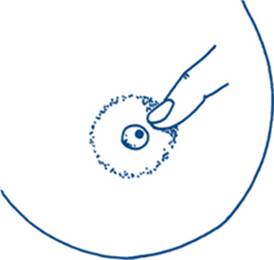
Figure 3.5 Nipple discharge
A spot of fluid is seen to appear from a single duct with pressure on the related breast segment.
Mamillary fistula
This produces a purulent discharge from a point away from the nipple. Such a fistula usually results from periductal inflammation and abscess formation, sometimes in association with a specific infection, and occurs in the skin close to the areola. A long history of discharge often dates from a peri-areolar abscess that has been incised or has pointed to discharge spontaneously on to the skin. The nipple is usually inverted and it is generally possible to pass a probe along the tract to a communicating major duct and out through the nipple.
Purulent discharge may originate in a subareolar abscess of Montgomery’s gland. This produces a purulent discharge from a point away from the nipple but within the areola.
Diagnostic plan
In the majority of cases the clinical diagnosis is obvious. Cytology of the discharge is indicated, together with breast imaging. Fine needle aspiration cytology or core biopsy for histology of an associated mass may be required. Cytology in duct ectasia will show only inflammatory cells. Ductal epithelial cells or red blood cells suggest the presence of an intraduct papilloma. Rarely, atypical cells or malignant cells are seen with more serious intraduct pathology.
Treatment plan
When a defined unilateral mass is present, treatment of the discharge is secondary to treatment of the mass.
With a bloodstained nipple discharge the segment of breast from which the discharge arises should be defined. At operation the responsible duct is probed and excised with an adequate margin (microdochectomy) through a circumareolar incision. Histology will almost always confirm a benign lesion (Fig 3.6).
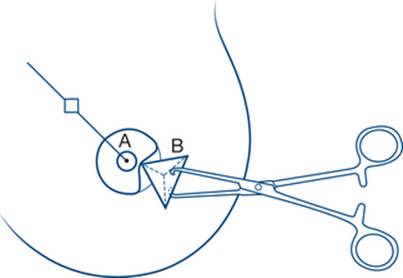
Figure 3.6 Microdochectomy
A: identifiction of affected duct by local pressure and insertion of lacrimal probe; B: excision of a segment containing the duct and papilloma through a circumareolar incision
Bilateral and diffuse nipple discharge with normal mammograms often needs no treatment other than reassurance. Rarely, prolonged nipple discharge in association with mammary duct ectasia may require subareolar disconnection of the ducts.
Mamillary fistula and Montgomery’s sinus are treated by formal excision of the fistula and related duct segment.
3.5 Gynaecomastia
Gynaecomastia is a common disorder. It can take the form of either a discrete, palpable subareolar plate of tissue easily distinguished from surrounding fat or a more diffuse mass only slightly different on palpation from the surrounding fat. Early histological examination reveals duct dilatation and epitheliosis. Later the ductules become sparse and embedded in a diffuse fibrous stroma.
Unilateral gynaecomastia is more suggestive of local pathology but may also be due to systemic causes.
Common causes
1. Gynaecomastia of puberty and old age
2. Systemic diseases: alcoholic liver disease, renal injury, thyrotoxicosis, previous malnutrition
3. Carcinoma of the lung and other neoplasms
4. Drug-induced gynaecomastia
Clinical features
1 Puberty and old age
Gynaecomastia can result from an imbalance between circulating oestrogens and androgens, a state most common at the time of puberty. Many normal pubertal boys therefore develop gynaecomastia. In most instances the condition is asymptomatic. Regression usually occurs within one or two years. The prevalence of gynaecomastia also increases slowly in normal adult men and into old age (senile gynaecomastia). Gynaecomastia of minor degree is common. On clinical examination the condition is present bilaterally in up to one-third of normal adult men. Most of these men do not have pain or tenderness and are unaware of breast enlargement.
2 Systemic disease
Gynaecomastia is commonly seen with alcoholic liver disease and may be due to oestrogen retention. Up to 30% of males with thyrotoxicosis have gynaecomastia. Tender gynaecomastia may occur during the recovery phase after severe illness or injury, when this has been associated with marked catabolism and weight loss. This condition was called refeeding gynaecomastia when originally noticed in former prisoners of war. It is probably due to hormonal imbalance associated with a sudden return of gonadal function. Refeeding gynaecomastia may also be a factor in the gynaecomastia of patients with renal failure, as it commonly occurs soon after commencement of dialysis or transplantation.
3 Carcinoma of the lung and other tumours
Carcinoma of the lung is uncommonly associated with gynaecomastia but should always be considered as a possible cause in high-risk patients who develop gynaecomastia in mid-adult life.
Other tumours, such as hepatoma, adrenal or testicular tumours, are rare causes of gynaecomastia. Carcinoma of the male breast should be considered in patients with unilateral gynaecomastia, but carcinoma is a rare cause of breast enlargement in men. The diagnosis of carcinoma is suggested by a hard painless lump, which is asymmetrical or eccentric in location and is associated with signs of fixation or a bloodstained nipple discharge. Axillary nodes may be enlarged.
4 Drug-induced gynaecomastia
Box 3.3
COMMON DRUGS ASSOCIATED WITH GYNAECOMASTIA
Oestrogens
Androgens
Methyldopa
Spironolactone
Cimetidine
Marihuana
Digoxin
Cytotoxic agents
Phenothiazines
Amphetamines
Tricyclic antidepressants
Reserpine
A careful drug history is necessary. Drugs are an increasingly common cause of gynaecomastia. A commonly implicated drug is oestrogen, when used either to induce feminisation (often concealed) or as treatment for carcinoma of the prostate. Testosterone administration can also cause gynaecomastia, as can anabolic steroid abuse. Methyldopa, used for the treatment of hypertension, is a common cause of gynaecomastia.
Spironolactone and cimetidine can produce gynaecomastia by competitive displacement of testosterone from its intracellular receptor.
Digitalis preparations can also cause gynaecomastia because of their oestrogen-like properties and sometimes because of ‘refeeding’ after control of congestive cardiac failure.
Cytotoxic agents can produce secondary hypogonadism because of testicular damage. A secondary hypogonadal state can also be induced by drugs that act on the central nervous system to raise serum prolactin. Such drugs include phenothiazines, amphetamines, tricyclic antidepressants and marihuana.
Diagnostic plan
It is not necessary to perform a biopsy on all patients with gynaecomastia. Clinical examination including ultrasound is usually a reliable method of diagnosis. Biopsy is indicated if the lump is firm or hard and in some cases of asymmetrical or unilateral gynaecomastia.
The recent onset of symptomatic gynaecomastia in adult life suggests the need for further investigation. Of greatest importance is a careful drug history. The testis should be examined for neoplasms; chest X-ray and thyroid function tests should be performed.
Screening tests of serum hormone levels are rarely necessary.
Treatment plan
In many instances (gynaecomastia of puberty,) the condition is transient and reassurance is all that is required. Withdrawal of a potentially offending drug may lead to regression of the lesion. Senile gynaecomastia is treated by reassurance.
If pain or tenderness is severe and persistent, despite analgesia and pyridoxine treatment, or if the appearance is psychologically disturbing, excision should be considered. Anti-oestrogens should not be used, especially for the benign gynaecomastia of puberty.