
John Morton
Presentation
A 42-year-old woman with history of a BMI of 55, type II diabetes, depression, hypertension, hyperlipidemia, and gastroesophageal reflux disease (GERD) presents for surgical consultation. She has previously attempted weight loss on multiple occasions with initial success but subsequent weight regain. The patient has previous history of two cesarean sections and right knee arthroscopy for a torn meniscus. Her medications include NPH Insulin, Prozac, Hydrochlorothazide, Aciphex, and Zocor.
Differential Diagnosis
This patient suffers from the disease of obesity and qualifies as stage IV obese. While consideration of secondary causes of obesity must be considered, primary obesity is the overwhelming diagnosis. Rarely, secondary causes of obesity may be genetic (Prader-Willi), endocrine (hypothyroidism), or iatrogenic (steroids or pituitary resection). For this patient, the diagnosis and staging is complete.
Workup
All patients considering surgical weight loss must have a comprehensive history and physical examination with a special consideration to determining full burden of obesity and obesity-related diseases. A comprehensive cataloguing of obesity comorbidity is necessary to report their subsequent remission or improvement, a requirement for bariatric surgery center of excellence. Often, the obese patient will have undiagnosed or untreated medical concerns. By default, the bariatric surgeon assumes many primary care responsibilities for the obese patient.
The physical examination in the obese may be challenging but is nonetheless important. Anthropometric measurements such as neck or waist circumference may indicate sleep apnea or metabolic syndrome. The abdominal exam may display a hernia potentially affecting operative decision making. The stigmata of venous stasis disease are an important finding given that it may raise the risk of postoperative deep venous thrombosis (DVT).
In addition to the history and physical examination, the preoperative evaluation of the bariatric surgery patient should include upper endoscopy and psychological and nutritional consultation. Upper endoscopy or upper gastrointestinal (GI) series helps determine severity of GERD or masses in a stomach that may not be accessible postoperatively. Both nutritional and psychological counseling are critical tools for patients who must change their ingrained eating behaviors. Psychological contraindications to bariatric surgery include schizophrenia, developmental delay, active substance abuse, recent major depression with hospitalization or suicidal attempts, and severe bipolar disease. The psychological evaluation can also provide coping and stress management skills.
Serologic evaluation should incorporate complete blood count, liver function tests, biochemical cardiac risk factors, prothrombin time/partial thromboplastic time, glucose parameters, and nutritional markers. Often, obese patients may be calorically replete but nutritionally depleted.
Additionally, cardiac evaluation of obese patients is paramount. Frequently, these patients may have occult cardiac disease that may be misdiagnosed as asthma. Initial assessment should include a comprehensive history, EKG and, in certain patients, a stress echo. While rare, patients reporting a history of taking fenfluramine/phentermine, should have a cardiac echo to rule out valvular disorders. Further cardiac risk stratification can be gained through a biochemical cardiac risk factor assessment.
In the patient in this scenario, on history and exam, she has diabetes for 4 years, prior DVT, and has severe venous stasis disease. Her serologic testing demonstrates an elevated hemoglobin A1C of 9.8 and triglycerides of 250 mg/dL.
Diagnosis and Treatment
This patient has stage IV obesity and has repeatedly demonstrated failure of medical management. Her psychological evaluation does not reveal any contraindications. Based on her history, this patient will require more aggressive prevention of venous thromboembolism given her high risk as demonstrated by previous history of DVT and venous stasis disease.
Given her diagnosis of stage IV obesity (BMI > 50), this patient is at higher risk for any operative approach. A method for reducing risk is preoperative weight loss. Preoperative weight loss is a method for “down-staging,” acting in the same manner as preoperative chemoradiation therapy does for cancer. The objective for preoperative weight loss should not be a number or time period but an approach that ensures education and understanding of the tools needed postoperatively. Even a modest amount of weight loss will ensure a smaller liver and shorter OR times.
All major surgical options for weight loss are presented to the patient including gastric banding, gastric sleeve, and gastric bypass. As part of any preoperative discussion, risks and benefits are elaborated. Given this patient’s weight and comorbidities, the recommendation of gastric bypass is made for this patient and she agrees. For this particular patient, gastric bypass will afford her the most consistent and profound weight loss and comorbidity improvement for her GERD and diabetes.
Surgical Approach
A laparoscopic gastric bypass is scheduled (Table 1). The laparoscopic approach is superior to the open approach with considerably lower complications particularly wound-related complications. She lost 5% of her excess weight and her hemoglobin A1C improved to 8 mg/dL by doubling her Metformin. She also had a temporary IVC filter placed in preparation for her surgery.
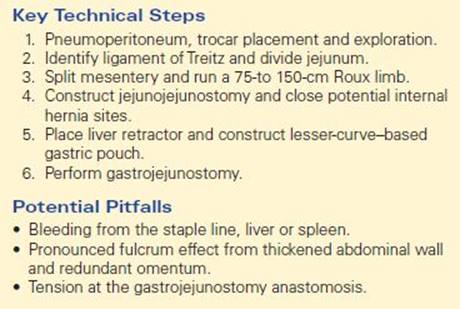
TABLE 1. Key Technical Steps and Potential Pitfalls in Laparoscopic Gastric Bypass
At the time of surgery, care is taken to appropriately position the patient to facilitate intubation and prevent nerve compression and skin breakdown. In order to prevent postoperative nausea and vomiting, several strategies are employed including IV hydration, a small steroid dose, and Zofran®. An orogastric tube is placed to prevent any gastric distension or aspiration.
During the surgical timeout, prophylactic subcutaneous 5,000 units of subcutaneous heparin, sequential compression devices, and 2 g of Cefoxitin® are confirmed as being administered. Availability of special equipment such as gastroscope and longer instruments is also confirmed during the surgical timeout.
Surgery is begun by placing an index trocar at 18 cm below the xiphoid in the midline after the Veress needle has been introduced to provide pneumoperitoneum. After remaining trocars are placed, laparoscopic exploration of the abdomen is conducted. The greater omentum is elevated and the ligament of Treitz is identified. The jejunum is divided into a biliopancreatic and Roux limbs at 20 cm distal to ligament of Treitz. Next, the jejunojejunostomy is performed after a 75-to 150-cm Roux limb is run, potential internal hernia sites are closed, and the liver retractor is placed. The gastric pouch at 15 to 30 mL in size is constructed based on the lesser curve and begun horizontally at the second vascular arcade and finished vertically up to the angle of His. Finally, the gastrojejunostomy is constructed either through circular-stapled, linear-stapled, or hand-sewn techniques with a surgical drain placement. Potential pitfalls that can occur include bleeding, inability for the Roux limb to reach the gastric pouch without tension, and unexpected anatomy such as malrotation, enlarged liver, excessive omentum, and thick abdominal wall.
Special Intraoperative Considerations
Though rare, unexpected findings during a laparoscopic gastric bypass may influence the operative course. For example, previous surgery may yield tenacious adhesions requiring lysis, malrotation of the ligament of Trietz necessitates a mirror image approach to the technique, hernia findings will require a change in port placement, or cirrhosis that may require biopsy or even aborting the case if varices or ascites is noted. The above image demonstrates a gastrointestinal stromal tumor (GIST) that may not have been revealed with preoperative assessment (Figure 1). In this circumstance, the tumor may be resected in its entirety and the gastric bypass be completed.
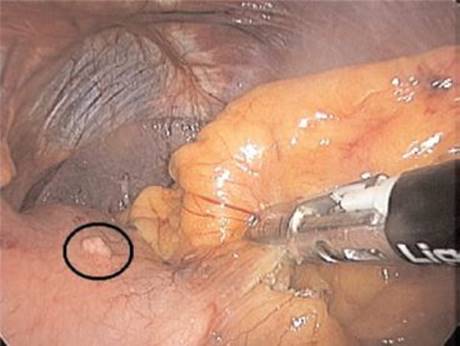
FIGURE 1 • GIST tumor (circled) on anterior aspect of stomach. (From Morton, Obesity Surgery. 2005.)
Postoperative Management
Postoperatively, the patient develops shortness of breath (SOB), increased heart rate, and per nurse, the Jackson-Pratt drain now has a cloudy discharge.
Bariatric surgery has increasingly become exceeding safe with a 30-day mortality of 0.2%. While rare, the two leading causes of mortality following bariatric surgery include pulmonary embolus (PE) and anastomotic leak. In this particular circumstance, this patient had an IVC filter filtered placed preoperatively reducing risk of PE, but the risk of anastomotic leak remains. Intraoperatively, a leak may be identified by endoscopic surveillance of the anastomosis while postoperatively, an upper GI study (as in the above image) or amylase levels from the drain might help identify the leak (Figure 2). Treatment includes NPO status, IV antibiotics, drainage and/or reoperation if a patient is unstable.
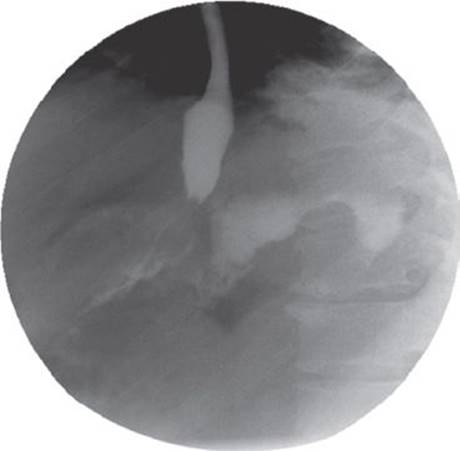
FIGURE 2 • Upper GI contrast study demonstrating a leak from the gastrojejunal anastomosis. (From Morton, Obesity Surgery. 2007.)
While early complications like PE, leaks, or bleeding can occur, late complications like bowel obstruction from internal hernias or anastomotic concerns like ulcers or strictures are also possible. Other complications may be psychological such as substance abuse or depression. Tracking of complications is a requirement for all bariatric surgery centers of excellence. Another component of outcomes reporting includes demonstration of the effective weight loss and comorbidity remission that accompanies bariatric surgery.
TAKE HOME POINTS
· All bariatric surgery patients require a thorough preoperative evaluation due to the high burden of disease of the obese.
· All patients should have a full description of major bariatric procedures including indications, risks, and benefits.
· The laparoscopic approach has substantial benefit for the bariatric patient.
· Serious complications following gastric bypass include PE, anastomotic leak, and bleeding.
· Obesity is a chronic disease and long-term surveillance is required for all postoperative patients.
SUGGESTED READINGS
Birkmeyer NJ, Dimick JB, Share D, et al. Hospital complication rates with bariatric surgery in Michigan. JAMA. 2010;304(4):435–342.
Buchwald H, Avidor Y, Braunwald E, et al. Bariatric surgery: a systematic review and meta-analysis. JAMA. 2004;292(14):1724–1737.
Flum DR, Belle SH, King WC, et al. Perioperative safety in the longitudinal assessment of bariatric surgery. Longitudinal Assessment of Bariatric Surgery (LABS) consortium. N Engl J Med. 2009;361(5):445–454.
Hernandez-Boussard T, Ahmed SM, Morton JM. Obesity disparities in preventive care: findings from the National Ambulatory Medical Care Survey, 2005–2007. Obesity. 2011.
Lee JK, Van Dam J, Morton JM. Endoscopy is accurate, safe, and effective in the assessment and management of complications following gastric bypass surgery. Am J Gastroenterol. 2009;104(3):575–582.
Raman R, Raman B, Raman P, et al. Abnormal findings on routine upper GI series following laparoscopic Roux-en-Y gastric bypass. Obes Surg. 2007;17(3):311–316.
Sanchez BR, Morton JM, et al. Incidental finding of gastrointestinal stromal tumors (GISTs) during laparoscopic gastric bypass. Obes Surg. 2005;15:1384–1388.
Schuster R, Hagedorn JC, Morton JM. Retrievable inferior vena cava filters may be safely applied in gastric bypass surgery. Surg Endosc. 2007;21(12):2277–2279.
Solomon H, Liu GY, Alami R, et al. Benefits to patients choosing preoperative weight loss in gastric bypass surgery: new results of a randomized trial. J Am Coll Surg. 2009;208(2):241–245.
Santry HP, Gillen DL, Lauderdale DS. Trends in bariatric surgical procedures. JAMA. 2005;294(15):1909–1917.
Williams DB, Morton JM. Gastric bypass reduces biochemical cardiac risk factors. Surg Obes Relat Dis. 2007;3(1):8–13.
Woodard GA, Downey J, Hernandez-Boussard T, et al. Impaired alcohol metabolism after gastric bypass surgery: a case-crossover trial. J Am Coll Surg. 2011;212(2):209–214.