
Sean M. Collins* & Barbara Cocanour*
INTRODUCTION
Anatomy, from the Greek word anatome for dissection, is the oldest basic medical science.1 It is the study of the structure of an organism and is primarily a morphological science (morphology being the study of structure without regard to function). Function is defined as the activity performed by any structure. To truly understand the function of the human body, whether normal or abnormal, knowledge of its structure is essential. Physical therapists examine, evaluate, and provide interventions to individuals with various cardiopulmonary impairments. Understanding the cardiopulmonary anatomy allows comprehension of function as well as an appreciation of the relationships between body systems involved with oxygen and nutrient transport. This chapter is not intended to be an exhaustive source of cardiopulmonary anatomy, but it will describe the cardiopulmonary anatomy as it is relevant for the physical therapist. This chapter assumes a basic understanding of anatomical terms and cardiopulmonary anatomy.
The organization of this chapter is based on the functional components of the cardiopulmonary system: ventilation, respiration, and circulation. The physical therapist must understand the structures involved with ventilation, respiration, and circulation in order to examine all domains of disablement (ie, pathology, impairment, functional limitation, disability). Often pathological processes alter the anatomy, resulting in impairment of organ function. Impairment of organ function in the cardiopulmonary system impacts the vital processes in the energy transport system. The physical therapist must also understand these structures in order to effectively evaluate, treat, and recognize the various effects of medical and surgical interventions. Finally, the physical therapist must possess the anatomic language to enter into a dialogue regarding disease mechanisms, treatment rationales, and advanced therapeutic concepts. This chapter includes clinical correlates that highlight the importance of cardiopulmonary structure to function and physical therapy evaluation.
EMBRYONIC DEVELOPMENT OF THE CARDIOPULMONARY SYSTEM
This is not intended to be a full review of the embryonic development of the cardiopulmonary system. Its purpose is limited to improving the physical therapist’s understanding of the structural abnormalities underlying various congenital defects, as well as the consequences of premature birth.
Development of the Heart
The heart begins development on gestational day 19 as a pair of lateral endocardial tubes in the cardiogenic area, in a horse-shoe–shaped formation in the buccopharyngeal area that later forms the pericardial cavity (Fig. 4-1). The lateral endocardial tubes fuse to form the primitive heart tube, which begins beating on day 22 and circulating blood on day 24. The paired dorsal aortae form outflow tracts on the cranial end of the primitive heart tube, and three bilateral pairs of inflow tubes connect with the caudal end to form the vitelline, umbilical, and the common cardinal veins.2
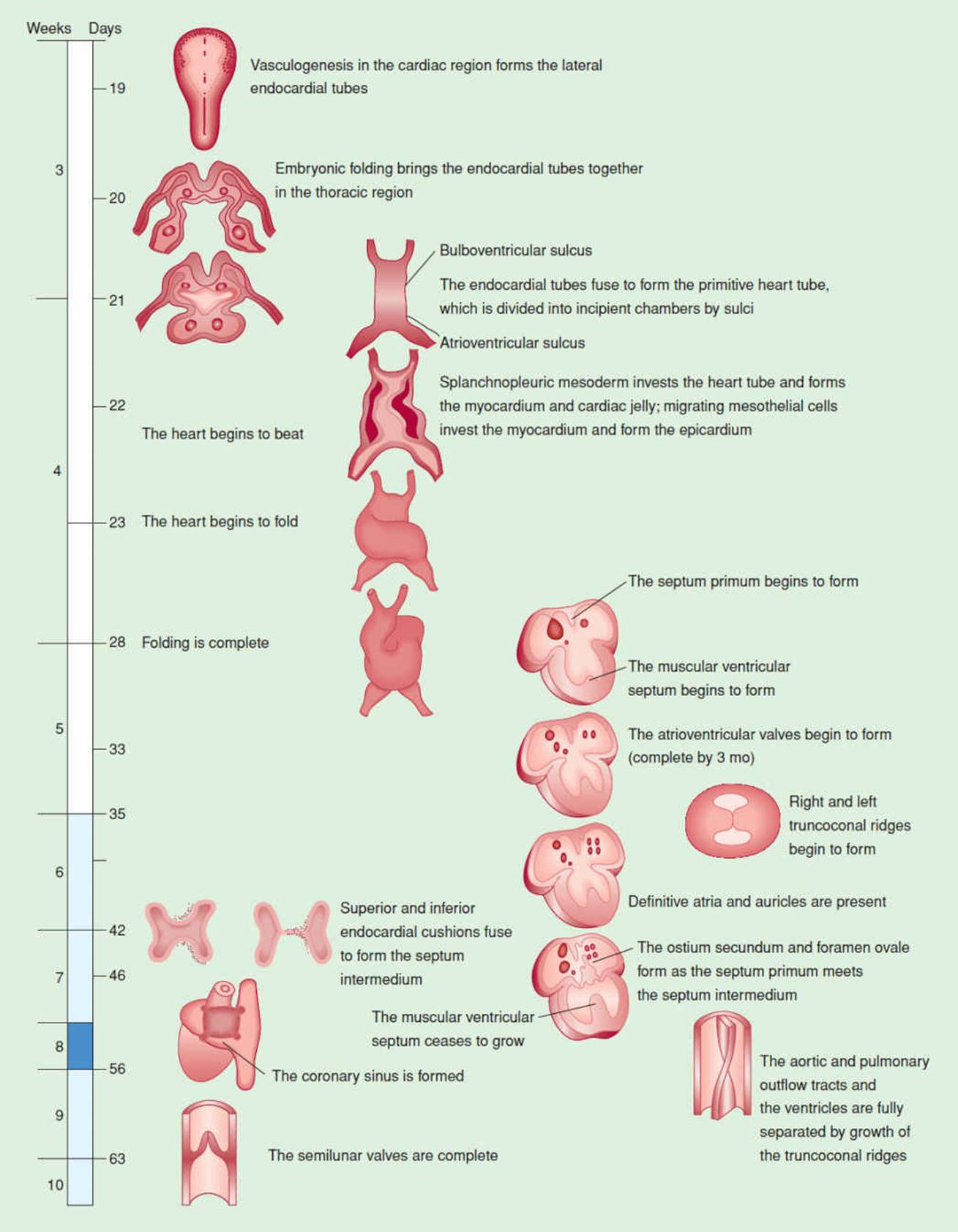
FIGURE 4-1 Timeline: Formation of the heart. (Reprinted from Larsen WJ. Human Embryology. Copyright 1993, with permission from Elsevier: p. 132.)
The inflow end of the primitive heart tube subdivides into the left and right horns of the sinus venosus, the primitive atrium, the ventricle, and the bulbus cordis. The sinus venosus develops into the right atrium and a part of the coronary circulation, and the primitive atrium gives rise to the right and left auricles. An atrioventricular sulcus separates the primitive atrium from the primitive ventricle. The primitive ventricle later develops into the left ventricle, whereas the inferior portion of the bulbus cordis differentiates into the right ventricle and the conotruncus. The conus cordis forms from the proximal portion of the conotruncus and develops into the cardiac outflow tracts and a part of the right ventricle.2 The distal part of the conotruncus, the truncus arteriosus, forms part of the ascending aorta and the pulmonary trunk. The most cranial segment of the heart tube, the aortic sac, gives rise to the left and right aortic arches.
The relationship of the heart chambers is established by a series of folds and loops. The bulbus cordis is displaced ventrocaudally and to the right, the ventricle to the left, whereas the atrium and sinus venosus are displaced craniodorsally.
While the four-chambered heart is developing, the primitive vasculature is being remodeled from a bilateral symmetrical single-circuit system to asymmetrical systemic and pulmonary circuits. The heart tube is remodeled in a manner such that the blood that is returned to the two sinus horns by way of the paired vitelline, umbilical, and common cardinal veins returns to the right atrium by way of the superior and inferior venae cavae3. The superior vena cava develops from the right anterior cardinal vein, draining the head and the upper limbs, whereas the inferior vena cava develops from the right vitelline vein, draining the trunk and the lower limbs. The left vitelline, left cardinal, and the two umbilical veins degenerate. The left sinus horn gives rise to the coronary sinus and the oblique vein of the left atrium to drain the heart. The superior vena cava, inferior vena cava, and the coronary sinus drain into the sinus venarum—the smooth posterior wall of the right atrium. Meanwhile the pulmonary venous system is incorporated into the smooth posterior wall of the left atrium.
During the fourth week of development, the septation of the atria and division of the atrioventricular canal begin.2 Right, left, superior, and inferior pad-like thickenings (endocardial cushions) form on the inner wall of the atrioventricular canal. The superior and inferior pads fuse forming the septum intermedium, dividing the atrioventricular canal into left and right canals. Remodeling will eventually align the left and right atrioventricular canals with the appropriate atria and ventricles.
During the remodeling, the primitive atrium is divided into left and right by the growth of the septum primum and septum secundum from the posterosuperior roof (Fig. 4-1). The opening between the descending edge of the septum primum and the atrioventricular canal is the ostium primum that allows for a right-to-left shunting of blood. The septum primum fuses with the septum intermedium, thus eliminating the ostium primum. However, before the elimination of the ostium primum, an ostium secundum develops in the superior region of the septum primum.3 The septum secundum develops to the right of the septum primum, growing from the posterosuperior atrial roof but does not reach the septum intermedium, thus creating the foramen ovale. The foramen ovale and ostium secundum do not overlap but allow for the continual shunting of blood from right to left. At birth, the shunt is closed by the rise of left atrial pressure, pressing the septum primum against the septum secundum.
During the fourth week of development, an incomplete muscular septum develops in the ventricular area. This coordinates with the formation of the atrioventricular valves and the septation of the outflow tracts. The cardiac outflow is divided by a pair of spirally patterned longitudinal truncoconal septa.2 The truncoconal septa arise from a pair of swellings on opposite walls of the outflow tracts (Fig. 4-1). When these swellings fuse, they form the ascending aorta and the pulmonary trunk. The septa also grow into the ventricular area to complete the interventricular septum, dividing the area into the left and right ventricles.
As the septa are formed, the atrioventricular valves, chordae tendineae, and papillary muscles are sculpted from the surrounding myocardium between the fifth and eighth weeks of gestation. The semilunar valves develop from tubercles that appear near the inferior end of the truncus arteriosus at the level of the ventricular outflow. By the end of the eighth week, a heart with its definitive structures is functioning.
Development of the Lungs
During the third week of development, differential growth and lateral folding convert the flat embryonic disc into a tube-like structure with a midventral opening to the yolk sac.2 The corresponding germ layers from each side fuse to form concentric layers of ectoderm (an outer layer that gives rise to integumentary structures), mesoderm (a middle layer that gives rise to muscles and related structures), and endoderm (an inner layer that gives rise to the gut structures). The endoderm region in the area of the yolk sac is the midgut, cranial to the yolk sac is the foregut, and caudal to the yolk sac is the hindgut. The formation of the tubular embryo forms an intraembryonic coelom—a cavity between two layers of mesoderm, with a layer of somatic (parietal) mesoderm next to the ectoderm, and a layer of splanchnic (visceral) mesoderm next to the endoderm.
At the cranial end of the embryo is the buccopharyngeal membrane, with the cardiogenic region cranial and lateral to the buccopharyngeal membrane, and the septum transversum (forerunner of the diaphragm and liver) cranial to the cardiogenic region. The septum transversum forms an incomplete separation between the thoracic (primitive pericardial) and the abdominal (peritoneal) cavities. The pericardioperitoneal canals are large openings on either side of the foregut between the thoracic and abdominal areas. The mesodermal septum transversum develops in the cervical region and later descends to its definitive region between the primitive pericardial and the peritoneal cavities taking its innervation from C3 through C5 (the spinal origin of the phrenic nerves) with it.3 The largest part of the diaphragm, consisting of the central tendon and muscle sheets from the pleuroperitoneal membrane, takes its origin from the septum transversum.
With further development, pleuroperitoneal folds grow into the pericardioperitoneal canals to fuse with the septum transversum and the esophageal mesentery, to form separate pleural and peritoneal cavities. A peripheral rim of muscular tissue of the diaphragm originates from the surrounding mesenchyme of the body wall, whereas the crura of the diaphragm develop from the mesentery of the esophagus. The crura and the peripheral ring of muscle, lining the body wall, are inner-vated by the spinal nerves T7 through T12.3
During the fifth week, pleuropericardial folds partition the primitive pericardial cavity into the pericardial cavity and two pleural cavities. The pleuropericardial folds fuse with each other and to the mesenchyme associated with the foregut, forming a definitive pericardial sac separated from the pleural cavities. At this stage of development, the pericardioperitoneal canals connect the pleural cavities with the peritoneal cavity.
During the fourth week, the lungs develop from an out-pocketing of the ventral foregut, the lung bud. As the lung bud expands caudally, esophagotracheal ridges form to separate the dorsal esophagus from the ventral trachea and lung bud. Communication is maintained between the esophagus and the respiratory components through the laryngeal orifice. Between days 26 and 28, the lung bud bifurcates to form two primary bronchial buds from the tracheal portion.3 Around the fifth week the bronchial buds enlarge to form the right and left main bronchi. With further development, the right bronchus forms three secondary bronchi and the left forms two, the forerunners of the numbers of lobes of the lungs on the respective sides. Between weeks 6 and 16, the primordial segments undergo further divisions until the bronchopulmonary segmentation of the adult lung is completed. Further divisions will continue during postnatal life. During this process of segmentation, the developing respiratory tree is assuming a more caudal position.
STRUCTURAL ORGANIZATION OF THE CARDIOPULMONARY SYSTEM
Thoracic Cavity
The thoracic cavity (Fig. 4-2) is surrounded by the ribs and muscles of the chest wall, the diaphragm, and the root of the neck, and contains the majority of the organs involved with ventilation, respiration, and circulation. It is divided into three parts—two lateral parts, each containing a lung, and the central part called the mediastinum (the section containing a central band of organs including the esophagus, trachea, great vessels, and the pericardium).
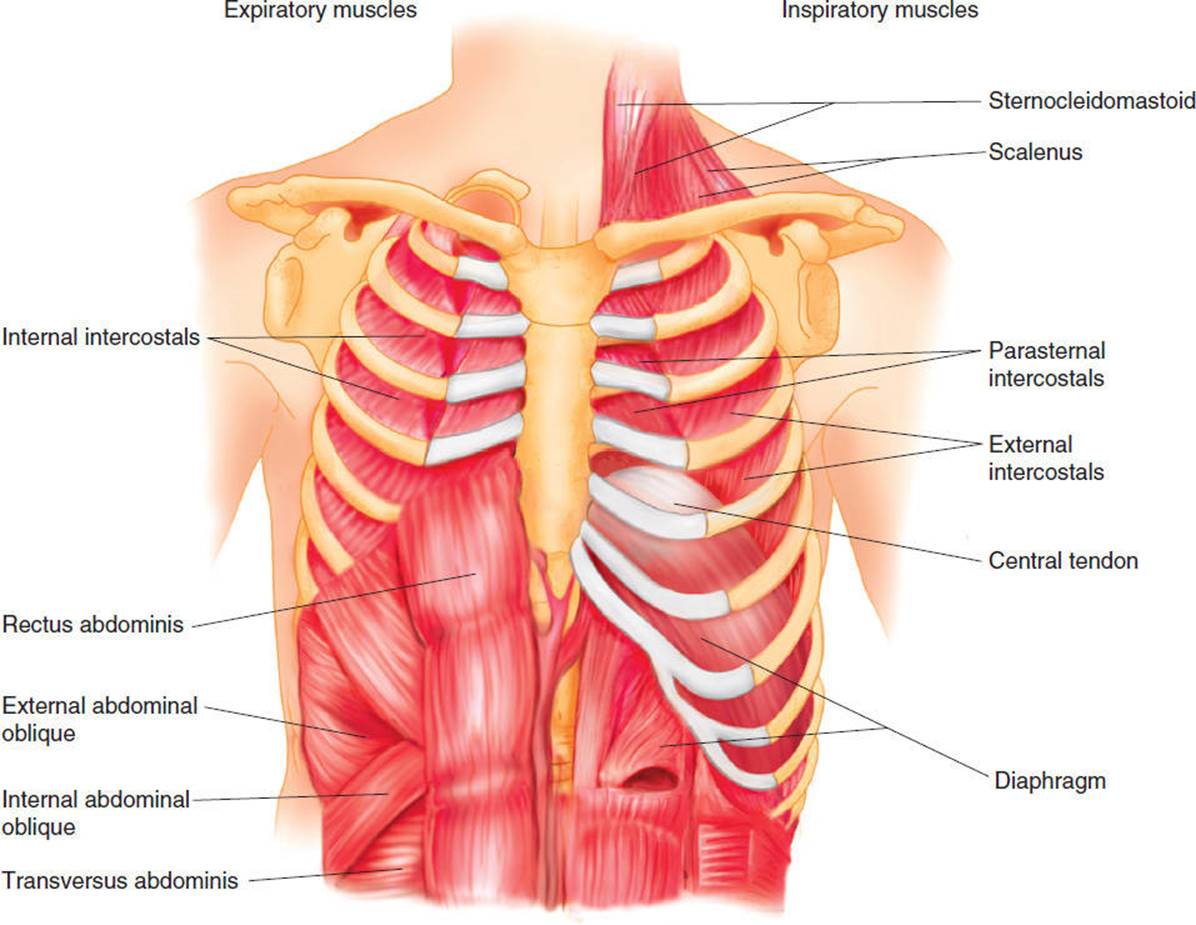
FIGURE 4-2 The muscles of inspiration and expiration. Anterior view of the chest wall depicting the bony cavity formed by the ribs, verte-brae, and sternum. Muscles of expiration (left) and inspiration (right) are shown.
STRUCTURE OF ELEMENTS INVOLVED IN VENTILATION
“Ventilation is the movement of a volume of gas into and out of the lungs.”4 The chest wall and muscles of ventilation work as a pump to produce the necessary pressure changes, whereas the lung interstitium, upper airways, trachea, bronchi, and bronchioles offer a dynamic route of passage for air during normal breathing.
Thoracic Cage
The thoracic cage creates a bony framework and consists of connective tissue, fascia, muscles of the chest wall, and vascular and neural elements. The bony structure is roughly cone shaped and includes the sternum and costal cartilages anteri-orly, the ribs laterally, and the vertebrae posteriorly. The thoracic cage is open superiorly where it communicates with the neck. Its inferior wall is formed by the diaphragm, which has several openings to allow communication between the thoracic and the abdominal cavities.
Sternum
The sternum consists of three parts: manubrium, body, and the xiphoid process. The superiorly located manubrium articulates with the clavicles laterally. Just beneath the clavicles, the manubrium also articulates with the first rib. The jugular notch, also called the suprasternal notch, is an indentation at the middle of the superior border of the manubrium. Inferior to the manubrium, the body consists of four separate bones that fuse after puberty and have laterally placed notches for articulation with the costal cartilages of ribs 3 through 7. A notch exists at the junction of the manubrium and the body, for articulation with the second rib. The most inferior part of the sternum, the xiphoid process, is a plate of hyaline cartilage that ossifies fully at around the age of 40.1 The sternal angle is a horizontal ridge, at the level of the second rib, across the sternum where the manubrium and the body form a fibrocartilaginous joint. This joint allows “pump handle” action of the sternal body during respiration (sagittal plane motion of the superior ribs).
Ribs
There are 12 pairs of ribs that mainly form the thoracic cage. The structure of the ribs serves two important functional roles (1) to protect the thoracic organs and (2) to provide a dynamic bony lever system for ventilation. The superior seven pairs of ribs articulate with the sternum via the costal cartilages and are referred to as true ribs. Rib pairs 8 through 10 have indirect cartilaginous connections to the sternum and are referred to as the false ribs. Rib pairs 11 through 12 have their costal cartilages embedded in the lateral body wall; they do not articulate with the sternum and are referred to as the floating ribs. The cartilaginous attachment of rib pairs 1 through 10 to the sternum provides a strong yet flexible articulation that contributes to the respiratory “bucket handle” motion (frontal plane motion of the inferior ribs). Costal cartilages of rib pairs 7 through 10 form the costal margin—the inferior margin of the thoracic cage on the anterior body wall.
The 12 pairs of ribs articulate with the thoracic verte-brae. These vertebrae form the posterior bony framework of the thoracic cavity. The thoracic vertebrae differ from the cervical and lumbar vertebrae due to the existence of facets on their transverse processes and body that allow for their articulation with ribs 1 through 12. The facet joints of the thoracic vertebrae, which articulate with the adjacent verte-brae, are aligned almost entirely in the frontal plane and the spinous processes overlap the vertebrae inferior to their origin. The combination of these structural factors greatly limits motion available to the thoracic vertebra. The head of the ribs articulates with the vertebrae at two facet joints—one at the body of the thoracic vertebra of the same number and the other to the thoracic vertebra just superior. These are the costovertebral joints. Lateral to the neck of the rib, a tuber-cle articulates with the transverse process of the same number of thoracic vertebrae at the costotransverse joints. The costovertebral and costotransverse joints are synovial joints allowing movement of the ribs. The axis for the upper ribs runs almost in a frontal plane and for the lower ribs in a sagittal plane. Based on the orientation of these joint axes, the movement of the upper ribs is primarily anterior and posterior (pump handle), whereas the transverse diameter increases for the lower ribs (bucket handle).
CLINICAL CORRELATE
Based on the connection of the ribs to the thoracic vertebrae, the posture, movement, and deformities of the thoracic spine may have an impact on ventilation. With postural deformities, reductions in thoracic cage expansion and therefore decreased static lung volumes may be present. Conversely, movement of the thoracic spine can be used to facilitate either inspiration (extension of the spine) or exhalation (flexion or rotation of the spine), or to facilitate either inspiration or expiration in one lung with side bending. Flexing the trunk forward causes the diaphragm to move cranially and lengthen. In view of the possible benefit of being flexed forward for facilitating expiration (the forward lean), the question that arises is, “Can a chronically shortened diaphragm be lengthened with such simple maneuvers?” Evidence provided by Volume Reduction Surgery (VRS) and transplantation shows that the chronically shortened diaphragm cannot do so. Therefore, during an evaluation of breathing patterns, if paradoxical breathing (indicating an ineffective diaphragm) can be eliminated with a forward lean posture, it may be established that the patient does not have a shortened diaphragm and may benefit from treatments such as inspiratory muscle training or diaphragmatic muscle training.
Muscles of Ventilation
During ventilation, the muscles of the thoracic cage and of the abdomen act as “pump” muscles to move the bony thorax, thereby causing intrathoracic pressure changes that, in turn, produce airflow into the lungs (Fig. 4-2). Muscles of the larynx and pharynx (discussed later) act as “valves” that help regulate airflow and maintain airway patency. Numerous studies have been conducted on the neural control of the ventilatory muscles and their coordination in ventilatory rhythm; many are reviewed in Miller et al.5
Intercostals
The muscles of the thoracic cage include the 11 internal and external intercostals. These muscles connect one rib to the next. The external intercostals originate from the lower border of a superior rib and travel inferomedially to the upper border of the inferior rib. They function to elevate the ribs and increase thoracic volume. Conversely, the internal intercostals originate from the lower border of a superior rib and travel inferolaterally to the upper border of the inferior rib. They function to lower the ribs, thereby decreasing thoracic volume.
Diaphragm
The diaphragm is the primary muscle of ventilation. Structurally, the diaphragm forms a partition between the thoracic and the abdominal cavities (Fig. 4-3). It originates from the xiphoid process of the sternum, the lower six costal cartilages and their adjoining ribs, lateral and medial arcuate ligaments, and from the right and left crura attached to the anterior surfaces of the lumbar vertebrae. The lateral and medial arcuate ligaments are thickenings in the thoracolumbar fascia over the quadratus lumborum and psoas major muscles, respectively. The muscle fibers of the diaphragm insert into the central tendon. There is a foramen in the central tendon to accommodate the inferior vena cava. An esophageal hiatus occurs in the right crus, whereas a median arcuate ligament that interconnects the left and right crura, forms the aortic hiatus. At rest, the diaphragm is dome shaped because of a balance between the functional residual volume of the lungs and the abdominal contents. When the diaphragm contracts, it descends over the abdominal contents and flattens, which causes the lower ribs to move outward; this decreases the intrathoracic pressure, which pulls air into the lungs. Figure 4-3 depicts the diaphragm in the transverse and sagittal planes. The diaphragm is innervated by phrenic motor neurons located in the cervical spinal cord (C3 through C5).
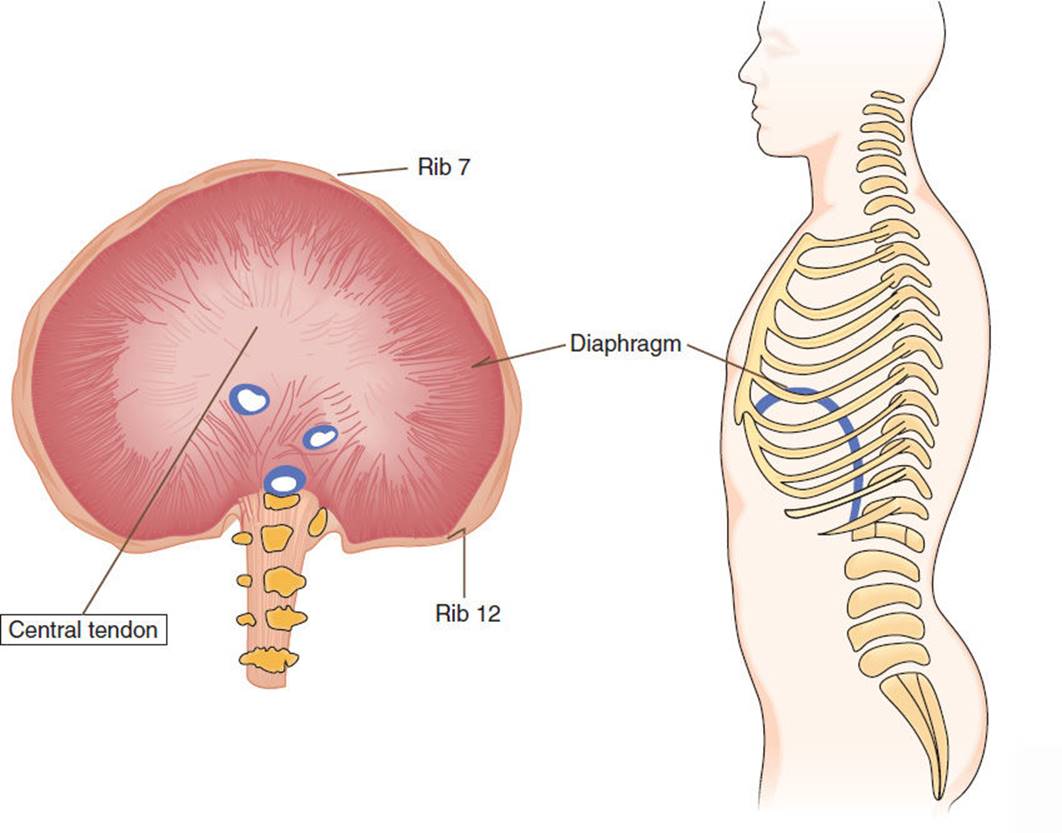
FIGURE 4-3 Transverse and sagittal views of the diaphragm.
CLINICAL CORRELATE
In patients with chronic obstructive pulmonary disease (COPD), a greater volume of air is left in the lungs at the end of expiration (increased functional residual capacity [FRC]). Therefore, the diaphragm in such patients is of a more shortened length (flattened) as compared to normal FRC. Based on the length–tension relationship of muscles, this shortened length results in a decreased force-generating capacity of the diaphragm. Because the diaphragm is flat, this loss of force is combined with a biomechanical alteration due to a change in the angle of pull of the diaphragm on the ribs. Despite an increased neural drive to the diaphragm, measurement of thoracoabdominal motion in COPD patients has demonstrated decreases in abdominal movement and increases in chest wall movement. This is thought to be related to the decreased mechanical capabilities of the diaphragm.6,7With severe airflow limitation and significant hyperinflation, static or dynamic, the separation of the ribs makes it hard to believe that the external inter-costals are actually shortened. However, they are affected functionally because of the lack of remaining range of motion of the ribs at the costovertebral and costotrans-verse joints.
Pleurae
The pleurae are serous membranes lining the pleural region of the thoracic cavity; they consist of an outer parietal layer and an inner visceral layer. The parietal pleura lines the inner surface of the thoracic cavity, the diaphragm, the mediastinum, and the great vessels in the superior mediastinum. The visceral pleura covers the outer surface of the lungs. The space between the two pleurae (pleural cavity) is supplied with a small amount of pleural fluid that serves to hold the visceral and parietal pleurae together during ventilation, and at the same time reduces friction between the lungs and the thoracic wall. Although the layers can easily slide over each other, separation is strongly resisted. The parietal and visceral pleurae are in contact at the root of the lung. Here, during lung development, the lung bud comes into contact with the pleura. Nerves and blood vessels that communicate between the mediastinum and the lungs pass through the root enveloped in a sheet of pleura. Therefore, the lungs and the thoracic wall form a functional unit that moves together—the lungs with the thoracic wall during inspiration and the thoracic wall with the lungs during quiet expiration. In expiration and during resting ventilation, recesses exist in the pleural cavity. Pleural recesses are spaces between the visceral and parietal pleurae, and these recesses exist predominantly in the lower parts of the thoracic cavity. No pleural recesses exist superiorly because of the close fit between the lungs and the pleural cavity. The previously mentioned functional residual capacity is dependent on the balance of recoil forces between the lungs and the thoracic wall. The visceral pleura does not have inner-vation and therefore does not have sensation, whereas the parietal pleurae of the costal and peripheral diaphragm are innervated by intercostal nerves. The mediastinal and central diaphragmatic pleurae are innervated by the phrenic nerve.8
CLINICAL CORRELATE
Pleural effusion refers to an excess of pleural fluid in the pleural cavity; it may restrict the patient’s ability to inspire and thus reduce lung volume. Other materials can invade the pleural space and cause restrictive lung dysfunction as well: There may be blood in the pleural space (hemothorax) or pus due to bacterial infection (empyema) or there may be an inflammation of the pleura, causing pleurisy. Pleurisy may be appreciated on lung auscultation by the presence of a pleural friction rub—a squeaky adventitious sound caused by the two layers of inflamed lung pleura moving against each other during ventilation.
Lungs
The lungs lie within the thoracic cavity on either side of the mediastinum. They are covered by the visceral pleura and include the conducting airways, such as the bronchi and the bronchioles that form a passageway for airflow into the lungs. The conducting airways continue to bifurcate, adding surface area with each generation, until finally they terminate into the distal airways that include the alveoli.9 These airways are supported by a network of connective tissue known as inter-stitium. The interstitium is an elaborate system of collagen fiber bundles and proteoglycan filaments that form a fine reticular mesh which supports the functional elements of the lungs. The main role of the lungs is to provide a large surface area of contact between the air and the blood in order to accomplish gas exchange. The outer surface of the interstitium is covered by the visceral pleura. Medially, the hilum (the root of each lung) marks the entrance and exit points of bronchi, nerves, blood, and lymph vessels. The most superior aspect of each lung is called its apex. The lung surface adjacent to the ribs is called the costal surface, and the lung surface adjacent to the mediastinum is called the mediastinal surface.
Right Lung
There are three lobes in the right lung—(1) right upper (superior) lobe (RUL), (2) right middle lobe (RML), and (3) right lower (inferior) lobe (RLL) (Fig. 4-4). The RUL occupies the superior third of the right lung. Posteriorly, the RUL is adjacent to the first 3 through 5 ribs. Anteriorly, the RUL extends inferiorly as far as the fourth right rib. The right middle lobe is typically the smallest of the three lobes and appears triangular in shape in the frontal plane, being narrowest near the hilum. The RML extends inferiorly and laterally to the fifth and the sixth rib, as it passes medially. The RLL is the largest of all the three lobes, separated from the others by the oblique fissure. Posteriorly, the RLL extends as far superiorly as the sixth thoracic vertebral body and extends inferiorly to the diaphragm. During full inspiration, the lower lobe can extend to as low as L2, becoming superimposed over the upper poles of the kidneys. Grossly, two fissures—horizontal and oblique—that anatomically correspond to the visceral pleural surfaces of those lobes from which they are formed separate these lobes from one another. The horizontal fissure separates the RUL from the RML; the right oblique fissure is more expansive in size than the minor fissure, separating the right upper and middle lobes from the larger right lower lobe.
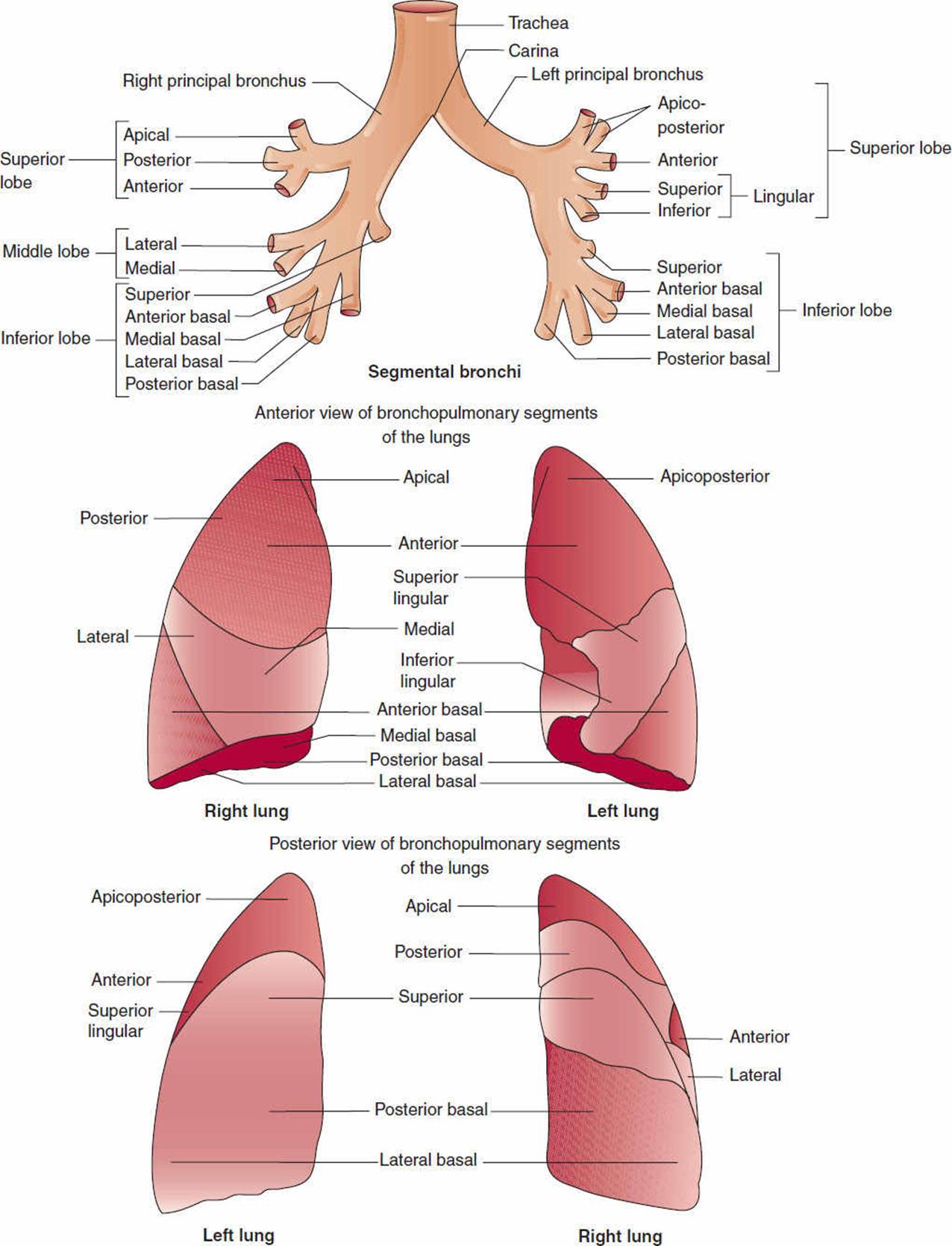
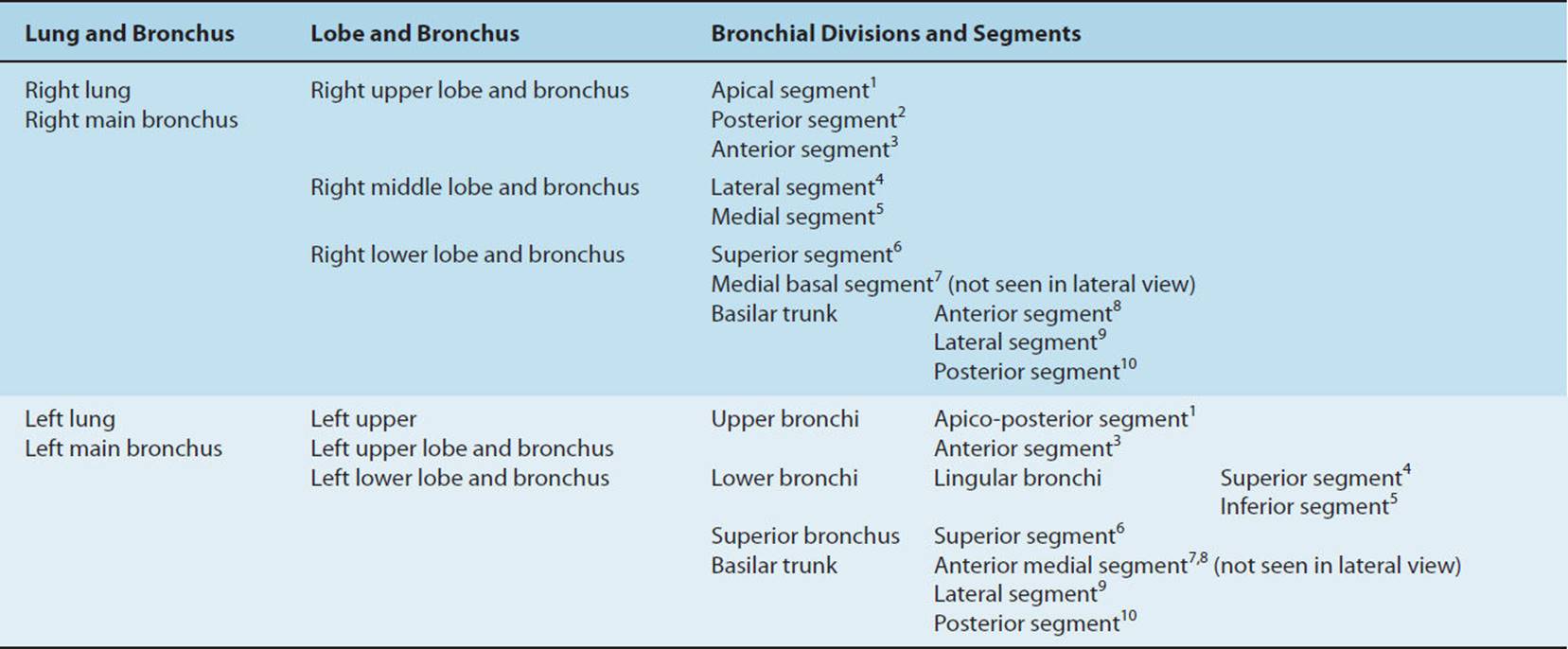
FIGURE 4-4 Anatomical relationship between the division of the lungs and the airways. Refer also to Table 4-1.
TABLE 4-1 Segmental Bronchi and Associated Lung Segments
Left Lung
The structure of the left lung differs slightly from that of the right lung (Fig. 4-4). The two lobes of the left lung are separated by an oblique fissure, identical to that seen on the right side, although often slightly more inferior in location. The portion of the left lung that corresponds anatomically to the right middle lobe (the lingular segment) is incorporated into the left upper lobe and extends posteriorly to the sixth rib. Posteriorly, the LLL extends as far inferiorly as the eleventh rib, and superiorly as far as the fourth rib.
AIRWAY ANATOMY
The branching nature of the bronchi contributes to the lobar structure of the lungs. This structure allows for an exponential increase in the amount of surface area for gas exchange as the bronchi continue to branch until they reach the terminal bronchioles and finally the alveoli. This branching nature also permits lung segments and lobes to function relatively independently. Pathological processes in one lobe, such as pneumonia, will not necessarily affect other regions of the lung. It should be pointed out that considerable anatomical variation might exist between individuals. The bronchial anatomy described herein is illustrative of a typical bronchial pattern. The reader should be aware that oftentimes, two or three bronchi might arise from a common trunk rather than have separate and discrete origins. This is frequently the case for the apical and posterior segments of the upper lobe of the left lung (therefore typically combined into apicoposterior) and the anterior and medial basal segments of the lower lobe of the left lung (therefore often combined into anteromedial basal). This explains why some anatomy texts list 10 segments for the left lung and others only 8.
Conducting Airways and Lobes of the Lungs
After the bifurcation of the trachea into the main bronchi, the conducting airways pass through the hilum (the root of the lung) and continue to bifurcate. Throughout the generation of these bifurcations, the airway diameter decreases and contains less cartilage and smooth muscle (Fig. 4-4).
In the normal adult, the left main bronchus (LMB) measures approximately 4.5 cm in length and the right (RMB) measures approximately 2.5 cm in length. The shortness of the right main bronchus is due to the more proximal origin of the right upper lobe bronchus. Taken together, the two main bronchi, volumetrically, have 40% more cross-sectional area than the trachea. The left main bronchus leaves the trachea at a 135-degree angle, whereas the more superiorly located right main bronchus tends to be more vertically oriented, having a 155-degree angle of origin.
CLINICAL CORRELATE
Aspiration of a foreign body (eg, button, food) almost always lodges in the right lung, because of the orientation of the right main bronchus (RMB).
Right Upper Lobe Bronchi
Soon after its origin, the RMB gives rise to the right upper lobe bronchus, which typically is directed superiorly and slightly laterally, having an almost 90-degree angle from the RMB (Fig. 4-4). The upper lobe bronchial trunk measures approximately 1 cm in length and approximately 1 cm in diameter. The trunk then gives rise to the segmental bronchi of the RUL. A segmental bronchus supplies the apical segment of the right upper lobe and has a diameter ranging from 4 to 7 mm. Another bronchus, supplying the posterior segment, has a more horizontal course.
Finally, a third segmental bronchus supplies the anterior segment and, like the posterior segmental bronchus, has a generally horizontal course but proceeds somewhat inferi-orly from its origin. The right main bronchus extends no farther inferiorly than the origin of the right upper lobe bronchus. The airway distal to the upper lobe bronchus is referred to as the bronchus intermedius (BI). The bronchus intermedius generally averages 2 cm in length and terminates at the point of origin of the right middle lobe bronchus.
Right Middle Lobe Bronchi
The middle lobe bronchial trunk measures approximately 12 mm in length and 8 mm in diameter. The origin of the middle lobe bronchus marks the point of origin of the right lower lobe bronchus. From its origin, off the anterior aspect of the BI, the right middle lobe bronchial trunk continues slightly inferiorly for a short distance before giving rise to the lateral and medial segmental bronchi. The medial segmental bronchus has a slightly more oblique course than the lateral segmental bronchus.
Right Lower Lobe Bronchi
The right superior segmental bronchus may arise at, or above, the level of the origin of the right middle lobe bronchus but more frequently arises slightly more distally. Regardless, the superior segmental bronchus is the first branch off the lower lobe bronchus and has a predominantly horizontal course. The airway distal to the superior segmental bronchus is referred to as the basilar trunk. The basilar segmental bronchi have a predominantly vertical orientation. The anterior, posterior, and lateral basilar segmental bronchi typically arise from a common trunk. The medial basal bronchus, oriented medially, has its origin inferior to the superior segmental bronchus.
Left Upper Lobe Bronchi
The origin of the left upper lobe bronchus occurs at a level lower than the origin of the right upper lobe bronchus. The left upper lobe bronchial trunk gives rise to the upper lobe and lingular segmental bronchi. Measuring 9 mm in length and approximately 12 mm in diameter, the left upper lobe bronchial trunk characteristically appears short but has a large diameter. The left upper lobe bronchial trunk divides into the ascending upper division (eventually giving rise to the apico-posterior and anterior segments) and the descending lower division (which then gives rise to the lingular segmental bronchi). Note that in the left upper lobe bronchus, the apical and posterior segments are combined and as such are supplied by one bronchus. The courses of apical and posterior segmental bronchi have vertically and horizontally oriented components as bronchial rami divide to supply the apicoposterior segment. The anterior segmental bronchus will have a more horizontal course similar to that seen on the right side. The lingular segmental bronchi have an oblique course. The superior lingular segmental bronchus has a more horizontal course and supplies the superior lingular segment. The superior lingular segmental bronchus is superior to the more vertically oriented inferior lingular segmental bronchus.
Left Lower Lobe Bronchi
The left superior segmental bronchus is similar to that on the right side, having a typically horizontal course and supplying the superior segment. There are only four segments in the left lower lobe, compared to five on the right. The bronchial segment that supplies the medial basal segment on the right side is not a separate entity on the left. As a result, the anterior and medial segments are combined and supplied by an anterome-dial bronchus. As is the case on the right side, the basilar segmental lower lobe bronchi course predominantly vertically. Like their contralateral counterparts, lateral and posterior basal segmental bronchi may arise from a common trunk.
CLINICAL CORRELATE
The normal orientation of segmental airways that feed the bronchopulmonary segments of each lobe dictate the bronchial drainage positions that patients adopt in order to mobilize secretions from the distal airways to the mainstem bronchi and trachea, where the secretions may be expelled with forceful coughing. For example, the bronchial drainage position that brings the segmental airway supplying the anterior segment of the right upper lobe to its full upright (vertical) position is supine with the bed flat. This position maximizes the effect of gravity in moving secretions out of the anterior segment and into the more proximal airways.
Upper Airways
The upper airways include the nose, pharynx, nasopharynx, oropharynx, larynx, and the trachea. These structures allow communication between the environment and the lungs. Knowledge of their structure is important for physical therapists in certain examination procedures as well as in airway clearance techniques.
Nose
The nose is supported by bone and cartilage and is covered by skin. Periosteal and perichondral membranes blend to connect the bones and cartilage to each other. The nasal cavity is a wedge-shaped passage divided vertically by a septum into right and left halves and into compartments by the nasal conchae. The nasal cavity begins with the nares and passes posteriorly to the nasopharynx. The lateral walls of each cavity contain prominent folds called conchae that project medially and inferiorly into the cavity and serve to increase the respiratory surface of the nasal mucous membrane to help warm and moisten air. The mucous membrane is formed from nasal epithelial cells; additional functions include protecting the airway from foreign substances by trapping particles in mucus and allowing for their removal by sneezing. The conchae occupy a large portion of the available space in the nasal cavity, and a small amount of inflammation can obstruct the nasal passage. The floor of the nasal cavity is formed by the palatine process of the maxilla and the horizontal part of the palatine bone. The paired nasal cavities open through the narrowed posterior apertures into the pharynx (Fig. 4-5).
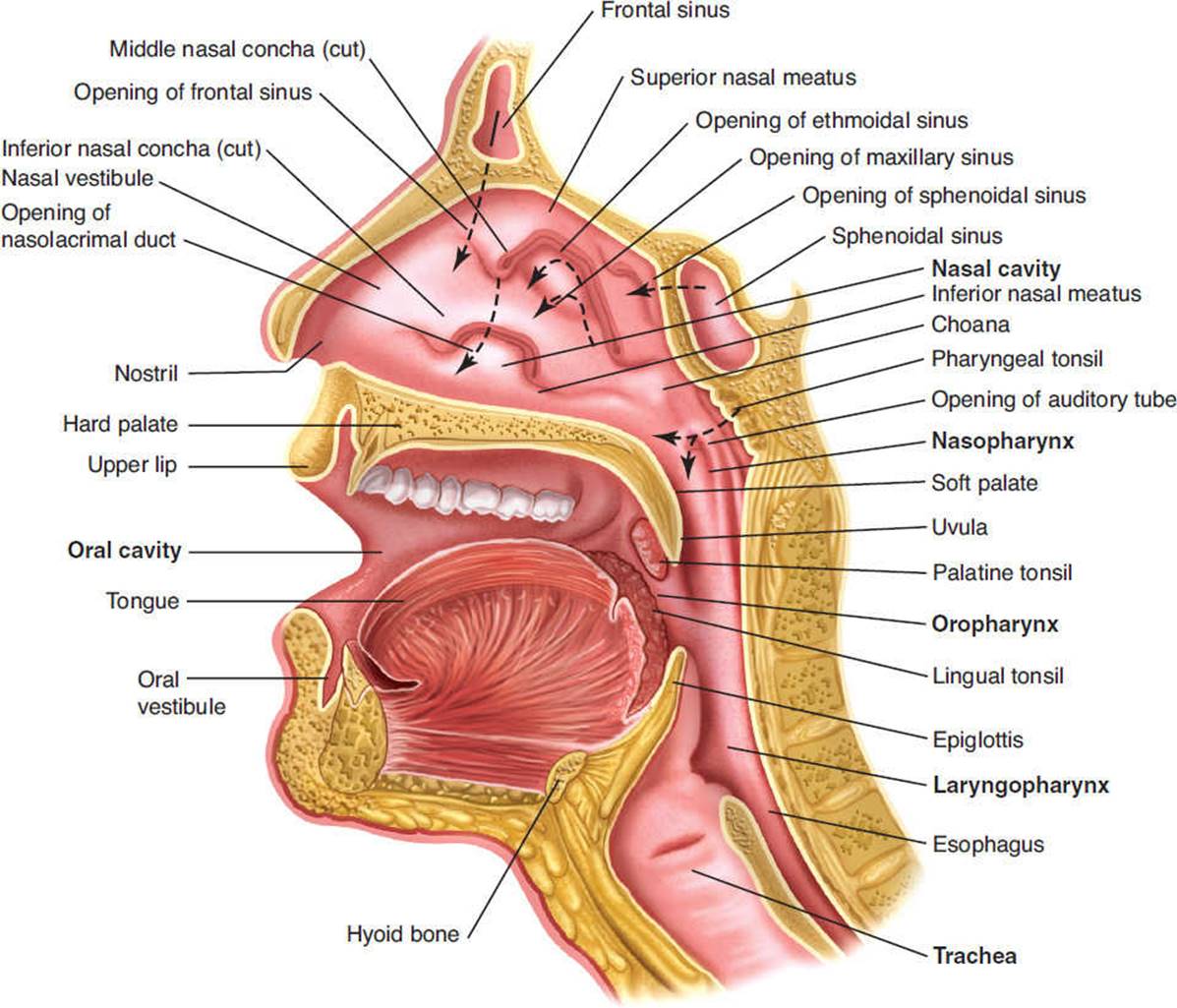
FIGURE 4-5 Sagittal view of the upper airways. (Reproduced with permission from Tintinalli JE, Kelen GD, Stapczynski JS. Emergency Medicine: A Comprehensive Study Guide. 6th ed. New York: McGraw-Hill; 2004:102.)
CLINICAL CORRELATE
The nasal conchae narrow the nasal passageways, and the mucous membrane is composed of fragile cells, making suction-catheter trauma likely in the case of blind nasotracheal suctioning. This is why low platelet counts may be a contraindication to this form of suctioning or, at the very least, require the insertion of a nasopharyngeal airway (nasal trumpet).
Pharynx
The pharynx is a shared structural throughway that allows the digestive system (from the mouth) and the respiratory system (from the nose) passage to their respective destinations—the esophagus and the larynx. The posterior and lateral walls of the pharynx are muscular, whereas the anterior wall consists of the opening to the nasal cavities, the soft palate, the opening to the mouth and the tongue, and finally to the posterior wall of the opening to the larynx.1The pharynx is surrounded by the superior, middle, and inferior constrictor muscles that run horizontally; the stylopharyngeus, which is oriented longitudinally, disappears between the superior and middle constrictors. The inferior constrictor maintains a tonic contraction until swallowing, serving as a sphincter between the esophagus and the pharynx. The pharynx normally undergoes small changes in size during normal breathing; however, structural abnormalities may impede airflow through the pharynx, particularly during sleep.
The pharynx is divided by the soft palate into the nasopharynx and oropharynx. Muscles that form the soft palate, which assist with ventilation, include the levator and tensor veli palatini, the musculus uvulae, the palatopharyngeus, and the palatoglossus. Their coordinated action regulates the route of airflow between nasal and oral pathways to meet ventilatory demands (Fig. 4-5).10
The roof of the nasopharynx is called the fornix and consists of a mucous membrane in close proximity to the basal portions of the sphenoid and occipital bones. The ostium of the auditory tube is located in the lateral wall of the pharynx and provides a structural connection to the middle ear. The soft palate forms a mobile floor of the anterior portion of the nasopharynx. The pharyngeal isthmus is posterior to the soft palate and forms the opening to the oropharynx. The isthmus can be closed by the levator veli palatini muscle pulling the soft palate backward and upward.10 The soft palate will approximate the posterior wall to allow, for example, proper phonation of consonants, drinking under pressure, and expiration of air through the mouth and not the nose (ie, pursed-lip breathing).
The oropharyx is bordered anteriorly by the base of the tongue and extends downward posteriorly to the upward projection of the epiglottis. The epiglottis is united to the tongue by a midline and two lateral folds—the median and the lateral glossoepiglottic folds. The laryngeal part of the pharynx is continuous with the oropharynx at the level of the upper border of the epiglottis and is wide superiorly and narrows as it travels posteriorly. Distal to the cricoid cartilage of the larynx, the pharynx becomes continuous with the esophagus. At this point, the anterior wall of the pharynx is the opening to the larynx.
Larynx
The larynx (composed of nine cartilages) forms a protective connection between the pharynx and the trachea. As part of the respiratory system, the larynx protects the trachea from food and foreign bodies by acting as a valve. The larynx is also equipped with a phonating mechanism designed for voice production. Laryngeal muscles, in addition to phonation, produce large changes in the size and therefore resistance of the laryngeal opening through the vocal cords. The larynx is approximately 5 cm in length in adult males.
The nine laryngeal cartilages form joints to allow normal functioning of the laryngeal structures. The cricoarytenoid joints and the cricothyroid joints both allow movement, which approximates, tenses, relaxes, tightens, or slackens the vocal cords.
The larynx is divided into three compartments by the projecting folds of the mucous membranes of the lateral walls. The vestibule lies between the inlet and the superior folds; the ventricle, between the superior folds and the vocal cords; and the infraglottic cavity, between the vocal cords and the cricoid cartilage, where it is continuous with the trachea. Contraction of the transverse and oblique arytenoid muscles and the aryepiglottic muscles has a sphincter action and closes the laryngeal inlet as a protective mechanism during swallowing.
Trachea
The trachea begins at the level of the cricoid cartilage of the larynx, which generally is at the level of the sixth cervical vertebra. In adults, the trachea ranges from 9 to 15 cm in length and terminates as the carina, a ridge at the bifurcation of the trachea into the left and right main bronchi (Fig. 4-4). The trachea has a maximum transverse diameter of 16 mm, whereas sagittally the trachea is narrower, having a maximal diameter of 14 mm. The posterior wall of the trachea tends to appear slightly flattened due to posteriorly directed horse-shoe–shaped cartilages. The carina is a cartilaginous wedge at the bifurcation of the trachea into the right and left main stem bronchi. It resides approximately at the level of the fifth thoracic vertebral body and can be localized approximately at the same level as the sternal notch.
CLINICAL CORRELATE
Tracheal suctioning requires the insertion of a catheter into the upper airway, where it is passed down the trachea to the level of the carina. The carina is richly innervated by the vagus nerve. When the tip of the suction catheter comes in contact with the carina, it can provoke a strong parasympathetic response, which in turn can trigger a sudden decrease in the heart rate and produce cardiac arrhythmias. Therapists should monitor their patients carefully for the appearance of such events and provide supplemental oxygen during the procedure.
STRUCTURE OF ELEMENTS INVOLVED IN RESPIRATION (GAS EXCHANGE)
“Respiration refers primarily to the exchange of oxygen and carbon dioxide across a membrane into and out of the lungs at the cellular level.”4 In the lungs it is the close proximity of the alveoli to the capillaries of pulmonary circulation that allows the gas exchange to occur. In the tissues of the body, the capillaries form dense networks that deliver oxygen to metabolically active tissues and pick up carbon dioxide in the form of hydrogen and acids to be returned to the lungs.
Alveoli
The terminal bronchioles evolve into respiratory bronchioles that have alveolar ducts extending from their walls. The alveolar ducts carry in their walls strong fibers that extend to the end of the duct. The ducts are densely populated with sacs that give rise to the terminal air sacs—the alveoli. The portion of lung extending distal to the terminal bronchiole is called the respiratory zone or the acinus (Fig. 4-6). Whereas the distance from the terminal bronchiole to the alveoli is only approximately 5 mm, the acinus makes up the majority of the air volume of the lung (3,000 mL).11 A dense network of fibers anchors the acinus to the interstitium. When the diaphragm and chest wall move, tension is transmitted through this dense network of fibers into the acinus and then to the alveolar walls. The alveolar wall consists of two thin layers of epithelial cells (squamous and granular pneumocytes) spread over a layer of connective tissue. Squamous pneumocytes are flat and thin, making up approximately 95% of the gas-exchange area, whereas granular pneumocytes are thick, active cells that produce surfactant. A third cell type is free floating in the alveolus and is called an alveolar macrophage, which engulfs and ingests foreign material in the alveoli as a protective function against disease.
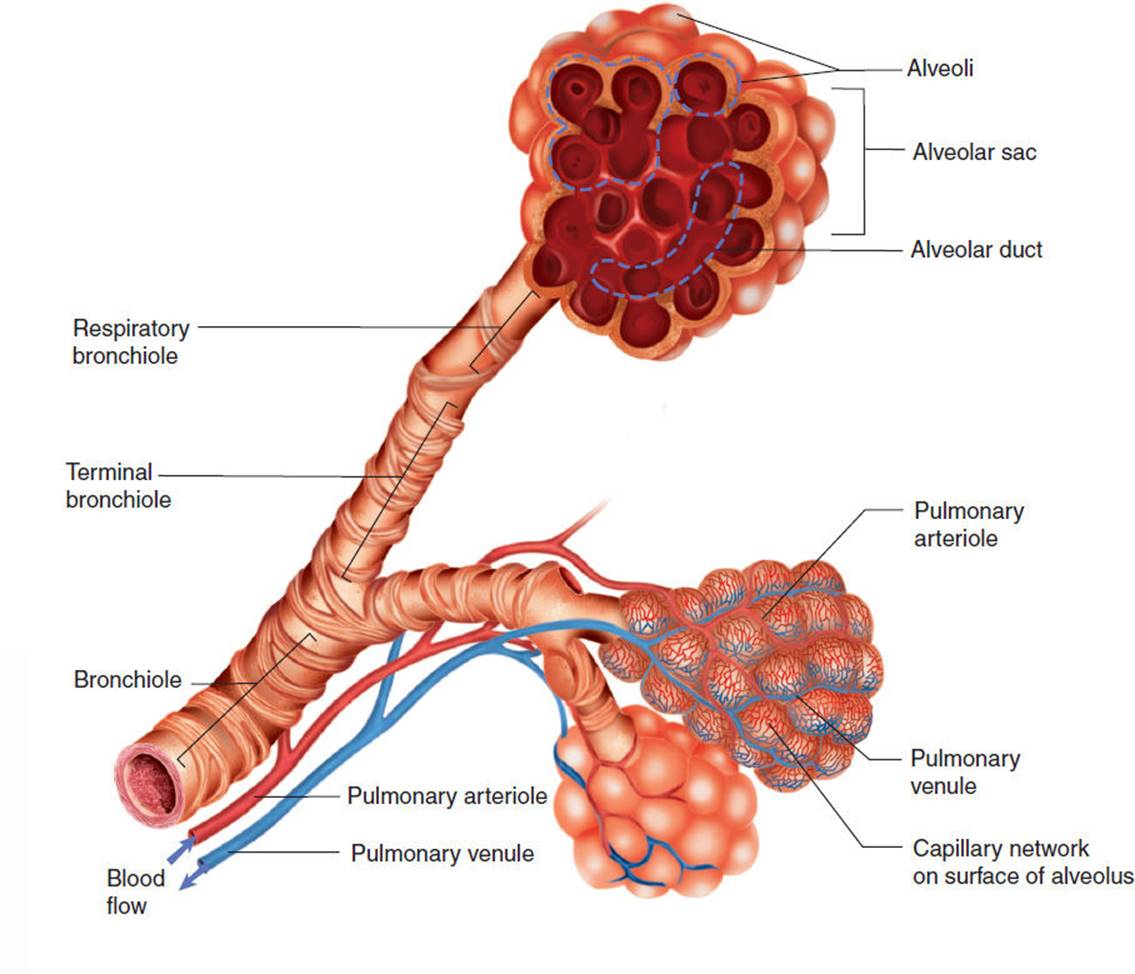
FIGURE 4-6 Terminal divisions of the bronchial tree, depicting the terminal and respiratory bronchioles leading into alveolar sacs or the acinus. Expanded view of an alveolar sac shows individual alveoli.
CLINICAL CORRELATE
The importance of this dense interconnected fiber network becomes apparent when disease processes, such as emphysema, destroy some of the fibers, which can drastically affect both respiration (reduced surface area) and ventilation (widened and irregular airspaces) of the alveoli.
Capillaries
Capillaries are tiny blood vessels (measuring approximately 4–12 μm in diameter) composed of a single layer of flattened endothelial cells. Capillaries bring blood in close contact with tissues. In metabolically active tissues, capillaries form a dense network that is fed by a number of arterioles. The density of the capillary bed is related to the functional activity of the organ—the greater the need for aerobic metabolism, the greater the density of the capillary bed. A capillary is composed of a thin layer of simple squamous cells. The capillary network is interwoven throughout the interstitium. Even though capillaries lack the elastic connective tissue component of arteries and veins they are still able to distend, thus allowing them to accommodate to the volume of blood being delivered to the lungs.
Alveolar–Capillary Membrane
It is at the alveolar–capillary interface that a common basement membrane is shared.9 The route that oxygen must take to get from the lung to the pulmonary capillary bed begins with movement through the squamous and granular pneumocytes (alveolar epithelium) and proceeds across the basement membrane and finally across the capillary endothelium into the lumen of the capillary, where it either becomes dissolved in plasma or is picked up by the red blood cell. The alveolar–capillary membrane thickness varies throughout the lung but is approximately 0.5 to 1.0 μm.
CLINICAL CORRELATE
The thickness of the membrane may increase with fluid accumulation in the interstitium because of increased capillary hydrostatic pressure (heart failure), obstructed lymphatic flow (lung cancer), reduced osmotic pressure, or trauma. This thickening in the membrane will make diffusion of gases more difficult and will impede respiration. The thickness of the membrane may also increase by fibrotic scarring of either the alveolar cell walls or the interstitium.
Red Blood Cells (Erythrocytes)
Erythrocytes are biconcave discs with a simple structure. They do not have a nucleus and do not reproduce or carry on metabolic activities. They contain cytoplasm, protein, lipid substances, and hemoglobin. Hemoglobin accounts for approximately 33% of the cellular volume. The biconcave structure maximizes the surface available for gas exchange in the capillaries.9
STRUCTURE OF ELEMENTS INVOLVED IN CIRCULATION
“Circulation is the passage of blood through the heart, blood vessels, organs and tissues; it also describes the oxygen delivery system.”4 The central components of the circulatory system, all located in the mediastinum, consist of the heart, which pumps blood, and the great vessels, which transport blood to the central pulmonary and systemic circulation. The systemic circulation includes the arteries and arterioles that deliver blood to the body; the capillaries that allow oxygen, nutrient, and waste product exchange; and the veins that return blood to the heart.
Mediastinum
The mediastinum is a space that extends from the thoracic inlet superiorly to the diaphragm inferiorly, and from the sternum anteriorly to the vertebral column posteriorly. The structures contained in the mediastinum are surrounded by loose connective tissue, nerves, blood and lymph vessels and nodes, and fat. The looseness of the connective tissue, combined with the elasticity of the lungs and pleura, allows the mediastinum to accommodate movement and volume changes in the thoracic cavity related to venous return, cardiac output, ventilation, and swallowing. There may be variations in the location of the mediastinum with changes in body position and, more significantly, with changes in unilateral lung volume. The mediastinum can shift to one side with unilateral loss of lung volume, such as in the case of a pneumothorax or even atelectasis (a collapsed or airless condition of the lung).
CLINICAL CORRELATE
A mediastinal shift is a common sign that reflects lung pathology. The mediastinum shifts toward a pneumothorax or severe atelectasis, or away from a tension pneumothorax. A tension pneumothorax occurs when air leaks out of a lung through a flap of lung tissue that acts as a one-way valve, allowing air to escape into the pleural space but not allowing it to return back into the lung. Pressure and tension build up in the pleural space, pushing the mediastinum away from the pathology.
Pericardium
The pericardium, located in the middle of the mediastinum, is posterior to the sternum and to the second through sixth costal cartilages. It is a double-walled fibroserous sac that surrounds the heart and the roots of the vessels entering and leaving the heart. The fibrous outer layer fuses with the outer layer of the vessels to the sternum, forming the sternopericardial ligaments, and to the central tendon of the diaphragm, forming the pericardiophrenic ligament.
The fibrous layer is lined with the serous pericardium—the parietal layer that continues onto the heart as the visceral pericardium (the epicardium). The potential space between the parietal pericardium and the visceral pericardium is the pericardial cavity. Serous fluid fills the pericardial cavity and allows for an almost friction-free environment for cardiac function, whereas the fibrous wall provides protection from the rapid and potentially damaging overfilling of the pericardial cavity.
The phrenic nerves, which contain pain fibers, innervate the parietal pericardium; however, the visceral pericardium is insensitive to pain. The pericardium receives its blood supply through branches of the internal thoracic arteries and phrenic arteries. Venous drainage is through the azygos and pericardiophrenic veins.
CLINICAL CORRELATE
Pericardial effusion is a pathologic condition where excess fluid (hemorrhagic, inflammatory, etc) fills the pericardial cavity. This increase in pressure on the heart restricts blood flow into the right ventricle, greatly diminishing venous return and impairing cardiac output. A pericardial rub may be appreciated through cardiac auscultation, indicating inflammation of the outer thin-walled serous pericardium and the fibrous layer.
Heart
For it is the heart by whose virtue and pulse the blood is moved, perfected, made apt to nourish and is preserved from corruption and coagulation . … It is indeed the fountain of life, the source of all action.
WILLIAM HARVEY (1578–1697)10
The heart is an inverted, cone-shaped organ situated obliquely in the mediastinum. It is slightly larger than the size of a closed fist, with two-thirds of its mass extending left of the midline. The tip of the left ventricle defines the apex of the heart, whereas the base of the heart is formed by the two atria. The apex is directed downward and anteriorly, pointing infer-olaterally to the left. In normal adults the apex rests at the level of the fifth intercostal space, midclavicular line in supine. The point of maximum impulse (PMI) is located at the apex and in some individuals may be visualized, when the left ventricle contracts and the apex of the heart moves forward, striking the chest wall. The base of the heart consists of the two atria. The base is directed upward and posteriorly and points posteromedially to the right. Finally, the heart is rotated on its long axis such that the right ventricle is an anterior structure, the left ventricle is a lateral structure positioned toward the anterior axillary line, and the wall of the interventricular septum is directed straight out away from the anterior chest.
The position of the heart in the mediastinum, as just described, implies that the heart lies on its side, with a portion of the left ventricle in direct contact with the diaphragm, and this is indeed the case. This diaphragmatic portion of the left ventricle is also termed as its inferior wall and is a common site of myocardial infarction.
CLINICAL CORRELATE
When the heart is hypertrophied and/or dilated, the PMI is displaced laterally because of the increase in left ventricular muscle mass. Left ventricular hypertrophy can be caused by increased systolic demands on the heart secondary to hypertension.
The great vessels enter and exit from the superiorly oriented base of the heart. The gross structure of the heart includes four chambers, four cardiac valves, and the vessels of coronary circulation. The right side of the heart pumps oxygen-poor blood from the cells of the body back to the lungs for gas exchange; the left side of the heart receives oxygen-rich blood from the lungs and pumps it through the arteries to the various parts of the body. The physical therapist must understand the normal structure of the heart in order to appreciate how the anatomy of the heart impacts physiology and pathophysiology and allows the necessary series of tightly coordinated physiological processes to occur.
Fibrous Skeleton
The cardiac skeleton is composed of fibrocartilaginous tissue, sometimes referred to as the anulus fibrosus, which forms a firm anchor to which the muscles and valves of the heart are attached (Fig. 4-7). The anulus fibrosus gives structure to the heart and acts as an electrical insulator between the atria and ventricles to ensure impulses move only through the AV node.1 It consists of tough fibrous rings surrounding the atrioventricular canals and the origins of the aortic and the pulmonary trunks, which are connected by the tendon of the conus—a fibrous band. The aortic anulus and the AV anuli are connected by the left and right fibrous trigone. These fibrous rings provide not only the circular form for the canals (atrioventricular and semilunar) but also the necessary rigidity to prevent the outlets from becoming dilated from the force of blood flowing through them.
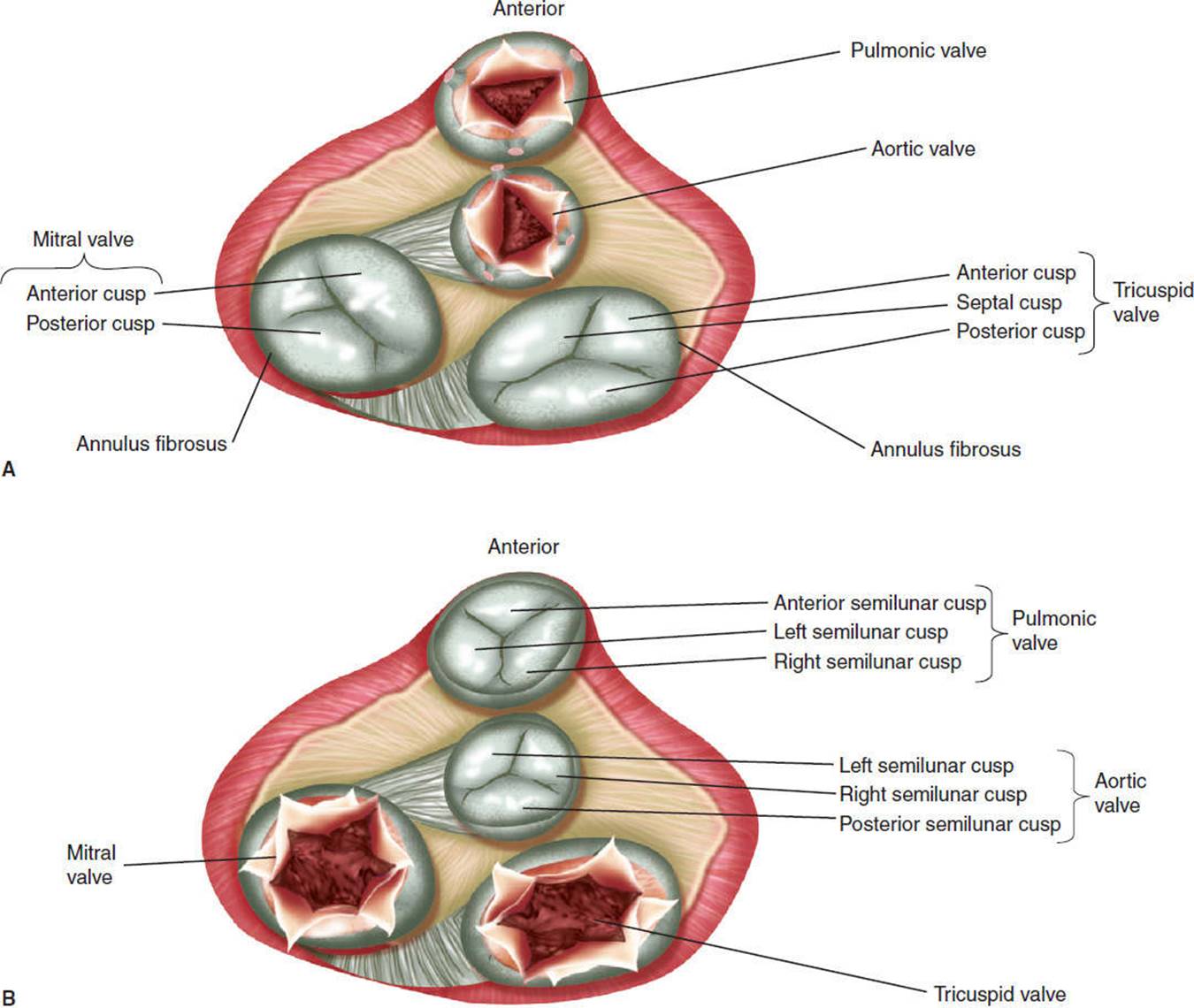
FIGURE 4-7 Transverse plane view of fibroskeleton and heart valves during systole (top) and diastole (bottom). A: Heart in systole: Fibroskeleton with atrioventricular and semilunar valves with atria removed. B: Heart in diastole: Fibroskeleton with atrioventricular and semilunar valves with atria removed.
CLINICAL CORRELATE
Cardiac arrhythmias may occur when the anulus fibrosus is damaged or diseased such as during cardiac surgery or aging. This occurs through escape of the ventricular action potential to the atria or from passage of the action potential from the atria to the ventricles by means other than the AV node and Bundle of His.
Tissue Layers
The heart wall consists of three layers. The outermost layer of the heart—the epicardium (visceral pericardium)—consists of epithelial cells that form a serous membrane to cover the entire heart. The innermost layer of the heart is known as the endocardium. It is a serous membrane that lines the inner surface of the heart, its valves, and the chordae tendineae. The endothelial cells of the endocardium are similar to and continuous with those of the tunica intima of the arteries (described in the section on circulation). The middle layer of the heart is the myocardium. It is responsible for the major pumping action of the ventricles due to the presence of contractile elements. The myocardial cells have an intrinsic ability to contract in the absence of stimuli (automaticity), in a rhythmic manner (rhythmicity), and to transmit nerve impulses (conductivity). The myocardium does not undergo mitotic activity and cannot replace injured cells. Therefore, in the case of cell death (due to lack of oxygen) or disease (eg, viral cardiomyopathy) the impact of loss of cells is the loss of contractile function.
Myocardial Cells
Myocardial cells are grouped into two structural categories (mechanical and conductive) representing their functional contributions. Mechanical cells have a greater capacity for mechanical shortening necessary for pump action, and conductive cells have a greater capacity for self-excitation and transmission of an action potential. Histologically the mechanical cells contain a much larger number of actin and myosin myofilaments than the conductive cells, whereas the conductive cells have more ion channels in their cell membranes.
Mechanical cells, or myocytes, are large cells that are joined together in series by intercalated discs forming a syncytium (a group of cells in which the protoplasm of one cell is continuous with that of the adjoining cells). Intercalated discs, which are cell membranes, have 1/100th the electrical resistance of the myocytes. Electrically the heart has two syncytia, the atria and the ventricles, which are separated by the fibrous skeleton. Action potentials spread rapidly through cardiac muscle, resulting in mechanical shortening, which occurs virtually simultaneously within each syncytium.12
Chambers of the Heart
Right Atrium
The right atrium has a thin muscular wall. It receives venous (deoxygenated) blood from the head and upper extremities via the superior vena cava, from the trunk and lower extremities via the inferior vena cava, and from the myocardium via the coronary sinus. The coronary sinus empties into the right atrium just above the tricuspid valve. The inner surfaces of the posterior and medial walls are smooth, whereas the anterior and lateral walls are composed of parallel muscle bundles known as the pectinate muscles.11 Most of the blood flow into the right atrium occurs during inspiration when pressure drops below that in the inferior and superior venae cavae. There are no functioning valves in the adult venae cavae; thus, when the right atrial pressure rises, congestion occurs in the systemic circulation. Normal filling pressure for the right atrium ranges from 0 to 8 mm Hg and is commonly referred to as central venous pressure (CVP).
CLINICAL CORRELATE
Orthotopic heart transplants involve the excision of the right atrium. The donor heart is then attached to the right atrium.
Right Ventricle
The right ventricle receives blood from the right atrium through the tricuspid valve and ejects it through the pulmonic valve into the pulmonary artery where it travels to the lungs. The right ventricle is normally the most anterior cardiac chamber lying beneath the sternum. It may be divided into the body of the right ventricle (inflow region consisting of the tricuspid valve, the chordae tendineae, the papillary muscle, and a heavily trabeculated myocardium) and the infundibulum (smooth outflow region). The inflow and outflow portions of the right ventricle are separated by four muscular bands—the infundibular septum, the parietal band, the septal band, and the moderator band. The resistance of pulmonary circulation is approximately 1/10th that of the systemic circulation. Normal systolic pressure in the right ventricle ranges from 15 to 28 mm Hg and the end-diastolic pressure ranges from 0 to 8 mm Hg. The chamber is crescent shaped and has a thin myocardial wall. The right ventricle generates less than one fourth the stroke work of the left ventricle.
Left Atrium
The left atrium receives venous (oxygenated) blood from the lungs through the right and left inferior and superior pulmonary veins. The wall of the left atrium is slightly thicker than that of the right atrium, an adaptation to the slightly higher pressures in the left atria. Normal filling pressure ranges from 4 to 12 mm Hg. Two pulmonary veins enter posterolaterally on each side and, although there are no valves, sleeves of atrial muscle extend from the atrial wall around the pulmonary veins. These may exert a sphincter-like action to reduce backflow of blood during atrial systole.10 The auricular appendage (“dog ear”) is an anteriorly directed outpocketing of the left superior aspect of the chamber, which represents the original heart tube and serves no useful function.8
CLINICAL CORRELATE
Certain conditions, such as mitral valve insufficiency, can result in an increase in regurgitant blood flow from the left ventricle back through the leaky mitral valve into the left atrium. This can create chronically elevated left atrial pressures that irritate the walls of the left atrium, sending it into atrial fibrillation. The left atrium, now “quivering like a bag of worms,” produces no forward blood flow. Static blood is subject to clot formation, and this blood clot invariably forms in the left atrial appendage.
Left Ventricle
The left ventricle has a thick muscular wall, approximately two to three times the thickness of the right ventricular wall. It receives blood from the left atrium through the mitral valve and ejects it through the aortic valve to the systemic circulation via the aorta. Normal systolic pressure ranges from 90 to 140 mm Hg and normal end-diastolic pressure from 4 to 12 mm Hg.
The ventricular septum, a thick muscular area that becomes membranous as it nears the atrioventricular (AV) valves, separates the right and left ventricles. It contains electrical conduction tissue and provides stability to the ventricles during contraction. The left chamber is an ellipsoidal sphere with its blunt tip directed anteriorly, inferiorly, and to the left where it forms the apex of the heart. There is a funnel-shaped inflow tract formed by the mitral anulus, its leaflets, and the chordae tendineae that directs the entering blood toward the apex. The outflow tract, which is surrounded by the inferior surface of the anteromedial mitral leaflet, the septum, and the ventricular wall, sends the blood from the apex superiorly and to the right toward the aortic valve. During systole, when the mitral valve leaflets snap shut, the entire chamber is converted into an explosive outflow tract.
Valves
The valves of the heart are formed by cartilaginous cusps from the fibrous skeleton to ensure unidirectional blood flow through the heart. Figure 4-7 illustrates the valves of the heart in the transverse plane of the heart with the atria removed during both diastole and systole. The mitral or bicuspid valve lies between the left atrium and the left ventricle. It has two cusps that slightly overlap each other when the valve is closed. The tricuspid valve lies between the right atrium and the right ventricle. It has three leaflets that are thinner than those of the mitral valve. The leaflets, both of the tricuspid and bicuspid valves, are attached to strong fibrous strands called chordae tendineae. These cords arise from the papillary muscle bundles in the inner ventricles. Two groups of papillary muscles arise from the trabeculae carneae in the left ventricle and three arise in the right ventricle. The aortic and pulmonary valves are called semilunar (ie, half-moon) valves because they have three cusps that are cuplike in nature. The AV (ie, mitral and tricuspid) valves prevent backflow of blood from the ventricles into the atria during systole. The aortic and pulmonary valves prevent backflow of blood from the aorta and pulmonary artery into the ventricles during diastole. They open and close based entirely on pressure gradient changes in the heart during the cardiac cycle.
CLINICAL CORRELATE
Abnormalities in valve structure either impede blood flow through the valve (stenosis) or cause retrograde blood flowback through the valve (regurgitation), which can produce limitations in exercise tolerance. These abnormalities can lead to a variety of cardiac murmurs.For a description of these heart sounds, the reader may refer to Chapter 8.
Conduction System
Figure 4-8 depicts the cardiac conduction system. The cardiac impulse arises in the sinoatrial (SA) node, which is located in the posterior wall of the right atrium near the entrance of the superior vena cava. It is known as the cardiac pacemaker because it has the fastest rate of impulse generation (ie, 60–100 bpm). Once generated, the impulse spreads via three conduction pathways—the anterior internodal tract of Bachmann, the middle internodal tract of Wenckebach, and the posterior internodal tract of Thorel—that carry the impulse to the AV node.12 A fourth tract depolarizes the left atrium. Collectively these tracts are called the internodal conduction pathways.11
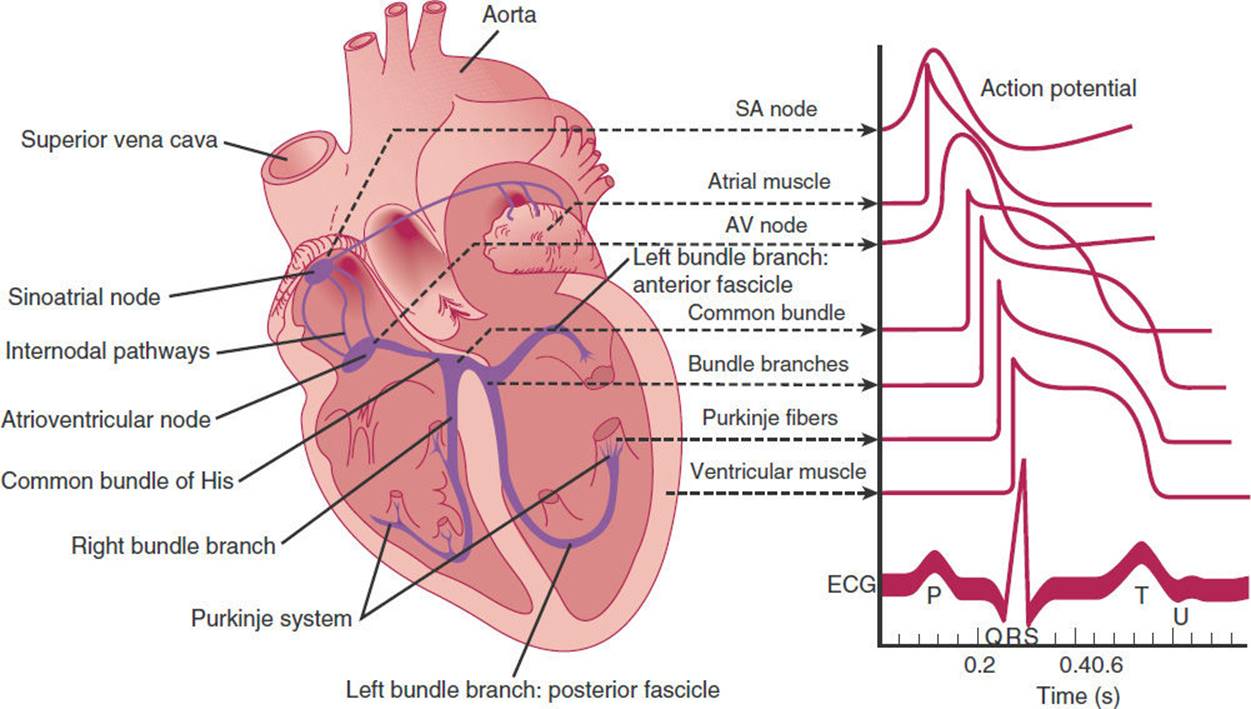
FIGURE 4-8 Anterior view of heart depicting the heart conduction system, action potentials, and ECG waveform representing a typical depolarization/repolarization cycle. (Reproduced with permission from McPhee SJ. Pathophysiology of Disease: An Introduction to Clinical Medicine. 6th ed. New York: McGraw-Hill; 2010:250. Redrawn with permission from Ganong WF. Review of Medical Physiology. 22nd ed. McGraw-Hill; 2005.)
The AV node is in the floor of the right atrium near the opening of the coronary sinus. The cardiac impulse travels from the AV node to the Bundle of His, which proceeds through the fibrous skeleton and then divides into the right and left bundle branches that travel inferiorly through the interventricular septum. The left bundle branch bifurcates into anterior and posterior divisions; both bundle branches finally terminate into a network of individual Purkinje fibers that stimulate ventricular contraction.
CLINICAL CORRELATE
A normal electrocardiographic (ECG) signal relies on the structural integrity of the conduction system. Abnormalities in the conduction system will present as abnormalities in the ECG. Myocardial infarctions in the area of the interventricular septum can result in blockage of one of the bundle branches, known as a bundle branch block.
Innervation
The heart has its own intrinsic rate of depolarization and subsequent contraction and is not innervated in the same manner that skeletal muscle is (because there is no action potential delivered in response to neurotransmitters). Inner-vation of the heart allows the autonomic nervous system to influence the heart rate and contractility and therefore allows adjustment in cardiac output based on metabolic demands. The cardiac plexus is located anterior to the tracheal bifurcation and consists of both parasympathetic and sympathetic nerves. The parasympathetic system input to the plexus originates through the right and left vagus nerve. The sympathetic input arises from each sympathetic trunk in the neck. The superior cervical, middle cervical, and cervicothoracic ganglion give rise to the superior, middle, and inferior cervical cardiac nerves, respectively. The upper 4 through 5 thoracic ganglia feed into the thoracic cardiac nerves, which also join the cardiac plexus. Both the parasym-pathetic and sympathetic fibers reach the heart via two coronary plexuses, which branch off from the cardiac plexus. The nerves that branch off the coronary plexuses follow the coronary vessels to innervate the SA node as well as other components of the conducting system and the atrial and ventricular myocardium. However, the parasympathetic inner-vation to the ventricular myocardium is sparse, and therefore the sympathetic nervous system has the dominant effect on myocardial contractility.
Coronary Circulation
As with lung airway anatomy, considerable anatomical variation may exist in cardiac circulatory anatomy too. The coronary arteries (CA) terminate in capillaries that supply the myocardium with blood. The left coronary artery (LCA) and the right coronary artery (RCA) arise from the sinuses of Valsalva (ie, outpouchings of the aortic wall that prevent occlusion of the coronary orifice by the open semilunar valve) just above the aortic valve.1 The LCA has two main branches—the left anterior descending (LAD) and the left circumflex (LCX) arteries (Fig. 4-9). The coronary arteries course around the heart in two grooves—the atrioventricular groove and the interventricular groove, which meet at the posterior aspect of the heart, known as the crux of the heart. The AV node is located at the crux and is nourished by either the RCA or the LCA. Right or left coronary dominance is determined by which artery crosses the crux and supplies the AV node. Fifty percent of people are right coronary artery dominant, 10% to 15% are left coronary dominant, and 35% to 40% have mixed right and left dominance. Lesions (atheromatous plaque, embolisms) of the RCA may produce AV node disturbances. Generally, the RCA supplies the right atrium, the right ventricle, and the inferior wall of the left ventricle. The LAD artery nourishes the anterior wall of the left ventricle. The LCX artery supplies the left atrium and lateral and posterior walls of the left ventricle. In 55% of the population, the sinoatrial (SA) node is nourished by the RCA. A branch of the LCX artery supplies the SA node in the remaining 45%. The AV node is supplied by the RCA in 90% of people. In the other 10%, the AV node is supplied by the LCX artery. Lesions of the LCA can interfere with ventricular pumping due to the large amount of myocardial tissue that is supplied by the LCA (Fig. 4-9).
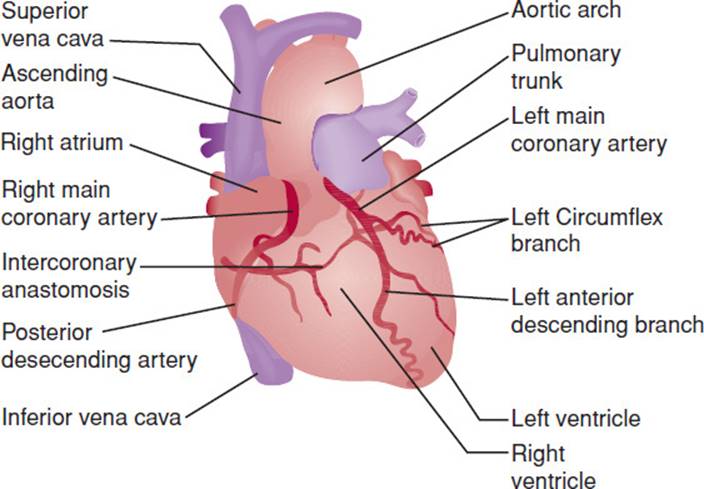
FIGURE 4-9 Anterior view of the heart depicting major vessels and coronary circulation.
Potential anastomoses (ie, intercoronary channels) exist between the arterial branches. These anastomoses provide collateral circulation if normal coronary vasculature becomes blocked. The heart has an extensive capillary network—approximately 3,300 capillaries/mm2 or approximately one capillary for each muscle cell. Under conditions of pathological cardiac hypertrophy, for example, the capillary network does not enlarge to accommodate the increase in heart size. This results in lack of oxygen and nutrients to the muscle.
The coronary arteries, reviewed earlier, all travel along the epicardial surface of the heart. These coronary arteries give rise to perforating arteries that diverge at right angles from the main epicardial arteries and travel deep into the myocardium, supplying blood and oxygen to the heart muscle.
The venous system of the heart consists of the thebesian veins, the anterior cardiac veins, and the coronary sinus. The thebesian veins traverse the myocardium, draining a portion of the right atrium, right ventricle, and some of the left ventricle. The anterior cardiac veins drain a large portion of the right ventricle and empty into the right atrium. The coronary sinus and its branches drain most of the myocardium through the great, middle, and small cardiac veins, and the left vein of Marshall (Fig. 4-9).
Circulation and Lymphatics
Blood is brought into close proximity with alveolar air during pulmonary circulation, and it is during systemic circulation that this blood is delivered to the remainder of the body in order to provide oxygen and nutrients to power various metabolic processes. Lymphatic vessels will also be considered in this section because of their anatomical connections to the circulatory system and their histologic similarities with arteries and veins.
The general structure of vessels can be considered regardless of the type of vessel. Vessel wall thickness is a function that depends on the amount of pressure that the vessel must withstand. The inner layer of the vessel is termed the intima, which consists of a flattened layer of endothelial cells. The integrity of this layer is essential to normal blood flow and will be discussed in more detail in Chapter 6, when discussing the process of atherosclerosis. In all vessels larger than capillaries, a layer of connective tissue supports this layer of endothelial cells. The intima is surrounded by the media, a layer of smooth muscle and elastic tissue. Superficial to the media is a collagenous tissue called the adventitia. This outer layer contains the nerves and the small blood vessels that supply the wall of the vessel, and it binds the vessel loosely with connective tissue in the area that they traverse.
Arteries
When the general structure of vessels is analyzed, variation exists both between and within vessels, which can be linked to the functional demands of that vessel. Arteries, at all levels, have a more developed media than veins, and veins are more developed than lymph vessels. The well-developed media within arteries can vary in the amount of elastic versus contractile elements. The elastic elements are more dominant in the proximal arteries, in order to allow greater distension because a larger volume of blood at a higher pressure is ejected through them. This elastic tissue, after being distended, also allows for a smooth transition back to normal between heartbeats. The more distal arteries continue to branch to form the more terminal arterioles, at which point an increasing proportion of contractile elements becomes apparent. The media of smaller arteries and arterioles are almost entirely muscular. The functional benefit of this structural shift is related to the maintenance of blood pressure and to the distribution of peripheral blood flow. The presence of anastomoses is evident as arteries become arterioles and arterioles become capillary beds. Anastomoses are connections between arterial branches providing collateral circulation to capillary beds. Their presence is extremely variable within individuals.
CLINICAL CORRELATE
The length–tension curve for skeletal muscular contraction can be applied to the functional properties of the arteries, and the relative components of the media become more significant. Proximal arteries, such as the aorta, contain a greater proportion of elastic tissue. This increases the slope of the passive elastic component of the length–tension relationship, thereby increasing the force of the recoil after distension due to blood ejection. In the more distal arteries, especially arterioles, the media contain a greater proportion of contractile components, thereby allowing a greater proportion of movement and force of contraction by these vessels. In peripheral vascular disease (PVD), peripheral arteriosclerosis may limit contraction of the media. In the proximal arteries, atherosclerosis reduces the distension and recoil force; and in the distal arteries, it reduces the range of movement and force of contraction.
Although most arterioles empty into capillary beds, some form arteriovenous anastomoses by emptying directly into venules. These arterioles tend to have highly contractile walls and therefore assist with the regulation of local blood flow.
Veins
Capillaries terminate into venules, which also exhibit similar endothelial intima as the arterial system, but with the addition of a thin adventitia. Medium-sized veins demonstrate some media, but the media may not continue in veins as they approach the heart. Veins create anastomoses more freely than do arteries, leading to complex networks for drainage of blood from tissue. To ensure proper flow of blood toward the heart, the intima in veins is folded in upon itself, creating valves. These are often bicuspid valves, but may be unicuspid or tricuspid as well. Valves are not present in the abdominal cavity veins of the portal system. However, because of movement of the diaphragm during ventilation, the ventilatory pump assists in the necessary pressure changes for flow back to the heart.
Lymphatics
Lymphatic capillaries are similar in structure to vascular capillaries, and as such they allow certain molecules to pass freely through their walls. Lymphatic capillaries begin blindly in tissue, and the number of lymph capillaries varies depending on the body region. In the central nervous system there are no lymph vessels, whereas in the dermis of the skin, lymph capillaries form dense plexuses. Like the venous system, larger lymphatic vessels are formed by the convergence of smaller vessels and as they get larger, a media begins to appear. Lymph vessels also contain valves, similar to veins, to ensure proper one-way flow of lymph toward the heart.
As they advance toward the venous system, many lymphatics pass through lymph nodes. Lymph nodes are collections of lymphocytes, and their precursors are held together by connective tissue and permeated by lymphatic channels. Each lymph node receives a number of lymph vessels, and the lymph from all of these vessels circulates through the lymph channels of the node, exiting through one larger vessel. Lymph may pass through several larger vessels before entering a node, and conversely lymph may pass from one node to another before entering the venous system. All lymph passes through several nodes prior to its entrance into the venous circulation (Chapter 21).
Innervation
Motor innervation of blood vessels is carried out entirely by the sympathetic nervous system.12 The arterioles have a particularly rich innervation for the control of local blood flow. Afferent fibers leave the blood vessels carrying sensations of pain, and in a few locations (aorta, internal carotids) afferent fibers leave the site of mechanoreceptors or chemoreceptors. Blood vessels are accompanied by nerve plexuses embedded in the adventitia. In the thoracic, abdominal, and cranial vessels, the nerve originating at the base of the vessel is likely to innervate the entire vessel. However, in the limbs a series of inter-locking plexuses is fed at regular intervals by nerve branches originating from local peripheral nerves. Innervation allows the regulation of blood flow and distribution of cardiac output by changing the luminal diameter of blood vessels. Sympathetic activity tends to vasoconstrict blood vessels, whereas local changes associated with increased metabolic rates can vasodilate vessels.
Pulmonary Circulation
Pulmonary circulation refers to the flow of deoxygenated blood from the systemic veins into the right side of the heart and then into the lungs. Blood flows from the right ventricle through the pulmonary valve to the pulmonary trunk. The pulmonary trunk is divided into the right and left pulmonary arteries that travel to the right and left lungs, respectively. At this point the pulmonary arteries do not follow exactly the same distribution as the bronchial tree, but rather branch in a similar distribution. The pulmonary capillaries form a network in the walls of the alveolar ducts and the alveoli. The pulmonary veins grow larger and often flow between the bronchopulmonary segments draining adjacent segments, eventually leading back to the left atrium.
SUMMARY
This chapter has summarized the basic highlights of cardiopulmonary anatomy relevant to the physical therapist student about to engage in clinical practice. It provides a basis of anatomical and structural knowledge for later chapters in the text, and provides a foundation upon which to integrate knowledge of cardiovascular and pulmonary physiology, evaluation, and intervention strategies for individuals with various cardiopulmonary impairments.
REFERENCES
1.Moore KL. Clinically Oriented Anatomy. 3rd ed. Baltimore, MD: Lippincott Williams & Wilkins; 1992.
2.Larsen WJ. Human Embryology. New York: Churchill Livingston; 1993.
3.Sadler TW. Langman’s Medical Embryology. 8th ed. Baltimore, MD: Lippincott Williams & Wilkins; 2000.
4.American Physical Therapy Association. Guide to Physical Therapist Practice. 2nd ed. Phys Ther. 2001 Jan;81(1):9-746.
5.Miller AD, Bianchi AL, Bishop BP. Neural Control of the Respiratory Muscles. Boca Raton, FL: CRC Press; 1997.
6.De Troyer A. Effect of hyperinflation on the diaphragm. Eur Respir J. 1997;10:708.
7.Martinez FJ, Couser JI, Celli BR. Factors influencing ventilatory muscle recruitment in patients with chronic airflow obstruction. Am Rev Respir Dis.1990;142: 276.
8.Stern JT. Essentials of Gross Anatomy. Philadelphia, PA: FA Davis Company; 1988.
9.Weibel ER. The Pathway for Oxygen. Cambridge, MA: Harvard University Press; 1984.
10.Hollinshead WH. Textbook of Anatomy. 5th ed. Hagerstown, MD: Harper and Row; 1997.
11.West JB. Respiratory Physiology: The Essentials. 2nd ed. Baltimore, MD: Lippincott Williams & Wilkins; 1979.
12.Guyton AC, Hall JE. Textbook of Medical Physiology. 9th ed. Philadelphia, PA: WB Saunders; 1998.