Eran Segal
Dr. Segal is a consultant of IMDsoft Inc.
Although there are numerous models of ICU design, the approach of most intensivists is that a physician-led, multidisciplinary team in a closed unit format is best in terms of quality and outcome. It has been estimated that implementation of ICU staffing and organization in this manner can save more than 50,000 lives a year in the United States (1). Several studies show that a dedicated intensivist can improve use of intensive care beds and also decrease mortality (2,3,4). However, the number of patients requiring critical care is rapidly growing, and research has shown that in a few years, the shortage of pulmonologists and intensivists will lead to dramatic reductions in the ability of critically ill patients to be cared for by dedicated intensivists (5). Recent recommendations by the Leapfrog Group have called for increased staffing of adult ICUs, the compliance of which will be very difficult for many institutions despite the very real possibilities of improved finances and quality. Provonost et al. (6) used a model to show a yearly savings of up to US $13 million in a 6- to 18-bed ICU if staffing recommendations were attained. The shortage of ICU clinicians and the explosion of information collected while caring for the critically ill patient lends itself to applying sophisticated information technology to improve ICU care.
Computerized systems can improve ICU work on many levels, from replacing the flow sheet filled with the patients' continual record of vital signs, to systems that allow all documentation to be entered, manipulated, and archived electronically. The systems available today allow vital signs to be collected automatically; physicians' and nurses' notes entered into the system; and information from the admitting and discharge system regarding all patient demographics provided in the record. Laboratory results are another layer of information that can be automatically entered into the patient's electronic record. The computerized patient record can be linked to other systems such as the radiology, echocardiography, or microbiology systems. An extremely important feature is the potential for added patient safety, a significant benefit of electronic systems.
Immediate Concerns
The vast, unwieldy amount of data collected on each patient in the ICU requires the use of computerized systems. It is very difficult for clinicians to use all the information obtained from monitors, ventilators, and laboratories without computerized support. Advantages of storing patient data on computerized systems include the following:
· Computerized physician order entry (CPOE) can decrease errors in prescription and in executing drug orders. This may lead to substantial error prevention and improved outcome.
· Computerized systems allow recording and manipulating data to optimize decision making.
· Complex rules and decision support tools are available to improve clinical decision making and reduce errors.
· Computerized systems can improve adherence to protocols, thus leading to improved quality and outcomes.
· Computerized systems can be used to improve monitoring and care of patients remotely (the remote ICU or e-ICU) using monitoring and audiovisual tools that enable experienced clinicians to improve care in ICUs that do not have full-time staffing.
Although implementing a computerized system can greatly improve patient care, there are potential risks due to our increased reliance on these systems, which will be discussed later in this chapter.
Classification of Information Technology (IT) Solutions for Critical Care
Electronic Charting
The most basic application of computerized systems is the electronic chart. The information on flow sheets in critical care includes, almost universally, the recording of all physiologic data including hemodynamic data, information from ventilators, and other electronic devices such as syringe pumps, specific stand-alone monitors, dialysis and hemofiltration machines, and information from central hospital systems such as pathology, imaging, hospital information systems, and echocardiography.
The presentation of this information, composed of different types of data—numeric, analog, images—with different time stamps and rates of refreshing the data, is quite complex. Some elements need to be updated at very rapid rates such as the physiologic parameters from the monitors and ventilators, whereas information from the microbiology laboratory—type of bacteria, specific identification, and sensitivities—should be updated as the information develops, although the time stamp of the acquisition of the sample is equally as important as the time of availability of the additional information (Fig. 12.1).
|
|
|
Figure 12.1. A screen shot of the computerized system demonstrating the use of different information sources to provide a clinical picture. In this screen, information from the microbiology lab (panel A), antibiotic administration (panel B), temperature and white blood cell count (panel C), and a Gantt chart of duration of intravenous lines (panel D) are reported together to enable easier assessment of the patient's infectious status. This and other kinds of data presentations can be customized by the clinicians at the ICU, hospital, or enterprise level. |
Drug administration and standing orders also need to be part of the flow sheet and require a different type of presentation of the information. Very often, a Gantt type of chart—showing a horizontal bar with start to end times of different processes—is a good way of presenting this type of data. Data should be made available electronically in different types of formats to optimize its usefulness in various types of situations. Tables, graphs, Gantt charts, and combinations of all of these are critical for a convenient and user-friendly presentation. When deciding on a computerized system, clinicians should be aware that data collected within a 24-hour period such as from a foldable paper flow sheet or an A3 paper sheet cannot conveniently fit on a single computer screen, so instruction on the techniques of scrolling in the specific program should be provided. At the same time, information from many weeks or days can be presented very rapidly and easily with one or two mouse clicks—for example, the lactate or white blood cell count (WBC) values of the patient for the duration of even the longest admission. This kind of ability is not available when using paper charting.
Undoubtedly, a most important aspect of deploying a computerized system is the ability to customize it to the unit's specific needs and requirements. Clinical work should not be changed due to implementation of a computerized system, but rather the system should be adaptable to the mode of operation in a particular ICU. Despite the similarities in critical care throughout the world, there are significant differences between ICUs in different institutions and ICUs within the same institution, and thus, a computerized system should be adaptable and customizable in any ICU.
Customization
Customizing the electronic medical record can produce a visual spectrum of work flow, depending on how the information is entered into the system, to the way data are presented.
Computing capabilities allow different users who log onto the system to view different types of information and in a presentation more suitable for their needs. Thus, an infectious disease consultant may wish to see pertinent information regarding cultures, white count, and fever on the same screen, whereas a nephrologist may want to be presented with electrolyte and metabolic data, as well as fluid balance initially. With a customizable system, complex order sets can be created and easily prescribed according to unit, procedure, or surgeon's protocol. The use of protocols and routine prescriptions may improve standardization and compliance with evidence-based procedures.
Complex Alerts
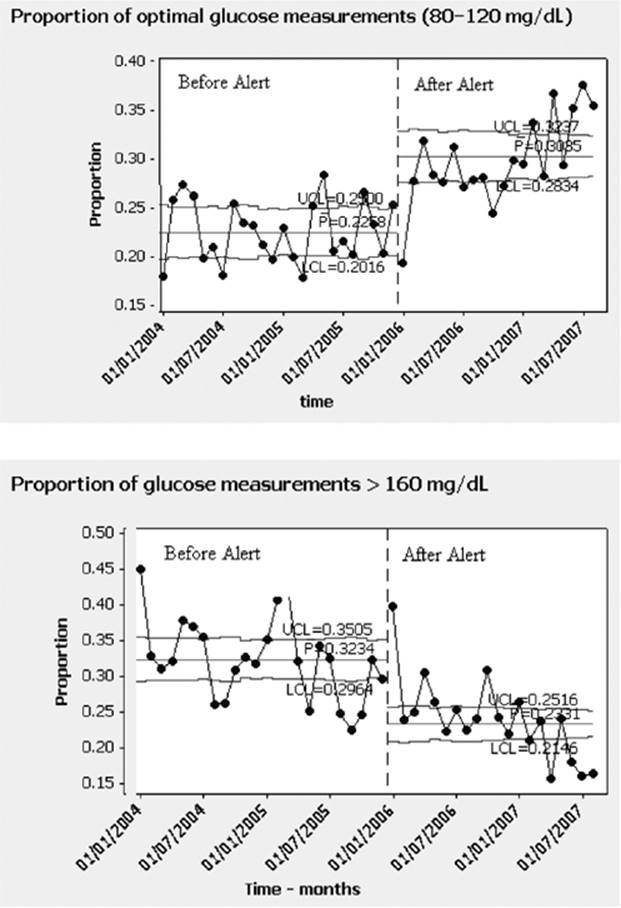
Computerized alerts can improve needed clinical activity. Paltiel et al. (7) showed that an alert presented by computers throughout the hospital for a low potassium level could reduce the time to treatment of hypokalemia. We looked at the impact of an electronic alert in a computerized patient record, and showed that when implementing this alert, the proportion of blood glucose measurements within the desired range significantly increased whereas the proportion of elevated glucose measurements decreased. This was achieved without an increase in the proportion of hypoglycemic episodes (8). We also showed that an alert that notifies the clinicians of a low potassium level reduces the time to treat the patient. There are programs designed to deal with specific topics and clinical problems. Juneja et al. (9) showed that a program dedicated to treating patients who require insulin while in the ICU to maintain tight glucose control led to better results compared to the situation before the program was implemented.
|
|
|
Figure 12.2. Effect of implementation of an electronic alert regarding glucose measurement on the incidence of optimal (top panel) versus high (bottom panel) glucose measurements. When an alert was implemented, proportion of optimal glucose levels increased and proportion of high glucose levels decreased significantly. (Modified from Segal E, Haviv-Yadid Y, Livingstone D, et al. An electronic alert to improve glucose control in a general ICU. Intensive Care Med. 2007;33[Suppl 2]:S234.) |
Decision support can improve the use of various resources. Perez et al. (10) used decision support to reduce the use of blood products in an intensive care unit. Rood et al. (11) showed that using an alert system designed to improve glycemic control in an ICU improved the time to achieving desired glucose control (Fig. 12.2). In fact, a computerized system can enable the application of many types of alerts. In our ICU, the computerized system alerts staff when a patient is receiving vancomycin and a blood level has not been drawn; when a patient's PaO2 is high when the FiO2 is greater than 0.3; and if a patient has not had a bowel movement in 3 days. All of these alerts are relevant to our daily clinical practice and help decrease variability in our work.
Alerts can be provided to clinicians in various ways. In a surgical ICU, a wireless system sent pages to the respective physicians, notifying them of abnormal physiological and laboratory results. The alerting system identified patients with a higher risk of death and longer stay in the ICU (12). The ability to identify high-risk patients and alert clinicians to critical events may enable earlier intervention and improved outcome.
Effects on Workload
The implementation of a computerized system may generate concern over the increased workload associated with the transition. Certainly an initial effort at customizing the system to fit the local clinical work flow is required, which may vary for different commercial systems. The time required for training of staff should also be considered when deciding on a computerized system. Even when the system is in place, there are clinicians who feel uncomfortable working with a keyboard and mouse rather than with pen and paper. These concerns, however, are decreasing as work with computers increases in everyday life, as well as the fact that computers are commonly used even in ICUs that have not yet implemented a complete electronic patient record. Hospital information systems, radiology, and laboratories are often computerized, but in many ICUs, clinicians still copy results from these various systems onto a paper flow sheet. In a computerized system, significant portions of the charting workload are eliminated for the clinicians, and thus more time is available for more sophisticated charting and reporting and also for direct patient care. Bosman et al. (13) showed that implementation of a computerized system decreased the time nurses spent on charting information on critically ill patients following cardiothoracic surgery. The time saved by the computerized system was spent on direct patient care, increasing the time at the bedside.
When clinicians work with computerized patient records, there are changes in the characteristics of the work, and new types of distractions may occur. An observational study of clinicians working with a computerized order entry system showed that there are distractions in working with the computer that may, in some cases, lead to potentially significant errors (14).
Computerized Physician Order Entry (CPOE)
Despite the evidence regarding the advantages of computerized provider order entry systems, only 5% to 10% of hospitals in the United States use them, according to various reports (15,16). CPOE has been proposed as a tool to decrease prescription errors due to handwriting legibility, mistakes in dosage, incompatibility, and allergy alerts. The implementation of CPOE can significantly impact the daily work of physicians and nurses (17). The use of a computerized database as part of the prescription process can lead to improvement, since orders can be evaluated by the database and provide alerts regarding drug–drug interaction, double prescription, drug allergies, and effects of disease processes on drug dose. This is true when a decision support capability is part of the CPOE (Table 12.1).
|
Table 12.1 Types of Errors That Should Be Prevented by CPOE with Decision Support |
|
|
There are more basic forms of electronic information systems. Computerized systems that do not have decision support as part of the available tools will only provide information regarding the drug–drug administration and dosage, but may not be able to alert when prescriptions have mistakes in them. The Leapfrog Group designed a Web-based test for CPOE and requires hospitals to prove that their CPOE can detect at least 50% of common drug prescription errors (18).
The types of prescription errors differ when CPOE is compared to handwritten prescriptions. Shulman et al. (19) evaluated the medication errors that occurred before and after implementation of a computerized system. They found that there was a reduction in the number of errors, which was time-related. After an initial increase in medication errors, the numbers decreased substantially. Garg et al. (20), in a review of the effect of computerized systems on clinical performance, found that of 29 studies that looked at the effect of drug dosing systems on clinical performance, 19 (66%) showed a favorable outcome.
Despite these findings, the importance and capability of CPOE to decrease harmful medical errors remains debatable. Berger and Kichak reviewed the basis for the claim that CPOE can decrease significant medical errors and concluded that:
The available objective data, which are scant, suggest that, at best, there is a potential for these systems to decrease ADEs (adverse drug events) and their additional medical costs (21).
Quality Improvement
Quality, as measured by both surrogate markers, such as adherence to best practice protocols and clinical outcomes, may be improved by computerized systems. Obviously, the use of checklists and “bundles” to improve quality can be improved when using computerized systems to alert and remind the clinicians of the various diverse tasks that are required by the particular bundle.
Using CPOE in patients with stroke has been shown to reduce the time it takes to assess the patient, increase the number of patients who receive thrombolysis, and decrease time to therapy (22). Others have shown that a computerized system can enable evaluation of antibiotic prophylaxis use during surgery (23). When patients were not given appropriate antibiotics according to recommended protocols, the outcome was significantly worse. These systems allow analysis of drug use and enable decisions regarding quality improvement (24).
Errors and Their Prevention
Errors are a major issue in intensive care medicine and are reported to occur 1.7 times a day per patient in an ICU (25). The impact of medical errors on patient outcomes was emphasized in the famous “To err is human” report by the Institute of Medicine (26). The use of computerized systems has a potential of reducing error by improving standardization and reviewing databases of information about the patient's baseline diseases, drug allergies, previous procedures, and tests. There is also an advantage to improving compliance with protocols and unit procedures, which computerized systems can enable.
Drug errors range from illegible prescriptions to mistakes in patient identification and lapses in knowledge of patient allergies, drug–drug interactions, and dosing considerations. Many of these types of errors can be reduced or completely eliminated using computerized systems. Vardi et al. (27) showed that using CPOE as part of an electronic patient record can completely eliminate drug order mistakes in a pediatric ICU when they applied it to resuscitation orders, which, in pediatrics, are particularly prone to mistakes because of the diversity in patient size and the urgency of the situation.
The Remote ICU
The requirements for physician staffing of ICUs calls for 24-hour coverage by trained physicians. The ICU should be directed by a dedicated trained intensivist who is in-house during the day, available for answering pages within 5 minutes, and able to provide physician or physician extender presence within the requirement for intensivist coverage of all critically ill patients as recommended by the Leapfrog Group. Coupled with the increasing shortage of intensive care clinicians, the desire for ICU coverage by trained intensivists has led to an interest in remote systems that enable direction of patient care in remote ICUs. These kinds of systems allow for a central hospital or critical care physicians group to assume responsibility for patients who are cared for in a peripheral ICU. There are reports of improved clinical outcomes, including mortality and length of stay, while caring for a higher-severity population of patients (28). Breslow et al. (29) described their experience with a remote ICU that was involved in the care of patients in two adult ICUs and provided 19 hours per day of monitoring by physicians and physician extenders. During the period of remote ICU work, they observed a reduction in ICU mortality, a decreased length of stay, and cost reduction, which more than compensated for the costs of the system; the effectiveness of this technology has been shown (30).
Vespa et al. (31) used a robotic telepresence system to respond to nursing pages in a neuro-ICU. They showed that during use of the robot system, the time for an attending face-to-face response to nursing page was significantly decreased for all types of calls. More than that, they had a decrease in length of stay of 2 days for patients with subarachnoid hemorrhage (SAH) and 1 day for patients with head trauma. ICU occupancy increased by 11%, with a substantial cost savings.
Tang et al. (32) recently described their experience with a remote ICU with respect to physician and nurse work flow. They found that the clinical team providing remote support used most of the time for monitoring and integration of monitored data. There were many interruptions during the routine work due to the need for observing or dealing with an unstable patient or due to a request for intervention from the local team. They also found that while physicians attended to specific problems that were primarily self-initiated, the nurses were alerted by automatic alarms in 80% of the cases. Also, nurses were required to spend a significant portion of their time recording bedside notes into the remote ICU chart. They conclude that when implementing these technologies, the different work flows of physicians and nurses have to be considered.
Risks of Computerized Systems
Dangers of IT implementation in critical care may be due to several factors (33). There may be complaints regarding increased workload, required changes in clinical work flow, persistence of paper components, and some emotional issues and problems with communications. There may also be issues related to blind dependence on the computer, so that if a default dose of drug was incorrectly customized into the drug database, clinicians might not be aware and prescribe the inappropriate dose. This has led to the creation of the term “e-Iatrogenesis” (34).
Han et al. (35) published a worrisome report of an increase in mortality—from 2.8% to 6.6%—in a pediatric ICU following implementation of CPOE. This may have been due to problems with the integration of pharmacy and clinical work flow into the system using the CPOE. For example, drugs could not be provided even in extreme situations unless prescribed through the CPOE. Other investigators have not found this phenomenon (36); in fact, a group from Seattle found a reduction in mortality as well as in risk-adjusted mortality, although these effects were not statistically significant. Keene et al. (37) also did not find an increase in mortality after implementing CPOE in a pediatric ICU.
Return on Investment
A significant question raised when considering the purchase and implementation of a computerized system is that of cost. These systems are not inexpensive, and thus their economic utility needs to be analyzed. On the one hand, costs of the system include not only the hardware and software of a system, but also the burden of time invested in customizing the system, training of personnel, and the maintenance required. It is unrealistic to expect a computerized system to run perfectly “right out of the box.” To achieve optimal results, a local “champion” of the system must be identified and appointed, with involvement of all components of the ICU team in the process. On the hospital level, when implementing a computerized system, pertinent management officials and IT quality and risk management should all take part in the assessment, customization, and follow-up.
The potential financial rewards of a computerized system (Table 12.2) range from an improvement in standardization of care, which may lead to better clinical outcomes, to a reduction in errors and adverse events, with a consequent decrease in malpractice litigation. Moreover, the ability to defend against malpractice claims may be improved with an accurate record that is easily retrievable, and therefore should lead to improved risk-management activities. Smaller but not inconsequential cost savings may be due to the lower cost of archiving computerized records versus paper charts. Additionally, adherence to protocols that suggest use of more cost-effective procedures can decrease use of unnecessary more-expensive drugs.
|
Table 12.2 Potential Cost Savings with Computerized Records |
|
|
Billing is probably improved by the use of a computerized system and may contribute to return on investment (ROI). The bottom line of ROI is difficult to prove, but many clinicians agree that there is a potential for computerized systems to decrease costs and, at the same time, improve quality.
Summary
With advances in information technology and in design of computerized systems for critical care, the significance of these systems for clinical care and for impacting patient outcome is increasing. There is no doubt that the use of computerized systems in critical care will increase in the coming years. The implementation of systems should be focused on improving the information at the clinician's fingertips to reduce errors, improve adherence to protocols, and provide better clinical outcomes.
References
1. Pronovost PJ, Waters H, Dorman T. Impact of critical care physician workforce for intensive care unit physician staffing. Curr Opin Crit Care. 2001;7(6):456–459.
2. Reynolds HN, Haupt MT, Thill-Baharozian MC, et al. Impact of critical care physician staffing on patients with septic shock in a university hospital medical intensive care unit. JAMA. 1988;260(23):3446–3450.
3. Brown JJ, Sullivan G. Effect on ICU mortality of a full-time critical care specialist. Chest. 1989;96(1):127–129.
4. Pollack MM, Katz RW, Ruttimann UE, et al. Improving the outcome and efficiency of intensive care: the impact of an intensivist. Crit Care Med. 1988;16(1):11–17.
5. Angus DC, Kelley MA, Schmitz RJ, et al. Caring for the critically ill patient. Current and projected workforce requirements for care of the critically ill and patients with pulmonary disease: can we meet the requirements of an aging population? JAMA. 2000;284(21):2762–2770.
6. Pronovost PJ, Needham DM, Waters H, et al. Intensive care unit physician staffing: financial modeling of the Leapfrog standard. Crit Care Med. 2006;34(3 Suppl):S18–24.
7. Paltiel O, Gordon L, Berg D, et al. Effect of a computerized alert on the management of hypokalemia in hospitalized patients. Arch Intern Med. 2003;163(2):200–204.
8. Segal E, Haviv-Yadid Y, Livingstone D, et al. An electronic alert to improve glucose control in a general ICU. Intensive Care Med. 2007;33(Suppl 2):S234.
9. Juneja R, Roudebush C, Kumar N, et al. Utilization of a computerized intravenous insulin infusion program to control blood glucose in the intensive care unit. Diabetes Technol Ther. 2007;9(3):232–240.
10. Perez ER, Winters JL, Gajic O. The addition of decision support into computerized physician order entry reduces red blood cell transfusion resource utilization in the intensive care unit. Am J Hematol. 2007;82(7):631–633.
11. Rood E, Bosman RJ, van der Spoel JI, et al. Use of a computerized guideline for glucose regulation in the intensive care unit improved both guideline adherence and glucose regulation. J Am Med Inform Assoc 2005;12(2):172–180.
12. Major K, Shabot MM, Cunneen S. Wireless clinical alerts and patient outcomes in the surgical intensive care unit. Am Surg. 2002;68(12):1057–1060.
13. Bosman RJ, Rood E, Oudemans-van Straaten HM, et al. Intensive care information system reduces documentation time of the nurses after cardiothoracic surgery. Intensive Care Med. 2003;29(1):83–90.
14. Collins S, Currie L, Patel V, et al. Multitasking by clinicians in the context of CPOE and CIS use. Medinfo. 2007;12(Pt 2):958–962.
15. Usage of CPOE steadily increasing, Leapfrog says. Healthcare Benchmarks Qual Improv. 2006;13(3):33–34.
16. Jha AK, Ferris TG, Donelan K, et al. How common are electronic health records in the United States? A summary of the evidence. Health Aff (Millwood). 2006;25(6):w496–507.
17. Popernack ML. A critical change in a day in the life of intensive care nurses: rising to the e-challenge of an integrated clinical information system. Crit Care Nurs Q. 2006;29(4):362–375.
18. Kilbridge PM, Welebob EM, Classen DC. Development of the Leapfrog methodology for evaluating hospital implemented inpatient computerized physician order entry systems. Qual Saf Health Care. 2006;15(2):81–84.
19. Shulman R, Singer M, Goldstone J, et al. Medication errors: a prospective cohort study of hand-written and computerised physician order entry in the intensive care unit. Crit Care. 2005;9(5):R516–521.
20. Garg AX, Adhikari NKJ, McDonald H, et al. Effects of computerized clinical decision support systems on practitioner performance and patient outcomes: a systematic review. JAMA. 2005;293:1223–1238.
21. Berger RG, Kichak JP. Computerized physician order entry: helpful or harmful? J Am Med Inform Assoc. 2004;11(2):100–103.
22. Nam HS, Han SW, Ahn SH, et al. Improved time intervals by implementation of computerized physician order entry-based stroke team approach. Cerebrovasc Dis. 2007;23(4):289–293.
23. Hartmann B, Sucke J, Brammen D, et al. Impact of inadequate surgical antibiotic prophylaxis on perioperative outcome and length of stay on ICU in general and trauma surgery. Analysis using automated data collection. Int J Antimicrob Agents. 2005;25(3):231–236.
24. Hartmann B, Junger A, Brammen D, et al. Review of antibiotic drug use in a surgical ICU: management with a patient data management system for additional outcome analysis in patients staying more than 24 hours. Clin Ther. 2004;26(6):915–924; discussion 904.
25. Donchin Y, Gopher D, Olin M, et al. A look into the nature and causes of human errors in the intensive care unit. Crit Care Med. 1995;23(2):294–300.
26. IOM: To Err Is Human: Building a Safer Health System. Washington, DC: National Academy Press; 1999.
27. Vardi A, Efrati O, Levin I, et al. Prevention of potential errors in resuscitation medications orders by means of a computerised physician order entry in paediatric critical care. Resuscitation. 2007;73(3):400–406.
28. Zawada ET Jr, Kapaska D, Herr P, et al. Prognostic outcomes after the initiation of an electronic telemedicine intensive care unit (eICU) in a rural health system. S D Med. 2006;59(9):391–393.
29. Breslow MJ, Rosenfeld BA, Doerfler M, et al. Effect of a multiple-site intensive care unit telemedicine program on clinical and economic outcomes: an alternative paradigm for intensivist staffing. Crit Care Med. 2004;32(1):31–38.
30. Rosenfeld BA, Dorman T, Breslow MJ, et al. Intensive care unit telemedicine: alternate paradigm for providing continuous intensivist care. Crit Care Med. 2000;28(12):3925–3931.
31. Vespa PM, Miller C, Hu X, et al. Intensive care unit robotic telepresence facilitates rapid physician response to unstable patients and decreased cost in neurointensive care. Surg Neurol. 2007;67(4):331–337.
32. Tang Z, Weavind L, Mazabob J, et al. Workflow in intensive care unit remote monitoring: a time-and-motion study. Crit Care Med. 2007;35(9):2057–2063.
33. Campbell EM, Sittig DF, Ash JS, et al. Types of unintended consequences related to computerized provider order entry. J Am Med Inform Assoc. 2006;13:547–556.
34. Weiner JP, Kfuri T, Chan K, et al. “e-Iatrogenesis”: the most critical unintended consequence of CPOE and other HIT. J Am Med Inform Assoc. 2007;14(3):387–388; discussion 389.
35. Han YY, Carcillo JA, Venkataraman ST, et al. Unexpected increased mortality after implementation of a commercially sold computerized physician order entry system. Pediatrics. 2005;116(6):1506–1512.
36. Del Beccaro MA, Jeffries HE, Eisenberg MA, et al. Computerized provider order entry implementation: no association with increased mortality rates in an intensive care unit. Pediatrics. 2006;118(1):290–295.
37. Keene A, Ashton L, Shure D, et al. Mortality before and after initiation of a computerized physician order entry system in a critically ill pediatric population. Pediatr Crit Care Med. 2007;8(3):268–271.