
James E. Tisdale
LEARNING OBJECTIVES
Upon completion of the chapter, the reader will be able to:
1. Describe the phases of the cardiac action potential, compare and contrast the cellular ionic changes corresponding to each phase, and explain the relationship between the cardiac action potential and the ECG.
2. Describe the modified Vaughan Williams classification of antiarrhythmic drugs, and compare and contrast the effects of available antiarrhythmic drugs on ventricular conduction velocity, refractory period, automaticity, and inhibition of ion flux through specific myocardial ion channels.
3. Compare and contrast the risk factors for and the features, mechanisms, etiologies, symptoms, and goals of therapy of: (a) sinus bradycardia; (b) atrioventricular (AV) nodal blockade; (c) atrial fibrillation (AF); (d) paroxysmal supraventricular tachycardia (PSVT); (e) ventricular premature depolarizations (VPDs); (f) ventricular tachycardia (VT, including torsades de pointes); and (g) ventricular fibrillation (VF).
4. Compare and contrast appropriate nonpharmacologic and pharmacologic treatment options for sinus bradycardia and AV nodal blockade.
5. Compare and contrast the mechanisms of action of drugs used for ventricular rate control, conversion to sinus rhythm and maintenance of sinus rhythm in patients with AF, and explain the importance of anticoagulation for patients with AF.
6. Compare and contrast the mechanisms of action of drugs used for acute termination of PSVT.
7. Compare and contrast the role of drug therapy versus nonpharmacologic therapy for long-term prevention of recurrence of PSVT.
8. Describe the role of drug therapy for management of asymptomatic and symptomatic VPDs.
9. Compare and contrast the mechanisms of action of drugs used for the treatment of acute episodes of VT (including torsades de pointes), and describe options and indications for nonpharmacologic treatment of VT and VF.
10. Design individualized drug-therapy treatment plans for patients with: (a) sinus bradycardia; (b) AV nodal blockade; (c) AF; (d) PSVT; (e) VPDs; (f) VT (including torsades de pointes); and (g) VF.
KEY CONCEPTS
 Cardiac arrhythmias may be caused by abnormal impulse formation (automaticity), abnormal impulse conduction (re-entry), or both.
 Numerous drugs (β-blockers, diltiazem, verapamil, digoxin, dronedarone, and amiodarone) can cause bradyarrhythmias (sinus bradycardia and/or atrioventricular [AV] nodal blockade).
 Individualized goals of treatment of atrial fibrillation (AF) include: (a) ventricular rate control with drugs that inhibit AV nodal conduction, (b) restoration of sinus rhythm with direct current cardioversion or antiarrhythmic drugs (commonly referred to as “cardioversion” or “conversion to sinus rhythm”), (c) maintenance of sinus rhythm/reduction in the frequency of episodes using antiarrhythmic drugs, and (d) prevention of stroke.
 Antiarrhythmic drug therapy for maintenance of sinus rhythm/reduction in frequency of episodes of AF should be initiated only in patients in whom symptoms persist despite maximal tolerated doses of appropriate drugs for ventricular rate control.
 The majority of patients with AF should receive warfarin therapy (titrated to an International Normalized Ratio [INR] of 2-3) for stroke prevention, particularly if they have other risk factors for stroke.
 Adenosine is the drug of choice for termination of paroxysmal supraventricular tachycardia.
 Asymptomatic ventricular premature depolarizations (VPDs) should not be treated with antiarrhythmic drug therapy.
 Implantable cardioverter-defibrillators are more effective than antiarrhythmic drugs for reduction in the risk of sudden cardiac death due to ventricular tachycardia (VT) or ventricular fibrillation (VF).
 The purpose of drug therapy for VF is facilitation of electrical defibrillation; in the absence of electrical defibrillation, drug therapy alone will not terminate VF.
 Drugs with the potential to cause QT interval prolongation and torsades de pointes should be avoided or used with extreme caution in patients with other risk factors for torsades de pointes.
NORMAL AND ABNORMAL CARDIAC CONDUCTION AND ELECTROPHYSIOLOGY
The heart functions via both mechanical and electrical activity. The mechanical activity of the heart refers to atrial and ventricular contraction, the mechanism by which blood is delivered to tissue. When circulated blood returns to the heart via the venous circulation, the blood enters the right atrium. Right atrial contraction and changes in right-ventricular pressure result in delivery of blood to the right ventricle through the tricuspid valve. Right-ventricular contraction pumps blood through the pulmonic valve through the pulmonary arteries to the lungs, where the blood becomes oxygenated. The blood then flows through the pulmonary veins into the left atrium. Left-atrial contraction and changes in left-ventricular (LV) pressure result in delivery of blood through the mitral valve into the left ventricle. Contraction of the left ventricle results in pumping of blood through the aortic valve and to the tissues of the body.
The mechanical activity of the heart (contraction of the atria and ventricles) occurs as a result of the electrical activity of the heart. The heart possesses an intrinsic electrical conduction system (Fig. 9–1).1Normal myocardial contraction cannot occur without proper and normal function of the heart’s electrical conduction system. Electrical depolarization of the atria results in atrial contraction, and ventricular depolarization is followed by ventricular contraction. Malfunction of the heart’s electrical conduction system may result in dysfunctional atrial and/or ventricular contraction and may reduce cardiac output.
The Cardiac Conduction System
Under normal circumstances, the sinoatrial (SA) node (also known as the sinus node), located in the upper portion of the right atrium, serves as the pacemaker of the heart and generates the electrical impulses that subsequently result in atrial and ventricular depolarization (Fig. 9–1).1 The SA node serves as the heart’s pacemaker because it has the greatest degree of automaticity, which is defined as the ability of a cardiac fiber or tissue to initiate depolarizations spontaneously. In adults at rest, the normal intrinsic depolarization rate of the SA node is 60 to 100 per minute. Other cardiac fibers also possess the property of automaticity, but normally the intrinsic depolarization rates are slower than that of the SA node. For example, the normal intrinsic depolarization rate of the atrioventricular (AV) node is 40 to 60 per minute, while that of the ventricular tissue is 30 to 40 per minute. Therefore, because of greater automaticity, the SA node normally serves as the pacemaker of the heart. However, if the SA node fails to generate depolarizations at a rate faster than that of the AV node, the AV node may take over as the pacemaker. Similarly, if the SA node and AV node fail to generate depolarizations at a rate greater than 30 to 40 per minute, ventricular tissue may take over as the pacemaker.
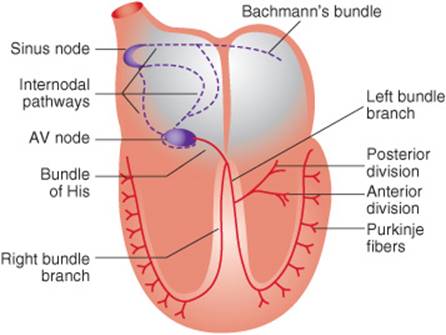
FIGURE 9–1. The cardiac conduction system. (AV, atrioventricular.)
Following initiation of the electrical impulse from the SA node, the impulse travels through the internodal pathways of the specialized atrial conduction system and Bachmann’s bundle (Fig. 9–1).1 The atrial conducting fibers do not traverse the entire breadth of the left and right atria; as impulse conduction occurs across the internodal pathways, and when the impulse reaches the end of Bachmann’s bundle, atrial depolarization spreads as a wave, conceptually similar to that which occurs upon throwing a pebble into water. As the impulse is conducted across the atria, each depolarized cell excites and depolarizes the surrounding connected cells, until both atria have been completely depolarized. Atrial contraction follows normal atrial depolarization.
Following atrial depolarization, impulses are conducted through the AV node, located in the lower right atrium (Fig. 9–1).1 The impulse then enters the bundle of His, and is conducted through the ventricular conduction system, consisting of the left and right bundle branches. The left ventricle requires a larger conduction system than the right ventricle due to its larger mass; therefore, the left bundle branch bifurcates into the left anterior and posterior divisions (also commonly known as “fascicles”). The bundle branches further divide into the Purkinje fibers, through which impulse conduction results in ventricular depolarization, after which ventricular contraction occurs.
The Ventricular Action Potential
The ventricular action potential is depicted in Figure 9–2.2 Cardiac myocyte resting membrane potential is usually 70 to 90 mV, due to the action of the sodium-potassium adenosine triphosphatase (ATPase) pump, which maintains relatively high extracellular sodium concentrations and relatively low extracellular potassium concentrations. During each action-potential cycle, the potential of the membrane increases to a threshold potential, usually 60 to 80 mV. When the membrane potential reaches this threshold, the fast sodium channels open, allowing sodiumions to rapidly enter the cell. This rapid influx of positiveions creates a vertical upstroke of the action potential, such that the potential reaches 20 to 30 mV. This is phase 0, which represents ventricular depolarization. At this point, the fast sodium channels become inactivated, and ventricular repolarization begins, consisting of phases 1 through 3 of the action potential. Phase 1 repolarization occurs primarily as a result of an efflux of potassiumions (Fig. 9–2).2During phase 2, potassiumions continue to exit the cell, but the membrane potential is balanced by an influx of calcium and sodium ions, transported through slow calcium and slow sodium channels, resulting in a plateau. During phase 3, the efflux of potassiumions greatly exceeds calcium and sodium influx, resulting in the major component of ventricular repolarization. During phase 4, sodiumions are actively pumped out of the myocyte via the sodium-potassium ATPase pump, resulting in restoration of ion concentrations to their resting values. An understanding of the ionic fluxes that are responsible for each phase of the action potential facilitates understanding of the effects of specific drugs on the action potential. For example, drugs that primarily inhibit ion flux through sodium channels influence phase 0 (ventricular depolarization), while drugs that primarily inhibit ion flux through potassium channels influence the repolarization phases, particularly phase 3.
The Electrocardiogram
The ECG is a noninvasive means of measuring the electrical activity of the heart. The relationship between the ventricular action potential and the ECG is depicted in Figure 9–2.2 The P wave on the ECG represents atrial depolarization (atrial depolarization is not depicted in the action potential shown in Figure 9–2, which shows only the ventricular action potential). Phase 0 of the action potential corresponds to the QRS complex; therefore, the QRS complex on the ECG is a noninvasive representation of ventricular depolarization. The T wave on the ECG corresponds to phase 3 ventricular repolarization. The interval from the beginning of the Q wave to the end of the T wave, known as the QT interval, is used as a noninvasive marker of ventricular repolarization time. Atrial repolarization is not displayed on the ECG, because it occurs during ventricular depolarization and is obscured by the QRS complex.
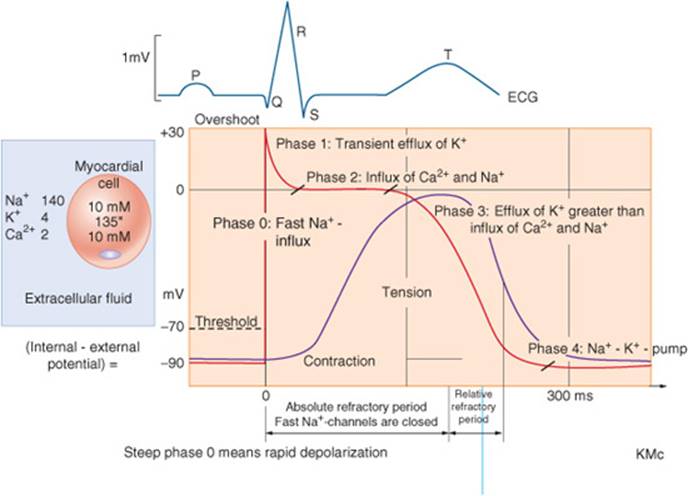
FIGURE 9–2. The ventricular action potential depicting the flow of specificions responsible for each phase. The specific phases of the action potential that correspond to the absolute and relative refractory periods are portrayed, and the relationship between phases of the action potential and the ECG are shown. (Ca, calcium; K, potassium; Na, sodium.) (From Ref. 2.)
Several intervals and durations are routinely measured on the ECG. The PR interval represents the time of conduction of impulses from the atria to the ventricles through the AV node; the normal PR interval in adults is 0.12 to 0.2 seconds. The QRS duration represents the time required for ventricular depolarization, which is normally 0.08 to 0.12 seconds in adults. The QT interval represents the time required for ventricular repolarization. The QT interval varies with heart rate—the faster the heart rate, the shorter the QT interval, and vice versa. Therefore, the QT interval is corrected for heart rate using Bazett’s equation,3 which is:

where QTc is the QT interval corrected for heart rate, and RR is the interval from the onset of one QRS complex to the onset of the next QRS complex, measured in seconds (i.e., the heart rate, expressed in different terminology). The normal QTc interval in adults is 0.36 to 0.44 seconds.
Refractory Periods
After an electrical impulse is initiated and conducted, there is a period of time during which cells and fibers cannot be depolarized again. This period of time is referred to as the absolute refractory period (Fig. 9–2),2 and corresponds to phases 1, 2, and approximately one-third of phase 3 repolarization on the action potential. The absolute refractory period also corresponds to the period from the Q wave to approximately the first half of the T wave on the ECG (Fig. 9–2). During this period, if there is a premature stimulus for an electrical impulse, this impulse cannot be conducted because the tissue is absolutely refractory. However, there is a period of time following the absolute refractory period during which a premature electrical stimulus can be conducted, and is often conducted abnormally. This period of time is called the relative refractory period (Fig. 9–2).2 The relative refractory period corresponds roughly to the latter two-thirds of phase 3 repolarization on the action potential and to the latter half of the T wave on the ECG. If a new (premature) electrical stimulus is initiated during the relative refractory period, it can be conducted abnormally, potentially resulting in an arrhythmia.
Mechanisms of Cardiac Arrhythmias
In general, cardiac arrhythmias are caused by: (a) abnormal impulse formation, (b) abnormal impulse conduction, or (c) both.
Abnormal Impulse Initiation
Abnormal initiation of electrical impulses occurs as a result of abnormal automaticity. If the automaticity of the SA node decreases, this results in a decreased rate of impulse generation and a slow heart rate (sinus bradycardia). Conversely, if the automaticity of the SA node increases, this results in an increased rate of generation of impulses and a rapid heart rate (sinus tachycardia). If other cardiac fibers become abnormally automatic, such that the rate of initiation of spontaneous impulses exceeds that of the SA node, or premature impulses are generated, other types of tachyarrhythmias may occur. Many cardiac fibers possess the capability for automaticity including the atrial tissue, the AV node, the Purkinje fibers, and the ventricular tissue. In addition, fibers with the capability of initiating and conducting electrical impulses are present in the pulmonary veins. Abnormal atrial automaticity may result in premature atrial contractions or may precipitate atrial tachycardia or atrial fibrillation (AF); abnormal AV nodal automaticity may result in “junctional tachycardia” (the AV node is also sometimes referred to as the AV junction). Abnormal automaticity in the ventricles may result in ventricular premature depolarizations (VPDs) or may precipitate ventricular tachycardia (VT) or ventricular fibrillation (VF). In addition, abnormal automaticity originating from the pulmonary veins is a precipitant of AF.
Automaticity of cardiac fibers is controlled in part by activity of the sympathetic and parasympathetic nervous systems. Enhanced activity of the sympathetic nervous system may result in increased automaticity of the SA node or other automatic cardiac fibers. Enhanced activity of the parasympathetic nervous system tends to suppress automaticity; conversely, inhibition of activity of the parasympathetic nervous system increases automaticity. Other factors may lead to abnormal increases in automaticity of extra-SA nodal tissues, including hypoxia, atrial or ventricular stretch (as might occur following long-standing hypertension or after the development of heart failure), and electrolyte abnormalities such as hypokalemia or hypomagnesemia.
Abnormal Impulse Conduction
The mechanism of abnormal impulse conduction is traditionally referred to as re-entry. Re-entry is often initiated as a result of an abnormal premature electrical impulse (abnormal automaticity); therefore, in these situations, the mechanism of the arrhythmia is both abnormal impulse formation (automaticity) and abnormal impulse conduction (re-entry). In order for re-entry to occur, three conditions must be present. There must be: (a) at least two pathways down which an electrical impulse may travel (which is the case in the majority of cardiac fibers); (b) a “unidirectional block” in one of the conduction pathways (this “unidirectional block” is often a result of prolonged refractoriness in this pathway, or increased “dispersion of refractoriness,” defined as substantial variation in refractory periods between cardiac fibers); and (c) slowing of the velocity of impulse conduction down the other conduction pathway.
The process of re-entry is depicted in Figure 9–3.4 Under normal circumstances, when a premature impulse is initiated, it cannot be conducted in either direction down either pathway because the tissue is in its absolute refractory period from the previous impulse. A premature impulse may be conducted down both pathways if it is only slightly premature and arrives after the tissue is no longer refractory. However, when refractoriness is prolonged down one of the pathways, a precisely-timed premature beat may be conducted down one pathway, but cannot be conducted in either direction in the pathway with prolonged refractoriness because the tissue is still in its absolute refractory period (Fig. 9–3).4 When the third condition for re-entry is present, that is, when the velocity of impulse conduction in one is slowed, the impulse traveling forward down the other pathway still cannot be conducted. However, because the impulse in one is traveling more slowly than normal, by the time it circles around and travels upward along the other pathway, sufficient time has passed so the pathway is no longer in its absolute refractory period, and now the impulse may travel upward in that pathway. In other words, the electrical impulse “re-enters” a previously stimulated pathway in the reverse (retrograde) direction. This results in circular movement of electrical impulses; as the impulse travels in this circular fashion, it excites each cell around it, and if the impulse is traveling at a rate faster than the intrinsic rate of the SA node, a tachycardia occurs in the tissue in question. Re-entry may occur in numerous tissues, including the atria, the AV node, and the ventricles.
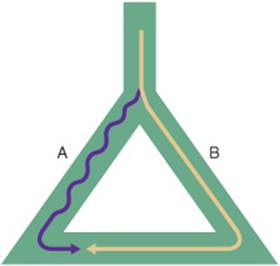
FIGURE 9–3. The process of initiation of re-entry. There are two pathways for impulse conduction, slowed impulse conduction down pathway A, and a longer refractory period in pathway B. A precisely timed premature impulse usually initiates re-entry; the premature impulse cannot be conducted down pathway B, because the tissue is still in the absolute refractory period from the previous, normal impulse. However, because of dispersion of refractoriness (i.e., different refractory periods down the two pathways), the impulse can be conducted down pathway A. Because conduction down pathway A is slowed, by the time the impulse reaches pathway B in a retrograde direction, the impulse can be conducted retrogradely up the pathway, because the pathway is now beyond its refractory period from the previous impulse. This creates re-entry, in which the impulse continuously and repeatedly travels in a circular fashion around the loop.
Prolonged refractoriness and/or slowed impulse conduction velocity may be present in cardiac tissues for a variety of reasons. Myocardial ischemia may alter ventricular refractory periods or impulse conduction velocity, facilitating ventricular re-entry. In patients with past myocardial infarction, the infarcted myocardium is dead and cannot conduct impulses. However, there is typically a border zone of tissue which is damaged and in which refractory periods and conduction velocity are often deranged, facilitating ventricular re-entry. In patients with left-atrial or LV hypertrophy as a result of long-standing hypertension, refractory periods and conduction velocity are often perturbed. In patients with heart failure due to LV dysfunction, ventricular refractoriness and conduction velocity are often altered due to LV hypertrophy, collagen deposition, and other anatomic and structural changes.
Vaughan Williams Classification of Antiarrhythmic Drugs
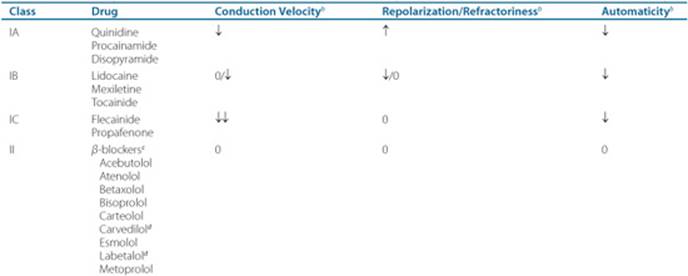
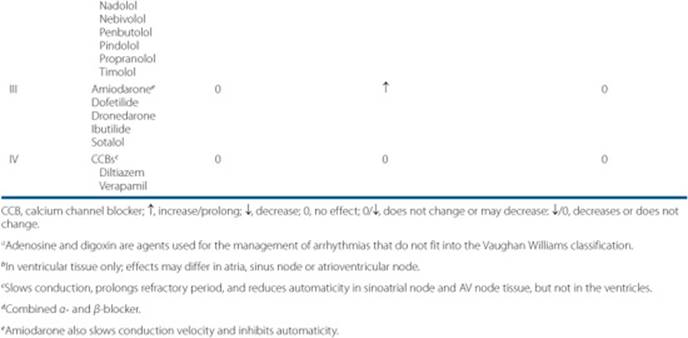
The Vaughan Williams classification of antiarrhythmic drugs, first described in 19705 and subsequently further expanded,6,7 is presented in Table 9–1. This classification is based on the effects of specific drugs on ventricular conduction velocity, repolarization/refractoriness, and automaticity. Class I drugs, which are the sodium channel blocking agents, primarily inhibit ventricular automaticity and slow conduction velocity. However, due to differences in the potency of the drugs to slow conduction velocity, the class I drugs are subdivided into class IA, IB, and IC. The class IC drugs have the greatest potency for slowing ventricular conduction, the class IA drugs have intermediate potency, and the class IB drugs have the lowest potency, with minimal effects on conduction velocity at normal heart rates. Class II drugs are the adrenergic β-receptor inhibitors (β-blockers), class III drugs are those that inhibit ventricular repolarization or prolong refractoriness, and class IV drugs are the calcium channel blockers (CCBs) diltiazem and verapamil.
The Vaughan Williams classification of antiarrhythmic drugs has been criticized for a number of reasons. The classification is based on the effects of drugs on normal, rather than diseased, myocardium. In addition, many of the drugs may be placed into more than one class. For example, the class IA drugs prolong repolarization/refractoriness, either via the parent drug8,9 or an active metabolite,10 and therefore also may be placed in class III. Sotalol is also a β-blocker, and therefore fits into class II. Amiodarone inhibits sodium and potassium channels, is a noncompetitive inhibitor of β-receptors, and inhibits calcium channels, and therefore may be placed into any of the four classes. For this reason, drugs within each class cannot be considered “interchangeable.” Nonetheless, despite attempts to develop mechanism-based classifications that better distinguish the actions of antiarrhythmic drugs,11 the Vaughan Williams classification continues to be widely used because of its simplicity and the fact that it is relatively easy to remember and understand.
Table 9–1 Vaughan Williams Classification of Antiarrhythmic Agentsa
CARDIAC ARRHYTHMIAS
In general, cardiac arrhythmias are classified into two broad categories: supraventricular (those occurring above the ventricles) and ventricular (those occurring in the ventricles). The names of specific arrhythmias are generally composed of two words; the first word indicates the location of the electrophysiologic abnormality resulting in the arrhythmia (sinus, AV node, atrial, or ventricular), and the second word describes the arrhythmia in terms of whether it is abnormally slow (bradycardia) or fast (tachycardia), or the type of arrhythmia (block, fibrillation, or flutter).
SUPRAVENTRICULAR ARRHYTHMIAS
Sinus Bradycardia
Sinus bradycardia is an arrhythmia that originates in the SA node, and is defined by a sinus rate less than 60 bpm.12
Epidemiology and Etiology
Many individuals, particularly those who partake in regular vigorous exercise, have resting heart rates less than 60 bpm. For those individuals, sinus bradycardia is normal and healthy, and does not require evaluation or treatment. However, some individuals develop symptomatic sinus-node dysfunction. In the absence of correctable underlying causes, idiopathic sinus-node dysfunction is referred to as sick sinus syndrome,12 and occurs with greater frequency in association with advancing age. The prevalence of sick sinus syndrome is approximately 1 in 600 individuals over the age of 65 years.12
Clinical Presentation and Diagnosis of Sinus Bradycardia
Symptoms
• Many patients are asymptomatic, particularly those with normal resting heart rates less than 60 bpm as a result of physical fitness due to regular vigorous exercise
• Susceptible patients may develop symptoms, depending on the degree of heart rate lowering
• Symptoms of bradyarrhythmias include dizziness, fatigue, light-headedness, syncope, chest pain (in patients with underlying CAD), and shortness of breath and other symptoms of heart failure (in patients with underlying left ventricular dysfunction)
Diagnosis
• Cannot be made on the basis of symptoms alone, as the symptoms of all bradyarrhythmias are similar
• History of present illness, presenting symptoms, and 12-lead ECG that reveals sinus bradycardia
• Assess possible correctable etiologies, including myocardial ischemia, serum potassium concentration (for hyperkalemia), thyroid function tests (for hypothyroidism)
• Determine whether patient is taking any drugs known to cause sinus bradycardia. If the patient is currently taking digoxin, determine the serum digoxin concentration and ascertain whether it is supratherapeutic (less than 2 ng/mL [2.6 nmol/L])
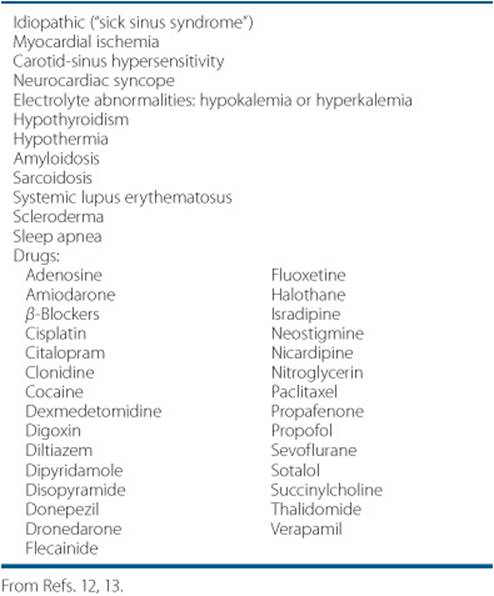
Sick sinus syndrome leading to sinus bradycardia may be caused by degenerative changes in the sinus node that occur with advancing age. However, there are other possible etiologies of sinus bradycardia including drugs(Table 9–2).13
Pathophysiology
Sick sinus syndrome leading to sinus bradycardia occurs as a result of fibrotic tissue in the SA node, which replaces normal SA node tissue.12
Treatment
Desired Outcomes
The desired outcomes of treatment are to restore normal heart rate and alleviate patient symptoms.
Pharmacologic Therapy
Treatment of sinus bradycardia is only necessary in patients who become symptomatic. If the patient is taking any medication(s) that may cause sinus bradycardia, the drug(s) should be discontinued whenever possible. If the patient remains in sinus bradycardia after discontinuation of the drug(s) and after five half-lives of the drug(s) have elapsed, then the drugs(s) can usually be excluded as the etiology of the arrhythmia. In certain circumstances, however, discontinuation of the medication(s) may be undesirable, even if it may be the cause of symptomatic sinus bradycardia. For example, if the patient has a history of myocardial infarction or heart failure, discontinuation of a β-blocker is undesirable, because β-blockers have been shown to reduce mortality and prolong life in patients with those diseases, and the benefits of therapy with β-blockers outweigh the risks associated with sinus bradycardia. In these patients, clinicians and patients may elect to implant a permanent pacemaker in order to allow the patient to continue therapy with β-blockers.
Table 9–2 Etiologies of Sinus Bradycardia
Acute treatment of the symptomatic patient consists primarily of administration of the anticholinergic drug atropine, which may be given in doses of 0.5 mg IV every 3 to 5 minutes. The maximum recommended total dose of atropine is 3 mg;14 however, this total dose should not be administered to patients with sinus bradycardia, but rather should be reserved for patients with cardiac arrest due to asystole, as complete vagal inhibition at this dose can increase myocardial oxygen demand and precipitate ischemia or tachyarrhythmias in patients with underlying coronary artery disease (CAD). Therefore, for management of sinus bradycardia, the maximum atropine dose should be approximately 2 mg. In patients with hemodynamically unstable or severely symptomatic sinus bradycardia that is unresponsive to atropine and in whom temporary or transvenous pacing is not available or is ineffective, epinephrine (2-10 mcg/min, titrate to response) and/or dopamine (2-10 mcg/kg/min) may be administered.14 Both drugs stimulate adrenergic α- and β-receptors.
In patients with sinus bradycardia due to underlying correctable disorders (such as electrolyte abnormalities or hypothyroidism), management consists of correcting those disorders.
Nonpharmacologic Therapy
Long-term management of patients with sick sinus syndrome requires implantation of a permanent pacemaker.12
Outcome Evaluation
• Monitor the patient’s heart rate and alleviation of symptoms.
• Monitor for adverse effects of medications, such as atropine (dry mouth, mydriasis, urinary retention, and tachycardia).
AV Nodal Blockade
AV nodal blockade occurs when conduction of electrical impulses through the AV node is impaired to varying degrees. AV nodal blockade is classified into three categories. First-degree AV block is defined simply as prolongation of the PR interval to greater than 0.2 seconds. During first-degree AV block, all impulses initiated by the SA node that have resulted in atrial depolarization are conducted through the AV node; the abnormality is simply that the impulses are conducted more slowly than normal, resulting in prolongation of the PR interval.15 Second-degree AV block is further distinguished into two types: Mobitz type I (also known as Wenckebach) and Mobitz type II. In both types of second-degree AV block, some of the impulses initiated by the SA node are not conducted through the AV node. This often occurs in a regular pattern; for example, every third or fourth impulse generated by the SA node may not be conducted. During third-degree AV block, which is also referred to as “complete heart block,” none of the impulses generated by the SA node are conducted through the AV node. This results in “AV dissociation,” during which the atria continue to depolarize normally as a result of normal impulses initiated by the SA node; however, the ventricles initiate their own depolarizations, because no SA node-generated impulses are conducted to the ventricles. Therefore, on the ECG, there is no relationship between the P waves and the QRS complexes.
Epidemiology and Etiology
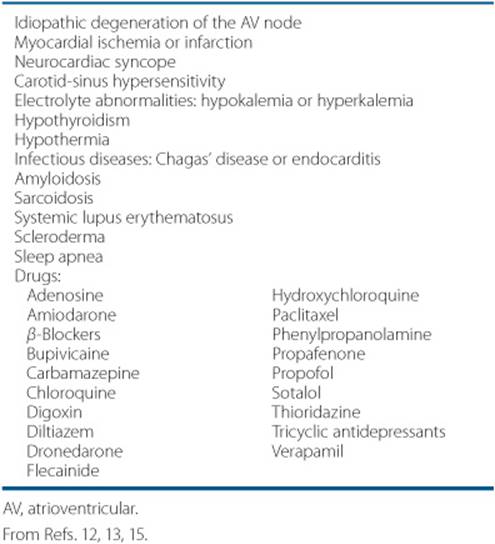
The overall incidence of AV nodal blockade is unknown. AV nodal blockade may be caused by degenerative changes in the AV node. In addition, there are many other possible etiologies of AV nodal blockade including drugs(Table 9–3).12,13,15
Pathophysiology
First-degree AV nodal blockade occurs due to inhibition of conduction within the upper portion of the node.15 Mobitz type I second-degree AV nodal blockade occurs as a result of inhibition of conduction further down within the node.12,15 Mobitz type II second-degree AV nodal blockade is caused by inhibition of conduction within or below the level of the bundle of His.12,15 Third-degree AV nodal blockade may be a result of inhibition of conduction either within the AV node or within the bundle of His or the His-Purkinje system.12,15 AV block may occur as a result of age-related AV node degeneration.
Treatment
Desired Outcomes
The desired outcomes of treatment are to restore normal sinus rhythm and alleviate patient symptoms.
Table 9–3 Etiologies of AV Nodal Blockade
Clinical Presentation and Diagnosis of AV Nodal Blockade
Symptoms
• First-degree AV nodal blockade is rarely symptomatic, because it rarely results in bradycardia
• Second-degree AV nodal blockade may cause bradycardia, as not all impulses generated by the SA node are conducted through the AV node to the ventricles
• In third-degree AV nodal blockade, or complete heart block, the heart rate is usually 30 to 40 bpm, resulting in symptoms
• Symptoms of bradyarrhythmias such as second-or third-degree AV block consist of dizziness, fatigue, light-headedness, syncope, chest pain (in patients with underlying CAD), and shortness of breath and other symptoms of heart failure (in patients with underlying left ventricular dysfunction)
Diagnosis
• Made on the basis of patient presentation, including history of present illness and presenting symptoms, as well as a 12-lead ECG that reveals AV nodal blockade
• Assess potentially correctable etiologies, including myocardial ischemia, serum potassium concentration (for hyperkalemia), and thyroid function tests (for hypothyroidism)
• Determine whether the patient is taking any drugs known to cause AV block
• If the patient is currently taking digoxin, determine the serum digoxin concentration and ascertain whether it is supratherapeutic (less than 2 ng/mL [2.6 nmol/L])
Pharmacologic Therapy
Treatment of first-degree AV nodal blockade is rarely necessary, because symptoms rarely occur. However, the ECGs of patients with first-degree AV nodal blockade should be monitored to assess the possibility of progression of first-degree AV nodal blockade to second-or third-degree block. Second-or third-degree AV nodal blockade requires treatment, because bradycardia usually results in symptoms. If the patient is taking any medication(s) that may cause AV nodal blockade, the drug(s) should be discontinued whenever possible. If the patient’s rhythm still exhibits AV nodal blockade after discontinuing the medication(s) and after five half-lives of the drug(s) have elapsed, then the drug(s) can usually be excluded as the etiology of the arrhythmia. However, in certain circumstances, discontinuation of a medication that is inducing AV nodal blockade may be undesirable. For example, if the patient has a history of myocardial infarction or heart failure, discontinuation of a β-blocker is undesirable because β-blockers have been shown to reduce mortality and prolong life in patients with those diseases, and the benefits of therapy with β-blockers outweigh the risks associated with AV nodal blockade. In these patients, clinicians and patients may elect to implant a permanent pacemaker in order to allow the patient to continue therapy with β-blockers.
Acute treatment of patients with second-or third-degree AV nodal blockade consists primarily of administration of atropine, which may be administered in the same doses as recommended for management of sinus bradycardia. In patients with hemodynamically unstable or severely symptomatic AV nodal blockade that is unresponsive to atropine and in whom temporary or transvenous pacing is not available or is ineffective, epinephrine (2-10 mcg/min, titrate to response) and/or dopamine (2-10 mcg/kg/min) may be administered.14
In patients with second-or third-degree AV block due to underlying correctable disorders (such as electrolyte abnormalities or hypothyroidism), management consists of correcting those disorders.
Nonpharmacologic Therapy
Long-term management of patients with second-or third-degree AV nodal blockade due to idiopathic degeneration of the AV node requires implantation of a permanent pacemaker.12
Outcome Evaluation
• Monitor the patient for termination of AV nodal blockade and restoration of normal sinus rhythm, heart rate, and alleviation of symptoms.
• If atropine is administered, monitor the patient for adverse effects including dry mouth, mydriasis, urinary retention, and tachycardia.
Atrial Fibrillation
AF is the most common arrhythmia encountered in clinical practice. It is important for clinicians to understand AF, because it is associated with substantial morbidity and mortality and because many strategies for drug therapy are available. Drugs used to treat AF often have a narrow therapeutic index and a broad adverse-effect profile.
Epidemiology and Etiology
Approximately 2.3 million Americans have AF. The prevalence of AF increases with advancing age; roughly 9% of patients between the ages of 80 and 89 years have AF.16 Similarly, the incidence of AF increases with age, and it occurs more commonly in men than in women.16
Etiologies of AF are presented in Table 9–4. The common feature of the majority of etiologies of AF is the development of left atrial hypertrophy. Hypertension may be the most important risk factor for development of AF. However, AF occurs commonly in patients with CAD. In addition, heart failure is increasingly recognized as a cause of AF; approximately 25% to 30% of patients with New York Heart Association (NYHA) class III heart failure have AF,17 and the arrhythmia is present in as many as 50% of patients with NYHA class IV heart failure.18
Clinical Presentation and Diagnosis of AF
Symptoms
• Approximately 20% to 30% of patients with AF remain asymptomatic
• Symptoms typical of tachyarrhythmiassuch as AF include palpitations, dizziness, light-headedness, shortness of breath, chest pain (if underlying CAD is present), near-syncope, and syncope. Patients commonly complain of palpitations; often the complaint is “I can feel my heart beating fast” or “I can feel my heart fluttering” or “It feels like my heart is going to beat out of my chest.”
• Other symptoms are dependent on the degree to which cardiac output is diminished, which is in turn dependent on the ventricular rate and the degree to which stroke volume is reduced by the rapidly beating heart
• In some patients, the first symptom of AF is stroke
Diagnosis
• Because the symptoms of all tachyarrhythmias are dependent on heart rate and are therefore essentially the same, the diagnosis depends on the presence of AF on the ECG
• AF is characterized on ECG by an absence of P waves, an undulating baseline that represents roughly 350 to 600 attempted atrial depolarizations per minute, and an irregularly irregular rhythm, meaning that the intervals between the R waves are irregular and that there is no pattern to the irregularity
Table 9–4 Etiologies of AF
|
Hypertension |
|
Coronary artery disease |
|
Heart failure |
|
Diabetes |
|
Hyperthyroidism |
|
Rheumatic heart disease |
|
Diseases of the heart valves: |
|
Mitral stenosis or regurgitation |
|
Mitral valve prolapse |
|
Chronic obstructive pulmonary disease |
|
Pulmonary embolism |
|
Idiopathic (“lone” AF) |
|
Thoracic surgery: |
|
Coronary artery bypass graft surgery |
|
Pulmonary resection |
|
Thoracoabdominal esophagectomy |
|
Drugs: |
|
Adenosine |
|
Albuterol |
|
Alcohol |
|
Alendronate |
|
Dobutamine |
|
Enoximone |
|
Ipratropium bromide |
|
Methylprednisolone |
|
Milrinone |
|
Mitoxantrone |
|
Paclitaxel |
|
Propafenone |
|
Theophylline |
|
Verapamil |
|
Zoledronic acid |
AF, atrial fibrillation.
FromRefs. 13,20,21.
Drug-induced AF is relatively uncommon, but has been reported (Table 9–4).13 Acute ingestion of large amounts of alcohol may cause AF; this phenomenon has been referred to as the “holiday heart” syndrome.19 In addition, recent reports have associated use of the bisphosphonate drugs zoledronic acid20 and alendronate21 with new-onset serious AF. The potential relationship between bisphosphonate use and new-onset AF requires further study.
Pathophysiology
AF may be caused by both abnormal impulse formation and abnormal impulse conduction. Traditionally, AF was believed to be initiated by premature impulses initiated in the atria. However, it is now understood that in many patients AF is triggered by electrical impulses generated within the pulmonary veins.22 These impulses initiate the process of re-entry within the atria, and AF is believed to be sustained by multiple re-entrant wavelets operating simultaneously within the atria.23 Some believe that, at least in some patients, the increased automaticity in the pulmonary veins maybe the sole mechanism of AF and that the multiple re-entrant wavelet hypothesis may be incorrect. However, the concept of multiple simultaneous re-entrant wavelets remains the predominant hypothesis regarding the mechanism of AF.23
AF leads to electrical remodeling of the atria. Episodes of AF that are of longer duration and episodes that occur with increasing frequency result in progressive shortening of atrial refractory periods, further potentiating the re-entrant circuits in the atria.24 Therefore, it is often said that “atrial fibrillation begets atrial fibrillation,” that is, AF causes atrial electrophysiologic alterations that promote further AF.23,24AF is associated with 400 to 600 attempted atrial depolarizations per minute and chaotic, disorganized atrial electrical activity.
The AV node is incapable of conducting 400 to 600 impulses per minute; however, it may conduct 100 to 200 impulses per minute, resulting in ventricular rates ranging from 100 to 200 bpm.
AF is classified as paroxysmal, persistent, or permanent (Fig. 9–4).25 Patients with paroxysmal AF have episodes that begin suddenly and spontaneously, last minutes to hours, or rarely as long as 7 days, and terminate suddenly and spontaneously. Some patients with paroxysmal AF have episodes that do not terminate spontaneously but require intervention, and this is known as persistent AF. Approximately 18% to 30% of patients with AF progress to the point of permanent AF; these patients are subsequently never in normal sinus rhythm but rather are always in AF.
AF is associated with substantial morbidity and mortality. This arrhythmia is associated with a risk of ischemic stroke of approximately 5% per year.25 The risk of stroke is increased two-to sevenfold in patients with AF compared to patients without this arrhythmia.25 AF is the cause of roughly one of every six strokes. During AF, atrial contraction is absent. Due to the fact that atrial contraction is responsible for approximately 30% of left ventricular filling, this blood that is not ejected from the left atrium to the left ventricle pools in the atrium, particularly in the left atrial appendage. Blood pooling facilitates the formation of a thrombus, which subsequently may travel through the mitral valve into the left ventricle and may be ejected during ventricular contraction. The thrombus then may travel through a carotid artery into the brain, resulting in an ischemic stroke.
Patient Encounter, Part 1
DA is a 58-year-old male who presents to the emergency department (ED) complaining that he can “feel my heart beating fast,” which started when he was taking out the garbage. He also complains of feeling light-headed and short of breath. His pulse is irregularly irregular, with a rate of 135 bpm.
His physical exam is completely normal and no focal neurologic deficits were observed.
What information is suggestive ofAF?
What additional information do you need in order to develop a treatment plan?
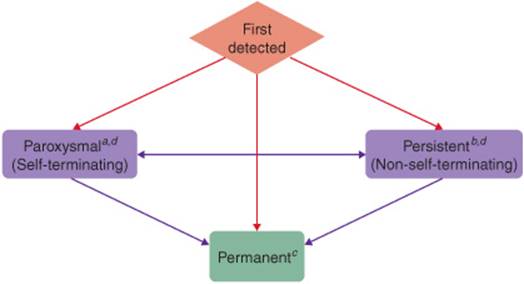
FIGURE 9–4. Classification of atrial fibrillation. aEpisodes that generally last 7 days or less (most less than 24 hours). bEpisodes that usually last 7 days. cCardioversion failed or not attempted. dEither paroxysmal or persistent atrial fibrillation may be recurrent. AF, atrial fibrillation. (From Ref. 25.)
AF may lead to the development of heart failure as a result of tachycardia-induced cardiomyopathy.26 AF increases the risk of mortality approximately twofold compared to that in patients without AF;25 the causes of death are likely stroke or heart failure.
Treatment
Desired Outcomes
 The goals of individualized therapy of AF are: (a) ventricular rate control, (b) termination of AF and restoration of sinus rhythm (commonly referred to as “cardioversion” or “conversion to sinus rhythm”), (c) maintenance of sinus rhythm, or reduction in the frequency of episodes of paroxysmal AF, and/or (d) prevention of stroke. These goals of therapy do not necessarily apply to all patients; the specific goal(s) that apply depend on the patient’s AF classification (Table 9–5).
Hemodynamically Unstable AF
For patients who present with an episode of AF that is hemodynamically unstable, emergent conversion to sinus rhythm is necessary using direct current cardioversion (DCC). Hemodynamic instability may be defined as the presence of any one of the following14: (a) patient has altered mental status, (b) hypotension (systolic blood pressure less than 90 mm Hg) or other signs of shock, (c) ventricular rate greater than 150 bpm, and/or (d) patient is experiencing squeezing, crushing chest pain suggestive of myocardial ischemia.
Patient Encounter, Part 2: Medical History, Physical Exam, and Diagnostic Tests
PMH: Hypertension × 15 years; coronary artery disease × 5 years; myocardial infarction 2005; heart failure × 5 years
Meds: Aspirin 81 mg once daily; metoprolol 50 mg twice daily; enalapril 5 mg twice daily; furosemide 40 mg daily
PE:
Ht 5′10″ (178 cm), wt 80 kg (176 lb), BP 110/70 mm Hg, P 135 bpm, RR 20/min; remainder of PE noncontributory
Labs: All within normal limits
CXR: Mild pulmonary edema
Echo: Moderately reduced LV function, LVEF 35%
ECG: Atrial fibrillation
What is your assessment of DA’s condition?
What are your treatment goals?
What pharmacologic or nonpharmacologic alternatives are available for each treatment goal?
Table 9–5 Treatment Goals According to AF Classification

DCC is the process of administering a synchronized electrical shock to the chest. The purpose of DCC is to simultaneously depolarize all of the myocardial cells, resulting in interruption and termination of the multiple re-entrant circuits and restoration of normal sinus rhythm. The initial energy level of the shock is 100 joules (J); if the DCC attempt is unsuccessful, successive cardioversion attempts may be made at 200 J, 300 J, and 360 J.14 Delivery of the shock is synchronized to the ECG by the cardioverter machine, such that the electrical charge is not delivered during the latter portion of the T wave (i.e., the relative refractory period), to avoid delivering an electrical impulse that may be conducted abnormally, which may result in a life-threatening ventricular arrhythmia.
The remainder of this section will be devoted to management of hemodynamically stable AR. The specific goals of therapy that apply to patients in each AF classification are presented in Table 9–5.
Pharmacologic Therapy
Ventricular Rate Control. Ventricular rate control can be achieved by inhibiting the proportion of electrical impulses conducted from the atria to the ventricles through the AV node. Therefore, drugs that are effective for ventricular rate control are those that inhibit AV nodal impulse conduction: β-blockers, diltiazem, verapamil, digoxin, and amiodarone (Tables 9–6 and 9–7).
In patients who present with their first detected episode of AF, or for those who present with an episode of persistent AF, ventricular rate control is usually initially achieved using IV drugs. A decision algorithm for selecting a specific drug for acute ventricular rate control is presented in Figure 9–5. In general, an IV CCB or β-blocker is preferred for ventricular rate control in patients with normal LV function, as ventricular rate control can often be achieved within several minutes. In patients with heart failure due to LV dysfunction, IV digoxin or amiodarone is preferred, because diltiazem and verapamil are associated with negative inotropic effects and may exacerbate heart failure.27 Similarly, although oral β-blockers are indicated in patients with heart failure due to LV dysfunction, IV β-blockers are generally avoided due to the potential for acutely exacerbating heart failure.
A decision strategy for long-term rate control in patients with paroxysmal or permanent AF is presented in Figure 9–6. In general, while digoxin is effective for ventricular rate control in patients at rest, digoxin is less effective than CCBs or β-blockers for ventricular rate control in patients undergoing physical activity including activities of daily living. This is likely because activation of the sympathetic nervous system during exercise and activity overwhelms the stimulating effect of digoxin on the parasympathetic nervous system. Therefore, in patients with normal LV function, CCBs or β-blockers are preferred for long-term ventricular rate control. Diltiazem may be preferable to verapamil in older patients due to a lower incidence of constipation. However, in patients with heart failure, oral diltiazem and verapamil are contraindicated as a result of their negative inotropic activity and propensity to exacerbate heart failure. Therefore, the options in this population are β-blockers or digoxin. The majority of patients with heart failure should be receiving therapy with an oral β-blocker with the goal of achieving mortality risk reduction. In patients with heart failure who develop rapid AF while receiving therapy with β-blockers, digoxin should be administered for purposes of ventricular rate control. Fortunately, studies have found the combination of digoxin and β-blockers to be effective for ventricular rate control, likely as a result of β-blocker-induced attenuation of the inhibitory effects of the sympathetic nervous system on the efficacy of digoxin.
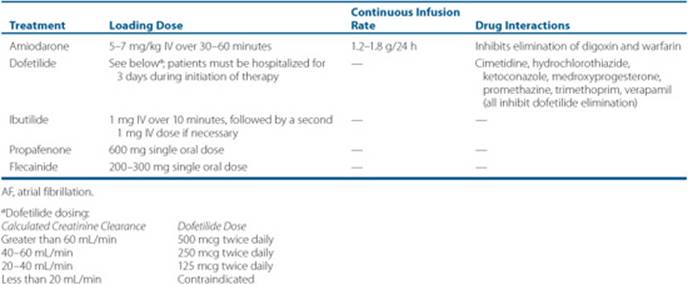
Conversion to Sinus Rhythm. Termination of AF in hemodynamically stable patients may be performed using antiarrhythmic drug therapy or elective DCC. Drugs that may be used for conversion to sinus rhythm are presented in Table 9–8; these agents slow atrial conduction velocity and/or prolong refractoriness, facilitating interruption of re-entrant circuits and restoration of sinus rhythm. DCC is generally more effective than drug therapy for conversion of AF to sinus rhythm. However, patients who undergo elective DCC must be sedated and/or anesthetized to avoid the discomfort associated with delivery of 100 to 360 J of electricity to the chest. Therefore, it is important that patients scheduled to undergo elective DCC do not eat within approximately 8 to 12 hours of the procedure to avoid aspiration of stomach contents during the period of sedation/anesthesia. This often factors into the decision as to whether to employ elective DCC or drug therapy for conversion of AF to sinus rhythm. If a patient presents with AF requiring nonemergent conversion to sinus rhythm, and the patient has eaten a meal that day, then pharmacologic methods must be used for cardioversion on that day, or DCC must be postponed to the following day to allow for a period of fasting prior to the procedure.
Table 9–6 Drugs for Ventricular Rate Control in AF
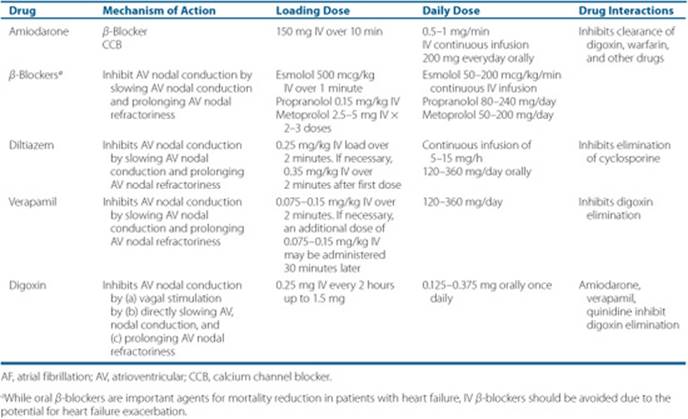
Table 9–7 Adverse Effects of Drugs Used to Treat Arrhythmias
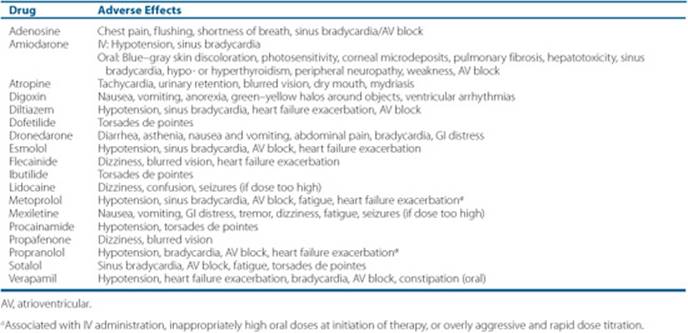
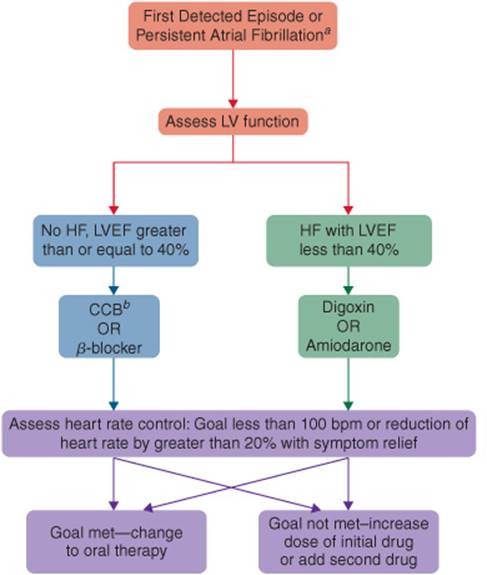
FIGURE 9–5. Decision algorithm for ventricular rate control using IV drug therapy for patients presenting with the first detected episode or an episode of persistent atrial fibrillation that is hemodynamically stable. aDrugs administered IV. bDiltiazem is generally preferred over verapamil because of a lower risk of severe hypotension. (β-blocker, esmolol, metoprolol, or propranolol; bpm, beats per minute; CCB, calcium channel blocker [diltiazem or verapamil]; HF, heart failure; LV, left ventricular; LVEF, left ventricular ejection fraction.)
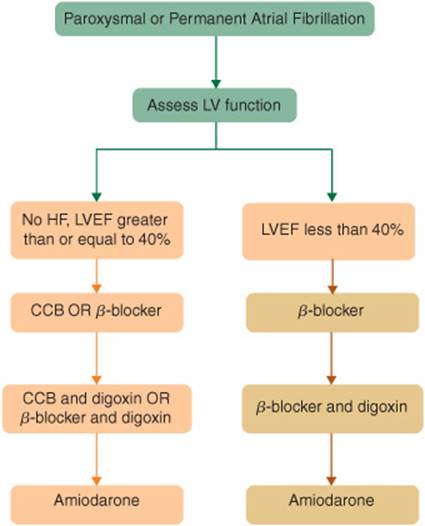
FIGURE 9–6. Decision algorithm for long-term ventricular rate control with oral drug therapy for patients with paroxysmal or permanent atrial fibrillation. With each therapy/dose change, assess heart rate control. Goal less than 100 bpm or reduction of heart rate by more than 20% with symptom relief. If goal is not met, move to next step in algorithm. (bpm, beats per minute; CCB, calcium channel blocker [diltiazem or verapamil]; HF, heart failure; LV, left ventricular function; LVEF, left ventricular ejection fraction.)
Table 9–8 Drugs for Conversion of AF to Normal Sinus Rhythm
A decision strategy for conversion of AF to sinus rhythm is presented in Figure 9–7. The cardioversion decision strategy depends greatly on the duration of AF. If the AF episode began within 48 hours, conversion to sinus rhythm is safe and may be attempted with elective DCC or specific drug therapy (Fig. 9–7). However, if the duration of the AF episode is longer than 48 hours or if there is uncertainty regarding the duration of the episode, two strategies for conversion may be considered. Data indicate that a thrombus may form in the left atrium during AF episodes of 48 hours or longer; if an atrial thrombus is present, the process of conversion to sinus rhythm, whether with DCC or drugs, can dislodge the atrial thrombus and cause a stroke. Therefore, in patients experiencing an AF episode of 48 hours or longer, conversion to sinus rhythm should be deferred unless it is known that an atrial thrombus is not present. In the past, common practice in patients with AF of greater than 48 hours duration was to anticoagulate with warfarin, maintaining a therapeutic International Normalized Ratio (INR) for 3 weeks, after which cardioversion may be performed. Patients were subsequently anticoagulated for a minimum of 4 weeks following the restoration of sinus rhythm. Today, rather than se nd patients with ongoing AF home for 3 weeks of anticoagulation, it has become standard practice at many institutions to perform a transesophageal echocardiogram (TEE) to determine whether an atrial thrombus is present; if such a thrombus is not present, DCC or pharmacologic cardioversion may be performed within 24 hours. If this strategy is selected, hospitalized patients should undergo anticoagulation with IV unfractionated heparin, with the dose targeted to a partial thromboplastin time (PTT) of 60 seconds (range 50–70 seconds), or warfarin therapy (target INR 2.5; range 2-3) during the hospitalization period prior to the TEE and cardioversion procedure. If no thrombus is present during TEE and cardioversion is successful, patients should maintain anticoagulation with warfarin (target INR 2.5; range 2-3) for at least 4 weeks. If a thrombus is observed during TEE, then cardioversion should be postponed and anticoagulation should be continued indefinitely. Another TEE should be performed prior to a subsequent cardioversion attempt.28
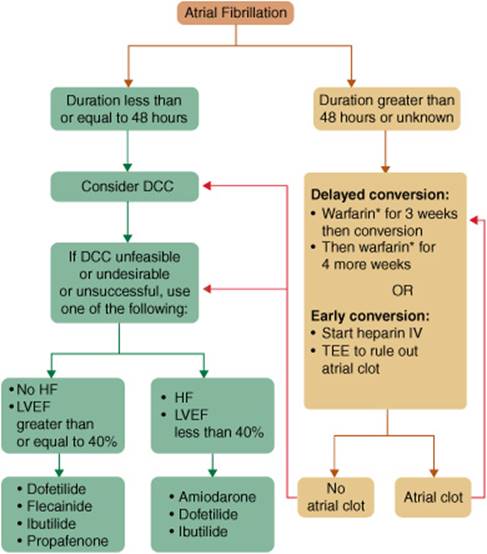
FIGURE 9–7. Decision algorithm for conversion of hemodynamically stable atrial fibrillation to normal sinus rhythm. (DCC, direct current cardioversion; HF, heart failure; LVEF, left ventricular ejection fraction; TEE, transesophageal echocardiogram.) *international Normalized Ratio 2-3.
Conversion of AF to sinus rhythm is usually performed in patients with the first detected episode of AF or in patients with an episode of persistent AF. In patients with permanent AF, conversion to sinus rhythm is usually not attempted because cardioversion is unlikely to be successful, and in those rare patients in whom sinus rhythm is restored successfully, AF usually recurs shortly thereafter.
Maintenance of Sinus Rhythm/Reduction in the Frequency of Episodes of Paroxysmal AF. In many patients, permanent maintenance of sinus rhythm following cardioversion is an unrealistic goal. Many, if not most, patients experience recurrence of AF after cardioversion. Therefore, a more realistic goal for many patients is not permanent maintenance of sinus rhythm, but rather reduction in the frequency of episodes of paroxysmal AF.
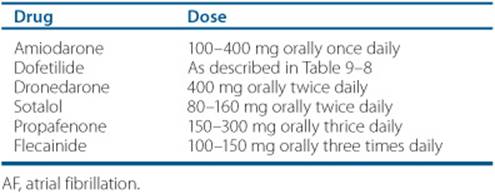
In recent years, numerous studies have been performed to determine whether drug therapy for maintenance of sinus rhythm is preferred to drug therapy for ventricular rate control.29–32 In these studies, patients have been assigned randomly to receive therapy either with drugs for rate control or with drugs for rhythm control (Table 9–9).
Table 9–9 Drugs for Maintenance of Sinus Rhythm/Reduction in the Frequency of Episodes of AF
These studies have found no significant differences in mortality in patients who received rhythm control therapy versus those who received rate control therapy.29–32 However, patients assigned to the rhythm control strategy were more likely to be hospitalized29,31,32 and were more likely to experience adverse effects associated with drug therapy.29,30 Therefore, drug therapy for the purpose of maintaining sinus rhythm or reducing the frequency of episodes of AF should be initiated only in those patients with episodes of paroxysmal AF who continue to experience symptoms despite maximum tolerated doses of drugs for ventricular rate control. A decision strategy for maintenance therapy of sinus rhythm is presented in Figure 9–8. Drug therapy for maintenance of sinus rhythm and/or reduction in the frequency of episodes of paroxysmal AF should not be initiated in patients with underlying correctable causes of AF, such as hyperthyroidism; rather, the underlying cause of the arrhythmia should be corrected.
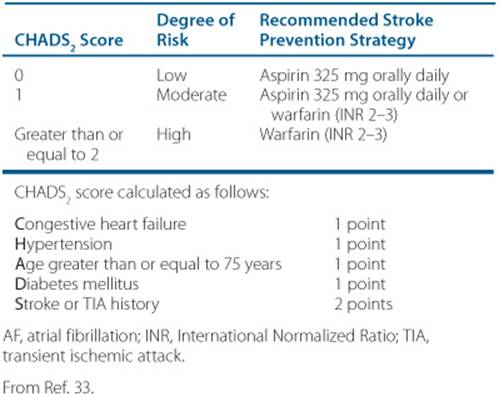
Stroke Prevention. All patients with paroxysmal, persistent, or permanent AF should receive therapy for stroke prevention unless compelling contraindications exist. A number of decision strategies for assigning patients to receive anticoagulation for stroke prevention in AF have been suggested; two commonly used strategies are presented in Tables 9–1028 and 9–11.33  In general, most patients require therapy with warfarin; in some patients with no or few additional risk factors for stroke, aspirin may be acceptable. For some patients, serious consideration of the benefits of warfarin versus the risks of bleeding associated with warfarin therapy is warranted. The potential bleeding risks associated with warfarin may outweigh the benefits in patients with a pretreatment INR of greater than 2, alcoholism, anticipated poor compliance, a history of falls, or current bleeding diathesis. In these situations, patients are at risk of severe bleeding associated with warfarin, including intracerebral hemorrhage, which may be associated with consequences as serious as those associated with a thrombotic stroke, and aspirin therapy may be associated with a more favorable benefit: risk ratio.
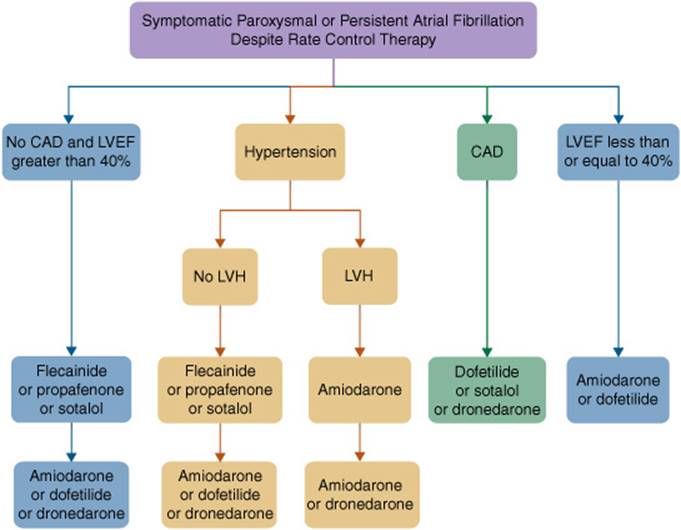
FIGURE 9–8. Decision algorithm for maintenance of sinus rhythm/reduction in the frequency of episodes of atrial fibrillation. (CAD, coronary artery disease; LVEF, left ventricular ejection fraction; LVH, left ventricular hypertrophy.)
Recently, specific genetic tests to guide the initiation of warfarin therapy have been approved by the FDA. These tests assess single nucleotide polymorphisms on the gene that encodes cytochrome P-450 2C19, the primary hepatic enzyme responsible for warfarin metabolism, and the gene VKORC1, which encodes vitamin K epoxide reductase, the enzyme that is inhibited by warfarin as its mechanism of anticoagulation. Some advocate that all patients in whom warfarin therapy is being initiated should undergo genetic testing to guide the initiation of therapy; patients with specific polymorphisms of one or both of these genes may require adjustment of the initial warfarin dose to achieve adequate anticoagulation or avoid overanticoagulation and toxicity. Genetic testing to guide the initiation of warfarin therapy has not yet become standard practice, and many have questioned the efficacy and cost effectiveness of incorporation of routine genetic testing into warfarin therapy. The role of genetic testing in selecting initial warfarin doses may continue to evolve, but at the present time, appears to be limited.
Table 9–10 American College of Chest Physicians Recommendations for Stroke Prevention in AF
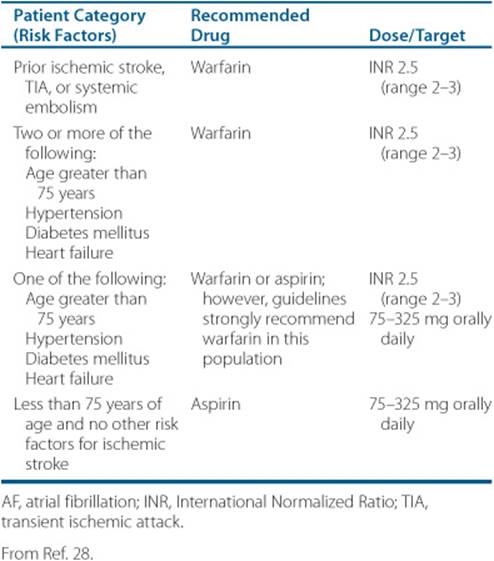
Table 9–11 Drugs for Stroke Prevention in AF—CHADS2 Risk Stratification
Outcome Evaluation
• Monitor the patient to determine whether the goal of ventricular rate control is met: heart rate less than 100 bpm or decrease in heart rate of 20% from the pretreatment value.
Patient Encounter, Part 3: Creating a Care Plan
Based on the information presented, create a care plan for DA’s acute AF episode, and for long-term management of hisAF.
Your plan should include: (a) a statement of the drug-related needs and/or problems, (b) the goals of therapy, (c) a patient-specific detailed therapeutic plan, and (d) a plan for follow-up to determine whether the goals have been achieved and adverse effects avoided.
• Monitor ECG to assess continued presence of AF and to determine whether conversion to sinus rhythm has occurred.
• Monitor INR approximately monthly to make sure it is therapeutic (target 2.5; range 2-3).
• Monitor patients for adverse effects of specific drug therapy (Table 9–7). Monitor patients receiving warfarin for signs and symptoms of bruising or bleeding.
Paroxysmal Supraventricular Tachycardia
Paroxysmal supraventricular tachycardia (PSVT) is a term that refers to a number of arrhythmias that occur above the ventricles and that require atrial or AV nodal tissue for initiation and maintenance.34 The most common of these arrhythmias is known as AV re-entrant tachycardia, in which the arrhythmia is caused by a re-entrant circuit that involves the AV node or tissue adjacent to the AV node. Other types of PSVT include the relatively uncommon Wolff-Parkinson-White syndrome, which is caused by re-entry through an accessory extra-AV nodal pathway. For the purposes of this section, the term PSVT will refer to AV nodal re-entrant tachycardia.
Epidemiology and Etiology
While PSVT can occur in patients experiencing myocardial ischemia or infarction, it often occurs in relatively young individuals with no history of cardiac disease. The overall incidence of PSVT is unknown.
Pathophysiology
Paroxysmal supraventricular tachycardia is caused by re-entry that includes the AV node as a part of the re-entrant circuit. Typically, electrical impulses travel forward (antegrade) down the AV node and then travel back up the AV node (retrograde) in a repetitive circuit. In some patients, the retrograde conduction pathway of the re-entrant circuit may exist in extra-AV nodal tissue adjacent to the AV node. One of these pathways usually conducts impulses rapidly, while the other usually conducts impulses slowly. Most commonly, during PSVT the impulse conducts antegrade through the slow pathway and retrograde through the faster pathway; in approximately 10% of patients, the re-entrant circuit is reversed.34
Clinical Presentation and Diagnosis of PSVT
• May occur at any age, but most commonly during the fourth and fifth decades of life34
• Occurs more commonly in females than in males; approximately two-thirds of patients that experience PSVT are women34
Symptoms
• Symptoms typical of tachyarrhythmias such as PSVT include palpitations, dizziness, light-headedness, shortness of breath, chest pain (if underlying CAD is present), near-syncope, and syncope. Patients commonly complain of palpitations; often the complaint is “I can feel my heart beating fast” or “I can feel my heart fluttering” or “It feels like my heart is going to beat out of my chest.”
• Other symptoms are dependent on the degree to which cardiac output is diminished, which is in turn dependent on the heart rate and the degree to which stroke volume is reduced by the rapidly beating heart
Diagnosis
• Because the symptoms of all tachyarrhythmias are dependent on heart rate and are therefore essentially the same, diagnosis depends on the presence of PSVT on the ECG, characterized by narrow QRS complexes (usually less than 0.12 seconds). P waves may or may not be visible, depending on the heart rate
• PSVT is a regular rhythm and occurs at rates ranging from 100to250bpm
Treatment
Desired Outcomes
The desired outcomes for treatment are to terminate the arrhythmia, restore sinus rhythm, and prevent recurrence. Drug therapy is employed to terminate the arrhythmia and restore sinus rhythm; nonpharmacologic measures are employed to prevent recurrence.
Termination of PSVT
Hemodynamically unstable PSVT should be treated with immediate synchronized DCC, using an initial energy level of 50 J; if the DCC attempt is unsuccessful, successive cardioversion attempts maybe made at 100, 200, 300, and 360 J.14
The primary method of termination of hemodynamically stable PSVT is inhibition of impulse conduction and/or prolongation of the refractory period within the AV node. Because PSVT is propagated via a re-entrant circuit involving the AV node, inhibition of conduction within the AV node interrupts and terminates the re-entrant circuit.
Prior to initiation of drug therapy for termination of hemodynamically stable PSVT, some simple nonpharmacologic methods known as vagal maneuvers may be attempted.35 Vagal maneuvers stimulate the activity of the parasympathetic nervous system, which inhibits AV nodal conduction, facilitating termination of the arrhythmia. Perhaps the simplest vagal maneuver is cough, which stimulates the vagus nerve. Instructing the patient to cough two or three times may successfully terminate the PSVT. Another vagal maneuver that may be attempted is carotid sinus massage; one of the carotid sinuses, located in the neck in the vicinity of the carotid arteries, may be gently massaged, stimulating vagal activity.35 Carotid sinus massage should not be performed in patients with a history of stroke or transient ischemic attack, or in those in whom carotid bruits may be heard on auscultation. The Valsalva maneuver, during which patients bear down against a closed glottis, may also be attempted.35
If vagal maneuvers are unsuccessful, IV drug therapy should be initiated.34 Drugs that may be used for termination of hemodynamically stable PSVT are presented in Table 9–12. A decision strategy for pharmacologic termination of hemodynamically stable PSVT is presented in Figure 9–9.35 Adenosine is the drug of choice for pharmacologic termination of PSVT and is successful in 90% to 95% of patients. Adenosine is associated with adverse effects (Table 9–7) including flushing, sinus bradycardia or AV nodal blockade, and bronchospasm in susceptible patients. In addition, adenosine may cause chest pain that mimics the discomfort of myocardial ischemia, but which is not actually associated with ischemia. The half-life of adenosine is approximately 10 seconds, due to deamination in the blood; therefore, in the vast majority of patients, adverse effects are of short duration.
If adenosine therapy is unsuccessful for termination of PSVT, subsequent choices of therapy depend on whether the patient has heart failure and/or a depressed left ventricular ejection fraction (LVEF).
Nonpharmacologic Therapy: Prevention of Recurrence
In the past, prevention of recurrence of PSVT was attempted using long-term oral therapy with drugs such as verapamil or digoxin. Unfortunately, oral therapy with these drugs was associated with relatively limited success. Currently, the treatment of choice for long-term prevention of recurrence of PSVT is radiofrequency catheter ablation. During this procedure, a catheter is introduced transvenously and directed to the right atrium under fluoroscopic guidance. The catheter is advanced to the AV node, and radiofrequency energy is delivered to ablate, or destroy, one of the pathways of the re-entrant circuit. This procedure usually achieves a complete cure of PSVT and is associated with a relatively low risk of complications, and therefore obviates the need for long-term antiarrhythmic drug therapy in this population.
Table 9–12 Drugs for Termination of PSVT
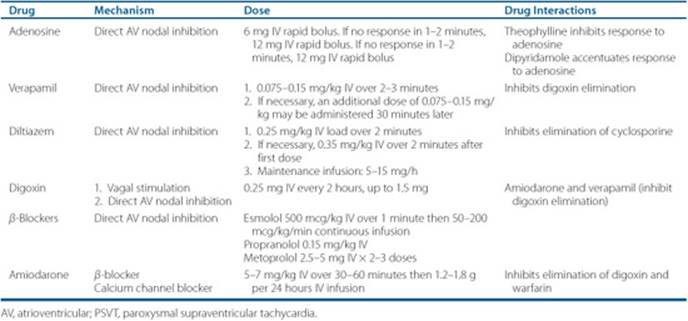
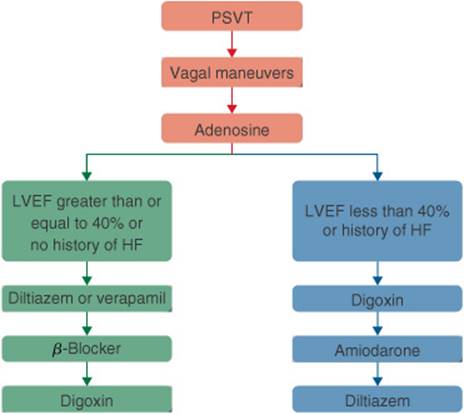
FIGURE 9–9. Decision algorithm for termination of PSVT. (HF, heart failure; LVEF, left ventricular ejection fraction; PSVT, paroxysmal supraventricular tachycardia.)
Outcome Evaluation
• Monitor patients for termination of PSVT and restoration of normal sinus rhythm.
• Monitor patients for adverse effects of adenosine or any other antiarrhythmic agents administered (Table 9–7).
VENTRICULAR ARRHYTHMIAS
Ventricular Premature Depolarizations
VPDs are ectopic electrical impulses originating in ventricular tissue, resulting in wide, misshapen, abnormal QRS complexes. VPDs are also commonly known by other terms, including premature ventricular contractions (PVCs), ventricular premature beats (VPBs), and ventricular premature contractions (VPCs).
Epidemiology, Etiology, and Pathophysiology
VPDs occur with variable frequency, depending on underlying comorbid conditions. The prevalence of complex or frequent VPDs is approximately 33% and 12% in men with and without CAD, respectively36; in women, the prevalence of complex or frequent VPDs is 26% and 12% in those with and without CAD, respectively.37 VPDs occur more commonly in patients with ischemic heart disease, a history of myocardial infarction, and heart failure due to LV dysfunction. They may also occur as a result of hypoxia, anemia, and following cardiac surgery.
VPDs occur as a result of abnormal ventricular automaticity, due to enhanced activity of the sympathetic nervous system and altered electrophysiologic characteristics of the heart during myocardial ischemia and following myocardial infarction.
In patients with underlying CAD or a history of myocardial infarction, the presence of complex or frequent VPDs is associated with an increased risk of mortality due to sudden cardiac death.38
Clinical Presentation and Diagnosis of VPD
• VPDs are usually categorized as simple or complex: simple VPDs are those that occur as infrequent, isolated single abnormal beats; complex VPDs are those that occur more frequently and/or in specific patterns
• Two consecutive VPDs are referred to as a couplet.37 The term bigeminy refers to VPDs occurring with every other beat; trigeminy means VPDs occurring with every third beat; quadrigeminy means VPDs occurring every fourth beat.37 VPDs occurring at a rate of more than 10 per hour or 6 or more per minute are defined as frequent37
Symptoms
• The majority of patients who experience simple or complex VPDs are asymptomatic. Occasionally, patients with complex or frequent VPDs may experience symptoms of palpitations, light-headedness, fatigue, near-syncope or syncope
Treatment
Desired Outcomes
The desired outcomes for treatment are to alleviate patient symptoms.
Pharmacologic Therapy
Asymptomatic VPDs should not be treated with antiarrhythmic drug therapy. Based on the knowledge that complex or frequent VPDs increase the risk of sudden cardiac death in patients with a history of myocardial infarction, the Cardiac Arrhythmia Suppression Trials (CAST I and II)39,40 tested the hypothesis that suppression of asymptomatic VPDs with the drugs flecainide, encainide, or moricizine in patients with a relatively recent history of myocardial infarction would lead to a reduction in the incidence of sudden cardiac death. However, the results of the trial showed that not only did these antiarrhythmic agents not reduce the risk of sudden cardiac death, there was a significant increase in the risk of death in patients who received therapy with encainide or flecainide compared to those that received placebo.39 During the continuation of the study with moricizine, a trend was found toward an increase in the incidence of death in the patients who received this antiarrhythmic drug as well.40 A subsequent meta-analysis of studies of other Vaughan Williams class I agents, including quinidine, procainamide, and disopyramide, found that the patients with complex VPDs who received these drugs following myocardial infarction were also at increased risk of death.41 Therefore, all available evidence shows that patients with complex VPDs following myocardial infarction do not benefit from therapy with antiarrhythmic agents and that many of these drugs increase the risk of death. Therefore, asymptomatic VPDs should not be treated.
Patients with symptomatic VPDs should be treated with β-blockers, as the majority of patients with symptomatic VPDs have underlying CAD. β-Blockers have been shown to reduce mortality in this population and have been shown to be effective for VPD suppression.42
Outcome Evaluation
• Monitor patients for relief of symptoms.
• Monitor for adverse effects of β-blockers—heart rate, blood pressure, fatigue, masking of symptoms of hypoglycemia and/or glucose intolerance (in patients with diabetes), wheezing or shortness of breath (in patients with asthma or chronic obstructive pulmonary disease).
Ventricular Tachycardia
Ventricular tachycardia (VT) is a series of three or more consecutive VPDs at a rate greater than 100 bpm. VT is defined as nonsustained if it lasts less than 30 seconds and terminates spontaneously; sustained VT lasts greater than 30 seconds and does not terminate spontaneously but rather requires therapeutic intervention for termination.
Epidemiology, Etiology, and Pathophysiology
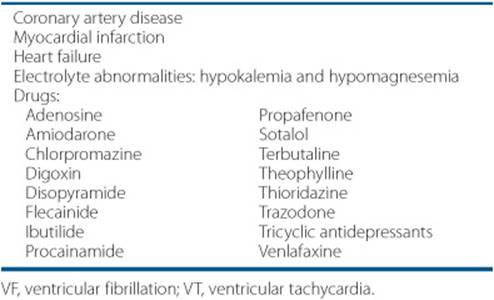
Etiologies of VT are presented in Table 9–13. The incidence of VT is variable, depending on underlying comorbidities. Up to 20% of patients who experience acute myocardial infarction experience ventricular arrhythmias.43Approximately 2% to 4% of patients with myocardial infarction develop VT during the period of hospitalization.42 Nonsustained VT occurs in 34% to 79% of patients with heart failure.44 Other etiologies of VT include electrolyte abnormalities such as hypokalemia, hypoxia, and some drugs (Table 9–13).
Ventricular tachycardia is usually initiated by a precisely timed VPD, occurring during the relative refractory period, which provokes re-entry within ventricular tissue.
Sustained VT requires immediate intervention, because if untreated, the rhythm may cause sudden cardiac death via hemodynamic instability and the absence of a pulse (pulseless VT) or via degeneration of VT into VF.
Treatment
Desired Outcomes
The desired outcomes for treatment are to terminate the arrhythmia and restore sinus rhythm, and to prevent sudden cardiac death.
Pharmacologic Therapy
Hemodynamically unstable VT should be terminated immediately using synchronized DCC beginning with 100 J and increasing subsequent shocks to 200 J, 300 J, and 360 J.14 In the event that VT is present but the patient has no pulse (and therefore no blood pressure), asynchronous defibrillation should be performed, starting with 200 J and increasing to 300 and 360 J.14
Clinical Presentation and Diagnosis of VT
Symptoms
• As with other tachyarrhythmias, symptoms associated with VT are dependent primarily on heart rate and include palpitations, dizziness, light-headedness, shortness of breath, chest pain (if underlying CAD is present), near-syncope, and syncope
• Patients with nonsustained VT may be asymptomatic if the duration of the arrhythmia is sufficiently short. However, if the rate is sufficiently rapid, patients with nonsustained VT may experience symptoms
• Patients with sustained VT are usually symptomatic, provided that the rate is fast enough to provoke symptoms. Patients with rapid sustained VT may be hemodynamically unstable
• In some patients, sustained VT results in the absence of a pulse or may deteriorate to ventricular fibrillation, resulting in the syndrome of sudden cardiac death
Diagnosis
• Diagnosis of VT requires ECG confirmation of the arrhythmia
• VT is characterized by wide, misshapen QRS complexes, with the rate varying from 140 to 280 bpm
• In the majority of patients with VT, the shape and appearance of the QRS complexes are consistent and similar, and referred to as monomorphic VT. However, some patients experience polymorphic VT, in which the shape and appearance of the QRS complexes vary
Table 9–13 Etiologies of VT and VF
Drugs used for the termination of hemodynamically stable VT are presented in Table 9–14. IV drug administration is required. A decision algorithm for management of hemodynamically stable VT is presented in Figure 9–10. The initial choice of drug is dependent on whether the patient’s VT is occurring in the setting of acute myocardial ischemia or infarction; if this is the case, the initial drug of choice is lidocaine, followed by procainamide and amiodarone.45 However, if the patient’s VT is not associated with myocardial ischemia or infarction, there is evidence that procainamide may be more effective for termination of VT;46 therefore, procainamide is the drug of choice in this situation.45
Nonpharmacologic Therapy: Prevention of Sudden Cardiac Death
 In patients who have experienced VT and are at risk for sudden cardiac death, implantation of an implantable cardioverter-defibrillator (ICD) is the treatment of choice.47 An ICD is a device that provides internal electrical cardioversion of VT or defibrillation of VF; the ICD does not prevent the patient from developing the arrhythmia, but it reduces the risk that the patient will die of sudden cardiac death as a result of the arrhythmia. Whereas early versions of ICDs required a thoracotomy for implantation, these devices now may be implanted transvenously, similarly to pacemakers, markedly reducing the incidence of complications.
ICDs have been found to be significantly more effective than antiarrhythmic agents such as amiodarone or sotalol for reducing the risk of sudden cardiac death48,49; therefore, ICDs are preferred therapy.47However, many patients with ICDs receive concurrent antiarrhythmic drug therapy to reduce the frequency with which patients experience the discomfort of shocks and to prolong battery life of the devices. Combined pharmacotherapy with amiodarone and a β-blocker is more effective than monotherapy with sotalol or β-blockers for reduction in the frequency of ICD shocks.50
Outcome Evaluation
• Monitor patients for termination of VT and restoration of normal sinus rhythm.
• Monitor patients for adverse effects of antiarrhythmic drugs administered (Table 9–7).
Ventricular Fibrillation
VF is irregular, disorganized, chaotic electrical activity in the ventricles resulting in absence of ventricular depolarizations, and, consequently, lack of pulse, cardiac output, and blood pressure.
Epidemiology and Etiology
Approximately 400,000 people die of sudden cardiac death annually in the United States. While some of these deaths occur as a result of asystole, the majority occur as a result of VT that degenerates into VF or primary VF. Etiologies of VF are presented in Table 9–13 and are similar to those of VT.
Table 9–14 Drugs for Termination of VT

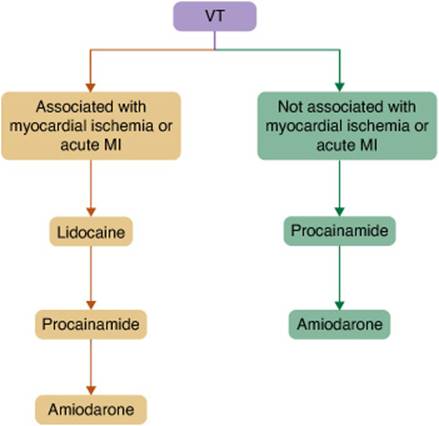
FIGURE 9–10. Decision algorithm for termination of hemodynamically stable ventricular tachycardia. (MI, myocardial infarction; VT, ventricular tachycardia.)
Treatment
Desired Outcomes
The desired outcomes for treatment are to: (a) terminate VF, (b) achieve return of spontaneous circulation, and (c) achieve patient survival to hospital admission (in those with out-of-hospital cardiac arrest) and to hospital discharge.
Pharmacologic and Nonpharmacologic Therapy
VF is by definition hemodynamically unstable, due to the absence of a pulse and blood pressure. Initial management includes provision of basic life support, including calling for help and initiation of cardiopulmonary resuscitation (CPR).51 Oxygen should be administered as soon as it is available. Most importantly, defibrillation should be performed as soon as possible. It is critically important to understand that the only means of successfully terminating VF and restoring sinus rhythm is electrical defibrillation. Defibrillation should be attempted using 200 J, after which CPR should be resumed immediately while the defibrillator charges; if the first shock was unsuccessful, subsequent defibrillation shocks should be 360 J.51
Clinical Presentation and Diagnosis of VF
Symptoms
• VF results in immediate loss of pulse and blood pressure. Patients who are in the standing position at the onset of VF suddenly and immediately collapse to the ground
Diagnosis
• The absence of a pulse does not guarantee VF, as the pulse may also be absent in patients with asystole, VT, or pulseless electrical activity
• Confirmation of the diagnosis with an ECG is necessary in order to determine appropriate treatment. ECG reveals no organized, recognizable QRS complexes. If treatment is not initiated within a few minutes, death will occur, or at best, resuscitation of the patient with permanent anoxic brain injury
If VF persists following one or two defibrillation shocks, drug therapy may be administered.  The purpose of drug administration for treatment of VF is to facilitate successful defibrillation. Drug therapy alone will not result in termination of VF. Drugs that are used for facilitation of defibrillation in patients with VF are listed in Table 9–15. Drug administration should occur during CPR, before or after delivery of a defibrillation shock. The vasopressor agents epinephrine or vasopressin are administered initially because it has been shown that a critical factor in successful defibrillation is maintenance of coronary perfusion pressure, which is achieved via the vasoconstricting effects of these drugs. A decision algorithm for the treatment of VF is presented in Figure 9–11. Epinephrine and vasopressin are equally effective for facilitation of defibrillation leading to survival to hospital admission in patients with out-of-hospital cardiac arrest due to VF. Amiodarone is more effective than lidocaine for facilitation of defibrillation leading to survival to hospital admission in patients with VF,52 which is the reason that amiodarone administration is recommended earlier than lidocaine administration in the decision algorithm.51 Note that the amiodarone doses recommended for administration during a resuscitation attempt for VF (Table 9–15) are different than those recommended for administration for termination of VT (Table 9–14).
Table 9–15 Drugs for Facilitation of Defibrillation in Patients with VF
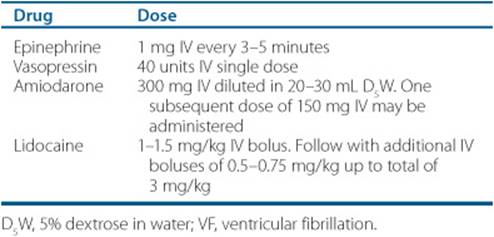
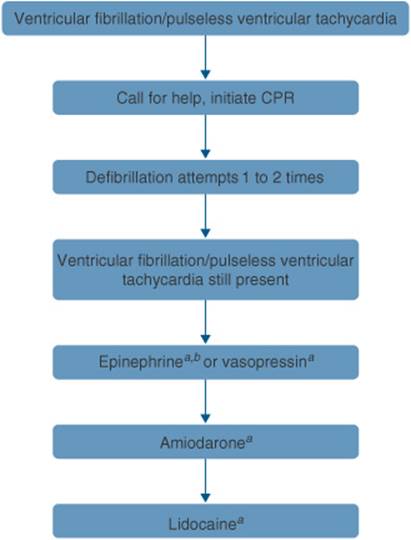
FIGURE 9–11. Decision algorithm for resuscitation of VF or pulseless ventricular tachycardia. (CPR, cardiopulmonary resuscitation.) aDefibrillation attempt should be made after every dose of drug. bEpinephrine should continue to be administered every 3 to 5 minutes throughout the remainder of the resuscitation.
Outcome Evaluation
• Monitor the patient for return of pulse and blood pressure, and for termination of VF and restoration of normal sinus rhythm.
• After successful resuscitation, monitor the patient for adverse effects of drugs administered (Table 9–7).
Torsades de Pointes
Torsades de pointes is a specific polymorphic VT that is associated with prolongation of the QT interval in the sinus beats that precede the arrhythmia.13
Epidemiology and Etiology
The incidence of torsades de pointes in the population at large is unknown. The incidence of torsades de pointes associated with specific drugs ranges from less than 1% to as high as 8% to 10%, depending on dose and plasma concentration of the drug and the presence of other risk factors for the arrhythmia.
Torsades de pointes maybe inherited or acquired. Patients with specific genetic mutations may have an inherited long QT syndrome, in which the QT interval is prolonged, and these patients are at risk for torsades de pointes. Acquired torsades de pointes may be caused by numerous drugs (Table 9–16); the list of drugs that are known to cause torsades de pointes continues to expand.
Pathophysiology
Torsades de pointes is caused by circumstances, often drugs, that lead to prolongation in the repolarization phase of the ventricular action potential (Fig. 9–2) manifested on the ECG by prolongation of the QT interval. Prolongation of ventricular repolarization occurs via inhibition of efflux of potassium through potassium channels; therefore, drugs that inhibit conductance through potassium channels may cause QT interval prolongation and torsades de pointes.
Table 9–16 Drugs That Have Been Reported to Cause Torsades de Pointes
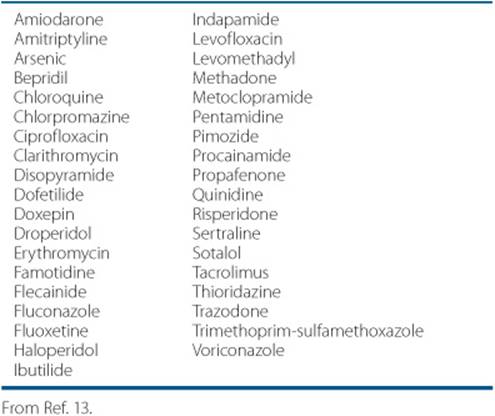
Clinical Presentation and Diagnosis of Torsades de Pointes
Symptoms
• As with other tachyarrhythmias, symptoms associated with torsades de pointes are dependent primarily on heart rate and arrhythmia duration, and include palpitations, dizziness, light-headedness, shortness of breath, chest pain (if underlying CAD is present), near-syncope, and syncope
• Torsades de pointes may be hemodynamically unstable if the rate is sufficiently rapid
• Like sustained monomorphic VT, torsades de pointes may result in the absence of a pulse, or may rapidly degenerate into VF, resulting in the syndrome of sudden cardiac death
Diagnosis
• Diagnosis of torsades de pointes requires examination of the arrhythmia on ECG
• Torsades de pointes, or “twisting of the points,” appears on ECG as apparent twisting of the wide QRS complexes around the isoelectric baseline
• The arrhythmia is associated with heart rates from 140 to 280 bpm
• Characteristic feature: a “long-short” initiating sequence that occurs as a result of a ventricular premature beat followed by a compensatory pause which is followed by the first beat of the torsades de pointes
• Episodes of torsades de pointes may self-terminate, with frequent recurrence
 Prolongation of ventricular repolarization likely promotes the development of early ventricular afterdepolarizations during the relative refractory period, which may provoke re-entry leading to torsades de pointes.
Drug-induced torsades de pointes rarely occurs in patients without specific risk factors for the arrhythmia (Table 9–17). In most cases, administration of a drug known to cause torsades de pointes is unlikely to cause the arrhythmia; however, the likelihood of the arrhythmia increases markedly in patients with concomitant risk factors.
The onset of torsades de pointes associated with oral drug therapy is somewhat variable and in some cases may be delayed; often, a patient can be taking a drug known to cause torsades de pointes for months or longer without problem until another risk factor for the arrhythmia becomes present, which then may trigger the arrhythmia.
Table 9–17 Risk Factors for Drug-Induced Torsades de Pointes
|
QTc interval greater than 500 milliseconds |
|
Increase in QTc interval by more than 60 milliseconds compared |
|
with the pretreatment value Female sex |
|
Age greater than 65 years Heart failure |
|
Electrolyte abnormalities: hypokalemia and hypomagnesemia Bradycardia Elevated plasma concentrations of QT interval-prolonging drugs |
|
due to drug interactions or absence of dose adjustment for |
|
organ dysfunction Rapid IV infusion of torsades-inducing drugs Concomitant administration of more than one agent known to |
|
cause QT interval prolongation/torsades de pointes Possible genetic predisposition Previous history of drug-induced torsades de pointes |
QTc, corrected QT interval.
From Ref. 13.
In some patients, torsades de pointes may be of short duration and may terminate spontaneously. However, torsades de pointes may not terminate on its own, and if left untreated, may degenerate into VF and result in sudden cardiac death.13 Several drugs, including terfenadine, astemizole, and cisapride, have been withdrawn from the U.S. market as a result of causing deaths due to torsades de pointes.
Treatment
Desired Outcomes
The desired outcomes for treatment include: (a) prevention of torsades de pointes, (b) termination of torsades de pointes, (c) prevention of recurrence, and (d) prevention of sudden cardiac death.
Pharmacologicand Nonpharmacologic Therapy
In patients with risk factors for torsades de pointes, drugs with the potential to cause QT interval prolongation and torsades de pointes should be avoided or used with extreme caution, and diligent QT interval monitoring should be performed.
Management of drug-induced torsades de pointes includes discontinuation of the potentially causative agent. Patients with hemodynamically unstable torsades de pointes should undergo immediate synchronized DCC. In patients with hemodynamically stable torsades de pointes, electrolyte abnormalities such as hypokalemia and hypomagnesemia should be corrected. Hemodynamically stable torsades de pointes is often treated with IV magnesium, irrespective of whether the patient is hypomagnesemic; magnesium has been shown to terminate torsades de pointes in normomagnesemic patients. Magnesium may be administered IV in doses of 1 to 2 g, diluted in 50 to 100 mL 5% dextrose in water (D5W), administered over 5 to 10 minutes; doses maybe repeated to a total of 12 g.
Alternatively, a continuous magnesium infusion may be initiated after the first bolus, at a rate of 0.5 to 1 g/h. Alternative treatments include: transvenous insertion of a temporary pacemaker for overdrive pacing, which shortens the QT interval and may terminate torsades de pointes and reduce the risk of recurrence; IV isoproterenol 2 to 10 mcg/min, to increase the heart rate and shorten the QT interval; IV lidocaine, which may shorten the duration of ventricular repolarization; or IV phenytoin, which may also shorten the duration of ventricular repolarization, administered at a dose of 10 to 15 mg/kg infused at a rate of 25 to 50 mg/min.
Patient Care and Monitoring
1. Perform a thorough medication history to determine whether the patient is receiving any prescription or nonprescription drugs that may cause or contribute to the development of an arrhythmia.
2. Evaluate the patient for the presence of drug-induced diseases, drug allergies, and drug interactions.
3. Determine and monitor the patient’s serum electrolyte concentrations to determine the presence or absence of hypokalemia, hyperkalemia, hypomagnesemia, or hypermagnesemia.
4. Consider the patient’s heart rate, blood pressure, and symptoms to determine whether he or she is hemodynamically stable or unstable.
5. Monitor the patient’s 12-lead ECG or single rhythm strips to determine if an arrhythmia is present and to identify the specific arrhythmia, and evaluate and monitor the patient’s symptoms.
6. Develop drug therapy treatment plans for management of the specific arrhythmia that the patient is experiencing: sinus bradycardia, AV nodal blockade, AF, PSVT, VPDs, VT (including torsades de pointes), or VF.
7. Develop specific drug therapy monitoring plans for the treatment plan implemented. Monitoring includes assessment of symptoms, ECG, adverse effects of drugs, and potential drug interactions.
8. In those receiving warfarin for AF, determine whether the patient’s INR is therapeutic.
9. Provide information regarding safe and effective warfarin therapy:
• Notify appropriate clinicians in the event of severe bruising, blood in urine or stool, or frequent nosebleeds.
• Avoid radical changes in diet.
• Avoid alcohol.
• Do not take nonprescription medications or herbal/alternative/complementary medicines without notifying your physician, pharmacist, and/or health care team members.
10. Stress the importance of adherence to the therapeutic regimen.
11. Provide patient education regarding disease state and drug therapy.
Outcome Evaluation
• Monitor vital signs (heart rate and blood pressure).
• Monitor the ECG to determine the QTc interval (maintain less than 450 milliseconds) and for the presence of torsades de pointes.
• Monitor serum potassium and magnesium concentrations.
• Monitor for symptoms of tachycardia.
Abbreviations Introduced in This Chapter
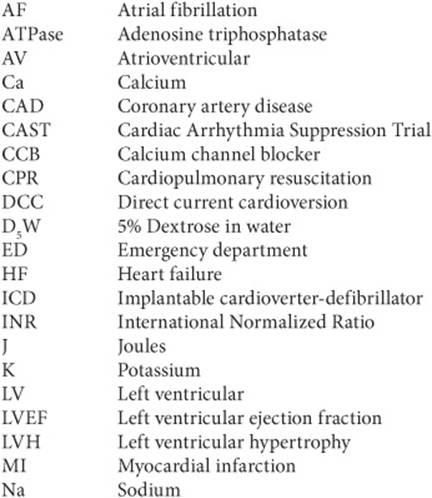
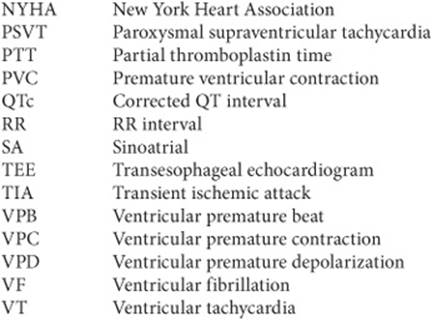
 Self-assessment questions and answers are available at http://www.mhpharmacotherapy.com/pp.html.
REFERENCES
1. Cummins RO, ed. ACLS Provider Manual. Dallas: American Heart Association, 2006.
2. Paulev PE. Textbook in Medical Physiology and Pathophysiology. Essentials and Clinical Problems. Copenhagen: Copenhagen Medical Publishers, 2000, http://www.mfi.ku.dk/ppaulev/chapter11/Chapter%2011.htm.
3. Bazett HC. An analysis of time relationships of the electrocardiogram. Heart 1920;7:353-370.
4. Fogoros RN. Electrophysiologic Testing, 4th ed. Maiden, MA: Blackwell, 2006:17.
5. Vaughan Williams EM. Classification of anti-arrhythmic drugs. In: Sandoe E, Flensted-Jansen E, Olesen KH, eds. Symposium on Cardiac Arrhythmias. Sodertalje, Sweden: AB Astra, 1970:449–472.
6. Singh BN, Vaughan Williams EM. A third class of anti-arrhythmic action. Effects on atrial and ventricular intracellular potentials, and other pharmacological actions on cardiac muscle, of MJ 1999 and AH 3474. Br J Pharmacol 1970;39:675–687.
7. Singh BN, Vaughan Williams EM. A fourth class of anti-arrhythmic action? Effect of verapamil on ouabain toxicity, on atrial and ventricular intracellular potentials, and on other features of cardiac function. Cardiovasc Res 1972;6:109–119.
8. Snyders J, Knoth KM, Roberds SL, Tamkun MM. Time-, voltage-, and state-dependent block by quinidine of a cloned human cardiac potassium channel. Mol Pharmacol 1992;41:322–330.
9. Coraboeuf E, Deroubaix E, Escande D, Coulombe A. Comparative effects of three class I antiarrhythmic drugs on plateau and pacemaker currents of sheep cardiac Purkinje fibres. Cardiovasc Res 1988;22: 375–384.
10. Komeichi K, Tohse N, Nakaya H, et al. Effects of N-acetylprocainamide and sotalol on ion currents in isolated guinea-pig ventricular myocytes. Eur J Pharmacol 1990;187:313–322.
11. Task Force of the Working Group on Arrhythmias of the European Society of Cardiology. The Sicilian gambit. A new approach to the classification of antiarrhythmic drugs based on their actions on arrhythmogenic mechanisms. Circulation 1991;84:1831–1851.
12. Mangrum JM, DiMarco JP. The evaluation and management of bradycardia. N Engl J Med 2000;342: 703–709.
13. Tisdale JE. Arrhythmias. In: Tisdale JE, Miller DM. Drug-Induced Diseases. Prevention, Detection, and Management. Bethesda, MD: American Society of Health-Systems Pharmacists, 2005:289–327.
14. 2005 American Heart Association Guidelines for Cardiopulmonary Resuscitation and Emergency Cardiac Care, Part 7.3. Management of symptomatic bradycardia and tachycardia. Circulation 2005;112: Iv-67-IV-77.
15. Kaushik V, Leon AR, Forrester JS, Trohman RG. Bradyarrhythmias, temporary and permanent pacing. Crit Care Med 2000;28(Suppl):N121-N128.
16. Kannel WB, Wolf PA, Benjamin EJ, Levy D. Prevalence, incidence, prognosis, and predisposing conditions for atrial fibrillation: Population-based estimates. Am J Cardiol 1998;82:2N-9N.
17. Torp-Pedersen C, Moller M, Bloch-Thomsen PE, et al., for the Danish Investigations of Arrhythmia and Mortality on Dofetilide Study Group. Dofetilide in patients with congestive heart failure and left ventricular dysfunction. Danish Investigations of Arrhythmia and Mortality on Dofetilide Study Group. N Engl J Med 1999;341: 857–865.
18. Maisel WH, Stevenson LW. Atrial fibrillation heart failure: Epidemiology, pathophysiology, and rationale for therapy. Am J Cardiol 2003;91:2D-8D.
19. Rich EC, Siebold C, Campion B. Alcohol-related acute atrial fibrillation. A case-control study and review of 40 patients. Arch Intern Med 1985;145:830–833.
20. Black DM, Delmas PD, Eastell R, et al. Once-yearly zoledronic acid for treatment of postmenopausal osteoporosis. N Engl J Med 2007;356:1809–1822.
21. Heckbert SR, Li G, Cummings SR, et al. Use of alendronate and risk of incident atrial fibrillation in women. Arch Intern Med 2008;168: 826–831.
22. Haissaguerre M, Jais P, Shah DC, et al. Spontaneous initiation of atrial fibrillation by ectopic beats originating in the pulmonary veins. N Engl J Med 1998;339(10): 659–666.
23. Cohen M, Naccarelli GV. Pathophysiology and disease progression of atrial fibrillation: Importance of achieving and maintaining sinus rhythm. J Cardiovasc Electrophysiol 2008;19:885–890.
24. Wijffels MC, Kirchhof CJ, Dorland R, Allessie MA. Atrial fibrillation begets atrial fibrillation. A study in awake chronically instrumented goats. Circulation 1995;92:1954–1968.
25. Fuster V, Rydén LE, Cannom DS, et al. ACC/AH A/ESC 2006 guidelines for the management of patients with atrial fibrillation—Executive summary: A report of the American College of Cardiology/American Heart Association Task Force on Practice Guidelines and the European Society of Cardiology Committee for Practice Guidelines (Writing Committee to Revise the 2001 Guidelines for the Management of Patients With Atrial Fibrillation). Circulation 2006;114:700–752.
26. Krahn AD, Manfreda J, Tate RB, et al. The natural history of atrial fibrillation: Incidence, risk factors, and prognosis in the Manitoba Follow-Up Study. Am J Med 1995;98:476–484.
27. Elkayam U, Shotan A, Mehra A, Ostrzega E. Calcium channel blockers in heart failure. J Am Coll Cardiol 1993;22(4 Suppl A):139A-144A.
28. Singer DE, Albers GW, Dalen JE, et al. Antithrombotic therapy in atrial fibrillation: American College of Chest Physicians Evidence-Based Practice Guidelines (8th ed). Chest 2008;133:546–592.
29. The Atrial Fibrillation Follow-up Investigation of Rhythm Management (AFFIRM) Investigators. A comparison of rate control and rhythm control in patients with atrial fibrillation. N Engl J Med 2002;347: 1825–1833.
30. Van Gelder IC, Hagens VE, Bosker HA, et al., for the Rate Control versus Electrical Cardioversion for Persistent Atrial Fibrillation Study Group. A comparison of rate control and rhythm control in patients with recurrent persistent atrial fibrillation. N Engl J Med 2002;347: 1834–1840.
31. Carlsson J, Miketic S, Windeler J, et al. Randomized trial of rate-control versus rhythm-control in persistent atrial fibrillation: The Strategies of Treatment of Atrial Fibrillation (STAF) study. J Am Coll Cardiol 2003;41:1690–1696.
32. Opolski G, Torbicki A, Kosior D, et al. Rhythm control versus rate control in patients with persistent atrial fibrillation. Results of the HOT CAFE Polish Study. Kardiol Pol 2003;59:1–16.
33. Gage BF, Waterman AD, Shannon W, Boechler M, Rich MW, Radford MJ. Validation of clinical classification schemes for predicting stroke: Results from the National Registry of Atrial Fibrillation. JAMA 2001;285:2864–2870.
34. Ganz LI, Friedman PL. Supraventricular tachycardia. N Engl J Med 1995;332:162–173.
35. Blomstrom-Lundqvist C, Scheinman MM, Aliot EM, et al., for the Writing Committee to Develop Guidelines for the Management of Patients with Supraventricular Arrhythmias. ACC/AHA/ESC guidelines for the management of patients with supraventricular arrhythmias—Executive summary: A report of the American College of Cardiology/American Heart Association Task Force on practice guidelines and the European Society of Cardiology Committee for Practice Guidelines (Writing Committee to Develop Guidelines for the Management of Patients with Supraventricular Arrhythmias). J Am Coll Cardiol 2003;42:1493–1531.
36. Bikkina M,LarsonMG, Levy D. Prognostic implications of asymptomatic ventricular arrhythmias: The Framingham Heart Study. Am J Cardiol 1994;74:232–235.
37. Lown B, Wolf M. Approaches to sudden death from coronary heart disease. Circulation 1971;44:130–144.
38. Ruberman W, Weinblatt E, Goldberg JD, et al. Ventricular premature beats and mortality after myocardial infarction. N Engl J Med 1977;297:750–757.
39. Echt DS, Liebson PR, Mitchell LB, et al. Mortality and morbidity in patients receiving encainide, flecainide, or placebo. The Cardiac Arrhythmia Suppression Trial. N Engl J Med 1991;324:781–788.
40. The Cardiac Arrhythmia Suppression Trial II Investigators. Effect of the antiarrhythmic agent moricizine on survival after myocardial infarction. N Engl J Med 1992;327:227–233.
41. Teo KK, Yusuf S, Furberg CD. Effects of prophylactic antiarrhythmic drug therapy in acute myocardial infarction. An overview of results from randomized controlled trials. JAMA 1993;270:1589–1595.
42. Chandraratna PA. Comparison of acebutolol with propranolol, quinidine, and placebo: Results of three multicenter arrhythmia trials. Am Heart J 1985;109:1198–1204.
43. Al-Khatib SM, Stebbins AL, Califf RM, et al. Sustained ventricular arrhythmias and mortality among patients with acute myocardial infarction: Results from the GUSTO-III trial. Am Heart J 2003;145:515–521.
44. Stevenson WG, Ellison KE, Sweeney MO, et al. Management of arrhythmias in heart failure. Cardiol Rev 2002;10:8–14.
45. Zipes DP, Camm AJ, Borggrefe M, et al. ACC/AHA/ESC 2006 Guidelines for management of patients with ventricular arrhythmias and the prevention of sudden cardiac death: A report of the American College of Cardiology/American Heart Association Task Force and the European Society of Cardiology Committee for Practice Guidelines (Writing Committee to Develop Guidelines for Management of Patients With Ventricular Arrhythmias and the Prevention of Sudden Cardiac Death): Developed in collaboration with the European Heart Rhythm Association and the Heart Rhythm Society. Circulation 2006;114:e385-e484.
46. Gorgels AP, van den Dool A, Hofs A, et al. Comparison of procainamide and lidocaine in terminating sustained monomorphic ventricular tachycardia. Am J Cardiol 1996;78:43–46.
47. Epstein AE, DiMarco JP, Ellenbogen KA, et al. ACC/AHA/HRS 2008 Guidelines for Device-Based Therapy of Cardiac Rhythm Abnormalities: Executive summary: A report of the American College of Cardiology/American Heart Association Task Force on Practice Guidelines (Writing Committee to Revise the ACC/AHA/NASPE 2002 Guideline Update for Implantation of Cardiac Pacemakers and Antiarrhythmia Devices). Circulation 2008;117:2820–2840.
48. The Antiarrhythmics versus Implantable Defibrillators (AVID) Investigators. A comparison of antiarrhythmic-drug therapy with implantable defibrillators in patients resuscitated from near-fatal ventricular arrhythmias. N Engl J Med 1997;337:1576–1583.
49. Connolly SJ, Gent M, Roberts RS, et al. Canadian implantable defibrillator study (CIDS): A randomized trial of the implantable cardioverter defibrillator against amiodarone. Circulation 2000;101:1297–1302.
50. Connolly SJ, Dorian P, Roberts RS, et al. Comparison of β-blockers, amiodarone plus β-blockers, or sotalol for prevention of shocks from implantable cardioverter-defibrillators. The OPTIC study: A randomized trial. JAMA 2006;295:165–171.
51. 2005 American Heart Association Guidelines for Cardiopulmonary Resuscitation and Emergency Cardiac Care, Part 7.2. Management of cardiac arrest. Circulation 2005;112:IV-57-IV-66.
52. Dorian P, Cass D, Schwartz B, et al. Amiodarone as compared with lidocaine for shock-resistant ventricular fibrillation. N Engl J Med 2002;346:884–890.