
Julia M. Koehler and Kathleen B. Haynes
LEARNING OBJECTIVES
Upon completion of the chapter, the reader will be able to:
1. Discuss the physiology of the normal female reproductive system.
2. Compare the efficacy of oral contraceptives with that of other methods of contraception.
3. State the mechanism of action of hormonal contraceptives.
4. Discuss the risks associated with the use of contraceptives, and state absolute and relative contraindications to their use.
5. List side effects associated with the use of various contraceptives, and recommend strategies for minimizing or eliminating such side effects.
6. Describe advantages and disadvantages of various contraceptives, including both oral and nonoral formulations.
7. Cite important drug interactions that may occur with oral contraceptives.
8. Provide appropriate patient education regarding the important differences between various barrier methods of contraception.
9. Discuss how emergency contraception (EC) may be employed to prevent accidental pregnancy.
10. Provide appropriate patient education regarding the use of oral contraceptives, and recommend and discuss the use of nonoral contraceptives when appropriate.
KEY CONCEPTS
 Heavy smokers (greater than or equal to 15 cigarettes per day) over the age of 35, as well as patients with a history of thromboembolic disease, stroke, coronary artery disease, any estrogen-dependent neoplasm, or undiagnosed abnormal uterine bleeding, should not take estrogen-containing contraceptives.
 Side effects associated with the use of combination oral contraceptives may be minimized by appropriately adjusting either the total estrogen or progestin content.
 Antibiotic administration during contraceptive use may decrease the efficacy of many hormonal contraceptives.
 Nonoral forms of contraceptives, such as the transdermal patch and the transvaginal ring, avoid the need for daily administration and, as such, may enhance patient convenience and compliance.
 Oral, transdermal, and transvaginal contraceptives, as well as intrauterine devices (IUDs) and most barrier contraceptives, do not protect against sexually transmitted diseases (STDs).
 When a contraceptive dose is missed, the risk of accidental pregnancy may be increased. Depending on how many doses were missed, the contraceptive formulation being used, and the phase of the cycle during which doses were missed, counseling regarding the use of additional methods of contraception may be warranted.
Historically, the 1950s represented an important time in the control of human fertility. It was during that decade that the first combination oral contraceptives were developed. Shortly after the discovery that the exogenous administration of hormones such as progesterone successfully blocked ovulation, the use of hormonal steroids quickly became the most popular method of contraception worldwide. Specifically, combination oral contraceptives represent the most commonly used reversible form of contraception today, and it is estimated that nearly 100 million women worldwide take oral contraceptives.1Further, in the United States, it is estimated that at some time during their lives, more than 80% of women born since 1945 have used oral contraceptives.1,2 Since the introduction of oral contraceptives, many newer forms of contraceptives have been developed and are available for use in the United States. New hormone delivery systems, such as transdermal systems, transvaginal systems, and intrauterine devices (IUDs), offer women effective and more convenient alternatives to oral contraceptives.
EPIDEMIOLOGY
According to the National Survey of Family Growth, approximately 6.3 million pregnancies occur annually in the United States.3 Of these pregnancies, it is estimated that nearly 3.15 million are unintended.3,4Contributing to the risk of unintended pregnancy is the fact that approximately 7.5% of all women who are at risk of becoming pregnant do not use any form of contraception.3,4 In addition, many women who do use contraceptives use their chosen method of contraception imperfectly, and this also increases the risk of undesired pregnancy. Given these statistics, the provision of appropriate and adequate instruction to patients regarding how to use contraceptive methods effectively is essential in order to reduce the risk of unwanted pregnancy.
Exposure to sexually transmitted diseases (STDs) is also a concern for women who are sexually active. It is estimated that 15 million people in the United States become newly infected annually with an STD.5Given that not all methods of contraception protect the user against STDs, the provision of proper patient education by health care professionals regarding this risk is absolutely essential.
PHYSIOLOGY
The female menstrual cycle is divided into four functional phases: follicular, ovulatory, luteal, and menstrual.6 The follicular phase begins the cycle, and ovulation generally occurs around day 14. The luteal phase then begins and continues until menstruation occurs.6 The menstrual cycle is regulated by a negative-feedback hormone loop between the hypothalamus, anterior pituitary gland, and ovaries.6 (Fig. 48–1).

FIGURE 48–1. Menstrual cycle events. aEstradiol: 40 pg/mL = 147 pmol/L; 250 to 400 pg/mL = 918 to 1,468 pmol/L; 125 to 250 pg/mL = 459 to 918 pmol/L. bProgesterone: 1 ng/dL = 0.032 nmol/L; 10 to 15 ng/dL = 0.32 to 0.48 nmol/L. (Adapted from Ref. 6.)
Initially, the hypothalamus releases gonadotropin-releasing hormone (GnRH), which stimulates the anterior pituitary to produce follicle-stimulating hormone (FSH) and luteinizing hormone (LH). The levels of FSH and LH released vary depending on the phase of the menstrual cycle. Just prior to ovulation, FSH and LH both are at their peak levels. The FSH helps to promote growth of the follicle in preparation for ovulation by causing granulosa cells lining the follicle to grow and produce estrogen. The LH promotes androgen production by theca cells in the follicle, promotes ovulation and oocyte maturation, and converts granulosa cells to cells that secrete progesterone after ovulation.
Conception is most likely to occur when viable sperm are present in the upper region of the reproductive tract at the time of ovulation. Fertilization occurs when a spermatozoan penetrates an ovum. Approximately 6 to 8 days after ovulation, attachment of the early embryo to the lining of the uterine cavity—implantation—occurs.
PREVENTION OF PREGNANCY: CONTRACEPTIVES AND DEVICES
Goals of Contraception/Desired Outcome
The most common goal of contraception is the prevention of pregnancy. However, some patients use contraceptive methods for other benefits, such as menstrual cycle regulation, reduction of premenstrual symptoms, or treatment of acne.
Choice of Contraceptives: Important Considerations
When helping a patient decide on a contraceptive, the most important goal is to find an option that the patient is comfortable with and that the clinician feels will be beneficial for the patient. It is imperative to explain the side effects, safety concerns, and noncontraceptive benefits of each alternative to the patient so that she may make an informed decision. Fertility goals vary for each patient. It must be determined if the goal is to postpone contraception, space out the next pregnancy, or avoid further pregnancy altogether. Also, a clinician must understand the patient’s desire to have or not have a regular bleeding pattern, because many contraceptives will affect menses.
As discussed later in this chapter, contraindications exist for various forms of contraception. Patients must be evaluated completely by a health care professional to rule out any medical contraindications to certain contraceptives. The physical examination also will allow health care professionals to determine if there are other medical concerns, such as hypertension, diabetes, or liver disease, that need to be considered when selecting an appropriate contraceptive agent. Clinicians also should review family history for potential risks with certain forms of birth control.
Sexual behavior of the female must be determined to understand the risk for STDs. Women who are not in a monogamous relationship must consider their risk of STDs as a factor in their contraceptive decision. Some barrier methods protect against STDs, but hormonal contraceptives do not prevent STDs if used alone.
Personal preference plays a large role when determining the best contraceptive option. For instance, if a woman is not interested in using a method that interrupts sexual activity, then a diaphragm would be an inappropriate choice. Preference of the sexual partner may be important as well. Certain agents such as male condoms require the male partner to play an active role in contraception.
Cost is also another related issue for patients. Insurance may not cover all forms of contraception, and patients may have to bear the entire cost for certain options.
Efficacy of Contraceptives
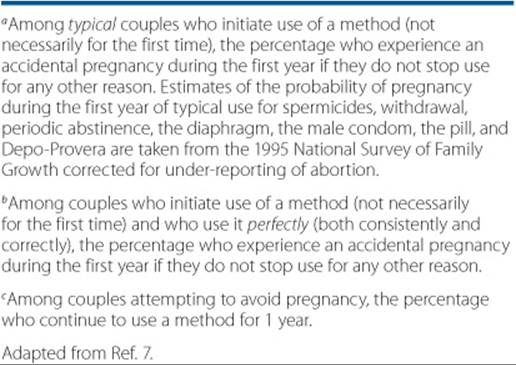
The accidental pregnancy rate for women who do not use any form of contraception is unknown. Therefore, it is difficult to determine the true efficacy of contraceptives in preventing unwanted pregnancy. Table 48–1 shows the percentage of women who experience unintended pregnancy within 1 year of contraceptive use with ongoing sexual activity.7
Oral Contraceptives (Combination)
Combination oral contraceptives contain a combination of a synthetic estrogen and one of several steroids with progestational activity. Most oral contraceptives contain one of two types of estrogen: ethinyl estradiol, which is pharmacologically active, or mestranol, which is converted by the liver to ethinyl estradiol. Many different progestins are found in the various oral contraceptives. These include norethindrone, norethindrone acetate, ethynodiol diacetate, norgestrel, levonorgestrel, desogestrel, norgestimate, and drospirenone.
The primary mechanism by which combination oral contraceptives prevent pregnancy is through inhibition of ovulation. FSH and LH regulate the production of estrogen and progesterone by the ovaries. Secretion of estrogen and progesterone by the ovaries occurs in a cyclic manner, which, in turn, determines the regular hormonal changes that occur in the uterus, vagina, and cervix associated with the menstrual cycle. Cyclic changes in the levels of estrogen and progesterone in the blood, together with FSH and LH, modulate the development of ova and the occurrence of ovulation. The estrogen component of combination oral contraceptives is most active in inhibiting FSH release.1However, at sufficiently high doses, estrogens also may cause inhibition of LH release. In low-dose combination oral contraceptives, the progestin component causes suppression of LH.1 Ovulation is prevented by suppression of the midcycle surge of both FSH and LH,1 and this suppression, which is induced by combination oral contraceptives, mimics the physiologic changes that occur during pregnancy.
Table 48–1 Unintended Pregnancy Rates

Although suppression of FSH and LH is the primary mechanism by which combination oral contraceptives prevent ovulation, there are other mechanisms by which these hormones work to prevent pregnancy. Other mechanisms include reduced penetration of the egg by sperm, reduced implantation of fertilized eggs, thickening of cervical mucus to prevent sperm penetration into the upper genital tract, and slowed tubal motility, which may delay transport of sperm.1 Thus, in addition to inhibition of ovulation, combination oral contraceptives induce changes in the cervical mucus and endometrium that make sperm transport and implantation of the embryo unlikely.1
Table 48–2 contains a partial listing of the many oral contraceptives available in the United States today.8 Although the efficacy of combination oral contraceptives was quickly demonstrated following their introduction into the market, it took longer to determine their safety and acceptability for patients. Since the mid-1960s, ethinyl estradiol has been the primary estrogen used in most combination oral contraceptives. However, the amount of ethinyl estradiol used in combination oral contraceptives has decreased progressively since that time, and most pills now contain 35 mcg or less of ethinyl estradiol. In addition, to reduce side effects and improve tolerability associated with oral contraceptive use, new progestins and different routes of administration have been explored. In an attempt to minimize the undesirable androgenic side effects associated with the progestins of combination oral contraceptives, the synthetic progestins were modified to create “third generation” progestins (e.g., desogestrel and norgestimate). These synthetic progestins are extremely potent in their ability to inhibit ovulation and prevent pregnancy.
Combination oral contraceptives are available in monophasic, biphasic, and triphasic preparations. Monophasic preparations contain fixed doses of estrogen and progestin in each active pill. Although all three preparations contain both estrogens and progestins, biphasic and triphasic preparations differ from monophasic preparations in that they contain varying proportions of one or both hormones during the pill cycle. These preparations were introduced to reduce a patient’s cumulative exposure to progestins, as well as to mimic more closely the hormonal changes of the menstrual cycle. However, there is no evidence to suggest that biphasic and triphasic preparations offer any clinical advantage over monophasic pills.8
Noncontraceptive Benefits of Combination Oral Contraceptives
In addition to preventing pregnancy, there are several noncontraceptive benefits associated with the use of combination oral contraceptive pills. Some of the potential noncontraceptive benefits are highlighted below.
Reduction in the Risk of Endometrial Cancer
The risk of endometrial cancer among women who have used oral contraceptives for at least 1 year is approximately 40% less than the risk in women who have never used oral contraceptives.9 There is additional evidence to suggest that the benefit of reduced risk for endometrial cancer is detectable within 1 year of use10–12 and that the benefit may persist for years following discontinuation of oral contraceptives.9
Reduction in the Risk of Ovarian Cancer
When compared with women who have never used oral contraceptives, women who have used oral contraceptives for 4 years or less are 30% less likely to develop ovarian cancer. There is also additional evidence to suggest that the longer the duration of oral contraceptive use, the greater the reduction in the risk of ovarian cancer. Women who have taken oral contraceptives for 5 to 11 years are 60% less likely to develop ovarian cancer, and women who have taken oral contraceptives for more than 12 years are 80% less likely to develop ovarian cancer than those who have never used oral contraceptives. As with the reduced risk of endometrial cancer, there is evidence to suggest that the reduced risk of ovarian cancer may persist for years following discontinuation of oral contraceptives.10–12
Table 48–2 Some Available Oral Contraceptives


Improved Regulation of Menstruation
Women who take oral contraceptives typically experience more regular menstrual cycles. In general, oral contraceptive use is associated with less cramping and dysmenorrhea.1,8 Also, women who take oral contraceptives have a smaller volume of menstruum and experience fewer days of menstruation each month and consequently experience less blood loss with each menstrual period.1,13 Some studies suggest that oral contraceptive use decreases overall monthly menstrual flow by 60% or more, which may be particularly beneficial in women who are anemic.1
Relief of Benign Breast Disease
Women who use oral contraceptives are less likely to develop benign breast cysts or fibroadenomas.1,8
Prevention of Ovarian Cysts
Because oral contraceptives suppress ovarian stimulation, women who take them are less likely to develop ovarian cysts.8
Reduction in the Risk of Symptomatic Pelvic Inflammatory Disease
The risk of hospitalization owing to symptomatic pelvic inflammatory disease caused by gonorrheal infection is reduced in oral contraceptive users.14 While the exact protective mechanism is unknown, it is believed that thickening of the cervical mucus and/or reduction in the ability of pathogens to enter the fallopian tubes may contribute to the lower incidence of pelvic inflammatory disease experienced by oral contraceptive users.1
Improvement in Acne Control
All combination oral contraceptives can improve acne by increasing the quantity of sex hormone-binding globulin and thereby decreasing free testosterone concentrations.8 Third generation progestins, such as desogestrel and norgestimate, are believed to have less androgenic activity.8 However, it is not clear that combination oral contraceptives containing these progestins confer any advantage over other combination oral contraceptives with respect to their ability to improve acne control. Only Ortho Tri-Cyclen (ethinyl estradiol and norgestimate) and Estrostep Fe (ethinyl estradiol and norethindrone acetate) are approved by the FDA for the treatment of acne.1,8
Potential Risks of Combination Oral Contraceptives
While there are many noncontraceptive benefits associated with the use of combination oral contraceptives, their use is not without risk or potential for adverse effects.
Sexually Transmitted Diseases
Because the use of combination oral contraceptives may decrease the use of selected barrier contraceptive methods that do protect against STDs (e.g., latex condoms), one of the most common risks associated with the use of oral contraceptives is the increased risk of acquiring an STD.8
Cardiovascular Events and Hypertension
A WHO collaborative study found that high-dose (50 mcg or more of ethinyl estradiol) oral contraceptive users with uncontrolled hypertension have an increased risk of experiencing a myocardial infarction or stroke.8,15 In this study, women who had the lowest risk for experiencing a myocardial infarction or stroke were those who did not smoke, took low-dose oral contraceptives, and had their blood pressure checked prior to beginning oral contraceptives.16–18 Hypertension secondary to oral contraceptive use is thought to occur in up to 1% to 3% of women, and this is believed to be attributed to the effect that estrogens and progestins can have on aldosterone activity.1Given this and the risk for cardiovascular events, women should have their blood pressure checked prior to initiating oral contraceptives, as well as periodically throughout oral contraceptive use. If significant elevations in blood pressure are noted, oral contraceptives should be discontinued. Estrogen-containing contraceptives are not recommended for smokers who are older than 35 years of age, for women with hypertension, or for women who experience migraine headaches (especially those with focal neurologic symptoms).8,19
Venous Thromboembolism
It is believed that the estrogen component of combination oral contraceptives stimulates the liver to produce higher levels of clotting factors. Lower-dose estrogen pills (less than 50 mcg estrogen) have been associated with a threefold to fourfold increase in the risk of venous thromboembolism compared with women who do not use oral contraceptives.8 Contraceptive users at greatest risk for the development of venous thromboembolism include those who are obese, those who smoke, those who have hypertension, and those with diabetes complicated by end-organ damage. It is important to note, however, that the increase in risk of venous thromboembolism in oral contraceptive users is lower than that of pregnant women.8 Newer progestins, such as desogestrel, were reported initially to be associated with a higher risk of venous thromboembolism.20,21 However, prospective studies validating this risk are lacking. In general, progestin-only contraceptives are preferred for women who are at increased risk of cardiovascular or thromboembolic complications, including women with a prior history of thromboembolic disease.8
Glucose Intolerance
Older oral contraceptive formulations containing higher doses of hormones were shown in some cases to induce hyperglycemia.1 Because estrogens may inhibit the release of insulin from islet cells of the pancreas, low-dose estrogen formulations may be preferred in patients with diabetes. Progesterone competes with insulin for binding to its receptor. Although it is thought that progestins may increase insulin resistance, the newer progestins are thought to be less androgenic and have little effect on carbohydrate and lipid metabolism. In general, the use of combination oral contraceptives is relatively contraindicated in patients with diabetes.
Gallbladder Disease
In women with pre-existing gallstones, low-dose estrogen-containing oral contraceptives may enhance the potential for the development of symptomatic gallbladder disease.1 Although this risk has not been demonstrated with the use of higher-dose oral contraceptives, combination oral contraceptives containing estrogen should be used with caution in patients with a history of gallbladder disease.
Hepatic Tumors
Although the use of oral contraceptives is not associated with an increased risk for the development of hepatocellular carcinoma, long-term use of high-dose oral contraceptives has been associated with the development of benign liver tumors.1 Because even benign liver tumors may pose significant risk to the patient, oral contraceptives should be discontinued if liver enlargement is noted on physical examination.
Cervical Cancer
There appears to be an increased risk for the development of cervical cancer among long-term users of oral contraceptives.1 Whether or not this increase in risk can be attributed directly to the use of oral contraceptives is uncertain, however. Data suggest that oral contraceptive users, on average, tend to have more sexual partners and use condoms less frequently, and as a result, this may increase their susceptibility to becoming infected with human papilloma virus (HPV), a known risk factor for cervical cancer.
Breast Cancer
While a history of breast cancer traditionally has been considered an absolute contraindication to the use of oral contraceptives, most recent studies evaluating the relationship between oral contraceptive use and the risk for breast cancer suggest little, if any, association between the two. A recent study illustrated that current or past use of oral contraceptives among women between the ages of 35 and 64 was not associated with an increased risk for the development of breast cancer.22 In older studies of patients using combination oral contraceptives containing 50 to 80 mcg ethinyl estradiol per pill, a link between oral contraceptive use and breast cancer was suggested. The cancers diagnosed in those studies were found to be more localized.23 Although the relationship between oral contraceptive use and the potential for breast cancer in older patients is becoming better understood, still the question of risk for breast cancer diagnosis in oral contraceptive users under age 35 is less clear.1 Absolute and relative contraindications to the use of oral contraceptives are listed in Table 48–3.1
Adverse Effects of Oral Contraceptives and Their Management
As with all medications, there are potential adverse effects with combination oral contraceptives (COCs). Many side effects can be minimized or avoided by adjusting the estrogen and/or progestin content of the oral contraceptive. It is also important to individualize the selection of oral contraceptives, because some women are at increased risk for potentially serious side effects.
Patient Encounter, Part 1
RC, a 22-year-old nulliparous woman, presents to your clinic requesting information on contraception. You begin to take a history and determine that the patient is currently sexually active and is not using any method of birth control. Her past medical history is significant only for acne, and she takes no medications except occasional ibuprofen for menstrual cramps. On further questioning, you discover that she has a positive family history of hypertension and coronary artery disease. As you discuss various contraceptive options with the patient, it is clear that she has a preference for an oral contraceptive agent.
What additional information do you need to know before recommending a contraceptive for this patient?
Based on the information provided by the patient, what oral contraceptive agent would you recommend for the patient and why?
What education would you provide to this patient regarding risks associated with oral contraceptive use?
Table 48–3 Contraindications to the Use of Combined Oral Contraceptives (COCs)
Absolute Contraindications
History of thromboembolic disease
History of stroke (or current cerebrovascular disease)
History of (or current) coronary artery disease
History of carcinoma of the breast (known or suspected)
History of any estrogen-dependent neoplasm
Undiagnosed abnormal uterine bleeding
Pregnancy (known or suspected)
Heavy smokers (15 cigarettes or more per day) who are greater than 35 years of age
History of hepatic tumors (benign or malignant) Active liver disease
Relative Contraindications
Smoking (less than 15 cigarettes per day) at any age
History of migraine headache disorder
Hypertension
Fibroid tumors of the uterus
Breast-feeding
Diabetes
From Refs. 1, 19.
Women stop their oral contraceptives owing to side effects such as headaches, nausea, vomiting, or weight gain that occur during oral contraceptive use. Package labeling reports a higher incidence of these side effects, although it cannot be determined if they occurred because of the pill or just happened when the women were on the pill.1 One double-blind trial compared women taking oral contraceptives with women taking placebo for 6 months. A similar percentage of patients in each group experienced headaches, nausea, vomiting, mastalgia, and weight gain, and there were no significant differences in the traditional “hormone-related” side effects.24 Given that oral contraceptives often are discontinued owing to side effects, proper counseling before initiation of COCs is necessary.
Between 30% and 50% of women complain of breakthrough bleeding or spotting when oral contraceptives are initiated. These side effects tend to resolve by the third or fourth cycle.1 Before changing formulations, other more serious causes of bleeding or spotting, such as pregnancy, infection, poor absorption of the oral contraceptive owing to drug interaction, or GI problems should be ruled out. Once these causes have been ruled out, the timing of the spotting must be determined in order to adjust the formulation appropriately.
Women who have spotting or bleeding before they finish their active pills need a higher progestin content to increase endometrial support. Either a monophasic formulation with a higher progestin or a triphasic formulation with an increasing dose of progestin would be appropriate. Women with continued bleeding after menses need more estrogen support. Either increasing the estrogen component or having a lower early progestin component (in triphasic pills) should be sufficient. If midcycle bleeding occurs, it is more difficult to determine the cause. It may be best to increase both the estrogen and progestin component for such women.1
Hormonal methods of contraception usually decrease the amount of withdrawal bleeding quite significantly, and patients need to be made aware of this. Lower-dose estrogen formulations may increase the risk of breakthrough bleeding. Switching to a higher estrogen formulation or to a triphasic formulation will help to minimize breakthrough bleeding and will increase the amount of withdrawal bleeding.
Acne, oily skin, and hirsutism are all side effects from progestins with increased androgenicity. Older progestins such as norgestrel and levonorgestrel have more androgenic effects, whereas agents containing norgestimate or desogestrel are less likely to have such side effects. If patients are complaining of such side effects, switching to a product with a lower risk of androgenic effects is appropriate.
GI complaints are seen often with oral contraceptives. Estrogen can induce nausea and vomiting via the CNS, whereas progesterone slows peristalsis, causing constipation and feelings of bloating and distention.1 Most women will adjust to the symptoms, and the symptoms often will resolve within 1 to 3 months. Taking the pill at bedtime or with food may be a good strategy to help cope with nausea. If women are unable to tolerate the GI side effects, then either a decrease in ethinyl estradiol to a low-dose 20 mcg formulation may minimize nausea or a decrease in progestin may minimize bloating and constipation. Progestin-only products may be considered if even low-dose ethinyl estradiol causes nausea.
Headaches are a common occurrence for women, and they must be evaluated because they can be a major warning sign for stroke. If headaches begin or become worse after initiation of COCs, all differential diagnoses must be considered. Blood pressure should be evaluated to rule out hypertension. If any neurologic symptoms or blurred vision occur with the headache, the oral contraceptive should be stopped immediately. Migraine headaches with aura showed a significant increase in the risk for ischemic stroke in one WHO study.17 If the headaches are not serious but still are troublesome to the patient, the following changes are suggested: (a) discontinue the oral contraceptive, (b) lower the dose of estrogen, (c) lower the dose of progestin, or (d) eliminate the pill-free interval for two to three consecutive cycles (for women with headaches during the pill-free interval only).1
Although rare, some women may complain of a decrease in libido. This often is found to coincide with feelings of depression. Alterations to vaginal lubrication and free testosterone levels may occur with some COCs, and both can relate to decreased libido.25 Low levels of estrogen can decrease vaginal lubrication as well and make intercourse painful. Use of the vaginal hormonal ring (NuvaRing) may help with lubrication problems.1
Dyslipidemias can occur from hormone therapy. Estrogen is known to cause an increase in high-density lipoprotein cholesterol (HDL-C), triglycerides, and total cholesterol levels and to decrease low-density lipoprotein cholesterol (LDL-C). Androgenic progestins are more likely to decrease HDL-C and triglycerides and increase LDL-C. Depending on the ratio of estrogen to progestin content, the HDL-C, LDL-C, and triglyceride levels may fluctuate up or down. In women with no risk factors for dyslipidemias (e.g., women who do not smoke, have hypertension, or have a family history of heart disease), it is not necessary to obtain a baseline lipid panel. However, if the lipid panel is monitored, and if dyslipidemia occurs, then it is recommended to replace an androgenic progestin with a more estrogenic progestin. In women with triglyceride levels greater than 350 mg/dL (3.96 mmol/L) at baseline, estrogen-containing formulations should be used only with caution, and low doses of 20 to 25 mcg ethinyl estradiol or a progestin-only formulation might be preferred.1
Mastalgia can occur in up to 30% of women taking oral contraceptives and is most likely due to the estrogen component. The average woman has a 20% increase in breast volume in the luteal phase owing to venous and lymphatic engorgement. Estrogen also causes adipose cell hypertrophy in the breast.1 Lower-dose pills (20 mcg) produce less mastalgia than those with 35 mcg of ethinyl estradiol.26 If tenderness occurs prior to menses, switching to a contraceptive that offers extended cycle length (see Unique Oral Contraceptives below) may minimize problems as well.
Women often are concerned about using oral contraceptives for fear of gaining weight. It has been proven that oral contraceptives containing less than or equal to 35 mcg ethinyl estradiol do not increase the risk of weight gain in women compared with placebo.24 Estrogen can cause hypertrophy of adipose cells, and therefore, women see an increase in measurement of their breasts, hips, and thighs.1 Decreasing the estrogen content of the COCs will minimize this effect. Weight gain associated with premenstrual fluid retention may occur with the combination of estrogen and a higher androgenic progestin. Switching to a lower-dose estrogen and a progestin with less androgenic activity may be beneficial in this situation.1
Additional side effects have been noted in some women. Women wearing contact lenses may have visual changes and more disturbances with lenses. If normal saline eye drops do not help, referral to an ophthalmologist is recommended. Melasma and chloasma can occur secondary to estrogen stimulation of melanocyte production. Women with darker pigmentation are more susceptible to hyperpigmentation effects. The melasma may not be completely reversible on discontinuation. Progestin-only products may be preferable, and sunscreen use is highly recommended.1
As described earlier, many of the side effects of COCs may be minimized by adjusting the estrogen or progestin content of the preparation. However, while low- and ultra-low-dose COCs may cause fewer side effects, it is important to note that in the event that doses are missed, such COCs may be more likely to result in contraceptive failure.
Progestin-Only Pills
For women unable to take estrogen-containing oral contraceptives, there is an alternative—oral contraceptives containing only progestin (previously called mini-pills). There are two active ingredients used in this form of contraception, norethindrone and norgestrel. These agents are slightly less effective than COCs but have other advantages over COCs. Progestin-only products have not shown the same risk of thromboembolic events as products containing estrogen have. Therefore, women at increased risk for or with a history of thromboembolism may be good candidates for progestin-only oral contraceptives. Also, these products can minimize menses, and many women have amenorrhea after six to nine cycles. Spotting does not subside in some women, and this is a common cause for discontinuation. These products should be taken at the same time every day, and there is no pill-free or hormone-free period.
Unique Oral Contraceptives
Along with varying doses of ethinyl estradiol and different progestins, there are also formulation modifications that may benefit various patient situations. In the United States, these formulations include products such as Loestrin-24 Fe, Seasonale, Seasonique, Ortho Tri-Cyclen, Estrostep Fe, Yasmin, Yaz, Mircette, Ovcon 35, and Lybrel. Each of these products may show benefit in certain women owing to their unique characteristics.
Loestrin-24 Fe (norethindrone/ethinyl estradiol) is an extended cycle preparation which contains a low-dose estrogen, a high amount of progestin, and medium androgenic activity. Similar to other low-dose estrogen combination OCs, Loestrin-24 Fe may offer a smaller margin of error when pills are missed but offers the potential advantage of fewer estrogen-related side effects (e.g., nausea and breast tenderness). Unlike the typical 28 pill packs which contain 21 active tablets and seven placebo tablets, Loestrin-24 Fe contains 24 active tablets and 4 placebo tablets, allowing for shorter menstrual periods and fewer menstrual-related symptoms, such as menstrual-related headaches, menorrhagia, and anemia.
Seasonale (levonorgestrel/ethinyl estradiol) is a mono phasic combination that is packaged as a 91-day treatment cycle with 84 active tablets that are taken consecutively followed by seven placebo tablets. The extended cycle length of this product allows for one menstrual cycle per “season,” or four per year. This formulation may be appealing to women with perimenstrual side effects or those at higher risk for anemia with menstrual bleeding. Seasonale may improve anxiety, headache, fluid retention, dysmenorrhea, breast tenderness, bloating, and menstrual migraines. However, in the SEA 301 clinical trial comparing the efficacy of Seasonale with that of an equivalent-dosage 28-day cycle regimen, 7.7% versus 1.8% of women discontinued prematurely for unacceptable bleeding.27 The risk of intermenstrual bleeding and/or spotting is higher for patients taking Seasonale than for patients taking 28-day-regimen COCs.27
Seasonique (levonorgestrel/ethinyl estradiol) is also an extended cycle preparation which is similar to Seasonale, but instead contains seven tablets with low-dose estrogen rather than placebo. Menstruation-related problems which may improve with Seasonique include menstrual-related headaches, menorrhagia, and anemia. In addition, endometriosis-related menstrual pain may be relieved by providing a continuous regimen without a pill-free interval.28
Ortho Tri-Cyclen (norgestimate/ethinyl estradiol) and Estrostep Fe (norethindrone acetate/ethinyl estradiol) both have an approved indication for treatment of moderate acne vulgaris in females 15 years of age or older desiring contraception who have not responded adequately to conventional antiacne medication. This can help clinicians to streamline medications by serving dual purposes.
Yasmin and Yaz (drospirenone/ethinyl estradiol) are the only oral contraceptives that contain the progestin drospirenone. This hormone not only has antiandrogenic properties but also showed antimineralcorticoid activity in preclinical trials. It has a unique application in young women who experience problems associated with producing too much androgen. Drospirenone is a spironolactone analog, and the 3 mg dose available in Yasmin and Yaz has antimineralocorticoid activity equal to 25 mg spironolactone. It can affect the sodium and water balance in the body, although it has not shown superior efficacy for side effects such as bloating compared with other oral contraceptives. Caution should be used in women with chronic conditions or other medications that may affect serum potassium.29 It is advised to check a baseline potassium level in patients at risk for hyperkalemia, such as those taking angiotensin-converting enzyme inhibitors or angiotensin II receptor blockers. Yaz (drospirenone/ethinyl estradiol) is an extended cycle preparation which contains a low-dose estrogen and antimineralocorticoid and antiandrogenic activity. Like Loestrin-24 Fe, Yaz contains 24 active tablets and four placebo tablets, allowing for shorter menstrual periods and fewer menstrual-related symptoms, such as menstrual-related headaches, menorrhagia, and anemia.
Mircette (desogestrel/ethinyl estradiol) has a unique dosing schedule. After the usual 21 active tablets, there are only two tablets with inert ingredients. The last five tablets in the package have 10 mcg of ethinyl estradiol. In theory, this may minimize bleeding during the menstrual cycle, although the clinical significance of this dosing schedule has not been established.30 It is important to counsel patients to complete the entire pack and not to discard the last 7 days of medication.
Another unique formulation is a chewable tablet available to women who have difficulty swallowing medications. Ovcon 35 (norethindrone/ethinyl estradiol) has all 28 tablets in chewable form and has added spearmint flavoring.31
Finally, Lybrel (levonorgestrel/ethinyl estradiol) is the first continuous cycle OC approved by the FDA. Active pills are taken every day throughout the year with no pill-free interval. The major advantage of this product is elimination of menstrual periods, resulting in improvement in or elimination of menstrual-related symptoms (e.g., headaches, menorrhagia, anemia, and endometriosis-related menstrual pain). The most bothersome side effect associated with Lybrel is a high incidence of spotting and breakthrough bleeding during the initial months of use. It appears as though the incidence of breakthrough bleeding with Lybrel decreases with continued use.32
Drug Interactions with Oral Contraceptives
Ethinyl estradiol is metabolized in the liver primarily via cytochrome P450 (CYP450) 3A4. When reviewing drug interactions of oral contraceptives, it is important to keep in mind that antibiotic administration during contraceptive use may decrease the efficacy of many combination oral contraceptives. Refer to Table 48–4 for a list of common drug interactions seen with oral contraceptives.1,33
Patient Encounter, Part 2: Adverse Effects
After 10 weeks of taking Microgestin 1/20, RC returns to your clinic complaining of breakthrough bleeding during her third week of active pills. The patient also reports a 1.4-kg (3-lb) weight gain since starting Microgestin 1/20. Because she has heard that birth control pills cause weight gain, she expresses concern and wants to discuss other birth control options.
What are some potential causes of the breakthrough bleeding that the patient has been experiencing?
What information can you provide to the patient regarding the potential association between weight gain and oral contraceptive use?
What strategy would you recommend to eliminate or minimize the potential adverse effects experienced by the patient?
Table 48–4 Commonly Seen Drug Interactions With COCs

Nonoral Hormonal Contraceptives
As an alternative to oral contraceptive pills, which must be taken daily in order to reliably prevent pregnancy, nonoral contraceptives in the form of transdermal, transvaginal, and injectable preparations are available and offer patients safe and effective alternatives to the pills for prevention of pregnancy. These formulations also do not require daily administration, making them more convenient than the pill formulations.
Ortho-Evra is a transdermal patch that contains both an estrogen (20 mcg of ethinyl estradiol) and a progestin (150 mcg of norelgestromin). A new patch is applied to the abdomen, buttocks, upper torso, or upper (outer) arm once weekly for 3 weeks, followed by seven patch-free days.8 Although some women have noted irregular bleeding during the first two cycles of patch use, the patch has been demonstrated to provide similar menstrual cycle control and contraceptive efficacy to that of COCs.34 It is important to note, however, that higher contraceptive failure rates are seen when the patch is used in women weighing more than 90 kg (about 200 lb).8,34 Further, the manufacturer prescriber information for the product indicates that women who take Ortho-Evra are exposed to approximately 60% more estrogen than women who take COCs with 35 mcg estrogen.35 While the clinical significance of this is not well defined, recent studies have suggested a link between the use of the patch and an increased risk for venous thromboembolism. A slightly higher reported incidence of breast discomfort and local skin irritation has also been reported with the patch.8,36
NuvaRing is a unique transvaginal delivery system that provides 15 mcg ethinyl estradiol and 120 mcg etonogestrel for the prevention of ovulation. NuvaRing is inserted into the vagina on or before day 5 of the menstrual cycle and is removed from the vagina 3 weeks later.8 Seven days after the ring is removed, a new ring should be inserted. In clinical trials, NuvaRing demonstrated comparable efficacy and cycle control to that of COCs.8 Side effects seen with NuvaRing are similar to those observed in women taking COCs.8,37 NuvaRing should not be removed during intercourse. If the ring is dislodged or removed for more than 3 hours, efficacy could be compromised, and a backup method of contraception is recommended until a new ring has been in place for 7 days.
Depo-Provera is a progestin-only injectable contraceptive that contains depot medroxyprogesterone acetate. Depo-Provera is administered intramuscularly as a 150-mg injection once every 3 months. An advantage of Depo-Provera is that it provides an estrogen-free method of contraception either for women in whom estrogens are contraindicated or for women who cannot tolerate estrogen-containing preparations. Depo-Provera is extremely effective in preventing pregnancy. However, the incidence of menstrual irregularities (including amenorrhea) and weight gain appears to be much greater than that seen with COCs. The use of Depo-Provera also has been demonstrated to result in significant loss of bone mineral density (BMD).38 Although it is not known whether the use of Depo-Provera will increase the risk for osteoporotic fracture, a black-box warning within the product labeling cautions against the risk of potentially irreversible BMD loss associated with long-term use (e.g., greater than 2 years) of the injectable product. While the extended duration of activity of this product may offer women the advantage of less frequent administration, it is important to note that on discontinuation of Depo-Provera, the return of fertility can be delayed by approximately 10 to 12 months (range 4–31 months).8
Depo-SubQ Provera 104 is also an injectable contraceptive product that contains only a progestin (depot medro-xyprogesterone acetate). This product, which was approved by the FDA in 2005, is different from Depo-Provera in that it is given subcutaneously rather than intramuscularly, and it contains only 104 mg medroxyprogesterone acetate (approximately 30% less hormone) every 3 months for the prevention of pregnancy.39 Clinical trials have demonstrated that the subcutaneous formulation of depot medroxyprogesterone acetate is as effective as the intramuscular formulation in the prevention of pregnancy.40 Although this product carries the same warning in its package labeling regarding possible effects on BMD as DepoProvera,39 it is not yet known if the lower progestin dose will lessen the potential for long-term side effects.
Implantable Devices
There are currently three implantable contraceptive devices available, two containing a progestin and one nonhormonal device. After insertion, Mirena, a levonorgestrel-releasing IUD, can provide contraceptive protection for up to 5 years. Paragard T 380A, a copper IUD, can provide contraceptive protection for up to 10 years. Implanon, the newest of the implantable devices, is an etonogestrel-releasing system that is surgically implanted under the skin of the upper arm and is effective for up to 3 years. Surveys have shown that IUDs have the highest satisfaction rate among patients using reversible contraceptives.
Although the mechanism of action for IUDs is not completely understood, several theories have been suggested. The original theory is that the presence of a foreign body in the uterus causes an inflammatory response that interferes with implantation. It is believed that copper-containing IUDs may have a direct toxic effect on spermatozoa. Progestin-containing implantable contraceptives can have direct effects on the uterus, such as thickening of cervical mucus and alterations to the endometrial lining. Mirena and Implanon can inhibit ovulation because they contain a progestin, but Paragard T 380A does not prevent ovulation.
It is important to evaluate a patient to determine if she is an appropriate candidate for an implantable contraceptive. Implantable contraceptives are recommended for women with at least one child, in a monogamous relationship, who have no history of pelvic inflammatory disease (PID) and no history or risk of ectopic pregnancy. There are also multiple contraindications to IUD use. Evaluation of the patient is essential because IUDs cannot be used in the following situations: (a) pregnancy or suspected pregnancy, (b) anatomically abnormal or distorted uterine cavity, (c) acute PID or history of PID, unless there has been a subsequent intrauterine pregnancy, (d) postpartum endometritis or infected abortion in the past 3 months, (e) known or suspected uterine or cervical neoplasia or unresolved abnormal pap smear, (f) genital bleeding of unknown etiology, (g) untreated acute cervicitis or vaginitis, (h) acute liver disease or liver tumor, (i) woman or her partner has multiple sexual partners, (j) previously inserted IUD still in place, (k) conditions associated with increased susceptibility to infections (e.g., leukemia or acquired immune deficiency syndrome), (l) genital actinomycosis, (m) hypersensitivity to any component of the IUD, (n) known or suspected carcinoma of the breast, (o) history of ectopic pregnancy or a condition that would predispose to ectopic pregnancy, and (p) Wilson’s disease.41,42
There are potential side effects of IUD use. The most common adverse effects are cramping, abnormal uterine bleeding, and expulsion of the device. Other side effects seen are ectopic pregnancy, sepsis, PID, embedment of the device, uterine or cervical perforation, and ovarian cysts.41,42
Nonpharmacologic Contraceptive Methods
Barrier Contraceptives
As an alternative to hormonal contraceptives, several barrier contraceptive options are available for the prevention of pregnancy. While barrier contraceptives are associated with far fewer adverse effects compared with hormonal contraceptives, their efficacy is highly user-dependent. Overall, compared with both hormonal contraceptives and IUDs, barrier contraceptives are associated with much higher accidental pregnancy rates.8 (Table 48–1).
Diaphragms and Cervical Caps
Diaphragms and cervical caps are dome-shaped rubber caps that are placed over the cervix to provide barrier protection during intercourse. Both diaphragms and cervical caps require fitting by a health care professional, and they must be refitted in the event of weight gain or weight loss. Diaphragms or cervical caps typically can be placed over the cervix as much as 6 hours prior to intercourse. They must be left in place for at least 6 hours after intercourse before they can be removed. Diaphragms should not be left in place longer than 24 hours, and smaller cervical caps should not be left in place longer than 48 hours owing to the risk of toxic shock syndrome (TSS). Diaphragms and cervical caps are used along with spermicides to prevent pregnancy. When sexual intercourse is repeated with the diaphragm, reapplication of the spermicide is necessary. However, when sexual intercourse is repeated with a cervical cap, reapplication of the spermicide typically is not necessary.8 Whether or not diaphragms or cervical caps provide adequate protection against STDs remains unclear.43
Spermicides
Nonoxynol-9, a surfactant that destroys the cell membranes of sperm, is the most commonly used spermicide in the United States.8,44 Nonoxynol-9 is available in a variety of forms, including a cream, foam, film, gel, suppository, and tablet. Spermicides may be used alone, with a barrier method, or adjunctively with other forms of contraceptives to provide additional protection against unwanted pregnancy.44 To be used most effectively, spermicides must be placed in the vagina not more than 1 hour prior to sexual intercourse, and they must come in contact with the cervix.8 While the efficacy of spermicides depends largely on how consistently and correctly they are used, their efficacy is enhanced when they are used in combination with a barrier contraceptive device.44 Clinical trials assessing the ability of spermicides to protect against STDs have failed to produce positive results.44 Further, there exists some evidence to suggest that frequent use of spermicides actually may increase risk for transmission of HIV secondary to vaginal mucosal tissue breakdown, which may allow a portal of entry for the virus.8 In December 2007, the FDA issued a statement requiring manufacturers of nonoxynol-9 products to include a warning on the product label indicating that the spermicide does not provide protection against infection from HIV or other STDs.
Condoms
Condoms, which are available for both male and female use, act as physical barriers to prevent sperm from coming into contact with ova.45 Condoms are easy to use, available without a prescription, and inexpensive. Most condoms are made of latex. When used correctly, condoms can be very effective in prevention of unwanted pregnancy. Condoms should be stored in a cool, dry place, away from exposure to direct sunlight. When stored improperly or when used with oil-based lubricants, however, latex condoms can break during intercourse, increasing the risk of pregnancy8 For latex-sensitive individuals, condoms made from lamb intestine (“natural membrane” condoms) and synthetic polyurethane condoms are available. Unlike latex condoms, condoms made from lamb intestine contain small pores that may permit the passage of viruses and therefore do not provide adequate protection against STDs.45 Both latex and synthetic condoms can provide some protection against many STDs. Data from one metaanalysis suggested that HIV transmission can be reduced by as much as 90% when condoms are consistently used.46 This is in contrast to hormonal contraceptives (oral, transdermal, or vaginal), IUDs, and most other barrier contraceptives, which do not protect against STDs. Relative to male condoms, female condoms may offer even better protection against STDs because they provide more extensive barrier coverage of external genitalia, including the labia and the base of the penis.44 It is important to note that the male and female condoms are not recommended to be used together because they may adhere to one another, causing displacement of one or both condoms.44
Sponge
The Today sponge is a small, pillow-shaped polyurethane sponge impregnated with nonoxynol-9.44 It is an over-the-counter barrier contraceptive that has been shown to be generally less effective at preventing pregnancy than diaphragms.47 The sponge is moistened with water and then is inserted and placed over the cervix for up to 6 hours prior to sexual intercourse. The sponge then is left in place for at least 6 hours following intercourse.44 Although the sponge maintains efficacy for 24 hours (even if intercourse is repeated), as with diaphragms, the sponge should be removed after 24 hours owing to the risk of TSS.8
Fertility Awareness–Based Methods
Fertility awareness–based methods (natural methods) represent another nonpharmacologic means of pregnancy prevention. Although failure rates of such methods can be high, some couples still prefer these types of approaches. Fertility awareness–based methods depend on the ability of the couple to identify the woman’s “fertile window,” or the period of time in which pregnancy is most likely to occur as a result of sexual intercourse.48 During the fertile window, the couple practices abstinence, or avoidance of intercourse, in order to prevent pregnancy. In some cases, rather than practicing abstinence during the fertile period, some couples may prefer to employ barrier methods or spermicides as a means of preventing pregnancy rather than to avoid intercourse altogether.8 In order to identify the fertile window, a number of different fertility awareness–based methods may be tried. The calendar (rhythm) method involves counting the days in the menstrual cycle and then using a mathematical equation to determine the fertile window.48 The temperature method involves monitoring changes in the woman’s basal body temperature using a basal thermometer.48 The cervical mucus (or Billings ovulation) method involves observing changes in the characteristics of cervical secretions throughout the cycle.48 Around ovulation, the mucus becomes watery. The symptothermal method, which is considered to be the most difficult to learn but potentially the most effective, is a combination of both the temperature method and the cervical mucus method.8 In general, fertility awareness–based methods are not recommended for women who have irregular menstrual cycles or who have difficulty interpreting their fertility signs correctly.48
Patient Encounter, Part 3: Missed Doses
RC calls your clinic in a panic today because she forgot to start a new package of oral contraceptives. Three days have elapsed since she took her last placebo pill, and she reports having had unprotected sexual intercourse last night. The patient is very concerned about her risk of pregnancy, and she would like to discuss her options for prevention of pregnancy. When a contraceptive dose is missed, the risk of accidental pregnancy may be increased. Depending on how many doses were missed, the contraceptive formulation being used, and the phase of the cycle during which doses were missed, counseling regarding the use of additional methods of contraception may be warranted.
Given this patient’s reported imperfect use of her oral contraceptive, what information can you provide to the patient regarding her risk of pregnancy?
Provide appropriate patient education regarding the use of Plan B.
Patient Care and Monitoring
1. Obtain a thorough medical and family history and carefully evaluate each patient’s risk factors prior to prescribing contraceptives.
2. Educate all women taking hormonal contraceptives to prevent pregnancy regarding self-monitoring for early warning signs that may precede adverse events. Health care professionals can easily recall the major warning signs by using the two simple pneumonics highlighted below:
ACHES—for women taking hormonal contraceptives
A = Abdominal pain. This may be an early warning sign of the presence of an abdominal thromboembolism, liver adenoma, or gallbladder disease.
C = Chest pain. The presence of chest pain may indicate pulmonary embolism, angina, or myocardial infarction.
H = Headaches. Headaches (particularly those associated with focal neurologic symptoms, such as blurred vision, speech impairment, and/or weakness) may represent strokelike symptoms. Headaches also may indicate poorly controlled blood pressure.
E = Eye problems. Blurred vision and/or ocular pain may be early warning signs for stroke and/or blood clots. In addition, visual changes may occur in patients wearing contact lenses (secondary to changes in corneal shape).
S = Severe leg pain. Patients taking hormonal contraceptives who complain of severe leg pain should be evaluated for the presence of venous thromboembolism.
PAINS—for women with an IUD
P = Period late
A = Abdominal pain, pain with intercourse
I = Infection, abnormal or odorous vaginal discharge
N = Not feeling well, fever, chills
S = String (missing, shorter, longer)
3. In addition to the preceding, monitor patients taking hormonal contraceptives for missed periods, signs of pregnancy, appearance of jaundice, and/or severe mood changes. Instruct patients to consult a health care professional upon noticing or experiencing any of these warning signs.1
4. Stress the importance of adherence to the patient’s chosen method of contraception in order to reliably prevent pregnancy. Educate the patient on what to do in the event of missed doses with hormonal contraception.
Emergency Contraception
Emergency contraception (EC) is used to prevent pregnancy after known or suspected unprotected sexual intercourse. Previously, the Yuzpe regimen, named after Alfred Yuzpe who discovered it in 1974, using ethinyl estradiol and levonorgestrel, was a widely used EC option for women. This regimen had an increased risk of side effects and no difference in efficacy compared to the use of levonorgestrel alone; thus, it is no longer marketed for this use. Plan B is an FDA-approved emergency contraceptive currently available. With this formulation, patients take one tablet of 0.75 mg levonorgestrel within 72 hours of unprotected intercourse and then a second dose 12 hours later. In 2009, the FDA approved Plan B for nonprescription sale to patients 17 years of age and older. It is important to note that EC is more effective the earlier it is used after unprotected intercourse. This progestin-only formulation has shown decreased risk of side effects such as nausea and vomiting compared to the Yuzpe method, which decreases the risk of EC failure.
OUTCOME EVALUATION/MONITORING
Side effects of contraceptives tend to occur in the first few months of therapy. Thus, schedule a follow-up visit 3 to 6 months after initiating a new contraceptive. Yearly checkups usually are sufficient for patients who are doing well on a particular product.1 At each follow-up visit, assess blood pressure, headache frequency, and menstrual bleeding patterns, as well as compliance with the prescribed regimen.
Abbreviations Introduced in This Chapter

 Self-assessment questions and answers are available at http://www.mhpharmacotherapy.com/pp.html.
REFERENCES
1. Nelson A. Combined oral contraceptives. In: Hatcher RA, Trussel J, Nelson AL, et al. Contraceptive Technology, 19th rev. ed. New York: Ardent Media, 2007:193–270.
2. Blackburn RD, Cunkelman A, Zlidar VM. Oral contraceptives—An update. Popul Rep A 2000;28:1–32.
3. Abma JC, Chandra A, Mosher WD, et al. Fertility, family planning, and women’s health: New data from the 1995 National Survey of Family Growth. Vital Health Stat 1997;19:series 23.
4. Henshaw SK. Unintended pregnancy in the United States. Fam Plann Perspect 1998;30:24–29.
5. Cates W Jr, and the American Social Health Association Panel. Estimates of the incidence and prevalence of sexually transmitted diseases in the United States. Sex Transm Dis 1999;26:S2–S7.
6. Hatcher RA, Namnoum AB. The menstrual cycle. In: Hatcher RA, Trussel J, Nelson AL, et al. Contraceptive Technology, 19th rev. ed. New York: Ardent Media, 2007:7–18.
7. Trussel J. Choosing a contraceptive: Efficacy, safety, and personal considerations. In: Hatcher RA, Trussel J, Nelson AL, et al. Contraceptive Technology, 19th rev. ed. New York: Ardent Media, 2007:19–48.
8. Anonymous. Choice of contraceptives: Treatment Guidelines from The Medical Letter. Med Lett 2007;64:101–108.
9. Vessey MP, Painter R. Endometrial and ovarian cancer and oral contraceptives—Findings in a large cohort study. Br J Cancer 1995;71:1340–1342.
10. Ness RB, Grisso JA, Klapper J, et al., for the SHARE Study Group. Risk of ovarian cancer in relation to estrogen and progestin dose and use characteristics of oral contraceptives. Steroid hormones and reproduction. Am J Epidemiol 2000;152:233–241.
11. Burkman RT. Oral contraceptives: Current status. Clin Obstet Gynecol 2001;44:62–72.
12. Schildkraut JM, Calingaert B, Marchbanks PA, et al. Impact of progestin and estrogen potency in oral contraceptives on ovarian cancer risk. J Natl Cancer Inst 2002;94:32–38.
13. Iyer V, Farquhar C, Jepson R. Oral contraceptive pills for heavy menstrual bleeding. Cochrane Database Syst Rev 2000;2: CD000154.
14. Panser LA, Phipps WR. Type of oral contraceptive in relation to acute, initial episodes of pelvic inflammatory disease. Contraception 1991;43:91–99.
15. Tanis BC, van den Bosch MA, Kemmeren JM, et al. Oral contraceptives and the risk of myocardial infarction. Arch Intern Med 2001;161:1065–1070.
16. Schwingl PJ, Ory HW, Visness CM. Estimates of the risk of cardiovascular death attributable to low-dose oral contraceptives in the United States. Am J Obstet Gynecol 1999;180:241–249.
17. Chang CL, Donaghy M, Poulter N. Migraine and stroke in young women: Case-control study. The World Health Organization Collaborative Study of Cardiovascular Disease and Steroid Hormone Contraception. BMJ 1999;318:13–18.
18. Curtis KM, Chrisman CE, Peterson HB, WHO Programme for Mapping Best Practices in Reproductive Health. Contraception for women in selected circumstances. Obstet Gynecol 2002;99:1100–1112.
19. Petitti DB. Clinical practice. Combination estrogen-progestin oral contraceptives. N Engl J Med 2003;349:1443–1450.
20. Hennessy S, Berlin JA, Kinman JL, et al. Risk of venous thromboembolism from oral contraceptives containing gestodene and desogestrel versus levonorgestrel: A meta-analysis and formal sensitivity analysis. Contraception 2001;64:125–133.
21. Kemmeren JM, Algra A, Grobbee DE. Third generation oral contraceptives and risk of venous thrombosis: Meta-analysis. BMJ 2001;323:131–134.
22. Marchbanks PA, McDonald JA, Wilson HG, et al. Oral contraceptives and the risk of breast cancer. N Engl J Med 2002;346:2025–2032.
23. Collaborative Group on Hormonal Factors in Breast Cancer. Breast cancer and hormonal contraceptives: Collaborative reanalysis of individual data on 53,297 women with breast cancer and 100,239 women without breast cancer from 54 epidemiological studies. Lancet 1996;347:1713–1727.
24. Redmond G, Godwin AJ, Olson W, Lippman JS. Use of placebo controls in an oral contraceptive trial: Methodological issues and adverse event incidence. Contraception 1999;60:81–85.
25. Graham CA, Ramos R, Bancroft J, et al. The effects of steroidal contraceptives on the well-being and sexuality of women: A double-blind, placebo-controlled, two-centre study of combined and progestogen-only methods. Contraception 1995;52:363–369.
26. Rosenberg MJ, Meyers A, Roy V. Efficacy, cycle control, and side effects of low- and lower-dose oral contraceptives: A randomized trial of 20 micrograms and 35 micrograms estrogen preparations. Contraception 1999;60:321–329.
27. Duramed Pharmaceuticals. Product information for Seasonale. Pomona, NY: Duramed Pharmaceuticals, Inc; 2003(Sep).
28. Vercellini P, Frontino G, De Giorgi O, et al. Continuous use of an oral contraceptive for endometriosis-associated recurrent dysmenorrhea that does not respond to a cyclic pill regimen. Fertil Steril 2003;80: 560–563.
29. Berlex, Inc. Product information for Yasmin. Montville, NJ: Berlex, Inc; 2005(Feb).
30. Mircette Patient Information Guide. http://www.mircette.com/guide.html.
31. Bristol-Myers Squibb Co. Product information for Ovcon 35. Princeton, NJ: Bristol-Myers Squibb Co; 2003(Nov).
32. Wyeth Pharmaceuticals, Inc. Product information for levonorgestrel 90 mcg and ethinyl estradiol 20 mc (Lybrel). Philadelphia, PA: Wyeth Pharmaceuticals; 2007(May).
33. Tom W. Oral contraceptive drug interactions. Pharmacist’s Letter/Prescriber’s Letter 2005;21:210903.
34. Anonymous. Ortho Evra—A contraceptive patch. Med Lett Drugs Ther 2002;1122:8.
35. Anonymous. An update on Ortho Evra and the risk of thromboembolism. Pharmacist’s Letter/Prescribers Letter 2005;21:211202.
36. Smallwood GH, Meador ML, Lenihan JP, et al. for the Ortho Evra/Evra 002 Study Group. Efficacy and safety of a transdermal contraceptive system. Obstet Gynecol 2001;98:799–805.
37. Dieben TO, Roumen FJ, Apter D. Efficacy, cycle control, and user acceptability of a novel combined contraceptive vaginal ring. Obstet Gynecol 2002;100:585–593.
38. Westhoff C. Bone mineral density and DMPA. J Reprod Med 2002;47:795–799.
39. Pharmacia and Upjohn. Product information for Depo-subQ Provera 104. New York: Pharmacia and Upjohn; 2005(Mar).
40. Toh YC, Jain J, Rahnny MH, et al. Suppression of ovulation by a new subcutaneous depot medroxyprogesterone acetate (104 mg/0.65 mL) contraceptive formulation in Asian women. Clin Ther 2004;26:1845–1854.
41. Berlex, Inc. Product information for Mirena. Montville, NJ: Berlex; 2004(Sep).
42. FEI Products LLC. Product information for Paragard T 380A. N. Tonawanda, NY: FEI Products LLC; 2003(Oct).
43. Moench TR, Chipato T, Padian NS. Preventing disease by protecting the cervix: The unexplored promise of internal vaginal barrier devices. AIDS 2001;15:1595–1602.
44. Cates W Jr, Raymond EG. Vaginal barriers and spermicides. In: Hatcher RA, Trussel J, Nelson AL, et al. Contraceptive Technology, 19th rev. ed. New York: Ardent Media, 2007:317–336.
45. Warner L, Steiner MJ. Male condoms. In: Hatcher RA, Trussel J, Nelson AL, et al. Contraceptive Technology, 19th rev. ed. New York: Ardent Media, 2007:297–316.
46. Davis KR, Weller SC. The effectiveness of condoms in reducing heterosexual transmission of HIV. Fam Plann Perspect 1999;31:272–279.
47. Kuyoh MA, Toroitich-Ruto C, Grimes DA, et al. Sponge versus diaphragm for contraception: A Cochrane review. Contraception 2003;67:15–18.
48. Jennings VH, Arevalo M. Fertility awareness-based methods. In: Hatcher RA, Trussel J, Nelson, AL, et al. Contraceptive Technology, 19th rev. ed. New York: Ardent Media, 2007:343–360.