
Anastasia Rivkin
LEARNING OBJECTIVES
Upon completion of the chapter, the reader will be able to:
1. Describe the basics of the regulation of hemostasis and thrombosis.
2. Determine which factor replacement preparation is appropriate in a given clinical situation.
3. Calculate an appropriate factor-concentrate dose for a product, given the percentage correction desired.
4. List the complications from hemophilia bleeding episodes.
5. Devise a treatment plan for a patient with a specific variant of von Willebrand’s disease (vWD).
6. Identify an appropriate treatment plan based on presentation of disseminated intravascular coagulation (DIC).
7. Recommend a treatment approach for the initial treatment of immune thrombocytopenic purpura (ITP).
8. Identify basic clinical features and causes of thrombotic thrombocytopenic purpura (TTP).
KEY CONCEPTS
 Intravenous factor replacement with recombinant or plasma-derived products to treat or prevent bleeding is the primary treatment of hemophilia.
 Type 1 patients unresponsive to desmopressin, patients with types 2 and 3 von Willebrand’s disease (vWD), and major surgery patients require replacement therapy with plasma-derived intermediate-and high-purity factor VIII, virus-inactivated factor VIII concentrates containing von Willebrand’s factor (vWF).
 The primary treatment of recessively inherited coagulation disorders (RICDs) is single-donor fresh-frozen plasma (FFP) that contains all coagulation factors.
 The cornerstone of the management of disseminated intravascular coagulation (DIC) is aggressive treatment of the underlying primary illness. Supportive measures may be used as necessary; however, owing to the heterogeneity of the DIC etiology, treatment should be guided by predominant symptoms (bleeding or clotting).
 The treatment of immune thrombocytopenic purpura (ITP) is determined by the symptom severity. In some cases, no therapy is needed.
 The present standard of treatment for thrombotic thrombocytopenic purpura (TTP) is urgent plasma exchange (PEX). If PEX is unavailable, treatment with plasma infusion and glucocorticoids is indicated until PEX is available.
INTRODUCTION
Components of the Hemostatic System
Following endothelial injury, vessel-wall response involves vasoconstriction, platelet plug formation, coagulation, and fibrinolysis regulation. In normal circumstances, platelets circulate in the blood in an inactive form. After injury, platelets undergo activation, which consists of (a) adhesion to the subendothelium, (b) secretion of granules containing chemical mediators (e.g., adenosine diphosphate, thromboxane A2, thrombin, etc.), and (c) aggregation. Chemical factors released from the injured tissue and platelets stimulate the coagulation cascade and thrombin formation. In turn, thrombin catalyzes the conversion of fibrinogen to fibrin and its subsequent incorporation into plug.
The coagulation system consists of intrinsic and extrinsic pathways. Both pathways are composed of a series of enzymatic reactions that ultimately produce thrombin, fibrin, and a stable clot. In parallel with the coagulation, the fibrinolytic system is activated locally. Plasminogen is converted to plasmin, which dissolves the fibrin mesh (Fig. 67–1).1
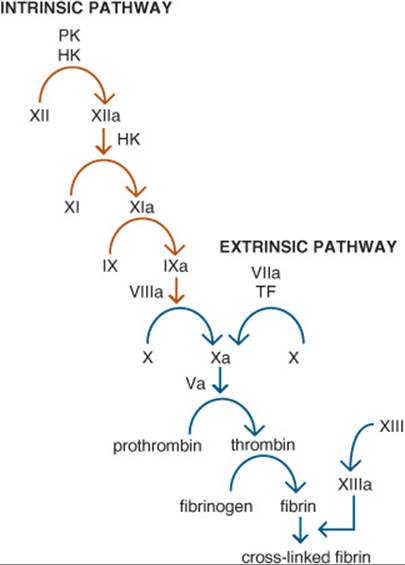
FIGURE 67–1. Cascade model of coagulation demonstrates activation via the intrinsic or extrinsic pathway. This model shows successive activation of coagulation factors proceeding from the top to the bottom where thrombin and fibrin are generated. (PK, prekallikrein; HK, high–molecular weight kininogen; TF, tissue factor.) (From Roberts HR et al. Molecular biology and biochemistry of the coagulation factors and pathways of hemostasis. In: Beutler et al., eds. Williams Hematology. 6th ed. New York: McGraw-Hill; 2001:1409–1434.)
INHERITED COAGULATION DISORDERS
HEMOPHILIA
Etiology and Epidemiology
Hemophilia A and B are coagulation disorders that result from defects in the genes encoding for plasma coagulation proteins. Hemophilia A (classic hemophilia) is caused by the deficiency of factor VIII, and hemophilia B (Christmas disease) is caused by the deficiency of factor IX. The incidences of hemophilia A and B are estimated at 1 in 5,000 and 1 in 30,000 male births, respectively. Both types of hemophilia are evenly distributed across all ethnic and racial groups.1
Pathophysiology
The pathophysiology of hemophilia is based on the deficiency of factor VIII or IX resulting in inadequate thrombin generation and an impaired intrinsic-pathway coagulation cascade (see Fig. 67–1). Factor VIII and IX genes are located on the X chromosome. Hemophilias are recessive X-linked diseases. Generally, affected males carrying either defective allele on their X chromosome do not transmit the gene to their sons. However, their daughters are obligate carriers. Over 2,100 mutations, deletions, and inversions have been identified throughout the factor VIII and IX genes.2
Consequently, hemophilia is not a result of a single genetic mutation. However, inversion at intron 22 of the factor VIII gene accounts for 45% of severe hemophilia A cases. Owing to the high incidence, this mutation is used for carrier and prenatal testing.3
Complications of Hemophilia
The severity of bleeding associated with hemophilia correlates with the degree of factor VIII or factor IX deficiency as measured against the normal plasma standard. Table 67–1 summarizes the age at onset and laboratory and clinical manifestations of hemophilia.4
Clinical Presentation and Diagnosis of Hemophilias A and B
Hemophilias A and B are clinically indistinguishable.
Symptoms
• Ecchymoses
• Hemarthrosis—bleeding into joint spaces* (especially knee, elbow, and ankle)
• Joint pain, swelling and erythema
• Cutaneous warmth
• Decreased range of motion
• Muscle hemorrhage
• Swelling
• Pain with motion of affected muscle
• Signs of nerve compression
• Potential life-threatening blood loss, especially with thigh bleeding
• Mouth bleeding with dental extractions or trauma
• Genitourinary bleeding
• Hematuria
• Intracranial hemorrhage (spontaneous or following trauma), with headache, vomiting, change in mental status, and focal neurologic signs
• Excessive bleeding with surgery
*Hallmark of hemophilia; recurrent inadequately managed hemarthrosis leads to deformity and chronic pain.
Table 67–1 Laboratory and Clinical Manifestations of Hemophilia

Treatment
Desired Outcomes
Currently, there is no cure for hemophilia A or B. The life expectancy of hemophiliacs was only 8 to 11 years in the 1920s and 1930s. With the development of effective treatment strategies, life expectancy is currently about 65 years, or nearly that of the normal population.
The short-term goals of hemophilia treatment are to:
• Decrease the number of bleeding episodes per year or bleeding frequency
• Normalize or improve clotting factor concentrate levels
The long-term goals of hemophilia treatment are to:
• Maintain clinical joint function
• Normalize orthopedic joint score
• Normalize radiologic joint score
• Maintain quality-of-life measurements
General Approach to Treatment
 Intravenous factor replacement with recombinant or plasma-derived products to treat or prevent bleeding is the primary treatment of hemophilia. Primary prophylaxis is defined as the regular administration of factor concentrates with the intention of preventing joint bleeds.5 The rationale for primary prophylaxis is that individuals with factor levels of greater than 0.02 IU/mL (0.00002 unit/L) rarely suffer from spontaneous bleeds and arthropathy. Therefore, to maintain a trough level above this might convert “severe” hemophilia to “moderate” disease, with the abolition of joint bleeds and the associated arthropathy.6
Although primary prophylaxis is expensive, historical cohorts show progressively better outcomes (joint function and radiologic appearances) with its use. The Medical and Scientific Advisory Council of the National Hemophilia Foundation of the United States recommends primary prophylaxis in patients with severe hemophilia A and B (factor VIII or factor IX less than 1%). The optimal duration of prophylactic therapy is unknown.7, 8 Vaccination against hepatitis A and B is recommended in all hemophiliacs.
Nonpharmacologic Therapy
Surgery
Surgical arthroscopic synovectomy reduces replacement-therapy-resistant disease and repetitive hemarthrosis of a single joint. This procedure removes inflamed joint tissue. Patients may have decreased range of motion after the surgery.
Orthotics
Joint prostheses do not deal with the deformities directly. Orthotics in hemophilia serve as an important supportive measure before or after surgery.
Pharmacologic Therapy
Hemophilia A
DDAV P.
Primary therapy is based on disease severity and type of hemorrhage.9 Most patients with mild to moderate disease and a minor bleeding episode can be treated with 1-desamino-8-d-arginine vasopressin (desmopressin acetate [DDAVP]), a synthetic analog of the antidiuretic hormone, vasopressin. DDAVP causes release of von Willebrand’s factor (vWF) and factor VIII from endothelial storage sites. DDAVP increases plasma factor VIII levels by three-to five-fold within 30 minutes. The recommended dose is 0.3 mcg/kg IV (in 50 mL normal saline infused over 15–30 min) or subcutaneously or 150 to 300 mcg intranasally via concentrated nasal spray every 12 hours. Peak effect with intranasal administration occurs 60 to 90 minutes after administration, which is somewhat later than with IV administration. Desmopressin infusion may be administered daily for up to 2 to 3 days. Facial flushing, hypertension or hypotension, GI upset, and headache are common side effects of desmopressin. Water retention and hyponatremia may occur; patients should be instructed to limit water intake while taking desmopressin. Serious side effects include seizures related to hyponatremia, most frequently seen in children younger than two years of age, and myocardial infarction in the elderly. Tachyphylaxis, an attenuated response with repeated administration, may occur after several doses.10 Use of DDAVP is contraindicated in patients with creatinine clearance less than 50 mL/min.
Antifibrinolytic Therapy.
Aminocaproic acid and tranexamic acid are antifibrinolytic agents that reduce plasminogen activity leading to inhibition of clot lysis and clot stabilization. These agents are usually used as adjuncts in dental procedures or in difficult-to-control epistaxis and menorrhagia episodes.
Factor VIII Replacement.
Patients with severe hemophilia may receive primary (before the first major bleed) or secondary (after the first major bleed) prophylaxis. All hemophiliacs with a major bleed require factor VIII replacement.11The therapy may include recombinant (produced via transfection of mammalian cells with the human factor VIII gene) or plasma-derived (concentrate from pooled plasma) factor VIII (Table 67–2). The choice of product and dose are based on the overall clinical scenario because the efficacy of various preparations does not differ. Newer-generation plasma-derived coagulation factor concentrates are considerably safer owing to advancements in viral testing and inactivation technology. While original recombinant factor VIII concentrates were stabilized with human serum albumin, potentially creating a source for viral contamination, new generation recombinant factor VIII concentrates are stabilized with sucrose, eliminating the concern for viral transmission.
The severity of hemorrhage and its location are major determinants of percentage correction to target, as well as duration of therapy (Table 67–3). The normal range of factor VIII activity level is 1 IU/mL (0.001 IU/L), which corresponds to 100% of the factor found in 1 mL of normal plasma. Minor bleeding may be treated with a goal of 25% to 30% (0.25-0.30 IU/mL [0.00025-0.0003 IU/L]) of normal activity, whereas serious or life-threatening bleeding requires at least 50% of normal activity. Factor VIII is a large molecule that remains in the intravascular space and its estimated volume of distribution is approximately 50 mL/kg. Generally, factor VIII levels increase by 2% (0.02 IU/mL [0.00002 unit/L]) for every 1 unit/kg of factor VIII concentrate infused. To calculate factor VIII replacement dose, the following equation can be used:
Table 67–2 Factor Concentrates


Table 67–3 Guidelines for Replacement Dosing With Factor VIII and Factor IX

Dose of factor VIII (units) = weight (kg) × (desired percentage increase) × 0.5
Thus, to increase factor VIII levels by 50% (e.g., from 0 to 50%) in a 70 kg (154 lb) patient, an IV dose of 1,750 units is required. The half-life of factor VIII ranges from 8 to 15 hours. Half the initial dose is given every half-life (every 8-12 hours) to maintain the desired factor VIII level.12 Although intermittent bolus infusions of factor VIII concentrates have been used successfully, continuous-infusion protocols are being instituted successfully in patients requiring prolonged treatment of acute hemorrhage to avoid dangerously low trough levels and decrease the overall cost of therapy.
Hemophilia B
Factor IX Replacement
Hemophilia B therapy may include recombinant (produced via transfection of mammalian cells with the human factor IX gene) or plasma-derived (concentrate from pooled plasma) factor IX (see Table 67–2). Guidelines for choosing the factor-concentrate formulation for hemophilia B are similar to the guidelines for hemophilia A. However, older-generation factor IX concentrates containing other vitamin K-dependent proteins (e.g., factors II, VII, and IX), called prothrombin complex concentrates (PCCs), have been associated with thrombogenic side effects. Consequently, these products are not first-line treatment for hemophilia B. Because it is a small protein, the factor IX molecule passes into both the intravascular and the extravascular spaces. Therefore, the volume of distribution of recombinant factor IX is twice that of factor VIII. Consequently, 1 unit of factor IX administered per kilogram of body weight yields a 1% rise in the plasma factor IX level (0.01 IU/mL [0.00001 units/L]). To calculate the factor IX replacement dose, the following equation can be used:
Dose of factor IX (units)
= weight (kg) × (desired percentage increase) × F Where F = 1 for human plasma-derived products and 1.2 for recombinant factor IX.
Thus, to increase factor IX levels by 50% (e.g., from 0 to 50%) in a 70 kg (154 lb) patient, the required dose of factor IX is 4,200 units IV (using the recombinant factor IX product). The half-life of factor IX ranges from 18 to 22 hours; therefore, doses are given every 12 to 24 hours.
Treatment of Patients With Factor VIII or IX Inhibitors
Factor VIII and IX inhibitors are antibodies that develop in 20% and 5% of hemophilia A and hemophilia B patients, respectively, in response to replacement therapy. These antibodies bind to and neutralize the activity of infused factor concentrates. Although the inhibitors do not increase hemorrhage frequency, their existence challenges the treatment of bleeding episodes. Titers of inhibitors are measured and reported in Bethesda units (BU), and this measurement is used to guide therapy (Fig. 67–2). Management options for acute bleeding in patients with factor inhibitors include the administration of factor VIII concentrates, PCCs, recombinant factor VIIa (rFVIIa), and porcine factor VIII. Immune tolerance induction can be attempted to prevent future bleeding episodes.
Factor VIII concentrates can be used in patients with low inhibitor levels to control acute bleeding episodes. The dose of factor VIII is determined based on clinical response (see Fig. 67–2).
PCCs contain the vitamin K-dependent factors II, VII, IX, and X. These agents bypass factor VIII at which the antibody is directed (see Fig. 67–2). However, PCCs carry the risk of serious thrombotic complications.
Factor VIIa (rFVIIa) is a bypassing agent designed to generate thrombin only at tissue injury sites, where it binds tissue factor. Due to its local action, rFVIIa is associated with fewer systemic thrombotic events than PCC. rFVIIa is used effectively in surgeries and spontaneous bleeds.13
Plasma-derived porcine factor VIII participates in the coagulation cascade in place of human factor VIII. However, due to contamination with parvovirus, it is no longer available. Recombinant porcine factor VIII is currently under review and could serve as a third-line agent (only after factor VIIa and a PCC have failed) owing to the relatively high incidence of cross-reactivity with factor VIII inhibitors.

FIGURE 67–2. Treatment algorithm for the management of patients with hemophilia A and factor VIII antibodies. Porcine factor VIII is currently not available in the United States. (BU, Bethesda unit; PCC, prothrombin complex concentrate; aPCC, activated prothrombin complex concentrate.)
Induction of immune tolerance is often performed with the goal of eliminating the inhibitor. Immune tolerance induction is accomplished by the administration of repetitive doses of factor VIII or IX with or without immunosuppressive therapy. It is effective in 70% of patients with hemophilia A and 30% of patients with hemophilia B.
Pain Associated With Hemophilia
Pain commonly occurs in patients with hemophilia. Acute bleeding episodes and long-term joint destruction are common sources of pain. Acetaminophen, cyclooxygenase-2 (COX-2) inhibitors, and opioid analgesics are recommended to control mild, moderate, and severe pain, respectively. Nonsteroidal anti-inflammatory drugs and aspirin should be avoided if possible, because these drugs bind to platelets and increase the risk of bleeding episodes.
Outcome Evaluation
The main goal of hemophilia treatment is to prevent bleeding episodes and their long-term complications. Clinicians should evaluate patients every 6 to 12 months for the following:
• Musculoskeletal status, including joint range of motion and radiologic assessment, as indicated.
• Number and type of bleeding episodes to assess adequacy of prophylactic treatment and home therapy.
• Use of clotting-factor concentrates to check for the development of inhibitors, especially in patients with severe disease and poor treatment responders.
VON WILLEBRAND’S DISEASE
Epidemiology and Etiology
von Willebrand’s disease (vWD) is the most common inherited bleeding disorder caused by a deficiency or dysfunction of vWF. It is classified based on the quantitative deficiency of vWF or qualitative abnormalities of vWF. The disease prevalence is estimated at 30 to 100 cases per million. In contrast to hemophilia, the majority of vWD cases are inherited as an autosomal dominant disorder, ensuing equal frequency in males and females.14
Pathophysiology
vWF is a large multimeric glycoprotein with two main functions in hemostasis: to aid platelet adhesion to injured blood vessel walls and to carry and stabilize factor VIII in plasma. Table 67–4 represents three main vWD phenotypes, their frequency, and genetic transmission.15
Treatment
Desired Outcomes
Unlike hemophilia, the bleeding tendency in vWD is less frequent and generally less severe. Consequently, chronic prophylaxis is usually unwarranted. The goal of two mainstay therapeutic options in vWD is:
Table 67–4 Classification of vWD

Clinical Presentation and Diagnosis of vWD
Clinical manifestations vary depending on the subtype. Patients with mild disease may be asymptomatic into adulthood.
Symptoms
• Bruising
• Mucocutaneous bleeding
• Epistaxis
• Oral cavity bleeding
• Menorrhagia
• GI bleeding
• Joint and deep tissue bleeding
• Postoperative bleeding
Laboratory Testing
• Low or normal von Willebrand’s factor antigen concentration in plasma (vWF:Ag)
• Low or normal factor VIII coagulation assay (FVIII:C)a
• Low ristocetin cofactor activity (vWF:RCo)b
a Factor VIII coagulation assay measures the ability of vWF to ind factor and maintain adequate levels of factor VIII.
b Ristocetin cofactor activity (vWF:RCo) assay measures the ability of vWF to interact with intact platelets (normal 50–200 IU/dL).
• To stop spontaneous bleeding as necessary
• To prevent surgical and postpartum bleeding
Nonpharmacologic Therapy
Local measures, including pressure and ice, may be used to control superficial bleeding.
Pharmacologic Therapy
Systemic therapy is used to prevent bleeding associated with surgery, childbirth, and dental extractions and to treat bleeding that cannot be controlled with local measures. The two systemic approaches involve using desmopressin, which stimulates the release of endogenous vWF, or administering products that contain vWF. The general approach to the treatment of vWD is depicted in Figure 67–3. In 2008, The National Heart, Lung, and Blood Institute issued a comprehensive evidence-based guidelines for the diagnosis and management of vWD.16
DDAVP
Most patients with type 1 vWD (functionally normal vWF) and a minor bleeding episode can be treated successfully with desmopressin, which induces release of factor VIII and vWF from endothelial cells through interaction with vasopressin V2 receptors. The recommended dose is the same as that used to treat mild factor VIII deficiency (0.3 mcg/kg IV in 50 mL of normal saline infused over 15-30 min). This therapy is generally ineffective in type 2A patients, who secrete abnormal vWF, and is controversial in type 2B patients because it may increase the risk of postinfusion thrombocytopenia. Type 3 vWD patients who lack releasable stores of vWF do not respond to DDAVP therapy.17
The individual responsiveness to desmopressin is consistent, and a test dose administered at the time of diagnosis or prior to therapy is the best predictor of response. Generally, DDAVP is more effective in vWD than in hemophilia patients, with an average two-to five-fold increase in vWF and factor VIII levels over baseline. In patients with an adequate response, desmopressin is first-line therapy because it allows for once-daily administration (elevates plasma levels for 8–10 hours), does not pose a threat in terms of viral transmission, and costs substantially less than that of the plasma-derived products.

FIGURE 67–3. Guidelines for the treatment of vWD. a Use factor VIII concentrate for life-threatening bleeding. b Some patients with type 2 or 3 vWD may respond to desmopressin.
Table 67–5 Replacement Therapy in vWD

Antifibrinolytic Therapy
Fibrinolysis inhibitors and oral contraceptives are used successfully in the management of epistaxis and menorrhagia or as adjuvant treatments. Fibrinolysis inhibitors include aminocaproic acid (25–60 mg/kg orally or IV every 4–6 hours, to a maximum dose of 24 g/day) and tranexamic acid (10 mg/kg IV every 8 hours). Tranex aminic acid is not FDA-approved for oral administration; however, IV form given as swish and swallow or spit every 6 to 8 hours has been used as bleeding prophylaxis in dental surgery. Both aminocaproic acid and tranexaminic acid are dose adjusted with renal insufficiency.
Replacement Therapy  Type 1 patients unresponsive to desmopressin, patients with types 2 and 3 vWD, and major surgery patients require replacement therapy with plasma-derived, intermediate- and high-purity factor VIII virus-inactivated factor VIII concentrates containing vWF. 18 Table 67–5 provides typical dosing guidelines and target levels of replacement therapy–concentrates to control various types of hemorrhage. Ultra-high-purity (monoclonal) plasma-derived and recombinant factor VIII concentrates do not contain vWF and should not be used in the treatment of vWD. Cryoprecipitate contains considerable amounts of both factor VIII and vWF. However, this product is not a first-line treatment option because it does not undergo viral inactivation.
Outcome Evaluation
The main goal of vWF treatment is to prevent bleeding with surgery or dental procedures. Clinicians should evaluate patients every 6 to 12 months for the following:
• Number and type of bleeding episodes to assess the need for prophylactic treatment.
• Ensure adequate levels of vWF and factor VIII prior to minor and major surgical procedures and for the treatment of bleeding.
• Vaccination against hepatitis A and B is recommended in all patients with vWF deficiency.
OTHER CLOTTING FACTOR DEFICIENCIES
Etiology and Epidemiology
Recessively inherited coagulation disorders (RICDs) refer to relatively rare deficiencies in factor II, V, VII, and X to XIII resulting in either decreased clotting factor production or production of a dysfunctional molecule with reduced activity.19 The clinical severity of bleeding varies and generally is poorly correlated with the factor blood levels. Table 67–6 illustrates these clotting factor deficiencies and some of their characteristics.
Pathophysiology
The RICDs are rare genetic disorders. Mutations in the genes responsible for the respective clotting factors results in impaired functionality or production of the factor.
Treatment
Desired Outcomes
Therapeutic options for RICDs improve hemostasis via replacement of deficient blood coagulation factors while minimizing the development of immune tolerance.20
Hemostatic levels should be maintained for the following conditions:
• Spontaneous bleeding—until bleeding stops.
• Minor surgery—for two to three days.
• Major surgery—until incision site has healed.
Nonpharmacologic Therapy
Transfusional Therapies The primary treatment of RICDs is single-donor fresh-frozen plasma (FFP) that contains all coagulation factors. Disadvantages of FFP treatment include the risk of becoming volume overloaded, especially when repeated infusions are administered in order to improve and maintain hemostasis, risk of infections, and risk of inhibitor • development. PCCs licensed for the treatment of hemophilia B also contain significant levels of vitamin K-dependent factors and may be used off-label for treatment of RICD. Table 67–7 lists the recommended RICD treatment schedules in different clinical scenarios.
Pharmacologic Therapy
Less severe hemorrhages may be treated successfully with antifibrinolytic amino acids alone or in combination with factor replacement therapy. Tranexamic acid and aminocaproic acid may be administered IV or orally (for doses, see Pharmacologic Therapy for vWD).
Table 67–6 Clotting Factor Deficiency Characteristics

Table 67–7 Treatment of Factor Deficiencies

ACQUIRED COAGULATION DISORDERS
DISSEMINATED INTRAVASCULAR COAGULATION
Etiology and Epidemiology
Disseminated intravascular coagulation (DIC) is a systemic thrombohemorrhagic disorder characterized by an increased propensity for clot formation secondary to a wide variety of clinical conditions (Table 67–8). Central to the etiology of DIC is excessive and unregulated generation of thrombin, leading to an aggressive compensatory fibrinolysis. Therefore, clinical manifestations of DIC result from a loss of balance between the clot-promoting (leading to thrombosis) and the clot-lysing (leading to hemorrhage) systems. Although this balance may tip in either direction, presenting as bleeding or clotting, bleeding is most common. Incidence of bleeding, end-organ dysfunction, and other manifestations depends on the etiology of DIC.21
Pathophysiology
Once injured or activated by a toxic substance (e.g., bacterial toxins, placenta chemicals, snake venom, etc.), endothelial cells and monocytes respond by generating tissue factor on the cell surface. Generation of tissue factor–factor VIIa complexes leads to extrinsic pathway activation, excessive generation of thrombin and fibrin, generation of systemic microthrombi, and consumption of coagulation factors and platelets. In addition, inhibition of naturally occurring endothelium-linked anticoagulant pathways (e.g., antithrombin, protein C, and tissue factor pathway inhibitor) and fibrinolytic system (due to a rise in plasminogen activator inhibitor, PAI-1 concentrations) leads to a vast procoagulant state. While bleeding into the subcutaneous tissues, skin, and mucous membranes takes place, microvascular thrombosis exacerbates tissue ischemia and organ damage.22
Treatment
Desired Outcomes
 The cornerstone of the management of DIC is aggressive treatment of the underlying primary illness. Supportive measures may be used as necessary, but owing to the heterogeneity of DIC etiology, treatment should be guided by predominant symptoms (bleeding or clotting).23
Goals of DIC treatment include:
• Replace missing blood components
• Interrupt coagulation
• Treat underlying disease
Pharmacologic Therapy
Anticoagulants
While bleeding is the most frequently observed symptom of DIC, thrombotic events cause most of the mortality. Heparin is an effective anticoagulant which activates the antithrombin system and inhibits factors II (thrombin), IXa, and Xa; however, its use is limited by the potential for bleeding. Clinical trials of heparin in DIC have not shown a consistent improvement in organ function or mortality benefit. DIC patients most likely to benefit from heparin are those with chronic symptomatic thromboemboli, extensive fibrin deposition, and solid tumors. Heparin is contraindicated in DIC patients with serious or life-threatening bleeding, such as intracranial bleeding.24
Table 67–8 Conditions Associated With DIC

Clinical Presentation of DIC
Clinical manifestations generally are associated with underlying primary illness, as described in Table 67–8.
• Signs and Symptoms
• Thrombosis, hemorrhage, or both
• Hemorrhagic bullae
• Peripheral cyanosis
• Petechiae and purpura
Thrombus and End-Organ Dysfunction
• Skin
• Lungs
• Kidneys
• Liver
• Adrenal glands
• Heart
Laboratory Testing
• Increased D-dimer
• Thrombocytopenia
• Decreased fibrinogen
• Increased fibrin degradation products (FDP)
• Increased prothrombin time (PT)
• Evidence of end-organ dysfunction or failure
Heparin may be given IV or subcutaneously; there is no universally accepted dose. Heparin administered subcutaneously for venous thromboembolism prophylaxis (5,000 units every 8–12 hours) can be beneficial in DIC patients without serious or life-threatening bleeding. Full-dose heparin therapy in adults is a bolus of 5,000 units, followed by a continuous infusion of 1,000 units/h. In general, full-dose heparin should be avoided in patients with DIC due to increased risk of bleeding, and a lower dose of 500 units/hour can be used. Since the aPTT is already elevated in individuals with DIC, monitoring heparin therapy may be difficult. Treatment with subcutaneous heparin and low–molecular weight heparins are other, less studied options.25
Patient Encounter 1, Part 1: DIC
A 48-year-old woman was admitted to the intensive care unit with sepsis and hemodynamic instability. Three days earlier, the patient had undergone an abdominal surgery. After the IV line was placed, the patient’s nurse notified the medical team of blood oozing from the IV lines, abdominal drains, and nasogastric tube.
What information is suggestive of disseminated intravascular coagulation (DIC)?
What additional information do you need to create a treatment plan for this patient?
What is the most important intervention at this time?
Patient Encounter 1, Part 2: DIC
Meds
• Insulin via sliding scale SC
• Lorazepam 1 mg/h IV
Labs
• Platelet count: 30 × 103/mm3 (30 × 109/L) (normal 140–440 × 103/mm3 [140–440 × 109/L])
• aPTT: 46 seconds (normal 25-40 seconds)
• PT: 31 seconds (normal 10–12 seconds)
• D-dimer: 3 mcg/mL (3 mg/L) (normal 250 ng/mL)
• Fibrinogen: 0.8 g/L (normal 2-4 g/L)
• Hemoglobin: 7.8 g/dL (78 g/L or 4.8 mmol/L) (normal 12. 1-15.1 g/dL or 121-151 g/L or 75-9.36 mmol/L)
Given this additional information, is this patient’s presentation consistent with DIC?
Identify your treatment goals for this patient.
Patient Encounter 1, Part 3: DIC: Creating a Care Plan
Based on the information presented, create a care plan for this patient’s DIC.
Antithrombin concentrate has been evaluated in clinical trials and has not been associated with reduced mortality in septic patients. Although activated protein C can normalize abnormal coagulation activation during severe sepsis, more data are necessary before its use can be recommended for patients with DIC.26,27
Platelets and FFP
Treatment with platelet concentrates and plasma is indicated in patients who are bleeding or who require an invasive procedure. In a bleeding patient, the platelet count should be maintained above 50 × 103/mm3 (50 × 109/L), and platelet concentrates should be given at a dose of 1 unit/10 kg of body weight. For patients who are not bleeding, a lower threshold of less than 10 to 20 × 103/mm3 or less than 10 to 20 × 109/L is used. FFP contains all the coagulant factors as well as fibrinogen. Adding fibrinogen to the blood system in a situation where the level of antithrombin is already low may predispose patients to widespread microvascular thrombosis and may aggravate end-organ damage. Therefore, FFP use is reserved for actively bleeding patients who have significantly elevated prothrombin time and a fibrinogen concentration less than 50 mg/dL (0.5 g/L). The recommended FFP dose is 10 to 15 mL/kg.
Cryoprecipitate
If FFP cannot maintain fibrinogen concentration above 100 mg/dL (1 g/L) in a symptomatic patient, 1 to 4 units/10 kg of cryoprecipitate may be administered.
Outcome Evaluation
• With each therapeutic option, postinfusion monitoring parameters (platelets, PT, aPTT, and fibrinogen) should be checked within 30 to 60 minutes and every 6 hours thereafter, and the dose should be adjusted accordingly.
• Monitor the patient for relief of symptoms and signs of hemorrhage.
PLATELET DISORDERS
IMMUNE THROMBOCYTOPENIC PURPURA
Etiology and Epidemiology
Immune (or idiopathic) thrombocytopenic purpura (ITP) is one of the most common causes of acquired thrombocytopenia. The estimated incidence is 100 cases per 1 million persons per year, about half of whom are children. ITP is an autoimmune disorder caused by the binding of antibodies (usually IgG) to platelet surface antigens resulting in shortened platelet life span. ITP can occur as an isolated condition or secondary to an underlying disorder. Childhood-onset and adult-onset ITP present very differently. Adult-onset ITP is generally chronic (greater than 6 months) and affects women two to three times more often than men. By contrast, childhood-onset ITP is acute in onset and usually follows an infectious illness, and both sexes are equally affected. Childhood ITP typically resolves on its own within 4 to 6 weeks without major sequelae. ITP occurs in 1 to 2 of every 1,000 pregnancies. In pregnant women with pre-existing ITP, both maternal and fetal complications may occur, requiring separate management.28
Clinical Presentation and Diagnosis of ITP
General
The typical patient is well with the exception of bleeding.
Symptoms
• Petechiae
• Purpura
• Ecchymoses
• Cutaneous bleeding
• Mucosal site bleeding
• Epistaxis
• Gingival bleeding
• Hematuria
• Intracranial hemorrhage (rare)
Laboratory Testing
• Normal or slightly elevated thrombopoietin
• Decreased hemoglobin, hematocrit, platelets
• Prolonged bleeding time
• Peripheral blood smear for abnormal platelets
• Helicobacter pylori testing
• HIV, HCV testing
Patient Encounter 2, Part 1: ITP
GH is a 4-year-old boy who presents with gingival bleeding and hematuria for 1 day. His vital signs and physical exam are within normal limits, except for noticeable mucosal ecchymoses in the oral and nasal cavities.
What information is suggestive of immune thrombocytopenic purpura (ITP)?
What additional information do you need to create a treatment plan for this patient?
Pathophysiology
In ITP, IgG autoantibodies bind to platelet-antigen complex and are cleared from the blood via binding to mononuclear phagocytes by macrophage Fc γ receptor, leading to thrombocytopenia. Platelet survival time is significantly shorter in patients with ITP (from minutes to 2–3 days). Sequestration in spleen, liver, and bone marrow is partially responsible for decreased platelet survival. Megakaryopoiesis may be reduced due to antibody binding to megakaryocyte precursors in the bone marrow.
Treatment
Desired Outcomes
The main goal of ITP treatment is to maintain the platelet count (greater than 20–30 × 103/mm3 [20–30 × 109/L]) while awaiting spontaneous or treatment-induced remission.29
Patient Encounter 2, Part 2: ITP
Meds at Home
• Albuterol inhaler one to two inhalations as needed for asthma
PMH: Mild intermittent asthma, recent upper respiratory disease with rhinorrhea, fever, and vomiting (per mother’s report)
Labs:
• Platelet count: 60 × 103/mm3 (60 × 109/L) (normal 140–440 × 103/mm3 [140–440 × 109/L])
• aPTT: 28 seconds (normal 25-40 seconds)
• PT: 12 seconds (normal 10-12 seconds)
• Hemoglobin 12. 5 g/dL (125 g/L or 7.75 mmol/L) (normal 13.8-17.2 g/dL or 138-172 g/L or 8.6-10.7 mmol/L)
• Bleeding time 8 minutes (normal 3-7 minutes)
Given this additional information, is this patient’s presentation consistent with ITP?
What is the likely etiology of this patient’s ITP?
Identify your treatment goals for this patient.
General Approach to Treatment
The treatment of ITP is determined by the symptom severity (Table 6–9). In some cases, no therapy is needed. The initial treatment of children with ITP is controversial because 30% to 70% of cases resolve spontaneously irrespective of pharmacologic intervention. Currently, therapy is indicated in children with platelet counts less thaln 10 to 20 × 103 mm3 (10–2 0 × 10 9/L) because most intracranial hemorrhages occur when platelets are in this range.30 In adults, treatment is indicated when platelet counts are less than 20 to 30 × 103/mm3 (20–30 × 109/L) or less than 50 × 103/mm3 (5 0 × 10 9/L) with serious bleeding or risk factors for bleeding.31
Table 67–9 Guidelines for the Initial Management of ITP

Nonpharmacologic Therapy
In adults, splenectomy is generally considered after 3 to 6 months if the patient continues to require 10 to 20 mg/day of prednisone to maintain the platelet count greater than 30 × 103/mm3 30 × 109/L) or within 6 weeks of diagnosis in nonbleeding patients with platelet counts of less than 10 × 103/mm3 (10 × 109/L) despite treatment. Splenectomy may also be considered for urgent treatment of neurologic symptoms or for managing relapse despite an adequate trial of corticosteroids, intravenous immunoglobulin (IVIg), or anti-Rh(D). Even though individual patient response cannot be predicted, approximately two-thirds of refractory adult patients have a favorable response to splenectomy within several days; however, 30% to 40% will have no response or will experience a relapse some time after splenectomy. In children, splenectomy is usually reserved due to the self-limited nature of ITP and fear of infectious complications of splenectomy. Splenectomy is recommended in children with ITP duration greater than one year with significant bleeding symptoms and platelet counts less than 10 × 103/mm3 (10 × 109/L), or platelet counts 10 to 30 × 103/mm3 (10–30 × 109/L) with bleeding symptoms. Between 70% and 80% of children attain complete remission following splenectomy. Laproscopic splenectomy is preferable to open splenectomy because it speeds the recovery and shortens the duration of hospitalization. The major drawback of splenectomy is bacterial sepsis, occurring at incidence rates of approximately 1%. Immunization with Haemophilus influenzae type b, pneumococcal, and meningiococcal vaccines is indicated in all patients two weeks prior to splenectomy.29
Pharmacologic Therapy
The general approach to initial management of ITP is summarized in Table 67–9.
Glucocorticoids
Glucocorticoids may decrease splenic sequestration of antibody-coated platelets, diminish antibody generation by the spleen and the bone marrow, and increase platelet output by the bone marrow. In adults, the response rate to oral prednisone (1–1.5 mg/kg/day) is 50% to 75% with patients usually responding within the first three weeks. In children, severe life-threatening bleeding is treated with either high-dose oral (4-8 mg/kg/day prednisone) or parenteral (30 mg/kg/day methylprednisolone) glucocorticoids.
IV Immunoglobulin (IVIg)
IVIg impairs the clearance of platelets coated with IgG by activating inhibitory receptor FcRyIIb. It is generally indicated in emergencies, during pregnancy, and in chronic management of patients refractory to other treatment options. Roughly 80% of adults will respond to IVIg (1 g/kg/day for 2-3 days), but remission usually is not sustained. In adults, use of IVIg is reserved for severe life-threatening bleeding, platelet counts less than 5 × 10³/mm3 (5 × 10⁹/L), with extensive purpura. If treatment is indicated in children, a single dose of IVIg (0.8 g/kg) is usually effective, although other dosing regimens can also be used (1 g/kg × 1 day; 2 g/kg total dose over 2-5 days). IVIg use is complicated by many serious adverse effects and high cost.
Anti-Rh(D)
Anti-Rh(D) can be used only in Rh(D)-positive patients. It is as efficacious as IVIg and is generally less expensive. The indications for use of anti-Rh(D) are identical to those for IVIg. Anti-Rh(D) is desirable form of treatment in chronic ITP when the goal is to circumvent long-term exposure to corticosteroids. At doses of 25 to 75 mcg/kg/day, anti-Rh(D) may increase the platelet count in about 70% to 80% of children with acute and chronic ITP. Response to anti-Rh(D) lasts about 3 to 5 weeks, and substantial numbers of patients treated repetitively with Rh(D) can postpone or avoid splenectomy
Immunosuppressants
Immunosuppressant therapy is generally utilized for patients with platelet counts below 20 × 103/mm3 (20 × 109/L) who are refractory to or intolerant of all other ITP treatments. Azathioprine and cyclophosphamide produce response rates of 20% to 40% in adult patients who are treated for 2 to 6 months. Other medications used in ITP include vincristine, vinblastine, cyclosporine, and rituximab; due to major toxicities, their use is reserved for refractory ITP.
Thrombopoietic Growth Factors
New treatment options for ITP include a novel thrombopoiesis-stimulating protein and a small-molecule thrombopoietin (TPO) receptor agonist. These agents stimulate the bone marrow to make enough platelets to overcome the body’s premature destruction of platelets. Romiplostim and eltrombopag are two new therapeutic agents that have been recently approved by the FDA for the treatment of thrombocytopenia in patients with chronic ITP who have had an insufficient response to corticosteroids, immunoglobulins, or splenectomy.
Romiplostim is a TPO peptide mimetic that binds to and activates the human TPO receptor. As a once weekly subcutaneous injection, romiplostim stimulates mega karyo-poiesis resulting in enhanced platelet production. Initial dose of romiplostim is based on the actual body weight, adjusted weekly by increments of 1 mcg/kg until a maximum of 10 mcg/kg the patient achieves a platelet count greater than or equal to 50 × 103/mm3 (50 × 109/L) as necessary to reduce the risk for bleeding. In clinical studies, most patients who responded to romiplostim achieved and maintained platelet counts greater than or equal to 50 × 103/mm3 (50 × 109/L) with a median dose of 2 mcg/kg. Both agents need to be discontinued if platelet counts do not increase after 4 weeks at a maximum dose. Eltrombopag is a once-daily oral nonpeptide thrombopoietin receptor agonist with a low immunogenic potential that stimulates megakaryocyte proliferation and differentiation.
Patient Encounter 2, Part 3: ITP: Creating a Care Plan for ITP patient
Based on the information presented, create a care plan for this patient’s ITP.
For most patients, the initial dose of eltrombopag is 50 mg once daily. The daily dose is subsequently adjusted to a maximum dose of 75 mg daily, in order to achieve and maintain a platelet count greater than or equal to 50 × 103/mm3 (50 × 109/L) in order to reduce the risk for bleeding.
Romiplostim and eltrombopag are effective in increasing platelet counts in patients with ITP and can be used in combination with therapies that inhibit platelet destruction. While usually well tolerated, a number of rare but serious risks have been reported, including; changes in the bone marrow, worsened thrombocytopenia and the risk of bleeding after cessation of the medication, thrombotic/thromboembolic complications, and worsening of blood cancers. Eltrombopag carries a black-box warning regarding hepatic toxicity. It is also associated with development of cataracts and has multiple drug–drug interactions. To enhance patient safety, both romiplostim and eltrombopag are available only through restricted access programs. For both programs, each institution must enroll in the program to receive drug and training kits and only prescribers, pharmacists, and patients registered with the program are able to prescribe, dispense, and receive the product, respectively.
Outcome Evaluation
• Monitor platelet counts as indicated clinically.
• Goal of therapy is to maintain platelet count greater than or equal to 30 × 103/mm3 (30 × 109/L).
• Monitor for signs and symptoms of bleeding.
THROMBOTIC THROMBOCYTOPENIC PUPURA
Etiology and Epidemiology
Thrombotic thrombocytopenic purpura (TTP) is a severe systemic disorder characterized by the thrombi formation within the circulation that results in the platelet consumption and subsequent thrombocytopenia. Acute idiopathic TTP is more common in women and African Americans, and most frequently occurs in people between 30- and 40-years-old. The estimated annual incidence of TTP is 3.8 cases per million.32 Common conditions associated with TTP are summarized in Table 67–10.
Table 67–10 Conditions Associated with TTP
• Infections
Bacterial, fungal, viral, atypical
• Transplantation
Solid organ or bone marrow
• Malignancy
• Pregnancy
• Collagen vascular diseases
• Medications
Antineoplastic agents, ticlopidine, clopidogrel, antibiotics, immunosuppressants, others
Pathophysiology
Endothelial cells normally synthesize vWF in the form of a high-molecular weight multimer composed of smaller identical monomers. Each monomer is able to bind platelets, and the number of monomers on the vWF multimer is directly proportional to its platelet-binding capacity. Consequently, particularly adherent ultralarge molecules of the vWF (ULvWF) are broken down to smaller size by vWF-cleaving proteases such as ADAMTS13 (a disintegrin and metalloprotease with thrombospondin type 1 repeats) to avoid undesired clot formation. TTP results from genetic or acquired deficiency in the vWF-cleaving protease ADAMTS13 activity. This, in turn, elevates circulating levels of ultralarge molecules of the factor (ULvWF) leading to inappropriate platelet agglutination. Thrombocytopenia develops because the rate of aggregated platelet consumption is faster than megakaryocyte bone marrow production. Microangiopathic hemolytic anemia generally follows as a consequence of red blood cell damage by platelet clumps occluding the microcirculation. Occlusive ischemia of the brain or GI tract is common, and renal dysfunction may occur.
Treatment
Desired Outcomes
The main goal of TTP treatment is to prevent end-organ damage.
Nonpharmacologic Therapy
 The present standard of treatment for TTP is urgent plasma exchange (PEX). If PEX is unavailable, treatment with plasma infusion and glucocorticoids is indicated until PEX is available.33
Plasma Exchange
The procedure involves removal of the patient’s plasma and its substitution by donor plasma. In this manner, circulating antibody inhibitor of ADAMTS13 is removed and enzyme is replenished. PEX involves placement of two IV lines (cannulae) into two separate veins. Blood removed through one cannula is centrifuged to separate the blood cells from the plasma. The blood cells are mixed subsequently with donor plasma and returned to the patient via the second cannula. The goal is to exchange 1 to 1.5 plasma volumes (40–60 mL/kg). The procedure generally is repeated daily until neurologic symptoms resolve and normal LDH and platelet counts are maintained for several days. After complete remission is achieved, PEX frequency can be reduced to every other day for an additional few days, with subsequent PEX discontinuation and close patient follow-up. When PEX is started immediately upon diagnosis, remission and survival rates at six months are approximately 80%. Although generally considered safe, complications from catheter insertion or catheter infection may occur and include hemorrhage, pneumothorax, sepsis, and thrombosis. Allergic reactions to plasma can cause severe hypotension and hypoxia.33
Clinical Presentation and Diagnosis of TTP
Typical Pentad of Symptoms (Rare That All Five Are Present)a
1. Thrombocytopenia
• Thrombocytopenic purpura
• Bleeding
2. Fever
3. Microangiopathic hemolytic anemia
4. Neurologic symptoms
• Headache, confusion, difficulty speaking, transient paralysis, numbness
5. Renal abnormalities
• Proteinuria, hematuria, mild renal insufficiency
Laboratory Testing
• Decreased hemoglobin, hematocrit, and platelets
• Peripheral blood smear for schistocytes
• Decreased serum haptoglobin
• Elevated lactate dehydrogenase (LDH)
• Elevated indirect bilirubin level
• Elevated reticulocyte count
• Normal PT and aPTT
• Elevated urine protein, red blood cells, and/or serum creatinine
a TTP diagnosis can be based on the presence of thrombocytopenia and microangiopathic hemolytic anemia in the absence of other possible causes
Patient Encounter 3, Part 1: TTP
A 58-year-old African American female presented to her primary care physician complaining of headache, weakness, fever, chills, chest pain, nausea, vomiting, and hematuria. She had a diagnostic cardiac catheterization performed 10 days ago and oral clopidogrel 75 mg daily was prescribed by her cardiologist after the test.
What information is suggestive of thrombotic thrombocytopenic purpura (TTP)?
What additional information do you need to create a treatment plan for this patient?
Splenectomy
Splenectomy is reserved for patients with frequently relapsing disease, refractory to PEX or immunosuppressive therapy.
Patient Encounter 3, Part 2: TTP
Meds at Home: Clopidogrel 75 mg orally daily; metoprolol tartrate 25 mg orally twice a day; zolpidem 10 mg orally at bedtime as needed
PE: Wt 65 kg (143 lb)
Labs:
• Platelet count: 9 × 10³/mm3 (9 × 10⁹/L) (normal 140–440 × 103/mm3 [140–440 × 109/L])
• aPTT: 38 seconds (normal 25–40 seconds)
• PT: 10 seconds (normal 10-12 seconds)
• Haptoglobin 15 mg/dL (150 mg/L) (normal 30-200 mg/dL or 300-2,000 mg/L)
• LDH 1,950 units/L (32.5 μkat/L) (normal 100-250 units/L, or 1.67-4.17 μkat/L)
• Hemoglobin 6 g/dL (60 g/L or 3.72 mmol/L) (normal 12. 1-15.1 g/dL or 121-151 g/L or 75-9.36 mmol/L)
• Blood peripheral smear: numerous schistocytes (11-12 per high power field)
Given this additional information, is this patient’s presentation consistent with TTP?
What is the likely etiology of this patient’s TTP?
Identify your treatment goals for this patient.
Pharmacologic Therapy
Corticosteroids
Corticosteroids can be used for their immunosuppressive effect in combination with PEX; however, they are not efficacious as monotherapy in TTP. The most commonly used agents are methylprednisolone 1 g/day IV for 3 days and prednisone 1 to 2 mg/kg/day orally for the duration of PEX therapy.
Patient Encounter 3, Part 3: TTP: Creating a Care Plan
Based on the information presented, create a care plan for this patient’s TTP.
Patient Care and Monitoring
1. Obtain a complete history.
2. In a patient presenting with a bleeding or clotting disorder, an initial evaluation should include bleeding time, prothrombin time (PT), activated partial thromboplastin time (aPTT), thrombin time, and platelet count.
• Activated partial thromboplastin time: aPTT is performed by adding calcium phospholipids and kaolin to citrated blood and measures the time required for a fibrin clot to form. In this manner, aPTT measures the activity of intrinsic and common pathways. Prolongation of aPTT may be due to a deficiency or inhibitor for factors II, V, VIII, IX, X, XI, and XII. It also may be due to heparin, direct thrombin inhibitors, vitamin K deficiency, liver disease, or lupus anticoagulant.
• Prothrombin time: PT is performed by adding thromboplastin (tissue) factor and calcium to citrate-anticoagulated plasma, recalcifying the plasma, and measuring the clotting time. The major utility of PT is to measure the activity of the vitamin K-dependent factors II, VII, and X. The PT is used in evaluation of liver disease, to monitor warfarin anticoagulant effect, and to assess vitamin K deficiency.
• Thrombin time is an assessment of the time required for the appearance of the fibrin clot after thrombin is added to plasma. It may be affected by thrombin inhibitors or fibrinogen abnormalities. Most commonly, thrombin time is used to monitor fibrinolytic therapy.
• Bleeding time indicates how well platelets interact with blood vessel walls to form blood clots by assessing the length of time to arrest the bleeding after a standardized skin cut. The bleeding time is prolonged in thrombocytopenia, fibrinogen disorders, and collagen defects.
3. After a diagnosis is made, institute specific therapy.
4. Monitor resolution of laboratory and clinical symptoms with treatment.
Immunosuppressants
TTP that fails to respond adequately to PEX can be treated with immunosuppressive agents. Cytotoxic immunosuppressive therapies with potential benefit in refractory TTP include vincristine, cyclophosphamide, azathioprine, rituximab, and the CHOP combination regimen (cyclophosphamide, doxorubicin, vincristine, and prednisone).33
Outcome Evaluation
Monitor platelet counts, hemoglobin, and LDH.
Abbreviations Introduced in This Chapter

 Self-assessment questions and answers are available at http://www.mhpharmacotherapy.com/pp.html.
REFERENCES
1. Soucie JM, Evatt B, Jackson D. Occurrence of hemophilia in the United States. The Hemophilia Surveillance System Project Investigators. Am J Hematol 1998;59:288–294.
2. Bolton-Maggs PH, Pasi KJ. Haemophilias A and B. Lancet 2003;361: 1801–1809.
3. Stobart K, Iorio A, Wu JK. Clotting factor concentrates given to prevent bleeding and bleeding-related complications in people with hemophilia A or B. Cochrane Database Syst Rev 2006:CD003429.
4. Astermark J, Petrini P, Tengborn L, et al. Primary prophylaxis in severe haemophilia should be started at an early age but can be individualized. Br J Haematol 1999;105:1109–1113.
5. Berntorp E. Prophylactic therapy for haemophilia: Early experience. Haemophilia 2003; 9(Suppl 1):5–9; discussion 9.
6. Blanchette VS, Manco-Johnson M, Santagostino E, et al. Optimizing factor prophylaxis for the haemophilia population: Where do we stand? Haemophilia 2004;10(Suppl 4):97–104.
7. MASAC Recommendation Concerning Prophylaxis (Regular Administration of Clotting factor Concentrate to Prevent Bleeding). MASAC Document #179. National Hemophilia Foundation 2007; 116 West 32nd Street, New York, NY 10001.
8. Manco-Johnson MJ, Abshire TC, Shapiro AD, et al. Prophylaxis versus episodic treatment to prevent joint disease in boys with severe hemophilia. N Engl J Med 2007;357:535–544.
9. Fiebig EW, Busch MP. Emerging infections in transfusion medicine. Clin Lab Med 2004;24:797–823.
10. Srivastava A. Optimizing clotting factor replacement therapy in hemophilia: A global need. Hematology 2005;10(Suppl 1):229–230.
11. MASAC Recommendations Concerning the Treatment of Hemophilia and Other Bleeding Disorders. MASAC Document #182. National Hemophilia Foundation 2008; 116 West 32nd Street, New York, NY 10001.
12. Mannucci PM, Tuddenham EG. The hemophilias-from royal genes to gene therapy. N Engl J Med 2001;344:1773–1779.
13. Shord SS, Lindley CM. Coagulation products and their uses. Am J Health Syst Pharm 2000;57:1403–1417; quiz 1418–1420.
14. Rodeghiero F, Castaman G, Dini E. Epidemiological investigation of the prevalence of von Willebrand’s disease. Blood 1987;69:454–459.
15. Werner EJ, Broxson EH, Tucker EL, et al. Prevalence of von Willebrand disease in children: A multiethnic study. J Pediatr 1993;123:893–898.
16. Nichols WL, Hultin MB, James AH, et al. von Willebrand disease (vWD): Evidence-based diagnosis and management guidelines, the National Heart, Lung, and Blood Institute (NHLBI) Expert Panel report (USA). Haemophilia 2008;14:171–232.
17. Mannucci PM. Treatment of von Willebrand’s disease. N Engl J Med 2004;351:683–694.
18. Friedman KD, Rodgers GM. Inherited coagulation disorders. In: Glader B, ed. Wintrobe’s Clinical Hematology, Vol. 2. Philadelphia: Lippincott Williams and Wilkins, 2004:1619–1667.
19. Mannucci PM, Duga S, Peyvandi F. Recessively inherited coagulation disorders. Blood 2004;104:1243–1252.
20. Roberts HR, Escobar MA. Other clotting factor deficiencies. In: Hoffman R, Benz EJJ, Shattil SJ, eds. Hematology: Basic Principles and Practice. Philadelphia: Elsevier, 2005:2047–2069.
21. Okajima K, Sakamoto Y, Uchiba M. Heterogeneity in the incidence and clinical manifestations of disseminated intravascular coagulation: A study of 204 cases. Am J Hematol 2000;65:215–222.
22. Levi M. Disseminated intravascular coagulation. Crit Care Med 2007;35:2191–2195.
23. Rodgers GM. Acquired coagulation disorders. In: Greer JP, Foerster J, Lukens JN, et al., eds. Wintrobe’s Clinical Hematology, Vol. 2. Philadelphia: Lippincott Williams and Wilkins, 2004:1669.
24. Levi M. Disseminated intravascular coagulation: What’s new? Crit Care Clin 2005;21:449–467.
25. Bick RL. Disseminated intravascular coagulation: Pathophysiological mechanisms and manifestations. Semin Thromb Hemost 1998;24:3–18.
26. de Pont AC, Bakhtiari K, Hutten BA, et al. Recombinant human activated protein C resets thrombin generation in patients with severe sepsis—A case control study. Crit Care 2005;9:R490–R497.
27. Warren BL, Eid A, Singer P, et al. Caring for the critically ill patient. High-dose antithrombin III in severe sepsis: A randomized controlled trial. JAMA 2001;286:1869–1878.
28. Frederiksen H, Schmidt K. The incidence of idiopathic thrombocytopenic purpura in adults increases with age. Blood 1999;94:909–913.
29. George JN, Woolf SH, Raskob GE, et al. Idiopathic thrombocytopenic purpura: A practice guideline developed by explicit methods for the American Society of Hematology. Blood 1996;88:3–40.
30. Medeiros D, Buchanan GR. Major hemorrhage in children with idiopathic thrombocytopenic purpura: Immediate response to therapy and long-term outcome. J Pediatr 1998;133:334–339.
31. Cines DB, Blanchette VS. Immune thrombocytopenic purpura. N Engl J Med 2002;346:995–1008.
32. Furlan M, Robles R, Galbusera M, et al. von Willebrand factor-cleaving protease in thrombotic thrombocytopenic purpura and the hemolytic-uremic syndrome. N Engl J Med 1998;339:1578–1584.
33. Sadler J, Poncz M. Antibody-mediated thrombotic disorders: Idiopathic thrombotic thrombocytopenic purpura and heparin-induced thrombocytopenia. In: Lichtman M, ed. Williams Hematology. New York: McGraw-Hill, 2006:2031–2054.