
 CALCIFICATIONS, ABDOMINAL AND PELVIC
DESCRIPTION Abdominal and pelvic calcifications are a common finding on plain radiographs and CT. The differential is very broad and includes renal, ureteral and bladder calculi, vascular calcifications (arthrosclerosis and phleboliths), calcified tumors, lymph nodes, seminal vesicles, vas deferens, and infectious processes (TB) (Image  ).
).
REFERENCE
O’Connor OJ. Imaging of hematuria. Radiol Clin North Am. 2008;46(1):113–132.
CALCIFICATIONS, BLADDER
DESCRIPTION Bladder calcifications on CT or plain radiograph:
• Intraluminal: Bladder calculi, 7% of bladder urothelial carcinomas may be calcified and appear as small stones, encrusted cystitis, foreign body, iatrogenic (postop sutures, retained prostate chips, catheter fragments, hair [due to chronic self-catheterization], following intravesical BCG or mitomycin)
• Bladder wall: Infections (tuberculosis, schistosomiasis), squamous cell carcinoma, cyclophosphamide-induced cystitis, prior radiation treatment, amyloidosis
REFERENCE
O’Connor OJ. Imaging of hematuria: Radiol Clin North Am. 2008;46(1):113–132.
CALCIFICATIONS, PROSTATE
DESCRIPTION Calcifications within the prostate are fairly common and can be detected in over 50% of older men. In 1 series of normal men calcifications were found in 23.1% of men aged 20–29 yr compared with 83% for men aged 60–69 yr. Prostatic calculi in childhood are rare. On Doppler imaging they create a prominent “twinkle” artifact. Prostatic calculi usually coexist with prostatitis or BPH in elderly men. It is unclear whether prostatic calculi independently cause LUTS. The prostatic stones are usually located between adenoma and the compressed prostatic tissue sometime referred to as the “surgical capsule” of the gland. Many prostatic stones appear to be calcified proteinaceous bodies called corpora amylacea. Corpora amylacea have no clinical significance, and even if dense or clumped, they are usually not palpable. Primary or endogenous calculi are said to be formed in acini from corpora amylacea. Secondary or exogenous calculi are formed in the prostatic and ejaculatory ducts. Prostatic utricle cysts can also calcify or contain multiple stones.
Prostatic calculi quite often are asymptomatic. Prostatic calcifications are not found more frequently in men with prostatitis but larger calcifications are more likely to be associated with LUTS. However, these calcifications can be a nidus for chronic bacterial infections in some men as many are surrounded by biofilm.
Radiation oncologists have explored the use of prostate calcifications as naturally occurring fiducial markers. The relationship between prostate cancer and calcifications has not been confirmed. Extensive calcifications can be seen after some cases of cryotherapy of the prostate and with tuberculous involvement of the prostate. (See also “Prostate Utricle Calcification.”)
REFERENCES
Kim WB, Doo SW, Yang WJ, et al. Influence of prostatic calculi on lower urinary tract symptoms in middle-aged men. Urology. 2011;78(2):447–449.
Zackrisson B, Hugosson J, Aus G. Transrectal ultrasound anatomy of the prostate and seminal vesicles in healthy men. Scand J Urol Nephrol. 2000;34(3):175–180.
CALCIFICATIONS, RENAL
DESCRIPTION May represent calcified renal calculi or calcified cystic or solid renal neoplasms. RCC is detectable on plain radiography and calcified ∼8–18% of the time. Other possible etiologies for renal calcifications include papillary tip calcifications, calcified renal pelvis TCC, nephrocalcinosis, calcified renal artery, and tuberculosis (Image ).
REFERENCE
O’Connor OJ. Imaging of hematuria. Radiol Clin North Am. 2008;46(1):113–132.
CALCINOSIS, IDIOPATHIC SCROTAL
DESCRIPTION Occurs in pre-existing epidermal cysts or in the dermis without cysts. Usually affects young men. Multiple cysts (>50) are not uncommon. Calcifications range in size from a few millimeters to 3 cm. They may represent epidermal cysts that have, over time, lost their normal wall and calcified. Surgical excision is curative if symptomatic.
REFERENCE
Ro JY, et al. Chapter 15: Penis and scrotum. in urologic surgical pathology. In: Bostwick DG, Cheng L eds. 2nd ed. Philadelphia, PA: Mosby Elsevier; 2008.
CALCIPHYLAXIS
DESCRIPTION Calciphylaxis, also known as calcific uremic arteriolopathy, is a rare cutaneous-systemic disease seen with advanced chronic kidney disease. The classical clinical picture is a necrotic and progressive skin ulcer (reticular pattern), primarily in the lower legs and susceptible to local infection. It is a product of mural calcification and occlusion of cutaneous and subcutaneous arteries and arterioles. Calciphylaxis has been reported to occur in 1–4.5% of patients in dialysis, mostly in hemodialysis, with preponderance in patients who are obese, diabetic, present liver disease, are using systemic corticosteroids or have a calcium-phosphate product of >70 mg2/dL. Calciphylaxis is reported to be a lethal complication with an estimated 1-yr survival rate of .8%. Mortality is usually reported as a result of local and systemic infections and sepsis. Sodium thiosulfate has been proposed as therapy for calciphylaxis with improvements with reduction of pain, inflammation, and healing of lesions (Image ).
REFERENCE
Marques SA, Kakuda AC2, Mendaçolli TJ2, et al. Calciphylaxis: A rare but potentially fatal event of chronic kidney disease. Case report. An Bras Dermatol. 2013;88(6 Suppl 1):44–47.
CALCIUM LOAD AND FAST STUDIES
DESCRIPTION Tests performed to evaluate hypercalciuria in stone-formers. 1 method is to place patients on a low-calcium, low sodium diet for 1 wk. A fast is performed from 9 PM–9 AM. At 7 AM, the patient empties his bladder. This urine is discarded. 600 mL of distilled water is then consumed. Urine is collected from 7 AM–9 AM. At 9 AM, 1 g of calcium is consumed, and urine is collected from that point until 1 PM. Urine samples are analyzed for calcium, creatinine, and cAMP. Results can then differentiate between absorptive hypercalciuria, renal hypercalciuria, and hyperparathyroidism. On a normal diet, 24-hr urinary calcium levels are considered <300 mg/d (7.5 mmol/d) in men and <250 mg/d (6.25 mmol/d) in women. (See also Section I: “Urolithiasis, Adult, General”; Section I: “Urolithiasis, Calcium Oxylate/Phosphate”; Section II: “Hypercalciuria [Absorptive, Renal and Resorptive].”)
REFERENCE
Rivers K, Shetty S, Menon M. When and how to evaluate a patient with nephrolithiasis. Urol Clin North Am. 2000;27(2):203–213.
CALCIUM SUPPLEMENTATION AND UROLITHIASIS
DESCRIPTION Oral calcium supplementation may be used for a variety of conditions, including osteoporosis. Because calcium carbonate and calcium phosphate are widely used but poorly absorbed from the intestinal tract, these can increase urinary calcium excretion and promote calcium oxalate/phosphate stone disease. Calcium citrate (Citracal) has 950 mg of calcium citrate and 200 mg of elemental calcium in each tablet and increases urinary calcium excretion. However, this formulation also increases urinary citrate excretion, which potentially offsets the lithogenic potential of the calcium supplement–induced hypercalciuria. If calcium supplementation is to be considered to prevent osteoporosis, calcium citrate preparations should be used. In women with a history of stone disease, consider a 24-hr urine collection to identify those who will become or remain hypercalciuric while on calcium supplementation. In patients who are normocalciuric while receiving calcium citrate, no further intervention is necessary. In those patients found to be hypercalciuric, treatment with thiazide diuretics or slow-release potassium phosphate can be used.
REFERENCE
Heaney RP. Calcium supplementation and incident kidney stone risk: A systematic review. J Am Coll Nutr. 2008;27(5):519–527.
CAMEY I AND II ORTHOTOPIC URINARY DIVERSION
DESCRIPTION In the Camey I procedure, a 40-cm segment of the midportion of the ileum is chosen for an orthotopic urinary diversion that can reach the urethra. A LeDuc antireflux ureteral ileal anastomosis is carried out on each end of the ileal segment. In the Camey II version, the initial Camey I diversion is modified by using 65 cm of ileum, which is detubularized along its antimesenteric border. It is folded into a U-shape configuration, the adjoining sides of the U are sutured, and the resulting bowel is then folded again to create a pouch anastomosed to the urethra with a LeDuc ureteral anastomosis.
REFERENCE
Lilien OM, Camey M. 25-year experience with replacement of the human bladder (Camey procedure). J Urol. 2002;167(2 Pt 2):1161–1167.
CANAL OF NUCK HYDROCELE AND CYST (FEMALE HYDROCELE)
DESCRIPTION In the female, the labia majora are homologous to the scrotum in the male. The labia majora contain the terminal portion of the round ligaments of the uterus and an obliterated remnant of peritoneum similar to the tunica vaginalis, which may persist as the canal of Nuck. A hydrocele (fluid collection) may rarely form in the canal of Nuck.
REFERENCE
Dietrich CS 3rd, Gehrich A, Bakaya S. Surgical exposure and anatomy of the female pelvis. Surg Clin N Am. 2008;88(2):223–243.
CANDIDIASIS—CUTANEOUS, EXTERNAL GENITALIA
DESCRIPTION Candida albicans, the most common Candida fungus; rarely colonizes normal skin. Risk factors include the elderly, damaged skin, diabetes, broad-spectrum antibiotic use, steroids, pregnancy, and immunosuppression. Can involve warm, moist areas such as distal urethra, scrotum, inguinal region, glans penis of uncircumcised male and cause itching, burning, discharge, dryness, and dysuria in females (vulvovaginitis). Vesicopustules that enlarge and rupture can progresses to maceration and erythema. There are distinct red borders, often with satellite lesions with vaginal discharge being white and thick. Microscopic exam of scrapings or discharge with potassium hydroxide or Gram stain reveals hyphae/pseudohyphae. (For systemic candida, see Section I: “Fungal Infections, Genitourinary.”)
TREATMENT
• Keep affected areas dry and exposed to air
• Men: Topical Nystatin 100,000 U/d, miconazole cream QID
• Women vulvovaginitis: Oral fluconazole (single 150-mg dose) or topicals such as Nystatin 100,000–200,000 U/d for 1–2 wk
Clotrimazole troches or cream 100 mg/d for
3–7 days, others
More severe infections may require long-term
ketoconazole
REFERENCE
Margesson LJ. Vulvar disease pearls. Dermatol Clin. 2006;24(2):145–155.
CAPTOPRIL TEST
DESCRIPTION As a functional test for renovascular hypertension, plasma renin activity (PRA) is measured before and 1 hr after the administration of 25 mg of captopril. The test is considered positive if all of the following occur: Postcaptopril PRA >12 ng/mL/h, an absolute increase in PRA >10 ng/mL/h, and a 400% increase in baseline PRA (150% increase if the baseline PRA was >3 ng/mL/h). A positive captopril test points to renovascular hypertension. The test has a sensitivity of ∼74% and a specificity of 89%. All diuretics and ACE inhibitors must be discontinued 1 wk prior to the test, and a normal or light-sodium diet is necessary.
REFERENCE
Pickering TG, Blumenfeld JD, Laragh JH. Renovascular hypertension and ischemic nephropathy. In: Brenner BM, ed. The Kidney. 5th ed. Philadelphia, PA: Saunders; 1996:2106–2125.
CARCINOID TUMORS, GENITOURINARY
DESCRIPTION Very rare in the GU tract, carcinoid tumors have been described in the kidneys, ovaries, uterine cervix, urethra, testes, and bladder, and may have associated carcinoid syndrome. They are usually 5-hydroxyindoleacetic acid and argentaffin positive on special staining. Electron microscopy demonstrates granules similar to Kulchitsky cells. Primary treatment is surgical excision.
REFERENCE
Kaplan AL, Margolis DJ, Said J, et al. Primary carcinoid tumor of urinary bladder discovered on pelvic magnetic resonance imaging. Urology. 2012;80(5):55–57.
CARCINOSARCOMA, BLADDER
DESCRIPTION Rare tumor exhibiting elements of epithelial and mesenchymal origin. These usually are bulky, fast growing, invasive tumors. Epithelial elements are typically TCC, but they can be any of the other tumor types. Mesenchymal elements are usually spindle cells with evidence of chondroid, osteoid, smooth muscle, or rhabdomyoblastic differentiation. Usually presents with painless, gross hematuria.
TREATMENT
• Transurethral resection or radical cystectomy, as appropriate
• Chemotherapy and radiotherapy for metastatic disease, but outcomes are poor (Image )
REFERENCE
Orsatti G, Corgan FJ, Goldberg SA. Carcinosarcoma of urothelial organs: Sequential involvement of urinary bladder, ureter, and renal pelvis. Urology. 1993;41(3):289–291.
CARCINOSARCOMA, PROSTATE
DESCRIPTION Very rare tumor, similar to the carcinosarcoma of the bladder. These tumors are mixtures of epithelial and sarcomatous elements. The epithelial element in the prostate, however, is adenocarcinoma. Most differentiate from collision tumors, which are separate coexisting tumors of differing cell types. True carcinosarcomas have an intermixture of cells in the same tumor. Has been described following radiation therapy. Treatment is RP, if organ-confined.
REFERENCES
Nazzeer T, Barada JH, Fisher HA, et al. Prostatic carcinosarcoma: Case report and review of literature. J Urol. 1991;146(5):1370–1373.
Tseng TY, Sevilla DW, Moul JW, et al. Prostatic carcinosarcoma 15 years after combined external beam radiation and brachytherapy for prostatic adenocarcinoma: A case report. Prostate Cancer Prostatic Dis. 2006;9:195–197.
CARNEY SYNDROME (CARNEY COMPLEX)
DESCRIPTION Also called familial myxoma, the syndrome is characterized by skin pigmentary abnormalities, myxomas, endocrine tumors or overactivity, and schwannomas. Primary pigmented nodular adrenocortical disease or PPNAD, which causes Cushing syndrome, is the most frequently observed endocrine tumor in Carney Complex or CNC, occurring in approximately 25%. Pale brown to black lentigines are the most common presenting feature of CNC and typically increase in number at puberty. Cardiac myxomas occur at a young age. Large-cell calcifying Sertoli cell tumors (LCCSCTs) are observed in 1/3 of affected males within the 1st decade and in almost all adult males. It is an autosomal dominant disorder. Carney complex gene 1 is the regulatory subunit 1A of protein kinase A (PRKAR1A) located at 17q22–24 and is present in about 60%. Prognosis depends on malignant spread of tumors.
TREATMENT
Open-heart surgery for cardiac myxomas; surgical excision of cutaneous and mammary myxoma; bilateral adrenalectomy for Cushing syndrome; transsphenoidal surgery for pituitary adenoma; surgery for cancerous thyroid adenomas; orchiectomy for boys with LCCSCT and gynecomastia to avoid premature epiphyseal fusion and induction of central precocious puberty; surgery to remove primary and/or metastatic psammo-matous melanotic schwannomas (PMS) of the spine
REFERENCE
Pagon RA, et al., eds. GeneReviews. http://www.ncbi.nlm.nih.gov/books/NBK1286/, Accessed March 2, 2014.
CARNEY TRIAD
DESCRIPTION Syndrome of tumors affecting at least 5 organs, the stomach, the lung, the paraganglionic system, the adrenal and the esophagus. Generally seen in young females; 80% of patients present before age 30 and 85% are females. Gastrointestinal stromal tumors (GISTs) of the stomach, lung chondroma, paraganglioma, adrenal adenoma, pheochromocytoma, and esophageal leiomyoma are syndrome-defining tumors. Of the classic triad, GIST is the most common presenting lesion (75%), followed by lung chondroma (15%) and paraganglionic tumor (10%). 1/5 of patients had a clinically nonfunctioning adrenal tumor. Generally accepted as a genetic disorder, it is not familial and the genetic etiology is unknown.
REFERENCE
Carney JA. Carney triad. Front Horm Res. 2013;41:92–110.
CARUNCLE, URETHRAL
DESCRIPTION An inflammatory lesion of the distal female urethra that usually presents as an asymptomatic urethral mass in the postmenopausal woman. Usually reddish in appearance and covered by mucosa, the lesion protrudes from the urethral meatus. The lesion may thrombose or necrose and may present with spotting of the underwear or even pain. Treatment may involve local estrogen replacement or simple excision. Excision should be considered for any atypical-appearing lesions as pathologically significant lesions such as melanoma have been known to mimic this lesion. (See also Section I: “Urethra, Mass.”)
REFERENCE
Park DS, Cho TW. Simple solution for urethral caruncle. J Urol. 2004;172(5 Pt 1):1884.
CASALE PROCEDURE
DESCRIPTION A variation of the Yang–Monti ileal tube, which is often too short to reach from the bladder to the skin surface. This procedure produces a long (12 cm) catheterizable tube (12–16 Fr) from a short (3.5 cm) segment of bowel, usually ileum. It was designed to take the place of the appendix as a continent channel for intermittent catheterization of the bladder utilizing the Mitrofanoff principle. To increase the canal length, as may be necessary in obese children, Casale used an initial segment that is twice as long, partially split in the middle, and then opened the segment in a spiral fashion on opposite sides to make a longer strip that can be tubularized in continuity. The long-term results of the Casale tube are comparable to those of the appendix and Yang–Monti tube in terms of durability, continence, and complication rate (Image ).
REFERENCE
Casale AJ. A long continent ileovesicostomy using a single piece of bowel. J Urol. 1999;162(5):1743–1745.
CAT-EYE SYNDROME
DESCRIPTION Also called Schmid–Fraccaro syndrome, a rare, congenital syndrome with features of coloboma of the iris and anal atresia with fistula, downslanting palpebral fissures, preauricular tags and/or pits, frequent occurrence of heart and renal malformations, and normal or near-normal mental development. The urologic abnormalities reported include various renal malformations, eg, absence of 1 or both kidneys, hydronephrosis, supernumerary kidneys or renal hypoplasia, chronic pyelonephritis, horseshoe kidney, hydronephrosis, and vesicoureteral reflux, and an associated additional chromosome 22. Close monitoring for possible pyelonephritis is warranted.
REFERENCE
Cat Eye Syndrome. Online Mendelian Inheritance in Man. http://omim.org/entry/115470, Accessed March 1, 2014.
CAUDA EQUINA SYNDROME
DESCRIPTION A term applied to the clinical picture resulting from compression of the cauda equina (or “horse tail”) formed by nerve roots caudal to the level of spinal cord termination. This includes perineal sensory loss, loss of anal and urethral sphincter control, and loss of erections. The most common causes include posterior, central lumbar disc herniation, spinal stenosis, tumor, and trauma. Cauda equina syndrome is present in 1–5% of all prolapsed lumbar disks. Characteristically, the affected patient has an acontractile detrusor with no bladder sensation, and often an inactive sphincter EMG. Treatment consists of surgical relief of pressure, although the neurologic deficit can be permanent. On follow-up urodynamics, an acontractile detrusor and variable EMG activity may persist.
REFERENCE
Mauffrey C, Randhawa K, Lewis C, et al. Cauda equina syndrome: An anatomically driven review. Br J Hosp Med (Lond). 2008;69(6):344–347.
CAUDAL REGRESSION SYNDROME
DESCRIPTION First described by Duhamel in 1961, this syndrome is caused by disordered embryogenesis during the 4th–5th wk of gestation. It features a wide array of abnormalities centering on the anorectal, urogenital, and lower spine areas. Severe cases demonstrate fusion of the lower limbs, sacral agenesis, imperforate anus, and absent GU tract (except gonads). In less severe cases, imperforate anus and/or sacral agenesis is seen. These, in turn, are associated with voiding dysfunction. Vesicoureteral reflux is also quite common. Managing the myriad problems requires a multidisciplinary approach.
SYNONYMS
• Caudal dysplasia sequence
• VACTER/VACTERL syndrome
REFERENCE
Boemers TM, van Gool JD, de Jong TP, et al. Urodynamic evaluation of children with the caudal regression syndrome (caudal dysplasia sequence). J Urol. 1994;151:1038–1040.
CAVERNOSOGRAPHY
DESCRIPTION A test used to evaluate veno-occlusive leak in erectile dysfunction. It is performed by the injection of contrast material into the corpora cavernosa after the injection of a pharmacologic agent, such as papaverine, to stimulate erection. Any visualized leakage of contrast material outside the corpora could be a defect in the veno-occlusive mechanism. Typical leak points include the glans, corpus spongiosum, superficial or deep dorsal veins, and cavernous and crural veins.
REFERENCE
Hsu GL, Hsieh CH, Wen HS, et al. Penile venous anatomy: An additional description and its clinical implication. J Androl. 2003;24(6):921–927.
CAVERNOSOMETRY
DESCRIPTION A test used to evaluate veno-occlusive leak in ED. Performed by 1st stimulating erection, either by saline infusion into the corpora or injection of a pharmacologic agent. Intracorporeal pressure measurements are then recorded. The inability to raise intracorporeal pressure to levels equal to systolic blood pressure or a rapid drop of pressure after cessation of infusion is indicative of veno-occlusive dysfunction.
REFERENCE
Vardi Y, Glina S, Mulhall JP, et al. Cavernosometry: Is it a dinosaur? J Sex Med. 2008;5(4):760–764.
CECIL URETHRAL STRICTURE REPAIR
DESCRIPTION The stricture is 1st excised, and the defect is closed with urethral skin. In the 2nd stage, a neourethra is created by tabularizing the ventral penile skin, as described by Thiersch. The penis is then buried in a mid-line scrotal incision. In the 3rd stage, the penis is freed from the scrotum, using scrotal skin to cover the ventrum of the penis, and the scrotum is primarily closed.
REFERENCE
Devine CJ, Devine PC. Operations for urethral stricture. In: Novick AC, et al., eds. Stewart’s Operative Urology. Baltimore, MD: Williams & Wilkins; 1989:650–680.
CECOURETEROCELE
DESCRIPTION A ureterocele is a congenital saccular dilatation of the terminal portion of the ureter. Cecoureteroceles are elongated beyond the ureterocele orifice by tunneling under the trigone and the urethra and represent a subtype of ureterocele.
REFERENCE
Smith EA, Parrott TS. The unsuspected cecoureterocele. J Urol. 1994;152(1):182–184.
CELLO SCROTUM
DESCRIPTION A published factitious medical condition in which a cello player irritates the scrotum. Admitted as a “hoax” condition in 2009.
REFERENCE
Murphy E, Murphy JM. Cello scrotum confession. Murphy’s lore. BMJ. 2009;338:b288.
CEREBRAL PALSY, UROLOGIC CONSIDERATIONS
DESCRIPTION Cerebral palsy is a broad term describing a generally nonprogressive brain dysfunction occurring perinatally (up to age 3 yo by some definitions) with the consequence of long-term cerebral dysfunction. The etiology is thought to involve injury, infection, or a period of anoxia. The range of symptoms is broad, from mild mental retardation to severe developmental and motor delay. Surprisingly little is written on the exact urologic manifestation of cerebral palsy, and even the incidence of urologic dysfunction is unclear. In some series, up to 36% of patients with cerebral palsy had lower urinary tract dysfunction. In another series, the most common symptoms included incontinence (74%), frequency (56%), and urgency (37%). The most common urodynamic findings were detrusor overactivity (DO) (87% of those undergoing urodynamics), with 25% of these exhibiting apparent striated sphincter dyssynergia. (See also Section I: “Neurogenic Bladder, General Considerations.”)
REFERENCE
Ozturk M, Oktem F, Kisioglu N, et al. Bladder and bowel control in children with cerebral palsy: Case-control study. Croat Med J. 2006;47(2):264–270.
CERVICAL CANCER, UROLOGIC CONSIDERATIONS
DESCRIPTION Iatrogenic complications regarding cervical cancer treatment are well documented. If pelvic exenteration is performed, urinary diversion is obligatory. Radical hysterectomy has risks of ureteral and bladder damage, which may result in a fistula. Radiation therapy also can be morbid, with radiation cystitis, ureteral stricture, and fistula possibly resulting. The increased risk of bladder cancer after radiation therapy is controversial. (See also Section VII: “TNM Staging.”)
REFERENCE
Magerina JF. Complication of irradiation and radical surgery for gynecologic malignancies. Obstet Gynecol Surv. 1993;48(8):571–575.
CHANCROID
DESCRIPTION An STD/STI caused by Haemophilus ducreyi and relatively uncommon in the United States but a common STD/STI in developing countries. The combination of a painful genital ulcer and tender suppurative inguinal adenopathy suggests the diagnosis of chancroid. H. ducreyi is a gram-negative coccobacilli and resembles a “school of fish” on Gram stain (clumping in long parallel strands). Incubation is 4–10 days and the ulcer is 1–2 cm, nonindurated, purulent, and ragged with painful adenopathy in over 50%. Sites include the distal penis in men and labia and vagina in women. Diagnosis is based on clinical findings. No FDA-cleared PCR test for H. ducreyi is available in the United States, but such testing can be performed by clinical labs that have developed their own PCR test and have conducted a CLIA verification study. A probable diagnosis of chancroid, for both clinical and surveillance purposes, can be made if all of the following criteria are met: (1) the patient has 1 or more painful genital ulcers; (2) the patient has no evidence of Treponema pallidum infection by darkfield exam of ulcer exudate or by a serologic test for syphilis performed at least 7 days after onset of ulcers; (3) the clinical presentation, appearance of genital ulcers and, if present, regional lymphadenopathy are typical for chancroid; and 4) a test for HSV performed on the ulcer exudate is negative.
TREATMENT
Recommended treatment is a single dose of azithromycin 1 g PO or ceftriaxone 250 mg IM or ciprofloxacin 500 mg PO BID × 3 days (contraindicated if pregnant or lactating) or erythromycin base 500 mg PO TID for 7 days. (See also Section I: “Sexually Transmitted Infections [STIs] and Sexually Transmitted Diseases [STDs], General.”)
REFERENCE
Centers for Disease Control and Prevention. Sexually Transmitted Diseases Treatment Guidelines, 2010. MMWR Recomm Rep. 2010;59 (No. RR-12):1–110.
CHARCOT-BOETTCHER CRYSTALS AND FILAMENTS
DESCRIPTION A normal ultrastructural component of human Sertoli cells observable with electron microscopy. Can be used to establish Sertoli origin in atypical sex cord-stromal tumors.
REFERENCE
Jarzembowski JA, Lieberman RW. Pediatric sex cord-stromal tumor with composite morphology: A case report. Pediatr Dev Pathol. 2005;8(6):680–684.
CHARGE ASSOCIATION
DESCRIPTION CHARGE refers to the association of coloboma, congenital heart disease, choanal atresia, retarded growth and development, structural brain abnormalities, and ear anomalies. Of urologic interest is the association with genital hypoplasia secondary to low androgen levels. Mostly sporadic, but a familial form has been reported. It is theorized to originate during a developmental error of neural crest elements at about the 6th wk.
Early management of sensory defects is important. Androgen replacement is used for genital hypoplasia.
REFERENCE
Harvey AS, Leaper PM, Bankier A. CHARGE association: Clinical manifestations and developmental outcome. Am J Med Genet. 1991;39:48–55.
CHEMOTHERAPY TOXICITY, UROLOGIC CONSIDERATIONS
DESCRIPTION All chemotherapeutic agents have potentially significant toxicities and side effects. For the urologic surgeon, certain toxicities may be more commonly encountered. Both commonly used chemotherapeutic regimens for urothelial carcinoma, methotrexate/vinblastine/adriamycin/cisplatinum and gemcitabine/cisplatinum have significant nephrotoxicity, which can be problematic for older patients or patients with renal insufficiency or malignant ureteral obstruction. Bleomycin, used for nonseminomatous germ cell tumors as part of the bleomycin, etoposide, cisplatinum (BEP) regimen causes pulmonary toxicity. If postchemotherapy retroperitoneal lymphadenectomy is necessary, the anesthetist should be counseled to avoid high inspired oxygen concentrations and minimize crystalloid fluid resuscitation, as these factors may exacerbate bleomycin-related pulmonary toxicity. Cyclophosphamide may cause hemorrhagic cystitis because of its toxic downstream metabolite, acrolein, which is excreted into the urine. Administering the agent Mesna decreases this toxicity. Cyclophosphamide also increases the risk of subsequent bladder cancer up to 9-fold. (See also Section II: “Bleomycin Toxicity.”)
REFERENCES
Baniel J, Foster RS, Rowland RG, et al. Complications of postchemotherapy retroperitoneal lymph node dissection. J Urol. 1995;153:976–980.
Vlaovic R, Jewett AS. Cyclophosphamide induced bladder cancer. Can J Urol. 1999;6:745–748.
CHLAMYDIA SEXUALLY TRANSMITTED DISEASE
DESCRIPTION Chlamydia is the most common bacterial STD in the world. Although often asymptomatic (up to 70% in women), it may cause urethritis, cervicitis, pelvic inflammatory disease (PID) in women, and prostatitis and epididymitis in men. In young sexually active males, it is the most common cause of epididymitis. Chlamydia trachomatis is an intracellular bacterium and does not grow in standard urine culture preparations. Nucleic acid amplification test by PCR of urine specimen is an effective diagnostic and screening tool. Alternatively, specialized cultures of urethral or cervical swabs can be performed. Treatment with azithromycin 1 g PO as a single dose or doxycycline 100 mg BID for 7 days is standard treatment. In pregnancy, erythromycin base 500 mg QID for 7 days is a safe alternative. Screening of sexual partners is recommended. (See also Section I: “Sexually Transmitted Diseases [STDs], General.”)
REFERENCE
Centers for Disease Control and Prevention. Sexually Transmitted Diseases Treatment Guidelines, 2010. MMWR Recomm Rep. 2010;59 (No. RR-12):1–110.
CHRISTMAS TREE BLADDER
DESCRIPTION A radiologic change in the bladder wall caused by detrusor muscle hypotrophy and fibrosis as a result of detrusor-sphincter dyssynergia. Also called pinecone appearance.
REFERENCE
Genitourinary system and retroperitoneum. In: Mettler FA, ed. Essentials of Radiology. 2nd ed. Philadelphia, PA: Saunders; 2005.
CHRONIC KIDNEY DISEASE (CKD)
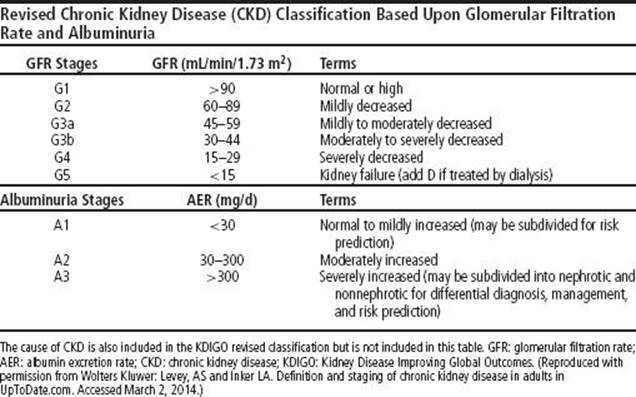
DESCRIPTION The Kidney Disease Improving Global Outcomes (KDIGO) organization developed updated clinical practice guidelines in 2012 to provide guidance on the evaluation, management, and treatment of chronic kidney disease (CKD) in adults and children who are not receiving renal replacement therapy (see table). CKD is defined as the presence of kidney damage (usually detected as urinary albumin excretion of ≥30 mg/day, or equivalent) or decreased kidney function (defined as estimated glomerular filtration rate [eGFR] <60 mL/min/ 1.73 m2) for 3 or more months, irrespective of the cause. The persistence of the damage or decreased function for at least 3 mo is necessary to distinguish CKD from acute kidney disease (AKI). The term “end-stage renal disease” (ESRD) generally refers to CKD treated with either dialysis or transplantation. Identifying the cause of kidney disease (eg, diabetes, drug toxicity, auto-immune diseases, urinary tract obstruction, kidney transplantation) enables specific therapy directed at preventing further injury. In addition, the cause of kidney disease has implications for the rate of progression and the risk of complications. The purpose of CKD staging is to guide management (risk for progression and complications of CKD). (See also Section I: “Chronic Kidney Disease, Adult [Renal Failure, Chronic].”)
REFERENCES
KDIGO. Summary of recommendation statements. Kidney Int. 2013;3(Suppl):5.
National Kidney Foundation. K/DOQI clinical practice guidelines for chronic kidney disease: Evaluation, classification, and stratification. Am J Kidney Dis. 2002;39 (Suppl 1):S1.
CHRONIC PELVIC PAIN SYNDROME/CHRONIC PROSTATITIS (CPPS/CP) IN MALES
DESCRIPTION Chronic pelvic pain syndrome (CPPS) is a diagnosis that can be made in either a man or a woman. Guidelines define CPPS/CP in males as CPP for at least 3 of the preceding 6 mo in the absence of other identifiable causes. Older terms used include prostatodynia and abacterial prostatitis.
• Males: Guidelines define CPPS as CPP for at least 3 of the preceding 6 mo in the absence of other identifiable causes. Sometimes referred to as chronic prostatitis/chronic pelvic pain syndrome (CP/CPPS) is a clinical syndrome. The symptomatology is based on urologic symptoms and/or pelvic pain or discomfort. While the term “prostatitis” is often used it is unclear to what degree the prostate is the cause of symptoms. Nonbacterial prostatitis occurs in men with no history of urinary tract infection and negative bacterial cultures of urine and prostatic fluid. The inflammatory type (NIH III A. Chronic prostatitis/pelvic pain syndrome, inflammatory) presents with GU or rectal pain or voiding symptoms; the prostatic fluid contains inflammatory cells. Men with the noninflammatory type (NIH IIIB. Chronic prostatitis/pelvic pain syndrome, noninflammatory), whose prostatic fluid has no leukocytes, have similar symptoms, but pelvic pain is usually the predominant complaint. (See Section I: “Prostatitis, Chronic, Nonbacterial, Inflammatory [NIH CP/CPPS III A]”; Section I: “Prostatitis, Chronic Nonbacterial, Noninflammatory [NIH CP/CPPS III B]”; Section II: “Pelvic Pain, Male.”)
TREATMENT
• Empiric 8–12 wk course of antibiotics
• Consider prostatic massage, if no response
• High-dose α-blockers (Flomax, Cardura, Hytrin)
• Anti-inflammatory agents, lifestyle changes, stress reduction, holistic therapies
REFERENCE
Nickel JC, Shoskes DA, Wagenlehner FM. Management of chronic prostatitis/chronic pelvic pain syndrome (CP/CPPS): The studies, the evidence, and the impact. World J Urol. 2013;31(4):747–753.
CHRONIC PELVIC PAIN SYNDROME (CPPS) IN FEMALES
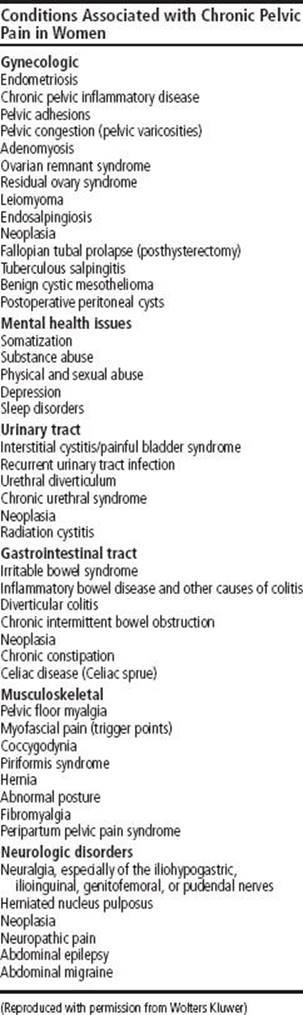
DESCRIPTION CPPS is a diagnosis that can be made in either a man or a woman. In women it is pain of at least 6-mo duration. The pain location is below the umbilicus and is usually severe enough to result in functional disability or need treatment. See table for causes. The best treatment plan for CPP is based upon shared decision making by the clinician and patient. A combination of treatments may be the optimal approach. (See also “Section I: Pelvic Pain, Female.”)
REFERENCE
Howard F. Causes of chronic pelvic pain in women. in UpToDate.com Wolters Kluwer, Accessed March 2, 2014.
CHRONIC PROSTATITIS SYMPTOM INDEX (CPSI)/NIH-CPSI (NATIONAL INSTITUTES OF HEALTH CPSI)
DESCRIPTION The National Institutes of Health Chronic Prostatitis Symptom Index (NIH-CPSI), a reliable validated instrument developed by the NIH Chronic Prostatitis Collaborative Research Network to aid in the quantification of chronic prostatitis symptoms. The NIH-CPSI is intended for clinical practice as well as research protocols. The instrument contains 9 questions. The major domains relate to pain (location, severity, frequency), the nature of voiding (irritative and obstructive symptoms), and the impact of prostatitis on quality of life. The goal of this multi-institutional collaborative effort was to define and measure the symptoms of chronic prostatitis and their impact on the daily lives of patients. The test is self-administered and can be completed in 5 min. Higher scores indicate worse outcomes in all domains, with a possible maximum score of 43. (See also Section I: “Prostatitis, Chronic Nonbacterial, Inflammatory & Noninflammatory (NIH CP/CPPS III A and B),” “Prostatitis, General” and “Section VII: Reference Tables: National Institutes of Health (NIH) Chronic Prostatitis Symptom Index [CPSI].”).
REFERENCES
Litwin MS, McNaughton-Collins M, Fowler FJ Jr, et al. The National Institutes of Health chronic prostatitis symptom index: development and validation of a new outcome measure. Chronic Prostatitis Collaborative Research Network. J Urol. 1999;162:369–375.
CHURG-STRAUSS SYNDROME
DESCRIPTION Also called allergic angiitis and granulomatosis, this is a vasculitis characterized by extravascular microscopic granulomas in the lungs, heart, GI tract, and skin. Histologically, necrosis and intense eosinophilic infiltration accompanied by histiocytes are seen. Both necrotizing and eosinophilic granulomatous vasculitis usually involve small arteries and veins, often with a history of atopy. Patients present with fever and weight loss. Eosinophilia, anemia, and an elevated ESR are found. The prostate may be involved by the granulomatous process. Treatment involving corticosteroids with cytotoxic drugs is being investigated.
REFERENCE
Langford CA, Sneller MC. New developments in the treatment of Wegener’s granulomatosis, polyarteritis nodosa, microscopic polyangiitis, and Churg-Strauss syndrome. Curr Opin Rheumatol. 1997;9(1):26–39.
CHYLOCELE
DESCRIPTION Also called filarial hydrocele, chylocele is a cyst-like collection of lymphatic fluid/drainage into the tunica vaginalis around the testis. The fluid is usually described as milky and contains leukocytes. This may result from lymphatic disruption secondary to diseases such as filariasis. Filariasis affects 120 million people in >80 countries and is caused by Wuchereria bancrofti, which is transmitted by mosquitoes. Chyloceles usually do not resolve after needle aspiration and require the underlying cause to be surgically or medically addressed. Freedom from infection at the time of surgery is critical for a favorable outcome. (See also “Section I: Scrotum and Testicle, Mass.”)
TREATMENT
• Vertical scrotal incision with complete excision of tunica vaginalis sac
• Orchiectomy and chordectomy for severe cases
• Medical treatment of filariasis (diethylcarbamazine, ivermectin, albendazole)
REFERENCE
DeVries CR. The role of the urologist in the treatment and elimination of lymphatic filariasis worldwide. BJU Int. 2002;89(S1):37–43.
CIRCUMCISION, FEMALE
DESCRIPTION Female genital cutting, also known as female circumcision or genital mutilation, is a culturally determined practice, predominantly performed in parts of Africa and Asia. The World Health Organization classified female genital cutting into 4 types of procedures.
• Type I consists of excision of the prepuce, with or without excision of part or all of the clitoris.
• Type II involves clitoridectomy and partial or total excision of the labia minora.
• Type III, or infibulation, includes removing part or all of the external genitalia and reapproximation of the remnant labia majora, leaving a small neointroitus.
• Type IV involves other forms of injuries to the genital region including pricking, piercing, stretching, burning, scraping, or any other manipulation of external genitalia.
Short-term urologic problems with the procedure include urethral edema and urinary retention potential. Long-term problems include dysmenorrhea, dyspareunia, fibrosis, keloids, sebaceous cysts, vulvar abscesses, infertility, and difficulty with pelvic exams, coitus, and vaginal delivery. Urologic issues include chronic UTI, voiding difficulties, urethral strictures, meatal obstruction meatitis, and urinary crystals.
REFERENCE
Nour NM. Female genital cutting (circumcision). In UpToDate.com, Accessed March 8, 2014.
CISPLATIN TOXICITY
DESCRIPTION Cisplatin is a very commonly used antitumor agent with significant adverse effects. Administered in urology for urothelial carcinoma and testicular cancer, its nephrotoxicity is cumulative and dose-dependent, and commonly limits use. Other significant effects include myelosuppression, ototoxicity, GI disturbances, and neurotoxicity. (See also Section II: “Chemotherapy Toxicity, Urologic Considerations.”)
TREATMENT
• Amifostine has been used to limit toxicity.
• Use of other platinum-based compounds may decrease toxicity while maintaining efficacy.
REFERENCE
Schellens JH, Pronk LC, Verweij J. Emerging drug treatments for solid tumors. Drugs. 1996;51(1):45–72.
CLITORAL LENGTH
DESCRIPTION Anatomically the clitoris is composed of the glans clitoris and the crura, its dimensions are generally independent of BMI, age, and height. Average length of the glans clitoris is 5.1 +/– 1.4 mm. Total average clitoral length from the tip of the glans to the insertion of the crura on the pubis is 16.0 +/– 4.3 mm. Multiparous women have slightly larger clitoral dimensions than nulliparous women with a total length on average 0.9 mm greater and a glans length 0.5 mm greater. (See also Section II: “Clitoromegaly.”)
REFERENCE
Verkauf BS, Von Thron J, O’Brien WF, et al. Clitoral size in normal women. Obstet Gynecol. 1992;80(1):41–44.
CLITORAL PRIAPISM
DESCRIPTION A rare condition that is associated with an extended duration of clitoral erection due to local engorgement of clitoral tissue causing clitoral or vulvar pain. The prolonged erection is not associated with sexual stimulation, and can last from minutes to days. It has been associated with medications: α-blockers, inhibitors of serotonin reuptake (SSRI antidepressants), and non-SSRI antidepressants and with TCC obstructing venous and lymphatic outflow. Stopping the offending agent can result in resolution within 24–72 hr. Other treatments reported: Imipramine, NSAIDs, ice packs, opiates, and, rarely, intracavernous injection of adrenaline. (See also Section II: “Clitoromegaly.”)
REFERENCE
Gharahbaghian L. Clitoral Priapism with No Known Risk Factors. West J Emerg Med. 2008;9(4):235–237.
CLITOROMEGALY
DESCRIPTION Enlargement of the clitoris is most commonly see in newborns. When noted, the practitioner must consider the possibility of intersex issues. The condition may be so severe as to appear as a normal male penis, although chordee is also usually present. Virilization is most commonly secondary to CAH. The underlying cause must be addressed. (See also Section I: “Disorders of Sexual Development [DSD]”; Section II: “Congenital Adrenal Hyperplasia.”)
REFERENCE
Rink RC, Kaefer M. Surgical management of disorders of sexual differentiation, cloacal malformation, and other abnormalities of the genitalia in girls. In: Wein AJ, et al., eds. Campbell-Walsh Urology. 10th ed. Philadelphia, PA: Saunders; 2012:3629–3666.
CLONIDINE SUPPRESSION TEST
DESCRIPTION A test sometimes used to rule out pheochromocytoma. Clonidine (0.3 mg) is administered and plasma norepinephrine levels are then measured. Those patients with essential hypertension with an elevation of norepinephrine levels will experience a 50% decrease in this catecholamine level. Patients with pheochromocytoma will not be suppressed. Patients should not be taking diuretics, β-blockers, or tricyclic antidepressants; α-blockers do not interfere with the test.
REFERENCE
Eisenhofer G, Goldstein DS, Walther MM, et al. Biochemical diagnosis of pheochromocytoma: How to distinguish true- from false-positive test results. J Clin Endocrinol Metab. 2003;88(6):2656–2666.
CLOSTRIDIUM DIFFICILE COLITIS, UROLOGIC CONSIDERATIONS
DESCRIPTION Also known as pseudomembranous enterocolitis, this is a potentially life-threatening infection of the colon due to overgrowth of C. difficile. It can be precipitated by antibiotic therapy – most commonly fluoroquinolones, clindamycin, cephalosporins, and penicillins – but any antibiotic can be implicated. This suppression of normal bowel flora by antibiotics and overgrowth of C. difficile has been reported in association with bowel preparation prior to elective surgery, as well as in addition to the use of antibiotics for any indication. Watery diarrhea and abdominal pain are the main symptoms of C. difficile infection, but it can range from the asymptomatic carrier state, diarrhea with colitis, or pseudomembranous colitis (endoscopic evidence of “pseudomembranes”), to severe life-threatening disease with toxic megacolon. Low-grade fever and leucocytosis are common. It is diagnosed by classic endoscopic findings, culture of organism, or detection of toxin in stool. Enzyme immunoassay (EIA) allows the direct detection of C. difficile toxin and is the test of choice.
TREATMENT
• Removal of antibiotic therapy. If antibiotic therapy is essential, attempt to use an agent with lesser likelihood of causing C. difficile overgrowth (aminoglycosides, macrolides, sulfonamides, tetracycline, or vancomycin).
• Metronidazole (500 mg TID or 250 mg QID) is recommended as initial treatment of less severe cases. If needed, IV metronidazole 500 mg q8h; treat for 10–14 days with follow-up toxin assay.
• Alternatively, oral vancomycin 125 mg QID.
REFERENCE
Kelly CP, LaMont JT. Clostridium difficile: More difficult than ever. N Engl J Med. 2008;59:1932–1940.
CLOT RETENTION
DESCRIPTION The culmination of visible blood in the urine that has formed clots within the bladder. The presence of blood clots impede the outflow of urine via the urethra and result in urinary obstruction. If not addressed emergently, clot retention can lead to pain, abdominal distension, hydroureteronephrosis, and bladder rupture.
TREATMENT
• Bedside insertion of urinary catheter for drainage and evacuation of blood clots
• May require operative cystoscopy and treatment of underlying cause of hematuria
• Correction of blood coagulation disorders
REFERENCE
Hicks D, Li C. Management of macroscopic hematuria in the emergency department. EMJ. 2007;24:385–390.
COBB COLLAR
DESCRIPTION Congenital narrowing of the bulbar urethra that can present with hematuria, UTI, or weak stream. Endoscopy and retrograde urethrogram reveal a bulbar urethral narrowing. The obstructing membrane is located just distal to the external sphincter and is reinforced by a fold extending from the verumontanum. Treatment is endoscopic resection.
SYNONYMS
• Moerman rings
• Congenital obstructive posterior urethral membrane
TREATMENT
Endoscopic resection
REFERENCE
Dewan PA, Keenan RJ, Morris LL, et al. Congenital urethral obstruction: Cobb’s collar or prolapsed congenital obstructive posterior urethral membrane (COPUM). Br J Urol. 1994;73(1):91–96.
COBRA HEAD SIGN
DESCRIPTION The radiologic appearance on an intravenous urogram (IVU) of an intravesical ureterocele of a single ureter in an adult, also called spring onion sign. The dilated ureterocele, filled with contrast material, protrudes into the bladder, which is also filled with contrast material, but is separated from it by a thin radiolucent halo. The ureterocele might be congenital or acquired, as in cases of trauma or inflammation.
REFERENCE
Nussbaum AR, Dorst JP, Jeffs RD, et al. Ectopic ureter and ureterocele: Their varied radiographic manifestations. Radiology. 1986;159:227–235.
COCCIDIOMYCOSIS, GENITOURINARY
DESCRIPTION Outbreaks of Coccidioides immitis infection are common when people are exposed to dust that contains the spore. An opportunistic infection more common in patients <5 and >50 yo, it is associated with AIDS, steroid use, and chemotherapy for malignancy. After pulmonary inoculation, the patient can develop erythema nodosum (valley bumps or valley fever). Chest radiographs demonstrate infiltrates with cavitation. Serologic tests are available to help establish the diagnosis. Disseminated disease involves the kidney in up to 65%, the adrenal in 16–32%, and the prostate in 6%. Renal coccidiomycosis may cause similar changes, as seen in renal TB (moth-eaten calyces, infundibular stenosis, ureteral stricture, and calcifications). Prostatic infection with occasional abscess and scrotal infections with fistulas have been reported. Epididymal and prostatic involvement can demonstrate necrotizing and nonnecrotizing granulomas. Therapy includes up to 2 g of amphotericin, with 1 year of ketoconazole (200 mg/d).
REFERENCE
Wise GJ, Freyle J. Changing patterns in genitourinary fungal infections. AUA Update. Vol. XVI, Lesson 1, 1997.
COHEN (“CROSS-TRIGONAL”) URETERAL REIMPLANTATION
DESCRIPTION Through a transvesical approach, the ureter is mobilized from its hiatus and delivered through a submucosal tunnel to the contralateral side of the trigone. A cross-trigonal reimplantation is then carried out by reanastomosing the ureter to the bladder.
REFERENCE
Khoury AE, Bagli DJ. Vesicoureteral Reflux. In: Wein AJ, et al., eds. Campbell-Walsh Urology. 10th ed. Philadelphia, PA: Saunders; 2012:3267–3309.
COITAL INCONTINENCE (COITAL LEAKAGE/INTERCOURSE INCONTINENCE)
DESCRIPTION Recent attention has focused on loss of urine during intercourse termed “coital incontinence.” Loss of vaginal fluids during sexual activity is not well studied and the term “female ejaculation” has become a popular term. Although the exact pathophysiology is poorly understood this phenomenon may include urinary incontinence during sexual activity. In 1 series 60% of women with a history of urinary incontinence reported urinary leakage during intercourse. Coital incontinence is considered in the spectrum of stress urinary incontinence (SUI) and pelvic organ prolapse by some authors. Urethral sphincter incompetence has also been suggested as part of the pathophysiology. Many women with detrusor overactivity (DO) leak during sex; however, the potential role of associated urethral incompetence needs further investigation. Quality of life appears negatively impacted by this condition. (See also Section I: “Incontinence, Urinary, Adult Female and Section II; “Ejaculation, Female.”)
REFERENCES
El-Azab AS, Yousef HA, Seifeldein GS. Coital incontinence: Relation to detrusor overactivity and stress incontinence. Neurourol Urodyn. 2011;30(4):520–524.
Jha S, Strelley K, Radley S. Incontinence during intercourse: Myths unravelled. Int Urogynecol J. 2012;23(5):633–637.
COLLECTING SYSTEM DUPLICATION, COMPLETE
DESCRIPTION Duplicated collecting systems (also known as duplex collecting systems) can be defined as renal units containing 2 pyelocaliceal systems that are associated with a single ureter or with double ureters. The 2 ureters empty separately into the bladder or fuse to form a single ureteral orifice. Associated problems include upper-pole hydronephrosis from stenosis, ectopic insertion of the upper-pole ureter, ureterocele of the upper-pole ureter, and reflux involving the lower pole. Duplex collecting systems can be unilateral or bilateral and can be associated with obstruction, reflux, and infection. Caused by early ureteral bud bifurcation or the occurrence of 2 ureteral buds from the wolffian duct during renal embryogenesis.
REFERENCE
Glassberg KI, Braren V, Duckett JW, et al. Suggested terminology for duplex systems, ectopic ureters and ureteroceles. J Urol. 1984;132(6):1153–1154.
COLON AND RECTAL CANCER, UROLOGIC CONSIDERATIONS
DESCRIPTION Colorectal cancer may present as locally invasive lesions that involve the bladder and/or prostate. En-bloc resection (pelvic exenteration) of the bladder and rectum/colon is sometimes indicated. In colorectal malignancies, a 7–12% incidence of locoregional extension into the adjacent organs has been reported, with the bladder as the most commonly involved organ. In women, the interposition of the uterus between the colon and bladder makes the incidence lower. In cases of more proximal colon cancers, ureteral and renal involvement may require localization with ureteral catheters. After extensive colorectal dissection, erectile and bladder dysfunction may occur secondary to disruption of the pelvic plexus up to 70% of the time. (See also Section I: “Neurogenic Bladder, General” and Section VII: “TNM.”)
REFERENCE
Calpista A, Lai S, Agostini A, et al. Functional urological complications after colorectal cancer surgery. Pelviperineology. 2007;26(1):38–40.
COLUMN OF BERTIN, HYPERTROPHIED
DESCRIPTION A normal anatomic structure of the kidney, which, if enlarged, can be mistaken for a renal mass. It normally appears as granular material in the renal sinus, which is simply cortex. The column of Bertin is located between the pyramids. (See also Section II: “Renal Pseudotumors.”)
REFERENCE
Anderson JK, Cadeddu JA. Surgical Anatomy of the Retroperitoneum, Adrenals, Kidneys and Ureters. In: Wein AJ, et al., eds. Campbell-Walsh Urology. 10th ed. Philadelphia, PA: Saunders; 2012:3–32.
COMPARTMENT SYNDROME, UROLOGIC CONSIDERATIONS
DESCRIPTION Compartment syndrome, defined by the rise of pressure in a tissue compartment compromising circulation, can result in devastating consequences, especially in the urologic setting. Reports of compartment syndrome leading to rhabdomyolysis, renal failure, and limb loss have been reported with the dorsal lithotomy position, flank position during open or laparoscopic procedures, prolonged reconstructive pediatric procedures, and urethral and perineal surgeries. Recently there has been an increase in reports relating to robotic prostatectomy. In abdominal compartment syndrome, a Foley catheter can be used to provide continuous abdominal compartment pressure readings.
The etiology of compartment syndrome is multifactorial and prevention is the mainstay of treatment. Positioning and other efforts to prevent acute lower extremity compartment syndrome include limiting the time of leg elevation, positioning the leg below the level of the atrium and postoperative monitoring of patients at risk. Pulse oximetry to detect hypoperfusion has been reported. The 6 “Ps” associated with compartment syndrome are: Pain out of proportion based on exam, paresthesia, pallor, paralysis, pulselessness, and pressure. Fasciotomy may be necessary to relive pressure and restore extremity perfusion. Although debated, measured compartment pressure of 30 mm Hg is a generally accepted indication for lower extremity fasciotomy. (See also Section I: “Rhabdomyolysis.”)
REFERENCES
Bocca G, van Moorselaar JA, Feitz WF, et al. Compartment syndrome, rhabdomyolysis and risk of acute renal failure as complications of the lithotomy position. J Nephrol. 2002;15:183–185.
Sukhu T, Krupski TL. Patient positioning and prevention of injuries in patients undergoing laparoscopic and robot-assisted urologic procedures. Curr Urol Rep. 2014;15(4):398.
COMPULSIVE MASTERBATION
DESCRIPTION Masturbation is the deliberate stimulation of the genitalia in order to achieve sexual arousal. Compulsive masturbation, like all compulsive behaviors, may be included in the spectrum of anxiety disorders. Compulsive behaviors are meant to reduce anxiety, fear, worry, or apprehension. Patients with compulsive disorders are unable to inhibit their behaviors, even after they become maladaptive, regardless of consequences. Most frequently seen in patients with psychiatric disorders such as autism, schizophrenia, and personality disorders. May be seen with dementia and Parkinson disease.
REFERENCE
Calabro RS, Galì A, Marino S, et al. Compulsive masturbation and chronic penile lymphedema. Arch Sex Behav. 2012;41(3):737–739.
CONDYLOMATA LATA
DESCRIPTION Also called flat condyloma, these moist or mucous papules are found in the skin folds of syphilis patients and reflect the secondary stage of syphilis. They secrete serous fluid and can be covered by a layer of epidermal debris. They represent the hematogenous spread of spirochetes. (See also Section I: “Syphilis.”) (Image )
TREATMENT
• Single dose of penicillin G (benzyl penicillin) 2.4 million units IM OR
• IM ceftriaxone 1,000 mg/d for 10 days OR
• Oral tetracycline 500 mg QID for 14 days OR
• Oral doxycycline 100 mg BID for 14 days
REFERENCE
Lautenschlager S. Cutaneous manifestations of syphilis: Recognition and management. Am J Clin Dermatol. 2006;7(5):291–304.
CONGENITAL ADRENAL HYPERPLASIA (CAH)
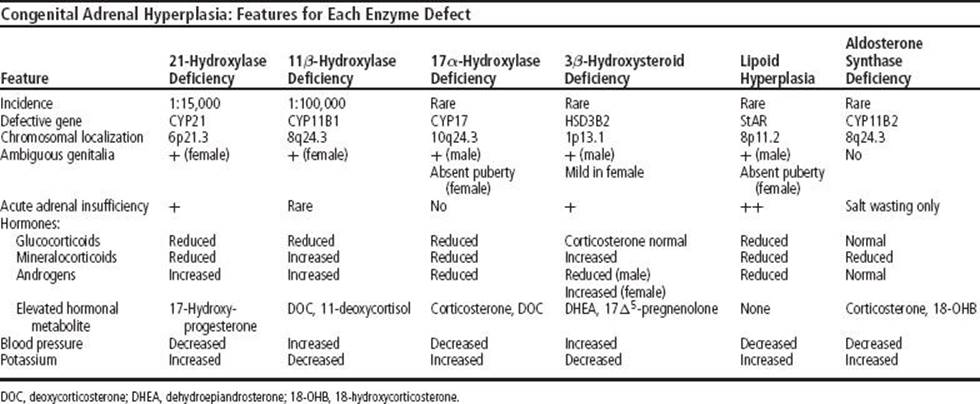
DESCRIPTION The adrenal cortex secretes 2 compounds, DHEA and androstenedione, that require conversion to testosterone in peripheral tissues for their androgenic effects. CAH represents a group of autosomal-recessive, inherited metabolic errors, each characterized by a deficiency or total lack of a particular enzyme involved in the biosynthesis of cortical steroids, particularly cortisol. Steroidogenesis is then channeled into other pathways, leading to increased production of androgens, which accounts for virilization. Simultaneously, the deficiency of cortisol results in increased secretion of ACTH, resulting in adrenal hyperplasia. Certain enzyme defects may also impair aldosterone secretion, adding salt wasting to the virilizing syndrome. The most commonly recognized forms are 21-hydroxylase deficiency (>90%) and 11-hydroxylase deficiency (5–8%). The spectrum of presentation is substantial, resulting from the compound heterozygosity and multiple etiologies in this disease continuum. Phenotypic manifestations include ambiguous genitalia (CAH is the most common reason in newborns), clitoromegaly, labioscrotal fusion, and hypospadias. Clinical CAH subtypes include (1) salt wasters (virilization and aldosterone deficiency), (2) simple virilizers (virilization without salt wasting), and (3) nonclassic patients (no virilization or wasting). In the salt-wasting variant, symptoms begin weeks after birth with weight loss, failure to thrive, vomiting, dehydration, and life-threatening adrenal crisis. In virilizers, sexual precocity is the hallmark of disease. Diagnosis is often made from markedly elevated levels of serum 17-hydroxyprogesterone and progesterone (with 21-OH deficiency), but may also present as elevated 11-deoxycortisol and 11-DOC (with 11-OH deficiency). (See also Section I: “Disorders of Sexual Development [DSD]”; Section II: “11β-hydroxylase (CYP11B1) deficiency and 21-Hydroxylase (CYP21A2) Deficiency.”)
TREATMENT
• Monitor for severe, life-threatening salt wasting and dehydration in the 1st wk of life. Follow electrolytes.
• Monitor for adrenal crisis.
• Determination of etiology (measure 17-hydroxyprogesterone, ACTH, cortisol, 11-DOC, DHEA)
• Genetic analysis (karyotype, FISH for SRY region)
• Sex assignment. Girls with classic CAH typically undergo reconstructive surgery, usually clitoroplasty and vaginoplasty.
• Glucocorticoid replacement therapy: Hydrocortisone 12–18 mg/m2/d infants. In older children, dexamethasone 0.25–0.50 mg at bedtime. Stress dose increases for illness or surgery to avoid adrenal crisis.
• Mineralocorticoid replacement fludrocortisone 0.05–0.20 mg/d
REFERENCES
MacLellan DL1, Diamond DA, et al. Recent advances in external genitalia. Pediatr Clin N Am. 2006;53(3):449–464.
Merke DP, Bornstein SR. Congenital adrenal hyperplasia. Lancet. 2005;365(9477):2125–2136.
Speiser PW, Azziz R, Baskin LS, et al. Congenital adrenal hyperplasia due to steroid 21-hydroxylase deficiency: An Endocrine Society clinical practice guideline. J Clin Endocrinol Metab. 2010;95(9):4133–4160.
CONGENITAL NEPHROSIS/NEPHROTIC SYNDROME
DESCRIPTION Congenital nephrotic syndrome is a rare condition affecting children from birth to the 3rd month of life. Familial incidence occurs as an autosomal recessive mode of inheritance. This disease is seen most frequently in Finland (1:8,000 live births). Clinical manifestations include wide anterior and posterior fontanelles, generalized edema, abdominal distention, anasarca, and malnutrition. Characteristic lab findings include proteinuria, hypoalbuminemia, and hyperlipidemia. Long-term survival is dependent on the correction of nutritional deficits and renal transplantation.
REFERENCE
Ramirez-Seijas F, Granado-Villar D, Cepero-Akselrad A, et al. Congenital nephrotic syndrome. Intern Pediat. 2000;15(2):121–122.
CONSTIPATION, UROLOGIC CONSIDERATIONS
DESCRIPTION Constipation is associated with bladder storage symptoms and increased risk of urinary tract infections. Urodynamic studies in children with functional constipation have revealed detrusor overactivity (DO) and small bladder capacity, both of which improve with improved bowel function. In addition, the same holding behavior that leads to functional constipation often alters bladder habits as well, as seen with dysfunctional elimination syndrome. Treatment of bowel dysfunction alone can resolve chronic recurrent UTI and urinary incontinence in some children. It is important to rule out neurologic and bowel disease as causes of constipation before making the diagnosis of functional constipation. (See also Section I: “Dysfunctional Elimination Syndrome.”)
TREATMENT
• Diet changes
• Laxatives, stool softeners
• Toilet schedules
REFERENCES
Loening-Baucke V. Urinary incontinence and urinary tract infection and their resolution with treatment of chronic constipation of childhood. Pediatrics. 1997;100:228–232.
Veiga ML, Lordêlo P, Farias T, et al. Constipation in children with isolated overactive bladder. J Pediatr Urol. 2013;9(6 Pt A):945–949.
CONTACT DERMATITIS, UROLOGIC CONSIDERATIONS
DESCRIPTION Contact dermatitis is caused by an external irritant or allergen, and the patient complains of itching and burning or stinging. The findings are inflammation, scaling, and crust formation. Extreme reactions can result in blistering and necrosis. Allergic agents typically induce dermatitis after repeated contact with the skin.
CAUSES
• Common irritant agents cause immediate symptoms and include industrial chemicals, soaps, cleansing products, spermicides and lubricants, perfumes, urogenital secretions, and feces.
• Sensitizing agents for the genital skin include cleansing agents and disinfectants, lubricants and emollients, spermicides and other topical ointments, perfumes and fragrances, latex and other types of rubber, clothing, dyes, poison ivy (direct contact or indirect contact from the hand), met als such as nickel, and sanitary napkins.
TREATMENT
• Attempt to identify and remove the offending agent from contact with the skin.
• Topical corticosteroids, emollients, and antihistamines give symptomatic relief. Severe allergic contact dermatitis may require oral corticosteroids.
• Severe reactions (rarely) may require debridement and grafting.
• Patch testing of uninvolved skin to common antigens is often helpful.
REFERENCES
Buechner SA. Common skin disorders of the penis [review]. BJU Int. 2002;90(5):498–506.
Burrows LJ, Shaw HA, Goldstein AT. The vulvar dermatoses. J Sex Med. 2008;5(2):276–283.
CONTRAST-INDUCED NEPHROPATHY (CIN)
DESCRIPTION An acute and usually reversible form of acute kidney injury following the administration of radiocontrast media. Onset is often 12–24 hr after the contrast study, with renal recovery typically beginning within 3–5 days; it is nonoliguric. The process behaves as a clinical acute tubular necrosis (ATN) with decreased GFR and increased FENa. Risk factors include renal insufficiency (Cr >1.5 mg/dL, GFR <60 mL/min), diabetes, heart failure, dehydration, and multiple contrast studies within 72 hr. The mechanisms of the injury are thought to be renal vasoconstriction with resulting medullary hypoxemia and direct cytotoxic effects of contrast material. Older agents are hyperosmolar and ionic and carry a higher risk of nephrotoxicity, whereas newer agents are iso-osmolar and nonionic and have a lower risk of renal injury. (See also Section I: “Contrast allergy and reactions” and Section II: “Nephrogenic Systemic Fibrosis/Fibrosing Dermatopathy.”)
TREATMENT
• Preventative:
– Avoid contrast material if possible; consider alternative imaging modalities such as ultrasound or CT/MRI without contrast
– Avoid dehydration and NSAIDs, as both increase renal vasoconstriction
– IV saline or sodium bicarbonate (154 mEq/L in D5W, 3 mL/kg/h 1 hr prior, 1 mL/kg/h 6 hr following) before and after the administration of contrast
– Antioxidant acetylcysteine [600–1,200 mg PO BID] 1 day prior and following contrast study
– Use low- or iso-osmolal contrast agents and avoid frequent repeat dosing intervals of contrast (ie, <48 hr).
• Contrast-induced nephropathy diagnosed following a procedure should be managed as ATN:
– Do not biopsy kidney; injury is usually transient.
– Carefully control fluid and electrolyte balance; hemodialysis is usually unnecessary.
– Avoid further nephrotoxic insults and/or medications.
REFERENCE
Asif A, Epstein M. Prevention of radiocontrast-induced nephropathy. Am J Kidney Dis. 2004;44:12.
CORDONNIER AND NESBIT URETERAL ANASTOMOSIS
DESCRIPTION A direct ureteral colonic refluxing anastomosis incorporating full-thickness ureteral and intestinal wall.
REFERENCE
Dahl DM, et al. Use of intestinal segments and urinary diversion. In: Wein AJ, et al., eds. Campbell-Walsh Urology. 10th ed. Philadelphia, PA: Saunders; 2011:2411–2449.
CORPORA AMYLACEA (CA)
DESCRIPTION Small, round, ovoid bodies, lamellar in structure, located in the alveoli of the prostate. Composed of lecithin, albumin, and nitrogenous substances, they may precipitate around sloughed and degenerated prostatic epithelial cells. Recently noted is a high prevalence of calcium phosphate in the form of hydroxyapatite. CAs become more common with age, and act as the nidus for the development of prostatic calculi formation. Although often observed histologically to be associated with inflammation, the contribution of CA to prostatitis-related symptoms of unknown etiology or to prostate carcinogenesis remains unclear.
REFERENCE
Sfanos KS, Wilson BA, De Marzo AM, et al. Acute inflammatory proteins constitute the organic matrix of prostatic corpora amylacea and calculi in men with prostate cancer. Proc Natl Acad Sci U S A. 2009;106(9):3443–3448.
CORTICAL NECROSIS, ACUTE (RENAL CORTICAL NECROSIS)
DESCRIPTION Acute cortical necrosis is a rare form of acute renal failure (ARF) characterized by necrosis of the cortex with sparing of the medulla. It is thought to be the result of selective arterial spasm of the cortical vasculature with continued perfusion of the renal medulla via the medullary arterioles. Pathologically, necrosis of the glomeruli, tubules, and arterioles occurs. A cortical rim sign can be seen on contrast-enhanced CT scan, indicating spared perfusion of the renal capsule. Factors that can predispose a patient to acute cortical necrosis include shock, placental abruption, peritonitis, transfusion reaction, pancreatitis, and toxins. (See also Section I: “Renal Failure, Acute.”)
REFERENCE
Wilck EJ, Gerard PS. Acute cortical necrosis. Urology. 1997;49(3):116.
COSTOVERTEBRAL ANGLE TENDERNESS
DESCRIPTION Costovertebral angle (CVA) tenderness is a clinical sign elicited by percussion of the CVA and often accompanied by symptoms of flank pain. The CVA is defined by the area formed by the 12th rib and vertebral column. CVA tenderness is a manifestation of renal capsular distension resulting in innervation of afferent T11–L2 nerve roots. Common causes include pyelonephritis, perirenal abscess, urolithiasis, acute hydronephrosis, renal artery occlusion, and renal vein thrombosis. (See also Section I: “Flank Pain.”)
REFERENCE
Follin SA. Professional Guide to Signs & Symptoms, 5th ed. Philadelphia, PA: Lippincott Williams & Wilkins; 2006.
COUGH STRESS TEST
DESCRIPTION The cough stress test involves filling the patient’s bladder to at least 300 mL or to subjective fullness. The patient is then asked to cough as the physician directly visualizes the urethral meatus. The test can be performed with the patient in an upright position or in dorsal lithotomy on an exam table (supine stress test). If urine leakage is noted, the test is positive. The cough stress test has been compared with other more sophisticated testing methods (multichannel urodynamic studies) and has demonstrated good sensitivity and specificity. This test can be used not only as part of the clinician’s physical exam, but as an outcome measure after treatment.
REFERENCE
Ghoniem G, GhoniStanford E, Kenton K, et al. Evaluation and outcome measures in the treatment of female urinary stress incontinence: International Urogynecological Association (IUGA) guidelines for research and clinical practice. Int Urogynecol J Pelvic Floor Dysfunct. 2008;19(1):5–33.
COWPER DUCT CYST
DESCRIPTION The Cowper glands are paired periurethral structures located in the urogenital diaphragm and are drained by 2–3-cm long ducts that empty into the bulbous urethra through small, flush openings. These glands secrete a clear fluid that functions as a lubricant and a coagulation factor for semen during ejaculation and to neutralize traces of acidic urine in the urethra. Abnormalities of these glands and their ducts may result from obstruction and, less frequently, trauma and infection. This diagnosis should be considered in any male presenting with irritative or obstructive urinary symptoms, particularly when there is a complaint of persistent postvoid dribbling or incontinence. Urethrography and cystourethroscopy are the diagnostic studies of choice.
SYNONYMS
• Cowper syringocele
• Bulbourethral gland duct ectasia
TREATMENT
Endoscopic unroofing of the syringocele (marsupialization) into the bulbar urethra
REFERENCE
Bevers F, Abbekerk EM, Boon TA. Cowper’s syringocele: Symptoms, classification and treatment of an unappreciated problem. J Urol. 2000;163:782–784.
COWPER GLAND CARCINOMA
DESCRIPTION Rare tumor that can present with obstructive symptoms, pain with defecation, or constipation. Most have a palpable perineal mass. Microscopically, these appear as adenocarcinoma. However, local necrosis and tissue destruction may prevent exact localization of the site of origin. Combined surgical and radiation therapy has been employed.
REFERENCE
Mitsumori K, Elwell MR. Tumours of the male accessory sex glands. IARC Scientific Pub. 1994;111:431–449.
COWPERITIS (INFLAMMATION OF BULBOURETHRAL GLAND)
DESCRIPTION Normally, the bulbourethral glands are not palpable. 1 gland lies on each side of the membranous urethra, between the inferior edge of the prostate and the inner border of the anal canal. When they are inflamed, they are exquisitely tender and palpable. In chronic inflammation, they enlarge from the size of a pea to that of a hazelnut. With a finger in the rectum, the thumb is held outside on the median raphe of the scrotum just anterior to the anus and the tissue is compressed to detect tenderness or a mass.
REFERENCE
Chughtai B, Sawas A, O’Malley RL, et al. A neglected gland: A review of Cowper’s gland. Int J Androl. 2005;28(2):74–77.
CREATININE, SERUM, INCREASED/DECREASED
DESCRIPTION Serum creatinine represents the breakdown product of muscle creatine and is an ideal marker of glomerular filtration rate (GFR). 5–10% of excreted creatinine is secreted in the proximal tubule, rather than filtered through the glomerulus. Serum creatinine can estimate the GFR (eGFR) by 2 methods: The modification diet of renal disease (MDRD) or the Cockcroft–Gault formula. Increased levels can signify renal failure, renal infection, rhabdomyolysis, urinary tract obstruction, acute tubular necrosis, dehydration, eclampsia, drug toxicity, etc. Decreased levels may reflect female gender, advanced age, late stages of muscular dystrophy, or myasthenia gravis. (See also Section IV: “Urine Studies III Creatinine Clearance and Glomerular Filtration Rate.”)
REFERENCE
Rule AD, Larson TS, Bergstralh EJ, et al. Using serum creatinine to estimate glomerular filtration rate: Accuracy in good health and in chronic kidney disease. Ann Intern Med. 2004;141(12):929–937.
CREDé MANEUVER
DESCRIPTION Used to facilitate voiding in those patients with decreased bladder tonicity and low outlet resistance. The maneuver involves placing the thumb of each hand over the left and right anterior superior iliac spine, and the fingers over the suprapubic area and pressing into the abdomen. Both hands are then pressed downward into the pelvis. It may not always be an effective technique to empty the bladder, since the external urethral sphincter may contract during the maneuver.
SYNONYM
Manual compression of bladder
REFERENCE
Moy LM, Wein AJ. Additional therapies for storage and emptying failure. In: Wein AJ, et al., eds. Campbell-Walsh Urology. 10th ed. Philadelphia, PA: Saunders; 2011:2298.
CREMASTERIC REFLEX
DESCRIPTION The cremasteric reflex is a useful sign in the evaluation of the acute scrotum. The classic presentation of testicular torsion is sudden onset of severe unilateral pain, often associated with nausea or vomiting. The normal reflex consists of cremasteric contraction with elevation of the testis, elicited by stroking the ipsilateral upper medial thigh. The innervation is carried via the genital branch of the genitofemoral nerve. The reflex was previously reported to be absent in 100% of cases of testicular torsion; however, there have been reported cases of preserved cremasteric reflex in the setting of testicular torsion. As such, the presence or absence of this reflex should not influence the decision to perform a scrotal exploration when there is a clinical suspicion of torsion.
REFERENCE
Nelson CP, Williams JF, Bloom DA. The cremasteric reflex: A useful but imperfect sign in testicular torsion. J Pediatr Surg. 2003;38(8):1248–1249.
CRIBRIFORM CLEAR CELL HYPERPLASIA OF THE PROSTATE
DESCRIPTION This condition may be misdiagnosed as cribriform prostate carcinoma, but anticytokeratin staining of the basal cell layer distinguishes the 2 lesions. Also, hyperplasic cells lack cytologic atypia, which is in contrast to carcinoma. The natural history is unknown; the lesion is usually found in the central area of the gland.
REFERENCE
Epstein J. Precursor lesions to prostatic adenocarcinoma. Virchows Arch. 2009;454(1):1–16.
CRYPTOCOCCUS, GENITOURINARY
DESCRIPTION An opportunistic fungal infection, Cryptococcus neoformans thrives in areas inhabited by birds. A pulmonary site is most common primary infection site, but immunocompromised patients can develop disseminated disease (AIDS, transplant). Adrenal insufficiency has been reported, but the most common sites of GU involvement are the prostate and kidney. The prostate may be a reservoir in patients with AIDS. Epididymis and penis involvement have also been reported. GU involvement is considered a manifestation of systemic disease. (See also Section I: “Fungal Infections, Genitourinary.”)
TREATMENT
• Systemic antifungal therapy with IV amphotericin B, flucytosine, fluconazole, or combination of drugs
• Surgical drainage of large abscesses may be considered
REFERENCE
Traboulsi R, Kanafani ZA, Kanj SS. Fungal infections of the genitourinary tract [review]. J Med Liban. 2004;52(4):202–209.
CRYSTAL-INDUCED ACUTE KIDNEY INJURY (ACUTE RENAL FAILURE)
DESCRIPTION Intratubular precipitation of crystals poorly soluble in human urine can lead to AKI. This form of AKI most commonly occurs as a result of acute uric acid nephropathy (tumor lysis syndrome) or following the administration of other drugs/toxins, such as acyclovir, sulfonamides, methotrexate, indinavir, triamterene, ethylene glycol, and high doses of Vitamin C. The presentation is usually asymptomatic and detected by worsening serum creatinine, although renal colic symptoms may be present. Severe volume depletion (prerenal state) is the most important predisposing factor to crystal-induced AKI when patients are receiving the above medications. Likewise, the 1st step in treatment is correction of volume status, usually with isotonic saline and loop diuretics in order to wash out crystals. (See also Section I: “Acute Kidney Injury, Adult [Renal Failure, Acute].”)
REFERENCE
Lochy S, Jacobs R, Honoré PM, et al. Phosphate induced crystal acute kidney injury – an under-recognized cause of acute kidney injury potentially leading to chronic kidney disease: case report and review of the literature. Int J Nephrol Renovasc Dis. 2013;6:61–64.
CT SCAN, UROLOGIC CONSIDERATIONS
DESCRIPTION A computed tomography (CT) of the abdomen and pelvis can be performed with and without IV or PO contrast. Noncontrast studies are most useful in the evaluation of nephrolithiasis. IV contrast is useful to delineate vascular, renal, and collecting system anatomy. Delayed images (excretory phase) provide information on urinary tract drainage and ureteral anatomy. Protocols have been developed to delineate renal tumors, stones, urothelial tumors, and arterial supply by adjusting the presence of contrast and the timing of the study. Modern CT machines can provide detailed images quickly and efficiently, but the clinician must be aware of contrast complications and contrast-induced nephropathy (see also Section I: “Contrast Allergy and Reactions”; Section II: “Contrast Induced Nephropathy [CIN].”) and the increased risk of malignancy with repeat scans, especially in children. Approximate CT radiation exposure varies with type. Some radiation exposure comparisons average, in MilliSieverts (mSv):
• CT electron beam (EBT): 11 mSv Chest, 26 mSv Abdomen
• CT Sequential: 4 mSv Chest, 20 mSv Abdomen
• CT Spiral: 2 mSv Chest, 7 mSv Abdomen
• CT Pelvis: 7 mSv
• Intravenous pyelogram: 8 mSv
• Standard chest x-ray (2 view): 0.06–0.25 mSv
• Natural sources: Annual (Germany): 2.4 mSv/yr
• Survivors of Hiroshima and Nagasaki Atomic bombings: 50–150 mSv
• Mean lethal dose radiation (kills 50% within 60 days): 3,500–4,000 mSv
REFERENCES
Blake MA, Kalra MK. Imaging of urinary tract tumors. Cancer Treat Res. 2008;143:299–317.
Brenner DJ, Hall EJ. Computed tomography: An increasing source of radiation exposure. N Engl J Med. 2007;357(22):2277–2284.
Cancer Risk due to Diagnostic Radiology in Family Practice notebook. http://fpnotebook.com/Rad/HemeOnc/CncrRskDTDgnstcRdlgy.htm, Accessed March 2, 2014.
CULP-DEWEERD PYELOPLASTY
DESCRIPTION A pyeloplasty technique best suited for management of UPJ obstruction in the setting of a long segment of strictured proximal ureter. A spiral incision is carried out over the anterior and medial aspect of the renal pelvis and continued down across a point beyond the UPJ obstruction. The apex of the flap is brought down to the apex of the ureterotomy, where a 5-0 chromic stay suture is placed. The posterior and anterior anastomoses are completed with interrupted 5-0 chromic sutures.
REFERENCE
Nakada SY, Hsu TH. Management of Upper Urinary Tract Obstruction. In: Wein AJ, et al., eds. Campbell-Walsh Urology. 10th ed. Philadelphia, PA: Saunders; 2012:1143.
CUNNINGHAM CLAMP
DESCRIPTION A clamp device designed to compress the penile urethra and prevent urinary incontinence in males only. The clamp is usually placed on the midshaft of the penis and requires the user to have manual dexterity, intact penile skin, good cognition, and a sensate penis and bladder. The clamp has a ratchet-type closure with foam padding and comes in small, medium, and large sizes. It is inexpensive and the most commonly used clamp device. Other types are commercially available based on this urethral compression concept.
REFERENCE
Moore KN, Schieman S, Ackerman T, et al. Assessing comfort, safety, and patient satisfaction with 3 commonly used penile compression devices. Urology. 2004;63(1):150–154.
CYCLOPHOSPHAMIDE (CYTOXAN) TOXICITY
DESCRIPTION Cyclophosphamide (sometimes referred to through the historic brand name Cytoxan) is an alkylating chemotherapeutic agent used to treat many blood cell cancers and as an effective immunosuppressant for other diseases such as rheumatoid arthritis. Common side effects include bone marrow suppression, diarrhea, alopecia, and lethargy. However, Cytoxan has unique toxicities, including the development of hemorrhagic cystitis and secondary cancers such as urothelial carcinoma of the bladder and leukemia. Acrolein, a metabolite of Cytoxan, is the main cause of acute hemorrhagic cystitis (and thought to be the cause of long-term increased risk of urothelial carcinoma in patients treated with Cytoxan). Hemorrhagic cystitis can be prevented by administering Mesna at the time of Cytoxan readministration; Mesna binds the toxic metabolite acrolein. (See also Section I: “Cystitis, Hemorrhagic [Infectious, Noninfectious, Radiation]”; Section II: “Chemotherapy Toxicity, Urologic Considerations.”)
TREATMENT
• Mesna can be given either PO or IV, and its routine concurrent use is recommended in the treatment of patients receiving cyclophosphamide and ifosfamide. It should be discontinued when hemorrhagic cystitis is present as it can prevent the development of the cystitis but is ineffective in treating active bleeding.
• Hydration: Forced saline diuresis and the medication Mesna were similar in preventing the incidence of cyclophosphamide-induced hemorrhagic cystitis in some studies.
– ASCO recommends that patients receiving high-dose cyclophosphamide in the setting of hematopoietic cell transplantation receive Mesna in conjunction with saline diuresis.
REFERENCES
Hensley ML, Hagerty KL, Kewalramani T, et al. American Society of Clinical Oncology 2008 clinical practice guideline update: Use of chemotherapy and radiation therapy protectants. J Clin Oncol. 2009;27(1):127–145.
Hu RQ, Mehter H, Nadasdy T, et al. Severe hemorrhagic cystitis associated with prolonged oral cyclophosphamide therapy: Case report and literature review. Rheumatol Int. 2008;28(11):1161–1164.
CYSTADENOCARCINOMA, GENITOURINARY
DESCRIPTION Commonly seen in other organ systems, such as the ovary, pancreas, appendix, and thyroid. In the GU system, cystadenocarcinoma has been reported in testes, prostate, paratesticular structures, and kidney. Grossly, multilocular cystic masses are noted. Microscopically, cuboidal to columnar epithelium is seen lining the cysts. These cells can secrete serous or mucinous substances. Malignant cells will demonstrate multilayering of epithelium, nuclear atypia, and invasion of surrounding stroma. It is treated by primary surgical resection.
REFERENCE
Yu CC, Huang JK, Chiang H, et al. Papillary cystadenocarcinoma of the epididymis: A case report and review of the literature. J Urol. 1992;147(1):1622–1625.
CYSTADENOMA, GENITOURINARY
DESCRIPTION A benign cystic epithelial-lined mass that has been described in the kidney, seminal vesicle, prostate, and epididymis (most common GU tract site). It is often described as a papillary cystadenoma and represents benign epithelial hyperplasia. It usually causes very few symptoms. Lesions can be bilateral, and 2/3 may be associated with Von Hippel–Lindau syndrome. Grossly, the lesion appears cystic. Microscopically, it demonstrates cells with clear, vacuolated cytoplasm arranged in glandular or papillary structures. It appears as a cystic to solid mass at the head of the epididymis on ultrasound. Treatment is observation or radical orchiectomy, if the diagnosis is in doubt.
REFERENCE
Choyke PL, Glenn GM, Wagner JP, et al. Epididymal cystadenomas in von Hippel-Lindau disease. Urology. 1997;49(6):926–931.
CYSTADENOMA/CYSTADENOCARCINOMA, RETROPERITONEAL
DESCRIPTION Primary retroperitoneal tumors of mucinous type are extremely rare. They can be sub-divided into cystadenoma (a benign cystic epithelial-lined mass), borderline, and cystadenocarcinoma (multilocular cystic masses with multilayer epithelium, nuclear atypia, and invasion of surrounding stroma). Prompt diagnosis is important, as the majority of cystadenocarcinomas are malignant. Presenting symptoms can be vague. Given their malignant nature, they should be considered in the differential diagnosis of chronic abdominal pain. Cross-sectional abdominal imaging is the primary diagnostic modality. Radical resection remains the treatment of choice. (See also Section I: “Retroperitoneal Masses, Fluid and Cysts.”)
REFERENCE
Navin P, Meshkat B, McHugh S, et al. Primary retroperitoneal mucinous cystadenoma: a case study and review of literature. Int J Surg Case Rep. 2012;3(10):486–488.
CYSTATIN C
DESCRIPTION A 13 kDa nonglycosylated endogenous protein found in all nucleated cells that has a constant rate of production unaffected by diet. Its clearance is not affected by renal tubular functions. It is not currently widely available, but it will likely replace serum creatinine as the standard test in GFR measurement.
REFERENCE
Stevens LA, Coresh J, Schmid CH, et al. Estimating GFR using serum cystatin C alone and in combination with serum creatinine: a pooled analysis of 3,418 individuals with CKD. Am J Kidney Dis. 2008;51(3):395.
CYSTIC FIBROSIS, UROLOGIC CONSIDERATIONS
DESCRIPTION In this genetic disease affecting 1 in 2,000 Caucasian births, defective chloride transport across the epithelium occurs. This leads to complications involving the pancreas, liver, salivary glands, and lungs. Urogenital findings include bilateral absence of the vas deferens, leading to infertility. Abnormal development of the mesonephric system, inguinal hernias, hydroceles, and undescended testes are also seen. Risk of testicular cancer may be increased. (See also Section I: “Vas Deferens, Congenital Absence.”)
REFERENCE
Oates RD. Clinical evaluation of the infertile male with respect to genetic etiologies. Syst Biol Reprod Med. 2011;57:72–77.
CYSTINOSIS
DESCRIPTION Rare autosomal recessive metabolic disorder involving lysosomal storage of the amino acid cysteine due to a defective membrane transport protein: Cystinosin. There are 3 types described, based on the age at diagnosis. Nephropatic or infantile–the most severe, inevitably leading to terminal renal failure in the 1st decade of life, and major identifiable cause of Fanconi syndrome in children. Intermediate–resembles the nephropathic form but onset is during adolescence. Nonnephropathic or ocular cystinosis—usually occurs in adulthood is characterized by corneal crystals and photophobia. The condition is characterized by the intracellular accumulation of excessive quantities of cystine. Daily excretion of cystine is only 5–10% of that found in cystinuria. Stone formation is rare. This condition has a varied range of severity, with severe forms progressing to end stage renal disease (ESRD). Medical management includes hydration, potassium, bicarbonate, vitamin D, and calcium supplementation. Cysteamine bitartrate (Cystagon) is a cysteine depleting medication. ESRD may require real transplantation.
REFERENCE
Nestorave G, Gahl WA. Cystinosis: The evolution of a treatable disease.Pediatr Nephrol. 2013;28(1):51–59.
CYSTITIS CYSTICA
DESCRIPTION Similar to von Brunn nests, which are areas of benign urothelium in the submucosa, except that in cystitis cystica the centers of the nests have undergone eosinophilic liquefaction (degeneration) to form small cystic mucin cavities; when intestinal metaplasia with gland formation is found it is described as cystitis glandularis. Both conditions are thought to be benign. Found in 60% of normal bladders at autopsy, cystoscopically they appear as small pearly white or yellowish lesions, usually <5 mm, but occasionally larger. No clear relation to malignant transformation is noted. There is no specific treatment; diagnosis is usually established by biopsy to rule out cancer.
REFERENCE
Alijani M, Ng KJ, Dickinson IK, et al. An unusual case of cystitis cystica. BJU International. 2002;89:634.
CYSTITIS, EMPHYSEMATOUS
DESCRIPTION A rare UTI with gas formation in the bladder wall or bladder lumen. Predominant in older women with diabetes. Presents with abdominal pain, dysuria, and possibly pneumaturia; gas can be seen on imaging studies. Escherichia coli and Klebsiella pneumoniae are most common pathogens and medical management is similar to acute complicated pyelonephritis. (See also Section I: “Pneumaturia [Gas in Urine].”)
REFERENCE
Thomas AA, Lane BR, Thomas AZ, et al. Emphysematous cystitis: A review of 135 cases. BJU Int. 2007;100(1):17–20.
CYSTITIS, EOSINOPHILIC
DESCRIPTION A rare and severe form of allergic cystitis. Symptoms include hematuria, urgency, dysuria, and suprapubic discomfort. Urine analysis may show eosinophiluria. Cystoscopic findings may reveal raised plaques or ulcers that mimic CIS or invasive bladder cancer. Bladder biopsy revealing eosinophilic infiltrate is pathognomonic. Potential causes include food or drug allergies (including methicillin, anthranilic acid, intravesical mitomycin, and thiotepa). Parasitic infections should also be considered as etiologies. Some confusion in the literature exists between this entity and granulomatous cystitis. Conservative medical management with oral antibiotics, antihistamines, and steroids with an allergy evaluation are required. (See also Section II: “Cystitis Granulomatous.”)
TREATMENT
• Conservative medical management with oral antibiotics, antihistamines, and steroids
• A full allergy evaluation is required
REFERENCE
Zaman SR, Vermeulen TL, Parry J. Eosinophilic cystitis: Treatment with intravesical steroids and oral antihistamines. BMJ Case Rep. 2013; pii: bcr2013009327. doi: 10.1136/bcr-2013-009327.
CYSTITIS FOLLICULARIS
DESCRIPTION Cystitis follicularis (also called “bacteriuric bumps” or “follicular cystitis”) is characterized by the formation of lymphoid follicles in the lamina propria of the trigonal region of the bladder. It is caused by repeated or chronic UTIs. It may appear grossly as punctate, yellow submucosal nodules. It is not associated with malignancy, and treatment of the underlying infection is curative.
REFERENCE
McIntire M, Scudiere JR, Gattuso P. Cystitis follicularis in bladder washings: Report of 2 cases and review of the literature. Diagn Cytopathol. 2007;35(8):537–538.
CYSTITIS GLANDULARIS AND CYSTITIS GLANDULARIS OF INTESTINAL TYPE
DESCRIPTION Similar to von Brunn nests, which are areas of benign urothelium in the submucosa, except these urothelial cells have undergone glandular metaplasia. It is usually only detected microscopically, but occasionally can appear as a grossly visible lesion and may appear papillary. Typical cystitis glandularis is the most common form. Diffuse cystitis glandularis of the intestinal type is seen in chronically irritated bladders, and is associated with an increased risk of bladder cancer (adenocarcinoma) and may be associated with pelvic lipomatosis. No specific treatment except follow-up due to cancer risk. (Image )
REFERENCE
Rau AR, Kini H, Pai RR. Morphological evaluation of cystitis glandularis. Indian J Pathol Microbiol. 2009;52(2):203–205.
CYSTITIS, GRANULOMATOUS
DESCRIPTION Granulomatous cystitis (sometimes called eosinophilic cystitis or eosinophilic granulomatous cystitis in the literature, thus leading to some confusion of this entity) is a rare allergic cystitis in patients who often have a significant allergic history. It mimics other forms of intractable cystitis, such as interstitial cystitis, TB, and bladder neoplasms. The cause is unknown, but believed to be various antigens that form immune complexes and stimulate eosinophilic infiltration. It can be seen in some patients after the use of intravesical BCG for bladder cancer as a thickened, edematous bladder with erythematous plaques, ulcerations, and submucosal hemorrhage. Microscopy reveals fibrosis and inflammatory cells with extensive eosinophil infiltration of bladder wall. Patients present with frequency, dysuria, and hematuria.
TREATMENT
• Condition is usually benign with self-limited course
• Optimal management is unclear; usually NSAIDs, steroids, and antihistamines
REFERENCES
Ladocsi LT, Sullivan B, Hanna MK. Eosinophilic granulomatous cystitis in children. Urology. 1995;46(5):732–735.
Littleton R, Farah RN, Cerny JC. Eosinophilic cystitis: An uncommon form of cystitis. J Urol. 1982;127(1):132–133.
CYSTITIS, POLYPOID AND PAPILLARY
DESCRIPTION These benign lesions may appear cystoscopically as papillary urothelial neoplasms and are a reaction to urothelial injury. Polypoid cystitis becomes papillary cystitis when the condition becomes chronic. Similar lesions occur throughout the urothelial tract and are referred to as polypoid urethritis, polypoid ureteritis, and polypoid pyelitis when present in the urethra, ureter, and renal pelvis, respectively; these are clinically and diagnostically similar lesions. Clinical settings for this diagnosis include evaluation of gross hematuria, bladder and/or urethral stones, prostate cancer with radiation therapy, history of urothelial carcinoma treatment, long-term urinary stents, and colovesical fistulas. Proper diagnosis relies on low-power microscopic identification of the reactive process with an inflamed background that is edematous or densely fibrous with predominantly simple, nonbranching, broad-based fronds of relatively normal-thickness urothelium. If the tissue is examined at higher power, some fronds may appear to resemble a urothelial neoplasm. Treatment is directed at the inciting cause.
REFERENCE
Lane Z, Epstein JI. Polypoid/papillary cystitis: A series of 41 cases misdiagnosed as papillary urothelial neoplasia. Am J Surg Pathol. 2008;32(5):758–764.
CYSTITIS, RADIATION
DESCRIPTION Radiation cystitis can be caused during the treatment of pelvic malignancies (prostate, cervical, colorectal) when the bladder is in the radiation treatment field. Patients may experience urgency, frequency, dysuria, and urination of small volumes. Bladder spasms may also be present. This can progress to hemorrhagic cystitis with diffuse bladder mucosal inflammation and hemorrhage. The initial response of the bladder to radiation exposure results in an edematous and friable bladder. There can be extensive endarteritis with friable mucosa. Long-term radiation cystitis may present with delayed bleeding remote from the exposure to radiation (6 mo–20 yr after). The hallmark is neovascularity that bleeds easily, however when bladder bleeding occurs long term, bladder cancer should be ruled out. Life-threatening hemorrhage is a possible consequence of radiation-induced hemorrhagic cystitis. Amifostine has shown potential in prevention of GI and acute bladder toxicity from radiation. (See Section I: “Cystitis, Hemorrhagic Infectious, Noninfectious, Radiation.”)
TREATMENT
• Local irrigation with evacuation of clots is the initial intervention along with the correction of any coagulopathy if present should be the initial conservative management based on the clinical presentation
• Endoscopic electrocoagulation or laser ablation of bleeding sites
• Intravesical alum
• Hyperbaric oxygen (100% oxygen at higher than atmospheric pressure) 60–93% effective
• Pentosan polysulfate 100 mg 3 times a day; conjugated estrogens
• Intravesical instillation of formalin (37% solution of formaldehyde) in the absence of reflux
• Refractory life-threatening hemorrhage may require more aggressive intervention: Using selective embolization of the vesical or internal iliac arteries, diversion of the urinary stream (nephrostomy tubes, ileal conduit) with or without cystectomy (Image )
REFERENCES
Mendenhall WM, Henderson RH, Costa JA, et al. Hemorrhagic radiation cystitis. Am J Clin Oncol. 2013 Dec 7. [Epub ahead of print].
Smit SG, Heyns CF. Management of radiation cystitis. Nat Rev Urol. 2010;7(4):206–214.
CYSTITIS, VIRAL
DESCRIPTION Viruses are increasingly recognized as the cause of lower UTIs—especially hemorrhagic cystitis among immunocompromised patients. Viral cystitis is caused most commonly by adenovirus, papovavirus, or influenza A. BK virus, adenovirus, and CMV are predominant pathogens involved in hemorrhagic cystitis after stem cell and solid-organ transplantation, and their early diagnosis and treatment may prevent significant morbidity. These can produce clinically significant symptoms, such as dysuria, hematuria, and frequency. Standard urine culture is negative. Urine analysis may show WBCs and RBCs. Cytology may be suspicious for malignancy, with abnormally large cells having prominent nuclei. The diagnosis of viral lower UTI is based on molecular techniques, and real-time polymerase chain reaction is often the method of choice because it allows for quantification of viral load. (See also Section I: “Cystitis, Hemorrhagic”; “Polyoma virus (BK, JC), urologic considerations”; Section II: “BK Virus, Urologic Considerations.”)
TREATMENT
• Viral cystitis is usually self-limited
• In immunosuppressed patients, the use of antiviral agents (cidofovir, vidarabine, ribavirin) administered by PO, IV, or intravesical routes is recommended
REFERENCE
Paduch DA. Viral lower urinary tract infections. Curr Urol Rep. 2007;8(4):324–335.
CYSTOCELE GRADING: BADEN–WALKER, PELVIC ORGAN PROLAPSE QUANTIFICATION (POP-Q)
DESCRIPTION The grading and evaluation of cystoceles have evolved from the Baden–Walker grading scale to the current Pelvic Organ Prolapse Quantification (POP-Q) system. Although the 2-staging systems are widely used in clinical practice, POP-Q is more commonly used in the literature. The classic Baden–Walker grading system was 1st described in 1968. POP-Q was later developed in 1996. Both staging systems base the degree of prolapse on the leading edge during a Valsalva maneuver. (See also Section I: “Pelvic Prolapse [Cystocele and Enterocele]”; Section II: “Pelvic Organ Prolapse Quantification System [POPQ].”) (Image Cystocele/Pelvic Organ Prolapse Classification)
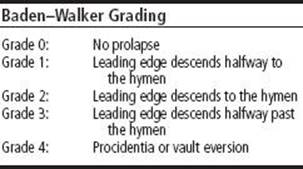
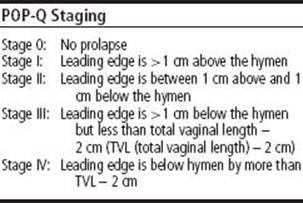
REFERENCES
Bump RC, Mattiasson A, Bø K, et al. The standardization of terminology of female pelvic organ prolapse and pelvic floor dysfunction. Am J Obstet Gynecol. 1996;175(1):10–17.
Theofrastou JP, Swift SE. The clinical evaluation of pelvic floor dysfunction. Obstet Gynecol Clin North Am. 1998;25(4):783–804.
CYSTOGRAM, INDICATIONS AND TECHNIQUE
DESCRIPTION A cystogram is a radiologic exam of the urinary bladder that can show the bladder’s position, shape, presence of vesicoureteral reflux, bladder perforation and/or filling defects. A catheter is inserted into the bladder and used to fill the bladder with a contrast agent under gravity drainage. Typically, 300–350 mL of contrast is utilized depending on the patient’s anatomy. Fluoroscopic images are then taken of the opacified bladder in the AP and oblique views. A postdrainage view is important to evaluate residual volume and to ensure no missed contrast extravasation behind the bladder. Common indications include abdominal/pelvic trauma, infection, fistula, reflux disease, and incontinence. Cystography has been largely replaced by the use of the CT cystogram.
REFERENCE
Chan DP, Abujudeh HH, Cushing GL Jr, et al. CT cystography with multiplanar reformation for suspected bladder rupture: Experience in 234 cases. AJR Am J Roentgenol. 2006;187(5):1296–1302.
CYSTOMETROGRAM
DESCRIPTION A cystometrogram evaluates the filling and/or storage phases of detrusor function. Catheters to measure intravesical pressure, abdominal pressure and to fill the bladder with saline, water, or CO2 are utilized. The bladder filling rate is 1–50 mL/min. Simultaneous measurements of pressure and volume are recorded and a curve is created. Variables observed are compliance, contractility, sensation, and capacity. During filling, the bladder volumes are recorded at (1) the 1st sensation of filling, (2) sensation of urgency to void, and (3) sensation of maximum capacity. Abnormalities that may be detected include altered sensation, changes in detrusor compliance, disorders of detrusor contractility, and/or presence of detrusor overactivity (DO).
REFERENCE
Pressure/flow cystometry. In: Chapple CR, MacDiarmid SA, Patel A, eds. Urodynamics Made Easy. 3rd ed. London: Elsevier; 2009.
CYSTOSARCOMA PHYLLODES, PROSTATE
DESCRIPTION Histopathologically resembles its counterpart in the breast: Distinctive biphasic pattern with hyperplastic epithelium-lined cysts, leaf-like intraluminal epithelium-lined stromal projections, and variable spindle cell stroma. Grossly, the tumor is unusually soft, cystic, and spongy. It can present with LUTS. Case reports indicate normal PSA levels or only slightly elevated. It can range from benign to malignant and its treatment is surgical resection.
REFERENCE
Fujii T, Shimada K, Tanaka N, et al. Phylloides tumor of the prostate. Pathol Int. 2012;62(3):204–208.
CYSTOSCOPE PROCESSING
DESCRIPTION Flexible fiberoptic cystoscopes are a major component of urology practice used for both diagnostic and therapeutic procedures. The American Urologic Association (AUA) and Society of Urologic Nurses and Associates (SUNA) have issued joint recommendations for reprocessing flexible cystoscopes. The key findings are summarized here:
• Cystoscopes as “semi-critical” devices requiring high-level disinfection or sterilization between patients. High-level disinfection differs from sterilization: High-level disinfection does not kill large numbers of bacterial spores; sterilization is the complete destruction of all microbial life.
• In the office setting, high-level disinfection (using glutaraldehyde or another chemical disinfectant) should include precleaning, leak testing, cleaning, disinfection, rinsing, and drying.
• Glutaraldehyde “soak times” are 20–45 min. With no precleaning a 45-min glutaraldehyde soak is required. A 20-min soak is adequate if recommended reprocessing steps are followed prior to immersion in glutaraldehyde.
• One chemical disinfectant (ortho-phthalaldehyde [OPA]) has been associated with anaphylaxis in bladder cancer patients, and should be avoided in these patients.
REFERENCE
Clemens JQ, Dowling R, Foley F, et al. Joint AUA/SUNA white paper on reprocessing of flexible cystoscopes. J Urol. 2010;184(6):2241–2245.
CYTOKERATIN STAINING
DESCRIPTION Commonly used in prostate cancer diagnosis (ie, to differentiate PIN from basal cell hyperplasia or distinguish various forms of acinar proliferations that are not cancer on needle biopsy) 34β3E12, which detects basal cell–specific CK, is commonly used. If basal cell staining is present, this helps to rule out carcinoma; it is also used to examine lymph nodes or periprostatic tissues for prostate cancer and may increase the accuracy of lymph node staging. It has shown promise in breast cancer staging, where up to 1/3 of patients have unsuspected micrometastasis to lymph nodes. Its utility in prostate cancer metastasis is being investigated. (See also Section II: “Immunohistochemical Staining, Urologic Considerations.”)
REFERENCE
Moul JW, Lewis DJ, Ross AA, et al. Immunohistologic detection of prostate cancer pelvic lymph node micrometastases: Correlation to preoperative serum prostate-specific antigen. Urology. 1994;43(1):68–73.
CYTOLOGY, PROSTATE
DESCRIPTION Exam of cells, usually obtained by fine-needle aspiration (FNA), for the detection of malignancy. Characteristics that can be determined include DNA ploidy status, cell cycle distribution, and cytologic grade. Its advantages over standard pathologic techniques include ease and rapidity of technique; when used in combination with flow cytometry, it seems to increase accuracy. The findings must be read by an experienced cytopathologist to ensure reliability. The use of this technique has declined greatly in favor of needle biopsy. (See also Section II: “Fine-Needle Aspiration, Prostate.”)
REFERENCE
Paz-Bouza JI, Orfao A, Abad M, et al. Transrectal fine needle aspiration biopsy of the prostate combining cytomorphologic, DNA ploidy status and cell cycle distribution studies. Pathol Res Pract. 1994;190(7):682–689.
CYTOLOGY, URINARY
DESCRIPTION Microscopic exam of the urine, usually performed for the detection of malignant cells during follow-up of urothelial carcinoma. Criteria for malignancy include increased cytoplasmic-to-nuclear ratio, eccentric nucleus, nuclear pleomorphism and irregularity, hyperchromasia, chromatin clumping, nuclear crowding and overlapping, prominent nucleoli, mitotic figures, lack of cytoplasmic vacuolization, and loss of cell cohesion. Highly accurate (95%) in high-grade carcinoma and CIS but less (10–50%) accurate in low-grade bladder cancer, it is also useful in detecting unresected residual tumor, and may predict future tumor recurrence after transurethral resection (Image ).
REFERENCE
Jones JS, Larchian WA. Non-Muscle Invasive Bladder Cancer (Ta, T1, and CIS). In: Wein AJ, et al., eds. Campbell-Walsh Urology. 10th ed. Philadelphia, PA: Saunders; 2012:2351.
CYTOMEGALOVIRUS (CMV), UROLOGIC CONSIDERATIONS
DESCRIPTION CMV is the most important infectious threat to renal transplant recipients. Risk factors include the serologic status of donor and recipient, as well as the immunosuppressive regimen utilized. Other effects include voiding dysfunction by invading peripheral nerves. CMV cystitis has been reported to occur in AIDS, and it is 1 of the TORCH infections that can cause fet al malformations. CMV has been associated with perinatal renal vein thrombosis, and it can be a cause of virally induced hemorrhagic cystitis. Ganciclovir has been effective in transplant patients. (See also Section I: “Immunocompromised Patients, Urologic Considerations.”)
REFERENCE
Xu LP, Zhang HY, Huang XJ, et al. Hemorrhagic cystitis following hematopoietic stem cell transplantation: incidence, risk factors and association with CMV reactivation and graft-versus-host disease. Chin Med J. 2007;120(19):1666–1671.