
Q. A 52-year-old man is referred with recurrent UTIs. What questions are important in the history?
A. It is known that recurrent UTIs are very uncommon in male patients. There fore, in the history I would ask specifically about the presence of any lower urinary tract symptoms (LUTS), particularly a reduced or prolonged flow and a feeling of incomplete emptying to exclude a urethral stricture or a large post-void residue. I would also enquire about a past or present history of renal stone disease. Other important questions in the history include the possible presence of pneumaturia, a previous history of diverticular disease, recurrent diarrhoea, or rectal bleeding which may indicate the possibility of a colo-vesical fistula.
I would also ask about the presence of dysuria, storage-type LUTS symptoms, perineal/ suprapubic discomfort and ejaculatory problems. These may indicate underlying CPPS [7].
In general, recurrent UTIs can be either due to re-infection or bacterial persistence. As re-infections are very uncommon in men, it is important to try to elicit symptoms which may suggest a persistent focus of infection.
Q. He has been having frequency, urgency, dysuria, perineal discomfort and painful ejaculation intermittently for a few years. What do you think this suggests?
A. On the basis of these symptoms, the most likely diagnosis at this stage would be chronic pelvic pain (CPP), however, that is quite often a diagnosis of exclusion and it is important to exclude other conditions.
Q. What is CPPS?
A. Chronic pelvic pain is chronic or persistent pain perceived in structures related to the pelvis of either men or women. It is often associated with negative cognitive, behavioural, sexual and emotional consequences as well as with symptoms suggestive of lower urinary tract, sexual, bowel, pelvic floor or gynaecological dysfunction. CPPS is the occurrence of CPP when there is no proven infection or other obvious local pathology that may account for the pain.
Q. What do you want to do next for this patient?
A. I would want to ascertain more details from the history about the duration of his symptoms, what his most bothersome symptoms are and how badly these symptoms are impinging on his quality of life. Furthermore, I would like to know if he has previously had any medical or surgical treatments for the condition. To be able to effectively measure the severity of the condition and the possible effect of any treatments I would use the National Institutes of Health Chronic Prostatitis Symptom Index (NIH-CPSI) questionnaire as a baseline.
After obtaining all the necessary information in the history, I would then perform a focussed physical examination of the kidneys, suprapubic region, external genitalia and prostate. This would be followed up by some basic investigations in the form of dipstick urinalysis, MSU for microscopy and C and S, x-ray KUB, renal US, flow rates and PVR.
Q. What is NIH-CPSI?
A. NIH-CPSI stands for National Institutes of Health Chronic Prostatitis Symptom Index. It is a validated questionnaire initially produced by the NIH/NIDDK workshop on chronic prostatitis (CP). It is recommended for use in both clinical practice as well as research. It is a nine-item questionnaire with three main domains (pain, urinary symptoms and quality of life). It is used to establish the patients’ baseline bother which can be used to assess the need for any treatment. It can also be used to stratify patients on the basis of their predominant symptoms and to monitor the response to treatment [8].
Q. How do you establish a diagnosis of prostate pain syndrome (PPS)?
A. In PPS, whereas the VB-2 specimen is sterile, EPS and VB3 show <10,000 cfu of uropathogenic bacteria in expressed prostatic secretions and insignificant numbers of leucocytes or bacterial growth in ejaculates. However, this test is impractical in the standard clinical setting. Hence, diagnostic efficiency may be enhanced cost-effectively by using PPMT (described later) [9]. It must be emphasised, however, that these tests help only a little in the diagnosis of PPS, because 8% of patients with suggested PPS have been found to have positive prostatic localisation cultures, similar to the percentage of asymptomatic men [10].
Q. What is bladder pain syndrome (BPS) and how would you establish the diagnosis?
A. The European Society for the Study of IC/PBS (ESSIC) has proposed to use the name bladder pain syndrome (BPS), followed by a type indication. Other terms that have been used include ‘interstitial cystitis’, ‘painful bladder syndrome’, and ‘PBS/IC’ or ‘BPS/IC’. These terms are no longer recommended.
In general, BPS is a diagnosis of exclusion and There fore it is important to exclude conditions such as benign prostatic hyperplasia (BPH), urethral stricture or UTI which may cause similar symptoms.
Bladder pain syndrome (BPS) is defined as the presence of persistent or recurrent pain perceived in the urinary bladder region (>6 months) and accompanied by at least one other symptom, such as pain worsening with bladder filling and daytime and/or nighttime urinary frequency [11]. Specifically, there should be no proven infection or other obvious bladder pathology. BPS is often associated with negative cognitive, behavioural, sexual or emotional consequences, as well as with symptoms suggestive of lower urinary tract and sexual dysfunction [7].
In 2008-2009, ESSIC suggested a standardised scheme of sub-classifications [11] to acknowledge differences and make it easier to compare various studies (Table 9.4).
Table 9.4 ESSIC classification of BPS types according to results of cystoscopy with hydrodistension and biopsies
|
Cystoscopy with hydrodistension |
||||
|
Biopsy |
Not done |
Normal |
Glomerulationsa |
Hunner's lesionb |
|
Not done |
XX |
IX |
2X |
3X |
|
Normal |
XA |
IA |
2A |
3A |
|
Inconclusive |
XB |
IB |
2B |
3B |
|
Positive0 |
XC |
1C |
2C |
3C |
a Cystoscopy: glomerulations grade 2-3. b Lesion per Fall’s definition with/without glomerulations.
c Histology showing inflammatory infiltrates and/or detrusor mastocytosis and/or granulation tissue and/or intrafascicular fibrosis.
In Table 9.4 the first symbol (1, 2 or 3) relates to cystoscopy with hydrodistension and the second symbol (A, B or C) to biopsy:
1, 2 or 3 represent increasing grade of severity at cystoscopy with hydrodistension
A, B or C represent increasing grade of severity of biopsy findings
X indicates not done for both
After excluding these conditions, BPS is diagnosed on symptoms and localisation of organisms and/or leucocytes in segmented urogenital specimens. The gold standard is the four-glass test described by Meares and Stamey. It involves microscopy and culture of urine and expressed prostatic secretion (EPS) [12].
Q. How do you perform the four-glass test?
A. In my practice, I perform this test in a standardised manner as follows:
1. I ask and confirm that the patient has drunk 400 mL of water 30 min before the test.
2. I make sure that four sterile specimen containers are marked VB1, VB2, EPS and VB3 and their lids are removed.
3. The glans penis is exposed and the foreskin kept retracted throughout the test.
4. I cleanse the glans penis with a soap solution and the soap removed with sterile gauze.
5. I make sure the first 10-15 mL of urine is collected in the container marked VB1.
6. I then ask the patient to pass the next 100-200 mL of urine into the toilet and then collect the subsequent 10-15 mL in the container marked VB2.
7. I then ask the patient to bend forwards holding the container marked EPS near their urethral meatus.
8. I then massage the prostate until a few drops of prostatic secretion are collected in the EPS container.
9. Immediately after the prostatic massage, I ask the patient to again urinate and collect the first 10-15 mL of urine in the container marked VB3.
Q. How are the results of the four-glass test interpreted?
A. I ensure that all four specimens are set off for formal microscopy and culture. A positive VB1 or VB2 indicates urethritis and cystitis, respectively. A diagnosis of CP is made in the presence of organism(s) and/or leucocytes in the EPS or VB3 specimen.
Q. Are you aware of any alternative methods of diagnosis to the four-glass test?
A. An alternative method is the pre- and post-massage test (PPMT) proposed by Nickel. It is less tedious, time-consuming and expensive, but an equally effective modification of the four-glass test. This test involves microscopy and culture of a pre- and post-prostatic massage urine sample with a positive post-massage sample indicating the possibility of CP.
Q. The four-glass test in this man shows leucocytes in EPS, but no organisms.
What does that mean?
A. This result is consistent with a diagnosis of type IIIA prostatitis.
Q. What types of prostatitis are you aware of?
A. The contemporary classification of prostatitis is the NIH classification (1995). It divides prostatitis into the following categories:
Type I - Acute bacterial prostatitis (acute bacterial infection)
Type II - Chronic bacterial prostatitis (recurrent bacterial infection)
Type III - Chronic non-bacterial prostatitis/CPPS (no demonstrable infection)
Type IIIA - Inflammatory - WBC in semen/EPS/post-prostatic massage urine
Type IIIB - Non-inflammatory - No WBC in semen/EPS/post-prostatic massage urine
Type IV - Asymptomatic inflammatory prostatitis
Q. How is CPPS caused?
A. The aetiology of CPPS is poorly understood. It is likely that there are multiple factors operating not only in different patients, but also within an individual patient. The proposed aetiological factors include infection, chemical irritation, dysfunctional high pressure voiding, intraductal reflux, neuromuscular disturbances and altered immunity. Even when the triggering factors are not known, the resultant inflammatory process causes tissue oedema and intraprostatic pressure leading to local hypoxia and varied mediator- induced tissue damage. It is proposed that this in turn leads to altered neurotransmission in sensory nerve fibres resulting in pain and other symptoms associated with the condition.
Q. How would you manage this patient?
A. I would manage this patient according to what his predominant symptoms were and their impact on his quality of life. It is imperative to have a long, frank discussion with the patient to provide reassurance about the benign nature of the condition and explanation about the lack of unequivocal evidence in favour of any treatment. The goal should be symptom control rather than eradication and the management should be multimodal, of an appropriate duration and incremental in nature.
The European Association of Urology (EAU) chronic pelvic pain guidelines have suggested a diagnostic and phenotyping (classification) of CPPS for both sexes (Figures 9.5 and 9.6) [7].
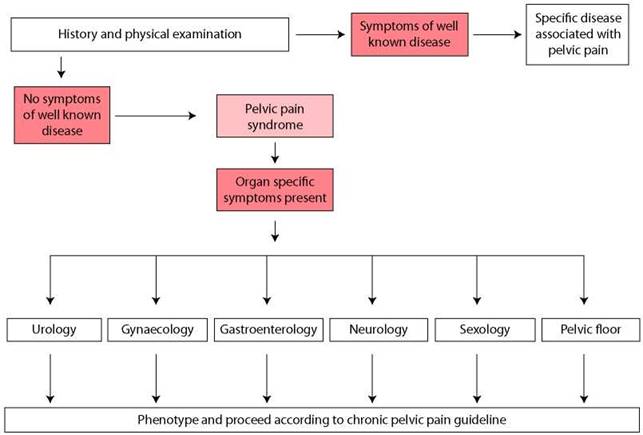
Figure 9.5 Diagnosing chronic pelvic pain. (Adapted from EAU guidelines, http://uroweb.org/guideline/ urological-infections .)

Figure 9.6 Phenotyping of pelvic pain - UPOINTS classification. (Adapted from EAU guidelines, http://uroweb.org/ guideline/urological-infections.)
The cornerstones of management are antibiotics, anti-inflammatories and alpha-blockers.
For non-steroidal anti-inflammatory drugs (NSAIDs), a trial has reported that the pain, quality of life, and total NIH-CPSI scores were in favour of the treatment, but effects were limited to the duration of therapy [10]. Two recent meta-analyses concluded that anti-inflammatory drugs were 80% more likely to have a favourable response than placebo [13,14].
With regards to the use of alpha- blockers, a recent systematic review and network metaanalyses have shown significant improvement in total symptoms, pain, voiding and quality of life scores [15].
I would start him on a combination of antibiotics and an NSAID and if there is an improvement in 2 weeks, I will continue these agents for 6 weeks.
Q. Which antibiotics are particularly suitable for PPS and why?
A. I regularly use either quinolones, tetracyclines, azythromycin, trimethoprim or amoxycillin. Quinolones and tetracyclines are particularly useful as they show good penetration and bioavailability into the prostate with oral as well as parenteral administration and are likely to be effective against the usual pathogens.
Empirical antibiotic therapy is widely used currently and patients responding to antibiotics should be maintained on medication for 4-6 weeks or even longer [7]. Unfortunately none of the biochemical or microbiological tests predict antibiotic response in patients with PPS [16]. A meta-analysis of randomised controlled trials using quinolones (ciprofloxacin and levofloxacin) and tetracycline hydrochloride has been published. Although direct metaanalysis has not shown significant differences in outcome measures, network meta-analysis has suggested significant effects in decreasing total symptoms, pain, voiding and quality of life scores compared with placebo. The network meta-analysis also shows combination therapy of antibiotics with alpha-blockers has shown even better outcomes in network metaanalysis [17].
Based on the evidence, the EAU guidelines currently do not recommend 5-alpha-reductase inhibitors for use in PPS in general, but symptom scores may be reduced in a restricted group of older men with an elevated prostate-specific antigen [18].
Q. Is there any evidence that using antibiotics in a patient when there is no evidence of infection is helpful?
A. There is a lack of strong evidence that antibiotics are of any benefit. The treatment strategies used in the management of this condition are based on expert opinion panels. It is generally believed that even in culture-negative cases, there may be an underlying sub-clinical infection with chlamydia, ureaplasma and other fastidious organisms. Thus a trial of an agent such as a tetracycline seems sensible.
Q. There is no response to these agents in 2 weeks. What will you do next?
A. I will continue the NSAID for a total of 6 weeks and also consider adding in an alpha-blocker, which I will advise for at least 3 months.
Q. Unfortunately, the symptoms are only partly relieved. Are you aware of any other options?
A. The NSAID can be replaced with a muscle-relaxant such as diazepam or baclofen, or a tricyclic antidepressant and I would counsel the patient with respect to considering regular prostatic massage on a bi- or tri-weekly basis for 6-12 weeks, depending on the response.
Q. How is prostatic massage supposed to work?
A. The benefits of prostatic massage are believed to be derived from a combination of several factors including expression of inspissated prostatic secretions, relief of pelvic muscle spasm, physical disruption of any protective biofilm (see following discussion), improved circulation and thus penetration of antibiotics.
Q. In your clinical experience, do you believe it works?
A. The results of prostatic massage in my experience are variable. Unfortunately, the benefit has not been shown in the setting of a randomised controlled trial, but there are case series and anecdotal reports suggesting some symptomatic relief in a quarter to a third of patients.
Q. What is a biofilm?
A. A biofilm is a complex aggregation of organisms on a solid substrate, protected by an extracellular mucopolysaccharide matrix in an aqueous environment.