
Q. A 67-year-old man is referred to you by his GP with ‘mild prostatism’. What is ‘prostatism’?
A. Prostatism is an outdated term for lower urinary tract symptoms (LUTS) due to benign prostatic enlargement (BPE).
Q. What is BPE?
A. BPE is the clinical finding of an enlarged prostate due to the histological process of benign prostatic hyperplasia (BPH).
Q. What is LUTS?
A. LUTS is a non-specific term for symptoms which may be attributable to lower urinary tract dysfunction. There are two main groups of LUTS - storage and voiding. BPO (benign prostatic obstruction) is bladder outlet obstruction (urodynamic evidence of blockage of passage of urine) caused by BPE [1].
Q. How would you assess the patient in your clinic?
A. I would take a history, examine the patient and arrange further investigation.
Q. What features would you seek to elicit in your history?
A.
|
Symptoms |
Duration |
|
Extent |
|
|
Lifestyle |
Impact/bother |
|
Fluid intake |
|
|
Drugs |
Adjustments already tried by the patient |
|
Trial of medication in primary care and outcome |
|
|
Drugs with sympathomimetic and anticholinergic effects |
|
|
Past medical history |
Urethral injury/instrumentation |
|
Pelvic surgery |
|
|
Neurological disorders |
Q. Are you aware of any standardised instruments for the measurement of LUTS in male patients?
A. ttere have been a number of different questionnaires which have been used in the study of symptomatic BPE. These questionnaires include the International Prostate Symptom Score (IPSS), American Urological Association (AUA) Symptom Score, Danish (DAN) Prostatic Symptom Score and Bristol male LUTS. The IPSS questionnaire, derived from the AUA questionnaire [2] is the most commonly used instrument and has been shown to be valid, reliable and reproducible.
Q. Can you describe the AUA/IPSS questionnaire?
A. The IPSS consists of seven questions based on the extent of symptoms and a single quality- of-life question to assess symptom bother (Table 12.1). On the basis of the answers to the individual questions a total score is derived which can be used to divide patients into three groups - mild (0-7), moderate (8-19) and severe (20-35).
Q. What would you look for on examination?
A.
|
Specific features |
Palpable bladder |
|
Enlarged (ballotable) kidneys |
|
|
Prostate - size, consistency, presence of nodules |
|
|
Note: Assess anal tone and sensation during digital rectal examination (DRE) |
|
|
General features |
Renal failure, e.g. fluid overload, signs of uraemia |
|
Neurological disorders, e.g. tremor; gait disturbance |
Table 12. The IPSS score with supplementary quality of life question
|
Over the past month, how often have you: |
Not at all |
Less than 1 time in 5 |
Less than half the time |
About half the time |
More than half the time |
Almost always |
|
1. ...had a sensation of not emptying your bladder completely after you finished urinating? |
0 |
і |
2 |
3 |
4 |
5 |
|
2..had to urinate again less than 2 hours after you finished urinating? |
0 |
і |
2 |
3 |
4 |
5 |
|
3..stopped and started again several times when you urinated? |
0 |
і |
2 |
3 |
4 |
5 |
|
4....found it difficult to postpone urination? |
0 |
і |
2 |
3 |
4 |
5 |
|
5..had a weak urinary stream? |
0 |
і |
2 |
3 |
4 |
5 |
|
6..had to push or strain to begin urination? |
0 |
і |
2 |
3 |
4 |
5 |
|
None |
Once |
Twice |
3 times |
4 times |
5 times or more |
|
|
7. Over the past month, how many times did you most typically get up to urinate from the time you went to bed at night until the time you got up in the morning? |
0 |
і |
2 |
3 |
4 |
5 |
|
Supplementary question - Quality of life due to urinary symptoms. If you were to spend the rest of your life with your urinary condition the way it is now, how would you feel about that? 0. Delighted 1. Pleased 2. Mostly satisfied 3. Mixed - about equally satisfied and dissatisfied 4. Mostly dissatisfied 5. Unhappy 6. Terrible |
||||||
Note: The IPSS scores seven questions on a scale from 0 to 5. Mild LUTS is defined as a score of 0-7, moderate LUTS scores 8-19, and severe LUTS scores 20-35. The quality of life question is scored from 0-6.
Q. Your history indicates that the patient has an IPSS of 14 with no other relevant medical conditions. Clinical examination confirms a moderately enlarged benign prostate with no other significant findings. How would you investigate the patient?
A.
|
Frequency-volume chart |
|
|
Urinalysis |
|
|
Serum creatinine and estimated glomerular filtration rate (eGFR) (if I suspect renal impairment, i.e. if patient has a palpable bladder, nocturnal enuresis, recurrent urinary tract infections or a history of renal stones) |
|
|
I would arrange the following tests: |
Prostate-specific antigen (PSA) (I would offer men with LUTS information, advice and time to decide if they wish to have PSA testing if: their LUTS were suggestive of bladder outlet obstruction secondary to BPE, if their prostate felt abnormal on DRE or if they were concerned about prostate cancer) |
|
Uroflowmetry |
|
|
Ultrasound measurement of post-void residual (PVR) urine |
Q. Would you perform a renal ultrasound?
A. No. A renal ultrasound would only be indicated in the following situations:
Chronic retention
Haematuria
Recurrent infection
Sterile pyuria
Profound symptoms
Pain
Q. Would you perform a cystoscopy on this patient?
A. No. I would only offer cystoscopy when clinically indicated, e.g. if there is a history of any of the following:
Recurrent infection
Sterile pyuria
Haematuria
Profound symptoms
Pain
Q. Is transrectal ultrasound indicated in the investigation of this patient?
A. No. It would be indicated if there was an elevated PSA, an abnormal DRE or if planning surgical treatment (i.e. transurethral resection of the prostate [TURP], Holmium laser enucleation of the prostate or Millin’s prostatectomy - latter if transrectal ultrasound volume >100 mL).
Q. Which patients should be considered for urodynamics evaluation before surgical intervention?
A. Invasive urodynamics (pressure flow study) should be performed only in individual patients for specific indications prior to surgery or when evaluation of the underlying pathophysiology of LUTS is warranted.
The EAU guidelines recommend it in the following patients:
1. Men who have had previous unsuccessful (invasive) treatment for LUTS
2. Patients who cannot void >150 mL
3. When considering surgery in men with bothersome, predominantly voiding LUTS men with a PVR >300 mL
4. When considering surgery in men with bothersome, predominantly voiding LUTS men who are aged >80 years and <50 years
I would also consider it in men with equivocal flow rates, e.g. Qmax >10 mL/s and those with co-existing neurological disease.
Q. What do you tell a patient in preparation for a flow rate?
A. Patient will need to attend for 2-3 hours. I tell the patient to wait until he has a comfortably full bladder before performing the test (usually asked to attend having drank 500-1000 mL of fluid). Drinks are provided so that the patient can continue to drink while providing 2 or 3 flow rates when bladder volumes are at least 150 mL. When he passes urine into the flowmeter he should avoid compressing the penis as this may lead to squeeze artefact. Similarly he should not allow the urinary stream to wander around the funnel as this may also lead to abnormal recordings. I tell him that he should aim to pass at least 150 mL and if it is less than this then I ask him to repeat it. If it is persistently difficult to obtain an adequate voided volume then I ask him whether the flow is representative. If I have any doubts about the veracity of the recordings then I arrange for pressure-flow urodynamics.
Q. What factors affect the flow rate?
A. Flow rates are affected by
Age
Sex
Voided volumes (VV) (should be >150 mL and <500 mL)
Bladder outflow obstruction/hypocontractility
Q. What are the normal age-specific flow rates (Qmax) in males?
A. Normal age-specific flow rates (Qmax) in males are
<40 years = >21 mL/s
40-60 years = >18 mL/s
>60 years = >13 mL/s
Note: Age-specific flow rates (Qmax) in females are
<50 years = >25 mL/s
>50 years = 18 mL/s
Q. What factors do you analyse when interpreting the flow tracing?
A. Voided volume - adequate, i.e. >150 mL
|
Overdistention |
VV >500 mL |
|
Maximum flow |
Normal > 15 mOs |
|
Suggestive of obstruction if <10 mOs |
|
|
Box-like curve (plateau curve) suggestive of stricture (for trace see Chapter 8) |
|
|
Overall pattern |
Hyperflow suggestive of overactive bladder |
|
Prolonged time to Qmax suggestive of BPH |
Q. What is the significance of a reduced urinary flow rate?
A. A reduced Qmax is usually taken to be evidence of bladder outflow obstruction (BOO). Approximately 90% of men with a flow rate of less than 10 mL/s will be obstructed on pressure-flow urodynamic criteria. The remaining 10% will have reduced detrusor contractility - low pressure, low flow situation. Similarly 75% of men with a flow rate of more than 15 mL/s will not have BOO. The remainder of men with a good flow rate may have high-pressure, high-flow situations where flow is maintained at the expense of increased detrusor work. (As an approximate guide there is a 90% probability of obstruction with a Qmax <10 mL/s, 60% probability of obstruction with a Qmax between 10 mL/s-15 mL/s, and 30% probability of obstruction with a Qmax >15 mL/s.) In the clinical setting, a reduced flow rate is a risk factor for acute urinary retention [3] and symptomatic progression [4].
Q. If the principal significance of a reduced Qmax is that it indicates the likelihood of BOO, then what is the significance of BOO?
A. The main significance of BOO is that it underpins the rationale behind dis-obstructing operations, e.g. TURP, in men with BPH. It allows more accurate prediction of symptomatic outcome after surgical intervention. Studies suggest that men with BOO who undergo TURP have a 90% chance of symptomatic improvement as compared to men without BOO who have a 60% chance of benefit [5].
Q. How can you accurately measure BOO?
A. BOO is an urodynamic diagnosis. It represents a high-pressure, low-flow situation. It can only be defined through the simultaneous measurement of detrusor pressure and urinary flow. ttere are a number of different ways of categorising the presence or absence of obstruction.
Q. Can you draw the ICS nomogram?
A. The ICS nomogram (Figure 12.2) categorises patients as obstructed, equivocal or unobstructed. The Abrams-Griffith number (Bladder Outlet Obstruction Index) gives a single numeric value through the equation PdetQmax - 2 x Qmax = Abrams-Griffith number. Values over 40 are indicative of obstruction, values less than 20 represent unobstructed voiding with values between 20 and 40 being equivocal.
The ICS nomogram
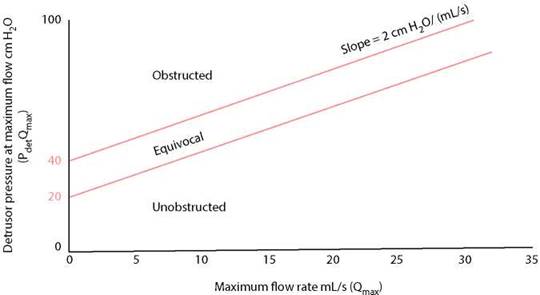
Figure 12.2 Current ICS method for definition of obstruction in patients with BPH.
Q. What is BPH?
A. Benign prostatic hyperplasia (BPH) properly describes the histological basis of a diagnosis of benign prostatic enlargement (BPE) resulting in bladder outflow obstruction (BOO) that gives rise to lower urinary tract symptoms (LUTS).
Q. How would you describe the relationship between BPE, BOO, LUTS and BPH. Can you draw a diagram to illustrate this?
A. The relationship between BOO, BPE, LUTS and BPH is depicted in Figure 12.3.
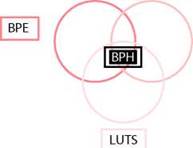
Figure 12.3 Relationship between BOO, LUTS, BPE and BPH
Q. What is BPH?
A. Benign prostatic hyperplasia (BPH) properly describes the histological basis of a diagnosis of benign prostatic enlargement (BPE) resulting in bladder outflow obstruction (BOO) that gives rise to lower urinary tract symptoms (LUTS).
Q. Your patient in clinic asks why he has developed BPH. What can you tell him about the aetiology of this condition?
A. We do not understand exactly what the causative agent or agents are in BPH. The following factors are important:
Age
Androgens
Race
Diet
Growth factors
Q. How common is BPH?
A. The exact prevalence of BPH varies according to the definition used. Data from post-mortem series show that histological evidence of BPH can be detected from the age of 30 and the prevalence increases to 88% of 80-year-olds [6].
Studies which define BPH on the presence of symptoms alone give a higher prevalence than those studies which include reduced urinary flow rates or demonstrable prostatic enlargement. The Olmsted County study (4) showed a prevalence of moderate-to-severe urinary symptoms in 13% of men aged 40-49, rising to 28% of men over the age of 70. A UK series which define BPH as the presence of an enlarged prostate (>20 g) with symptoms or reduced urinary flow (Qmax <15 mL/s) give a BPH prevalence of 138/1,000 population age 40-49 (13.8%) rising to 430/1,000 men age 60-69 (43%) [7].
Q. Your patient asks what will happen if he does not have any treatment. Using the information which you already know about the patient what can you tell him about the likely course of his condition? What other information would you ask for to try to predict the outcome in his particular case?
A. Information on the natural history of BPH can be obtained from two main sources: crosssectional studies of community-dwelling men and the placebo arms of drug trials.
the Olmsted County study measured the prevalence of symptoms of BPH in men aged 40-80. An average AUA symptom score deterioration of 0.18/year was observed across the study with the fastest rate of deterioration observed in the 60-69 age group. It seems reasonable to conclude that there is a gradual increase in urinary symptoms with age but that the overall extent of these increases in the population is small.
Some risk factors have been identified which can help predict disease progression in individual patients. Factors which have been shown to be associated with an increased chance of disease progression include age, symptom severity, reduced urinary flow rate and prostate size (Table 12.2). The above patient in clinic has moderate symptoms, a reduced urinary flow and moderate prostate enlargement which would all increase the likelihood of progression but he is under 70 years old which would reduce the overall likelihood of deterioration.
Data from placebo arms of large drug trials have shown that PSA is an independent marker of disease progression. I would There fore ask the patient to have a PSA test performed
Table 12.2 The important risk factors with respect to disease progression and their associated hazard ratio (HR) in order to try to refine his risk further. A PSA level of 1.4 ng/mL or higher indicates an increased risk of disease progression.
|
Risk factor |
Risk of treatment |
|
Moderate to severe symptoms |
HR 5.3 |
|
Enlarged prostate (Vol >30 cc) |
HR 2.3 |
|
Reduced flow rate (Qmax > 12 m^s) |
HR 2.7 |
Other potential markers of disease progression include failure to respond to medical therapy [8], symptom deterioration while on treatment, increasing residual urine volume [9] and the presence of inflammation on prostate biopsies [10].