
Echinacea spp.
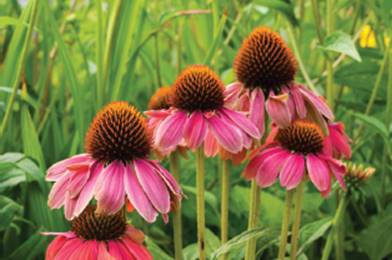
Echinacea or purple coneflower
The Native Americans used echinacea to treat snakebite, fevers, and for healing old, stubborn wounds. The early settlers soon adopted the plant as a home remedy for colds and influenza, and it became popular with the nineteenth-century Eclectics. In the past fifty years, it has achieved worldwide fame as a potent immunostimulant and antibiotic and has also been used in AIDS therapy. Cultivated purple coneflower is usually E. purpurea, although E. angustifolia is considered more potent by some practitioners.
Character: Cool, dry, and mainly pungent.
Constituents: Volatile oil, glycosides, amides, antibiotic polyacetylenes, inulin.
Actions: Antibiotic, immune stimulant, anti-allergenic, lymphatic tonic.
PARTS USED
ROOT
Generally used in tinctures or powder for almost any type of infection or inflammation; it can be especially useful for recurring kidney infections as well as more common catarrh and colds. Harvest after flowering, wash, chop and dry.
LEAVES
These are less commonly used, although German research in the 1990s demonstrated that aerial parts of E. purpurea can be as effective an antibiotic as the root.
APPLICATIONS
Root
Tincture: Use small, frequent doses (2–5 ml) every 2–3 hours for influenza, chills, and urinary tract infections during the first couple of days of acute symptoms. For more chronic conditions use standard doses and combine with other suitable herbs – such as with buchu and couch grass for kidney infections; white deadnettle and saw palmetto for prostate problems; or cleavers for lymphatic enlargement and glandular fever. Can also be used in large doses (10 ml) for food or animal poisoning (including snakebites).
Decoction: Take 10 ml doses of a standard decoction every 1–2 hours for the acute stage of infections. Combines well with hemp agrimony.
Powder: Use powdered root as a dust for infected skin conditions like boils, erysipelas, or weeping infected eczema. Combine with marshmallow powder for boils.
Gargle: Use 10 ml of the tincture in a glass of warm water as a gargle for sore throats.
Capsules: Take three 200 mg capsules up to three times daily at the onset of acute infections (such as colds, influenza, kidney, or urinary tract infections).
Wash: Use the decoction or dilute tincture as a wash for infected, putrid wounds. Bathe affected area frequently.
Leaf
Infusion: Take a glass of a standard infusion 3–4 times daily for common colds.
CAUTIONS:
• High doses can occasionally cause nausea and dizziness.
• Allergic reaction to echinacea is extremely rare but has been reported.
Ephedra sinica
Ma huang
The Ephedra species belong to the Gnetopsida group of plants—an oddity among botanical families and one that would seem to be a relic of distant prehistory.
In China, ma huang has been used as an anti-asthmatic for at least 5,000 years. The alkaloid ephedrine, extracted from the plant, was first identified by Chinese scientists in 1924; two years later, the pharmaceutical company Merck produced a synthetic version still used to treat asthma. The Indian variety, E. gerardiana, known as somlata, is thought to have been the prime ingredient of soma, a potent tonic and elixir of youth praised in the Rigveda.
Character
Twigs: Pungent, bitter, and warm.
Root: Pungent and neutral.
Constituents: Alkaloids (inc. ephedrine), saponins, volatile oil.
Action
Twigs: Antispasmodic, febrifuge, diaphoretic, diuretic, antibacterial and antiviral properties identified in the essential oil.
Root: Anti-hydrotic.
PARTS USED
E. sinica
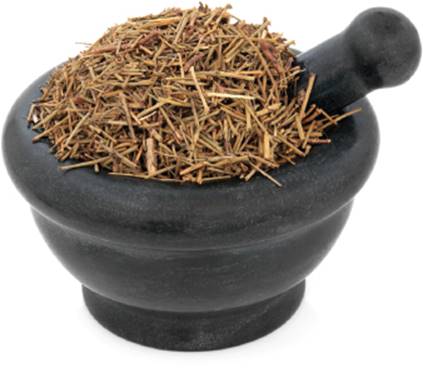
TWIGS
These relieve bronchial spasm in asthma and appear to have anti-allergenic properties useful in hay fever and nettle rash. In China, they are used for common colds, especially those that are linked to “wind cold” and characterized by chills, headaches, shifting aches and pains, and chesty coughs.
ROOT
Known as ma huang gen in China, the root is specifically used for night sweats and excessive sweating, which in traditional Chinese medicine can be associated with a deficiency of yin energy. This property is in marked contrast to the twigs, which, as a diaphoretic, actually promote sweating.
APPLICATIONS
E. sinica
Twigs
Tincture: In the UK, the maximum permitted dose is 2.5 ml of a 1:4 tincture three times daily. This is used for asthma, hay fever, or severe chills. Combine with cowslip root and thyme tinctures for bronchial asthma, whooping cough, emphysema, and other severe chest conditions: 20 drops three times daily.
Decoction: In China, up to 6 g of the twigs may be used per dose, although maximum legal dose in the UK is one-tenth that: 600 mg. Use for common colds, coughs, asthma, hay fever, etc. Also as a diuretic in kidney weakness.
Root
Decoction: Used in debility where yin or qi weakness is leading to uncontrolled sweating.
CAUTIONS:
• Not to be used by patients taking monoamine oxidase inhibitors as antidepressants.
• Should also be avoided in severe hypertension, glaucoma, and coronary thrombosis.
• Restricted in the UK under the 1968 Medicine Act for use by practitioners only.
Equisetum arvensis
Horsetail
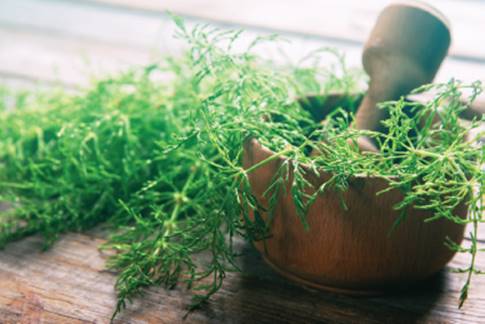
A prehistoric botanical relic, horsetail is a close relative of the trees that grew 270 million years ago during the Carboniferous period, and which are the source of our modern coal seams. Its brittle jointed stems are extremely rich in silica, and since the time of the Ancient Greeks horsetail has been used for wounds. It is now considered an invasive weed. The Chinese use a related species, E. hiemale, or mu zei.
Character: Cold and dry with a slightly bitter taste.
Constituents: Silica, alkaloids (inc. nicotine), saponins, flavonoids, bitter principles, minerals (inc. potassium, manganese, magnesium), phytosterols, tannins.
Action: Astringent, styptic, diuretic, anti-inflammatory, tissue healer.
PARTS USED
AERIAL PARTS
E. arvensis
The astringent, healing stems check bleeding in wounds, nosebleeds, heavy periods, and blood in the urine. A strong diuretic for urinary tract and prostate disorders, horsetail is also healing for the urinary mucosa, and can be useful in bed-wetting and as a cooling astringent for catarrh. Its other main area of activity is in lung disease where it can repair long-standing, deep-seated damage, as in tuberculosis and emphysema.
E. hiemale
These are mainly used to cool fevers and as a specific for eye inflammations, conjunctivitis, cataracts, and corneal disorders.
APPLICATIONS
E. arvensis
Juice: This is the best form of horsetail to use: 5–10 ml three times daily for urinary disorders or to repair long-standing damage to the lungs.
Decoction: This must be simmered for at least three hours to extract the main constituents. Use as an astringent for heavy periods or for internal healing in gastric ulceration, inflammations of the urinary tract, prostate problems or lung disorders. Can also be helpful for skin conditions such as acne and eczema,
Powder: Can be made into a paste and used on leg ulcers, wounds, sores, chilblains, etc.
Mouthwash/gargle: Use the diluted decoction for mouth and gum infections or throat inflammations.
Tincture: Generally not as effective as the decoction. Best made by preserving the decoction with alcohol. Use as the juice or decoction.
Capsules: Powdered horsetail can be taken in capsule form, which can be more convenient than juices or decoctions.
CAUTIONS:
• Seek professional guidance in all cases of blood in the urine or for sudden changes in menstrual flow leading to heavy bleeding.
Eucalyptus globulus
Eucalyptus
A traditional Aboriginal fever remedy, eucalyptus was introduced to the West in the nineteenth century by the director of the Melbourne botanical gardens, and cultivation spread in southern Europe and North America. The properties of oils from different species vary slightly, but all are very antiseptic. Russian research has suggested that some species are effective against the influenza virus, while others are antimalarial or highly active against a wide range of bacteria.
Character: Cool and moist, pungent and bitter.
Constituents: Volatile oil, tannins, aldehydes, bitter resin.
Actions: Antiseptic, antispasmodic, stimulant, febrifuge, hypoglycemic, anthelmintic.
PARTS USED
ESSENTIAL OIL
Made by steam distillation of the leaves, the oil is one of the most antiseptic essences in the herbal repertoire, used in a wide range of infections such as influenza, measles, diphtheria, typhoid, and scarlet fever. It is available commercially, although infused oil, which has a similar though less potent action, can be made at home.
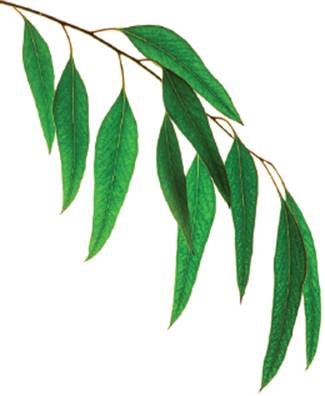
LEAVES
In traditional Aboriginal medicine these were used in poultices for any type of wound or inflammation and various decoctions were also taken internally – although this is not recommended for home use today. Today it is used in lozenges and capsules for chest and catarrhal problems.
APPLICATIONS
Essential oil
Chest rub: Use 10 drops of eucalyptus oil in 25 ml of almond oil (or similar) as a chest rub for colds, bronchitis, asthma and other infections.
Gargle: 5 drops well mixed in a glass of water can be used as a gargle for throat infections.
Compress: A pad soaked in a solution of 2 ml of oil well dispersed in 100 ml water can be applied to inflammations, painful joints and burns.
Oil: The essential oil diluted in a vegetable oil or ointment base (approx. 5–10 drops of essential oil in 10 ml of carrier) can be used topically for cold sores (Herpes simplex).
Massage oil: Combines well with rosemary as a massage rub for rheumatic and arthritic pain.
Steam inhalation: Use 10 drops in a hot water as a steam inhalation for any chest infections. Combines well with 1 drop of peppermint oil.
Leaves
Steam inhalation: Boiling water poured over a few leaves releases the oil and makes an effective steam inhalation for chest infections, or catarrh.
Fumigant: Burning leaves on an open fire similarly fills the room with antiseptic vapors – useful for flea infestations.
Capsules: Powdered leaves are available in commercial capsules (200–250 g) for treating respiratory infections and bronchitis; use only as directed on the package.
CAUTIONS:
• Eucalyptus should not be taken internally unless under professional guidance.
• Use with caution for small children.
Eupatorium spp.
Gravel Root, Boneset, Hemp Agrimony
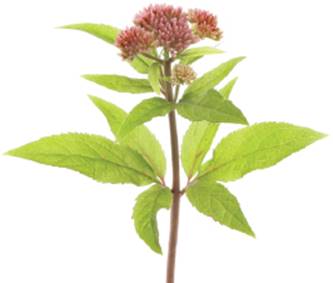
A favorite with native Americans, gravel root (E. purpureum) was known as Joe Pye weed after a New England medicine man who used it to cure typhus. Boneset (E. perfoliatum) was also used by the settlers for “breakbone fever” – an influenza-like infection characterized by severe pain – and is now used as an antiviral for flu. Interest in a related European variety, hemp agrimony (E. cannabium), has revived in recent years as various immunostimulant properties have been identified in the herb.
Character: Bitter and pungent, drying, and cool or cold depending on species.
Constituents: Tannins, bitters, volatile oils, flavonoids, sesquiterpene lactones.
Actions: E. cannabium: febrifuge, diuretic, antiscorbutic, laxative, tonic, cholagogue, expectorant, diaphoretic, antirheumatic, immune stimulant.
E. perfoliatum: diaphoretic, peripheral vasodilator, laxative, cholagogue, antispasmodic, expectorant.
E. purpureum: soothing diuretic, antirheumatic, emmenagogue.
PARTS USED
AERIAL PARTS
E. cannabium
Considered a remedy for feverish colds, the aerial parts were also used externally for putrid sores. Recent research has identified a bitter compound called eupatoriopicrin believed to have an antitumor action, and there is also an immunostimulant action that increases resistance in viral infections. Harvest while flowering in late summer.
Root: In Europe, the root is used as an expectorant and – in higher doses – as a purgative.
E. perfoliatum
Mainly used for feverish colds, but it also has a stimulating and cooling effect on the liver so is useful for hepatitis, jaundice, or to stimulate the appetite in convalescence.
ROOT
E. purpureum
Gravel root, as the name implies, describes this plant’s main action: as a diuretic useful for clearing urinary stones. It is also taken for prostate problems, some types of menstrual pain, and to ease childbirth. Harvest in autumn.
APPLICATIONS
E. cannabium
Aerial parts
Tincture: For feverish colds and influenza. Take 5 drops at frequent intervals. Also can be added to anti-catarrhal mixtures such as elderflower and ground ivy.
Infusion: Drink a standard infusion for rheumatic pains and arthritis. A stronger infusion is purgative for liver stagnation and some types of constipation; it can be useful for constipation in the elderly.
E. perfoliatum
Aerial parts
Infusion: Drink frequent doses of standard infusion (every half hour or so) during the acute phase of influenza and severe colds – best taken lukewarm. The very hot infusion is more stimulating for the liver and digestive system. Small doses are best in convalescence.
Tincture: Very similar in action to the infusion.
E. purpureum
Root
Decoction: Use for menstrual pains or sip during labor. Also has a cleansing effect for persistent urinary infections.
Tincture: Use 2–3 ml three times daily for urinary disorders, including cystitis and gravel, or discharges associated with infection. Combine with white deadnettle for prostate problems.
CAUTIONS:
• Avoid gravel root in pregnancy.