
Definition
• A congenital heart defect consisting of an abnormal opening in the atrial septum, allowing blood flow between the atria
Pathogenesis
• In the fifth week of development, the septum primum grows down from the top of the atria and merges with the endocardial cushions to form the interatrial septum. When this process is defective, it results in ASDs
Clinical features
Epidemiology
• ASD accounts for 10% of all congenital heart defects
• Occurs twice as often in females than in males
• Less than 10% of patients have pulmonary hypertension
Prognosis and treatment
• In childhood, spontaneous closure may occur
• May require surgical repair for clinically significant shunts
Pathology
Gross
• There are three types of ASDs, based on location:
• Ostium secundum type:
– Most common type (90% of ASDs)
– Located in the middle of the septum
• Ostium primum type:
– Accounts for 6% of ASDs
– Defect located adjacent to the endocardial cushions (lowest part of interatrial septum)
– Patients usually also have clefts in the mitral valve and tricuspid valve leaflets
• Sinus venosus type:
– Comprises 4% of ASDs
– Located superior to the fossa ovalis
– Often the right pulmonary vein will drain into the right atrium or superior vena cava
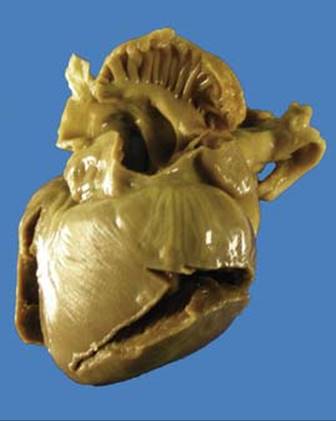
Fig 1 Atrial septal defect. Gross photograph of the heart showing opened right atrium and large ASD.
(Courtesy of Dr. Mojgan Hosseini, University of Chicago, Chicago, Ill.)
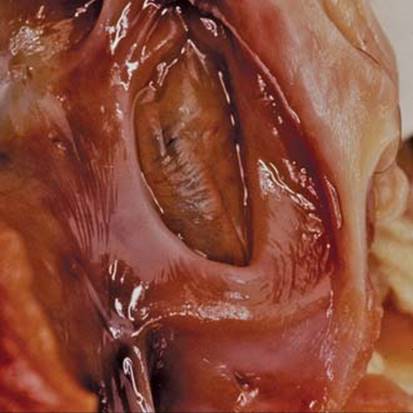
Fig 2 Atrial septal defect. Large ASD in the middle of the septum; ostium secundum type.