
Definition
• Abnormal opening between the ventricles, allowing blood to flow between the ventricles
Clinical features
Epidemiology
• The most common congenital cardiac malformation
• Occurs in 1 to 2 of 1000 live births
Presentation
• Severity of symptoms varies with size of defect
• Symptoms may include congestive heart failure, poor weight gain, pallor, diaphoresis, repeated upper and lower respiratory infections, bacterial endocarditis, respiratory distress
• Holosystolic murmur
Prognosis and treatment
• Medical treatment includes antibiotics for endocarditis prophylaxis
• About 80% of VSDs will close spontaneously
• Larger and symptomatic lesions may require surgical repair
• With treatment, prognosis is excellent
Pathology
Gross
• About 90% of VSDs occur in the membranous septum. The remaining occur within the muscular septum or below the pulmonary valve (infundibular)
• Complete absence of the interventricular septum can occur, resulting in a single ventricle
• Multiple defects may occur, giving a “Swiss cheese” appearance
• Up to 70% of cases have additional cardiac defects
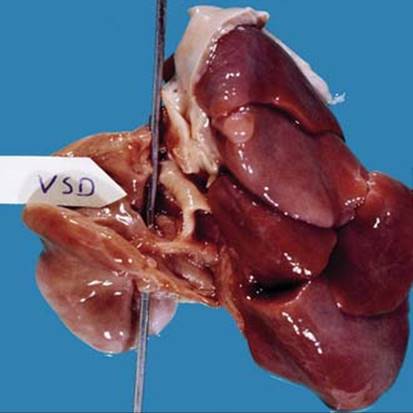
Fig 1 Ventricular septal defect. Gross photograph of heart and lungs with probe placed through the VSD.
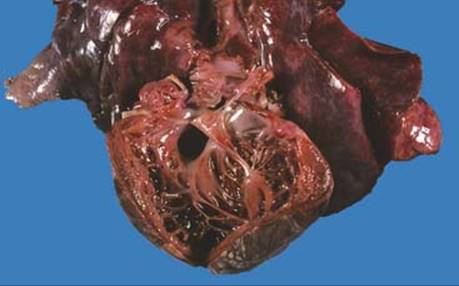
Fig 2 Ventricular septal defect. Gross photograph of heart from the right ventricular aspect showing a defect in the muscular portion of the interventricular septum.
(Courtesy of Dr. Jerome B. Taxy, University of Chicago, Chicago, Ill.)