
Definition
• Deposition of aseptic thrombi on previously undamaged heart valves
Clinical features
Epidemiology
• Typically seen in older adults
• No gender predilection
• Majority of cases are associated with a malignant neoplasm, most commonly mucinous adenocarcinoma
• Any condition associated with pathological coagulation may predispose
• Patients with intravenous catheters are at risk of right-sided NBTE
Presentation
• Aortic and mitral valves are most commonly affected
• Valvular dysfunction is rare
• Asymptomatic unless systemic embolization occurs
• Signs of disseminated intravascular coagulation are seen in approximately 20% of patients
• Embolization occurs in approximately 50% of patients, as the thrombi are loose collections of fibrin and platelets without cellular organization
• Most common presentation is neurological deficit due to embolic stroke
• Often multiple small and large strokes are present
• Myocardial infarction can occur secondary to coronary artery embolism
• Embolus to the extremity is seen as a cyanotic pulseless limb
• Emboli to kidney and spleen can result in hematuria and left upper quadrant pain, respectively
• NBTE should be strongly suspected in any patient with adenocarcinoma and the sudden onset of stroke or other embolic disease
Prognosis and treatment
• Treatment consists of systemic anticoagulation and managing the underlying malignancy
• Surgery is rarely indicated
• Heparin reduces the incidence of recurrent embolic episodes
• Although anticoagulation is effective in managing thrombosis, prognosis is poor because of the frequent presence of an underlying malignancy
Pathology
Histology
• Single or multiple nondestructive vegetation on the valve leaflet
• Vegetation is composed of platelets mixed with fibrin and erythrocytes
• Inflammation is absent
• Fibroblastic proliferation may be seen at the base of the thrombus
Immunopathology/special stains
• Not contributory
Main differential diagnoses
• Infective endocarditis
• Symptoms of acute infection (e.g., fever, chills) are typically present in the acute form, whereas the subacute form has an insidious onset of vague constitutional symptoms
• Underlying adenocarcinoma may also be present, particularly in the setting of Streptococcus bovis endocarditis
• Can also be associated with embolic events
• In contrast to NBTE, vegetation of infective endocarditis causes damage to underlying valve
• Vegetation contains neutrophils, lymphocytes, and bacteria in addition to fibrin and platelets
• Libman-Sacks (verrucous) endocarditis
• Typically seen in patients with systemic lupus erythematosus
• Noninfectious vegetation on atrial and ventricular surfaces of valves
• Vegetation composed of fibrin and fibroblasts, but mononuclear cells are also present
• Usually asymptomatic; systemic emboli are rare
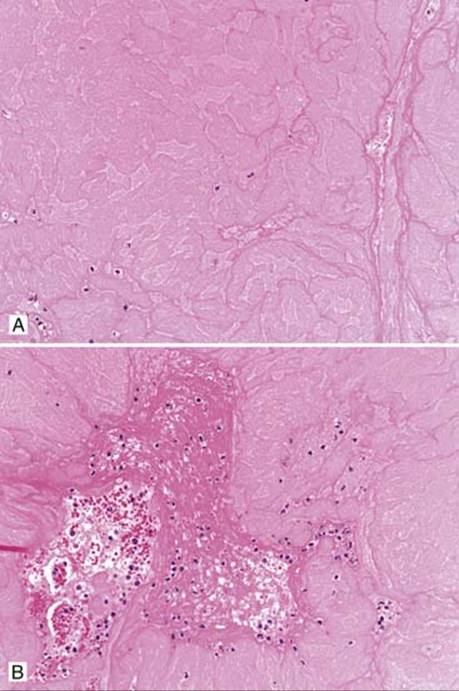
Fig 1 Nonbacterial thrombotic endocarditis. Microscopically, the vegetation is composed primarily of fibrin (A) and with few inflammatory cells (B) most likely derived from the blood clot rather than an inflammatory reaction.