
Richard Allen and Kenneth Crump
Key points
· Chemotherapy drug preparation standard operating procedures (SOPs)
· A generic SOP is suggested.
· Storage of cytotoxic drugs
· Separate chemotherapy drugs from other medications.
· Helpful websites for governmental guidelines
· Safe drug preparation
· State-of-the-art protective equipment
· Preparing chemotherapy drugs in a smaller clinic
· Safe drug administration
· Use a dedicated catheter.
· Compounding powdered chemotherapy drugs
· Splitting tablets
· Safe waste disposal
· Seven government agencies regulate the handling of hazardous waste.
· Laws pertaining to handling hazardous waste are strictly enforced.
· Standards for waste handling
· It is important to recognize the different classifications of hazardous waste.
· Waste receptacles are color coded.
· Hazardous waste can only be transported by licensed “hazardous waste handlers.”
Introduction
The decision to treat patients with chemotherapy must not be taken lightly. There are many specialty clinics that prepare and administer chemotherapy on a large scale, with well-trained staff and safety equipment on-site. So, the option for your clinic to avoid handling these medications through referral is always available. However, when the decision is made to treat cancer patients in your practice, there are many considerations that must be recognized to ensure the safety of the personnel administering the agents, as well as the patients being treated. Studies have linked workplace exposure to hazardous drugs with health effects, such as skin rashes, adverse reproductive outcomes, and possibly cancer. The degree of health risk is influenced by the extent of exposure, the concentration of the agent, and the toxicity of the agent being used. This chapter reviews the proper measures to employ to assure safe handling, preparation, administration, and disposal of these agents. The goal is to assure maximum protection for all involved.
Chemotherapy treats both human and animal cancers. These drugs are toxic to both cancerous and normal healthy cells. Individuals who prepare and administer chemotherapy must be protected from contact with these medications. The veterinarian will develop a treatment plan for each patient based on the type of cancer and the stage of its development. Many factors are taken into consideration for the selection of drugs, doses, and treatment intervals. Because these drugs are cytotoxic, double or even triple check the choice and doses of medications before they are administered to the patients. To be successful, each protocol must allow the maximum therapeutic effect with minimal side effects to the animal. If, as a result of treatment, the pet is constantly lethargic, nauseated, or has severe bouts of diarrhea, the owner may perceive it as causing more suffering than the disease.
Below is a short list of common chemotherapy drugs and their uses in veterinary medicine:
· carboplatin
o used in a variety of veterinary and human cancers, including squamous cell carcinomas, ovarian carcinomas, and adenocarcinomas;
· doxorubicin
o used for lymphomas, carcinomas, leukemias, and sarcomas;
· vinblastine
o used for lymphomas and mast cell tumors;
· vincristine
o used in combination-drug protocols for lymphoid cancers and cancers of the blood.
All of these drugs require preparation before they can be administered to a patient. Some, such as vincristine, only need to be drawn into a syringe. Others, such as doxorubicin, must be diluted with an electrolyte solution and either added to a bag of fluids or drawn into a large syringe. However, neither preparation should be made without the use of personal protective equipment (PPE).
Standard Operating Procedures (SOPs)
If your clinic has made the decision to prepare and administer chemotherapeutics, an SOP needs to be established and implemented. If a chemotherapy hood or an isolator (described below) is not available, drugs can be prepared in a small designated room with low airflow and minimal traffic. This room should be scrubbed down regularly. Technicians need to wear PPE and use some type of protective system such as PhaSeal® or Onguard® to minimize contamination of the surroundings and personnel. Once prepared, place the drugs in a ziplock chemo-transport bag. The sealed chemo-transport bag will contain any leakage that may occur while the drug is moved from one room to another. Used supplies are then disposed of in a yellow chemo-waste receptacle.
An example of a generic SOP for handling these agents is suggested below:
Designate a work area.
· biological safety cabinet (BSC)
· small room (minimum)
o good ventilation (no drafts)
o low traffic
o allow only essential personnel in room during preparation
· well-lighted counter for preparation
o place an adsorbent pad with nonporous backing on the work surface
Gather PPE.
· face mask with respirator
· disposable gown with elastic cuffs
· latex or nitrile exam gloves
Make sure all drugs are labeled.
· Verify patient’s name, product name, and dosage.
o This is an extremely important step. Make sure all preparations are labeled with the drug name, concentration, and dosage that each syringe or intravenous (IV) bag contains. Drugs like vincristine and vinblastine have similar names, yet very different doses and effects on the treatment outcome. Have at least two people calculate the dose. Remember, you cannot remove an incorrect drug once it is in the patient.
Use only Luer lock syringes.
· Luer lock syringes screw and lock onto a needle or catheter.
Use Phaseal or Onguard or other drug containment devices.
Have a chemo-spill kit available to handle any accidents.
· A chemo-spill kit contains chemotherapy protective gloves, eye protection, disposable gown, absorbent towels, and collection and disposal bags.
Procedure
(1) Prepare the product to be administered.
(2) Clearly label it with the patient’s name, drug name, and drug concentration.
(3) Place in a sealed chemo-transfer bag.
(4) Dispose of all waste in proper receptacles.
Commercially Prepared Agents
There are some pharmacies that will prepare chemotherapeutic agents for your patients and deliver or ship them directly to your clinic. Although this eliminates the necessity of someone in your clinic having to prepare the dosage, handling of the drugs at the time of delivery and handling of waste must still be considered.
· Be sure to employ PPE and other protective precautions to assure minimal exposure to personnel.
· Keep a chemo-spill kit nearby to immediately and safely contain an accidental leak or spill. To clean a spill:
o Wear PPE.
o Absorb liquid in towels or absorbent pads.
o If a dry spill, wet the towels to limit the creation of dust.
o Place broken vials and other waste in a plastic bag.
o Dispose of used plastic waste bag, towels, and absorbent pads in a chemo-waste container.
o Deactivate and decontaminate the spill area with bleach solution.
o Clean spill area with detergent solution.
· Once again, it is important to have a written SOP for handling prepared chemotherapy drugs and that all personnel are familiar with the procedures.
Storage
Whether stored at room temperature or refrigerated, segregate chemotherapy drugs from other medications. A separate refrigerator to store these agents is ideal, or at least prepare a designated container within a drug refrigerator. Apply a warning sign to the door of the refrigerator to indicate that hazardous drugs are stored there. Also, identify chemotherapy drugs stored on shelving units with warning signs. Chemotherapy drugs are usually shipped in a ziplock bag or a sealed container. Wear gloves when carrying these sealed containers to their storage area to prevent contamination. When removing a bottle or vial from the sealed container, wipe it down with alcohol or diluted bleach, not for disinfection but for deactivation and decontamination. Bottles and vials may be exposed to broken bottles during shipment, or may have overfilled and back-splashed at the time of manufacture.
Notify every employee in your practice that chemotherapy preparation and administration will be performed and educate them on the risk factors. Pregnant personnel or those trying to become pregnant should avoid handling, preparing, or administering these drugs. Post the written SOP you have established, and verbally present them to the staff to avoid any misunderstanding as to how the drugs are handled. Also, review what to do in case of a spill or an adverse reaction. Since health risks are influenced by the extent of exposure and potency of a drug, limiting exposure to the cytotoxic drugs is a priority. A few of the many governmental agencies regulating the distribution, protection of personnel, and disposal of these hazardous products are listed below. Each has helpful websites that can guide you to prepare and implement an SOP for your clinic:
· Occupational Safety Health and Safety Administration (OSHA),
· National Institute for Occupational Safety and Health (NIOSH), and
· Department of Transportation (DOT).
Limiting Exposure
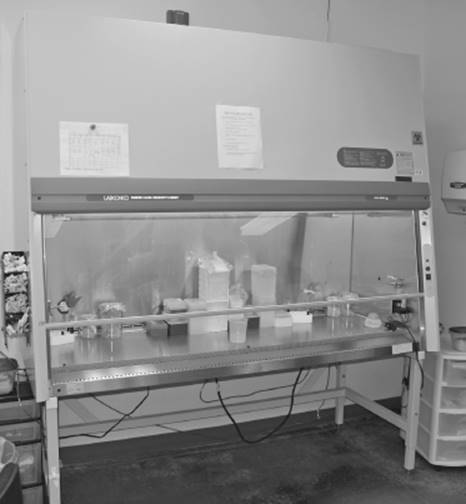
Minimizing exposure is a major concern when dealing with cytotoxic drugs. There have been many devices developed to attempt to accomplish this. Unless your clinic is a large oncology treatment center, it is unlikely that you will have access to what most agencies consider an optimal piece of equipment necessary for protection: a Class IIA vertical laminar flow BSC or a negative pressure isolator. The BSC hoods establish sterile airflow from the top of the hood to the bottom, with the air splitting near the bottom of the unit, flowing into the front and rear intakes (Figure 5.1). The air is then vented through high efficiency particulate air (HEPA) filters into a dedicated venting system to the outdoors. This process not only establishes a sterile environment but, when used properly, also allows the operator to prepare hazardous compounds safely. The BSC allows minimal exposure to the individual preparing the drug. However, the hood alone may not provide all the protection needed to safely prepare cytotoxic drugs.
Figure 5.1 Class IIA, vertical laminar flow biological safety cabinet. Although this cabinet is very long, much shorter cabinets are made, which can easily fit into smaller spaces.
The operator should also wear PPE including a lint-free, long-sleeved gown; gloves (special heavy long-sleeved chemotherapy gloves, latex gloves, or nitrile gloves); and eye protection. In addition to all of these safety equipment, it is suggested you use a device to safely vent vials when mixing. These devices allow compressed air escaping from the vial to be either filtered or vented into a containment envelope.
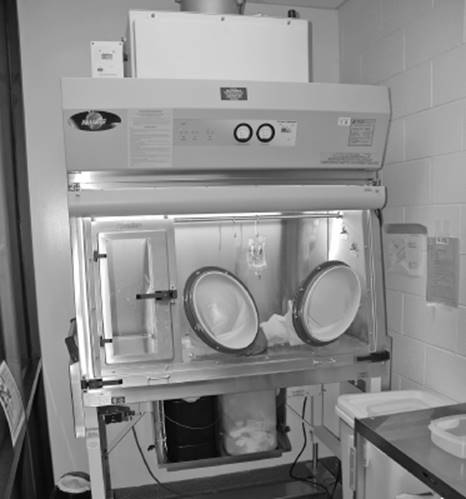
Equipment more recent than the older vertical laminar flow hood is called a “negative pressure total exhaust compounding aseptic containment isolator” (Figure 5.2). They are also costly and not intended for a clinic that seldom administers chemotherapy. These units are basically glove boxes with external venting through HEPA filters. Isolators are made up of two chambers. Items are placed in the antechamber after being sprayed with sterile alcohol. After entry, it takes about a minute for the air in the antechamber to become sterile again. Then items are transported into the working chamber. The operator inserts his or her gloved hands into the sleeved portion of the working chamber to prepare the chemotherapy drugs. It is still necessary to use devices to limit aerosolization so the interior of the chamber is not contaminated, but the only PPE required are latex or nitrile gloves. The totally contained chamber system allows zero exposure to the operator and the environment. Because of the waste ports at the floor of the chamber that open into chemo-waste containers stored under the unit, the operator is never exposed to empty vials, syringes, or other wastes. These waste ports are sealed with plastic covers. When full, another plastic plug is locked in place before the waste container is removed. Strict guidelines are set for pharmacies in the “USP 797” protocol.
Figure 5.2 Negative pressure isolator.
Because of the low volume of chemotherapy preparations, these guidelines are not yet imposed on smaller veterinary clinics. However, as you will see in the Safe waste disposal section of this chapter, government agencies are taking a closer look at the safe handling of these agents during preparation, storage, handling of waste, and disposal for all veterinary practices.
Safe Drug Preparation
Never attempt to mix a chemotherapy agent without some type of protective device to vent the vial during reconstitution or dilution. Additional safety equipment is available for the veterinary setting whether you have an isolator, a BSC, or just a small room for preparation. One of the first types of safety devices was called a chemo-safety pen. The pen allowed air expelled from a vial by liquid displacement to exit through a 0.22-µm filter. This was thought to be a safe device until tests showed that particles escaped through the filter and contaminated the immediate area.
Many studies have been published connecting the potential toxicity of chemotherapeutics to the workers who handle them. Several papers demonstrate compromised reproductive effects, as well as cancer in healthcare workers handling these agents. When mixed in a BSC, the hood removes the atomized particles with its HEPA filters. However, without a BSC, you may contaminate the work area and create the opportunity for personal exposure. Studies demonstrated that even while using the chemo-safety pen, chemotherapy agents show up on work surfaces, surrounding areas, and the operator’s gloves. Since most chemotherapy drugs are manufactured in vials at sea level, there is positive pressure inside the vials at higher elevations. When a needle, chemo-safety pen, or other device penetrates the vial, it will expel air and particulates from the vial into the surrounding area. Caution should be used, and all precautions should be in place to prevent exposure when penetrating a chemotherapy vial.
Two new systems for mixing chemotherapeutics are now available. One system (PhaSeal) is considered a “closed-system drug transfer device.” The other system (Onguard) is a “contained medication system.” Both are superior to the early chemo-safety pens. Yet, as good as they are, OSHA considers them to be even safer when used inside a BSC or an isolator.
The Onguard system uses a locking cap that attaches to the drug vial, with a spike that penetrates the vial’s rubber closure. This cap contains a 0.22-µm filter and a secondary filter made up of activated charcoal. The activated charcoal absorbs toxins that might escape through the membrane filter. A special syringe adaptor screw-locks onto the vial cap to prevent leakage. A diluent is introduced into the vial, and the displaced air escapes through the filters. So air still leaves the vial, but it is double filtered. The system allows a positive-lock needleless connection to an IV set for administration to the patient. The needleless aspect of this system is attractive because it eliminates the potential for accidental injury or contamination by needlesticks.
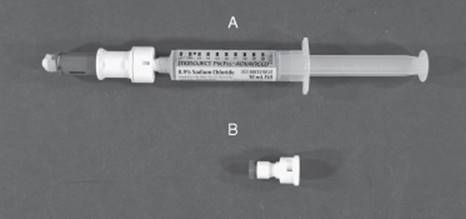
Unlike the Onguard system, the PhaSeal system totally prevents air and particulates from escaping into the surrounding area. The PhaSeal device has a spike connected to a protector cap that penetrates the rubber membrane of the vial. When pressed through the membrane, a balloon chamber on the side of the spike inflates, capturing air and particles that are displaced from the vial. Then, a needle is pushed out of its protective barrel and down through double membranes, into the vial. The needle portion of this Luer lock injector is designed so the needle is never exposed, preventing accidental needlestick injuries. It is contained in a plastic chamber that telescopes into the barrel (Figures 5.3 and 5.4). The injector and the protector cap are locked together, with the rubber membrane of the injector in contact with the rubber membrane of the vial, creating a dry connection. When the needle is withdrawn from the vial, it retracts into its plastic barrel chamber. Because the rubber membranes are locked together in a dry connection, there is no chance of drug particles escaping the vial during preparation. If the drug is diluted into a larger volume, such as a 150-mL bag of electrolyte solution, a different infusion adaptor connects to the IV administration set and allows the drug to be added to the bag, using the same locking closed system. A similar docking device is used for the administration of the medication. An adapter is Luer-locked onto the catheter, and a needle again penetrates the double membrane of the dry connection. The four-part PhaSeal system provides maximum protection for the technician or pharmacist preparing and administering a dose of chemotherapy. The cost of these closed or contained systems is reasonable for the practice that occasionally administers chemotherapy and can be passed directly on to the client.
Figure 5.3 PhaSeal components necessary for chemotherapy preparation. (A) Injector: attaches to a syringe to allow safe extraction of chemotherapy drug from a vial. (B,C) Two sizes of protectors. These absorb positive pressure and aerosols from a vial and allow drug extraction without aerosol exposure risk.
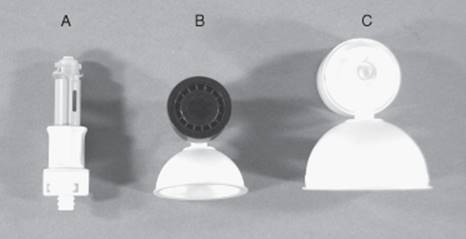
Figure 5.4 PhaSeal components necessary for chemotherapy administration. (A) Flush syringe with the injector attached. (B) Luer lock connector. This attaches to the catheter attachment on the patient with a locking mechanism that prevents drug exposure.
Safe Drug Administration
Always place a new, dedicated catheter for the administration of chemotherapy. Administering IV chemotherapy through only a needle with syringe leaves your patient (and yourself) vulnerable to accidental exposure. The patient may pull away from the holder and cause the needle to come out of the vein, risking a needlestick injury or topical exposure to you as well as the holder, and topical or perivascular exposure to the patient. Many chemotherapy drugs are very toxic to normal tissues when administered perivascularly. Flush the catheter immediately before administration to confirm its patency and immediately after administration to assure that the catheter is clear of any drugs before removal. That way, the patient receives its entire intended dose and no drug remains in the catheter when it is removed.
Many cancer drugs can be administered orally by the owners on an outpatient basis. These drugs can be dispensed by your clinic or prescribed to a pharmacy. Instruct owners to wear gloves when handling these medications, and caution them that their pet’s saliva, urine, and feces may be contaminated with chemotherapy drugs or their metabolites for a period of time. There may be times when splitting a tablet to achieve the proper dose of chemotherapy for an animal patient seems unavoidable. Having tablets compounded is one way to avoid the risks associated with splitting them. Compounding powdered chemotherapy drugs into capsules should not be attempted by a veterinary clinic without a powder containment glove box. It is similar to the isolator chambered system, except that a powder containment glove box has prefilters to prevent its HEPA filters from becoming clogged with powder. To compound a human cancer drug, which veterinary patients require in very small doses, the drug is pulverized and mixed with other powder fillers and then placed in capsules for administration. The powder containment glove box confines the toxic dust created by this compounding process, protecting the surroundings and personnel.
Although unadvisable, if a patient’s chemotherapy tablet must be split, and the owner is willing to do it at home, instruct the owner to wear a mask and gloves, and to carefully cut the tablets with a tablet cutter. If a technician, veterinarian, or pharmacist routinely divided tablets for their cancer patients, they would take unacceptably high risks of being exposed to much higher levels of toxicity. The pet’s owner will also be exposed by cutting his or her pet’s tablets, but his or her exposure will be nominal. Supply the owners with protective latex or nitrile gloves, and teach them how to minimize their risk of contamination as they split and administer chemotherapy tablets to their pets.
Safe Waste Disposal
Proper disposal of hazardous waste is important to all of us and is the mission of the Environmental Protection Agency (EPA) and other government agencies. Recent studies demonstrate that our drinking water contains measurable levels of drugs that have not been filtered out by current water treatment systems. The highest levels of drugs are hormonal-type steroids classified as “endocrine disruptors.” They are, in large part, from prescriptions for birth control products and hormones for menopause. These drugs, or their metabolites, work their way through the body and end up in our wastewater. Antibiotics, pain medications, tranquilizers, antidepressants, and chemotherapeutics are also detected. It has long been common practice to dispose of excess or expired drugs like these by flushing them down the drain.
When administered to humans, chemotherapy drugs are also excreted in their urine or feces over time and, ultimately, end up in the wastewater system. Chemotherapy drugs containing platinum, like cisplatin or carboplatin, can be detected in a patient’s urine for up to 5 days. The veterinary cancer patient presents additional concerns about waste. Since pets rarely use toilets, there is increased potential for direct exposure to humans and other animals. Inform owners that waste from their pets may be hazardous and to avoid contact with urine, feces, or vomit. Instruct them to protect small children and pets by picking up and disposing of their cancer patients’ feces in plastic bags, and washing urine spots with water. Hazardous waste in your clinic is governed by no less than seven government agencies, and all are concerned with how your veterinary clinic disposes of hazardous waste. They are
· EPA,
· OSHA,
· Drug Enforcement Agency (DEA),
· US Nuclear Regulatory Commission (USNRC),
· State Department of Public Health and Environment,
· NIOSH, and
· DOT.
These organizations are most interested in waste generated by human medicine. However, it has come to their attention that veterinary clinics also have the potential to contaminate drinking water and accidentally expose people to infectious, nuclear, and cytotoxic waste products. And they impose the same guidelines on veterinary clinics for the disposal of these agents. Inspections by any of these governmental agencies can take place unannounced to determine your compliance with laws pertaining to waste handling.
Standards for Waste Handling
Standards have been set for handling hazardous waste, and they apply to veterinary clinics as well as human clinics. Special color-coded containers are manufactured to collect hazardous waste. The colors indicate the type of waste that they store. Yellow designates chemotherapy waste, red is for infectious waste, and black containers are specific for Resource Conservation and Recovery Act (RCRA) waste. These standards were initially set to control hazardous waste produced by large manufacturers. However, they have now trickled down to end users like medical and veterinary clinics. For instance, the practice of clinics working together to gather their chemotherapy waste and dispose of it from a central location violates both state and federal laws governing the transport of hazardous materials. Now, only licensed “hazardous waste handlers” can transport these wastes. If you were to carry chemotherapy waste from your clinic to the local human hospital for proper disposal, and it was discovered in your car, you could face imprisonment and a fine for illegally transporting hazardous waste without a license.
The RCRA classifies hazardous waste using letter designations. Hazardous drugs are designated by the letters “P” and “U.” Products that fit into these two categories are chemicals commonly found in healthcare facilities. Examples of drugs that are designated with a “P” that might be found in your clinic are
· heartworm medication,
· epinephrine,
· nitroglycerine, and
· warfarin.
Most chemotherapeutic agents are designated in the “U” listing of RCRA.
It is important for veterinarians and technicians to recognize the classifications of hazardous waste and to know how to handle them in the clinic. There are specific guidelines for the disposal of these agents, as well as specific types of containers that must be used. The RCRA containers are black and are available in 1-, 2-, and, 5-gal sizes. Drugs classified as letter “P” and “U” must be disposed of in these containers.
The waste generated by chemotherapy preparation and administration is designated as either concentrated waste or contaminated waste. Concentrated waste includes the original drug vial, or a syringe and needle that came in contact with the concentrated drug during preparation. These should be disposed of in a black RCRA container. Contaminated waste, such as gloves, gowns, administration sets, and IV bags, is disposed of in yellow chemo-waste containers. Yellow is the designated color for incidental chemotherapy waste.
Veterinary clinics that handle any of the RCRA drugs or chemotherapeutics must contract with a licensed hazardous waste handler. Waste containers can be purchased from the same suppliers who offer sharps containers. They have a sealable lid and are to be accessed only when adding more waste. Nothing should ever be removed once it is placed in a container. The RCRA and yellow containers may be stored on-site for 30 days or more until arrangements can be made for pickup. Licensed waste handlers will pick up your containers, replace them with empty ones, and transport the waste to their collection sites. Contracting with a waste-handling service is the only way for a veterinary clinic to comply with state and federal regulations and is an expense to be considered. Laws are very strict regarding this process.
The EPA has designated state governments to enforce the proper handling of medical waste. State agencies are always looking for sources of hazardous waste contamination. They already inspect human hospitals, pharmacies, and medical clinics. They are beginning to look at veterinary clinics as possible contaminators. They have the authority to come into your clinic and observe how you handle hazardous waste. If you have the proper color-coded containers and a contract with a licensed waste handler, your clinic is in compliance and should have no problems with an inspection. All of these protective measures add up and are expensive, but we must all be good custodians of our environment.
Additional Reading
Department of Transportation (DOT). More information on hazardous material transportation violations can be found at the DOT, Office of Inspector General (OIG) web site. [http://www.oig.dot.gov/oversight-areas/criminal-investigations/hazardous-materials-pipelines].
Harrison BR. 1989. Exposure to hazardous drugs: Time to reevaluate your program? Am J Health Syst Pharm 56(14):1403.
National Institute of Safety and Health (NIOSH). Safe Handling of Hazardous Drugs for Veterinary Healthcare Workers, 2010. [http://www.cdc.gov/niosh/docs/wp-solutions/2010-150/pdfs/2010-150.pdf].
Occupational Safety Health and Safety Administration (OSHA). Prevention of Employee Exposure, 1999. [http://www.osha.gov/dts/osta/otm/otm_vi/otm_vi_2.html#5].
Skov T, Maarup B, Olsen J, Rørth M, Winthereik H, Lynge E. 1992. Leukaemia and reproductive outcome among nurses handling antineoplastic drugs. Br J Ind Med 49(12):855–61.
U.S. Pharmacopeia (USP). USP797, Guidebook to Pharmaceutical Compounding: Sterile Preparations, 2008 . [http://www.usp.org/products/797Guidebook/].