
It is important for all pediatricians in all fields to recognize signs and symptoms of congenital disorders, including dysmorphologic features. It is also important to involve genetics in the patient’s care, for appropriate screening and treatment of conditions associated with genetic syndromes, genetic testing, if available and appropriate, and counseling regarding siblings and possible future offspring of the patient. Finally, physicians strive for a unifying diagnosis, and usually one is sufficient, but patients can have more than one thing going on, and children with genetic disorders can also get the diseases children without genetic conditions get!
ENVIRONMENTAL FACTORS

A 3-week-old infant is brought for seizure. On physical examination, the patient has microcephaly. Cerebral calcifications are seen on brain CT scan. What does the infant likely have? Congenital Cytomegalovirus infection
Teratogens:
 Cause 10% of all birth defects.
Include maternal metabolic disorders (diabetes mellitus), maternal/intrauterine infections (TORCHeS [toxoplasmosis, others, rubella, cytomegalovirus, herpes simplex, syphilis]), drugs, radiation, mechanical forces.
Common teratogenic drugs include ethanol, warfarin, isoretinoin, lithium, valproic acid, fluoroquinolones, tetracyclines, and phenytoin.
GENETIC FACTORS
Include single gene, parental imprinting, molecular cytogenetics.
Single gene:
Autosomal (dominant/recessive).
X-linked (dominant/recessive).
Parental imprinting: Genetic defect is dependent on which parent passes the abnormal gene.
Molecular cytogenetics:
Unstable repeat sequences
Uniparental disomy
Translocation

Trisomies:
Age 13, Puberty: Patau
Age 18, can vote—“Elect”: Edwards
Age 21, can Drink: Down
TRISOMY SYNDROMES
Trisomy 21 (Down Syndrome)
A female infant has slanted palpebral fissures, epicanthal folds, and some delayed development. Think: Down syndrome.
This is a classic description of an infant with Down syndrome. The diagnostic clinical features include flat facial profile, oblique palpebral fissures and epicanthic folds are usually evident at birth. It is also a leading cause of severe mental retardation in children. It is the most common chromosomal disorders.
A 33-week-gestation male infant born to a 40-year-old mother was noted to have facial dysmorphism with depressed nasal bridge, wide-spaced eyes, low hairline, and low-set ears. He was also noted to have a single palmar crease in both hands. At 2 hours of life he was noted to have bilious emesis, and an abdominal x-ray was obtained, as shown in the figure. What is the diagnosis and management of this infant?
The infant described was born to a mother with advanced maternal age (> 35 years) and features consistent with trisomy 21 (Down syndrome). X-ray is notable for the classic double-bubble sign, which is pathognomonic for duodenal atresia. Management includes surgical repair of the duodenal atresia and also to confirm the diagnosis of trisomy 21 by chromosome analysis.
Extra copy of the genetic material on chromosome 21.
Most common malformation syndrome.
Most common chromosome disorder.
Most common genetic cause of moderate mental retardation.
Patients with Down syndrome develop Alzheimer’s dementia early, around age 35.
ETIOLOGY
Ninety-five percent complete trisomy (meiotic nondisjunction of homologous chromosomes).
Four percent Robertsonian translocation (to chromosome 14).
One percent mosaicism.
EPIDEMIOLOGY
One in 600 births.
RISK FACTORS
Advanced maternal age.
SIGNS AND SYMPTOMS
More than 100 different physical signs can be present.
Varying degrees of mental retardation (most with IQs between 35 and 70).
Generalized hypotonia (of central nervous system [CNS] origin; most meet major motor milestones at 2× normal age).
Balding scalp hair pattern.
Upslanted eyes with epicanthal folds (see Figure 7-1).
Flat nasal bridge.
Prominent tongue.

Think of duodenal atresia in a newborn with Down syndrome presenting with bilious vomiting.
Extra neck skin folds (sometimes visible on prenatal ultrasound).
Transverse palmar (simian) creases.
Small ears.
Short stature.
Joint laxity.
Hypoplastic nipples.
Brushfield spots on irises.
Subendocardial cushion defect (atrial/ventricular septal defect [ASD/VSD], atrioventricular [AV] canal).
Duodenal atresia, Hirschsprung’s disease, imperforate anus.
Hypothyroidsim.
Amyloid plaques and neurofibrillary tangles in brain—early onset dementia.
 risk of leukemia (acute lymphocytic leukemia [ALL], acute myelogenous leukemia [AML], acute megakaryocytic leukemia).
risk of neonatal leukemoid reactions.
Atlantoaxial instability becomes an issue later in life.
Most males with Down syndrome are sterile but some females have been able to reproduce.
Look for “double-bubble sign” in a plain abdominal radiograph.
DIAGNOSIS
Prenatal diagnosis can be made via amniocentesis or chorionic villus sampling.
Maternal serum α-fetoprotein (AFP) is  .
.
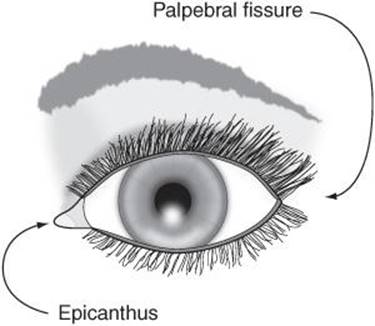
FIGURE 7-1. Location of epicanthus and palpebral fissure.
In Down syndrome, there are epicanthal folds and upwardly slanted palpebral fissures.
Low maternal serum unconjugated estriol level.
Elevated maternal beta-human chorionic gonadotropin (β-hCG).
TREATMENT
Early childhood intervention to maximize social and intellectual capacity.
Life skills training.
Surgery for correction of cardiac and duodenal defects.
At risk for atlantoaxial dislocation and cervical cord compression.
risk for leukemia and respiratory tract infections.
Yearly screening for thyroid disease.
Trisomy 18 (Edwards Syndrome)
ETIOLOGY
Most common type is complete trisomy.
Small percentage are due to mosaicism.
EPIDEMIOLOGY
One in 6000 live births; second most common trisomy.
SIGNS AND SYMPTOMS
Prominent occiput.
Low-set ears.
Small mouth.
Short sternum.
Thumb and radius agenesis/hypoplasia.
Camptodactyly (little finger fixed in flexion).
Redundancy of cardiac valve leaflets.
Hypertonia.
Seizures.
Rocker-bottom feet.
TREATMENT
Supportive.
Fifty percent die within first week of life. Most common cause of death is apnea.
Five to ten percent survive beyond the first year.
Those who survive are severely mentally retarded.
Trisomy 13 (Patau Syndrome)
Higher frequencies in stillbirths and spontaneous abortions.
ETIOLOGY
Seventy-five percent complete trisomy.
Twenty-three percent Robertsonian translocation (to chromosome 14).
Four percent mosaicism.
EPIDEMIOLOGY
One in 10,000 live births.
SIGNS AND SYMPTOMS
Holoprosencephaly (failure of telencephalon to divide into two hemispheres, resulting in large central ventricle; brain assumes configuration of a fluid-filled ball).
Microphthalmia and other eye defects (coloboma, cyclops).
Midline facial defects.
Polydactyly.
Scalp cutis aplasia.
Cystic kidneys.
VSD.
TREATMENT
Supportive.
Eighty percent die within first month; 5% survive past 6 months.
SEX CHROMOSOME ANOMALIES
Turner syndrome is the most common cause of primary amenorrhea.
Turner Syndrome
A newborn infant has lymphedema of the hands and feet, extra skin folds at a short neck, widely spaced nipples, and femoral pulses. Think: Gonadal dysgenesis (45, X) Turner syndrome, and do a chromosomal analysis to confirm the diagnosis.
Many infants with Turner syndrome are recognized at birth due to the presence of edema of the hands and feet and loose skin folds at the nape of the neck. Coarctation of aorta may be present in up to 20%.
ETIOLOGY
45, XO—missing one X chromosome.
EPIDEMIOLOGY
One in 2000–5000 live female births.
RISK FACTORS
Not related to advanced maternal age.
SIGNS AND SYMPTOMS
Short stature.
Webbed neck.
Lymphedema of hands and feet.
Coarctation of the aorta + biscuspid aortic valve.
Small mandible.
Narrow maxilla and high arched palate.
Epicanthal folds.
Impaired hearing (sensorineural).
Delay in motor skill development with normal intelligence.
Ovarian dysgenesis.
Phenotypically female.
Association with spontaneous abortion.
TREATMENT
Replacement for secondary sex characteristic development.
Monitor for autoimmune hypothyroidism.
Refer to an endocrinologist for induction of puberty at an appropriate age.
Resection of any intra-abdominal gonads to prevent malignancy.
Noonan Syndrome
Phenotypically similar to Turner syndrome but can affect both sexes.
Girls with Noonan syndrome have normal XX chromosomes.
Autosomal dominant.
Pulmonary stenosis.
Mental retardation often present.
Klinefelter Syndrome
ETIOLOGY
Presence of an extra X chromosome in males.
47,XXY most common.
Most common cause of hypogonadism and infertility in males.
EPIDEMIOLOGY
One in 500 males.
RISK FACTORS
Advanced maternal age.
SIGNS AND SYMPTOMS
Hypogonadism.
Small testes but puberty occurs at the normal age.
Most patients are phenotypically normal until puberty.
Azoospermia (absence of sperm).
Tall stature (eunuchoid).
Female hair distribution, gynecomastia.
Learning disabilities.
Delay of motor skill development
Presence of inactivated X chromosome (Barr body).
TREATMENT
Administration of testosterone during puberty to improve secondary sex characteristics.
Interventions for developmental delays/learning disabilities.
IMPRINTING DISORDERS
Imprinting—different phenotype, same genotype.
Angelman Syndrome
ETIOLOGY
Sixty percent due to maternal deletion 15q11–13 (see Prader-Willi syndrome).
Forty percent have two normal paternal copies of chromosome 15.
EPIDEMIOLOGY
One in 20,000.
SIGNS AND SYMPTOMS
Happy, laughing disposition—previously known as the “happy puppet” or “marionette joyeuse” syndrome because of this and stereotyped flapping of hands.
Often, strikingly attractive children with lighter pigmentation than other family members (often blond-haired, blue-eyed).
Mental retardation (severe).
Microcephaly.
Ataxia.
Hypotonia (ataxia and hypotonia create the characteristic “puppet”-like gait).
Epilepsy (80%) with characteristic electroencephalographic (EEG) findings.
Complete absence of speech.
Unusual facies characterized by a large mandible and open-mouthed expression revealing tongue.
Inappropriate laughter.
The same chromosomal deletion causes Angelman syndrome and Prader-Willi syndrome. The only difference is that in Angelman the missing genetic material is maternal, and in Prader-Willi, paternal.
TREATMENT
Supportive.
Seizures are often refractory to anticonvulsant therapy.
Normal life span.
Prader-Willi Syndrome
ETIOLOGY
Genetic.
Seventy-five percent paternal deletion 15q11–13 (see Angelman syndrome).
Twenty-five percent maternal disomy.
Hyperphagia/lack of satiety, caloric requirement secondary to hypotonia/ movement, and obsessions/compulsions that focus on food all contribute to the vicious cycle  obesity in these patients.
Obesity.
Small hands and feet.
Hypogonadism.
EPIDEMIOLOGY
One in 15,000–20,000.
SIGNS AND SYMPTOMS
Hypotonia and poor feeding (in infancy) progressing to hyperphagia and obesity by childhood.
Precocious puberty.
Micropenis.
Mild mental retardation.
Sleep disturbances.
Lighter pigmentation than other family members.
Significant behavioral problems (stubborn, manipulative, aggressive).
Fluent speech.
Obsessive/compulsive traits.
TREATMENT
Strict diet and behavioral interventions to prevent obesity.
Growth hormone to promote stature, and other timely hormone supplementation to promote secondary sex characteristics.
Patients develop complications from obesity that limit their life span.
Early prevention of obesity is the key to quality and quantity of life in these patients.
MOLECULAR CYTOGENETIC DISORDERS
22q11 Syndrome
Caused by deletion of a small piece of chromosome 22.
Seen in DiGeorge syndrome, velocardiofacial syndrome.
Occurs in 1 in 4000 births.
Most common features include congenital heart defects (85%), palatal abnormalities, thymic aplasia, immune deficiency (defective T-cell function), hypocalcemia (parathyroid involvement), characteristic facial features.
Cardiac features include tetralogy of Fallot, interrupted aortic arch.
Detected by fluorescence in situ hybridization (FISH).
Fragile X Syndrome
ETIOLOGY
Due to number of repeated nucleotide sequences (CGG).
Fragile X is the most common form of heritable mental retardation.
EPIDEMIOLOGY
One in 2000 births
Male-to-female ratio: 2:1.
RISK FACTORS
Family history.
SIGNS AND SYMPTOMS
Mental retardation.
Macroorchidism in boys.
Protruding ears, macrocephaly, triangular, elongated facies, flat malar bones.
Shyness, autistic behavior, avoidance of eye contact.
AUTOSOMAL-DOM I NANT CONDITIONS
People in every generation are affected.
Examples include adult polycystic kidney disease, familial hypercholesterolemia, Marfan syndrome, neurofibromatosis type 1 (von Reckling-hausen’s disease), von Hippel–Lindau, Huntington disease, familial adenomatous polyposis, and hereditary spherocytosis.
Marfan syndrome:
Connective tissue disorder affecting fibrillin.
Chromosome 15.
Tall stature, long limbs.
Cardiovascular—aortic root dilatation, mitral valve prolapse, aortic regurgitation.
Ophthalmologic—lens subluxation.
Sudden death usually due to aortic dissection.
AUTOSOMAL-RECESSIVE CONDITIONS
The X chromosome lyonizes randomly early in embryogenesis when there are relatively few cells. Since all daughter cells lyonize the same X, the odds that a significantly disproportionate inactivation of the “good” X will occur in carrier females, while small, are not infinitesimal. When this occurs, the carrier is affected, and the mechanism is termed unfortunate lyonization.
Skips generations (often a grandparent has had a similar condition).
Examples include cystic fibrosis and many enzyme deficiencies/metabolic disorders.
History of early deaths from unknown disorders or multiple miscarriages.
Consanguinity really the odds—you must ask if the parents are blood relatives.
X-LINKED RECESSIVE CONDITIONS
Usually only males are affected; females are unaffected or only partially affected (due to lyonization) carriers of the trait.
Examples include Duchenne and Becker muscular dystrophies, hemophilia A and B, Fabry disease, glucose-6-phosphate dehydrogenase (G6PD) deficiency, Hunter syndrome, ocular albinism, red–green color blindness, and Alport syndrome.
CONGENITAL ANOMALIES
Polydactyly
DEFINITION
Presence of more than five fingers or toes, which may be rudimentary to fully developed.
Incidence: 2 per 1000 live births.
ETIOLOGY
May occur as an isolated defect (whether genetic, toxic, or mechanical) or in conjunction with syndromes such as:
Ellis–van Creveld syndrome: With congenital heart disease.
Bardet-Biedl syndrome: With obesity, pigmentary retinopathy, mental retardation, hypogonadism, and renal failure.
Meckel-Gruber syndrome: Triad of occipital encephalocele, large polycystic kidneys, and postaxial polydactyly. Associated abnormalities include oral clefting, genital anomalies, CNS malformations, fibrosis of the liver, and pulmonary hypoplasia.
DIAGNOSIS
Observation, x-ray, fetal sonogram.
TREATMENT
Surgery, usually at 1 year of age.
Syndactyly
Definition
Webbing or fusing of two or more fingers or toes. May be bony and/or cutaneous. Often looked for between the second and third toes.
PATHOPHYSIOLOGY
Failure of cell apoptosis between digits during development.
TREATMENT
Surgery.
Craniosynostosis
DEFINITION
Premature closing of one or more cranial sutures due to abnormalities of skull development.
Can be primary skull/bone defect or a result of failure of brain growth.
Syndromic craniosynostosis in 20%.
Most common: Apert syndrome and Crouzon syndrome.
ETIOLOGY
May occur alone or in conjunction with syndromes such as:
Apert syndrome
Chotzen syndrome
Pfeiffer syndrome
Carpenter syndrome
Crouzon syndrome
SIGNS AND SYMPTOMS
Early closure of fontanels and sutures.
COMPLICATIONS
Hydrocephalus.
intracranial pressure (ICP).
Developmental delay.
TREATMENT
Craniotomy to prevent intracranial and ophthalmologic complications.
Multidisciplinary approach—genetics, psychology, pediatrics, surgery, neurology.
Genetic counseling.
Long-term follow-up.
Amniotic Bands
DEFINITION
Fibrous strands of membrane stretching across chorionic cavity.
Form of disruption.
EPIDEMIOLOGY
Not associated with problems in future pregnancies.
ETIOLOGY
Spontaneous.
Associated with abdominal trauma.
May be associated with chorionic villus sampling (CVS).
PATHOPHYSIOLOGY
Caused by early amnion rupture and leakage of chorionic fluid.
SIGNS AND SYMPTOMS
May be innocent and not cause any harm to the fetus.
Can  limb or other body part constriction or amputation (amniotic band syndrome).
May be associated with oligohydramnios and fetal movement.
DIAGNOSIS
Ultrasound.
TREATMENT
Most bands disappear on their own, not appearing on follow-up ultrasound.
Cleft Palate/Lip
DEFINITION
Spectrum of defects of the upper lip, philtrum, and hard and soft palates.
Cleft lip, cleft palate, or both.
Unilateral or bilateral.
EPIDEMIOLOGY
Fourth most common birth defect.
Incidence of orofacial clefting is 1 in 700 live birth.
Occur more often in infants of Asian, Latino, or Native American descent.
More common in males.
ETIOLOGY
Teratogens—ethanol, anticonvulsants, steroids, chemotherapy, maternal vitamin A excess.
Gestational factors—maternal diabetes, amniotic bands.
Chromosomal abnormalities.
Idiopathic (majority).
PATHOPHYSIOLOGY
Clefting of lip and anterior (primary) palate due to defect in fusing of both maxillary processes with the frontonasal process during weeks 5 and 6.
Clefting of posterior (secondary) palate due to defect in fusion of palatal shelves during weeks 7 and 8.
SIGNS AND SYMPTOMS
Can affect feeding, speech, illness (colds and ear infections), teething, hearing, and emotional coping.
DIAGNOSIS
Physical exam of lips, palate, and oropharynx.
TREATMENT
Infants with cleft palate may require assistance with feeding.
Surgical repair of lip within first months of life, palate around 1 year of life; potential for final repairs and scar revisions in adolescence.
Cleft team can include plastic and oral surgeons; geneticist; ear, nose, and throat (ENT) specialist; dentist; speech pathologist; audiologist; social worker or psychologist; and nurse coordinator.
Genetic counseling.
Omphalocele
DEFINITION
Herniation of abdominal contents (usually only intestine, though can include liver and/or spleen) through umbilical root, which is covered only by peritoneum.
EPIDEMIOLOGY
May be associated with other congenital defects, including chromosomal anomalies, heart defects, and diaphragmatic hernia.
Association: Beckwith-Wiedemann syndrome (omphalocele, macrosomia, hypoglycemia), trisomies 13 and 18.
In a normal pregnancy, there is approximately 600 mL of amniotic fluid surrounding the baby at 40 weeks’ gestation.
DIAGNOSIS
Some may be detected on prenatal ultrasounds.
TREATMENT
Until any other, more serious conditions have been taken care of, the extruded contents are covered.
Serial reductions of intestines back into abdomen until skin closure is possible.
Amniotic fluid volume as gestational age advances beyond 32 or 34 weeks’ gestation.
Oligohydramnios
DEFINITION
Abnormally small amount of amniotic fluid (amniotic fluid index [AFI] < 5.0 cm or single pocket of fluid < 2 cm).
Volume < 500 mL = oligohydramnios.
Complicates 1–5% of pregnancies.
Isolated third-trimester oligohydramnios is not necessarily associated with poor perinatal outcome.
ETIOLOGY
Premature rupture of membranes (PROM).
Intrauterine growth retardation (IUGR).
Postdates pregnancy.
Renal anomalies (eg, bilateral renal agenesis, multicystic dysplastic kidneys, posterior urethral valves).
Other congenital anomalies (eg, aneuploidy).
Placental abruption.
Twin-twin transfusion.
Iatrogenic—nonsteroidal prostaglandin synthetase inhibitors, firsttrimester chorionic villus sampling, second-trimester amniocentesis; amniotic fluid level may return to normal.
Idiopathic.
Oligohydramnios becomes most evident after 20 weeks of gestation.
PATHOPHYSIOLOGY
Amniotic fluid is regulated by fetal urine, as well as fetal oral secretions and respiratory secretions. Any process disrupting this exchange of fluid can pathological amniotic fluid levels.
COMPLICATIONS
Fetal demise.
Pulmonary hypoplasia.
Facial deformities.
Skeletal deformities (eg, compressed thorax, twisted feet).
Pulmonary hypoplasia is the most serious complication of oligohydramnios.
Potter Syndrome
Potter syndrome specifically refers to bilateral renal agenesis, though other renal anomalies oligohydramnios have also used the eponym.
Potter syndrome includes pulmonary hypoplasia, skeletal anomalies, and characteristic facies (sloping forehead; flattened nose; recessed chin; and low-set, floppy ears).
It is incompatible with neonatal life.
Death occurs due to pulmonary hypoplasia.
Patients with second-trimester oligohydramnios have a higher prevalence of congenital anomalies and a lower fetal survival rate than those women with oligohydramnios in the third trimester.
DIAGNOSIS
Amniotic fluid index (AFI)—sum of the maximum vertical pocket of amniotic fluid in each quadrant of the uterus.
Best to use average of three readings.
TREATMENT
Depends on etiology.
First goal is to remove the inciting cause or correct the underlying problem (eg, discontinue prostaglandin inhibitor, place a shunt).
Measures to prepare fetus for possible premature birth (corticosteroids and antibiotics for PROM).
Antepartum testing to determine appropriate time for delivery in IUGR.
Suspect bilateral renal agenesis if maternal ultrasonography shows oligohydramnios, nonvisualization of the bladder, and absent kidney.
Hypospadias
DEFINITION
Improper location of urethral meatus, not at tip of penis, but on underside of penis, even as far back as the scrotum.
ETIOLOGY
Hereditary—if father has, there is a 20% chance that child will.
Infants with hypospadias should not be circumcised at birth, as the foreskin may be useful in the repair.
SIGNS AND SYMPTOMS
Curvature of penis downward; foreskin “hooding.”
Potentially may have to sit down to urinate.
DIAGNOSIS
Clinical, though radiologic studies may be necessary if other congenital defects possibly present.
TREATMENT
Surgical correction to extend urethra to end of penis before 18 months of age and chordae repair if sexual function will be affected by bent erect penis.
May require more than one operation.
Beware of postoperative bleeding, infections, stenosis, and fistulae.
