
Approach to the Problem
Variations in the physical appearance of female genitalia encompass findings within the spectrum of normal, ambiguous genitalia, and abnormalities—congenital or acquired. Although most variations represent isolated external findings, some are associated with variations in the structure and/or function of other organ systems. In the category of acquired abnormalities, it is crucial for pediatric clinicians to have a heightened sense of awareness for accidental and inflicted genital trauma, including female genital mutilation (FGM). Identifying variations in the appearance of female genitalia depends on the physical characteristics, the stage of the child’s genital development, the presence of associated symptoms, ongoing parental involvement in the child’s genital care, and the primary care provider’s consistent inclusion of a careful genital examination at every health maintenance visit. Early detection may be imperative as with ambiguous genitalia, preferred as with imperforate hymen, or inconsequential as with normal hymenal variants. In addition, any complaints of abdominal pain, urinary symptoms, perineal/vaginal symptoms, change in bowel habits, and/or sexual maltreatment should prompt the clinician to carefully examine the perineum.
Key Points in the History
• A patient’s age and Tanner stage are key to establishing whether a particular external genital finding is within the limits of normal.
• Imperforate hymen or a vaginal web may present with complaints of abdominal or lower back pain, pain with defecation, diarrhea, extremity pain, urinary retention, and nausea and vomiting.
• There may be a genetic predisposition to imperforate hymen.
• Congenital adrenal hyperplasia (CAH) occurs with higher frequency in Ashkenazi Jewish, Hispanic, Slavic, and Italian populations.
• A family history of neonatal death may represent a missed diagnosis of CAH.
• A family history of ambiguous genitalia, consanguinity, infertility, or amenorrhea suggests a genetic basis for ambiguous genitalia.
• Maternal history of certain ovarian tumors, drug ingestion, or teratogen exposure during pregnancy may contribute to the development of ambiguous genitalia.
• Labial adhesions are common and may result from vulvar exposure to irritants, including residual feces between the labia, bubble baths, harsh soaps, detergents, accidental trauma as with vigorous cleaning, or nonaccidental trauma as with child sexual abuse and FGM.
• Inquire about genital trauma with history of recurrent urinary tract infections (UTIs), chronic vaginitis, dysuria, dysmenorrhea, or adolescent dyspareunia.
• A report from an obstetrician or a birth history may reveal FGM in a patient’s mother. Daughters of these mothers are at increased risk of FGM.
• Countries practicing FGM are found in Africa, Asia, and the Middle East. FGM practice continues in immigrant populations in countries including the United States.
• Subtle clues suggesting that a planned FGM may be upcoming include the following: upcoming cultural holidays, special ceremonies centered on the child, and requests for travel immunizations or prescriptions for antimalarial medications.
• Clues that FGM has recently occurred in a child include the following: genitourinary pain and bleeding, lengthy visits to the school bathroom, avoidance of physical activity (e.g., participation in physical education), and sudden change in behavior after a holiday.
Key Points in the Physical Examination
• The physiological red coloring of the prepubertal child’s genital mucosa may be mistaken for child maltreatment.
• In a newborn with ambiguous genitalia, gonadal material palpable in the inguinal canal or labioscrotal folds is most commonly testicular material and rarely a herniated ovary or ovotestis in a hermaphrodite; its presence eliminates the diagnoses of Turner syndrome and pure gonadal dysgenesis.
• Varying degrees of labial adhesion typically create a fused segment, posteriorly to anteriorly.
• Imperforate hymen may be detected when yellow/white tissue as with mucohydrocolpos, or red/blue tissue, as with hematocolpos, is seen protruding from a child’s vagina upon straining or crying.
• Genital trauma, accidental (e.g., motor vehicle accident), third party-inflicted (e.g., FGM), and self-inflicted (e.g., battery or cosmetic product burns) may present acutely as hemorrhagic shock, local infection, genital burns, human and animal bites, crush injuries, vulvar hematomas, or partial or complete excision of the external female genitalia.
• Consider FGM in a child or adolescent who has genital scars or perineal keloid formation, whose perineum has the classic appearance of FGM, or whose parent refuses genital examination.
|
PHOTOGRAPHS OF SELECTED DIAGNOSES |
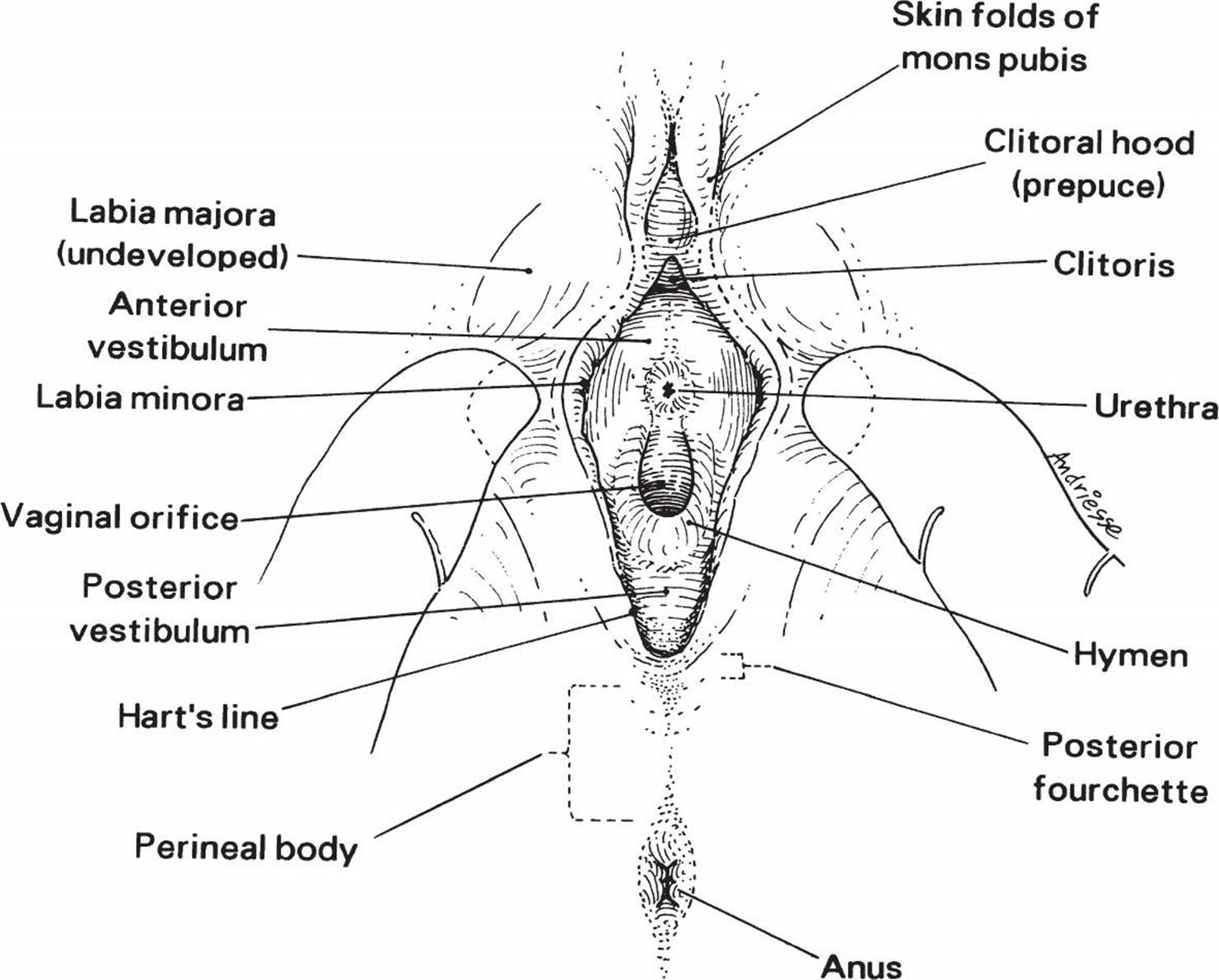
Figure 52-1 Prepubertal child genitalia. Undeveloped labia majora and other external structures are notable. (Used with permission from Emans SJ, Laufer MR, Goldstein DR, eds. Pediatric and Adolescent Gynecology. 5th ed. Philadelphia, PA: Lippincott Williams & Wilkins; 2005:3.)
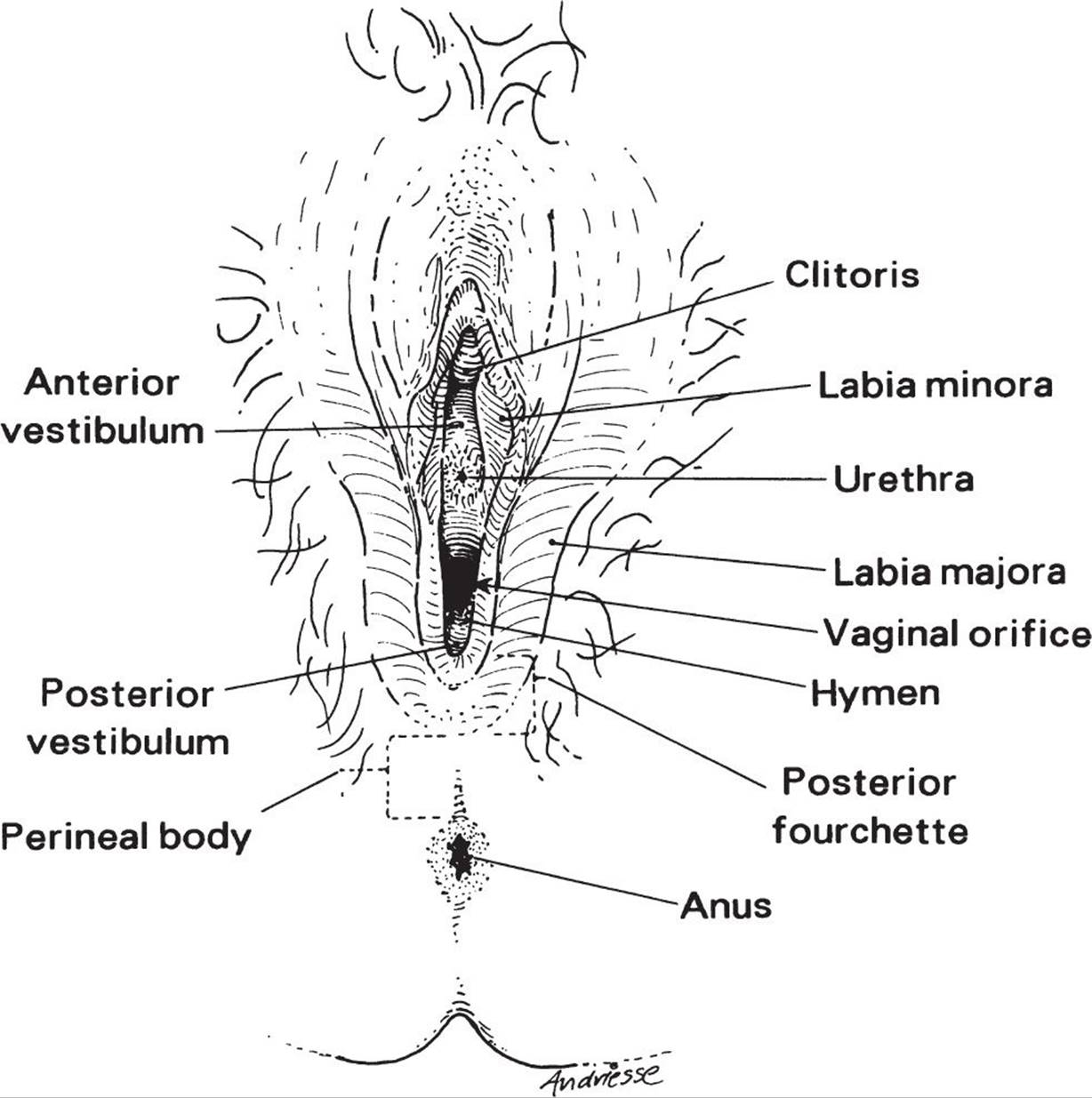
Figure 52-2 Pubertal child genitalia. Evidence of maturation of the external genitalia is prominent. (Used with permission from Emans SJ, Laufer MR, Goldstein DP, eds. Pediatric and Adolescent Gynecology. 5th ed. Philadelphia, PA: Lippincott Williams & Wilkins; 2005:28.)

Figure 52-3 Imperforate hymen. Opening of the labia minora is not visualized. (Used with permission from Emans SJ, Laufer MR, Goldstein DP, eds. Pediatric and Adolescent Gynecology. 5th ed. Philadelphia, PA: Lippincott Williams & Wilkins; 2005:plate 21.)
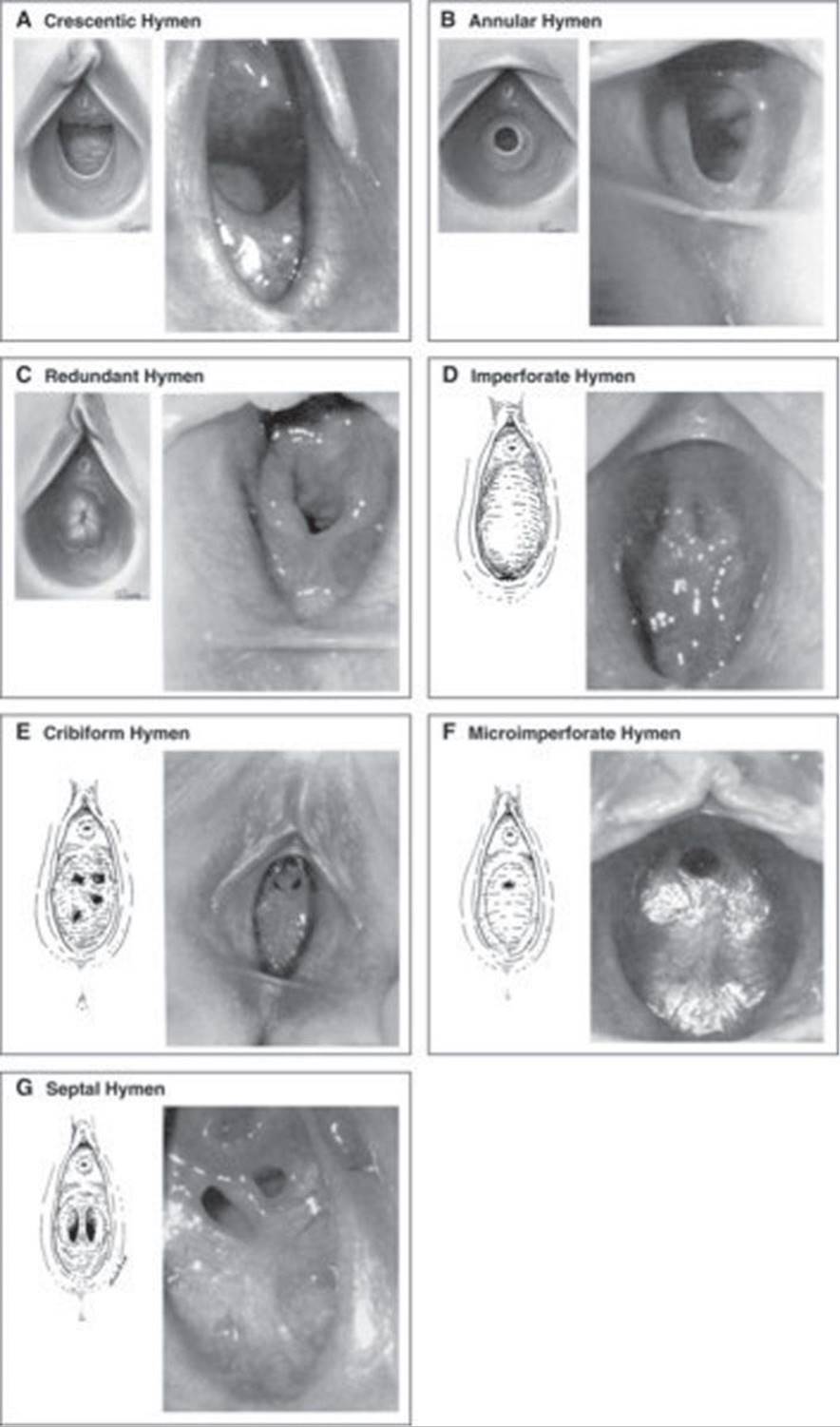
Figure 52-4 Hymen variations. (A) Crescentic hymen. (B) Annular hymen. (C) Redundant hymen. (D) Imperforate hymen. (E) Cribriform hymen. (F) Microperforate hymen. (G) Septate hymen. (Used with permission from Dudek RW. BRS Embryology. 5th ed. Philadelphia, PA: Lippincott Williams & Wilkins; 2010.)

Figure 52-5 Labial adhesions. Fused labia majora in a prepubertal child. (Used with permission from Fleisher GR, Ludwig S, Baskin MN, eds. Atlas of Pediatric Emergency Medicine. Philadelphia, PA:Lippincott Williams & Wilkins; 2004:146.)

Figure 52-6 Hematocolpos. Bluish bulging membrane in a child with primary amenorrhea and lower abdominal pain. (Used with permission from Fleisher GR, Ludwig S, Baskin MN, eds. Atlas of Pediatric Emergency Medicine. Philadelphia, PA: Lippincott Williams & Wilkins; 2004:145.)

Figure 52-7 Ambiguous genitalia in a child with CAH. Note the prominent clitoris. (Courtesy of Philip Siu, MD.)
DIFFERENTIAL DIAGNOSIS


Other Diagnoses to Consider
• Incomplete hymenal fenestration: microperforate, septate, and cribriform hymens
• Obstructive anomalies of the vagina
• Vulvar lichen sclerosis
• Vulvar hemangioma
• Genital trauma
• Urethral prolapse
• Rectal prolapse
• Child sexual abuse
When to Consider Further Evaluation or Treatment
• Surgery for imperforate hymen should be performed immediately in symptomatic patients and during the newborn, premenarchal, or postpubertal periods in asymptomatic patients.
• Evaluate and treat ambiguous genitalia immediately upon detection.
• Treat ambiguous genitalia as the salt-wasting form of CAH until proven otherwise.
• Gender assignment and genital surgery for ambiguous genitalia should be undertaken after careful research and deliberation by family and multidisciplinary team of specialists.
• Medical treatment of labial adhesions should be considered if patient is symptomatic, if process involves a large portion of the labia, if the urinary stream is affected, and/or if the adhesions have not resolved after puberty.
• Surgical treatment of labial adhesions should be performed only if patient is anuric, when parent/patient objects to or is noncompliant with medical treatment, and/or in cases of medical treatment failure.
• Further evaluation by endocrinology should be considered in cases of labial fusion present at 1 to 3 months of age or labial adhesions resistant to outlined treatment.
• If FGM is suspected, confirmed, or planned, the pediatric clinician should compassionately educate the parent and family on the physical and mental consequences of the procedure on the affected child. Every effort should be made to dissuade the practice of FGM.
SUGGESTED READINGS
Abu-Ghanem S, Novoa R, Kaneti J, et al. Recurrent urinary retention due to imperforate hymen after hymenotomy failure: a rare case report and review of the literature. Urology. 2011;78:180–182.
American Academy of Pediatrics Committee on Bioethics. Female genital mutilation. Pediatrics. 1998;102:153–156.
Merritt DF. Genital trauma in prepubertal girls and adolescents. Curr Opin Obstet Gynecol. 2011;23:307–314.
Romao RL, Salle JL, Wherrett DK. Update on the management of disorders of sex development. Pediatr Clin North Am. 2012;59:853–869.
Rome ES. Vulvovaginitis and other common vulvar disorders in children. Endocr Dev. 2012;22:72–83.
Simpson J. Female genital mutilation: the role of health professionals in prevention, assessment, and management. BMJ. 2012;344:e1361.
Tebruegge M, Misra I, Nerminathan V. Is the topical application of oestrogen cream an effective intervention in girls suffering from labial adhesions? Arch Dis Child. 2007;92:268–271.
WHO. Female genital mutilation. Fact sheet no 241, 2014. http://www.who.int/mediacentre/factsheets/fs241/en/. Accessed July 8, 2014.