
Goran Augustin1, 2
(1)
Department of Surgery Division of Gastrointestinal Surgery, University Hospital Center Zagreb, Zagreb, Croatia
(2)
School of Medicine University of Zagreb, Zagreb, Croatia
Abstract
Splenic rupture can occur with any degree of trauma to a normal spleen or minimal trauma to a diseased spleen. Eastman and Hellman made three important statements with respect to rupture of the spleen in pregnancy [1]:
9.1 Splenic Rupture
9.1.1 Definition and History
Splenic rupture can occur with any degree of trauma to a normal spleen or minimal trauma to a diseased spleen. Eastman and Hellman made three important statements with respect to rupture of the spleen in pregnancy [1]:
· Rarity of the condition
· Danger of confusing it with obstetric complications
· Importance of preexisting disease of the spleen
The first case of splenic rupture in pregnancy was reported by Sylvester Saxtorph (Fig. 9.1) in 1803 [2].

Fig. 9.1
Sylvester Saxtorph, Danish obstetrician (1772–1840), first described splenic rupture during pregnancy in 1803
In 1866 Simpson referred to three cases of fatal rupture of the spleen which had occurred respectively in the pregnant, parturient, and puerperal state. He pointed out the circumstance that, during pregnancy, there is often, if not generally, an increase of the white particles in the blood – in other words, a kind of normal or physiological leukocythemia. A certain amount of softening very frequently accompanies the hypertrophy of the spleen and predisposes to the laceration of the organ under strong exertion and muscular effort, blows, etc. [3]. One of the earliest cases was by Hubbard in 1879, but the authenticity of this report is open to question as the findings are not recorded too clearly or soundly [4]. Kotschnew and Manankow gave the first overview of splenic rupture in 1930. The first nine cases were confirmed through autopsies. In 1958, Sparkman provided an overview of 44 recorded cases of splenic ruptures in pregnancy, with detailed analysis of their etiology [5]. In 1967, Buchsbaum added an additional 27 cases to the list [6]. Literature up to 2003 indicates 18 more cases, bringing the total up to 89 [7]. Classification is made according to the cause:
· Traumatic
· Following antecedent disease
· Associated with toxemia of pregnancy
· Spontaneous
Incidence according to the cause is presented in Table 9.1.
Table 9.1
Pregnancy-related causes of splenic rupture [8]
|
Etiology |
Incidence (%) |
|
Normal pregnancy |
58 |
|
Splenic ectopic pregnancy |
24 |
|
Post-vaginal delivery |
5 |
|
Post-Cesarean section |
5 |
|
Preeclampsia |
2.5 |
|
Ruptured ectopic pregnancy |
2.5 |
|
HELLP syndrome |
2.5 |
9.1.2 Classification
9.1.2.1 Traumatic Splenic Rupture
Etiopathogenesis
In its position behind the rib cage, cushioned under the left hemidiaphragm, the spleen is protected from most forms of direct trauma. The pathogenesis of rupture has been explained by Schamaun as a countercoup mechanism in which the spleen, because of its relative mobility, is driven against the vertebral column and ruptures [9]. Another mechanism explains the rupture on the basis of the ligamentous suspension of the spleen, which allows a limited degree of motion and then sudden fixation and laceration. Schonwerth described the deep inspiration at the instant of trauma (the fright mechanism) displacing the superior pole downward, while the lower pole is relatively fixed by the phrenocolic ligament causing flexion of the spleen. Trauma over the rib cage then results in capsular laceration on the stretched convex surface [10]. Sometimes underlying pathology and minor (repeating) trauma are unknown or unrecognized. In cases of previously changed spleen or additional pathology, even a minor or minimal but repetitive trauma is sufficient for splenic rupture. In one case, the prominent exostosis arising from the tenth rib had roughened and thickened a circumscribed area of the splenic capsule (Fig. 9.2) over the years as a result of the respiratory excursions and movement of daily life. Laceration of the unthickened lower pole finally occurred during pregnancy, at a time when splenic size, vascularization, and position may be altered [11]. In two cases, initially spontaneous splenic rupture was diagnosed but cavernous hemangioma of the spleen as the source of hemorrhage was confirmed. It may be that minor trauma was the precipitating factor [12, 13].
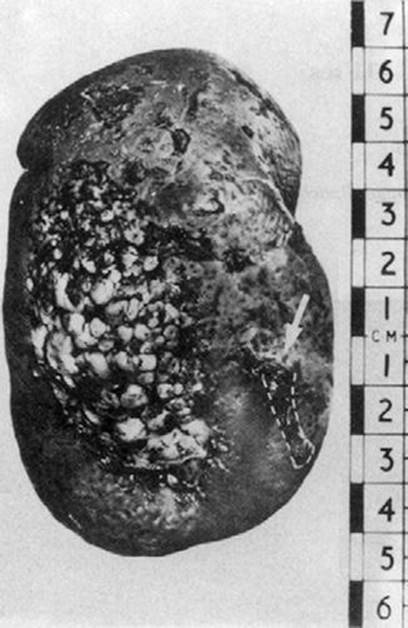
Fig. 9.2
The convex surface of the spleen to show the roughened capsule. The exostosis (dotted outline) has been replaced in the laceration (arrow) [11]
Specific etiology is complicated delivery where the spleen can be traumatized [14]. It is also mentioned in the section Postpartum Splenic Rupture.
9.1.2.2 Splenic Rupture Associated with Toxemia of Pregnancy
This classification was introduced by Sparkman in 1958 because a number of cases were associated with toxemia of pregnancy [5]. The authors suggest that toxemia may be associated with specific changes, such as hypertension, thrombosis, and diffuse angiitis, which may predispose toward vascular or visceral rupture [15–19].
9.1.2.3 Spontaneous Rupture of Normal Spleen
Definition
Opinion is divided as to whether the normal spleen ever ruptures spontaneously. Some authors deny the possibility [20], while others accept it as a rare occurrence [21]. No creditable experimental work could be found to describe changes in the spleen during pregnancy. Nelson and Hall reported a markedly diminished and almost total absence of germinal centers in lymph nodes of pregnant women at term [22]. Denehy et al. reviewed 89 cases of splenic rupture in pregnancy; only 2.2 % (2/89) were documented to be spontaneous in the puerperium [16]. In 1958, Orloff and Peskin established the following four criteria for the diagnosis of spontaneous rupture of a normal spleen [23]:
· No history of trauma
· No systemic disease that can affect the spleen
· No evidence of perisplenic adhesions to suggest previous trauma
· Splenic parenchyma, vasculature, and capsule normal macroscopically and histologically
A similar definition is by Sparkman [5]. More frequent examination of the surgical specimen will reveal pathologically changed spleens. The high incidence of secondary rupture indicates that as more adequate histories are obtained and reported, more cases of minor trauma forgotten by the patient during the long latent period will be revealed [6]. It is likely that the so-called spontaneous rupture in fact occurs as a result of capsular injury by the lower ribs from trivial blunt trauma (for instance, coughing and straining) either unnoticed by the patient at the time, or forgotten since, in the light of subsequent events [23]. These factors will markedly lower the number of cases designated as spontaneous rupture of the normal spleen in pregnancy. Sheehan and Falkiner in 1948 analyzed 163 routine obstetric necropsies and found that in the three following clinical conditions, the spleen was commonly enlarged (>200 g) in the second half of pregnancy [24]:
· Severe anemia of pregnancy
· Accidental hemorrhage of the abruptio type
· Puerperal thrombophlebitis or gross septic endometritis
This enlargement is an important risk factor for the splenic rupture.
Incidence
Zuckerman and Jacobi reviewed the world literature up to 1937 and collected 28 such cases, regarding 21 of these as genuine spontaneous rupture of the normal spleen and 7 as doubtful [25]. Another 21 cases of spontaneous rupture of a normal spleen during pregnancy or labor have been reported in the English language literature since 1958 [26]. However, spontaneous rupture in pregnancy without antecedent trauma is rare and occurs most commonly in the third trimester or puerperium [15, 26].
Pathophysiology
Hershey and Lubitz in discussing spontaneous rupture of the malarial spleen cite the pathogenesis and mechanisms of rupture of the normal spleen, suggesting a threefold mechanism [27]: firstly, local lesions as points of weakness; secondly, increase of tension due to hyperplasia and engorgement; and thirdly, compression by the abdominal musculature. The influence of increased intra-abdominal pressure and the physiological engorgement of the spleen during pregnancy seems significant. However, the authors are unable to postulate any one theory as to the etiology of spontaneous rupture of the normal spleen. Therefore, it is obvious that minimal trauma, such as straining for a bowel movement, coughing, vomiting, sneezing, or jumping, may be causally related to splenic rupture by increasing intra-abdominal pressure, which is then transmitted to a number of intra-abdominal organs. In addition, the hemodynamic changes that accompany pregnancy may predispose to spontaneous splenic rupture via two possible mechanisms. First, the combined effects of the increased circulating blood volume and reduced volume of the peritoneal cavity due to expansion of the gravid uterus may make the spleen more fragile and therefore more vulnerable to rupture [28]. In keeping with this hypothesis, it is interesting that almost all cases have occurred in multiple pregnancies or in the third trimester of pregnancy. Secondly, circulating hormones such as estrogen and progesterone cause structural changes to the spleen that may increase the risk of splenic rupture during pregnancy even after minor trauma [29]. In earlier works pregnancy was thought to predispose the spleen to rupture. Therefore, pregnancy was listed as an etiological factor in splenic rupture. This view completely disregarded Barcroft’s work, in which he demonstrated on a small number of dogs that the exteriorized spleen shrinks markedly during pregnancy [30]. Furthermore, examination of the spleen at autopsy in eight pregnant female dogs with normal spleens failed to reveal any correlation between splenic weight and duration of pregnancy.
9.1.2.4 Postpartum Splenic Rupture
Incidence
To date, only eight cases of spontaneous postpartum splenic rupture are reported in the literature [15–19, 31]. There are also several cases during labor [2, 32].
Etiopathogenesis
The etiology of spontaneous postpartum splenic rupture remains speculative at best.
Splenic Enlargement (Per Se)
It has been suggested that splenic enlargement and increased blood volume normally seen in pregnancy in addition to the trauma of parturition could be implicated in the pathogenesis of some cases of splenic rupture (Fig. 9.3), but this is controversial.
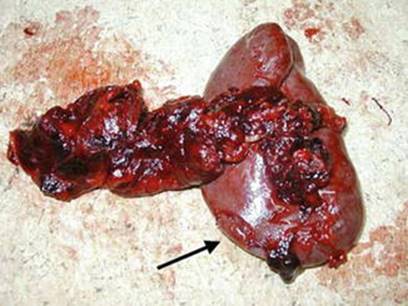
Fig. 9.3
Rupture of splenic capsule (arrow) on the lower pole [7]
Blunt (Internal) Trauma
Suggested etiological factors in cases of true spontaneous rupture include blunt internal trauma, as proposed by Barnett (i.e., occasioned by coughing, vomiting, coitus in the latter stages of pregnancy, and the bearing-down efforts of the second stage of labor) [14, 33]. Several authors have suggested a short splenic pedicle or deeply recessed location of the spleen as congenital factors that might contribute to rupture by compressing the diaphragm during coughing, sneezing, or vomiting [23]. Whether the episode of tonic-clonic seizure that occurred in one case could be considered traumatic enough to induce injury to the spleen will remain unanswered [34].
Intrasplenic Aneurysm
Another widely held theory is that rupture of a small intrasplenic aneurysm may occur, with all trace of the aneurysm being destroyed by the hemorrhage, thus preventing its discovery by the pathologist. Certainly larger aneurysms of the splenic artery are more prone to rupture during pregnancy, and even spontaneous rupture of the splenic vein has been reported.
Manipulation During Cesarean Section
During operation, traction with undue force with sharp- or blunt-edged instruments during Cesarean delivery and insertion of packs could theoretically cause abrasive injuries to an already congested organ such as the spleen. Excessive force in exploring the upper abdomen and manual expression of the fetus by forceful pushing on the upper abdomen at the time of Cesarean delivery or even while removing clots from the paracolic gutters might lead to splenic injury, especially in those with high blood pressure [31].
Rapid Plasma Expansion
It might also be possible that rapid plasma expansion with blood products and other volume expanders could result in a rapid volume increase within the spleen, predisposing it to rupture [34].
9.1.3 Clinical Presentation
9.1.3.1 History Taking
When the patient has been involved in some obvious and serious accident and when there is associated bony and soft tissue injury (the most common is fracture of ribs, which occurs in 35 % of cases of traumatic rupture of the spleen in the general population), it is frequently obvious that intraperitoneal bleeding has taken place. In some instances the date of accident may be remote from the time of admission and may, under some circumstances, be forgotten altogether. In approximately 40–50 % of cases of rupture of the spleen, no history of trauma is obtained.
9.1.3.2 Clinical Examination
Rupture may become manifest:
· Immediately following the trauma
· Delayed and only recognized following a latent period
The immediate rupture usually presents no problem in diagnosis. The significance of the delayed form of rupture of the spleen was first emphasized in the general population by McIndoe in 1932 [35]. He reported that the acute onset of symptoms of rupture must occur 48 h or longer following the original injury if it is to be called delayed rupture. In many cases the latent period exceeds 1 week.
The classical triad of epigastric pain, tenderness, and Kehr’s sign is said to be characteristic of ruptured spleen. Pain and tenderness are commonly reported. Epigastric pain is perhaps the symptom most commonly and most consistently reported. In some cases there is an associated episode of vomiting. By and large the pain is made worse on coughing, deep breathing, and moving. At rest the pain may be almost completely relieved. Progressive severity of pain is common. In most cases reported, pain that was well tolerated at rest becomes more severe and analgesic medication is requested. In a few cases dyspnea is reported due to the expanding intraperitoneal mass, to declining circulating blood volume, or to loss of hemoglobin.
Kehr’s sign presents diaphragmatic irritation referred to the left shoulder tip region, and some authors say it is almost pathognomonic when present. Blood from any cause in the left subphrenic space causes positive Kehr’s sign and the most common are splenic rupture and ectopic pregnancy. Kehr’s sign is present in a small minority of these patients.
Dullness on percussion over the left upper quadrant is an important sign. The enlarging uterus makes percussion and palpation of upper abdominal masses more difficult. Barnett states that in pregnancy, the enlarged gravid uterus does not give rise to Ballance’s sign [33]. It is dullness to percussion in the left flank/left upper abdominal quadrant and shifting dullness to percussion in the right flank. The dullness in the left flank is due to coagulated blood, the shifting dullness on the right on altering position due to fluid blood.
In later stages the pain can become generalized, with distention and rigidity. Muscle spasm may not be present even in the presence of intraperitoneal blood. Eventually more than half of the patients will suffer hemorrhagic shock if the condition is left untreated [16].
Some authors have noted the confusing coexistence of hypertonicity of uterine muscle. Whether this is due to local peritoneal irritation is not known.
Postpartum Splenic Rupture
Rupture of the spleen in the postpartum period poses a significant difficulty for early diagnosis, because more common entities present with similar clinical findings especially early in the course of the rupture.
9.1.4 Differential Diagnosis
9.1.4.1 During Pregnancy
The differential diagnosis of spontaneous splenic rupture in the general, nonpregnant population includes local splenic disorders, such as splenic cysts and diffuse angiomatosis; hematologic diseases, such as hemophilia, congenital afibrinogenemia, and hemolytic anemia; metabolic disorders, such as amyloidosis, Wilson’s disease, Gaucher’s disease, and Niemann-Pick disease; drug induced, such as intravenous heparin, warfarin, and streptokinase; iatrogenic causes, such as extracorporeal shock wave lithotripsy and clamping of the portal triad; and miscellaneous, such as vomiting, uremia, systemic lupus erythematosus, and other connective tissue diseases. Most notable in the differential diagnosis are the infectious causes, such as infectious mononucleosis, which is considered the most common cause of spontaneous splenic rupture, as well as malaria [36].
In the first trimester it is usually confused with ruptured ectopic pregnancy. In the last trimester placental abruption and rupture of the uterus are the two most likely differential diagnoses. However, in the case of rupture of the spleen, the uterus is not tender or hard, and fetal heart sounds can usually be heard. The presence of referred pain in the left shoulder area should always alert the examiner to the possibility of splenic pathology (see previous section Clinical Presentation).
9.1.4.2 Postpartum Splenic Rupture
Differential diagnoses include exaggerated postpartum pains, uterine rupture, intra-abdominal bleeding in general, and injury of a viscus. Signs and symptoms of severe shock states might be mimicked by septic shock, amniotic fluid embolus, pulmonary embolus, cardiogenic shock, and disseminated intravascular coagulopathy.
9.1.5 Diagnosis
The true rate of preoperative diagnosis is unknown. One of the reasons for the complicated diagnosis is the unclear etiology of rupture itself. The frequency of correct diagnosis during the 1950s varied in the literature between 14 and 25 % [5, 37]. Perhaps the most confusing in the later months of pregnancy is the finding of uterine tetany, suggesting the strong possibility of placental abruption. The presence of hemoperitoneum and peritoneal irritation may make adequate uterine palpation difficult and auscultation of fetal heart sounds uncertain. Albuminuria may be present and add further to the difficulty of distinguishing between intraperitoneal bleeding due to splenic rupture and that due to placental abruption.
Diagnosis is frequently difficult because the presence of the pregnancy leads the obstetrician to concentrate on the possibility of uterine or adnexal injury. The clinical symptoms and signs normally associated with intraperitoneal bleeding may be poorly defined. When blood is lost swiftly and in large amounts, all of the characteristic features of physical shock are recognized without difficulty; however, when blood loss is slower and smaller in quantity, the appropriate abdominal findings may be obscured.
The diagnosis of spontaneous postpartum splenic rupture was not considered in either case preoperatively, even though there was no doubt as to the need for immediate surgical intervention and transfusion.
9.1.5.1 Paracentesis
Before the era of the ultrasound and CT, paracentesis was used to diagnose intraperitoneal bleeding. The necessity of performing paracenteses in the four abdominal quadrants with a No. 18 needle has been strongly emphasized by Wright and Prigot; in 87 % of patients with splenic rupture in the general population in whom paracentesis was performed, blood was obtained [38]. Dependence on the paracentesis has been criticized by Maughon et al., who state that false taps lead to dangerous delay [39]. In one case reported by these authors, the patient died when the correct diagnosis was not made because of a negative intraperitoneal tap. A repeat paracentesis is mandatory if doubt exists as to the cause of the patient’s symptoms. Maughon et al. believe that abdominal incision in the doubtful case is worth any number of paracenteses [39].
9.1.5.2 Plain Abdominal X-Ray
By and large the radiographic examination is not of much value in diagnosing rupture of the spleen. Careful observation may indicate:
· Elevation of the left hemidiaphragm
· Displacement of the gastric shadow to the right
· Subphrenic opacity in the left upper quadrant
· Descent of the left part of the transverse colon
These signs are less useful in the third trimester because of physiological displacement of intraperitoneal organs by the enlarged uterus.
9.1.5.3 Abdominal Ultrasound
Currently, abdominal ultrasound is an inexpensive and practical way to obtain a quick diagnosis of intraperitoneal fluid accumulation or hematoma, which can be performed at the patient’s bedside or in the emergency unit [40]. This can aid in the initial workup of a patient with hemodynamic instability and abdominal distention, especially if exploration is contemplated or if CT is not feasible. Free fluid in the upper abdomen or left upper quadrant should raise suspicion of splenic rupture [41, 42].
9.1.5.4 Angiography
In most cases it is not known preoperatively whether splenic rupture or rupture of the splenic artery aneurysm (SAA) occurred. In a suspected unruptured SAA, the gold standard for the diagnosis is arteriography [43], although ultrasonography and pulsed Doppler are preferable in pregnancy [44].
9.1.5.5 Abdominal CT Scan
Native abdominal MSCT scan especially with i.v. contrast can define SAA with or without rupture preoperatively but is almost never used in pregnant patients, as well as angiography. Abdominal CT scan is used when MRI is not available in emergency settings (Fig. 9.4).
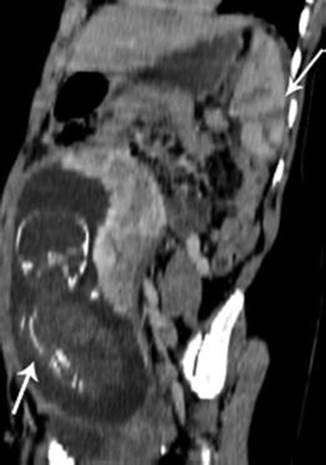
Fig. 9.4
An oblique sagittal reformatted CT scan image showing traumatic splenic laceration (right arrow) and the 26-week fetus (left arrow) [45]
9.1.5.6 Diagnostic Laparoscopy/Laparotomy
Sometimes the cause of the hemorrhage is not known preoperatively especially when the patient presents with hemodynamic instability. In such cases laparotomy is the preferred method.
9.1.6 Treatment
Splenectomy for ruptured spleen in pregnancy was first performed by Savor in 1898 [46]. The patient survived and delivered a full-term infant 3 and a half months later.
9.1.6.1 Conservative Approach
Conservative approach with close hemodynamic monitoring has been advocated in well-selected cases, most of which are traumatic in origin. There are no criteria for pregnant patients, but to be eligible for nonoperative management, patients should meet several criteria based on data on general population [47]:
· Hemodynamic stability
· Absence of peritoneal signs
· Absence of other abdominal injuries requiring surgery
Factors that predict failure of conservative measures in the general population include [47]:
· Preexisting splenic disease
· Age older than 55 years
· High-grade injury
· Significant hemoperitoneum
· Contrast blush in the spleen (suggesting false aneurysms) on CT
9.1.6.2 Surgical Treatment
Postpartum Splenic Rupture
The standard of care for patients with spontaneous postpartum splenic rupture remains emergency splenectomy. Of the 66 pregnant patients with splenic rupture who underwent splenectomy, 63 survived (survival rate 95.4 %), compared with a 100 % mortality rate in the 20 patients who did not undergo splenectomy [16]. Therefore, the survival of patients with spontaneous postpartum splenic rupture rests on several factors, including aggressive transfusion management, early diagnosis, and splenectomy.
Operative Principles
Consideration should be given to performing a midline or paramedian (if the diagnosis is known preoperatively) vertical incision to facilitate access and visualization. The problem is that the patient is often seen first by the obstetrician, with diagnosis of pelvic pathology, and the most common incision is a lower midline. In the 71 cases of spontaneous rupture of the normal spleen reviewed by Orloff and Peskin, 75 % of the cases that resulted in splenectomy were opened through an inadequate incision [23]. Some patients needed extensions, some a new incision, and in the balance, the surgery was made extremely difficult by the original incision. The diagnosis of spontaneous postpartum splenic rupture was not considered in either case preoperatively, even though there was no doubt as to the need for immediate surgical intervention and transfusion. Therefore, compulsory evaluation of the entire abdomen in posthysterectomy hemoperitoneum is advisable.
Cesarean section in patients with intraperitoneal bleeding due to splenic rupture may serve one of two purposes. In some patients, adequate surgery for the ruptured spleen cannot be undertaken until the uterus is evacuated because a term-sized uterus prevented adequate exposure of the splenic fossa. In others, Cesarean section is necessary to prevent intrauterine death due to maternal hypoxia and/or hypotension.
Laparoscopic Splenectomy
Currently there are two case reports of successful laparoscopic operation after blunt trauma causing splenic rupture in 18- and 27-week pregnant women (one with diaphragmatic rupture and intrathoracic ruptured spleen). In both operations, the mother and the fetus survived [48, 49]. Laparoscopic procedures are indicated in early presentations, because in delayed presentation, blood clots obscure the operative field and there is a difficulty in visualization. Also in hemodynamic unstable patients, definitive treatment must be swift; therefore, laparotomy is recommended.
9.1.6.3 Radiologic Interventions
Splenic Artery Embolization
Splenic artery angiography followed by embolization in the general population has been described, with a reported success rate of 85 % [50]. First, its role in the assessment and management of patients with hemoperitoneum is still unclear, and second, if the pregnancy continues, there is a risk of ionizing radiation.
9.1.7 Prognosis
Due to the rarity of the condition, maternal and fetal outcome for every etiology is difficult to estimate. Therefore, outcome is mostly presented for the whole group of splenic ruptures.
9.1.7.1 Maternal Outcome
Maternal death is commonly due to massive hemorrhage and accompanying hemorrhagic shock and consumptive coagulopathy. In 1952 Barnett stressed the severity of the condition with the maternal mortality of 54 % (15/28) [33]. Of the 15 deaths, eight were recorded before 1880. Excluding these, seven deaths occurred in 20 patients, which is a more accurate reflection of the results in the 1950s (maternal mortality of 35 %). The importance of correct diagnosis and early operation is apparent when it is noted that of the 16 patients who were taken to the operating room for splenectomy, only three died (19 %) [33]. The same percentage of overall maternal mortality was found in other studies from the same decade [5]. Also, in the 1950s the mortality from the spontaneous form of splenic rupture was 10 % [23]. Up to 1967 reported overall maternal mortality was lowered to 8 % in a series of 25 patients [6].
9.1.7.2 Neonatal Outcome
Maternal hemodynamic decompensation leads to an acute decrease in uteroplacental perfusion, resulting in “fetal distress” and, ultimately, fetal demise [51]. Specific information on infant survival is lacking. However, in an analysis of 32 infants up to 1958, a fetal mortality was 59 % [5]. Others claim fetal mortality of 70 % for all types of ruptured spleen [6, 33]. With 20 reported cases in the English literature since 1958, the maternal and fetal mortality rate in spontaneous splenic rupture in pregnancy is 14.3 % and 42.9 %, respectively [26].
9.2 Ruptured Splenic Pregnancy
9.2.1 Definition and Classification
In about 20/1,000 cases in pregnancy, the site of implantation is different from the uterine cavity (ectopic pregnancies): the most common site of ectopic implantation is the Fallopian tube (95.5 %). Although rare (1.3 % of ectopic pregnancies), an ovum could implant within the peritoneal cavity (abdominal pregnancies) either directly (primary abdominal pregnancies – extremely rare) or because of tubal rupture (secondary abdominal pregnancies). The criteria for primary abdominal pregnancy have been described by Studdiford in 1942 [52]:
· Normal Fallopian tubes and ovaries.
· No evidence of uteroplacental fistula.
· Pregnancy is related exclusively to the peritoneal surface and early enough to eliminate the possibility of secondary implantation after primary nidation of the Fallopian tubes.
9.2.2 Incidence
There are 13 case reports in the literature of primary splenic pregnancies. The patients have a mean age of 29.7 years (range 24–41 years) [53].
9.2.3 Pathophysiology
The liver and the spleen are more favorable for implantation because they are flat organs, rich in blood flow, and easily reached by the fertilized ovum (Figs. 9.5 and 9.8) [54]. However, both cannot allow placental attachment, thus leading to rupture with massive hemoperitoneum, if the pregnancy is left untreated [55].
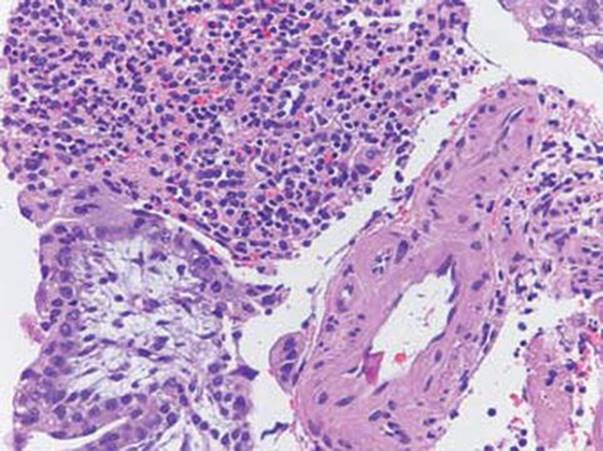
Fig. 9.5
Histopathological examination (20×): chorionic villi within the splenic tissue [53]
9.2.4 Risk Factors
Risk factors related to abdominal pregnancies are similar to those of other ectopic pregnancies:
· Prior history of pelvic inflammatory disease
· Prior ectopic gestation
· Endometriosis
· Reproductive assistance
· Uterotubal malformation
· Previous tubal surgery
9.2.5 Clinical Presentation
Mostly patients have prolonged amenorrhea but also in a period when the menstruation should occur. They present most commonly with sudden or short-lasting abdominal pain, radiating to the left shoulder (Kehr’s sign). Depending on the severity of intraperitoneal bleeding, the pain can be localized or diffuse. If the bleeding is massive, the patient can present with hemodynamic shock with pallor and cold sweat.
9.2.6 Diagnosis
In cases when pregnancy can be expected, βHCG should be checked. If elevated, transvaginal ultrasonography should be performed to define the uterine status and fetal status with gestational sac. If normal-size uterus with a thickened endometrium without individual gestational sac is found, ectopic pregnancy should be suspected. If Fallopian tube ectopic pregnancy is excluded, which is the most common, transabdominal ultrasound should be performed. Most of the gestations were subcapsular in location and assumed the appearance of an irregular mass that exceeds the contour of the spleen (Fig. 9.6) [53]. Agreeing with Yagil et al., the appearance of an irregular mass outside the contour of abdominal viscus should raise the suspicion of ectopic abdominal pregnancy [56]. Nearly all patients with ruptured splenic pregnancy had preoperative diagnosis of ruptured ectopic pregnancy. In unequivocal cases without hemodynamic instability, abdominal CT is indicated (Fig. 9.7).
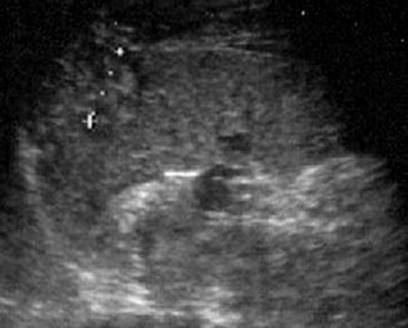
Fig. 9.6
Abdominal ultrasound (US), mass at the superior splenic pole [53]
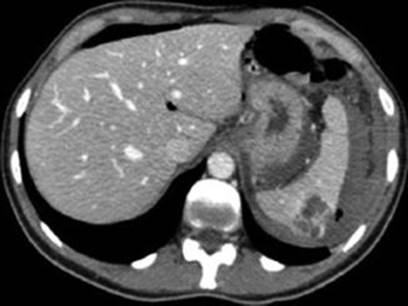
Fig. 9.7
Computerized tomography scan, heterogeneous hypervascular mass at the superior splenic pole [53]
9.2.7 Therapy
Sometimes it is difficult to make preoperative diagnosis, and therefore, laparoscopy should be performed for diagnosis and possible treatment (Fig. 9.8).
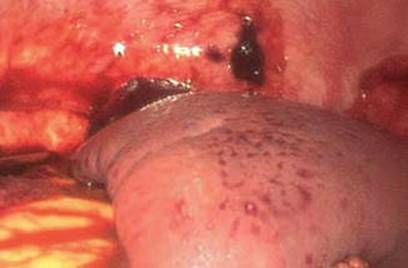
Fig. 9.8
Laparoscopic view, hemorrhagic lesion at the superior splenic pole [53]
The entire abdominal cavity must be evaluated, and removal of ectopic pregnancy could be attempted, especially in case of timely diagnosis. Successful emergency laparoscopic treatment of abdominal pregnancy associated with extensive hemoperitoneum has been reported in two cases [53, 56]. This shows that hemoperitoneum in abdominal pregnancy may be treated with laparoscopy and that conversion to laparotomy may not be necessary, at least in the case of splenic pregnancy, especially if the diagnosis is made early in the course of hemorrhage. Otherwise, median laparotomy should be made for visualization of all four abdominal quadrants and easier performance of the operation according to underlying pathology.
9.3 Spontaneous Rupture of the Splenic Artery (Aneurysm)
9.3.1 History
The first case of splenic artery aneurysm (SAA) was published in 1770 by Beaussier during the anatomic dissection of a 60-year-old female cadaver which he performed 10 years before publishing it (Fig. 9.9) [57].

Fig. 9.9
Original part of the text on the first case of SAA in nonpregnant female by Beaussier. The text was published in 1770 in Journal de Medecine, Chirurgie, Pharmacie
This and the second case reported by Parker in 1844 [58, 59] were for many years omitted from the literature and priority mistakenly given to Crisp from 1847 by all subsequent authors, possibly because he himself had also erroneously credited Parker with the description of the first case [60]. Winkler, in 1903, was the first to identify SAA in a living person (a nurse) during laparotomy in a patient with abdominal pain of an 8-year duration [61].
There is a strong association with pregnancy since Corson’s first description of the sudden and unexpected death of a 29-year-old multigravida at 8 months’ gestation in whom the diagnosis of rupture of a splenic artery aneurysm was only made following postmortem examination in 1869 [62]. Sheehan and Falkiner in 1948 noted that 56 % (23/41) females who suffered a rupture of a splenic artery aneurysm were pregnant and in their last trimester [24].
9.3.2 Incidence
9.3.2.1 General Population
Splenic artery aneurysm is the most common (60 %) of all visceral artery aneurysms. More than 50 % of aneurysmatic ruptures in women under the age of 40 years are correlated to pregnancy, and the arteries most often involved are, in declining order, the aorta, cerebral arteries, splenic artery, renal artery, coronaries, and ovarian artery [63]. The incidence of SAA is unknown because a vast majority of SAAs, being smaller than 2 cm, remain asymptomatic and is generally encountered as autopsy findings [44]. Berger et al. in 1953 found 152 cases of ruptured and unruptured SAA [64], while Owens and Coffey in the same year found 198 cases recorded up to 1952 and added six of their own [65]. The incidence of SAA in reports of autopsy series ranges from 0.01 to 10.4 % [66, 67], although in one series of 28,512 consecutive autopsies performed at the Mayo Clinic from 1911 to 1957, the incidence was 0.16 % [68]. It is likely that the figures quoted in most autopsy series represent underestimates as the aneurysms can be difficult to identify unless their presence is specifically sought. Increasingly, they are being detected incidentally in the course of sophisticated imaging for unrelated conditions.
9.3.2.2 Splenic Artery Aneurysm Rupture
The principal complication of an SAA is rupture, and the reported risk varies from 3 to 9.6 % [69, 70]. Nevertheless, to date, more than 400 cases of ruptured SAAs in the general population have been reported in the literature, with approximately 20–50 % of these during pregnancy [44, 69–72]. A summary of 58 recorded cases was made by Anderson and Gray in 1929, adding their own case [73], and Machemer and Fuge in 1939 collected a further 24 cases and added one of their own [74]. Sherlock and Learmonth in 1942 [75] stated that splenic aneurysm sometimes declares itself during pregnancy and this may partly account for the larger number of females in the general population. This incidence is particularly interesting as aneurysms at all other common sites are undoubtedly more frequent in males [76, 77]. Splenic artery aneurysms are the most frequent in the general population with incidence around 60 %. Among visceral aneurysms, the splenic artery aneurysm is the most common (95 %) in young pregnant women, and a greater number of diagnoses are made during pregnancy, often due to aneurysmal rupture. Of all splenic artery aneurysms, 65 % present in pregnant women and 50 % rupture during pregnancy [78]. In Owens and Coffey’s series, 24 % of the women were pregnant. When only the group in the childbearing age is considered, the incidence of splenic artery aneurysms rises to 53 % [65].
9.3.2.3 Distribution During Pregnancy
A significant percentage of women are pregnant when the diagnosis is made probably due to augmented use of ultrasonography and use of high-resolution cross-sectional imaging techniques [79]. Sheehan and Falkiner in 1948 noted that 56 % of females who suffered a rupture of a splenic artery aneurysm were pregnant and in their last trimester [24]. The incidence of rupture of the SAA during pregnancy is as follows [70, 80–87]:
|
First to second trimesters |
12 % |
|
Third trimester |
69 % |
|
Childbirth |
13 % |
|
Puerperium |
6 % |
9.3.2.4 Splenic Artery Pseudoaneurysm
In contrast to splenic artery aneurysm, splenic artery pseudoaneurysm is even rarer. In a large series from the Mayo Clinic, ten splenic artery pseudoaneurysms were compiled over 18 years [88]. To date, fewer than 200 cases in the general population have been reported in the English language literature.
9.3.3 Risk Factors
There are two distinct types of splenic artery rupture. One is spontaneous splenic rupture where no underlying pathology of the splenic artery could be found and another is spontaneous rupture of the SAA. True aneurysms of the splenic artery have been thought to be associated with a number of conditions – pregnancy and portal hypertension being the most common [67, 89, 90]; other conditions include essential hypertension.
Early reports of SAA suggested the risk of rupture of 10 % [91]; however, more recent data suggest rupture rates closer to 2–3 % [87, 92]. The size of the SAA is usually more than 2.5 cm in most patients at the time of rupture [69]; however, rupture of smaller aneurysms has also been reported [69, 84, 87].
9.3.3.1 Spontaneous Splenic Artery or Vein Rupture
Cases of spontaneous rupture of normal splenic artery (or vein) had risk factors of long-standing cirrhosis of the liver with portal hypertension [93]. Prolonged hypertension may be a contributory factor [94, 95].
9.3.3.2 Spontaneous Splenic Artery Aneurysm Rupture
Almost all cases of ruptured SAAs in pregnancy have occurred during the third trimester [72]. Therefore, it is evident that the physical history of pregnancy gradually increases the risk of rupture of SAA. Apart from the late stage of pregnancy, other risk factors include portal hypertension [41, 96, 97], atherosclerosis, congenital abnormalities of the vessels, inherited vascular and connective tissue disorders (medial fibrodysplasia), vascular trauma, inflammatory processes, and degenerative arterial disease [28, 67, 70]. Although the average parity of women at rupture is 4.5 [72, 79, 87, 89, 92], there are cases with nulliparous women [96, 98, 99]. High blood pressure as in preeclampsia-eclampsia especially during labor is a precipitating factor for SAA rupture [100].
9.3.4 Pathophysiology
The mechanisms which are involved in the formation of this vascular defect still remain unclear. Various theories have been proposed for the explanation of this phenomenon, mainly considering hemodynamic and hormonal alterations in the late stages of pregnancy [101]. Although the risk of rupture mainly exists in the third trimester of pregnancy [101], to date, only two cases of SAA rupture during the first trimester of pregnancy have been reported in the literature [102, 103].
One of the mechanisms promoting the vascular defect in splenic arteries during the late stages of pregnancy seems to be the escalating increase of the circulating estrogens and progesterone during pregnancy [89]. The elevation of the levels of these hormones has been associated with promotion of various structural alterations in the arteries, such as the disruption of the internal elastic lamina, fragmentation of elastic fibers, degeneration of smooth muscle fibers, and failure of elastin formation [104]. Additionally, it appears that the elevated levels of relaxin throughout the third trimester of pregnancy may affect the elasticity of the splenic artery wall [105] and could probably weaken the arterial wall [79, 83, 106]. Especially in case of multiparity, the repeated exposure to these hormonal shifting could explain the increased incidence of rupture of SAA in this group of pregnant women.
It is also assumed that hemodynamic changes which occur during the late stages of pregnancy are implicated in the etiology of SAA ruptures during this period. More specifically, due to the fact that the increased size of the uterus tends to compress the aorta and the iliac arteries, resulting in higher flow in the splenic artery, the development of the SAA is enhanced; moreover, the increases of blood volume and cardiac output, along with the relative portal congestion, can definitely contribute to the formation of SAAs [101]. Studies during the last decade highlight that the vessel wall is in a continual state of self-maintenance and self-regulation including remodeling that occurs in response to hemodynamic stress. It is suggested that remodeling of the vessel wall causes similar histological lesions, regardless of the pathogenic factors [107]. There are two principal types of splenic aneurysms: saccular and fusiform (Fig. 9.10).
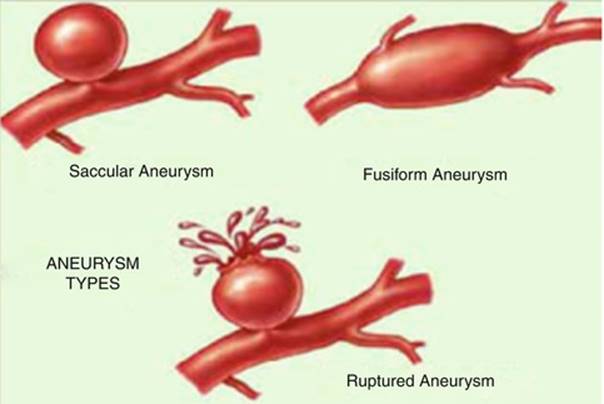
Fig. 9.10
Types of splenic artery aneurysm [86]
9.3.5 Clinical Presentation
Apart from asymptomatic SAA found incidentally during pregnancy, there are two types of presentations depending if the SAA is only symptomatic or there is true rupture.
9.3.5.1 Ruptured Splenic Artery Aneurysm
This rupture can be either sudden rupture or a two-stage rupture, which is present in 20–25 % of cases [84, 85, 87]. In terms of clinical manifestations, the rupture of SAA is undoubtedly presented as an acute abdomen. In the early stages of rupture, diffuse tenderness in the upper abdomen, in the left hypochondrium, or over the uterine fundus may be elicited, accompanied by vomiting and in severe cases derangement of the vital signs, compatible with developing hemodynamic shock. The physical course either can consist of one stage, leading to dramatic collapse as a result of inability of self-containment of bleeding, or can present in a two-stage sequence, when initial tamponade of hemorrhage in the lesser sack was made by clots blocking the foramen of Winslow [105]. In these patients, initial hemorrhage into the lesser sac may cause pain and transient hypotension; the gradual increase of pressure in the lesser sac would be suddenly followed by a rupture into the greater sac and lead to massive intraperitoneal bleeding and shock, causing the patient to collapse. The initial phase where hemorrhage remains confined to the lesser sac provides vital time for diagnosis and preparation for intervention [79, 83, 84, 106]. The “sentinel” period between the initial and subsequent hemorrhages may take anywhere between 6 and 96 h. This phenomenon of “double rupture” is found in 25 % of reported cases [66, 98]. When ruptured, it usually causes acute left-sided abdominal pain that may radiate to the back, flank, and subscapular region and may cause shock, abdominal distension, and death.
In the series reported by Owens and Coffey, ruptures in the general population were distributed as follows: 38 % into the peritoneal cavity, 10 % into the stomach, 7 % into the colon, 4 % into the pancreas, and 2 % into the splenic vein [65].
9.3.5.2 Symptomatic (Unruptured) Splenic Artery Aneurysm
The symptoms of an unruptured aneurysm are variable and may be completely lacking. According to Pasternack and Shaw [108], pain of a colicky nature in the left epigastrium or hypochondrium may occur and is characteristically increased by exertion or by changes of posture. There may also be symptoms referable to the stomach, gallbladder, or colon. A periumbilical pulsating mass may be felt or a systolic bruit heard. There are no physical signs that reliably indicate the presence of an SAA [79].
9.3.6 Diagnosis
Key to effective management of a ruptured SAA is increased clinical suspicion, combined with accurate implementation of the diagnostic means available, particularly abdominal sonography and angiography, if permitted by the hemodynamic condition of the patient. SAA should be considered when we encounter hemorrhagic shock in a pregnant woman without obstetric hemorrhage [96, 109]. Högler, in 1920, made the first preoperative diagnosis on the basis of bruit and a pulsatile mass on fluoroscopy [110]. Another case of one of the first preoperative diagnoses in the general population based on roentgen examination alone was made by Lindboe in 1932 [111]. In 1950, Evans obtained the first translumbar aortogram demonstrating a splenic artery aneurysm which was operated successfully. Baum in 1965 used selective angiography in making preoperative diagnosis.
Screening of the splenic artery by abdominal ultrasound and Doppler should be considered selectively in pregnant patients with predisposing factors like hypertension, multiparity, and liver and pancreatic diseases (Fig. 9.11). However, its utility is limited by operator dependency, obese patients, bowel gas shadow, and arteriosclerosis [112, 113]. The likelihood of missing smaller lesions is also quite high because of limited spatial resolution [114, 115].
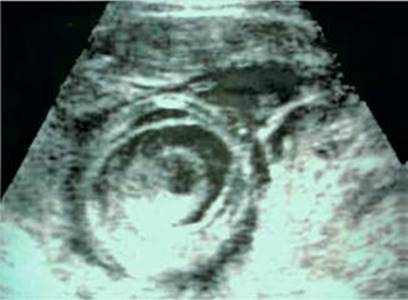
Fig. 9.11
Abdominal sonography of ruptured splenic artery aneurysm showing clots around [86]
Although it is not the first-line investigative tool for SAA, plain abdominal X-ray carried out for some other abdominal pathology may reveal calcified SAA as characteristic calcified ring with a central lucent area to the left of the first lumbar vertebral body [101].
Contrast-enhanced (i.v.) abdominal CT can reveal abdominal aorta with its branches. Splenic artery with saccular aneurysm formation with an 8 cm neck and greater diameters of 4.3 × 3.9 × 3.8 cm can be delineated (Fig. 9.12).
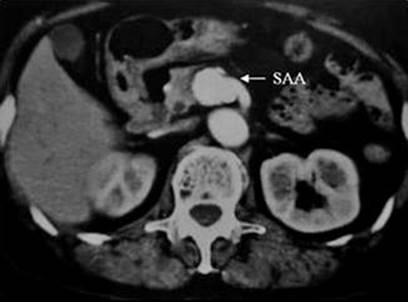
Fig. 9.12
Contrast-enhanced abdominal CT showing unruptured splenic artery saccular aneurysm (4.3 × 3.9 × 3.8 cm) [116]. SAA splenic artery saccular aneurysm
Magnetic resonance angiography of the abdominal aorta and branches revealed patent abdominal aorta with normal diameter. There is presence of saccular aneurysmal dilatation in the splenic aorta, originating from the emergence of the superior mesenteric artery, measuring 3.6 × 3.0 cm. Considering that common hepatic, splenic, and gastric arteries branch off the celiac trunk, imaging confirmed a splenic artery with anomalous anatomy branching off the superior mesenteric artery (Fig. 9.13).
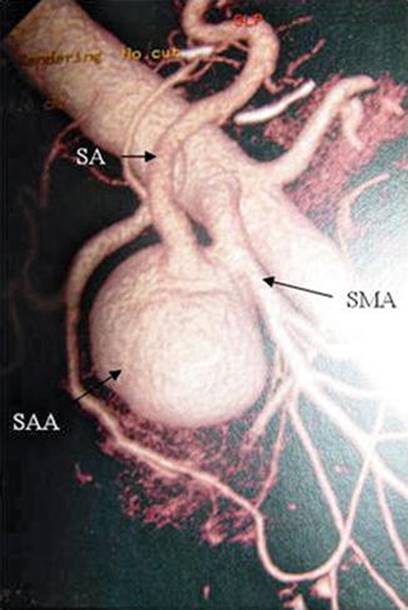
Fig. 9.13
Abdominal MR angiography: splenic artery saccular aneurysm with dimensions of 3.6 × 3.0 cm emerging from superior mesenteric artery [116]. SA splenic artery, SAA splenic artery aneurysm, SMAsuperior mesenteric artery
9.3.7 Differential Diagnosis
There are only four cases presented during the first trimester of pregnancy making ectopic pregnancy a strong differential diagnosis [102, 103, 117, 118]. Approximately 70 % of cases are diagnosed initially as a uterine rupture [63].
Differential diagnosis of pancreatic cysts or pseudocysts should be made, by location, this condition being more frequent in patients with past history of pancreatitis. Serous cystadenoma should also be considered as a hypothesis, but it occurs mainly in the seventh decade of life [119, 120].
9.3.8 Treatment
9.3.8.1 Ruptured SAA
Concerning intervention options, apart from the need of initial aggressive resuscitation, embolization of the aneurysm or emergency surgical operation with ligation of the ruptured aneurysm, followed or not by splenectomy, stands for the most realistic treatment options [101, 105]. The first successfully treated case in pregnancy was described in 1940.
The management of ruptured SAA requires awareness and aggressive surgical approach. Aneurysmectomy with splenectomy or distal pancreatectomy with splenectomy with ligation of the proximal and distal splenic artery or aneurysmectomy alone with splenic conservation are the procedures described [63, 83]. Splenic conservation is desirable but is difficult in the emergency setting with ruptured SAA [42, 83]. Angiography and embolization have been described for pseudoaneurysms and for unruptured true aneurysms [83]. In the high-risk patients, arterial embolization using coils can be an effective early treatment [63, 79, 106].
9.3.8.2 Symptomatic/Unruptured SAA
The management of the unruptured aneurysm is more controversial, although elective resection of those found in pregnant women and women of childbearing age is recommended if the SAAs are larger than 2 cm [67, 72, 87].
Surgical treatment options include resection of the aneurysm, with or without splenectomy, via laparotomy or laparoscopy. Aneurysms located in the proximal or middle third of the splenic artery may be treated with simple excision, with proximal and distal ligation of the artery and splenic preservation (through the short gastric vessels). For aneurysms located in the distal third, resection with splenectomy is most often performed, which is unfortunately the case in 70 % of the patients with portal hypertension [92, 121].
Endovascular radiological techniques that have also been employed in the general population include transcatheter embolization and percutaneous angiographic embolization [122–124] and could be used in the postpartum period. Postembolization syndrome and infarcts are common events (30 %) but generally resolve without sequel. The gestational age is an important parameter for the indication of this technique in pregnancy.
9.3.9 Prognosis
In the cases reported by Cosgrave et al. in 1947, the rupture was fatal in 93.3 % (14/15) pregnant women [125]. Poidevin found that in 30 cases of rupture during pregnancy, only two patients have survived, making the same maternal mortality of 93.3 % [126]. Early consideration and diagnosis of ruptured SAA significantly increases the chances of survival for both the mother and the fetus. In Australia, in 30 years (1967–1999), there have been only four maternal deaths due to rupture of an SAA [127]. By way of comparison, in the UK for the period 1988–2002, there were seven definite (and one possible) cases of a ruptured SAA [67]. But in a 10-year review of maternal mortality in Singapore, not a single case of SAA was identified [128]. Other reviews from North America confirm the rare mortality of the entity [129]. In the general population, there are some 400 individual reports in the literature with an overall mortality rate of 25 % [67]. Approximately 25 % involve pregnant women, and in this group, the mortality is disproportionately higher at 75 % for mothers and a fetal mortality rate approaching 95 % [41, 67, 98, 130]. The literature now contains more than 100 cases of ruptured SAAs in pregnancy but only 16 cases of both maternal and fetal survival [67, 131, 132], underlining the necessity of immediate intervention. The literature suggests that pregnant women tend to be younger and have fewer adhesions from previous surgery than the general population; therefore, rupture occurs almost exclusively into the free peritoneal cavity [67, 89, 133].
In early pregnancy where clinicians do not expect rupture of splenic artery (aneurysm), three cases [118] were described with two maternal deaths due to cardiac arrest during the early postoperative period [102, 103].
9.4 Spontaneous Splenic Vein (Aneurysm) Rupture
9.4.1 History and Incidence
Portal system aneurysms can be divided into two types: extrahepatic and intrahepatic. SVA is a true aneurysm and belongs to the extrahepatic category. Since 1953 when Lowenthal and Jacob [134] described the first case of SVA, fewer than 50 cases of portal system aneurysm [135–137] and only eight cases of SVA rupture in nonpregnant women have been reported in the English literature. The eight patients with SVA included five women and three men with mean age of 50 years [138–144]. There are five pregnant women with splenic vein rupture described [95, 145–148]. Up to 1961 there were only two references of the spontaneous rupture of the splenic vein in the general population [93, 149] and also two spontaneous cases in pregnancy [94, 95]. Splenic vein rupture in a pregnant woman was first described in 1959 by Rahn and Steffen [147].
Splenic vein rupture usually occurs during the third trimester, whereas splenic artery rupture has been described at any time from the first trimester through to the puerperium. There is only one case of SVA rupture occurring immediately postpartum published [145]. Despite the difference in incidence, SAA and SVA share a number of etiological factors, presenting symptoms, clinical course, complications, and management.
9.4.2 Etiology
The origins of the ruptures due to vascular pathologies at pregnancy may be hormonal, genetic, thrombotic, or mechanical. The etiology of splenic aneurysms is speculative and may include congenital causes such as local failure of connective and elastic tissue [150, 151]. Aneurysms may also be acquired due to trauma, inflammation, or portal hypertension [152, 153] or cirrhosis [93, 149, 154].
Splenic aneurysms are more common in multiparous women; it is therefore possible that pregnancy may influence their development because of changes in hemodynamic and increased levels of progesterone [92]. The physiological increase in blood volume and cardiac output during pregnancy could lead to portal congestion and splenic arteriovenous shunting and, together with progesterone-induced vasodilatation and vessel wall weakness, could favor aneurysm formation. Tolgonay et al. [140] described a case of splenic size increase and splenic vein aneurysm due to a systemic infection in a patient with leukemia. After appropriate therapy, they observed a reduction in spleen size followed by a decrease in splenic vein blood flow and a regression of the aneurysm. Recent studies have shown an alteration of elastic fibers in the internal elastic lamina and fibrodysplasia of the media lamina as the consequence of hormonal changes. These factors may become cumulative, explaining the increase of rupture of the splenic vessels as parity rises [63]. The etiology of SVA in nonpregnant women includes portal hypertension and liver cirrhosis [139], chronic pancreatic inflammation [143], and vessel wall weakness [138]. Splenic vein rupture during pregnancy is associated with acute pancreatic necrosis eroding the splenic vein, acute vessel wall inflammation [95], and splenic artery aneurysm rupture into the splenic vein [155, 156]. In other cases the etiology remains unknown and splenic vein rupture is labeled “spontaneous” to account for the lack of apparent trauma or disease.
9.4.3 Risk Factors
There are only two cases of pregnant patients with spontaneous rupture of normal splenic vein. In one case the patient recovered. Gross and microscopic examination of the spleen revealed splenomegaly with the spleen measuring 11.5 × 8.5 × 7 cm and weighing 252 g (Fig. 9.14). No specific pathologic lesion was seen grossly or microscopically in the spleen. There was a perforation of one of the branches of the splenic vein at the hilum of the spleen without underlying pathology. Prolonged hypertension may be a contributory factor [94, 95]. Mechanical factors such as torsion of the spleen can cause splenic vein rupture [157].
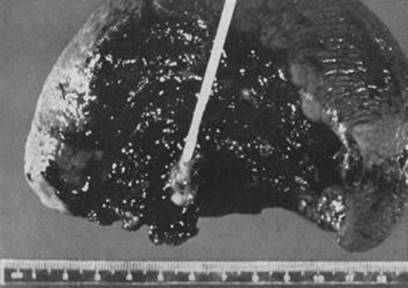
Fig. 9.14
Hilar surface of the spleen showing hemorrhage about splenic vessels. Probe inserted into spontaneous perforation of splenic vein [95]
9.4.4 Pathophysiology
9.4.4.1 Cirrhosis in Nonpregnant Patients
The SVA was associated with portal hypertension and liver cirrhosis in four of the eight nonpregnant patients. The pathogenetic mechanism of splenic vein rupture could be supported by three clinical observations:
1.
2.
3.
Furthermore, Tolgonay et al. reported that the reduction in the size of the aneurysm was related to a decrease in splenic vein blood flow [140]. These observations suggest that the persistent stagnation of blood flow in the portal system may have played a major role in the development of the SVA.
9.4.4.2 Hemodynamic and Hormonal Changes in Pregnancy
An increase in cardiac output and blood volume, usually found in the later months of pregnancy, is an important factor in the precipitation of vascular accidents [63]. Estrogens are believed to make capillary fragile, and progesterone is responsible for the enlargement of the venous system [161]. The increase of blood volume, the hypertrophy, or the dilation of the veins and changes in venous pressure related to pregnancy seem to be involved in the pathogenetic mechanism [150, 162]. Hemodynamic and hormonal changes may be the cause of vascular alterations, which can lead to weakening of the vein wall (Fig. 9.15).
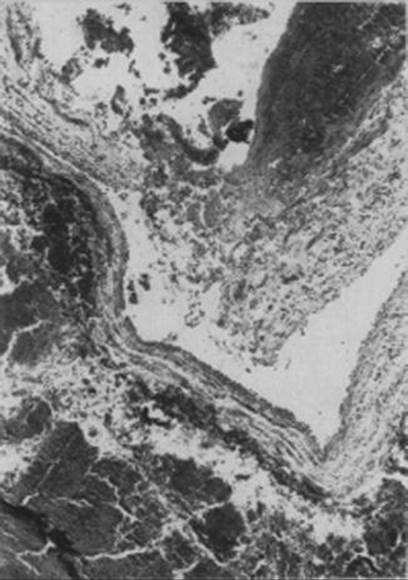
Fig. 9.15
Photomicrograph of splenic vein showing an acute inflammatory reaction and fibrinoid alteration in the vein wall with perforation and surrounding hemorrhage [95]
9.4.4.3 Mechanical Factors
Splenic torsion in the general population leading to splenic vein rupture is rarer still and is associated with high mortality [157, 163].
9.4.5 Clinical Presentation
Abdominal venous aneurysms including SVA are usually incidental findings. However, 75 % (6/8) nonpregnant patients had clinical complaints: 50 % had abdominal pain and all had abdominal fullness and hepatic dysfunction. One patient presented in a state of shock with intra-abdominal bleeding. The similarity between spontaneous perforation of the splenic vein and perforation of SAA is striking in many aspects: symptoms, signs, the lucid interval of amelioration of symptoms, occurrence in late pregnancy, and the therapeutic indications in both conditions [93, 95, 164–166].
Depending on the mechanism, extent, and location of the splenic vein rupture, the severity of the bleeding can be variable. If significantly severe, upper abdominal pain and nausea are followed by collapse. The patient recovers after several minutes but abdominal pain continues. The pain can be present on the top of the left (Kehr’s sign) or both shoulders [95]. If the hemorrhage is slower or the patient is referred to the hospital early, there is no collapse in the course of the disease [157].
9.4.6 Diagnosis
Angiography is the study of choice for diagnosing the presence of visceral aneurysm and rupture if the patient is hemodynamically stable. Also abdominal CT scan with i.v. contrast (arterial and venous phase) can reveal the correct diagnosis in a hemodynamically stable patient [167, 168]. In certain cases the diagnosis is made intraoperatively or unfortunately during autopsy (Fig. 9.16) [148].
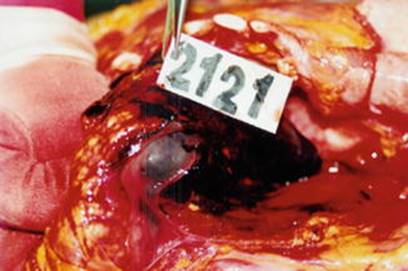
Fig. 9.16
Hematoma and spontaneous rupture at the lienal vein 3 cm far from the hilum of the spleen on autopsy of a 28-year-old woman in the fifth month of pregnancy [148]
9.4.7 Therapy
The natural course of non-ruptured SVA is uncertain; therefore, when patients in the general population are asymptomatic, treatment is controversial. In order to avoid the risk of rupture, it has been suggested that for 1–2 cm lesions, patients should be followed up on a regular basis with abdominal CT, abdominal MRI, or abdominal color Doppler ultrasound scanning. If inflammation is present as in accompanying chronic pancreatitis, every SVA should be treated surgically because rupture is possible despite aneurysm diameter [143]. However, we would recommend that in pregnancy, even the smallest SVA should be treated surgically [145].
Because of the already damage on the vein wall, repair of the vein should be avoided. Control of the bleeding, ligation of the vein, meticulous hemostasis, and splenectomy are the appropriate treatments. Splenectomy has long been advocated to correct the pancytopenias which result from the hypersplenism, associated with portal hypertension in cirrhotic patients. However, even though this intervention may correct the hematological picture, it should be noted that it rarely changes the course of the underlying disease. The standard management of SVA rupture remains emergency surgery which allows SVA resection, distal pancreatectomy, splenectomy, and splenorenal shunt [138].
9.4.8 Prognosis
It is difficult to discuss the prognosis due to several patients with splenic vein rupture during pregnancy. Probably due to slower bleeding then with rupture of splenic artery (aneurysm), the prognosis could be better. The patient described by Shepard in 1961 recovered but intrauterine fetal death occurred [95].
9.5 Splenic Torsion
9.5.1 History and Incidence
Splenic torsion is an exceedingly rare complication in pregnancy. The first case of successful splenectomy due to the splenic torsion in pregnancy was made by Meek in 1907 [169].
9.5.2 Etiopathogenesis
It is a complication of the wandering spleen [157], a rare condition characterized by increased splenic mobility due to the absence or laxity of its suspensory ligaments that may present as acute abdomen when it is twisted on its pedicle [170]. It has been reported in conditions such as abdominal trauma, splenomegaly, nonspecific abdominal muscle laxity, and laxity resulting from the hormonal effects of pregnancy [171]. It has been suggested that the softening effect of pregnancy hormones on ligaments, the abdominal musculature, diminished peritoneal cavity volume as a result of the gravid uterus, and a maximal third trimester increase in whole-blood volume might be the predisposing factors in pregnancy [172, 173].
9.5.3 Clinical Presentation
Symptoms of splenic torsion vary depending on the degree of torsion. Mild torsion might manifest with chronic abdominal pain resulting from congestion; moderate torsion might manifest with severe intermittent abdominal pain related to intermittent rotation and derotation [172]. Severe and acute torsion present with symptoms suggestive of an intra-abdominal catastrophe [157, 171, 173, 174]. It should be stressed that the patients sometimes had similar symptoms previously with one to several attacks that were attributed to other diseases [169].
9.5.4 Diagnosis
Splenic torsion during pregnancy creates a diagnostic dilemma because intrinsic pregnancy complications might mask its symptoms. It is a rare cause of acute or recurrent abdominal pain during pregnancy or the puerperium [16, 175].
9.5.5 Therapy
Treatment is always surgical. Initial exploration by laparoscopy or laparotomy depends on surgeon’s preference. Further surgical procedure depends on the status of the spleen. If long-standing detorsion is present with infarction and gangrene of the spleen, splenectomy is indicated (Fig. 9.17) [173, 176]. If exploration is done early with vital spleen, detorsion is indicated (Fig. 9.18) [176].
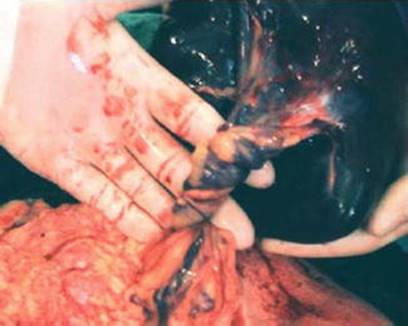
Fig. 9.17
Torted vascular pedicle of wandering spleen with infracted, hypermobile spleen [173]
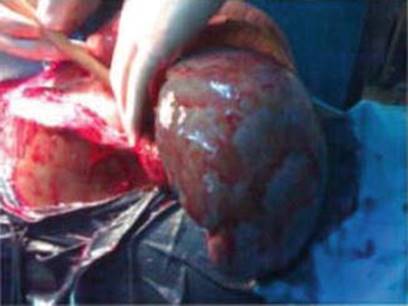
Fig. 9.18
Enlarged spleen on its twisted pedicle [176]
9.5.6 Prognosis
Prognosis depends on the severity of torsion (presentation). If operated early in the course of the diseases, prognosis is excellent. If the patient presents with hemorrhagic shock, fetal mortality is likely [176].
References
1.
Eastman NJ, Hellman LM. Williams obstetrics. 12th ed. New York: Appleton-Century-Crofts, Inc.; 1961. p. 853.
2.
Schwing C. Ruptur der Milz während der Schwangerschaft. Ein Beitrag zur Ätiologie des plötzlichen Todes während der Schwangerschaft. Zentralbl Gynakol. 1880;4:291.
3.
Simpson JY. On morbid conditions and injuries of the spleen in the pregnant and parturient states. Edinb Med J. 1866;268.
4.
Hubbard. Rupture of the spleen after labor. N Y J Med. 1879;30:75.
5.
Sparkman RS. Rupture of the spleen in pregnancy. Am J Obstet Gynecol. 1958;76:587–98.PubMed
6.
Buchsbaum HJ. Splenic rupture in pregnancy: report of a case and review of the literature. Obstet Gynecol Surv. 1967;22:381–95.PubMed
7.
Bljajic D, Ivanisevic M, Djelmis J, et al. Splenic rupture in pregnancy - traumatic or spontaneous event? Eur J Obstet Gynecol Reprod Biol. 2004;115:113–4.PubMed
8.
Aubrey-Bassler FK, Sowers N. 613 cases of splenic rupture without risk factors or previously diagnosed disease: a systematic review. BMC Emerg Med. 2012;12:11.PubMedCentralPubMed
9.
Schamaun M. Die Zweitzeitige traumatische Milzrupturen. Helv Chir Acta. 1962;29:560–75.PubMed
10.
Schonwerth K. Uber subkutane Milzrupturen. Dtsch Med Wochenschr. 1902;28:446–8.
11.
Lamerton AJ. Spontaneous rupture of the spleen in early pregnancy. Postgrad Med J. 1983;59:596–7.PubMedCentralPubMed
12.
Campbell WS. Rupture of haemangioma of the spleen in pregnancy. J Obstet Gynaecol Br Emp. 1962;69:665–8.PubMed
13.
Simpson CJ. Splenic rupture in pregnancy. Postgrad Med J. 1984;60:504.PubMedCentralPubMed
14.
Christau S, Klebe JG. Rupture of the spleen during delivery. Acta Obstet Gynecol Scand. 1978;57:187–8.PubMed
15.
McCormick GM, Young DB. Spontaneous rupture of the spleen. A fatal complication of pregnancy. Am J Forensic Med Pathol. 1995;16:132–4.PubMed
16.
Denehy T, McGrath EW, Breen JL. Splenic torsion and rupture in pregnancy. Obstet Gynecol Surv. 1988;43:123–31.PubMed
17.
Kaluarachchi A, Krishnamurthy S. Post-cesarean section splenic rupture. Am J Obstet Gynecol. 1995;173:230–2.PubMed
18.
Bhagrath R, Bearn P, Sanusi FA, et al. Postpartum rupture of the spleen. Br J Obstet Gynaecol. 1993;100:954–5.PubMed
19.
Hamedi B, Shomali Z. Postpartum spontaneous rupture of spleen in a woman with severe preeclampsia: case report and review of the literature. Bull Emerg Trauma. 2013;1:46–8.
20.
Anderson WAD. Pathology. St. Louis: CV Mosby; 1961.
21.
Babson WW, Morgan P. Spontaneous rupture of the apparently normal spleen. Am J Surg. 1946;72:97–102.PubMed
22.
Nelson Jr JH, Hall JE. Studies on the thymolymphatic system in humans. I. Morphologic changes in lymph nodes in pregnancy at term. Am J Obstet Gynecol. 1964;90:482–4.PubMed
23.
Orloff MJ, Peskin GW. Spontaneous rupture of the normal spleen; a surgical enigma. Int Abstr Surg. 1958;106:1–11.PubMed
24.
Sheehan HL, Falkiner NM. Splenic aneurysm and splenic enlargement in pregnancy. Br Med J. 1948;2:1105–6.PubMedCentralPubMed
25.
Zuckerman IC, Jacobi M. Spontaneous rupture of the normal spleen. Arch Surg. 1937;34:917–28.
26.
Wang C, Tu X, Li S, et al. Spontaneous rupture of the spleen: a rare but serious case of acute abdominal pain in pregnancy. J Emerg Med. 2011;41:503–6.PubMed
27.
Hershey FB, Lubitz JM. Spontaneous rupture of the malarial spleen: case report and analysis of 64 reported cases. Ann Surg. 1948;127:40–57.PubMedCentralPubMed
28.
Di Vella G, Arpaio A, Marzullo A, et al. Rupture of the spleen or splenic vessels (splenic emergency syndrome) in late pregnancy: a report of two autopsy cases. Forensic Sci Int. 2008;176:e1–5.PubMed
29.
Maymon R, Zimenman AL, Strauss S, Gayer G. Maternal spleen size throughout normal pregnancy. Semin Ultrasound CT MR. 2007;28:64–6.PubMed
30.
Barcroft J, Stevens JG. The effect of pregnancy and menstruation on the size of the spleen. J Physiol. 1982;66:32–6.
31.
Sakhel K, Aswad N, Usta I, Nassar A. Postpartum splenic rupture. Obstet Gynecol. 2003;102(5 Pt 2):1207–10.PubMed
32.
Harper JA, Huertas J. Spontaneous rupture of the normal spleen during labour. Can Med Assoc J. 1950;63:169–70.PubMedCentralPubMed
33.
Barnett T. Rupture of the spleen in pregnancy: a review of the recorded cases with a further case report. J Obstet Gynecol Br Emp. 1952;59:795–802.
34.
Barrilleaux PS, Adair D, Johnson G, Lewis DF. Splenic rupture associated with severe preeclampsia. J Reprod Med. 1999;44:899–901.PubMed
35.
McIndoe AH. Delayed haemorrhage following traumatic rupture of the spleen. Br J Surg. 1932;20:249–68.
36.
Debnath D, Valerio D. A traumatic rupture of the spleen. J R Coll Surg Edinb. 2002;47:437–45.PubMed
37.
Moore DW. Rupture of the spleen in pregnancy. West J Surg Obstet Gynecol. 1956;64:306–16.
38.
Wright LT, Prigot A. Traumatic subcutaneous rupture of the normal spleen. Arch Surg (Chic). 1939;39:551–76.
39.
Maughon JS, Geib PO, Lenhardt HF. Splenic trauma: an increasing problem. Surgery. 1961;49:477–85.PubMed
40.
Klinkert P, Kluit AB, de Vries AC, Puylaert JBCM. Spontaneous rupture of the spleen: role of ultrasound in diagnosis, treatment, and monitoring. Eur J Surg. 1999;165:712–3.PubMed
41.
Hillemanns P, Knitza R, Muller-Hocker J. Rupture of splenic artery aneurysm in a pregnant patient with portal hypertension. Am J Obstet Gynecol. 1996;174:1665–6.PubMed
42.
Herbeck M, Horbach T, Putzenlechner C, et al. Ruptured splenic artery aneurysm during pregnancy: a rare case with both maternal and fetal survival. Am J Obstet Gynecol. 1999;181:763–4.PubMed
43.
Wagner WH, Allins AD, Treiman RL, et al. Ruptured visceral artery aneurysms. Ann Vasc Surg. 1997;11:342–7.PubMed
44.
Lang W, Strobel D, Beinder E, Raab M. Surgery of a splenic aneurysm during pregnancy. Eur J Obstet Gynecol Reprod Biol. 2002;102:215–6.PubMed
45.
Puri A, Khadem P, Ahmed S. Imaging of trauma in a pregnant patient. Semin Ultrasound CT MRI. 2012;33:37–45.
46.
Savor R. Zentralbl Gynakol. 1898;22:1305.
47.
Ochsner MG. Factors of failure for nonoperative management of blunt liver and splenic injuries. World J Surg. 2001;25:1393–6.PubMed
48.
Rolton DJ, Lovegrove RE, Dehn TC. Laparoscopic splenectomy and diaphragmatic rupture repair in a 27-week pregnant trauma patient. Surg Laparosc Endosc Percutan Tech. 2009;19:e159–60.PubMed
49.
Latic F, Delibegovic S, Latic A, et al. Urgent laparoscopic splenectomy after traumatic splenic rupture in pregnancy. Acta Inf Med. 2009;17:231–2.
50.
Firstenberg MS, Plaisier B, Newman JS, Malangoni MA. Successful treatment of delayed splenic rupture with splenic artery embolisation. Surgery. 1998;123:584–6.PubMed
51.
Simpson I, Nq A, Griffin C. A rare cause of an acute abdomen in late pregnancy. Aust N Z J Obstet Gynaecol. 1995;35:435–6.PubMed
52.
Studdiford WE. Primary peritoneal pregnancy. Am J Obstet Gynecol. 1942;44:487–91.
53.
Biolchini F, Giunta A, Bigi L, et al. Emergency laparoscopic splenectomy for haemoperitoneum because of ruptured primary splenic pregnancy: a case report and review of literature. ANZ J Surg. 2010;80:55–7.PubMed
54.
Kitade M, Takeuchi H, Kikuchi I, et al. A case of simultaneous tubal-splenic pregnancy after assisted reproductive technology. Fertil Steril. 2005;83:1042.PubMed
55.
Tenore JL. Ectopic pregnancy. Am Fam Physician. 2000;61:1080–8.PubMed
56.
Yagil Y, Beck-Razi N, Amit A, et al. Splenic pregnancy: the role of abdominal imaging. J Ultrasound Med. 2007;26:1629–32.PubMed
57.
Beaussier M. Sur un anevrisme de l’artere splenique dont les parois se sont ossifiees. J Med Chir Pharm Paris. 1770;32:157–65.
58.
Parker E. Dublin J Med Sci. 1844;26:124.
59.
Parker E. Edinb Med Surg J. 1844;62:132–3.
60.
Crisp E. A treatise on the structure, diseases and injuries of the blood-vessels. London: Churchill; 1847. p. 251.
61.
Winckler V. Ein fall von milzexstirpation wegen aneurysma der arteria lienalis. Zentralbl Chir. 1905;32:257–60.
62.
Corson EM. Aneurysm of the splenic artery: rupture and death. Med Surg Report. 1869;20:351.
63.
Barrett JM, Van Hooydonk JE, Boehm FH. Pregnancy related rupture of arterial aneurysms. Obstet Gynecol Surv. 1982;37:557–66.PubMed
64.
Berger JS, Forsee JH, Furst JN. Splenic arterial aneurysm. Ann Surg. 1953;137:108–10.PubMedCentralPubMed
65.
Owens JC, Coffey RJ. Aneurysm of the splenic artery, including a report of six additional cases. Int Abstr Surg. 1953;97:313–35.PubMed
66.
Lowry SM, O’Dea TP, Gallagher DI, Mozenter R. Splenic artery aneurysm rupture: the seventh instance of maternal and fetal survival. Obstet Gynecol. 1986;67:291–2.PubMed
67.
Selo-Ojeme DO, Welch CC. Spontaneous rupture of splenic artery in pregnancy - review. Eur J Obstet Gynecol Reprod Biol. 2003;109:124–7.PubMed
68.
Sheps SG, Spittel Jr JA, Fairbairn II JF, Edwards JE. Aneurysms of the splenic artery with special reference to bland aneurysms. Proc Staff Meet Mayo Clin. 1958;33:381.PubMed
69.
Salo JA, Salmenkivi K, Tenhunen A, Kivilaakso EO. Rupture of splanchnic artery aneurysms. World J Surg. 1986;10:123–7.PubMed
70.
Messina LM, Shanley CJ. Visceral artery aneurysms. Surg Clin North Am. 1997;77:425–42.PubMed
71.
Vassalotti SB, Schaller JA. Spontaneous rupture of splenic artery aneurysm in pregnancy. Report of first known antepartum rupture with maternal and fetal survival. Obstet Gynecol. 1967;30:264–8.PubMed
72.
Abbas MA, Stone WM, Fowl RJ, et al. Splenic artery aneurysms: two decades experience at Mayo Clinic. Ann Vasc Surg. 2002;16:442–9.PubMed
73.
Anderson W, Gray J. Report of a case of aneurysm of the splenic artery: With references to 58 cases collected by the authors. Br J Surg. 1929;17:267–77.
74.
Machemer WL, Fuge WW. Aneurysm of the splenic artery: report of a case and review of the literature. Arch Surg. 1939;39:190–204.
75.
Sherlock SPV, Learmonth JR. Aneurysm of the splenic artery; with an account of an example complicating Gaucher’s disease. Br J Surg. 1942;30:151–60.
76.
Bedford PD, Lodge B. Aneurysm of the splenic artery. Gut. 1960;1:312–20.PubMedCentralPubMed
77.
Kalko Y, Ugurlucan M, Basaran, et al. Visceral artery aneurysms. Heart Surg Forum. 2007;10:E24–9.PubMed
78.
Khurana J, Spinello IM. Splenic artery aneurysm rupture: a rare but fatal cause for peripartum collapse. J Intensive Care Med. 2013;28:131–3.PubMed
79.
Mattar SG, Lumsden AB. The management of splenic artery aneurysms: experience with 23 cases. Am J Surg. 1995;169:580–4.PubMed
80.
Wagner WH, Cossman DV, Treiman RL, et al. Hemosuccus pancreaticus from intraductal rupture of a primary splenic artery aneurysm. J Vasc Surg. 1994;19:158–64.PubMed
81.
Deshpande AA, Kulkarni VM, Rege S, et al. Ruptured true aneurysm of the splenic artery: an unusual cause of haemoperitoneum. Am J Gastroenterol. 2000;46:191–2.
82.
Moawad M, Ray S, Joseph JV. Massive upper gastrointestinal haemorrhage due to intragastric rupture of splenic artery aneurysm. Int J Clin Pract. 2002;56:482–3.PubMed
83.
Holdsworth RJ, Gunn A. Ruptured splenic artery aneurysm in pregnancy. A review. Br J Obstet Gynaecol. 1992;99:595–7.PubMed
84.
de Vries JE, Schattenkerk ME, Malt RA. Complications of splenic artery aneurysm other than intraperitoneal rupture. Surgery. 1982;91:200–4.PubMed
85.
O’Grady JP, Day EJ, Toole AL, Paust JC. Splenic artery aneurysm rupture in pregnancy. A review and case report. Obstet Gynecol. 1977;50:627–30.PubMed
86.
Dhinakar M, Al Mashini S, Golash V. Rupture of splenic artery aneurysm during pregnancy: a report of two cases. Oman Med J 2011;26(5).
87.
Trastek VF, Pairolero FC, Joyce JW, et al. Splenic artery aneurysms. Surgery. 1982;91:694–9.PubMed
88.
Tessier DJ, Stone WM, Fowl RJ, et al. Clinical features and management of splenic artery pseudoaneurysm: case series and cumulative review of literature. J Vasc Surg. 2003;38:969–74.PubMed
89.
Dave SP, Reis ED, Hossain A, et al. Splenic artery aneurysm in the 1990s. Ann Vasc Surg. 2000;14:223–9.PubMed
90.
Enqlish JD. Spontaneous rupture of a splenic artery aneurysm in the third trimester. Ir J Med Sci. 1993;162:169–70.
91.
Busuttil RW, Brin BJ. The diagnosis and management of visceral artery aneurysms. Surgery. 1980;88:619–24.PubMed
92.
Stanley JC, Fry WJ. Pathogenesis and clinical significance of splenic artery aneurysms. Surgery. 1974;76:898–909.PubMed
93.
Pyrah LN, Stansfield FR, Garland HG. Hemoperitoneum due to spontaneous rupture of the splenic vein. Br Med J. 1929;1:810.
94.
Baird MA. Ruptures of a splenic artery aneurysm in pregnancy. Proc R Soc Med. 1973;66:762–3.PubMedCentralPubMed
95.
Shepard D, Foster CE. Spontaneous rupture of the splenic vein during pregnancy. Ann Surg. 1961;153:1029–32.PubMedCentralPubMed
96.
Chaichian S, Mehdizadeh A, Akbarian A, et al. Rupture of splenic artery aneurysm with portal hypertension during pregnancy: a case report. J Obstet Gynaecol Can. 2006;28:303–4.PubMed
97.
Barrett JM, Caldwell BH. Association of portal hypertension and ruptured splenic artery aneurysm in pregnancy. Obstet Gynecol. 1981;57:255–7.PubMed
98.
Caillouette JC, Merchant EB. Ruptured splenic artery aneurysm in pregnancy. Twelfth reported case with maternal and fetal survival. Am J Obstet Gynecol. 1993;168(6 Pt 1):1810–3.PubMed
99.
Czekelius P, Deichert L, Gesenhues T, Schulz KD. Rupture of an aneurysm of the splenic artery and pregnancy: a case report. Eur J Obstet Gynecol Reprod Biol. 1990;38:229–32.
100.
Toes NA. Ruptured splenic arterial aneurysm during parturition. Br Med J. 1956;1:495.PubMedCentralPubMed
101.
Parangi S, Levine D, Henry A, et al. Surgical gastrointestinal disorders during pregnancy. Am J Surg. 2007;193:223–32.PubMed
102.
Groussolles Jr M, Merveille M, Alacoque X, et al. Rupture of a splenic artery aneurysm in the first trimester of pregnancy. J Emerg Med. 2011;41:e13–6.PubMed
103.
Chookun J, Bounes V, Ducassé JL, Fourcade O. Rupture of splenic artery aneurysm during early pregnancy: a rare and catastrophic event. Am J Emerg Med. 2009;27(898):e5–6.PubMed
104.
Sadat U, Dar O, Walsh S, Varty K. Splenic artery aneurysms in pregnancy - a systematic review. Int J Surg. 2008;6:261–5.PubMed
105.
Nincheri Kunz M, Pantalone D, Borri A, et al. Management of true splenic artery aneurysms. Two case reports and review of the literature. Minerva Chir. 2003;58:247–56.PubMed
106.
Macfarlane JR, Thorbjarnarson B. Rupture of splenic artery aneurysm during pregnancy. Am J Obstet Gynecol. 1966;95:1025–37.PubMed
107.
Lelong DC, Logak M. Pathogenesis of spontaneous cervico-cerebral artery dissection. A hypothesis and a review of the literature. Med Hypotheses. 2004;3:453–7.
108.
Pasternack JG, Shaw JR. New Orleans Med Surg J. 1939;92:94–98.
109.
Tsokos M, Nolting RO, Lockemann U. Sudden, unexpected death due to splenic artery aneurysm rupture. Am J Forensic Med Pathol. 2005;26:83–5.PubMed
110.
Högler F. Beitrag zur klinik des leber und milzarterien aneurysmas. Wien Arch Inn Med. 1920;1:508.
111.
Lindboe EF. Aneurysm of the splenic artery diagnosed by X-rays and operated on with success. Acta Chir Scand. 1932;72:108–14.
112.
Derchi LE, Biggi E, Cicio GR, et al. Aneurysms of the splenic artery: noninvasive diagnosis by pulsed Doppler sonography. J Ultrasound Med. 1984;3:41–4.PubMed
113.
Lin CT, Chiang CW, Hsieh HC. Extrasplenic pseudoaneurysm: the role of color flow Doppler ultrasound in diagnosis. Jpn Heart J. 1999;40:365–8.PubMed
114.
Pilleul F, Beuf O. Diagnosis of splanchnic artery aneurysms and pseudoaneurysms, with special reference to contrast enhanced 3D magnetic resonance angiography: a review. Acta Radiol. 2004;45:702–8.PubMed
115.
Agrawal GA, Johnson PT, Fishman EK. Splenic artery aneurysms and pseudoaneurysms: clinical distinctions and CT appearances. Am J Roentgenol. 2007;188:992–9.
116.
Guillaumon AT, Chaim EA. Splenic artery aneurysm associated with anatomic variations in origin. J Vasc Bras. 2009;8:177–81.
117.
Veschambre P, Coppo B, Grosieux P. Rupture of aneurysm of the splenic artery during the first three months of pregnancy. Presse Med. 1993;22:1693–4.PubMed
118.
Pavlis T, Seretis C, Gourgiotis S, et al. Spontaneous rupture of splenic artery aneurysm during the first trimester of pregnancy: report of an extremely rare case and review of the literature. Case Rep Obstet Gynecol. 2012;2012:528051.PubMedCentralPubMed
119.
Sarr MG, Kendrick ML, Nagorney DM, et al. Cystic neoplasms of the pancreas: benign to malignant epithelial neoplasm. Surg Clin North Am. 2001;81:497–509.PubMed
120.
Civello IM, Frontera D, Viola G. Cystic neoplasm mistaken for pancreatic pseudocyst. Hepatogastroenterology. 1996;43:967–70.PubMed
121.
Puttini M, Aseni P, Brambilla G, Belli L. Splenic artery aneurysms in portal hypertension. J Cardiovasc Surg. 1982;23:490–3.
122.
Kokkalera U, Bhende S, Ghellai A. Laparoscopic management of splenic artery aneurysms. J Laparoendosc Adv Surg Tech A. 2006;16:604–8.PubMed
123.
La Bella GD, Muck P, Kasper G, et al. Operative management of an aberrant splenic artery aneurysm: utility of the medial visceral rotation approach: a case report and review of the literature. Vasc Endovascular Surg. 2006;40:331–3.
124.
Piffaretti G, Tozzi M, Lomazzi C, et al. Splenic artery aneurysm: postembolization syndrome and surgical complications. Am J Surg. 2007;193:166–70.PubMed
125.
Cosgrove GE, Watts JC, Kaump DH. Spontaneous rupture of splenic arterial aneurysms. Am J Clin Pathol. 1947;17:372–82.PubMed
126.
Poidevin LO. Rupture of the splenic artery aneurysm in pregnancy. Med J Aust. 1955;1:922–3.
127.
Slaytor EK, Sullivan EA, King JF. Maternal deaths in Australia 1997–1999. National Perinatal Statistics Unit. Maternal deaths series no.1. Sydney: Australian Institute of Health and Welfare; 2004.
128.
Lau G. Are maternal deaths on the ascent in Singapore? A review of maternal mortality reflected by coronial casework from 1990–1999. Ann Acad Med Singapore. 2002;31:261–75.PubMed
129.
Prahlow JA, Barnard JJ. Pregnancy related maternal deaths. Am J Forensic Med Pathol. 2004;25:220–36.PubMed
130.
Shahabi S, Jani J, Masters L, et al. Spontaneous rupture of a splenic artery aneurysm in pregnancy: report of two cases. Acta Chir Belg. 2000;100:231–3.PubMed
131.
Al Asfar F, Saber M, Dhar PM, Al Awadhi N. Rupture of splenic artery aneurysm during labor: a case report of maternal and fetal survival. Med Princ Pract. 2005;14:53–4.PubMed
132.
Reches A, Almog R, Pauzner D, et al. Spontaneous splenic rupture in pregnancy after heparin treatment. Br J Obstet Gynecol. 2005;112:837–8.
133.
Hunsaker DM, Turner S, Hunsaker JC. Sudden and unexpected death resulting from splenic artery aneurysm rupture: two case reports of pregnancy related fatal rupture of splenic artery aneurysm. Am J Forensic Med Pathol. 2002;23:338–41.PubMed
134.
Lowenthal M, Jacob H. Aneurysm of splenic vein - report of a case. Acta Med Orient. 1953;12:170–4.
135.
Boyez M, Fourcade Y, Sebag A, Valette M. Aneurysmal dilatation of the portal vein: a case diagnosed by real-time ultrasonography. Gastrointest Radiol. 1986;11:319–21.PubMed
136.
Glazer S, Gaspar MR, Esposito V, Harrison L. Extrahepatic portal aneurysm: report of a case treated by thrombectomy and aneurysmorphy. Ann Vasc Surg. 1992;6:338–42.PubMed
137.
Barzilai R, Kleckner MS. Hemocholecyst following ruptured aneurysm of portal vein. Report of a case. Arch Surg. 1956;72:725–7.
138.
Torres G, Hines GL, Monteleone F, et al. Splenic vein aneurysm: is it a surgical indication? J Vasc Surg. 1999;29:719–21.PubMed
139.
Shirohara H, Endo M, Sakai K, et al. Enlarging splenic vein aneurysm associated with stagnation of splenic venous blood flow. Am J Gastroenterol. 1996;91:385–7.PubMed
140.
Tolgonay G, Ozbek SS, Oniz H, et al. Regression of splenic vein aneurysm following resolution of splenomegaly. J Clin Ultrasound. 1998;26:98–102.PubMed
141.
Soo MS, Khoury MB, Lupetin AR. Splenic vein aneurysm: MR appearance - a case report. Angiology. 1991;42:590–3.PubMed
142.
Schmidt HG. Splenic vein aneurysm: diagnosis with color-coded duplex ultrasound. Leber Magen Darm. 1995;25:227–8.PubMed
143.
Shimoda M, Kubota K, Sakuma A, et al. Intra-abdominal hemorrhage due to rupture of a splenic vein aneurysm: a case report. J Gastrointest Surg. 2003;7:683–6.PubMed
144.
Ohhira MO, Ono M, Ohhira MA, et al. Case report: splenic vein aneurysm - report of a lesion that progressively expanded. Br J Radiol. 1994;67:656–8.PubMed
145.
Parpaglioni R, Metta E, Zagari A, Celleno D. Spontaneous splenic vein aneurysm rupture in the puerperium. Int J Obstet Anesth. 2009;18:48–51.PubMed
146.
Eckerling B, Goldman JA, Yado S. Spontaneous rupture of the splenic vein in pregnancy with massive retro- and intraperitoneal hemorrhage. Am J Surg. 1962;103:636–9.
147.
Rahn J, Steffen FW. Splenic vein rupture during pregnancy following acute pancreatic necrosis. Zentralbl Gynakol. 1959;81:1823–30.PubMed
148.
Turan N, Oghan F, Boran T. Spontaneous rupture of splenic vein in a pregnant woman during a religious ritual. J Forensic Leg Med. 2007;14:440–3.PubMed
149.
Safioleas MC, Moulakakis KG. A rare cause of intra-abdominal haemorrhage: spontaneous rupture of the splenic vein. Acta Chir Belg. 2006;106:237–9.PubMed
150.
Madhavan P, Hegarty P, Akram M, Drumm J. Spontaneous rupture of the splenic vein in pregnancy. Ir Med J. 1998;91:64.PubMed
151.
Wheelock JB. Spontaneous splenic vein rupture in pregnancy: case report. Mil Med. 1982;147:64.PubMed
152.
Puder H. Thrombosis and rupture of the splenic vein in “acute obstetrical hypercoagulamic syndrome”. Zentralbl Gynakol. 1961;83:1370–5.PubMed
153.
Friebel HG. Rupture of the splenic vein and pancreatic necrosis in pregnancy. Zentralbl Gynakol. 1962;27(84):137–5.
154.
Almgren B, Bowald S. Spontaneous rupture of the splenic vein secondary to hepatic cirrhosis. Acta Chir Scand. 1983;149:109–11.PubMed
155.
Murray M, Thal AP, Greenspan R. Splenic arteriovenous fistulas as a cause of portal hypertension. Am J Med. 1960;29:849–56.PubMed
156.
Régent D, Hodez C, Bigard MA, et al. Splenic arterial aneurysm rupturing into the splenic vein. A rare cause of acute portal hypertension in the postpartum period. J Radiol Electrol Med Nucl. 1977;58:151–4.PubMed
157.
Seah CS, Tan NC. Torsion of spleen with spontaneous rupture of splenic vein presenting as a case of accidental hemorrhage. Br Med J. 1964;1:1028.PubMedCentralPubMed
158.
Bolognesi M, Merkel C, Sacerdoti D, et al. Role of spleen enlargement in cirrhosis with portal hypertension. Dig Liver Dis. 2002;34:144–50.PubMed
159.
Tahan V, Avsar E, Karaca C, et al. Adrenomedullin in cirrhotic and non-cirrhotic portal hypertension. World J Gastroenterol. 2003;9:2325–7.PubMed
160.
Birney Y, Redmond EM, Sitzmann JV, Cahill PA. Eicosanoids in cirrhosis and portal hypertension. Prostaglandins Other Lipid Mediat. 2000;72:3–18.
161.
Descamps P, Marret H, Binelli C, et al. Body changes during pregnancy. Neurochirurgie. 2000;46:68–75.PubMed
162.
Sarmah BD, Sokhi GS. Spontaneous rupture of the splenic vein. Br J Surg. 1984;71:351.PubMed
163.
Safeoleas MC, Moulakakis KG. A rare cause of intra-abdominal hemorrhage: spontaneous rupture of the splenic vein. Acta Chir Belg. 2006;106:237–9.
164.
Riva HL, Pickhardt WL, Breen JL. Rupture of splenic artery aneurysm in pregnancy; report of a case. Obstet Gynecol. 1957;10:569–72.PubMed
165.
Tomsykoski AJ, Stevens RC, Izzo PA, Rodriquez CE. Aneurysm of the splenic artery in pregnancy. Am J Obstet Gynecol. 1953;66:1264–70.PubMed
166.
Gillam MB. Ruptured aneurysm of splenic artery during pregnancy. Br Med J. 1942;1:69–70.PubMedCentralPubMed
167.
Ufberg JW, Mcneil B, Swisher L. Ruptured renal artery aneurysm: an uncommon cause of acute abdominal pain. J Emerg Med. 2003;25:35–8.PubMed
168.
D’Ambrosio R, et al. Intraperitoneal hemorrhage from rupture of an aneurysm of splenic artery: case report and literature review. Ann Ital Chir. 2003;74:97–101.PubMed
169.
Meek H. Dislocated spleen with torsion of pedicle complicating pregnancy: removal of spleen: delivery at term. Br Med J. 1907;1:928.PubMedCentralPubMed
170.
Alimoglu O, Sahin M, Akleg M. Torsion of a wandering spleen presenting with acute abdomen a case report. Acta Chir Belg. 2004;104:221–3.PubMed
171.
Swischuk LE, Williams JB, John SD. Torsion of a wandering spleen: the whorled appearance of the splenic pedicle on CT. Pediatr Radiol. 1993;23:476–7.PubMed
172.
Huang YH, Hsu CY, Chang YF, Chen CP. Postcesarean splenic torsion. Taiwan J Obstet Gynecol. 2006;45:257–9.PubMed
173.
Parvaiz A, Chandran S, Karim A, et al. Torted and ruptured wandering spleen presenting as a surgical emergency in pregnancy. Sci World J. 2004;4:1035–7.
174.
Robinson AP. Wandering spleen case report and review. Mt Sinai J Med. 1988;55:428–34.PubMed
175.
Gilman RS, Thomas RL. Wandering spleen presenting as acute pancreatitis in pregnancy. Obstet Gynecol. 2003;101:1100–2.PubMed
176.
Akinola O, Fabamwo A, Rabiu K, et al. Splenic torsion in pregnancy: a case report. Int J Trop Med. 2009;4:129–31.