
Roger Mazze, PhD Matthew Murphy, BS Oded Langer, MD, PhD
There is no love sincerer than the love of food.
—George Bernard Shaw
Key Points
• Medical nutrition therapy has a very important function unique to maternal diabetes; it must assure adequate nourishment to the developing fetus without risking significant and prolonged maternal hyperglycemia or hypoglycemia.
• Medical nutrition therapy must also avoid overnourishment and undernourishment of the developing fetus as these may predispose the fetus to childhood and adult metabolic and cardiovascular morbidities.
• Evidence-based experiential approaches that base nutritional adjustments on episodic or continuous monitored blood glucose, weight, and ketones provide the best opportunity to achieve metabolic targets.
• Educating the patient, providing self-care skills, and adoption of a multidisciplinary approach that addresses behavioral changes are elements of a comprehensive, patient-centered approach.
Medical nutrition therapy (MNT) refers to the balance between energy input and energy output. Although it principally focuses on food planning, in recent years, it has encompassed physical activities (which will be discussed in Chapter 17, devoted to exercise and pregnancy). MNT, as all therapies, has a behavioral component as well. Pregnancy uncomplicated by diabetes presents substantial challenges. Normal pregnancy is a state of insulin resistance and accelerated insulin delivery in which maternal blood glucose levels are reduced by approximately 20% (see Figure 15-1), reflecting the shunting of nutrients from the mother to the developing fetus. To maintain glucose homeostasis and assure adequate maternal and fetal nourishment, while avoiding both undernutrition and overnutrition, maternal nutrient intake requires balancing of amino acids, omega-3 fatty acids, folic acid, iron, copper, and other minerals as well as carbohydrates, fat, and protein to assure adequate weight gain for the developing fetus.1 Recent evidence suggests that the stability of the early in utero nutritional environment is associated with “alterations” in the fetal genome.2 Some investigators believe that the so-called fetal origin hypothesis “suggests that the fetal hormonal and nutritional environment has an impact on future physiology and metabolism” of the child and adult. Activity and planned exercise are generally continued at the same level of intensity as the prepregnancy level unless an intercurrent event suggests otherwise.3 In fact, there is emerging evidence that exercise may be both preventative in developing glucose intolerance in pregnancy and beneficial if gestational diabetes develops.4
Pregnancy complicated by diabetes presents altogether unique circumstances. Type 1 diabetes, type 2 diabetes, and gestational diabetes mellitus (GDM) constitute similar medical challenges: to maintain near normal (see Figure 15-1) blood glucose levels while assuring appropriate fetal growth and development. Diabetes in pregnancy requires that adequate weight gain occurs to promote fetal growth while addressing a physiological state that risks sudden and sustained hypo- and/or hyperglycemia. Simultaneously, the nutrient intake must be synchronized with the antidiabetic medications, which are required in the majority of women with diabetes in pregnancy to prevent dysglycemia. If the goal is to achieve blood glucose levels that mimic normal diurnal glycemic patterns of pregnancy to prevent adverse perinatal outcomes, the selection of an appropriate food plan becomes a matter of considering myriad elements: fetal growth and development, maternal nutrition, and the pharmacodynamics of antihypergly- cemic medications.
There are many similarities that follow general nutritional principals in terms of MNT for pregestational and gestational diabetes. In this section, MNT is discussed from two perspectives: common approaches and clinical strategies specific to special circumstances. The overall approach is to incorporate recent research findings with practical applications to reduce variability and build consensus around nutrition management. A key element of this approach is the direct involvement of the patient. Education and skills development in self-care as well as participation in clinical decisions are hallmarks of patient-centered MNT. Without an understanding of the self-management responsibilities of the patient, MNT is substantially compromised.

COMMON ELEMENTS OF MNT
There is little difference between women with dysglycemia and women with normal glycemia with respect to the recommended dietary allowance (RDA) for pregnancy as published by the US Food and Nutrition Board of the National Academy of Sciences.5 In addition, women with diabetes do not differ in terms of the need to add sufficient caloric intake to assure appropriate fetal and maternal nourishment. Acknowledging that the goal of treatment is to restore normoglycemia in pregnancy, the American College of Obstetricians and Gynecologists in its 2013 Practice Bulletin made the following recommendations6:
• “nutritional counseling for all patients with GDM by a registered dietician, if possible, with a personalized nutrition plan based on the individual's body mass index”; and where this is not possible, nutritional counseling by the physician;
• “carbohydrate intake should be limited to 33-40% of calories, with the remaining calories divided between protein (20%) and fat (40%)”;
• “complex carbohydrates may be preferred to simple carbohydrates because they are less likely to produce significant postprandial hyperglycemia”;
• “three meals and two to three snacks are recommended to distribute glucose intake and to reduce postprandial glucose fluctuations”; and
• “a moderate exercise program.”
The American Diabetes Association and the National Academy of Science promulgated their recommendations for weight gain in pregnancy in 2006 and since then have reiterated these guidelines in their most recent publications.7 Using pregravid body mass index (BMI), underweight individuals with a BMI < 19.8 kg/m2 are expected to gain up to 40 lbs (18.2 kg) at a caloric intake rate of 40 kcal/kg/d, whereas normal weight (BMI 19.8-26.0 kg/m2) and overweight (BMI 26.0 kg/m2) pregnant women are expected to gain up to 35 and 25 lbs, respectively, at rates of 30 and 24 kcal/kg/d. Since it is likely that there is some weight gained prior to the first prenatal visit, weight gained between conception and the first prenatal visit is included in the calculation of total weight gain in pregnancy. This approach estimates that approximately 4 lbs of weight gain occurs during the first trimester, and subsequent weight gain is evenly distributed (approximately 1 lb/wk) during the remainder of pregnancy.8
Whether women are treated by MNT alone or in combination with pharmacologic agents, the distribution of nutrients is essentially the same. The only difference is that if MNT is combined with antihyperglycemic agents, dietary adjustments to synchronize with the pharmacologic treatment are considered at initiation of therapy.9 The precise nature of nutritional interventions is controversial, whether as a stand-alone treatment or in combination with pharmacologic agents. Evidence linking moderate or low carbohydrate diets with improved glycemic control is equivocal.10,11 This has led to the 2012 recommendations of the American Diabetes Association to conclude that MNT be “individualized” in pregnancy, in addition to considering an adjustment for ethnicity and socioeconomic status.12
AN EVIDENCE-BASED EXPERIENTIAL APPROACH TO TREATMENT
Since the impact of a food and activity plan can be readily measured by changes in weight (both gain and loss), diurnal glucose patterns, and ketones, an evidence-based experiential approach employs three parameters for clinical decision making.13 Specifically, decisions concerning starting and adjusting MNT are based on (1) overnight and daytime blood glucose patterns especially related to periods of severe hypoglycemia (<50 mg/dL) and persistent hyperglycemia (>140 mg/dL lasting more than two hours) obtained from SMBG or CGM (Figure 15-2); (2) changes in weight especially during the second and third trimesters; and (3) the presence of ketones especially with hypo- or hyperglycemia. This approach requires patients to monitor their blood glucose multiple times throughout the day (including before and after each meal and at bedtime) as well as overnight and also daily monitoring of ketones and weekly measurement of weight.
Changes in caloric intake are based on maintaining blood glucose within preset parameters (60-120 mg/dL), preventing ketosis and avoiding excess weight gain.
APPORTIONING CARBOHYDRATES, FAT, PROTEIN, AND FIBER
Dietary recommendations for carbohydrates extend from 33% to 40% of total nutrient intake, with fat ranging from 30% to 40% and protein generally less than 20%.6,14 These large variations represent a lack of consensus as to the most effective nutritional intervention that mimics normal glycemic control while assuring adequate nutrition. This is especially critical with respect to carbohydrates. The variation in recommendations of the proportion of carbohydrates needed to establish and mimic normal diurnal glucose patterns in pregnancy complicated by diabetes reflects the differences in interpretation of the postprandial glycemic response to carbohydrates as they are digested. Jenkins et al. proposed quantification of postprandial glycemic response in the form of the glycemic index in 1981.15 They established a means of measuring glycemic response by comparing a test food that contained carbohydrates with an equal amount of glucose (50 g of the test carbohydrate/50 g of glucose).16,17 It was found that a 50 g baked white potato provided the same glycemic effect (100%) as an equivalent amount of simple sugar; whereas 50 g of pasta provided 35% of the glycemic effect of 50 g of simple sugar. Thus, the potato scored 100 on the glycemic index and the pasta scored 35. It was hypothesized that foods with a high glycemic index tended to overstimulate Β-cell production of insulin. The resulting hyperinsulinemia would contribute to heightened insulin resistance, which combined with hyperglycemia would lead to glucotoxicity and further Β-cell dysfunction. If the hyperglycemia worsened, there was a greater risk of increases in free fatty acid levels. Consequently, Β-cells would be further exhausted resulting in decreased available insulin. In pregnancy, this cycle would be exaggerated leading to sustained hyperglycemia with relative insulin deficiency.

After several years of testing the glycemic index approach, it was found that the glycemic index was a function of myriad interrelated factors: meal composition, food preparation, and rate of ingestion.18 This led to disagreement as to whether carbohydrates should be measured solely by their glycemic index. Because most diets include mixed meals with different metabolic rates, arguments were put forth to make all carbohydrates equivalent. However, some investigators still disagree.19 Moses et al. showed that improved glycemic control and avoidance of insulin therapy were feasible if the patient were assigned a diet with a low glycemic index.20 Concluding that, “Women randomly assigned to receive a low glycemic index diet were able to lower the glycemic index of their diet rapidly and maintain this lower level for the duration of pregnancy.” Furthermore, the low glycemic index diet reduced “the need for the use of insulin without compromise of obstetric or fetal outcomes.”17
In spite of the controversy, or perhaps because of it, carbohydrate counting which assumes that 15 g of any carbohydrate (a carbohydrate choice) are equivalent in terms of their postprandial effect has become the mainstay of MNT in pregnancy complicated by diabetes. Meals and snacks are apportioned according to the number of carbohydrate choices (without regard to their glycemic index). Since each carbohydrate choice comprises 60 kcal, it is possible to calculate the number of calories from carbohydrates throughout the day and apportion them for each meal and snack. For example, if 40% of the total daily caloric requirements are composed of carbohydrates, and the total daily caloric intake is 2600 kcal, then 1040 kcal would be composed of carbohydrates or approximately 17 choices (1040/60). Assuming 80% of carbohydrates are apportioned to 3 meals and 20% to 3 snacks, then following is the final division of carbohydrate choices: 14 choices for meals and 3 choices for snacks.
Equally controversial is the amount and type of fat consumed by pregnant women with glucose intolerance especially as it is related to weight gain and lipotoxicity.21 Although it is generally agreed that if total carbohydrates are reduced, fats should be increased proportionately in calories; the amount of saturated, monosaturated, and polyunsaturated fats is unclear. General guidelines range from equal proportions of each type of fat to lower saturated fats and higher polyunsaturated fats.22 Saturated fats (such as those found in red meat, butter, cheese, and lard) are considered to have the highest association with cardiovascular disease. Monosaturated fats (olive oil) and polyunsaturated fats (vegetable and fish oils) seem to be less associated with cardiovascular disease and in some cases (such as fish oils with omega-3 fatty acids) are anti-inflammatory and antithrombotic.23
The role of protein in maternal nutrition has not been clearly established. It has been noted, nevertheless, that too much protein can stimulate excess hepatic glucose output, which will cause an increase in fasting plasma glucose and consequently in free fatty acids.5 Generally, protein is restricted to no more than 20% of total caloric intake and is distributed equally throughout each meal.3
Fiber is often considered the “fourth” constituent of MNT because of its potential for glucose lowering. Foods composed of water-soluble fiber such as fruits act to delay the intestinal absorption of carbohydrates thereby slowing the conversion of carbohydrates to glucose. This lessens their impact on postprandial blood glucose. In contrast, foods high in water insoluble fiber, such as vegetables, appear to have little impact on blood glucose level. Most recommendations for MNT include at least 30 g of fiber with emphasis on at least one form of water-soluble fiber with each meal.5,6,12,13
STARTING MEDICAL NUTRITION THERAPY
Since the final distribution of calories is subject to diurnal glucose patterns, weight, and ketones, an approach to MNT that starts from a fixed caloric distribution with adjustments based on these metabolic parameters seems reasonable. One such approach is illustrated in Figure 15-3.24 For both consistency and simplicity, the following proportions are used: 40% carbohydrates, 20% protein, and 40% fats. The carbohydrates are divided into <25% simple sugars (or low fiber, high glycemic index) and 75% complex carbohydrates (or high fiber, low glycemic index) to lessen the overall postprandial glycemic impact of simple sugars and foods/drinks low in fiber. The source of protein and fats are selected to lessen the long-term risk of macrovascular disease. Foods high in saturated fats are less than 10% of total fat intake. This proportion of carbohydrates, protein, and fat is maintained for both meals and snacks. To avoid carbohydrate loading and subsequent hyperglycemia, no meal is overbalanced with carbohydrates. Meals constitute 85% of the total caloric intake, with snacks comprising the remainder. The division of total meal calories into three primary meals is also subject to controversy. Recommendations of between 10% and 25% for breakfast, with equally wide variations for lunch and dinner, reflect the degree of disagreement and a lack of sufficient studies to guide clinical decision. However, if clinical parameters (glucose level, weight, and ketones) are relied upon, the exact division between meals seems less significant. Notwithstanding the disagreements, a reasonable starting point for total calories is 20% breakfast, 30% lunch, and 35% dinner, with the remainder reserved for snacks. To assure adequate intake of vitamins and minerals, the RDA for pregnancy is followed.5

SYNCHRONIZATION OF MNT WITH PHARMACOLOGIC TREATMENT
When pharmacologic agents are necessary to control blood glucose levels, whether for pregestational or gestational diabetes, the challenge is how to integrate MNT without subjecting the patient to a fixed routine. Traditional therapies synchronize food intake with the pharmacokinetics of the drug. This approach generally recommends large meals and small snacks to match the action curves of regular and intermediate-acting insulin (still the most popular insulin-based regimen). Regular insulin (R) requires a meal that assures sufficient mixed carbohydrate content to meet a peak action that begins within 30 minutes after the injection of insulin and lasts up to 90 minutes. Since intermediate-acting insulin (NPH) is generally administered with the regular insulin, a second meal consisting of substantial carbohydrate content is required between five and seven hours after the injection of R/NPH to match the peak action of the intermediate-acting insulin. If the patient is limited to two injections of this mixed insulin regimen, then each day's meals have to be planned with precision and executed without variation.
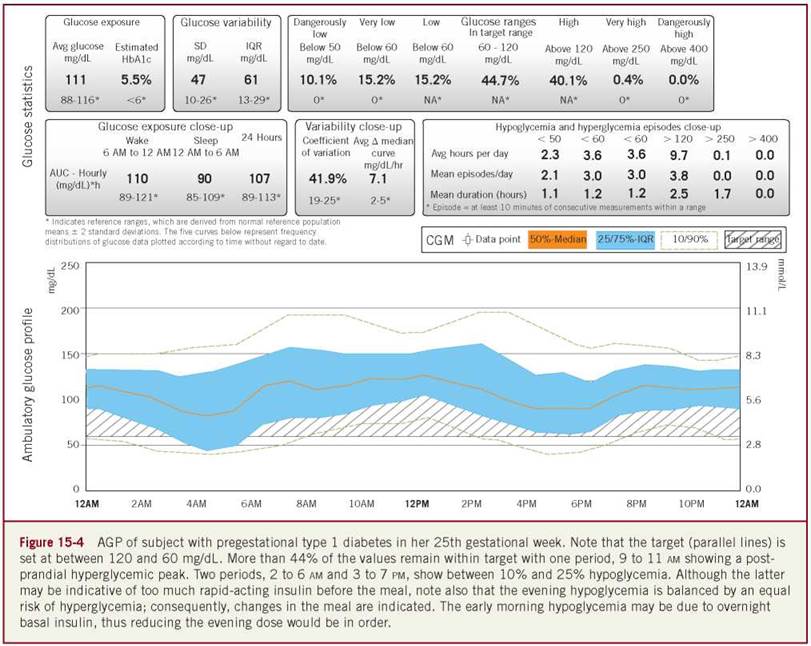
More contemporary approaches to insulin-based therapies utilize multiple injection regimens relying on rapid-acting insulin to accommodate meals and snacks (bolus) and intermediate- or long-acting insulin for overnight blood glucose control (basal). These regimens attempt to fit the lifestyle and eating habits of the patient by depending on frequent SMBG or CGM readings to guide insulin dose and dietary composition (see Figure 15-4). Patients test their glucose before each injection of insulin, during and after completion of each meal. If the glucose is higher than target, they administer a small amount of rapid-acting insulin, or if it is below target, they have a snack with sufficient carbohydrates to increase glucose levels to within target. Once glucose is stabilized, the patient can estimate the amount of rapid-acting insulin associated with a carbohydrate choice by dividing the total number of units of rapid-acting insulin by the total number of carbohydrate choices. This experiential approach is called intensive insulin management or basal/bolus insulin treatment. It can be used with equal effectiveness in both pregestational diabetes and GDM.
Currently, glyburide (sulfonylurea) is the only noninsulin agent shown to significantly reduce glucose levels and restore euglycemia in a large population of pregnant women with dysglyce- mia (GDM and type 2).25-27 Dietary management integrated with glyburide-based therapy has not been widely studied. However, since the pharmacokinetics of glyburide have been well documented, there is no reason to assume any difference in action during pregnancy. Sulfonylurea drugs attach to receptors on the potassium channel of pancreatic P-cells facilitating the release of insulin without regard to prandial state or glucose level. MNT must take into account the necessity of not missing meals and of knowing the glycemic level as the risk of hypoglycemia is increased when glyburide is present in the absence of exogenous nutrition. Consequently, frequent self-monitored blood glucose (SMBG) or continuous glucose monitoring (CGM) is a critical component to assure synchronization of glyburide action with energy intake.
MONITORING
As mentioned earlier, at the onset and throughout treatment for diabetes in pregnancy, three metabolic parameters should be monitored: glucose, weight, and ketones. Although women placed on MNT alone are considered less prone to ketosis or hypoglycemia than women treated with insulin or glyburide, they require the same surveillance. Because of their compromised ability to respond to changes in diurnal glucose patterns, these women are at an especially high risk of both ketosis and hypoglycemia during periods of severe morning sickness accompanied by vomiting. If prolonged ketosis occurs, there is a risk of adverse fetal neurode- velopment.28 For these women, close monitoring of ketones is essential. In addition, women with significant morning sickness accompanied by vomiting are subject to hypoglycemia due to loss of nutrients. For women treated with a pharmacologic agent, these risks are more pronounced. Both insulin and glyburide are hypoglycemic agents. Periods of undernourishment are especially prone to low blood glucose. Thus, frequent SMBG or CGM is advised. Finally, for women treated by diet alone or in combination with a pharmacologic agent who choose to significantly reduce caloric intake to control glucose levels, both starvation ketosis and hypoglycemia can subsequently occur. Weight loss in pregnancy may be the first indicator of this behavior.
Taking all these issues into account, the most ideal and physiologic approach to monitoring would be the employment of CGM since it provides diurnal glucose patterns that are generally not achievable with SMBG. However, owing to the high cost and poor reimbursement for this new technology, SMBG can be used in a more physiologic manner. Random testing at least seven times each day plus once each overnight period for at least one week will provide a generalized view of the patients’ diurnal glucose patterns. The testing is random so that it accounts for all time periods rather than limited to before and after each meal and at bedtime. This does not replace the necessity for patients treated with insulin or glyburide to test immediately before administration of either pharmacologic agent. This assures that the there is a lower risk of hypoglycemia. An easy schedule for random testing is fasting, between one and four hours after each meal, and at bedtime. For overnight at between 1 and 4 am, each night should be sufficient.
ADJUSTMENTS IN MNT
Dietary adjustments for women treated by MNT alone (see Figure 15-5) begin with an assessment of current diurnal glucose patterns, weight, and ketones. If these variables are within target parameters, further changes in therapy are unnecessary. If ketones are positive and fasting glucose is below target, the most likely cause is undernourishment. If ketones are positive and all glucose values are below target, the undernourishment may lead to sustained hypoglycemia. In both cases, additional carbohydrates before bedtime and throughout the day are advised. The ratio of carbohydrates at meals and snacks can be adjusted with more carbohydrates provided by snacks to increase blood glucose between meals. If ketones are negative and weight gain is outside of target parameters, reduction in total caloric intake of 5% will not risk undernourishment and may slow weight gain. If there is weight loss with negative ketones, an increase in total calories by 5% should re-establish appropriate maternal/fetal nourishment.
Blood glucose parameters are perhaps more critical than any other metabolic indicator for women treated by MNT alone. Unlike pharmacologic interventions, there is the assumption that reliance on nutritional therapies only indicates that the disorder is “inconsequential.” From a behavioral perspective, it is likely that the patient may not consider GDM or type 2 diabetes as serious diseases because they are only being treated by dietary changes; however, epidemiological data suggest otherwise. If glucose is not well controlled, the risk of adverse perinatal outcome may be as high or higher in women treated by MNT alone for GDM or type 2 diabetes as in women treated by pharmacologic intervention.29 If fasting glucose is >95 mg/dL or postprandial is consistently >120 mg/dL, the risk of adverse perinatal outcome increases by as much as 14-fold.30,31 There are insufficient data to suggest that MNT alone is effective when glucose is elevated to these levels. Consequently, pharmacological interventions, either glyburide or insulin, are appropriate for women with GDM or type 2 diabetes.

Effective utilization of dietary changes to improve glyce- mic control requires addressing the carbohydrate and fat content of meals and snacks (see Figure 15-5). When fasting glucose is <70 mg/dL for three consecutive days, then an increase in the amount of complex carbohydrates (low glycemic index) at bedtime is indicated. Complex carbohydrates containing water-soluble fiber are preferable. Since additional calories are not required, calories from fat should be reduced by an equivalent amount. When postprandial glucose is persistently below target for three consecutive days, the proportion of fat is decreased by up to 10% and carbohydrates (low glycemic index preferred) increased by up to 10%. Since total caloric intake is unchanged, weight should remain within target parameters. When fasting and postprandial glucose are below target and ketones are negative, diet can be adjusted to as low as 25% fat and up to 55% carbohydrates. In this instance, carbohydrates are divided into 75% meals and 25% snacks. This assures that the glycemic response of increased carbohydrates is evenly distributed without risk of hyperglycemia. Continued close surveillance of weight, glucose, and ketones assure the optimization of this approach to MNT alone. When MNT is used in combination with a pharmacologic agent to achieve glycemic targets, the challenge is to optimize both therapies (see Figure 15-6).18
Approaching modifications in MNT from an experiential base allows rapid adjustments that take into account the action of both the pharmacologic agent and the dietary nutrients. Assuring that the metabolic parameters are intact is essential. If ketones are positive and starvation ketosis is suspected, reduction in the evening or bedtime dose of the pharmacologic agent is suggested along with the redistribution (not addition) of carbohydrates at bedtime. If the patient is experiencing excessive weight gain, reduction in total caloric intake by 5% should be instituted first. If the total reduction in calories is composed of fats, it is unlikely that a change in medication dose is required. However, if carbohydrates are reduced, then close monitoring of glucose with appropriate adjustments in medications are recommended.
BEHAVIOR MODIFICATION, PATIENT SELF-CARE EDUCATION
Behavioral approaches begin by setting individualized dietary goals following a period of education designed to link energy intake with weight management and blood glucose control. Prochaska et al. argue that behavior modification in chronic disease requires an assessment of the patient's willingness and readiness to change.32 Essentially, they maintain that patients will not change eating behaviors unless they understand the rationale for the change and are ready to set short-term goals. Consequently, individuals with maternal diabetes need to learn about their disorder from several perspectives: etiology, treatment, complications, fetal development, delivery, postpartum follow-up, and self-care skills. These subjects constitute a substantial amount of learning that must take place within a relatively brief period of time if patients are to participate in their care. Most education/skills programs focus on the development of self-care “survival” skills first. For all women, independent of treatment, self-monitoring of blood glucose, and measurement of ketones are essential elements of self-care. For women treated with insulin for the first time, injection technique and insulin administration are emphasized. Recently, some educational programs have included a trial injection of saline for all women to remove any barriers (such as needle phobia) to eventual insulin administration. Nutrition and its relationship to glucose control is generally an early topic. Meal and snack planning skills, including carbohydrate counting, nutrient requirements, and healthy food choices, are part of the self-management skills set. If nutritional counseling is available, an individualized food and activity plan that is culturally and economically sensitive is developed.
The nutritional tools that the patient is taught vary. Fixed caloric intake with preset meals and snacks, an exchange list with “allowable foods and drinks” and carbohydrate counting are three of myriad dietary interventions. There is i nsufficient evidence to suggest that one is more successful at achieving dietary goals than the other. However, there is an emerging fourth approach that combines some of the elements of all these approaches. Based on both behavior modification and clinical metabolic parameters, the approach, “Replace, Reduce, Restrict,” provides a stepwise tactic that allows the patient to “experiment” with different dietary strategies.24 After a mutually acceptable set of short-term dietary goals are set, the patient begins by replacing foods and drinks high in carbohydrates with the same quantity of food or drink but with lower carbohydrate content. For example, an 8 oz. regular soft drink is replaced by an 8 oz. diet soft drink or a medium potato is replaced by 1/2 cup pasta. This replacement is made initially at one meal or snack and then increased to a goal of replacing high carbohydrate foods and drinks at every meal and snack. If this fails to achieve clinical goals, then reducing total caloric intake is attempted. In this strategy, the patient is asked to reduce each portion size. By maintaining only one change in behavior, the patient can focus on this behavior. Generally the portions sizes are decreased by increments of 5%. To reinforce the changes, the patient is asked to use the same plate, bowl, and drinking glass. In this manner, changes in the quantity of food can be observed. If this fails to achieve metabolic targets, then restrictions of specific foods and drinks are employed. The stepwise procedure can be combined, and the patient eventually may choose to replace some foods, reduce the intake of specific drinks, and accept restrictions of certain snacks. These dietary changes require ample time to be initiated and substantial time to be reinforced.
When adjustments to medications occur, dietary change (principally in carbohydrates) can assist in achieving glyce- mic control and should also be considered. When glucose is below target, the first step is to lower the medication that is most closely associated with the period of persistent hypoglycemia. If this fails to improve control to reach target, the composition of carbohydrates in the daily caloric intake is increased between 45% and 50% and fats can be reduced proportionately. The distribution of carbohydrates between meals and snacks is recalculated to correspond with changes in medication dose. If glucose is above target, medication is increased combined with a decrease (to no less than 35%) in proportion to carbohydrates. The distribution between meals and snacks is different dependent on the pattern of hyperglycemia. Fasting hyperglycemia suggests maintaining a ratio of 80% carbohydrates at meals and 20% at snacks, whereas persistent hyperglycemia throughout the day suggests a ratio of 75% meals to 25% snacks, thereby spreading the glycemic response throughout the day.

DIETARY CONTROVERSIES: ARTIFICIAL SWEETENERS, FAD DIETS, DRUG INTERVENTIONS
The US Food and Drug Administration lists four approved artificial sweeteners: saccharin, aspartame, acesulfame potassium, and sucralose.33 The American Diabetes Association, in its 2012 position statement regarding nutrition, appears to concur that these artificial sweeteners are safe in pregnancy.12 There are no significant studies regarding the safety or efficacy of artificial sweeteners in maternal diabetes. Both saccharin and aspartame have been subject to claims of linkage to cancer, brain tumors, and other medical conditions. However, repeated studies have not confirmed the association, thus both remain approved. Acesulfame potassium and sucralose are generally used in processed foods and have also been subjected to continual testing. No associations between these sweeteners and disorders of pregnancy have been uncovered.
Fad diets fall into five general categories: (1) starvation (<200 kcal/d); (2) very low calorie (approximately 800 kcal/d); (3) low energy (800-1600 kcal/d); (4) low fat (<20% of calories); and (5) low carbohydrate (<25 g/d).34 None of these diets have been tested in maternal diabetes nor do they appear to provide any reasonable scientific basis for use in pregnancy. Reliance on these diets could have serious detrimental effects for fetal growth and development and for maternal glycemic control. There are also pharmacologic agents that are currently used in diabetes that have been shown to improve weight management and aid weight loss. They are acarbose, metformin, orlistat, and sibutramine. Acarbose, an alpha-glucosidase inhibitor, has been used in the treatment of type 2 diabetes to slow the absorption of carbohydrates, thereby reducing the postprandial glucose response. Metformin, a biguanide, has been extensively used in the treatment of both type 2 diabetes and polycystic ovary syndrome (PCOS). Its weight management effect is twofold, and it suppresses excess hepatic glucose output, and due to gastrointestinal distress, it appears to lessen appetite. It has been used in pregnancy generally during the first trimester in patients with PCOS. Orlistat, a lipase inhibitor, also appears to have two effects on weight maintenance and weight loss. Its principal action is to block or slow the absorption of fat; its secondary action is to produce uncomfortable gastrointestinal side effects in patients who persist in consumption of foods high in fat. Sibutramine is a new class of drugs that acts on the central nervous systems to suppress appetite. It is reported to provide the patient with a sense of “fullness.” Generally, since all these pharmacologic agents pass the placental barrier and their effect on the developing fetus is unknown, they are not recommended for use in pregnancy. The exception may be metformin which although it passes through the placental barrier, it has beneficial effects during the first trimester that may balance any risks.
The use of MNT alone or in combination is a matter of balancing the energy intake with output which assuring normal fetal growth and development. Preconception counseling and glycemic control are the primary principals of reducing the risk of adverse perinatal outcomes. These principals are especially important in women with pre-existing diabetes or at high risk (obesity, family history of type 2 diabetes, previous GDM, or previous large for gestational age (LGA) or macrosomia) for glucose intolerance in pregnancy. Initiation of tight glycaemic control by diet alone or in combination with pharmacologic agents must be started prior to conception to assure a health physiological milieu for the mother and fetus.
REFERENCES
1. Lyons L, Reader D. Nutritional management for gestational diabetes. In: Coulston A, Rock C, Monsen E, eds. Nutrition in the Prevention and Treatment of Disease. San Diego, CA: Academic Press; 2001.
2. Pasternak Y, Aviram A, Poraz I, Hod H. Maternal nutrition and offspring’s adulthood NCD's: a review. J Matern Fetal Neonatal Med. 2013;26(5):439-444.
3. Dempsey JC, Sorensen TK, Williams MA, et al. Prospective study of gestational diabetes mellitus risk in relation to maternal recreational physical activity before and during pregnancy. Am J Epidemiol. 2004;159(7):663-670.
4. Barakat R, Pelaez M, Lopez C, Ruiz L. Exercise during pregnancy and gestational diabetes-related adverse effects: a randomized controlled trial. Br J Sports Med. 2013;47(10):630-636.
5. National Academy of Sciences. Dietary Reference Intakes. Washington, DC: National Academy Press; 2004; see also NAS. The Role of Weight and Obesity Before, During and After Pregnancy. Washington, DC: NAS, National Academy Press; 2013.
6. American College of Obstetricians and Gynecologists. Practice Bulletin No. 137: Gestational diabetes mellitus. Obstet Gynecol. 2013;122(2):406^16.
7. American Diabetes Association Clinical Recommendations 2004. Gestational diabetes mellitus. Diabetes Care. 2004;27(1):S88-S90.
8. Luke B. Dietary management. In: Reece EA, Coustan DR, Gabbe SG, eds. Diabetes in Women: Adolescence, Pregnancy, and Menopause. Philadelphia, PA: Lippincott Williams & Willkins; 2004:410.
9. Gabbe SG, Gregory RP, Power ML, et al. Management of diabetes mellitus by obstetrician-gynecologists. Obstet Gynecol. 2004;103(6):1229-1234.
10. Jovanovic L. Nutrition and pregnancy: the link between dietary intake and diabetes. Curr Diab Rep. 2004;4(4):266-272.
11. Bravata D, Sanders L, Huang J, et al. Efficacy and safety of low-carbohydrate diet: a systematic review. JAMA. 2003;289(14):1837-1850.
12. American Diabetes Association. Standards of medical care in diabetes—2012. Diabetes Care. 2012;35(suppl 1):S11-S63.
13. Mazze R, Strock E, Simonson G, et al. Staged Diabetes Management: A Systematic Approach. West Sussex, England, UK: Wiley; 2004.
14. Luke Saldana TM, Siega-Riz AM, Adair LS. Effect of macronutrient intake on the development of glucose intolerance during pregnancy. Am J Clin Nutr. 2004;79(3):479-486.
15. Jenkins D, Wolever T, Taylor R. Glycemic index of foods: a physiological basis for carbohydrate exchange. Am J Clin Nutr. 1981;34:362-366.
16. Ludwig D, Eckel R. The glycemic index at 20y. Am J Clin Nut. 2002;76(1):264S-265S.
17. Ludwig D. The glycemic index: physiological mechanisms relating to obesity, diabetes and cardiovascular disease. JAMA. 2002;287:2414-2423.
18. Wolever I, Katz-man-Relle L, Jenkins A, et al. Glycemic index of 102 complex carbohydrate foods in patients with diabetes. Nutr Res. 1997;14:651-669.
19. Louie JC, Markovic TP, Perera N, et al. A randomized controlled trial investigating the effects of a low-glycemic index diet on pregnancy outcomes in gestational diabetes mellitus. Diabetes Care. 2011;34:2341-2346.
20. Moses R, Barker M, Winter M, et al. Can a low-glycemic index diet reduce the need for insulin in gestational diabetes mellitus? Diabetes Care. 2009;36(2):996-1000.
21. Jarvie E, Hauguel-de-Mouzon S, Nelson SM, et al. Lipotoxicity in obese pregnancy and its potential role in adverse pregnancy outcome and obesity in the offspring. Clin Sci (Lond). 2010;119:123-129.
22. Jovanovic L. Nutrition and pregnancy: the link between dietary intake and diabetes. Curr Diab Rep. 2004;4(4):266-272.
23. Covington M. Omega-3 fatty acids. Am Fam Physician. 2004;70(1):133-140.
24. Mazze R, Strock E, Bergenstal R, et al. Diabetes in Pregnancy 135-169 in Staged Diabetes Management Third Edition. Oxford, UK: Wiley-Blackwell; 2012.
25. Langer O, Conway D, Berkus M, et al. A comparison of glyburide and insulin in women with gestational diabetes mellitus. N Eng J Med. 2000;343:1134-1138.
26. Langer O, Yogev Y, Xenakis EM, Rosenn B. Insulin and gly- buride therapy: dosage, severity level of gestational diabetes, and pregnancy outcome. Am J of Obstet Gynecol. 2005;192(1):134-139.
27. Tempe A, Mayanglambam RD. Glyburide as treatment option for gestational diabetes mellitus. J Obstet Gynecol Res. 2013;39:1147-1152.
28. Rizzo T, Metzger B, Burns W. Correlation between antepartum maternal metabolism and intelligence of offspring. N Eng J Med. 1991;325:911.
29. Sarkar S, Watman J, Seigel WM, et al. A prospective controlled study of neonatal morbidities in infants born at 36 weeks or more gestation to women with diet-controlled gestational diabetes (GDM-class AI). J Perinatol. 2003;23(3):223-228.
30. Peterson K, Peterson AS, Corbett V, Mazze R. Comparison of home blood glucose monitoring with the oral glucose tolerance test to detect gestational glucose intolerance. J Fam Pract. 1994;39(6):558-563.
31. The HAPO Study Cooperative Research Group. Hyperglycemia and adverse pregnancy outcomes. N Engl J Med. 2008;358:1991-2002.
32. Prochaska J, Norcross J, DiClemente C. Changing for Good. New York, NY: Harper Collins; 1994.
33. FDA Consumer. US Food and Drug Administration. Washington, DC: United States Printing Office; 2003.
34. International Diabetes Federation. Diabetes and Obesity. Brussels, Belgium: International Diabetes Federation and the International Association for the Study of Obesity; 2004.