
Q. A 68-year-old man is seen in your clinic. He is 12 months post-robotic-assisted laparoscopic prostatectomy and complains of significant urinary leakage which is affecting his daily life. How would you assess him?
A. I would want details of his histology, margin status and current prostate-specific antigen as well as to know if any further treatment was planned such as radiotherapy. I would want to know about the amount of urinary leakage (pad use, etc.), type of urinary leakage, i.e. stress, urgency and degree of bother these symptoms cause. I would want to know about his current erectile function prior to offering any intervention. I would want to know his overall fitness for further surgery/co-morbidities and hand function.
Q. What investigations would you arrange?
A. To confirm the diagnosis of urinary incontinence after prostatectomy, an initial clinical assessment should include
Physical examination
A bladder diary
An incontinence questionnaire such as the ICIQ-short form (ICIQ-SF for Urinary Incontinence)
Consider ultrasound scan to assess for residual urine
Urine analysis
Pad tests
Q. What is the key investigation?
A. Video-urodynamics.
Q. His video-urodynamics confirm a stable compliant bladder during filling with evidence of large volume stress urinary incontinence. What are his current treatment options?
A. Following radical prostatectomy, patients are often offered a trial of conservative therapy for their incontinence. This often takes the form of pelvic floor muscle training and generalised lifestyle advice. For those men who have severe incontinence in the early stages after surgery containment with absorbent pads or indwelling or sheath catheters are the mainstay of conservative treatment. After failure of conservative methods and sufficient time for natural continence recovery, men with post-prostatectomy incontinence (PPI) should be counselled on the wide range of treatment options available to them.
Male sling: Analogous to the successful use of sling surgery in women (e.g. tension-free vaginal tape) slings have been developed for use in men with urinary incontinence. For example, the AdVance sling is placed suburethrally via the obturator route, to reposition the lax and descended supporting structures of the sphincter to their preoperative position without causing obstruction.
Q. What does Figure 11.7 show?
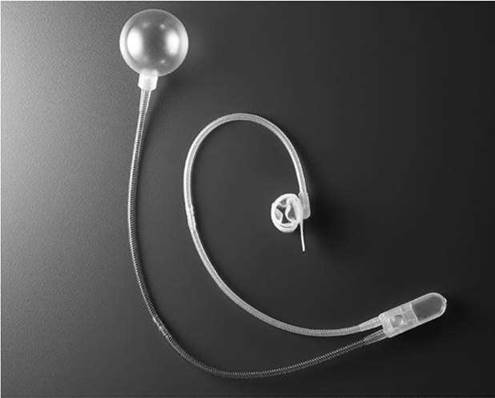
Figure 11.7 An artifical urinary sphincter (AMS 800).
A. Figure 11.7 shows an artificial urinary sphincter (AMS 800).
Q. How many components does an AUS have?
A. It has three components: a urethral cuff, a scrotal control pump and a reservoir (usually implanted in the pre-peritoneal space).
Q. What is the success rate of the AUS?
A. The AUS (AMS 800) allows >75% of patients to be completely continent and >90% to be socially dry. Satisfactory long-term continence is present in approximately 61% of patients between 10 and 15 years after implantation. However, success is less in SCI patients, especially if they are wheelchair bound.
Q. What are the complications of AUS?
A. These include
Infection
Cuff erosion
Urethral atrophy (in up to 33%-39%: Has been reported as the most common cause of surgical revision)
Persistent leakage
Mechanical failure
Upper urinary tract damage (particularly in children with neuropathic bladders)
Q. Are you aware of any trials comparing the male sling to AUS that are currently being recruited to?
A. The MASTER trial (Male synthetic sling versus Artificial urinary Sphincter Trial: Evaluation by Randomised controlled trial) will be the first trial to compare these two PPI treatments and provide evidence for men with PPI in the future.
References
1. Abrams P et al. The standardisation of terminology of lower urinary tract function: Report from the standardisation sub-committee of the International Continence Society. Am J Obstet Gynecol 2002; 187(1): 116-126.
2. Gray SL et al. Cumulative use of strong anticholinergics and incident dementia. JAMA Intern Med 2015; 175(3): 401-407.
3. Greenwell TJ et al. Augmentation cystoplasty. BJUI 2001; 88(6): 511-525.
4. Hamid R et al. Routine surveillance cystoscopy for patients with augmentation and substitution cystoplasty for benign urological conditions: Is it necessary? BJUI 2009; 104: 392-395.
5. NICE guidelines [CG171]. Urinary incontinence in women 2013.
6. Nilsson CG et al. Eleven years prospective follow-up of the tension-free vaginal tape procedure for treatment of stress urinary incontinence. Int Urogynecol J Pelvic Floor Dysfunct 2008; 19: 1043-1047.
7. Liapis A et al. Long-term efficacy of tension-free vaginal tape in the management of stress urinary incontinence in women: Efficacy at 5- and 7-year follow-up. Int Urogynecol J Pelvic Floor Dysfunct 2008; 19: 1509-1512.
8. Novara G et al. Tension-free midurethral slings in the treatment of female stress urinary incontinence: A systematic review and meta-analysis of randomized controlled trials of effectiveness. Eur Urol 2007; 52: 663-678.
9. Ockrim JL, Allen DJ, Shah PJ, Greenwell TJ. A tertiary experience of urethral diverticulectomy: Diagnosis, imaging and surgical outcomes. BJU Int 2009 Jun; 103(11): 1550-1554.
10. Bennett SJ. Urethral diverticula. Eur J Obstet Gynecol Reprod Biol 2000 Apr; 89(2): 135-139.
11. McGuire EJ et al. Prognostic value of urodynamic testing in myelodysplastic patients. J Urol 1981; 126: 205.
12. Lindan R, Joiner F, Freechafer A, Hazel C. Incidence and clinical features of autonomic dysreflexia in patients with spinal cord injury. Paraplegia 1980; 18: 285-292.
Further Reading
Arya M, Shergill IS, Silhi N, Grange P, Bott S (eds). 2008. Essential Urology in General Practice. London: Quay Books.
Wein AJ, Kavoussi LR, Novick AC, Partin AW, Peters CA (eds). 2016. Campbell-Walsh Urology, 11th edn. Philadelphia, PA: Saunders Elsevier.